Facilitating Students’ Artistic Expression With Digital Self-Portraits
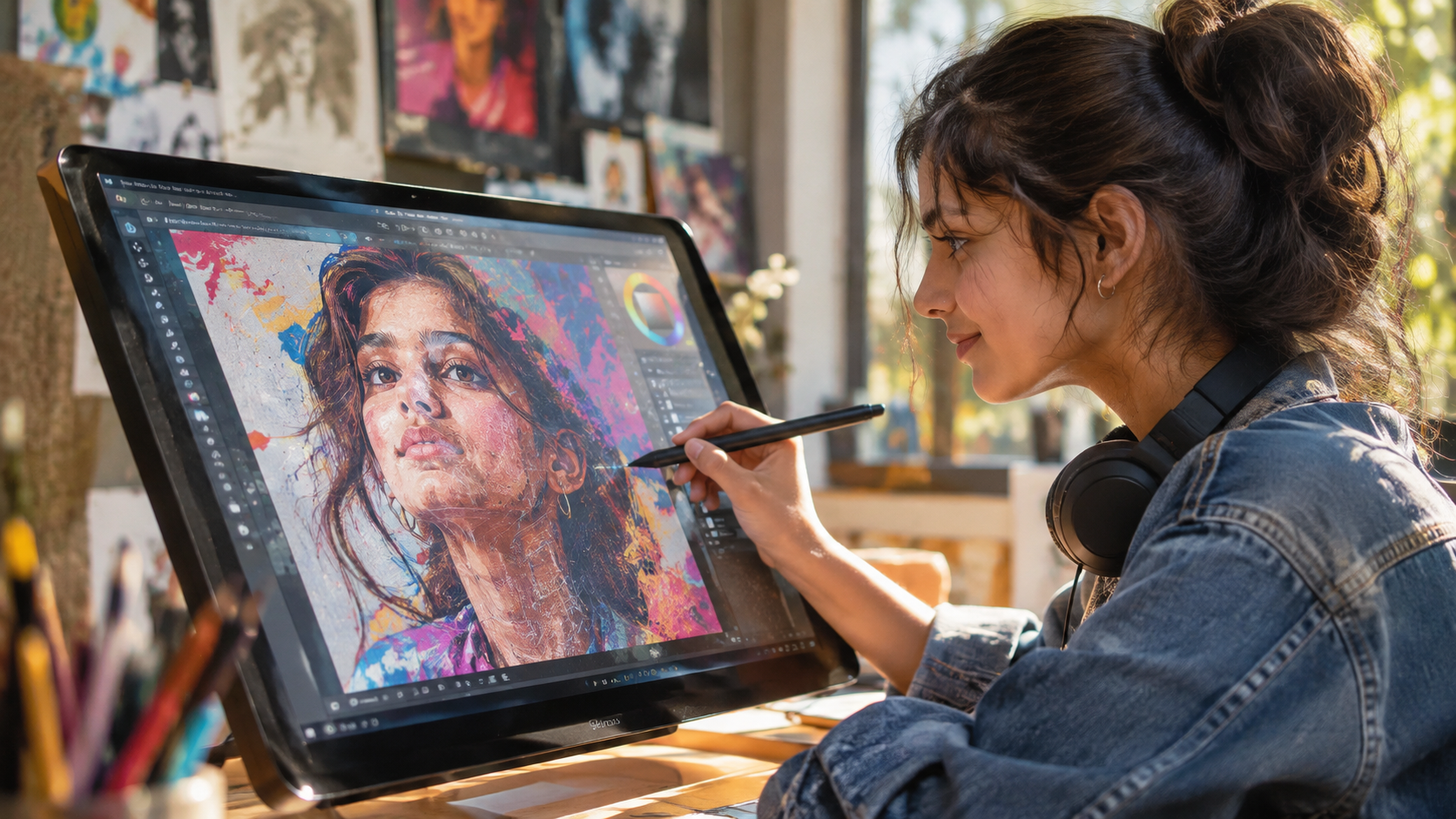
Every student has a unique story, but traditional classroom activities do not always capture their creative voice. Introducing digital self-portraits gives students modern ways to express their personalities, emotions, and cultural backgrounds. Digital art also encourages creativity, critical thinking, and confidence through hands-on exploration. The National Art Education Association highlights the importance of meaningful visual arts education in developing students’ creative abilities.
Unlike traditional painting, digital artwork allows students to experiment without worrying about wasting materials. They can use layers, digital brushes, filters, and vector shapes to explore different artistic styles. If they make a mistake, they can easily undo changes or try another approach. This freedom makes the creative process less intimidating for beginners.
Digital self-portrait projects also encourage students to explore personal identity. They can represent their interests, family backgrounds, memories, and future aspirations through visual elements. These activities combine artistic expression with practical technology skills.
This guide explores self-portraiture in creative arts, famous historical examples, and practical classroom activities. You will discover ten renowned self-portraits, creative digital examples, and engaging project ideas for children. Whether you teach in a school or support independent homeschooling, these ideas can help students develop their artistic confidence.
Can you provide some examples of self-portraits for students?
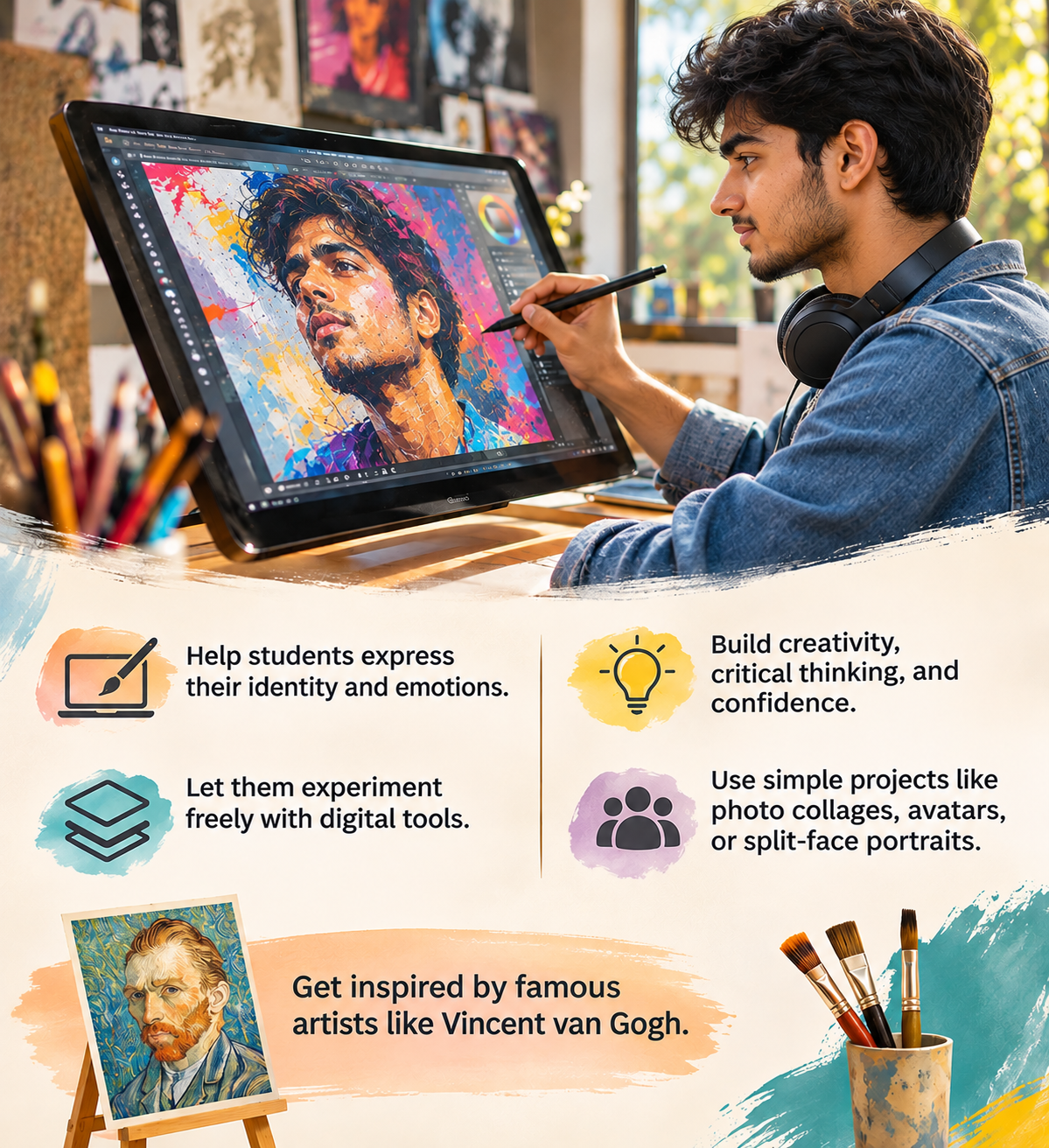
Student self-portraits can combine simple digital tools with meaningful personal storytelling. Teachers can introduce different formats based on students’ ages, artistic abilities, and available technology. These activities make creative expression accessible to beginners and experienced learners.
One popular option is a digital photo collage. Students take photographs and add graphic elements representing their hobbies, interests, family traditions, and ambitions. Another approach involves creating vector avatars using basic geometric shapes. This activity introduces concepts such as proportion, balance, and visual composition.
Digital split-face portraits offer another engaging classroom activity. Students divide their canvas into two sections. One side features a realistic photograph, while the other represents their emotions through abstract colours and patterns.
Other possibilities include illustrated avatars, digital silhouette portraits, and symbolic compositions. These projects encourage experimentation while helping students communicate their identities through visual storytelling.
Layered Symbolic Digital Collages
Layered digital collages allow students to communicate personal experiences through different visual elements. This technique combines photographs, illustrations, textures, and meaningful symbols into one composition. Students can use accessible graphic design applications to build their artwork without advanced drawing skills. Teachers can also introduce AI image generation techniques to help students explore additional visual concepts and creative possibilities.
Begin with a simple photograph or monochrome silhouette. Students can then add scanned handwriting, colourful backgrounds, personal photographs, and digital illustrations. Each layer represents something meaningful about their identity.
For example, a student might include musical notes to represent their favourite hobby. Family photographs could communicate important relationships, while nature-inspired textures might reflect personal interests. Students can also experiment with transparency and overlapping elements.
This approach makes digital self-portraits particularly suitable for beginners. It encourages thoughtful decisions about colour, composition, and symbolism. Teachers can also ask students to explain their design choices. This connects visual creativity with communication and personal reflection.
What artist is famous for self-portraits?
Vincent van Gogh is among the most famous artists associated with self-portraiture. His expressive paintings remain important examples of how artists can communicate emotions through colour, composition, and brushwork.
Throughout his career, van Gogh created more than thirty self-portraits. These paintings helped him practise his artistic techniques and explore different visual styles. He often used strong brushstrokes, contrasting colours, and distinctive textures to represent his appearance.
Financial difficulties also influenced his decision to paint himself. Hiring professional models was expensive, so using his own reflection provided an accessible alternative. However, his self-portraits became much more than technical exercises.
His paintings offer insight into his changing appearance and artistic development. Some works also reflect the emotional difficulties he experienced during his lifetime. For students, van Gogh’s work demonstrates that portraits do not need perfect realism. Artists can use visual techniques to communicate personal experiences and emotions.
What is self-portrait in creative arts?
In creative arts, a self-portrait is an artwork that represents the artist’s own physical appearance, personality, emotions, or identity. Traditionally, artists created self-portraits using paintings, drawings, and sculptures. These works often demonstrated technical ability, personal status, or individual perspectives.
Modern self-portraiture extends beyond realistic facial representations. Artists can use abstract shapes, photographs, illustrations, and symbolic imagery to communicate their experiences. A portrait might represent someone’s cultural background, personal values, memories, or emotional state. Exploring the challenges faced by art and craft in today’s world also helps students understand how artistic expression continues to evolve.
Technology has also introduced new possibilities for artistic expression. Through digital self-portraits, creators can experiment with photography, graphic design, digital painting, and image manipulation. They can combine different visual elements to develop unique compositions.
For students, this approach creates opportunities to explore personal identity. They can communicate who they are without following strict artistic rules. The focus shifts from creating a perfect likeness to expressing meaningful ideas through visual storytelling.
Identity Exploration Beyond Mere Likeness
A self-portrait can communicate much more than someone’s physical appearance. It can represent personal experiences, cultural influences, emotions, and individual perspectives. This makes identity exploration an important part of modern portraiture.
Students can experiment with different colours, backgrounds, lighting effects, and digital filters. Each choice can communicate something about their personality. For example, a student might use warm colours to represent confidence and enthusiasm. Another might choose softer shades to communicate calmness or reflection.
Symbolic objects can also add meaning to digital artwork. Books might represent a love of learning, while musical instruments could reflect creative interests. Students can include meaningful locations, family traditions, or favourite activities.
Teachers should encourage individual interpretations rather than expecting identical results. Every student has different experiences and perspectives. Allowing these differences makes classroom artwork more meaningful. Student choice in learning can further support individual creativity and help learners develop confidence in their artistic decisions. It also helps learners understand that artistic identity is personal and does not require perfect technical skills.
How to use art for self expression?
Using art for self-expression begins with personal ideas rather than technical perfection. Students should first identify an emotion, memory, experience, or message they want to communicate. They can then choose artistic elements that support their intended meaning. Practising drawing to learn and develop creative skills can also help students communicate their ideas more effectively.
Colour is one of the simplest ways to communicate emotions. Warm reds and oranges can suggest energy, excitement, or frustration. Cool blues and greens may create feelings of calmness or reflection. However, colour meanings can vary between individuals and cultures.
Other artistic elements also influence the message. Texture can create visual depth, while composition guides the viewer’s attention. Shapes, patterns, and contrasting elements can communicate different moods and experiences.
Digital art makes experimentation easier because students can adjust their work without starting again. They can change colours, rearrange layers, and explore different visual effects. This flexibility encourages creative confidence. It also helps students discover their preferred artistic styles while expressing ideas in a personal and meaningful way.
Translating Emotions Into Visual Metaphors
Visual metaphors help artists communicate complicated emotions through familiar objects, symbols, and scenes. Instead of illustrating an emotion directly, students can represent it through creative imagery. This approach makes abstract ideas easier to understand and interpret.
For example, storm clouds might represent confusion or difficult experiences. Blooming flowers could communicate personal growth, while open doorways might suggest new opportunities. Broken glass could represent emotional struggles or unexpected changes.
Students can incorporate these metaphors into digital self-portraits using photographs, illustrations, and digital brushes. They might combine several symbols to represent different aspects of their personalities. There is no single correct interpretation of these visual choices.
Teachers can encourage students to explain the meaning behind their artwork. This discussion develops communication skills and deeper artistic understanding. It also creates opportunities for respectful classroom conversations. Students learn that different people can interpret the same artwork in different ways.
What are the 10 most famous self-portraits?
Famous self-portraits provide valuable examples of how artists communicate identity, emotions, and personal experiences. Different historical periods introduced new approaches to composition, colour, symbolism, and artistic representation. Studying these masterpieces helps students understand the development of portraiture.
Some artists focused on realistic details, while others explored abstract forms and psychological expression. Their works also reflect the cultural and artistic movements of their respective periods.
Here are ten notable examples that students can explore during art history lessons:
- Vincent van Gogh – Self-Portrait with Bandaged Ear (1889): An expressive painting that documents a difficult period in the artist’s life.
- Frida Kahlo – The Two Fridas (1939): A double self-portrait exploring identity, personal experience, and emotional complexity.
- Rembrandt van Rijn – Self-Portrait with Two Circles (c. 1665–1669): A celebrated work featuring the artist with two mysterious background circles.
- Leonardo da Vinci – Portrait of a Man in Red Chalk (c. 1512): A drawing traditionally identified as a possible self-portrait, although its attribution remains debated.
- Albrecht Dürer – Self-Portrait at Twenty-Eight (1500): A remarkable portrait demonstrating Renaissance artistic skill and symbolism.
- Pablo Picasso – Self-Portrait (1907): An important example of his developing modern artistic style.
- Diego Velázquez – Las Meninas (1656): A famous painting featuring the artist within the composition.
- Andy Warhol – Self-Portrait with Fright Wig (1986): A distinctive portrait exploring identity, celebrity, and artistic image.
- Artemisia Gentileschi – Self-Portrait as the Allegory of Painting (c. 1638–1639): A powerful representation of the artist through the personification of painting.
- Egon Schiele – Self-Portrait with Physalis (1912): An expressive portrait featuring distinctive lines and symbolic details.
These artworks offer different approaches to personal representation. Teachers can use them to introduce artistic techniques and encourage students to develop their own visual interpretations.
What are some creative ideas for self-portraits for children?
Creative self-portrait activities should combine simple techniques with opportunities for imagination. Children do not need advanced drawing abilities or expensive equipment to create meaningful artwork. Basic tablets, drawing applications, and accessible photo-editing tools can support engaging classroom projects. Teachers can also explore ways to encourage arts class participation and make creative activities more inclusive.
One popular idea is the superhero alter-ego portrait. Children create a digital photograph or illustrated avatar and add costumes, masks, and imaginative backgrounds. They can use these elements to represent their strengths, interests, and aspirations.
Another activity is the “Inside My Mind” portrait. Students draw their silhouettes and fill the shapes with digital stickers, colourful patterns, and personal illustrations. They might include favourite animals, foods, hobbies, and future dreams.
Younger learners can also try digital finger-painting. Simple drawing applications allow them to experiment with colours, shapes, and basic facial features. Teachers can introduce these activities gradually, depending on students’ abilities. The goal is to encourage creativity, confidence, and personal expression rather than artistic perfection.
FREQUENTLY ASKED QUESTIONS
What digital tools are best for student self-portraits?
Beginner-friendly applications like Canva, Google Drawings, and Kleki provide excellent starting points without requiring expensive hardware or paid subscriptions. For intermediate and advanced art students, open-source programs like Krita and GIMP or industry tools like Adobe Fresco, Photoshop, and Procreate offer robust digital brush engines, non-destructive layer management, and versatile stylus support ideal for detailed digital portraiture.
At what age can students begin digital self-portraiture?
Children can begin digital portraiture as young as five years old using touchscreen tablets and simple drawing applications. At this early developmental stage, the focus remains on motor skills, primary colors, and basic shape recognition. As students advance into upper elementary and middle school, teachers can gradually introduce photo manipulation, masking, layers, and intentional thematic symbolism.
How do digital self-portraits support social-emotional learning?
Digital self-portrait projects directly support social-emotional learning by providing students a secure visual channel to explore self-awareness, identity, and personal values. Through intentional artistic choices involving colors, compositions, and iconography, students process internal emotions, express vulnerabilities, and build self-esteem. Class critiques also promote mutual empathy and social awareness as classmates discuss each other’s portraits.
CONCLUSION
Integrating digital self-portraits into the classroom provides an innovative bridge between timeless artistic traditions and modern digital literacy. Throughout history, masters from Albrecht Dürer to Vincent van Gogh and Frida Kahlo utilized their own likenesses to explore personal identity, process grief, and master creative techniques. Today’s digital drawing platforms, stylus pens, and graphic editing suites offer modern students that same transformative expressive potential without physical supply barriers.
Whether students assemble symbolic digital photo collages, design vector avatars, or paint surreal emotional narratives, self-portraiture cultivates deep self-awareness and visual communication abilities. By teaching learners to approach the digital screen as an intentional creative canvas rather than a passive entertainment device, educators equip them with lifelong creative tools. Use these lesson concepts, art history foundations, and technical strategies in your upcoming curriculum to inspire your students’ authentic artistic journeys today.