
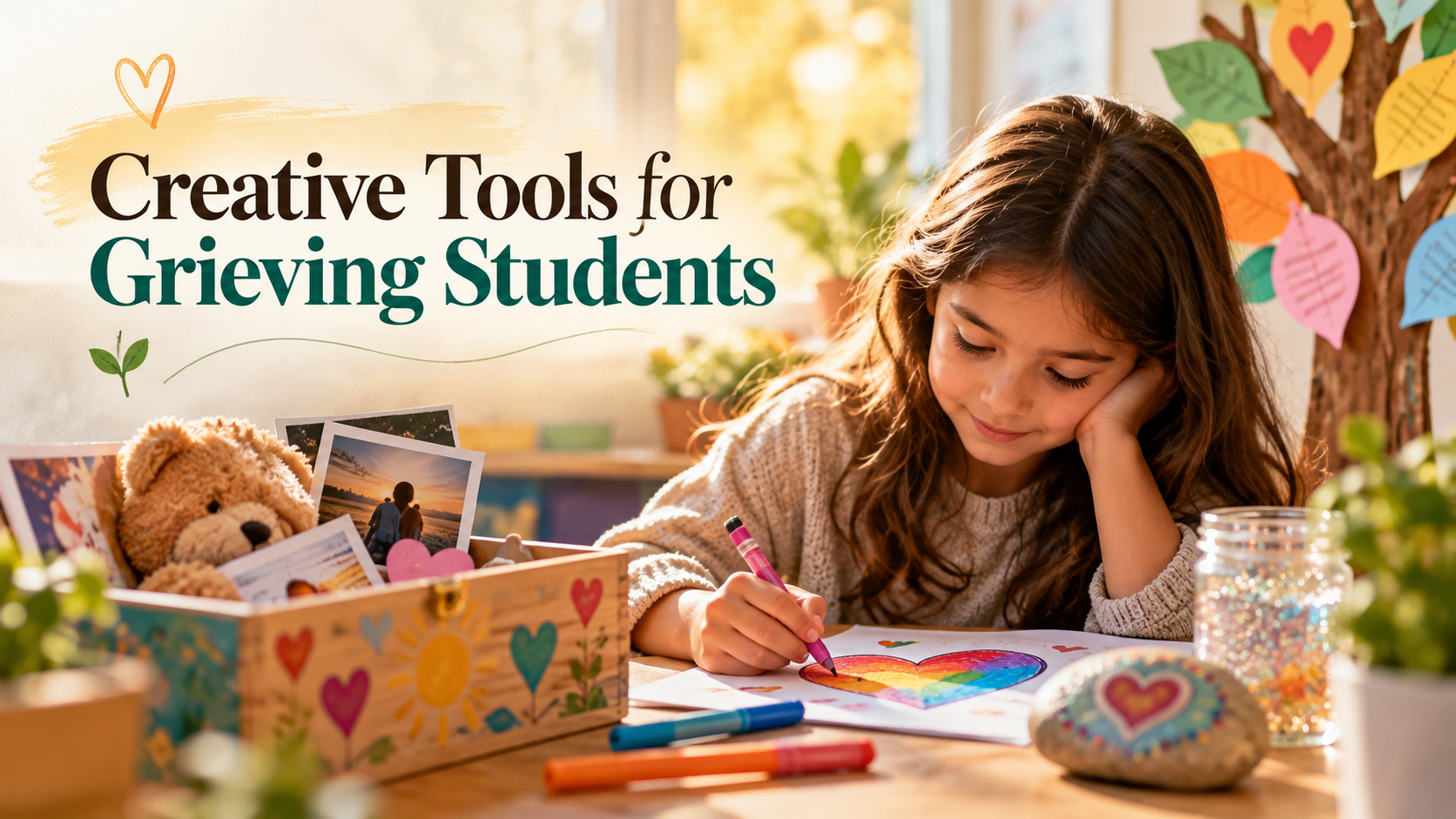
Creative Tools for Grieving Students: Meaningful Ways to Support Loss in Schools
Grief can overwhelm young minds that are still developing emotional coping skills. When loss enters a child’s world, comforting and expressive outlets can provide meaningful support. Using creative tools for grieving students gives children a safe way to express feelings they may struggle to explain. Guidance from the National Child Traumatic Stress Network highlights the value of creative activities and structured emotional outlets when children experience difficult events.
Art, storytelling, music, and sensory activities can help students explore confusing emotions at their own pace. These approaches do not require children to explain everything verbally. That can be especially helpful when grief affects concentration, classroom participation, friendships, and daily routines.
Creative activities should support, rather than replace, caring adult relationships. Teachers, counselors, and families can use these tools to create opportunities for expression without forcing students to participate. The goal is not to make grief disappear. Instead, these activities can help students feel understood, connected, and supported while they adjust to life after loss.
This guide explores practical grief activities for children, group projects, resources for grieving teenagers, classroom support strategies, and the three C’s of grief. These approaches can help schools provide compassionate spaces where students can express emotions and gradually rebuild a sense of stability.
What are some activities that can help children process grief?
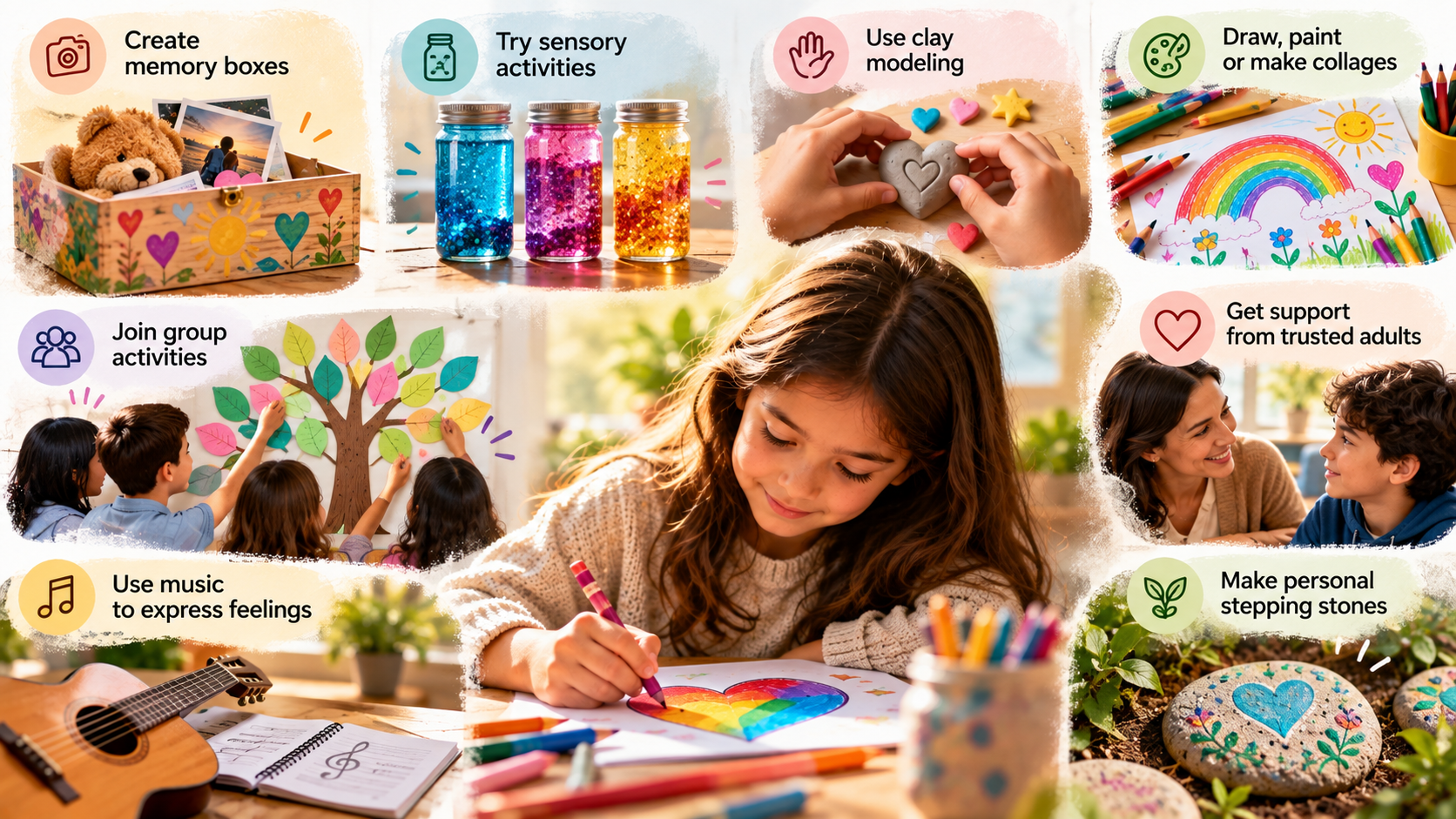
Artistic and sensory activities can give children practical ways to express grief when words feel difficult. Memory boxes are a useful starting point. Students can decorate a wooden or cardboard box and place photographs, small keepsakes, drawings, or handwritten notes inside. The box becomes a private place for memories and personal expression.
Another activity involves creating sensory emotion bottles. Children can use colored water, sand, or glitter to represent changing emotions. Educators can encourage students to describe what different colors or movements mean to them. There is no single correct interpretation.
Clay modeling can provide another hands-on outlet. Students might create a symbol that represents comfort, a favorite memory, or something they miss. Drawing, painting, and collage activities can serve a similar purpose, and drawing as a learning and expressive activity can give students another structured way to explore their thoughts and feelings.
These creative tools for grieving students should remain flexible. Children should decide how much they want to share. Adults can gently ask open questions without demanding explanations. The purpose is to create a safe opportunity for expression, reflection, and connection, including through experiential writing techniques that can help students put difficult experiences into words when they are ready.
Designing Personal Memory Stepping Stones
Creating decorated garden stepping stones can give children a lasting way to remember someone they have lost. Students can use air-dry clay or suitable craft materials to create a personal design. They might add initials, simple patterns, drawings, or symbols connected to a favorite memory.
The activity can begin with a conversation about memories. However, students should never be required to discuss details they would rather keep private. They can simply choose colors, shapes, or objects that feel meaningful.
Once the stepping stone is complete, it can become part of a school garden, family garden, or another appropriate location. This gives the child a physical reminder of their connection with the person who died. It also creates an opportunity to transform difficult feelings into something tangible.
Educators should consider the child’s age, emotional readiness, and family preferences before using memorial activities. Some students may find permanent memorials comforting, while others may prefer private projects.
The important element is choice. Creative grief activities work best when children control their level of participation and expression.
What are some creative activities for grief groups?
Grief groups can help students discover that they are not alone in their experiences. Creative activities can make these sessions less dependent on direct conversation. They also give participants a shared task while leaving room for personal expression.
The Memory Tree is one useful group activity. Students can create a large tree on paper and add leaves containing memories, drawings, messages, or symbols. Participants can decide whether they want to write about a person, a feeling, or a positive experience.
Music can provide another option. Students can suggest songs that remind them of someone or express a particular emotion. The group can discuss the feelings behind the selections without requiring anyone to explain personal circumstances.
Collaborative poetry can also encourage participation. Each student contributes one word or line to a shared poem. The final piece represents the group’s collective experience without requiring everyone to tell their individual story.
Using creative tools for grieving students in groups can reduce feelings of isolation. However, participation should remain voluntary. Adults should also establish clear boundaries around privacy and respectful listening before beginning group activities.
Constructing Collective Comfort Quilts
A collaborative comfort quilt gives students a shared project that represents connection and support. The activity can use fabric squares, paper squares, or another accessible material. Each participant receives one section to decorate.
Students might draw a meaningful symbol, write a short affirmation, add a favorite color, or create a simple pattern. They can choose whether their square represents a memory, an emotion, or a message of support. This flexibility allows students with different comfort levels to participate.
After the individual sections are finished, the pieces can be joined together. A fabric version may be sewn or tied, while a paper version can be assembled as a classroom display. The completed project shows how individual contributions can form something larger.
The activity also creates opportunities for quiet interaction. Students can work beside one another without needing to discuss their losses directly. This can be especially useful for children who feel uncomfortable speaking in groups.
Educators should protect privacy when displaying the finished project. Students should decide whether their names or personal messages are included. The goal is to create collective comfort, not public exposure.
What are resources are available for teenagers who are grieving?
Teenagers often need grief resources that respect their growing independence and changing emotional needs. Adolescents may prefer private digital activities, peer support, writing, music, or creative projects instead of traditional conversations with adults.
Digital resources such as Apart of Me have offered interactive, game-like experiences designed around grief and emotional reflection. Organizations such as The Dougy Center also provide grief resources, educational materials, and support information for children, teenagers, and families.
Schools can provide additional support through counseling offices, age-appropriate books, journals, and free student software for academic success, along with guided creative activities. Local bereavement programs may also offer teen groups, workshops, camps, or other structured opportunities for connection.
Creative technology can be particularly useful for teenagers. Digital storytelling, photography, audio recording, and video editing allow young people to control how they express themselves, while AI writing tools can provide another option for guided written expression. These activities can provide privacy while still encouraging reflection.
Adults should avoid assuming that every teenager wants the same type of support. Some may want to talk frequently, while others may need more personal space. Creative tools for grieving students should therefore be offered as choices rather than requirements.
If grief significantly disrupts daily functioning or creates safety concerns, schools and families should consider professional mental health support.
How to help a student who is grieving?
Supporting a grieving student begins with patience, consistency, and flexibility. Teachers should not force students to discuss their loss. Instead, they can offer quiet opportunities to talk, write, draw, or spend time with a trusted adult.
A simple check-in can help teachers understand how the student is managing that day. Schools can also provide a discreet way for students to visit a counselor when emotions become overwhelming.
Academic flexibility may also be necessary. Grief can affect concentration, memory, motivation, and classroom participation. Teachers can maintain familiar routines while allowing reasonable extensions or temporary adjustments when appropriate.
Communication with the student’s family can provide useful context. Families may share important dates, cultural preferences, or information about how the student prefers to discuss the loss. Schools should handle this information respectfully and protect the student’s privacy.
Classroom resources can include sketchbooks, writing prompts, quiet activities, or other creative tools for students that support drawing, writing, and personal expression. These options give students ways to regulate and express emotions without making them the center of attention.
The goal is to balance stability with compassion. Students still need predictable routines, but they may also need adults who understand that grief can affect their school experience.
Establishing Discreet Classroom De-escalation Zones
A quiet classroom area can give a grieving student a place to pause when emotions become difficult to manage. The space does not need to be large. A small corner with comfortable seating and simple materials may be enough.
Schools can provide drawing paper, notebooks, stress-relief objects, headphones, or other suitable sensory materials. Students should understand how and when they can use the space. Clear expectations prevent the area from becoming a source of embarrassment or confusion.
Privacy is important. Teachers should avoid announcing when a student uses the space or asking them to explain their emotions publicly. A discreet signal or agreed procedure can help students leave the classroom without unnecessary attention.
The space should also support a return to normal classroom activities. Students can spend a short period calming down before deciding whether they are ready to continue working. Teachers can check in privately when appropriate.
A classroom calming space is not a replacement for professional support. It is a practical classroom strategy that can provide temporary relief.
When designed thoughtfully, the area gives students greater control over difficult moments while preserving dignity and maintaining a predictable learning environment.
What are the three C’s of grief?
The three C’s of grief are commonly expressed as “I didn’t Cause it, I can’t Cure it, and I can Care for myself.” This framework can help children understand that they are not responsible for fixing a difficult situation.
Children may sometimes believe their actions, thoughts, arguments, or behavior caused a death or family crisis. The first C, Cause, reinforces that they did not create the event. Adults can explain this using simple, age-appropriate language.
The second C, Cure, reminds children that they cannot make another person’s grief disappear. Children may feel responsible for helping parents, siblings, or other family members feel better. They need reassurance that supporting others does not mean carrying responsibility for everyone’s emotions.
The final C, Care, focuses on self-care. Children can learn that resting, talking to trusted adults, using creative activities such as drawing, playing, spending time with supportive people, and expressing emotions are acceptable ways to care for themselves.
The framework should be introduced gently rather than treated as a strict formula. Every child experiences grief differently. Creative tools for grieving students can complement this approach by giving children practical ways to express and manage difficult emotions.
Frequently Asked Questions
How do I know if a student needs professional grief counseling?
Watch for sustained behavioral shifts lasting beyond several weeks. Warning signs include severe academic decline, persistent withdrawal from friends, aggressive outbursts, or expressed feelings of intense worthlessness. If a student displays chronic apathy, physical ailments, or self-harming tendencies, make an immediate referral to your licensed school psychologist or a pediatric mental health professional.
Can creative grief exercises accidentally trigger panic in class?
Yes, creative exercises can evoke sudden, intense emotions when underlying memories surface unexpectedly. You can prevent distress by framing every creative activity as entirely optional. Always give students alternative tasks and clear exit strategies. If an exercise becomes overwhelming, calmly guide the child to a designated quiet area to self-regulate without shame.
How do creative grief tools help non-verbal students?
Non-verbal and neurodivergent students often experience deep sorrow without the ability to articulate abstract emotional concepts aloud. Tactile mediums like therapeutic kinetic sand, emotion color-coding, and collage assemblies bypass language barriers entirely. These methods provide concrete outlets, allowing children to communicate internal states visually and kinesthetically without verbal distress.
Conclusion
Navigating youth bereavement requires thoughtful patience, intentional spaces, and practical emotional outlets. When traditional conversations feel overwhelming, integrating creative tools for grieving students gives young people safe avenues to externalize sorrow on their own terms. From tactile memory crafts and group art murals to digital adolescent resources, creative modalities honor each child’s unique emotional timeline.
Remember the core foundations: establish stable routines, dispel personal guilt through the three C’s framework, and listen actively without rushing the healing process. While educators and caregivers cannot erase the pain of bereavement, their compassionate presence makes a lifelong difference. Start introducing these supportive strategies today to ensure no grieving child faces loss in isolation.