
10 Countries With the Best Work-Life Balance
In our hyper-connected world, finding a healthy equilibrium between career ambitions and personal life can feel like an uphill battle. The continuous rise of remote work has blurred the lines between our living rooms and our offices, leaving many professionals burned out and searching for a change of scenery. If you are rethinking your daily routine, exploring countries with the best work-life balance can offer valuable perspective. The latest international data from the OECD Better Life Index reveals that certain nations have successfully built societies where personal well-being is prioritized just as much as economic output.
Evaluating global destinations requires looking beyond simple job satisfaction. True equilibrium relies on systemic support, including statutory annual leave, robust parental benefits, fair minimum wages, and a cultural mindset that fiercely protects time away from the desk. Western Europe and Oceania consistently dominate these metrics, proving that lower average working hours often result in higher national happiness and strong economic productivity. This comprehensive guide breaks down the top destinations leading the world in employment harmony and examines what makes their corporate environments so healthy.
What Defines a Healthy Work-Life Equilibrium?
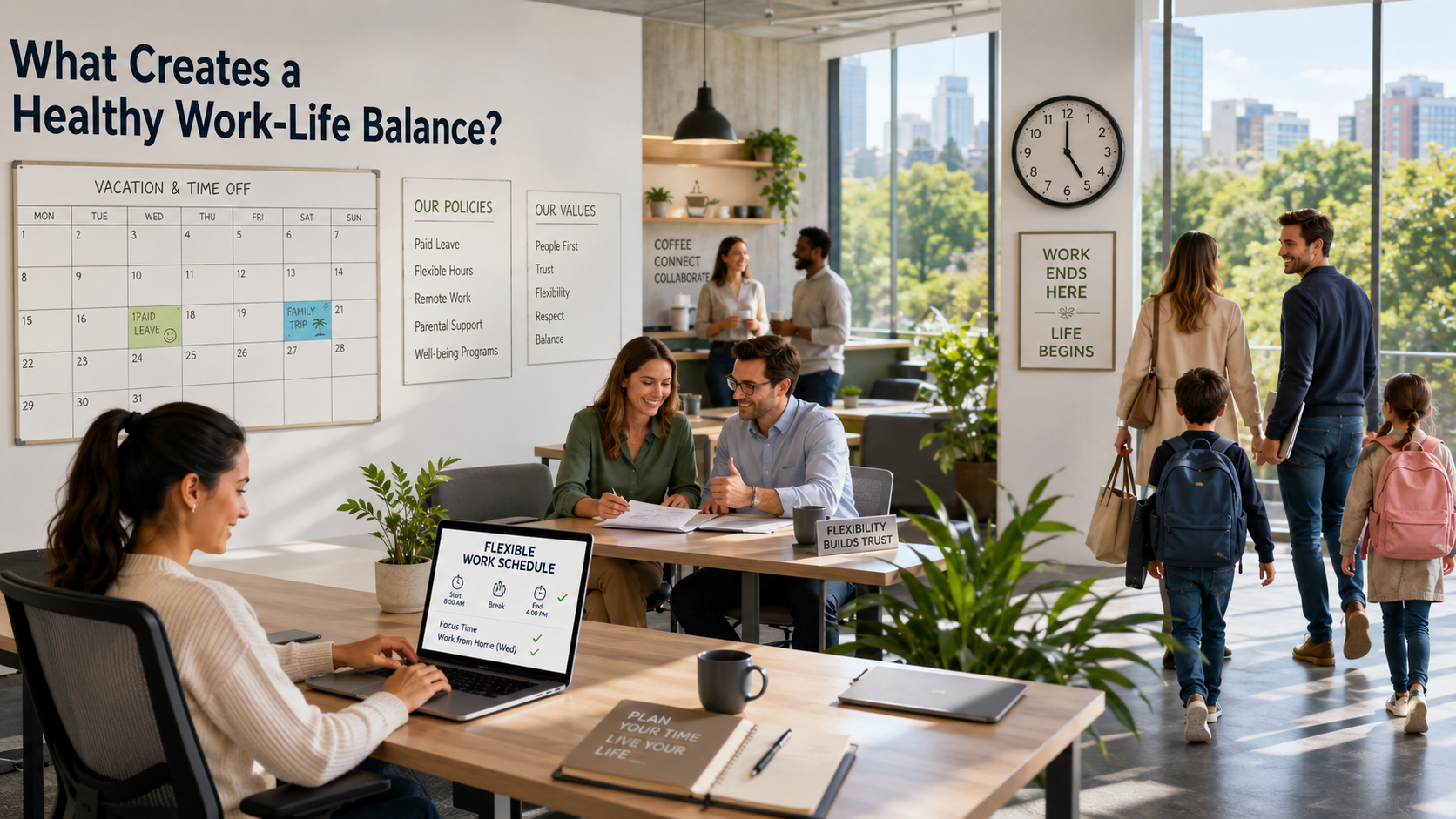
To truly understand how global professionals find harmony, we must look at the structural framework that supports them. A healthy workplace equilibrium is rarely the result of individual time management or personal discipline alone. Instead, it is driven by comprehensive national labor laws and rigid cultural boundaries that protect employees from systemic corporate exploitation.
When international HR experts assess global labor markets, they analyze several critical pillars. These include legally mandated annual leave, standard working hour limitations, and paid parental leave policies. When a government enforces these regulations, it actively reduces workplace stress and enhances overall societal well-being.
Furthermore, a healthy equilibrium relies heavily on robust social infrastructure, such as universal healthcare and affordable childcare frameworks. When these basic needs are covered by the state, workers do not feel pressured to clock extreme overtime just to survive. Consequently, employees maintain better physical health, stronger family relationships, and higher long-term career motivation.
The Top Countries With the Best Work-Life Balance
The countries with the best work-life balance consistently rank among the world’s most desirable places to live and work. These nations combine competitive economies with generous employee benefits, flexible workplace policies, and a strong commitment to personal well-being.
When comparing the countries with the best work-life balance, several nations consistently outperform the rest of the world in international labor and quality-of-life rankings. They have successfully balanced economic growth with shorter working hours, paid leave, healthcare access, and employee satisfaction.
One reason the countries with the best work-life balance stand out is their shared belief that a well-rested employee is a more productive employee. Rather than promoting constant overtime, these countries encourage healthy boundaries between professional responsibilities and personal life, leading to higher innovation, stronger communities, and lower burnout rates.
As we explore the countries with the best work-life balance, you will see how geography, labor laws, workplace culture, and government policies shape everyday working life. From shorter workweeks to generous vacation allowances, the countries with the best work-life balance prove that investing in employee well-being benefits individuals, businesses, and entire economies over the long term.
1. New Zealand
Holding the top spot globally on major corporate well-being metrics, New Zealand treats professional boundaries with immense respect. The local culture places a massive emphasis on outdoor activities, community engagement, and family time, all of which are heavily supported by forward-thinking government legislation.
Employees across the country enjoy a mandatory 32 days of statutory annual leave alongside an exceptionally high minimum wage framework. Furthermore, the government provides 26 weeks of paid maternity leave, making it an incredibly attractive destination for young professionals seeking a sustainable lifestyle.
The Kiwi corporate environment explicitly discourages after-hours communication. Managers openly encourage team members to disconnect completely on weekends to enjoy the nation’s stunning natural landscapes. This widespread societal alignment ensures that your job remains a way to fund your life, rather than becoming your entire identity.
2. Ireland
Ireland has climbed rapidly in international quality-of-life rankings due to a deliberate mixture of progressive labor regulations and unprecedented economic growth. The Irish government actively supports flexible working models, passing legislation that grants employees a statutory right to request remote or hybrid arrangements without facing professional penalties.
With 30 days of standard annual leave and highly generous maternity benefits, workers have ample opportunity to step away from their screens. The local professional landscape values clear communication, collaboration, and mutual respect, which prevents the development of toxic workplace environments.
Moreover, Irish cities offer vibrant cultural scenes that make disconnecting from work seamless and rewarding. Professionals can easily transition from an efficient workday to community sports, traditional music sessions, or coastal hikes, maintaining a rich personal life that fuels their daily career enthusiasm.
3. Belgium
Belgians enjoy an average workweek of just 34.1 hours, a figure that is significantly lower than the global industrialized average. The country seamlessly combines an extensive, tax-funded social security system with highly flexible workplace options designed to accommodate diverse family dynamics.
Belgian labor laws make it remarkably simple for employees to request structured part-time schedules or temporary career breaks. These transitions occur smoothly without individuals facing career stagnation, corporate discrimination, or professional stigma from their peers.
Additionally, the cultural emphasis on culinary arts, cycling, and family gatherings means that weekends are treated as sacred intervals. Offices completely empty out by Friday afternoon, allowing the workforce to recharge fully before the upcoming week begins. This collective respect for leisure time ensures that burnout levels remain low across major industries.
4. Germany
Despite a global reputation for intense focus and industrial manufacturing efficiency, Germany is a true global powerhouse when it comes to comprehensive worker protection. The country records some of the shortest annual working hours among major developed economies, averaging roughly 1,340 hours per worker each year.
German workplace culture relies on clear, rigid compartmentalization to protect mental wellness. When employees are on the clock, they focus entirely on optimization and task completion, leaving zero room for workplace distraction or time-wasting meetings.
Expert Insight: Once the standard workday concludes, strict labor regulations actively discourage managers from sending after-hours digital communication or making weekend phone calls.
This cultural separation means that personal time is entirely undisturbed, allowing German professionals to pursue hobbies, join community clubs, and rest deeply without lingering career anxiety.
5. Norway
Norway pairs breathtaking natural landscapes with a highly supportive social system built on equality and collective well-being. A standard Norwegian workweek is strictly capped at 37.5 hours, and workers receive an impressive five weeks of fully paid vacation time each calendar year.
Parental leave policies are among the most comprehensive worldwide, offering up to 49 weeks at full salary to support young families during critical developmental stages. This profound structural investment in family welfare keeps national stress levels low and civic trust exceptionally high across all demographics.
Culturally, Norwegians participate in friluftsliv, a philosophy centered on spending time in the open air regardless of the weather conditions. Employers actively structure work schedules so that team members can leave early enough in the afternoon to ski, hike, or sail, prioritizing health over corporate metrics.
6. Denmark
Denmark consistently ranks at the absolute top of international happiness indexes, largely because only a tiny fraction of the Danish workforce logs long hours. The Danish cultural philosophy of hygge, which prioritizes coziness, comfort, and meaningful connection, extends directly into professional spaces.
Corporate structures here are remarkably flat, meaning collaboration and employee happiness are prioritized over rigid corporate hierarchy and top-down management control. Flexible schedules are standard practice across industries, allowing parents to easily collect their children from school without experiencing career guilt.
Furthermore, Danish companies view overwork as a sign of poor time management rather than an indicator of dedication. If an employee is consistently staying late at the office, management will step in to redistribute the workload, ensuring everyone leaves on time to enjoy their personal evenings.
7. Canada
As the top-performing North American nation on this list, Canada stands out for its high quality of life, cultural diversity, and strong provincial workplace protections. Canadian corporations heavily emphasize employee wellness programs, proactive mental health support, and adaptable working environments that cater to modern lifestyle needs.
While statutory leave mandates vary slightly depending on the specific province, the overall corporate mindset strongly encourages a healthy separation between your job and your self-worth. Canada’s massive geographic scale and beautiful provincial parks encourage a highly active, outdoor-focused lifestyle during time off.
Whether snowboarding in the winter or camping in the summer, professionals are expected to disconnect and recharge. This cultural landscape makes Canada a prime destination for expats who want to advance their careers without sacrificing their personal peace.
8. Australia
Australia combines a booming, resilient economy with a famously laid-back lifestyle centered around community, fitness, and nature. Strong statutory minimum wages and an excellent universal healthcare system give citizens profound peace of mind outside of the traditional office setting.
Australians value their weekends immensely, using their extensive time off to take full advantage of the country’s pristine coastlines and warm climate. The corporate sector widely accepts flexible working hours, hybrid models, and generous personal leave allotments as standard employment baseline requirements.
Overtime is generally frowned upon, and taking your accumulated annual leave is seen as a healthy, necessary practice to maintain high operational efficiency. This collective approach creates a supportive corporate environment where professionals can thrive both financially and personally.
9. Spain
While the traditional afternoon siesta is less common in modern Spanish corporate hubs like Madrid or Barcelona, the cultural dedication to personal life remains completely intact. Spain legally mandates 36 days of annual leave, providing workers with ample time to rest, travel, and recharge throughout the year.
The local lifestyle naturally prioritizes long evening dinners, lively community gatherings, and a slow, highly intentional pace of living once the workday concludes. Spanish professionals rarely let their careers dictate their social schedules or family commitments.
Furthermore, recent labor reforms have strengthened the legal “right to disconnect,” ensuring that employees cannot be penalized for ignoring work messages outside of office hours. This strong framework keeps the focus on maximizing life outside of productivity metrics.
10. Finland
Finland leads the industrialized world in trust-based corporate cultures, offering unparalleled workplace autonomy to its citizens. Finnish employees enjoy immense freedom over their daily schedules, backed by federal laws that allow them to adjust their core working hours by up to three hours to accommodate personal responsibilities.
Combined with world-class public education and universal healthcare systems, Finland provides a masterclass in societal and professional sustainability. The culture places a massive premium on quiet relaxation, sauna visits, and connecting deeply with the nation’s vast forests and lakes.
Finnish managers operate with high trust, meaning they focus entirely on output and results rather than monitoring desk time. This environment empowers professionals to work efficiently, hit their goals, and transition seamlessly into a restful evening routine.
Global Well-Being Metrics Compared
The data clearly indicates that the world’s most balanced nations achieve their status through structured legal frameworks. When we look closely at average weekly hours alongside statutory vacation mandates, a clear pattern of institutional support emerges across these top-performing regions.
| Country | Average Weekly Hours | Statutory Leave (Days) | Parental Leave System |
| New Zealand | 33.0 | 32 | 26 weeks, full pay |
| Ireland | 34.3 | 30 | 26 weeks, partial pay |
| Germany | 33.2 | 30 | Highly flexible, shared |
| Norway | 32.6 | 35 | Up to 49 weeks, full pay |
| Denmark | 37.0 | 35 | Comprehensive, shared |
By analyzing this data, professionals can see that lower working hours do not harm economic output. Instead, these structured vacation periods and short workweeks give employees the necessary time to recover, resulting in significantly higher focus, fewer sick days, and elevated retention rates for businesses.
FAQs
Which country has the absolute best work-life balance?
New Zealand currently holds the top position globally across multiple international HR indexes. This prestigious ranking stems from its exceptional combination of 32 days of statutory annual leave and robust universal healthcare. The country also provides a high minimum wage framework and 26 weeks of fully paid maternity leave. Culturally, Kiwi employers deeply respect personal time. They actively encourage remote flexibility and manageable working hours. This systemic alignment ensures that workers can thrive in their careers. Meanwhile, they retain plenty of time to enjoy the country’s famous natural beauty and outdoor lifestyle.
Furthermore, the local philosophy dictates that a career should fund your life rather than consume it. Both public and private sectors actively guard this healthy standard. As a direct result, professionals experience incredibly low rates of occupational burnout. The government consistently reviews labor standards to match changing global economic conditions. This ongoing oversight ensures that flexibility remains protected as remote work trends evolve. Consequently, professionals residing in New Zealand enjoy an unparalleled quality of life and robust emotional well-being. They report deep satisfaction that spans both their professional milestones and their personal achievements.
How do European countries protect workers from burning out?
Many European nations use a strict combination of legislative frameworks and deeply ingrained cultural norms to fight corporate burnout. For instance, Germany and Spain have enacted clear labor laws that establish a legal “right to disconnect.” This means employers cannot penalize workers for ignoring messages outside of office hours. Additionally, high statutory vacation minimums—often ranging between 30 and 36 days annually—ensure that employees have dedicated time to rest. They can fully recharge without worrying about job security or financial strain. This collective approach successfully treats rest as a vital component of public health.
On top of these strict legal boundaries, European corporate culture emphasizes task optimization over superficial face-time at the office. Management frequently views working late as an indicator of poor time management or an unrealistic workload. It rarely signifies admirable dedication. Many companies actively implement forced server shutdowns after hours. This technical barrier prevents employees from accessing corporate email networks during weekends or holidays. By structuring the system so that rest is non-negotiable, these nations remove the individual guilt often associated with taking time off. This environment ultimately creates a much more resilient and creative workforce.
Does working fewer hours reduce national economic productivity?
No, data indicates the exact opposite is often true. Countries like Germany, Denmark, and Belgium maintain incredibly strong, highly competitive economies. Yet, they record some of the shortest average working hours worldwide. When employees are well-rested and feel secure in their personal lives, their workplace focus increases significantly. Their creativity and overall efficiency rise during their actual working hours. Shorter hours eliminate the mid-day fatigue and administrative inefficiency that often plague longer workweeks. This reality proves that the quality of labor matters far more than the sheer quantity of hours spent sitting at a desk.
Furthermore, economic studies demonstrate that overwork yields diminishing returns. It leads to costly mistakes, severe mental exhaustion, and high employee turnover rates that drain valuable corporate resources. When nations cap the standard workweek, businesses respond by optimizing their internal processes. They eliminate redundant meetings and maximize automated workflows. This shift ensures that the time spent at work is intensely focused and highly productive. Ultimately, a well-rested employee brings greater innovation and fewer errors to their daily tasks. A shorter, deliberate work schedule serves as a powerful engine for sustainable macroeconomic growth.
What role does parental leave play in overall lifestyle balance?
Comprehensive parental leave is foundational to systemic societal well-being. Nations like Norway and Denmark offer months of paid leave that parents can share flexibly. This system avoids placing the childcare burden entirely on one individual. This balanced approach significantly reduces the financial and emotional stress of welcoming a new child. It allows mothers to reintegrate into the workforce smoothly. It also fosters an equitable distribution of household responsibilities from day one. By protecting early family life, these countries build healthier, more resilient generations of future workers.
Moreover, these progressive parental leave frameworks remove the systemic career penalties that historically targeted working mothers. When the law financially supports both parents to take extended time off, corporate cultures adapt quickly. Businesses normalize temporary absences and career pauses. This structure shifts the cultural paradigm completely. It ensures that corporate environments view family development as a natural phase of life rather than an obstacle to advancement. The resulting drop in household stress levels heavily improves long-term mental health. It enhances marital stability and boosts overall life satisfaction for working parents across all commercial sectors.
Can you achieve a great work-life balance in the United States?
While the United States lacks federal mandates for paid annual leave or maternity benefits, achieving balance remains highly possible. Success requires choosing employers that explicitly value employee wellness. Professionals must set strict personal boundaries around digital communication and design a disciplined remote routine. Fortunately, many modern US companies now offer unlimited PTO or four-day workweeks to compete for top talent. This corporate shift allows proactive professionals to build a balanced lifestyle if they carefully vet their employment contracts before signing.
To find this harmony in an environment that rewards hustle culture, American workers must protect their personal time fiercely. They should track personal hours with the same strict discipline they apply to professional deadlines. This means turning off work notifications at a specific time every evening. Workers must utilize accrued vacation days fully, regardless of perceived corporate pressure. Cultivating a fulfilling identity completely outside of a job title remains crucial. This path requires significantly more individual advocacy and deliberate boundary-setting than it would in Europe. However, choosing the right company culture can unlock an excellent lifestyle within the United States.
Conclusion
Finding a sustainable harmony between your job and your personal life is no longer a luxury. It is a fundamental requirement for long-term health and professional success. The countries with the best work-life balance show us that corporate productivity does not require personal sacrifice. By embedding worker protections directly into national law, these nations create happier, healthier societies. They foster a supportive culture that celebrates leisure, family, and rest. If you are feeling overwhelmed by your current workload, take inspiration from these global models. Setting clearer boundaries, prioritizing your rest, or exploring remote roles can completely transform your career trajectory.
As we look toward the future of global employment, the demand for humane workplace practices will only continue to grow. True career sustainability requires a collective shift away from outdated corporate metrics that measure success solely by hours spent at a desk. Instead, businesses should prioritize employee well-being, while individuals should actively protect their mental health by setting healthy work-life boundaries. Organizations that invest in their people often benefit from higher productivity, stronger retention, and better long-term performance.
If you’re considering a flexible career that supports a healthier lifestyle, explore our guide to High-Paying Remote Jobs in 2026 to discover opportunities that combine competitive salaries with greater freedom and work-life balance.
Ultimately, the countries with the best work-life balance demonstrate that sustainable careers are built on flexibility, well-being, and respect for personal time. By focusing on sustainable growth, establishing clear boundaries, and embracing the importance of rest, you can build a career that is both financially rewarding and personally fulfilling.