
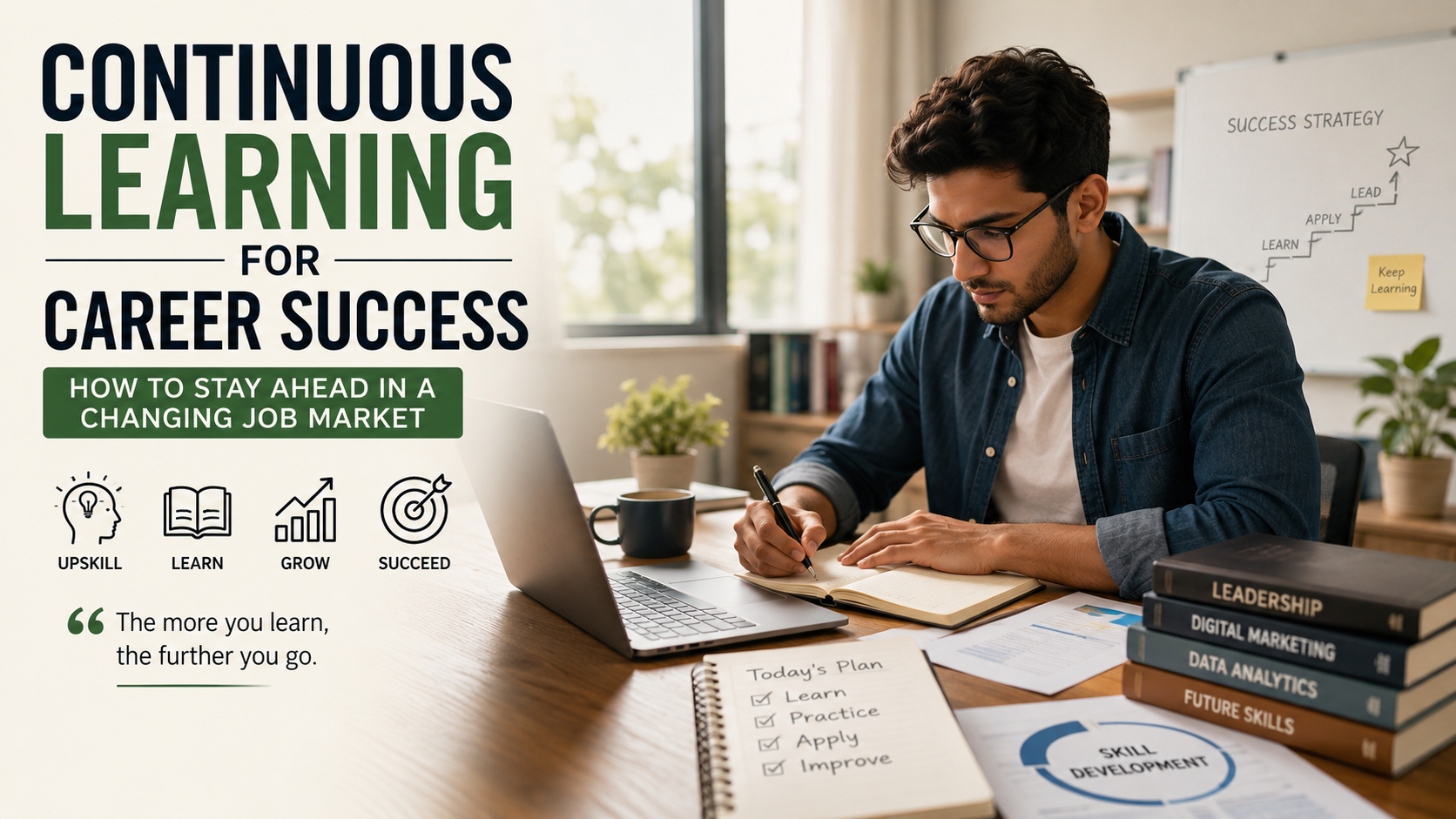
Continuous Learning for Career Success: How to Stay Ahead in a Changing Job Market
The modern professional landscape is moving faster than ever before. In fact, skills that guaranteed job security a decade ago are quickly becoming obsolete. This happens because technology, automation, and market dynamics evolve constantly. Consequently, to thrive in this environment, professionals must embrace continuous learning for career success as an active daily practice. According to research from the World Economic Forum, nearly half of all core work skills will change within a few years. Therefore, your current expertise is simply a starting point, not a final destination.
Adopting a mindset of lifelong education helps you adapt to sudden industry changes with confidence. As a result, it allows you to anticipate market needs, pivot into new roles, and remain valuable to employers. Throughout this guide, we will explore practical strategies to build a continuous learning routine. Furthermore, we will examine modern educational resources, time management solutions, and practical career growth tactics.

Why Up-Skilling Matters for Continuous Learning for Career Success
The traditional idea of relying on a single degree for a forty-year career is officially obsolete. Today, modern industries redefine their operational standards every few years. This rapid shift stems from software automation, digital integration, and changing economic priorities. Consequently, professionals who stop acquiring new knowledge quickly find their impact diminishing. Newer and more efficient methodologies replace familiar routines every day. Therefore, engaging in ongoing skill development ensures that your core expertise remains fresh, modern, and aligned with market needs.
Moreover, taking the personal initiative to learn new skills signals strong leadership potential. Employers actively seek self-motivated individuals who take genuine ownership of their professional growth. By consistently expanding your skillset, you build long-term career resilience against economic downturns. Similarly, you protect yourself against organizational restructures and technological displacement. Most importantly, this proactive habit opens up entirely new paths for personal advancement over time.
The Hidden Benefits of Ongoing Professional Development
Beyond simply maintaining job security, consistent skill development deeply transforms your approach to work. When you regularly challenge your mind with new concepts, you naturally build cognitive flexibility. As a result, complex problem-solving becomes far less intimidating. Furthermore, this continuous growth directly boosts your professional confidence. Consequently, you can volunteer for high-impact projects, pitch innovative ideas, and speak with authority during strategic team meetings.
-
Increased Adaptability: You easily pivot when project goals, company structures, or market demands suddenly shift.
-
Enhanced Confidence: Tackling unfamiliar software, frameworks, or leadership challenges becomes a manageable routine.
-
Higher Earning Potential: Acquiring specialized, high-demand skills allows you to negotiate better compensation packages.
-
Broader Career Options: You create natural pathways for internal promotions, lateral moves, or entirely new career paths.
Key Strategies for Building Lifelong Education Routines
Learning effectively requires a deliberate, structured plan rather than random consumption of content. Without a clear strategy, it is easy to drop online courses halfway through. Likewise, you might spend precious hours acquiring knowledge that does not align with your goals. Ultimately, a strategic approach ensures that every single hour you invest yields tangible returns for your career trajectory.
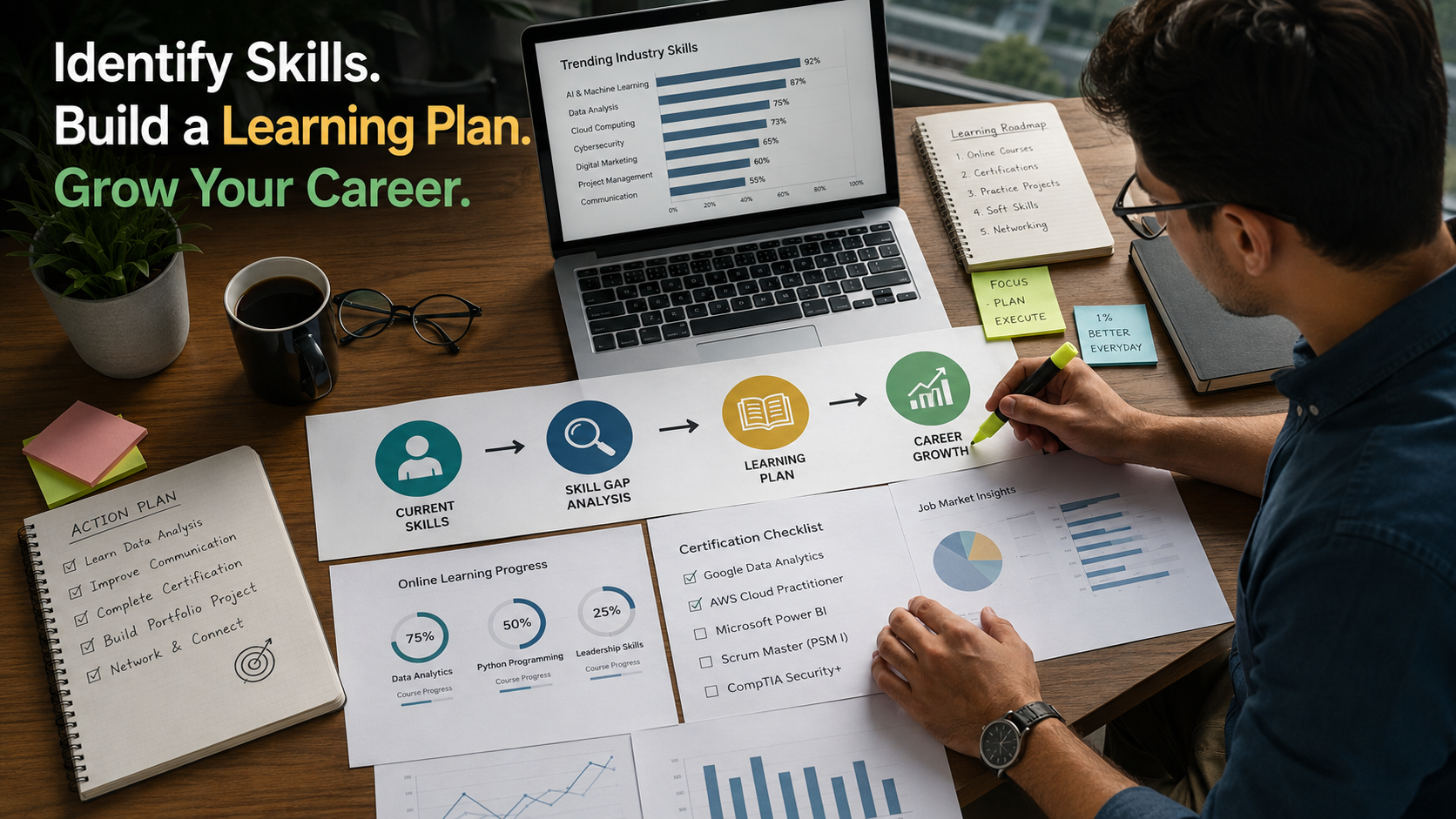
To begin building your roadmap, perform a comprehensive audit of your current capabilities. Next, compare your skills against current job market trends. Identify specific areas where your technical or soft skills lag behind current job listings. Once you pinpoint these precise skill gaps, establish concrete, realistic milestones. Consequently, these benchmarks will keep you accountable throughout your educational journey.
Skill Gap Analysis → Set Micro-Goals → Daily Execution → Practical Application
Setting Actionable Goals for Skill Building and Career Growth
To make consistent progress without feeling overwhelmed, break your large objectives into manageable weekly tasks. For example, instead of setting a vague goal, commit specifically to completing one technical module per week. Then, practice using that tool on an actual workplace workflow. Therefore, this structured approach prevents burnout and makes complex subjects feel manageable.
| Learning Phase | Focus Area | Expected Outcome |
|---|---|---|
| 1. Discovery | Identifying industry skill gaps | Targeted learning list |
| 2. Execution | Micro-learning & structured courses | Course completion & knowledge acquisition |
| 3. Application | Hands-on projects & team sharing | Practical mastery & portfolio growth |
Furthermore, apply what you learn immediately in a real-world setting to reinforce comprehension. Theoretical knowledge fades rapidly without practical execution. Therefore, try integrating a new productivity method into your daily schedule immediately. Alternatively, build a small side project or present your key takeaways to colleagues during team meetings to cement your understanding.
Leveraging Online Training and Career Upskilling Tools
Today’s professionals have unprecedented access to a vast ecosystem of high-quality educational content. However, the primary challenge is no longer finding information. Instead, you must filter through the noise to select reputable resources. Building an effective personal strategy involves combining formal instruction with informal learning habits. As a result, you maximize knowledge retention without exhausting your daily energy.
Online courses, industry certifications, podcasts, specialized newsletters, and professional networks all play crucial roles. Experimenting with different learning formats keeps the process fresh and engaging. Consequently, you can absorb valuable insights whether sitting at your desk or taking a quick break.
Choosing the Best Resources for Professional Advancement
Selecting the right combination of educational tools depends entirely on your learning style and schedule. Structured platforms are ideal for deep technical mastery. Conversely, shorter audio and written formats work best for tracking general industry trends. Combining these varied resources creates a well-rounded learning environment that adapts smoothly to your busy life.
-
Online Course Platforms: Use established platforms like Coursera, LinkedIn Learning, or Udemy for structured learning paths.
-
Industry Publications: Read recognized blogs, whitepapers, and research reports daily to spot emerging market trends.
-
Peer Mentorship: Join professional associations and networking groups to learn directly from experienced industry practitioners.
-
Interactive Workshops: Attend virtual webinars, bootcamps, or live hands-on sessions for intensive skill application.
Overcoming Barriers to Continuous Learning for Career Success
The single most common obstacle to ongoing growth is a perceived lack of time. Managing demanding projects, handling family responsibilities, and maintaining a personal life consumes energy. Thus, finding extra hours for study often feels completely impossible. However, highly successful professionals do not wait around for spare time to appear. Instead, they intentionally design their daily routines around their personal development priorities.
Another major hurdle is the natural discomfort of feeling like a beginner again. This is especially true for mid-career professionals accustomed to expertise. However, embracing a growth mindset requires accepting initial confusion as a normal step. Mistakes are simply healthy, essential parts of mastering any valuable new discipline or tool.
How Busy Professionals Can Master Career Development
Integrating learning into an already packed life requires strategic time management and realistic expectations. Instead of attempting massive study sessions, focus on smaller, highly manageable steps. Consequently, these micro-habits integrate smoothly into your existing daily routines and work obligations.
-
Practice Micro-Learning: Dedicate 15 to 20 focused minutes every morning to reading, watching a tutorial, or studying core concepts.
-
Utilize Downtime: Turn daily commutes, gym sessions, or household chores into productive time by listening to educational podcasts.
-
Protect Your Calendar: Schedule dedicated learning blocks directly onto your calendar just as you would for high-priority client meetings.
-
Prioritize Consistency: Daily micro-sessions build far stronger habits and better long-term retention than sporadic, weekend study binges.
Measuring the Business Value of Lifelong Learning
Acquiring new knowledge is personally satisfying. However, to advance your career, you must explicitly connect your learning efforts to tangible outcomes. Therefore, regularly evaluate how your newly acquired skills improve your everyday job performance. Assess whether they streamline team processes or generate quantifiable value for your organization. Ultimately, this ongoing reflection allows you to refine your strategy and focus on high-impact areas.
Document your growth meticulously as you progress through different topics and courses. Keep an updated repository of completed projects. Similarly, refresh your resume and online professional profiles with new credentials. Finally, actively bring concrete examples of your expanded capabilities to annual performance reviews. Articulating the business impact of your personal growth positions you for promotions, salary increases, and strategic leadership roles.
FAQ SECTION
Why is continuous learning for career success important in today’s job market?
Continuous learning for career success keeps your skill set strictly aligned with rapidly evolving industry standards and technological advancements. As automation and software redefine job requirements, remaining proactive ensures long-term employability. Furthermore, it unlocks higher earning potential and protects your career against unexpected industry disruptions. Building a habit of ongoing education demonstrates initiative, adaptability, and leadership to current and future employers. Consequently, professionals who invest in expanding their knowledge stay far ahead of industry trends. As a result, they make better strategic decisions, position themselves as invaluable assets within their organizations, and achieve steady long-term advancement.
How can I make time for continuous learning for career success while working full-time?
Making time for learning alongside a demanding full-time job requires breaking your educational goals into small, manageable actions through micro-learning. By dedicating just 15 to 20 minutes each morning to reading an industry publication or completing a course module, you accumulate significant knowledge over time. Furthermore, you can optimize daily downtime by listening to educational podcasts during commutes, workouts, or chores. Treat your study time as non-negotiable by scheduling explicit learning blocks on your daily calendar. Remember that consistent daily micro-sessions yield far better retention and long-term results than sporadic study marathons.
What are the best ways to track my skill building and career growth progress?
Tracking your learning progress effectively involves combining clear goal setting with practical, real-world application. Begin by defining specific, measurable objectives, such as completing a technical certification or mastering a specific software tool within a set timeframe. Next, document your journey by building a portfolio of completed projects, updating your resume, and refreshing your social profiles with new credentials. Furthermore, apply your knowledge directly to workplace tasks or personal side projects. Successful practical implementation is the ultimate measure of mastery. Finally, regularly reviewing your progress against your career goals ensures your learning efforts remain targeted and impactful.
Is formal education required for continuous professional development?
Formal higher education is certainly beneficial, but it is by no means required for effective professional upskilling in today’s fast-paced job market. While traditional university degrees and accredited institutional certifications carry weight, self-directed learning offers exceptional practical value. Specifically, you can leverage online platforms, specialized bootcamps, technical workshops, and hands-on personal projects. Many modern industries prioritize demonstrated skills, practical portfolios, and problem-solving abilities over traditional academic credentials. Therefore, engaging in continuous self-study, seeking peer mentorship, and producing tangible work samples often serves as the fastest, most cost-effective path to mastering modern skills.
How do I choose which new skills to learn for maximum career growth?
Choosing which skills to acquire starts with a clear assessment of your current field and future career ambitions. Begin by reviewing job postings for roles above your current position to spot recurring software requirements, qualifications, and core competencies. Next, follow industry publications, observe technological shifts, and gather direct performance feedback from managers to identify critical knowledge gaps. Balance your learning plan by combining immediate technical skills needed for your current role with strategic soft skills like leadership, communication, and project management. Ultimately, aligning your educational choices with verified market demands ensures that every hour spent learning delivers real, long-term returns.
CONCLUSION
Navigating today’s fast-changing job market requires a proactive mindset focused on constant development. Treating education as a lifelong commitment rather than a temporary milestone equips you with resilience, adaptability, and technical authority. Throughout this guide, we explored how self-auditing, structured micro-learning, modern platforms, and practical application lay the groundwork for long-term growth.
Ultimately, continuous learning for career success is a personal strategy that yields compounding returns over time. Every new tool you master and every industry trend you understand strengthens your position as an indispensable professional. If you’re looking for additional strategies to accelerate your professional growth, explore this guide on career success and hustling towards a better future. Do not wait for your current employer to direct your development. Take complete control of your journey today by identifying one critical skill gap, scheduling a quick daily study block, and taking your first concrete step toward lasting professional achievement.