
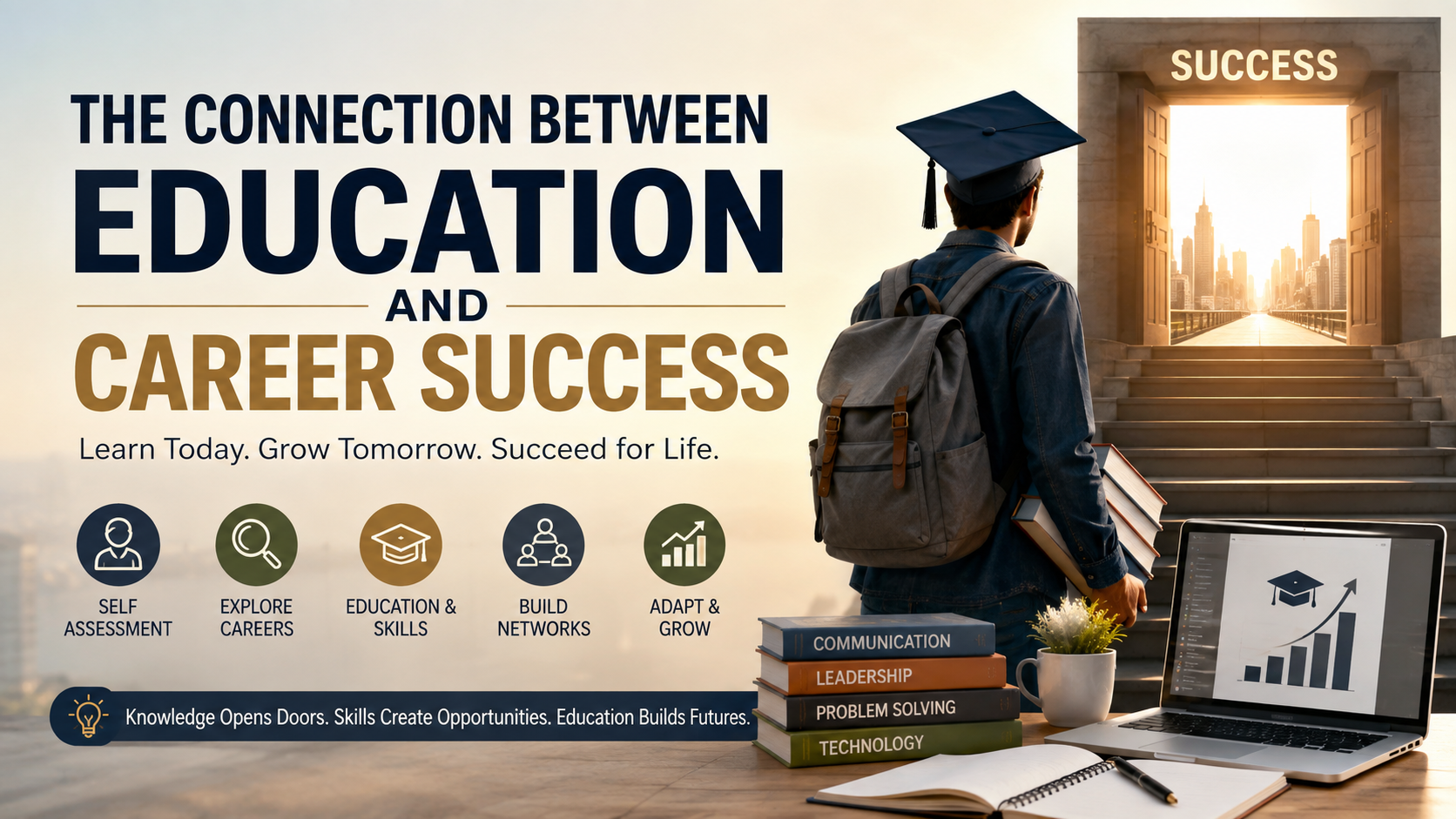
The Connection Between Education and Career Success
Understanding the connection between education and career success is vital for anyone hoping to build a stable and fulfilling professional life. From developing core competencies to unlocking specialized job markets, learning shapes our long-term trajectory. According to the U.S. Bureau of Labor Statistics, higher levels of educational attainment consistently correlate with lower unemployment rates and higher lifetime earnings. This article explores how education and career success intertwine by answering the questions you care about most. We will examine core career guidance steps, the necessity of degrees, alternative paths for Gen Z, and the impact of being uneducated. Let us dive into the details to help you navigate your professional future.


What Are the 5 Points for Career Guidance?
Navigating today’s professional landscape requires a structured approach to career planning and skill development. Career guidance helps individuals connect their strengths, interests, and goals with realistic opportunities in the job market. It can also reduce uncertainty when choosing education, training, or a career path.
The five key points are:
- Assess yourself: Identify your skills, interests, values, strengths, and areas for improvement.
- Research career options: Explore industries, occupations, salary expectations, job demand, and future opportunities.
- Identify education requirements: Determine which degrees, certifications, technical skills, or practical experience employers expect.
- Build a professional network: Connect with mentors, employers, teachers, peers, and professionals in your target field.
- Review and adapt: Track your progress and adjust your career plan as your interests, skills, or market conditions change.
Whether you are entering the workforce or planning a career change, these steps provide a practical framework. They help you make informed decisions instead of relying on guesswork.
Core Pillars of Professional Direction
Effective career guidance begins with self-awareness and continues through research, preparation, networking, and regular evaluation. Start by assessing your existing skills and identifying the subjects or activities that genuinely interest you. This creates a clearer foundation for choosing suitable career options.
Next, research industries that match your abilities and long-term goals. Look at current demand, required qualifications, earning potential, and opportunities for advancement. Avoid choosing a career based only on salary or popularity.
Once you identify promising options, determine the education and training required. Some careers need degrees, while others value certifications, portfolios, apprenticeships, or practical experience.
Networking also plays an important role. Conversations with professionals can reveal workplace realities that online research may miss. Finally, review your progress regularly. Career planning is not a one-time decision. Your goals and the job market can change, so your plan should remain flexible.
Why Is Education Key to Success?
Education provides a foundation for developing knowledge, critical thinking, communication, and technical skills. These abilities can improve your chances of finding suitable employment and progressing within a chosen field. However, education alone does not guarantee career success. Its value depends on how effectively you apply what you learn.
A strong educational background can help you understand complex problems, evaluate information, and learn new technologies. These abilities become increasingly important as industries change. Employers may also use qualifications as an initial signal of knowledge and commitment, especially for careers with specific educational requirements.
Education can also create access to professional networks, internships, mentors, and further training. These opportunities can influence career development beyond the classroom.
At the same time, practical experience matters. Communication, teamwork, adaptability, and problem-solving often develop through real-world situations. The strongest approach combines education with practical skills and continuous learning. This combination helps professionals remain competitive while adapting to changing workplace expectations.
The Role of Knowledge in Adaptability
Continuous learning helps professionals respond when industries, technologies, and job requirements change. A qualification may open the first door, but maintaining relevant skills can determine how long you remain competitive. For people developing technical skills, how to become a web developer in 2026 offers one example of how focused learning can support a changing career path.
Automation and artificial intelligence are already changing many workplace tasks. Workers may therefore need to update their technical knowledge or develop complementary human skills. Learning does not always require another full degree. Short courses, professional certifications, workshops, online programs, and workplace training can provide targeted development.
Adaptability also involves learning how to solve unfamiliar problems. Professionals who can understand new tools and apply existing knowledge often adjust more easily to changing responsibilities.
Lifelong learning should therefore focus on useful skills rather than collecting qualifications without purpose. Before starting a course, consider whether it supports your career goals or addresses a genuine skill gap.
A flexible learning approach allows you to respond to new opportunities without constantly starting over. It also makes career planning more practical because your skills can evolve alongside your industry.
Why Is Education Important? 5 Points
Education can influence both professional opportunities and personal development. Its benefits extend beyond memorizing information or completing examinations. A useful education helps people develop knowledge and skills that can be applied to work, further study, and everyday decisions. For a broader look at these benefits, why education is important in our life provides additional context.
Five important benefits include:
- Career skills: Education can provide technical and professional knowledge required for specific occupations.
- Critical thinking: Learning encourages people to analyze information, evaluate evidence, and solve problems.
- Career opportunities: Certain professions require formal qualifications before candidates can enter the field.
- Earning potential: Higher levels of education are often associated with higher average earnings, although results vary by field and experience.
- Personal development: Education can strengthen confidence, communication, discipline, and independent learning.
These benefits do not mean that every person needs the same educational path. Career outcomes depend on many factors, including experience, skills, location, industry, networking, and economic conditions.
The most valuable education is therefore relevant, purposeful, and connected to your goals.
Key Benefits of Formal Learning
Structured learning provides a clear environment for developing knowledge and professional abilities. It can help learners progress from basic concepts to more advanced skills through planned lessons, assignments, feedback, and assessment. For learners considering digital alternatives, the pros and cons of online learning can help clarify whether this approach fits their goals.
Formal education can also provide credentials. In fields such as medicine, engineering, teaching, and law, recognized qualifications are often essential for professional practice. In other industries, employers may place greater emphasis on portfolios, certifications, experience, or demonstrated skills.
Another benefit is exposure to different perspectives. Classrooms and training programs bring learners together with teachers and peers. These relationships can develop communication skills and create useful professional connections.
Education also encourages critical thinking and problem-solving. Instead of simply accepting information, learners can practice evaluating evidence and forming reasoned conclusions.
However, formal learning works best when combined with practical application. A qualification has limited value if you cannot use the knowledge effectively. Projects, internships, volunteering, freelance work, and workplace experience can help turn academic knowledge into useful professional capability.
Is Education Necessary for Success?
No. Formal education is not universally necessary for success, but it remains essential for many careers and can provide a significant advantage in others. The right path depends on the profession, individual goals, financial situation, and skills required.
Some careers require specific degrees, licenses, or regulated qualifications. In these fields, skipping formal education may prevent you from entering the profession altogether. Other industries, including parts of technology, design, sales, and entrepreneurship, may place greater weight on demonstrated ability and experience.
Successful professionals without traditional degrees do exist. However, their stories should not be treated as proof that education has little value. Many developed valuable skills through alternative forms of learning, extensive experience, networking, or business opportunities.
Practical experience also matters. Employers often evaluate communication, problem-solving, reliability, teamwork, and technical ability alongside qualifications.
The better question is not whether education is necessary for everyone. Ask which type of education or training your chosen career actually requires. That approach prevents both unnecessary credentials and costly gaps in preparation.
Alternative Paths Versus Traditional Degrees
Traditional university degrees remain valuable, especially when a profession requires a recognized academic qualification. They can also provide structured learning, professional networks, internships, and access to specialized knowledge.
However, alternative pathways can make sense for careers where skills can be demonstrated directly. Coding bootcamps, professional certifications, apprenticeships, vocational programs, online courses, and portfolio-based learning can provide focused preparation. Micro-credentials as an alternative to traditional degrees are another option worth evaluating when choosing a career-focused learning path.
These options are not automatically better or faster. Their value depends on the quality of the program, industry recognition, employer expectations, and the learner’s ability to build practical skills. A short course may teach a useful tool, but it may not replace the broader knowledge required for a degree-based profession.
A practical career strategy often combines different forms of learning. You might complete a certification, build projects, gain work experience, and later pursue a degree if it becomes necessary.
Before choosing an alternative path, research actual job postings in your target field. Look for recurring requirements. Let employer expectations guide your education choices, and consider practical certification options such as Google certifications for beginners rather than assuming one pathway works for every career.
Why Does Gen Z Not Go to College?
It is too broad to say that Gen Z simply does not want college. Many young people still pursue university degrees, while others are questioning whether a traditional four-year program offers enough value for its cost.
Tuition costs and student debt are major concerns. Students may worry about spending years in education while entering the workforce with substantial financial obligations. Some also question whether their chosen degree will lead to relevant employment after graduation.
The growth of remote work, freelancing, online businesses, creator careers, and digital learning has expanded the number of visible alternatives. Platforms and online resources also make it easier to learn specific skills outside traditional classrooms.
However, these alternatives have limitations. Not every online course leads to employment, and self-learning requires strong discipline and practical application. Some careers still require degrees or professional licenses.
Gen Z’s education choices are therefore better understood as a shift toward evaluating return on investment, rather than a rejection of education itself. Many young adults want flexible, affordable, and career-relevant learning options.
The Financial Burden of Tuition
The cost of higher education can strongly influence how young adults approach career planning. Tuition is only one expense. Students may also face accommodation, transportation, books, technology, and other living costs.
Student debt can add another concern. Borrowing money for education may be reasonable when a qualification is required for a stable career. However, the decision becomes more complicated when tuition is high and employment outcomes are uncertain.
Some learners therefore consider shorter programs, vocational training, professional certifications, apprenticeships, or direct employment. These options can reduce upfront costs while providing practical experience. They are not risk-free, however. A low-cost credential has limited value if employers do not recognize it, which is why comparing internships versus full-time jobs can also be useful when evaluating early career options.
Before choosing a pathway, compare total education costs, expected career opportunities, salary potential, and employer requirements. Research actual job postings rather than relying only on promotional claims from educational providers.
The goal should not be avoiding college at any cost. It should be choosing the most suitable learning investment for your intended career.
What Happens If a Person Is Not Educated?
Limited access to quality education can create serious barriers to employment and economic mobility. However, the term “uneducated” can be misleading because people may have valuable practical knowledge, skills, and life experience without completing formal schooling.
Basic education provides important literacy, numeracy, communication, and problem-solving skills. Without these foundations, people may face greater difficulty completing applications, understanding contracts, managing finances, or accessing certain jobs.
Limited education can also reduce the number of available career options. Some employers require specific qualifications, while others expect basic digital and communication skills. Workers with fewer formal qualifications may therefore have less flexibility when industries change.
These challenges can contribute to lower earnings and greater economic vulnerability. However, educational disadvantages are not permanent. Adult education, vocational training, apprenticeships, literacy programs, and skill-development courses can create new opportunities.
Access also matters. Poverty, geography, family responsibilities, disability, and limited resources can affect a person’s ability to pursue education. Addressing these barriers requires more than telling individuals to study harder.
Education is an important tool for improving opportunity, but broader social and economic conditions also influence outcomes.
Economic Vulnerability and Limited Mobility
Limited formal education can increase economic vulnerability, particularly when workers lack skills demanded by changing industries. People may have fewer options when a job disappears or an employer changes its requirements.
Some workers without recognized qualifications enter occupations with lower wages or fewer advancement opportunities. These roles can still require valuable skills and hard work. The problem is often limited access to pathways that lead toward higher-paying or more secure positions.
Skill development can improve mobility. Vocational training, apprenticeships, digital literacy programs, professional certifications, and adult education can help workers build capabilities that employers value.
However, education should not be treated as a guaranteed escape from poverty. Employment opportunities, local economies, discrimination, health, family responsibilities, and access to transportation can also influence career outcomes.
A practical solution combines education with employable skills and real-world experience. Learners should identify skills that are actually demanded in their target labor market.
Career guidance can help here by connecting training choices with realistic employment opportunities. This approach is more useful than pursuing education without considering where the resulting skills can be applied.
The Importance of Education for Your Future Career
Education can play an important role in building a sustainable career, but its value depends on relevance and application. Employers often look for a combination of knowledge, technical ability, communication, problem-solving, and practical experience.
A strong educational foundation can help you qualify for entry-level roles and develop the knowledge needed for more advanced responsibilities. Further learning can then support specialization, professional certifications, leadership opportunities, or career changes.
Education also helps professionals respond to economic and technological changes. As tools and job requirements evolve, people who continue learning may find it easier to update their capabilities.
However, career development should not become a race to collect qualifications. More degrees do not automatically produce better outcomes. The right learning investment depends on your industry, career goals, current skills, and employer expectations.
A sustainable approach combines formal education, practical experience, networking, and continuous skill development. Review your career goals regularly and identify the next skill that will create a meaningful opportunity.
This approach keeps education connected to real professional progress rather than treating learning as an end in itself.
Long-Term Career Compound Growth
Career development can build gradually when education, experience, and skills reinforce one another. An initial qualification may help you enter a field. Practical experience can then strengthen your competence and credibility.
Over time, additional training can support specialization or advancement. A professional certification may qualify you for new responsibilities, while advanced education may open opportunities in fields with higher qualification requirements.
However, career growth is not automatically linear. Industries change, employers restructure, and personal priorities evolve. Some skills may become less valuable while others gain importance. Regular career reviews can help you recognize these shifts before they create major problems.
Think of education as one part of a broader development cycle:
- Learn relevant knowledge.
- Apply it through projects or work.
- Build professional relationships.
- Measure your progress.
- Adapt when your goals or market conditions change.
This approach creates sustainable career growth without assuming that one degree or certification will guarantee lifelong success. The strongest long-term strategy is continuous, purposeful development linked to real opportunities.
Frequently Asked Questions
How Does Higher Education Impact Lifetime Earnings?
The Connection Between Education and Career Success is often reflected in long-term earning potential. Higher education can qualify people for specialized professions and roles with higher entry requirements. Graduates may also gain access to broader career opportunities and advancement paths. However, earnings vary by industry, experience, location, and skills. Education can provide an advantage, but practical experience and continuous learning also influence lifetime financial outcomes.
Can Someone Be Successful Without a College Degree?
Yes, people can build successful careers without a traditional college degree. The Connection Between Education and Career Success does not depend on one educational pathway. Entrepreneurship, skilled trades, certifications, apprenticeships, and self-directed learning can all lead to meaningful opportunities. Success often requires practical experience, networking, adaptability, and strong skills. However, some professions still require formal degrees, so career requirements should guide your education decisions.
What Role Do Soft Skills Play Alongside Education?
Soft skills strengthen the Connection Between Education and Career Success by helping professionals apply their knowledge effectively. Communication, teamwork, empathy, problem-solving, and leadership can influence workplace performance and professional relationships. Education may provide technical knowledge, but soft skills help people collaborate, handle challenges, and communicate with colleagues or clients. Employers often value candidates who combine relevant qualifications with strong interpersonal and professional abilities.
How Is Technology Changing Modern Career Education?
Technology is changing the Connection Between Education and Career Success by making learning more accessible and flexible. Online courses, digital certifications, virtual training, and educational platforms allow people to develop skills outside traditional classrooms. Professionals can learn new tools while continuing to work. Technology also supports faster access to industry knowledge. However, learners should choose credible programs and focus on skills that employers actually value.
Conclusion
The Connection Between Education and Career Success remains important in a rapidly changing professional landscape. Education can build knowledge, develop useful skills, and create access to career opportunities. However, qualifications alone do not guarantee success. Practical experience, networking, adaptability, and continuous learning also shape professional growth.
Whether you choose university, vocational training, certifications, or self-directed learning, focus on education that supports your goals. Start by assessing your current skills and identifying realistic career opportunities. Then choose learning opportunities that address genuine skill gaps.
The connection between education and career success becomes stronger when knowledge is applied through real-world experience. Lifelong learning can help you respond to changing technologies, workplace expectations, and career opportunities. By combining relevant education with practical skills, you can build a more adaptable and sustainable professional future.