
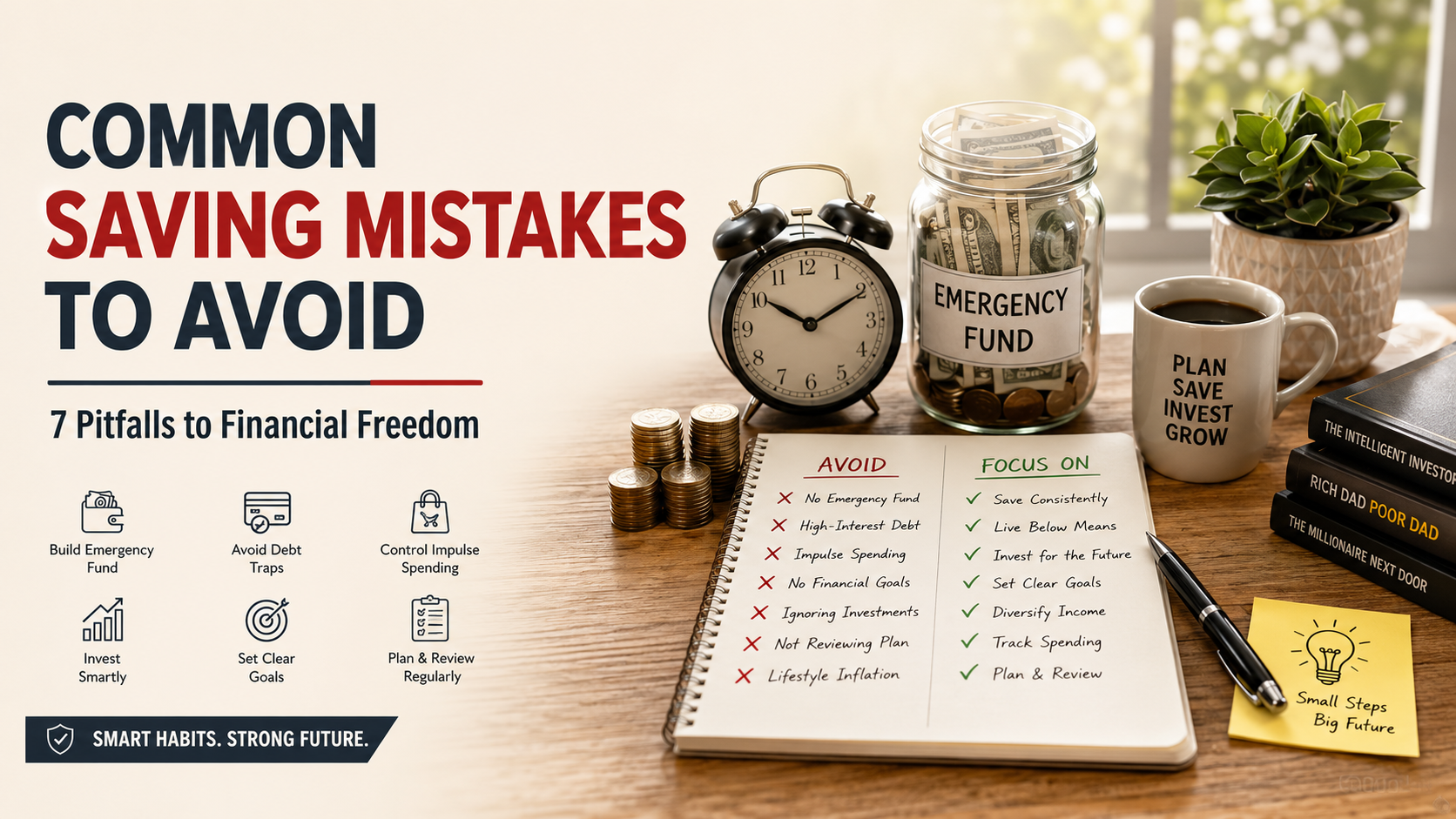
Common Saving Mistakes to Avoid for Financial Freedom

Links

Common Saving Mistakes to Avoid: 7 Pitfalls to Financial Freedom

Building a robust financial foundation is essential for a stress-free life, yet many people struggle to grow their wealth effectively because they do not know which common saving mistakes to avoid. Even if you earn a substantial income, poor money management habits can severely limit your long-term economic security. Understanding the nuances of personal finance helps you protect your hard-earned cash from inflation and unexpected expenses.

If you want to achieve true independence, you must learn which common saving mistakes to avoid at all costs. According to the Consumer Financial Protection Bureau (CFPB), establishing a dedicated, consistent savings habit is a critical component of lifelong economic well-being and stability. However, simply placing cash in a standard bank account is no longer enough to build real wealth.

You need a comprehensive, proactive strategy that maximizes your returns and minimizes unnecessary losses. Without a definitive plan, you risk falling behind your retirement targets and struggling during unforeseen emergencies. By recognizing these widespread financial errors, you can immediately shift your approach, optimize your budgeting techniques, and put your money to work for your future. Let us explore the fundamental rules of effective wealth generation.

common saving mistakes to avoid

What Are the Biggest Savings Mistakes?

Many people struggle to save money because they start without a clear financial goal. Saving becomes much easier when you know exactly what you are working toward, whether it is an emergency fund, a home down payment, or retirement. Without a specific target, it is tempting to dip into your savings for impulse purchases or lifestyle upgrades that provide only short-term satisfaction.

Another common mistake is keeping all your emergency savings in a low-interest checking account. Over time, inflation reduces your money’s purchasing power, meaning your savings lose value even if the balance stays the same. A high-yield savings account is often a better choice because it provides easy access while earning more interest.

Many people also overlook their monthly spending habits. Small subscription fees, daily coffee purchases, and forgotten recurring charges can quietly consume hundreds of dollars each year. Reviewing your expenses regularly helps you identify unnecessary costs before they become long-term financial drains.

Avoiding these common savings mistakes creates a stronger financial foundation. Setting measurable goals, choosing the right savings account, and tracking your spending consistently will help you build a reliable financial safety net for unexpected expenses and long-term financial success.

Failing to Automate Your Monthly Savings Transfers

One of the easiest ways to build savings is through automation. Scheduling an automatic transfer on payday ensures you save before you have the opportunity to spend. This simple strategy removes emotion from the process and keeps your financial goals on track.

Automatic savings also create consistency. Even small monthly contributions add up over time through regular deposits and compound growth. Because the transfers happen automatically, you rely less on motivation or willpower.

Treat your savings transfer like any other recurring bill. Prioritizing your future first makes it easier to build wealth steadily while reducing the temptation to spend money on unnecessary purchases.


What Is the 7 7 7 Rule for Money?

The 7 7 7 rule for money is a simple decision-making strategy that encourages thoughtful spending instead of impulse buying. Although different versions exist, the most common approach asks you to consider how a purchase will affect your finances over seven days, seven months, and seven years. Looking at expenses through multiple time horizons helps separate temporary wants from meaningful long-term needs.

This pause gives you time to evaluate whether a purchase truly adds value to your life or simply satisfies a short-lived desire. Many impulse purchases lose their appeal after a few days, making it easier to avoid unnecessary spending.

The money you choose not to spend can instead support more important financial goals. Redirecting those funds toward an emergency fund, retirement savings, debt repayment, or a high-yield savings account strengthens your long-term financial position. Consistently applying the 7 7 7 rule encourages mindful spending habits that improve both financial discipline and overall savings.

Applying the Time Horizon Strategy to Major Purchases

Before making a major purchase, pause and evaluate its value across different timeframes. Ask yourself whether the item will still matter in seven days, seven months, or seven years. If the answer is no, reconsider the purchase.

This simple habit reduces buyer’s remorse and prevents emotional spending. Instead of buying something with little lasting value, transfer that money directly into your savings account or investment fund.

Using a time horizon strategy consistently helps you make smarter financial decisions while keeping your long-term goals on track.


How to Avoid Common Financial Mistakes

Avoiding common financial mistakes starts with creating a realistic monthly budget and tracking every expense. Knowing exactly where your money goes helps you identify unnecessary spending before it becomes a habit. Even small recurring purchases can have a significant impact on your long-term financial health.

Another effective strategy is to automate your savings. Set up automatic transfers that move money into a separate savings account as soon as you receive your paycheck. Paying yourself first reduces the temptation to spend money on impulse purchases and helps you build wealth consistently.

Finally, establish an emergency fund that covers three to six months of living expenses. This financial cushion helps you handle unexpected events, such as medical bills or job loss, without relying on high-interest credit cards or personal loans. Developing these habits creates a stronger financial foundation and supports long-term financial stability.

Automating Your Savings for Long-Term Success

Automating your savings is one of the simplest ways to improve your financial future. Instead of relying on willpower each month, let technology handle the process automatically. Scheduling transfers on payday ensures saving becomes a regular habit rather than an occasional decision.

Direct deposits into a dedicated savings account help you live comfortably on the income that remains. Over time, this approach reduces overspending and limits the effects of lifestyle inflation. As your income grows, you can increase your automatic contributions without changing your daily routine.

Automation also keeps your financial goals moving forward during busy periods. Whether you’re saving for a home, vacation, education, or retirement, consistent contributions create steady progress. Even modest deposits can grow significantly over time through discipline and consistency.


What Are the Five Biggest Financial Mistakes?

Many people struggle financially because they repeat the same avoidable mistakes. Recognizing these habits early allows you to make better decisions and improve your long-term financial health.

The five biggest financial mistakes include:

  • Not following a monthly budget
  • Failing to build an emergency fund
  • Carrying high-interest credit card debt
  • Allowing lifestyle inflation to consume income increases
  • Delaying retirement planning and investing

Each of these mistakes can reduce your ability to save and build wealth. Poor budgeting limits financial awareness, while credit card debt adds expensive interest charges. Ignoring retirement planning also means losing valuable years of compound growth. Addressing these issues early improves cash flow, strengthens financial security, and makes it easier to reach future financial goals.

The Hidden Danger of Lifestyle Inflation

Lifestyle inflation happens when your spending rises every time your income increases. Instead of saving or investing extra earnings, you gradually spend more on housing, vehicles, dining, entertainment, or luxury purchases.

While occasional upgrades are reasonable, constantly matching spending to income leaves little room for saving. Many people earn more over time but still struggle financially because their expenses grow at the same pace.

A practical solution is to direct part of every raise into savings or investments before adjusting your lifestyle. This strategy lets you enjoy higher earnings while steadily building long-term wealth. Small decisions made consistently often produce better financial results than dramatic changes.


What Should You Avoid When Saving Money?

Understanding the common saving mistakes to avoid is just as important as developing good financial habits. Saving money is about more than setting cash aside. It also requires avoiding decisions that can slow your financial progress over time. One of the most common saving mistakes to avoid is keeping all your money in a standard checking account that earns little or no interest. As inflation rises, your purchasing power gradually declines.

Another of the common saving mistakes to avoid is withdrawing money from your savings for non-essential purchases such as luxury items, entertainment, or spontaneous vacations. Treat your savings as money reserved for genuine emergencies or carefully planned financial goals. Staying disciplined helps your savings grow consistently.

Finally, one of the most costly common saving mistakes to avoid is chasing unrealistic investment opportunities that promise guaranteed high returns. These schemes often carry significant risk and can lead to major financial losses. By recognizing these common saving mistakes to avoid and practicing consistent saving, careful investing, and patience, you can build stronger long-term financial security.

Choosing the Right Accounts for Growth

Selecting the right savings account helps your money work harder without increasing risk. High-yield savings accounts generally offer much better interest rates than traditional checking accounts, making them a suitable place for emergency funds and short-term savings.

Although inflation still affects purchasing power, earning competitive interest helps reduce its impact. Compare interest rates, account fees, withdrawal limits, and accessibility before opening an account. Choosing the right financial institution can improve your overall savings strategy.

For longer-term goals, consider combining a high-yield savings account with diversified investment options that match your risk tolerance and financial objectives. Using the right mix of accounts allows your savings to remain accessible while supporting steady financial growth over time.


What Are 7 Ways to Save Money?

Saving money does not require a high income. It requires consistent habits and smart financial decisions. Small changes made regularly can have a significant impact over time. By reducing unnecessary spending and prioritizing savings, you can steadily build financial security without feeling deprived.

Here are seven practical ways to save money:

  • Review recurring subscriptions and cancel services you rarely use.
  • Plan meals and shop with a grocery list to reduce food waste and restaurant spending.
  • Use the 24-hour rule before making non-essential purchases to prevent impulse buying.
  • Negotiate recurring bills, including insurance, internet, and utility services, each year.
  • Reduce energy consumption by turning off unused electronics and using energy-efficient appliances.
  • Deposit unexpected income, such as tax refunds or work bonuses, directly into savings.
  • Handle simple DIY home and vehicle maintenance when it is safe and practical instead of paying for minor repairs.

These strategies become even more effective when practiced consistently. Over time, small savings accumulate into meaningful financial progress and help you achieve both short-term and long-term financial goals.

Implementing Automated Budgeting and Expense Tracking Tools

Budgeting apps make managing your money easier by automatically tracking income and expenses. They categorize purchases, identify spending patterns, and highlight areas where you can save more.

Regularly reviewing your financial data helps you catch unnecessary expenses before they become recurring habits. Many apps also allow you to set savings goals and monitor your progress in real time.

Combining automated budgeting with automatic savings transfers creates a simple system that supports consistent financial growth while reducing the effort required to manage your money.


Frequently Asked Questions

What is the ideal amount to keep in an emergency fund?

Most financial experts recommend saving three to six months of essential living expenses. This emergency fund provides financial protection during job loss, medical emergencies, or unexpected home and vehicle repairs.

Keep these funds in a high-yield savings account where the money remains accessible while earning competitive interest. Review your emergency fund regularly and adjust it as your monthly expenses change.

How can I stop spending money impulsively?

Reducing impulse spending starts by creating small barriers before making purchases. Remove saved payment information from shopping websites, avoid one-click checkout, and follow a mandatory waiting period before buying non-essential items.

Shopping with a list and setting spending limits also helps reduce unnecessary purchases. If emotional spending is a challenge, find healthier alternatives for managing stress, such as exercise, reading, or spending time with friends.

Is it better to save money or pay off debt first?

For most people, the best approach is to build a small emergency fund first, then focus on paying off high-interest debt, especially credit card balances. This strategy protects you from unexpected expenses while reducing costly interest payments.

After eliminating expensive debt, increase your emergency savings to cover three to six months of living expenses. The right balance depends on your interest rates, financial goals, and overall financial situation.

How often should I review my monthly budget?

Review your budget at least once each month. Monthly check-ins allow you to compare your actual spending with your planned budget, identify unnecessary expenses, and adjust savings goals as needed.

Regular reviews also help you catch subscription price increases, monitor progress toward financial goals, and maintain healthy financial habits. Consistent budgeting is one of the most effective ways to achieve long-term financial stability.


Conclusion: Avoiding Common Saving Mistakes to Avoid for Good

Securing your ultimate financial future is a completely attainable goal that remains entirely within your personal, day-to-day control. Building massive, lasting wealth absolutely does not require a highly lucrative executive salary or a sudden, incredibly lucky lottery win. Instead, it relies heavily on unwavering consistency, intense daily discipline, and knowing exactly which common saving mistakes to avoid. By properly identifying and proactively correcting these extremely frequent money mistakes to avoid today, you immediately set yourself up for lifelong economic success.

We comprehensively explored exactly why establishing a robust, fully funded emergency reserve actively protects you from life’s unexpected, expensive turns. We also deeply discussed the absolute vital importance of setting clear, highly actionable monetary goals to keep your daily motivation consistently elevated. You must always remember to heavily leverage the significantly better interest rates of modern online high-yield banking accounts. Furthermore, you must never allow toxic, high-interest consumer debt to silently destroy your hard-earned financial progress over the coming decades.

Most importantly, you must confidently start right now, regardless of how incredibly small your initial monthly financial contributions might currently seem. Time and the mathematical magic of compound interest are unequivocally your absolute greatest allies in this lifelong wealth-building journey. Take highly intentional, immediate action today by deeply reviewing your current digital bank statements and your household monthly budget. Automate your financial systems comprehensively so you never have to actively think about transferring your money ever again.


Leave a Reply

Your email address will not be published. Required fields are marked *