
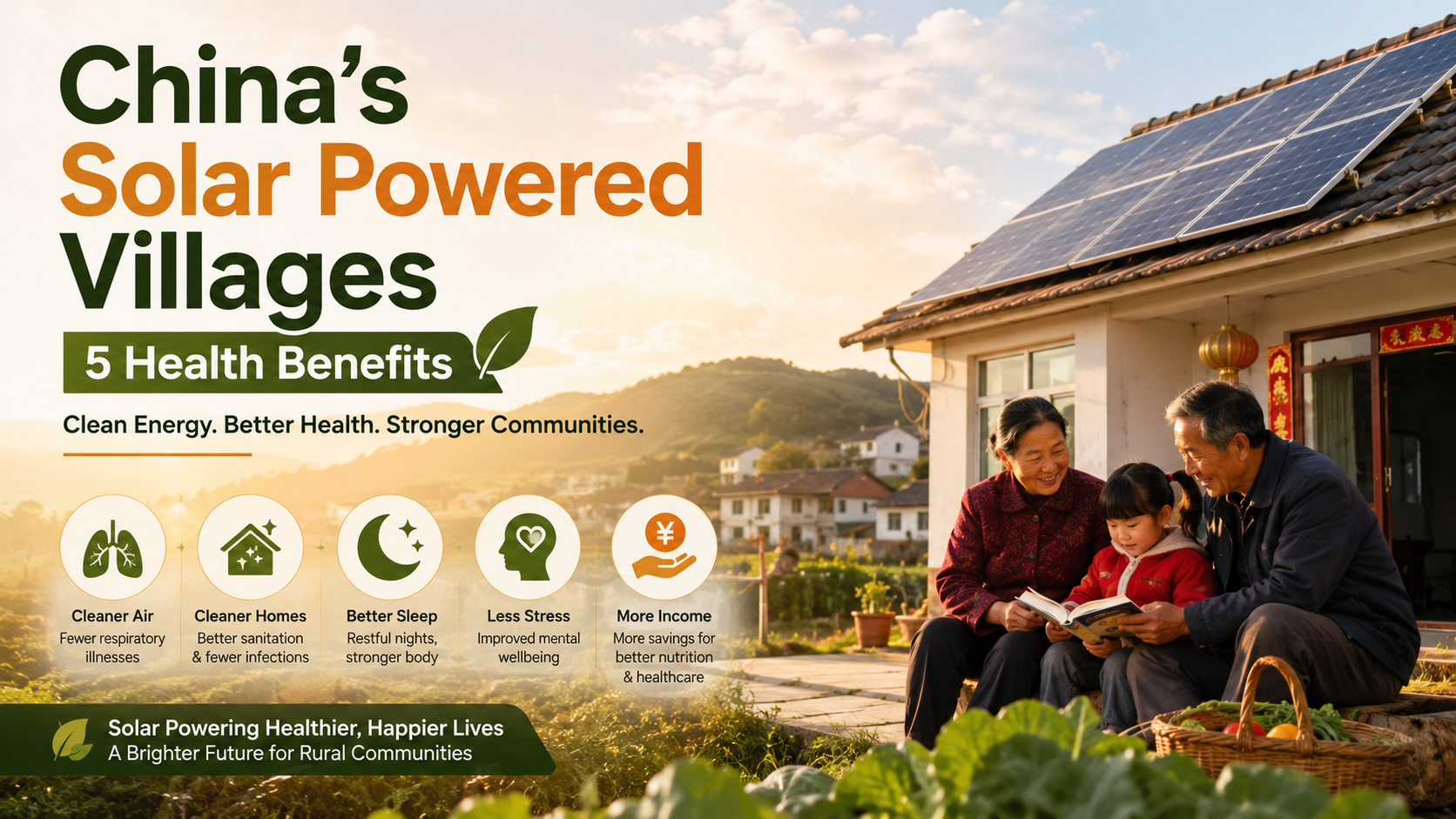
China’s Solar Powered Villages
Around the world, rural communities often rely on traditional fuels like coal, crop waste, and wood for heating. Consequently, this heavy reliance creates severe indoor air pollution. Furthermore, it drastically impacts daily wellbeing across multiple generations. However, a massive shift toward targeted renewable energy investments is rapidly changing this narrative. Today, the incredible health benefits of China’s solar powered villages are gaining global attention.
Specifically, this ambitious transition goes far beyond simple environmental conservation. According to the World Health Organization, reducing household air pollution directly prevents millions of premature respiratory-related deaths annually. Therefore, replacing soot-belching indoor stoves with clean electricity is causing a true health revolution. Throughout this article, we will explore exactly how rooftop photovoltaic panels transform rural health outcomes.
First, you will discover how clean energy prevents chronic respiratory diseases. Next, we will examine how it vastly improves sleep quality and physical recovery. Moreover, we will discuss the mental health benefits of financial stability brought by green initiatives. Ultimately, let us explore the surprising ways renewable power actively heals rural communities today.

Does China Have Any Solar Farms?
China has the world’s largest and most advanced network of solar farms, stretching across deserts, mountains, and rural communities. The country has invested heavily in photovoltaic (PV) technology to reduce its dependence on coal and accelerate the transition to renewable energy. Today, China’s solar infrastructure includes massive utility-scale projects in remote western regions and millions of distributed rooftop systems across cities and villages. These projects are strategically located in areas with high solar radiation to maximize electricity generation. At the same time, modern transmission networks carry clean power to densely populated regions with greater energy demand. This rapid expansion has made China the global leader in solar energy generation, manufacturing, and installation. It also serves as a model for countries seeking to expand renewable energy while lowering carbon emissions and improving long-term energy security.
Massive Desert Installations and Distributed Arrays
China’s renewable energy strategy combines large-scale desert solar farms with distributed rooftop systems. Utility-scale installations occupy thousands of acres in regions such as Xinjiang, Qinghai, and Inner Mongolia, where sunlight is abundant and land is widely available.
Meanwhile, rooftop photovoltaic systems generate electricity close to where it is consumed. This balanced approach reduces transmission losses, improves grid reliability, and increases the country’s overall clean energy production.
Which village in India is solar powered?
Modhera, located in the Mehsana district of Gujarat, stands proudly as India’s first village to run completely on solar power 24 hours a day, 7 days a week. Famous for its historic Sun Temple, this settlement underwent a massive government-backed green transformation featuring ground-mounted solar plants and thousands of residential rooftop systems. Integrated battery energy storage systems store excess daylight power to ensure continuous nighttime electricity. Local residents now power home appliances like refrigerators and air conditioners at a fraction of their previous costs. Furthermore, families generate extra income by selling surplus electricity back to the main utility grid.
The Role of Battery Storage in Modhera
Continuous green power requires advanced battery storage technology to bridge the gap after sunset. Modhera utilizes a large-scale battery energy storage system that captures peak midday generation safely. This infrastructure guarantees uninterrupted electricity delivery, proving that rural communities can achieve total energy independence through smart micro-grid investments.
Which Villages Are Solar Powered?
Beyond South Asia, numerous rural communities worldwide have embraced clean micro-grids to achieve total energy self-sufficiency. In China, thousands of designated rural settlements have been integrated into poverty alleviation and photovoltaic upgrade programs. Villages across regions like Qinghai, Hebei, and Anhui feature expansive rooftop setups that convert idle residential space into clean power generators. Similarly, remote villages in parts of Sub-Saharan Africa and Europe utilize localized solar hubs to eliminate reliance on diesel generators. These localized setups empower agrarian populations by providing reliable electricity for crop irrigation, water purification, and lighting.
Government Initiatives Driving Rural Photovoltaics
State-backed financial incentives and targeted subsidies accelerate the adoption of solar micro-grids in developing rural sectors. Governments partner with private engineering firms to install durable hardware tailored to local weather patterns. These collaborative programs ensure that isolated communities receive technical training, maintenance support, and long-term economic benefits from clean energy.
What percent of China’s energy is solar
Solar power accounts for a rapidly growing share of China’s total electricity generation mix, reaching double-digit percentages during peak generation months. According to data from industry analysts like Ember, solar photovoltaics contributed approximately 12.4% of the nation’s total monthly electricity generation during peak periods. Across the entire energy landscape, total installed photovoltaic capacity has surpassed one terawatt, driven by massive utility-scale installations and distributed rural arrays. While total annual generation fluctuates based on seasonal weather patterns, solar energy continues to displace coal-fired power at an unprecedented pace nationwide.
The Exponential Growth of Photovoltaic Capacity
China’s total solar capacity has expanded exponentially over the past decade due to streamlined manufacturing and aggressive state targets. The country routinely installs more solar capacity annually than the rest of the world combined. This relentless expansion pushes absolute generation figures higher each year, cementing solar power as a dominant pillar of modern infrastructure.
Which Country Is No. 1 in Solar Energy?
China is the world’s leading country in solar energy, both in installed capacity and manufacturing. It has built more photovoltaic capacity than any other nation and continues expanding its renewable energy infrastructure at an unmatched pace. Massive government investment, supportive policies, and strong domestic manufacturing have enabled this rapid growth. China also dominates the global production of solar panels, wafers, cells, and polysilicon, supplying much of the international market. This integrated supply chain reduces production costs and supports continuous innovation. As a result, China can deploy new solar projects faster and more economically than most competitors. Its leadership in renewable energy has strengthened global solar adoption while helping the country reduce emissions, improve energy security, and move toward its long-term climate objectives.
Unprecedented Manufacturing and Installation Scale
China manufactures and installs more solar panels each year than any other country. Control of the complete photovoltaic supply chain, from raw materials to finished modules, allows continuous expansion at exceptional speed.
Large-scale domestic production also lowers manufacturing costs, making solar technology more affordable for both local and international markets.
Where Is China’s Biggest Solar Farm?
China is home to several of the world’s largest solar farms, including Golmud Solar Park in Qinghai Province and Tengger Desert Solar Park in Ningxia. These massive facilities span hundreds of square kilometers across desert landscapes with excellent sunlight conditions. Their locations maximize solar energy production while making productive use of otherwise unused land. High-voltage transmission lines carry electricity generated by these projects to major population centers in eastern China, where energy demand is significantly higher. These large-scale developments demonstrate China’s ability to combine advanced engineering with strategic energy planning. By converting vast desert regions into clean energy hubs, the country continues expanding renewable electricity generation while supporting economic growth and reducing reliance on fossil fuels.
Harnessing Desert Landscapes for Clean Power
Desert solar farms use advanced photovoltaic panels designed to withstand high temperatures, strong winds, and frequent sandstorms. Modern engineering improves durability while maintaining efficient electricity generation.
Research also suggests that elevated solar panels may reduce soil evaporation and create localized conditions that support limited vegetation beneath some installations.
Frequently Asked Questions
What Are the Main Benefits of Solar-Powered Villages in China?
China’s solar powered villages deliver multiple environmental and economic benefits. They reduce air pollution, lower household electricity costs, and create additional income through feed-in tariff programs. These renewable energy projects also improve electricity access in rural communities while supporting China’s solar powered villages as part of the country’s broader clean energy transition.
How Do Farmers Earn Money From Rural Solar Projects?
Farmers in China’s solar powered villages earn income by leasing rooftops or unused land to solar developers. Many also install their own photovoltaic systems. Any electricity that exceeds household consumption can be sold back to the national grid, creating a reliable secondary source of income while increasing the financial benefits of China’s solar powered villages.
Are These Solar Installations Durable Against Harsh Weather?
Yes. Solar systems used in China’s solar powered villages are built to withstand heavy snow, strong winds, sandstorms, and extreme temperature changes. Modern photovoltaic panels are engineered to operate efficiently for more than 25 years with proper maintenance, making them a dependable long-term investment for rural households.
What Is the Long-Term Renewable Energy Goal for China?
China aims to reach peak carbon dioxide emissions before 2030 and achieve carbon neutrality by 2060. Expanding China’s solar powered villages, along with utility-scale solar farms and rooftop photovoltaic systems, remains a key part of this long-term renewable energy strategy. These initiatives help increase clean electricity generation while reducing dependence on fossil fuels.
CONCLUSION
In summary, the transition toward renewable energy is accomplishing much more than just reducing global carbon emissions. As we have explored, the incredible health benefits of China’s solar-powered villages represent a tangible leap forward in rural public health. By replacing highly polluting coal stoves with modern solar infrastructure, these remote communities are improving air quality, reducing disease, and creating healthier living conditions.
Furthermore, this essential technology fundamentally transforms daily physical well-being. Families now breathe clean, soot-free air indoors, significantly reducing the risk of respiratory illnesses such as chronic asthma. They also enjoy safer homes, better sleep, and cleaner indoor environments free from toxic ash. Most importantly, the financial stability created by selling excess solar power enables families to afford better nutrition, education, and essential healthcare.
Ultimately, treating clean energy as a direct medical intervention changes how we view modern infrastructure. Renewable energy is not only an environmental solution but also a powerful preventative healthcare tool. As sustainable transportation continues to evolve alongside clean energy initiatives, understanding the benefits and drawbacks of electric cars provides valuable insight into how renewable technologies are shaping a healthier and more sustainable future. Therefore, expanding these initiatives worldwide can help ensure every rural community enjoys improved health, economic stability, and environmental resilience.