Category Archives: Science

Science related posts.

China’s Solar Powered Villages

China’s Solar Powered Villages

Around the world, rural communities often rely on traditional fuels like coal, crop waste, and wood for heating. Consequently, this heavy reliance creates severe indoor air pollution. Furthermore, it drastically impacts daily wellbeing across multiple generations. However, a massive shift toward targeted renewable energy investments is rapidly changing this narrative. Today, the incredible health benefits of China’s solar powered villages are gaining global attention.

Specifically, this ambitious transition goes far beyond simple environmental conservation. According to the World Health Organization, reducing household air pollution directly prevents millions of premature respiratory-related deaths annually. Therefore, replacing soot-belching indoor stoves with clean electricity is causing a true health revolution. Throughout this article, we will explore exactly how rooftop photovoltaic panels transform rural health outcomes.

First, you will discover how clean energy prevents chronic respiratory diseases. Next, we will examine how it vastly improves sleep quality and physical recovery. Moreover, we will discuss the mental health benefits of financial stability brought by green initiatives. Ultimately, let us explore the surprising ways renewable power actively heals rural communities today.

Does China Have Any Solar Farms?

China has the world’s largest and most advanced network of solar farms, stretching across deserts, mountains, and rural communities. The country has invested heavily in photovoltaic (PV) technology to reduce its dependence on coal and accelerate the transition to renewable energy. Today, China’s solar infrastructure includes massive utility-scale projects in remote western regions and millions of distributed rooftop systems across cities and villages. These projects are strategically located in areas with high solar radiation to maximize electricity generation. At the same time, modern transmission networks carry clean power to densely populated regions with greater energy demand. This rapid expansion has made China the global leader in solar energy generation, manufacturing, and installation. It also serves as a model for countries seeking to expand renewable energy while lowering carbon emissions and improving long-term energy security.

Massive Desert Installations and Distributed Arrays

China’s renewable energy strategy combines large-scale desert solar farms with distributed rooftop systems. Utility-scale installations occupy thousands of acres in regions such as Xinjiang, Qinghai, and Inner Mongolia, where sunlight is abundant and land is widely available.

Meanwhile, rooftop photovoltaic systems generate electricity close to where it is consumed. This balanced approach reduces transmission losses, improves grid reliability, and increases the country’s overall clean energy production.


Which village in India is solar powered?

Modhera, located in the Mehsana district of Gujarat, stands proudly as India’s first village to run completely on solar power 24 hours a day, 7 days a week. Famous for its historic Sun Temple, this settlement underwent a massive government-backed green transformation featuring ground-mounted solar plants and thousands of residential rooftop systems. Integrated battery energy storage systems store excess daylight power to ensure continuous nighttime electricity. Local residents now power home appliances like refrigerators and air conditioners at a fraction of their previous costs. Furthermore, families generate extra income by selling surplus electricity back to the main utility grid.

The Role of Battery Storage in Modhera

Continuous green power requires advanced battery storage technology to bridge the gap after sunset. Modhera utilizes a large-scale battery energy storage system that captures peak midday generation safely. This infrastructure guarantees uninterrupted electricity delivery, proving that rural communities can achieve total energy independence through smart micro-grid investments.


Which Villages Are Solar Powered?

Beyond South Asia, numerous rural communities worldwide have embraced clean micro-grids to achieve total energy self-sufficiency. In China, thousands of designated rural settlements have been integrated into poverty alleviation and photovoltaic upgrade programs. Villages across regions like Qinghai, Hebei, and Anhui feature expansive rooftop setups that convert idle residential space into clean power generators. Similarly, remote villages in parts of Sub-Saharan Africa and Europe utilize localized solar hubs to eliminate reliance on diesel generators. These localized setups empower agrarian populations by providing reliable electricity for crop irrigation, water purification, and lighting.

Government Initiatives Driving Rural Photovoltaics

State-backed financial incentives and targeted subsidies accelerate the adoption of solar micro-grids in developing rural sectors. Governments partner with private engineering firms to install durable hardware tailored to local weather patterns. These collaborative programs ensure that isolated communities receive technical training, maintenance support, and long-term economic benefits from clean energy.


What percent of China’s energy is solar

Solar power accounts for a rapidly growing share of China’s total electricity generation mix, reaching double-digit percentages during peak generation months. According to data from industry analysts like Ember, solar photovoltaics contributed approximately 12.4% of the nation’s total monthly electricity generation during peak periods. Across the entire energy landscape, total installed photovoltaic capacity has surpassed one terawatt, driven by massive utility-scale installations and distributed rural arrays. While total annual generation fluctuates based on seasonal weather patterns, solar energy continues to displace coal-fired power at an unprecedented pace nationwide.

The Exponential Growth of Photovoltaic Capacity

China’s total solar capacity has expanded exponentially over the past decade due to streamlined manufacturing and aggressive state targets. The country routinely installs more solar capacity annually than the rest of the world combined. This relentless expansion pushes absolute generation figures higher each year, cementing solar power as a dominant pillar of modern infrastructure.


Which Country Is No. 1 in Solar Energy?

China is the world’s leading country in solar energy, both in installed capacity and manufacturing. It has built more photovoltaic capacity than any other nation and continues expanding its renewable energy infrastructure at an unmatched pace. Massive government investment, supportive policies, and strong domestic manufacturing have enabled this rapid growth. China also dominates the global production of solar panels, wafers, cells, and polysilicon, supplying much of the international market. This integrated supply chain reduces production costs and supports continuous innovation. As a result, China can deploy new solar projects faster and more economically than most competitors. Its leadership in renewable energy has strengthened global solar adoption while helping the country reduce emissions, improve energy security, and move toward its long-term climate objectives.

Unprecedented Manufacturing and Installation Scale

China manufactures and installs more solar panels each year than any other country. Control of the complete photovoltaic supply chain, from raw materials to finished modules, allows continuous expansion at exceptional speed.

Large-scale domestic production also lowers manufacturing costs, making solar technology more affordable for both local and international markets.


Where Is China’s Biggest Solar Farm?

China is home to several of the world’s largest solar farms, including Golmud Solar Park in Qinghai Province and Tengger Desert Solar Park in Ningxia. These massive facilities span hundreds of square kilometers across desert landscapes with excellent sunlight conditions. Their locations maximize solar energy production while making productive use of otherwise unused land. High-voltage transmission lines carry electricity generated by these projects to major population centers in eastern China, where energy demand is significantly higher. These large-scale developments demonstrate China’s ability to combine advanced engineering with strategic energy planning. By converting vast desert regions into clean energy hubs, the country continues expanding renewable electricity generation while supporting economic growth and reducing reliance on fossil fuels.

Harnessing Desert Landscapes for Clean Power

Desert solar farms use advanced photovoltaic panels designed to withstand high temperatures, strong winds, and frequent sandstorms. Modern engineering improves durability while maintaining efficient electricity generation.

Research also suggests that elevated solar panels may reduce soil evaporation and create localized conditions that support limited vegetation beneath some installations.


Frequently Asked Questions

What Are the Main Benefits of Solar-Powered Villages in China?

China’s solar powered villages deliver multiple environmental and economic benefits. They reduce air pollution, lower household electricity costs, and create additional income through feed-in tariff programs. These renewable energy projects also improve electricity access in rural communities while supporting China’s solar powered villages as part of the country’s broader clean energy transition.

How Do Farmers Earn Money From Rural Solar Projects?

Farmers in China’s solar powered villages earn income by leasing rooftops or unused land to solar developers. Many also install their own photovoltaic systems. Any electricity that exceeds household consumption can be sold back to the national grid, creating a reliable secondary source of income while increasing the financial benefits of China’s solar powered villages.

Are These Solar Installations Durable Against Harsh Weather?

Yes. Solar systems used in China’s solar powered villages are built to withstand heavy snow, strong winds, sandstorms, and extreme temperature changes. Modern photovoltaic panels are engineered to operate efficiently for more than 25 years with proper maintenance, making them a dependable long-term investment for rural households.

What Is the Long-Term Renewable Energy Goal for China?

China aims to reach peak carbon dioxide emissions before 2030 and achieve carbon neutrality by 2060. Expanding China’s solar powered villages, along with utility-scale solar farms and rooftop photovoltaic systems, remains a key part of this long-term renewable energy strategy. These initiatives help increase clean electricity generation while reducing dependence on fossil fuels.


CONCLUSION

In summary, the transition toward renewable energy is accomplishing much more than just reducing global carbon emissions. As we have explored, the incredible health benefits of China’s solar-powered villages represent a tangible leap forward in rural public health. By replacing highly polluting coal stoves with modern solar infrastructure, these remote communities are improving air quality, reducing disease, and creating healthier living conditions.

Furthermore, this essential technology fundamentally transforms daily physical well-being. Families now breathe clean, soot-free air indoors, significantly reducing the risk of respiratory illnesses such as chronic asthma. They also enjoy safer homes, better sleep, and cleaner indoor environments free from toxic ash. Most importantly, the financial stability created by selling excess solar power enables families to afford better nutrition, education, and essential healthcare.

Ultimately, treating clean energy as a direct medical intervention changes how we view modern infrastructure. Renewable energy is not only an environmental solution but also a powerful preventative healthcare tool. As sustainable transportation continues to evolve alongside clean energy initiatives, understanding the benefits and drawbacks of electric cars provides valuable insight into how renewable technologies are shaping a healthier and more sustainable future. Therefore, expanding these initiatives worldwide can help ensure every rural community enjoys improved health, economic stability, and environmental resilience.
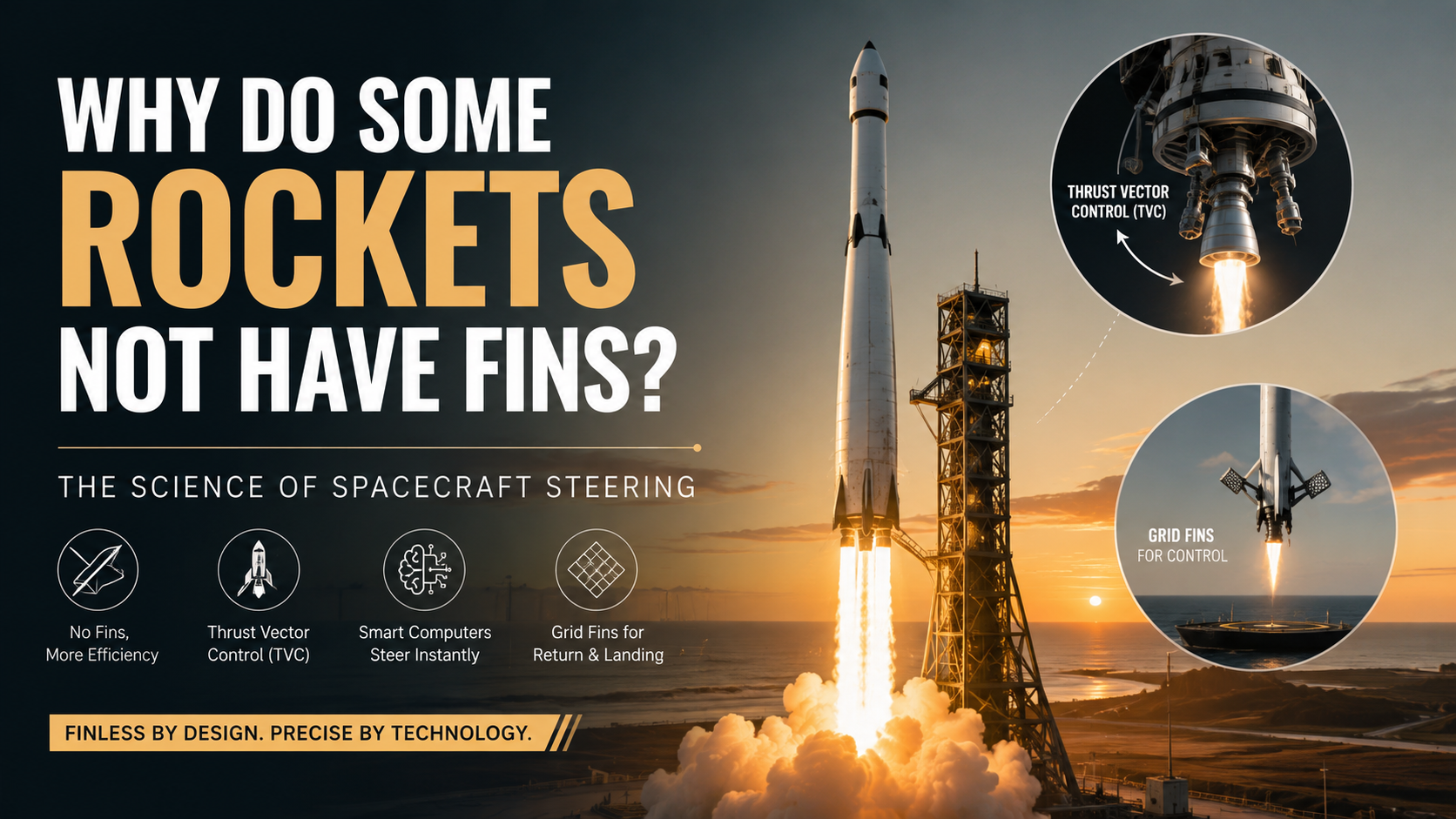
Why Do Some Rockets Not Have Fins?

Why Do Some Rockets Not Have Fins? The Science of Spacecraft Steering

Have you ever watched a modern space launch and wondered why do some rockets not have fins? If you grew up building model rockets or watching classic science fiction movies, you probably expect every spacecraft to feature those iconic, dart-like wings at the base. However, if you look closely at modern launch vehicles like the SpaceX Falcon 9 or the Blue Origin New Shepard, those familiar fins are completely missing.

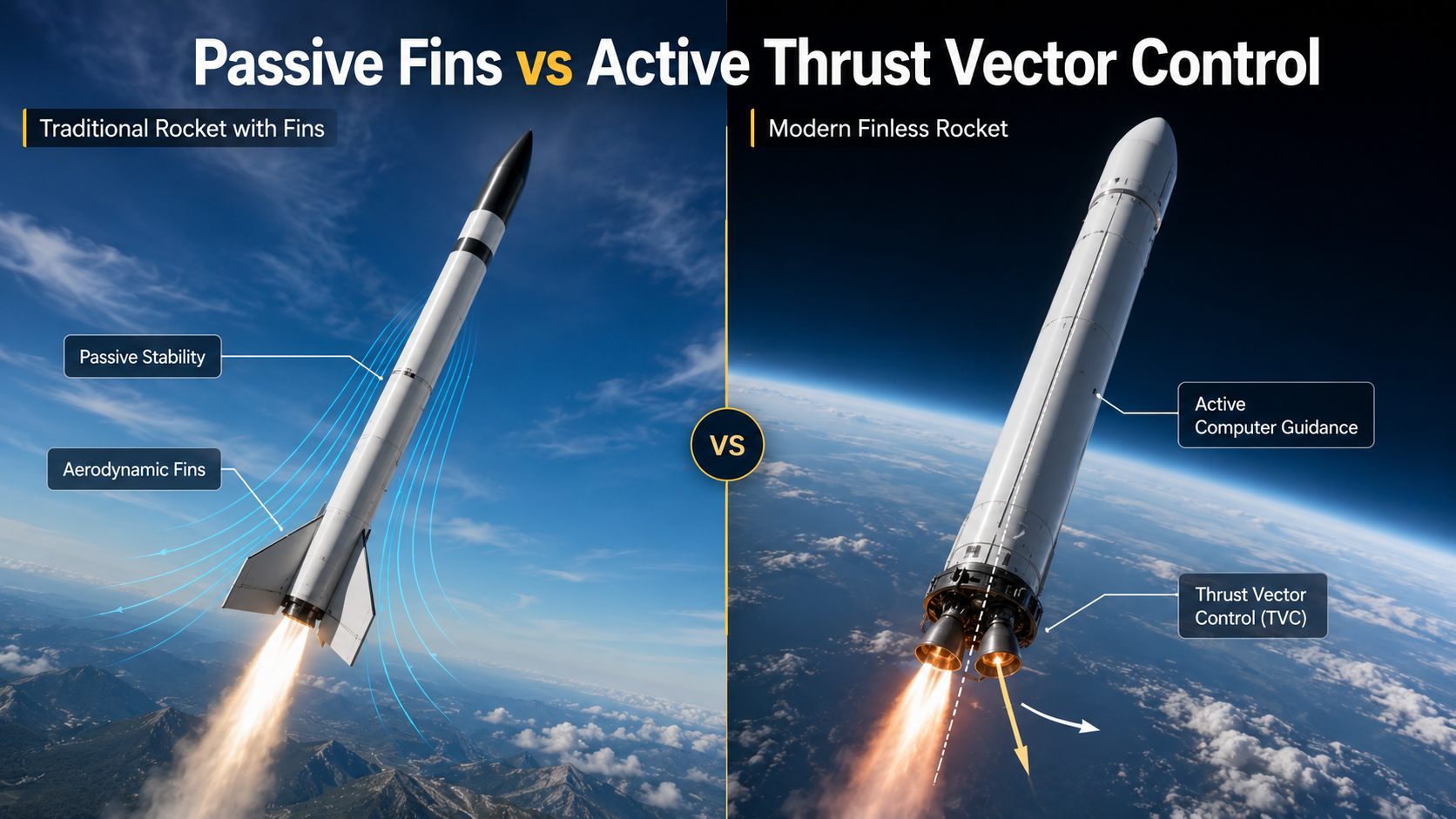
To understand this dramatic shift in aerospace design, we have to look at how engineering has evolved over the decades. Early rockets relied heavily on fins for stability. They worked exactly like the feathers on the back of an arrow. As the rocket flew through the thick atmosphere, the rushing air pushed against the fins to keep the vehicle pointed safely upward. You can explore the basics of this aerodynamic principle in the NASA beginner’s guide to rockets.

But here is the engineering catch. Fins only work when there is air moving around them. Once a rocket leaves the Earth’s atmosphere and enters the vast vacuum of space, fins become entirely useless dead weight. Therefore, brilliant engineers developed much smarter, computer-driven methods to keep massive rockets stable and on course.

In this article, we will explore the fascinating science of rocket steering. We will break down why modern spacecraft leave the fins behind, how thrust vector control works, and what the future of orbital design looks like.

Why Don’t NASA Rockets Have Fins?

NASA rockets often do not use exterior aerodynamic fins because they rely on thrust vector control (TVC) instead of passive aerodynamic surfaces for stability. As large launch vehicles climb through Earth’s lower atmosphere, aerodynamic drag and structural loads become significant challenges. Large fixed fins increase skin friction drag, add structural weight, and reduce overall launch efficiency.

Instead of using fins, modern rockets continuously adjust the direction of their engine exhaust. This process, known as thrust vectoring, provides precise control throughout ascent. It reacts much faster than passive aerodynamic surfaces and maintains the rocket’s planned trajectory even in changing atmospheric conditions.

Engineers also aim to keep launch vehicles as lightweight as possible. Every kilogram saved can increase payload capacity or improve mission performance. Eliminating large exterior fins helps reduce unnecessary mass while maintaining excellent flight stability through advanced guidance systems.

The Role of Thrust Vector Control

Thrust Vector Control (TVC) is the primary reason modern orbital rockets can fly safely without large aerodynamic fins. Instead of depending on airflow over fixed surfaces, TVC changes the direction of engine thrust to steer the vehicle throughout flight.

Rocket engines are mounted on gimbals that allow them to pivot by small angles. Flight computers calculate the rocket’s position and attitude many times each second. If winds or other forces push the rocket away from its planned path, the engines immediately adjust to restore stability.

This active control system works during every phase of powered ascent, including periods when aerodynamic surfaces become less effective. Because thrust vectoring provides rapid and precise corrections, it completely replaces the stabilizing role that fins once served on many early rocket designs.


Is it better for a rocket to have 3 or 4 fins?

Deciding between three or four stabilizing surfaces involves balancing aerodynamic drag, weight, and roll stability during atmospheric ascent. Three fins, known as a tripod configuration, actually offer a distinct aerodynamic advantage over four. With only three points of contact, every single fin experiences a higher angle of attack, which generates stronger restoring forces with less overall structural weight. Furthermore, a three-fin design eliminates the risk of an indeterminate fit on a flat launch pad surface where four symmetrical pieces might wobble. However, four surfaces provide redundant stability and simpler manufacturing symmetry for traditional model rocketry enthusiasts. Engineers must carefully weigh these factors before finalizing any suborbital or atmospheric flight design.

Minimizing Aerodynamic Drag With Three Fins

Reducing extra mass on any launch vehicle saves valuable fuel during the critical atmospheric ascent phase. Three stabilizing surfaces create less surface area, which directly lowers skin friction and form drag. Aerospace designers prefer this minimalist approach because every ounce saved translates into higher payload capacities and better overall flight efficiency.


Why don’t rockets have fins?

Large orbital launch vehicles skip external stabilizing surfaces because active guidance systems control flight paths far better than passive aerodynamics can. As a vehicle climbs past the thickest parts of the atmosphere, aerodynamic forces decrease rapidly while the air thinned out. Massive orbital boosters rely instead on thrust vectoring, which involves pivoting the main rocket engine nozzles in real time to steer the vehicle. According to SpaceX engineering data, gimbaled engines make quick, precise adjustments that react instantly to wind shears. External surfaces would only add dead weight and extreme thermal stress once the vehicle reaches hypersonic speeds outside the sensible atmosphere.

Utilizing Thrust Vectoring for Precise Guidance

Gimbaled engine technology replaces passive stabilization by actively redirecting exhaust plumes to steer the vehicle along its trajectory. Computers calculate tiny directional corrections thousands of times per second. This active control method adapts dynamically to changing atmospheric conditions far more effectively than fixed aerodynamic surfaces ever could.


Why Do Some Missiles Not Have Fins?

Some modern missiles are intentionally designed without external fins. Their missions often demand high speed, compact storage, stealth, and rapid maneuverability. Large fins increase drag, require additional launch clearance, and occupy valuable space inside launch systems.

Finless missiles can fit more efficiently inside vertical launch cells, sealed canisters, aircraft weapon bays, or mobile launchers. Removing external surfaces may also help reduce the radar signature on certain designs while lowering aerodynamic heating during high-speed flight.

Instead of fixed fins, these missiles rely on advanced guidance technologies such as thrust vectoring, lateral control thrusters, or internal control mechanisms. These systems provide accurate steering and fast attitude corrections without the weight and structural penalties associated with large aerodynamic surfaces.

Benefits of Confined Launch Compatibility

Compact finless missiles are well suited for sealed launch systems used by many modern military platforms. Their streamlined shape allows engineers to maximize storage space while protecting the weapon from harsh environmental conditions.

Key advantages include:

  • Higher storage density in launch cells and canisters
  • Better protection from moisture, dust, and corrosion
  • Faster deployment during operational missions
  • Lower maintenance while stored for extended periods
  • Improved compatibility with aircraft internal weapon bays

These benefits make finless designs especially valuable for modern defense systems where space, readiness, and reliability are essential.


Can a Rocket Fly Without Fins?

Yes. A rocket can fly without fins if it has an effective active stabilization system. Modern launch vehicles continuously monitor their orientation using onboard sensors and correct any unwanted movement through engine control systems.

Without active guidance, a symmetrical rocket moving through the atmosphere can become unstable and begin tumbling. Earlier rockets solved this problem with fixed fins, which shifted the center of pressure behind the center of mass to provide passive stability.

Today’s rockets replace that passive approach with advanced avionics. High-speed computers, inertial measurement units, hydraulic actuators, and thrust vector control work together to keep the vehicle stable. These systems respond within milliseconds, allowing rockets to maintain accurate flight paths through challenging atmospheric conditions.

Achieving Dynamic Stability via Avionics

Modern rockets depend on sophisticated flight computers and avionics to maintain stability throughout ascent. These systems continuously collect data from onboard sensors and compare the rocket’s actual position with its planned trajectory.

Whenever small deviations occur, the guidance system instantly commands engine adjustments. This rapid feedback loop keeps the vehicle properly aligned, even during periods of strong aerodynamic forces or changing wind conditions.

Because these corrections happen continuously, modern rockets can safely fly without relying on natural aerodynamic stability from fixed fins.


Why Does Falcon 9 Not Have Fins?

The SpaceX Falcon 9 does not use traditional fixed aerodynamic fins on its main body because it relies on engine gimballing during ascent and deployable grid fins during descent.

During launch, the rocket’s nine Merlin engines use thrust vector control to keep the vehicle stable. This system provides accurate steering while avoiding the extra weight and drag that permanent fins would create.

After stage separation, the returning first stage deploys four titanium grid fins. These movable control surfaces guide the booster through Earth’s atmosphere during reentry and help position it for a precise propulsive landing. Since the grid fins remain folded during ascent, they do not reduce payload performance like large fixed fins would.

The Function of Titanium Grid Fins

Titanium grid fins are specialized aerodynamic control surfaces used during Falcon 9’s return to Earth. Unlike conventional flat fins, they use an open lattice structure that performs efficiently across a wide range of flight speeds.

Their design offers several advantages:

  • Excellent control at both supersonic and subsonic speeds
  • Lower hinge forces than conventional fins
  • High heat resistance during atmospheric reentry
  • Precise steering for controlled booster landings
  • Foldable design that minimizes drag during launch

These characteristics make grid fins ideal for reusable launch vehicles that must return safely for another mission.


Frequently Asked Questions

Do all rockets require stabilization to reach orbit safely?

Yes. Every rocket needs some form of stabilization during flight. Without it, the vehicle could tumble, experience excessive structural loads, or drift away from its intended trajectory.

Modern rockets achieve stability through active guidance systems rather than relying solely on aerodynamic fins. Flight computers, thrust vector control, inertial sensors, and navigation systems work together to keep the rocket properly aligned throughout ascent. Smaller rockets may still depend on fixed fins because they lack these advanced control technologies.

How do rockets stay on course without aerodynamic control surfaces?

Rockets remain on course by using sophisticated guidance, navigation, and control (GNC) systems. Inertial measurement units constantly track the vehicle’s position, orientation, and movement.

When the rocket begins drifting from its planned path, onboard computers calculate the required correction within milliseconds. They then command the engines to pivot slightly using thrust vector control. This redirects the exhaust plume and restores the correct trajectory much faster than passive aerodynamic fins could.

Are grid fins the same as traditional rocket fins?

No. Although both provide aerodynamic control, grid fins differ significantly from traditional solid fins. Grid fins have an open lattice structure that performs efficiently across a broad speed range, especially during transonic and supersonic flight.

Traditional fins mainly provide passive stability through airflow. Grid fins, however, are movable control surfaces that actively steer reusable boosters during atmospheric descent. Their design also requires less actuator force while maintaining excellent control authority.

Do small model rockets also fly without fins?

Most model rockets require fixed fins because they do not include the sophisticated guidance systems found on orbital launch vehicles. Passive aerodynamic stability is the simplest and most reliable way to keep these lightweight rockets flying straight.

Without fins, a typical model rocket would quickly become unstable after launch. Since hobby rockets usually lack thrust vector control, flight computers, and precision sensors, aerodynamic fins remain essential for safe and predictable flight.


Conclusion

As we have discovered, rocket science is all about maximizing flight efficiency and eliminating unnecessary weight. If you have ever wondered why some rockets do not have fins, the answer lies in remarkable advances in computer technology and active guidance systems.

Traditional fins played a vital role in early rocketry by providing passive stability through the dense lower atmosphere. However, they also create aerodynamic drag, add extra weight, and become ineffective once a spacecraft reaches the vacuum of space.

Today, aerospace engineers rely on Thrust Vector Control (TVC), which uses powerful onboard computers to continuously adjust the direction of a rocket’s engines. This sophisticated steering method enables modern launch vehicles to be lighter, more efficient, and capable of carrying heavier payloads into orbit. If you’re fascinated by space exploration, you’ll also enjoy exploring the best space gifts for space lovers, featuring unique ideas for astronomy enthusiasts and aspiring astronauts.

Furthermore, systems such as Reaction Control System (RCS) thrusters allow spacecraft to maneuver precisely once they are in space. The transition from finned rockets to sleek, finless launch vehicles represents one of the most significant engineering advancements in modern aerospace. The next time you watch a rocket launch, you’ll have a deeper appreciation for the sophisticated guidance systems and rapid computer calculations that keep it perfectly balanced on its journey beyond Earth’s atmosphere.

Why White Trails Behind Planes Aren’t Chemicals

Why White Trails Behind Planes Aren’t Chemicals

Have you ever looked up at a clear blue sky and wondered about those long, chalky lines stretching across the horizon? You certainly are not alone. Many people assume that the white trails behind planes contain dangerous chemical sprays. However, this is a widespread misconception that ignores basic atmospheric science. These distinct streaks are actually condensation trails, more commonly known as contrails. To understand exactly what is happening above us, we can look at the extensive atmospheric research provided by NASA, which studies how aircraft exhaust interacts with high-altitude environments.

The internet remains full of wild theories regarding these aviation vapor trails. Some groups claim they contain weather-modifying substances. Others truly believe they carry harmful toxins designed to affect the population. The reality is far less sinister and deeply rooted in everyday physics and chemistry. When commercial jet engines burn aviation fuel, they naturally release water vapor, carbon dioxide, and small soot particles. In the freezing, low-pressure environment of high altitudes, this hot vapor instantly freezes into billions of tiny ice crystals.

This article will debunk the popular myths surrounding aircraft exhaust and explain the fascinating science behind contrail formation. We will explore why some trails disappear in seconds while others linger for hours, spreading across the sky. We will also discuss how humidity and temperature play a critical role in creating these cloud-like formations. By the time you finish reading, you will understand the real physics of modern flight and recognize these trails for what they truly are.

Why Do Planes Have White Trails Behind Them?

Planes leave white trails behind them because of a natural atmospheric process called condensation. It is similar to seeing your breath on a freezing winter morning. When jet engines burn fuel, they produce water vapor, hot gases, carbon dioxide, and tiny soot particles. At cruising altitudes, typically above 30,000 feet, outside temperatures often fall below -40°F (-40°C).

The hot exhaust mixes with the extremely cold air almost instantly. As a result, the water vapor condenses and freezes around microscopic particles in the exhaust, forming millions of tiny ice crystals. These ice crystals create the long white lines visible from the ground, known as contrails.

How long these trails remain visible depends mainly on atmospheric humidity. In dry air, the ice crystals evaporate within seconds. In humid air, they absorb additional moisture, grow larger, and can remain visible for hours. Over time, persistent contrails may spread across the sky and resemble thin cirrus clouds, making them appear like naturally occurring cloud formations.

The Role of Atmospheric Humidity

Atmospheric humidity plays the biggest role in determining whether a contrail disappears quickly or remains visible for hours. Even when two aircraft fly at the same altitude, the surrounding air can have very different moisture levels. That difference directly affects how long the ice crystals survive.

When the upper atmosphere is dry, the ice crystals evaporate rapidly, causing the white trail to fade within seconds. However, when humidity is high, the crystals absorb additional moisture instead of evaporating. They become larger and remain suspended in the atmosphere for much longer.

Persistent contrails can gradually spread outward due to high-altitude winds. Over time, they may transform into thin sheets of cirrus clouds that cover large portions of the sky. This is why some aircraft leave short-lived trails, while others create long white streaks that remain visible long after the plane has disappeared.


Are Contrails Harmful to the Environment?

Contrails are not considered a major source of local air pollution, but they can contribute to climate change. The greatest environmental impact occurs when persistent contrails spread into extensive cirrus cloud layers. These clouds influence how heat moves through Earth’s atmosphere.

During the day, they reflect a portion of incoming sunlight back into space. At night, however, they trap heat that would otherwise escape from Earth’s surface. Research shows that this warming effect is generally greater than the daytime cooling effect, creating a small but measurable contribution to global warming.

To reduce this impact, researchers and aviation authorities are exploring several solutions, including:

  • Adjusting flight paths to avoid humid atmospheric layers
  • Developing more fuel-efficient aircraft engines
  • Using sustainable aviation fuels (SAF)
  • Improving weather forecasting for flight planning

Reducing persistent contrail formation is becoming an important part of making commercial aviation more environmentally sustainable.

Climate Impact of Spreading Clouds

When contrails persist, they can gradually spread into large sheets of thin cirrus clouds. These clouds act like an insulating blanket by trapping outgoing heat, especially during the night. Although they also reflect some sunlight during the day, scientific studies indicate that their overall effect produces more warming than cooling. Because of this, reducing long-lasting contrails has become an active area of aviation and climate research aimed at lowering the industry’s environmental footprint.


Why avoid seat 11A on a plane?

Travelers often hear quirky superstitions about specific rows, but seat 11A carries no actual physical curse or mechanical hazard during normal flight operations. Some frequent flyers jokingly avoid this window seat due to urban legends or minor airline layout quirks, such as a missing window alignment on specific aircraft models. In reality, every passenger seat undergoes rigorous safety certification by aviation authorities. Whether you sit near the front, middle, or rear, your flight safety remains entirely unaffected by your row number. Choosing where to sit usually comes down to personal preference regarding legroom, proximity to the galley, or a clear view of the engine.

Understanding Airline Seating Myths and Window Alignments

Airlines configure cabin layouts based on structural frames and emergency exit placements rather than superstitions. Passengers sometimes complain that row eleven lacks a proper view because structural ribs block the glass. Choosing a seat near the front or back simply affects your deplaning speed rather than your overall in-flight safety.


Why do military jets not always leave contrails?

Fighter jets and bombers frequently change altitude, speed, and engine output, which directly alters whether condensation forms behind them. When these high-performance aircraft fly at lower altitudes or through dry air masses, exhaust moisture evaporates instantly without forming ice crystals. Furthermore, military pilots often use specialized technology or fly specific profiles to avoid detection during training missions. Even when combustion creates water vapor, atmospheric conditions dictate whether that moisture becomes visible from the ground. Therefore, missing vapor trails simply mean the surrounding air lacks the extreme humidity required to freeze exhaust droplets into lasting clouds.

Operating at Altitudes With Low Atmospheric Moisture

Dry air layers prevent ice crystals from forming behind fast-moving aircraft engines. If surrounding humidity levels sit below the saturation threshold, hot exhaust gases dissipate invisibly into the sky. Military aviators understand these atmospheric nuances well, utilizing varying flight levels to manage their visual footprint during daily operations.


Why Do Some Jets Leave Contrails and Others Don’t?

The appearance of vapor lines depends entirely on local atmospheric humidity, ambient temperature, and engine efficiency at cruising altitude. When a commercial airliner flies through air with high relative humidity, the water vapor in its exhaust instantly freezes onto tiny soot particles. This rapid freezing process creates visible ice clouds. If another jet flies right beside it through a dry air pocket, no trail appears because the surrounding atmosphere absorbs the moisture immediately. Why white trails behind planes aren’t chemicals becomes obvious when you realize these formations consist purely of frozen water droplets and natural atmospheric moisture reacting to jet exhaust temperatures.

The Role of Atmospheric Humidity and Engine Exhaust

Cruising altitudes feature sub-zero temperatures where water vapor readily transforms into ice crystals. Engine bypass ratios and fuel composition also influence how much moisture enters the air stream. When conditions align perfectly, these artificial clouds linger for hours, spreading out into wide cirrus formations driven by high-altitude winds across the sky.


What Is the White Trail From a Plane Called?

The white trail behind a plane is called a contrail, which is short for condensation trail. The name accurately describes how the trail forms through the condensation and freezing of water vapor in the aircraft’s exhaust. Contrails are not smoke, nor are they evidence of chemicals being intentionally sprayed into the atmosphere.

Instead, they are temporary man-made clouds consisting mainly of tiny ice crystals. Their appearance depends entirely on weather conditions at high altitude. Under favorable conditions, they may disappear almost immediately or remain visible long enough to spread into cirrus clouds.

Understanding the correct scientific term helps eliminate common misconceptions. Contrails are a well-understood meteorological phenomenon that has been studied for decades. They are a normal byproduct of modern jet aircraft operating in extremely cold sections of the atmosphere.

Scientific Origin of the Term

The word contrail combines the words condensation and trail. Meteorologists created the term to describe the ice-crystal clouds formed behind high-altitude aircraft. Using this scientific terminology distinguishes contrails from smoke, ordinary exhaust, fog, or other atmospheric phenomena. The name reflects the physical process responsible for their formation rather than their appearance alone.


Frequently Asked Questions

Do contrails contain toxic chemicals?

No. Contrails are not made of toxic chemicals or substances intentionally released into the atmosphere. They consist primarily of water ice crystals, water vapor, carbon dioxide, and tiny amounts of exhaust particles produced during normal jet engine combustion. Their white appearance comes from frozen moisture reflecting sunlight.

How long can a contrail stay in the sky?

A contrail may last anywhere from a few seconds to several hours. The duration depends almost entirely on humidity, temperature, and wind conditions at high altitude. Dry air causes the ice crystals to evaporate quickly, while humid air allows them to persist and gradually spread into cirrus clouds.

Can contrails predict upcoming weather changes?

Persistent contrails can sometimes indicate increased moisture in the upper atmosphere. When they remain visible for long periods and spread rapidly, they may suggest that a weather system or frontal boundary is approaching. However, they should be viewed only as an informal weather indicator rather than a reliable forecasting method.

Why do some contrails look wider than others?

Contrails become wider because high-altitude winds spread the ice crystals over a larger area. High humidity also allows the crystals to grow, causing the trail to expand gradually. What begins as a narrow white line can eventually develop into a broad, hazy layer of thin cirrus cloud covering a significant portion of the sky.


Conclusion

Understanding the actual science above our heads helps dispel unnecessary fears and rumors. The white trails behind planes simply represent a fascinating interaction between modern aviation technology and extreme atmospheric conditions. When jet engines release incredibly hot, moist exhaust into the freezing, thin air of the upper atmosphere, basic physics takes over. The water vapor instantly freezes into tiny ice crystals, creating the beautiful white streaks we know as contrails. If you’re fascinated by atmospheric and space-related phenomena, you may also enjoy exploring some of the wildest planets in the Milky Way and the incredible science behind them.

Whether these trails disappear within seconds or spread across the sky depends almost entirely on atmospheric humidity, not a secret chemical mixture. While the aviation industry continues to study and reduce the climate impacts of persistent contrails, there is no credible scientific evidence supporting claims of widespread toxic spraying operations.

The next time you look up and see a long white streak crossing a bright blue sky, you can appreciate the remarkable science of condensation, ice crystal formation, and Earth’s atmosphere in action. Share this knowledge with curious friends and family to encourage evidence-based discussions and inspire a deeper interest in aviation, weather, and space science.

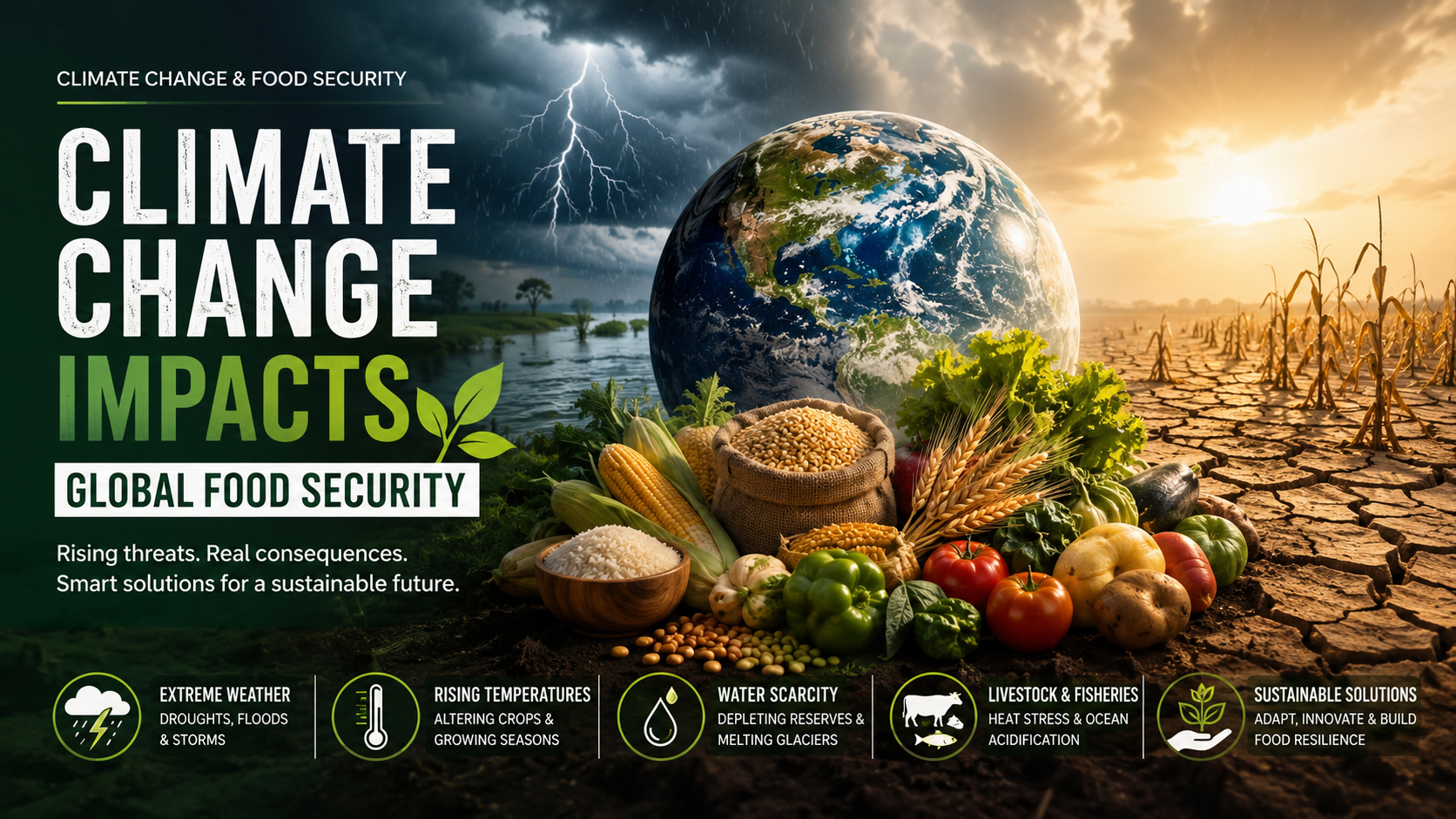
Climate Change Food Security: Impacts and Solutions

How Climate Change Impacts Global Food Security Today

Have you noticed how grocery prices spike after a severe drought or flood? These everyday moments highlight a growing, worldwide crisis. Understanding exactly how climate change impacts global food security is no longer just a topic for environmental scientists. It is a pressing, urgent reality that affects every meal we eat. Rising temperatures and erratic weather patterns are actively disrupting agricultural systems across the globe.

To grasp the severity of this issue, we can look at ongoing research from the Food and Agriculture Organization (FAO), which tracks how environmental shifts threaten our food supply chains on a macro level. The staple crops we rely on daily, such as wheat, corn, and rice, are highly sensitive to sudden temperature changes and water scarcity. When these vital crops fail, millions of people face the immediate risk of hunger and malnutrition.

This article explores the direct connection between our changing environment and the global food supply. We will dive into how extreme weather destroys seasonal harvests and why shifting growing seasons disrupt traditional farming methods. We will also look at the economic ripple effects that make food much less accessible for vulnerable communities. Finally, we will discuss actionable solutions and adaptive strategies to help build a more resilient agricultural future.


How to Reduce the Impact of Climate Change on Food Security?

Reducing the impact of climate change on food security requires adopting farming practices that protect natural resources while maintaining stable food production. Climate-smart agriculture helps farmers adapt to changing weather, conserve water, improve soil health, and reduce greenhouse gas emissions. These practices increase resilience without compromising long-term agricultural productivity.

Farmers can use drip irrigation, cover cropping, crop rotation, and no-till farming to improve soil moisture and reduce erosion. Growing diverse crops also lowers the risk of total crop failure because different varieties respond differently to droughts, floods, and extreme temperatures. In addition, planting climate-resilient seed varieties helps farms withstand prolonged dry periods and heatwaves.

Governments, agricultural organizations, and extension services play an essential role by providing training, financial support, and access to modern farming technologies. Together, these efforts strengthen food systems, improve rural livelihoods, and reduce the long-term impact of climate change on global food security.

Adopting Sustainable Farming Practices and Crop Diversity

Sustainable farming improves agricultural resilience while protecting the environment. Regenerative practices such as crop rotation, cover cropping, and reduced tillage restore soil fertility, improve water retention, and increase biodiversity. Healthier soils support stronger crop growth and reduce dependence on chemical fertilizers.

Crop diversity is equally important because it spreads production risk across multiple plant varieties. If one crop performs poorly due to drought or disease, others may continue producing reliable yields. This approach improves both farm income and local food availability.

Efficient irrigation systems, organic soil management, and integrated pest management further strengthen sustainable agriculture. These practices help farmers adapt to changing climate conditions while maintaining consistent harvests. Over time, they contribute to healthier ecosystems, stronger rural economies, and more secure food supplies.


How Does Climate Change Contribute to Food Security?

Climate change directly affects food security by disrupting agricultural production and reducing the availability of nutritious food. Rising temperatures, changing rainfall patterns, and more frequent extreme weather events make farming less predictable. These challenges reduce crop yields and increase production costs for farmers worldwide.

Higher carbon dioxide levels may also affect the nutritional quality of some staple crops. At the same time, prolonged droughts reduce groundwater supplies needed for irrigation. Livestock production faces additional pressure because extreme heat reduces animal health, fertility, and productivity.

As these environmental challenges increase, food supplies become less stable and prices often rise. Lower-income households are especially vulnerable because higher food costs reduce access to nutritious meals. Strengthening climate resilience is therefore essential for protecting both agriculture and long-term food security.

Disrupting Crop Growth Cycles and Livestock Health

Changing climate conditions interfere with normal crop development and livestock production. Higher temperatures can shorten growing seasons for cereal crops, reducing harvest quality and overall yields. Unpredictable rainfall also increases the risk of flooding, drought, and soil degradation.

Livestock are equally affected by prolonged heat exposure. Heat stress reduces milk production, lowers reproductive performance, and increases disease risks. Limited pasture growth further affects animal nutrition and farm productivity.

These combined pressures make food production more difficult and expensive. Investing in climate-resilient farming practices, improved livestock management, and drought-resistant crop varieties helps reduce these risks while supporting long-term agricultural sustainability.


What Are the 7 Main Impacts of Climate Change?

Climate change affects ecosystems, economies, and human health across the globe. Understanding its major consequences helps governments, businesses, and communities prepare for future environmental challenges while protecting natural resources and food production systems.

The seven main impacts of climate change include:

  • Rising global temperatures
  • Melting polar ice caps
  • Sea-level rise
  • More frequent extreme weather events
  • Severe droughts
  • Changing precipitation patterns
  • Loss of biodiversity

These impacts are closely connected. Rising temperatures increase evaporation, while droughts reduce water availability for agriculture. Floods and severe storms damage crops, transportation networks, and food storage facilities. Biodiversity loss also weakens ecosystems that support pollination, soil fertility, and agricultural productivity.

Extreme Weather Events Disrupting Global Agricultural Production

Extreme weather events have become one of the greatest threats to global agriculture. Heatwaves, floods, hurricanes, and prolonged droughts can destroy crops within days and cause significant financial losses for farming communities.

These disasters also damage roads, storage facilities, irrigation systems, and transportation infrastructure. As a result, food distribution slows, supply chains become disrupted, and prices increase for consumers.

Building climate-resilient infrastructure, improving early warning systems, and investing in disaster preparedness help reduce these risks. Stronger agricultural planning enables farmers to recover more quickly while supporting stable food supplies during challenging weather conditions.


What Are the 4 Types of Food Insecurity?

Food insecurity affects people in different ways depending on its causes and duration. Understanding these categories helps governments and humanitarian organizations develop targeted solutions that address both immediate needs and long-term challenges.

The four main types of food insecurity are:

  • Chronic food insecurity
  • Transitory food insecurity
  • Seasonal food insecurity
  • Situational food insecurity

Chronic food insecurity results from long-term poverty or limited access to resources. Transitory food insecurity occurs after sudden events such as natural disasters or economic crises. Seasonal food insecurity appears during predictable periods, including pre-harvest seasons, while situational food insecurity develops after unexpected personal emergencies or local disruptions.

Recognizing these differences allows policymakers to design more effective food assistance and development programs.

Differentiating Between Chronic and Transitory Insecurity States

Chronic and transitory food insecurity require different responses. Chronic food insecurity demands long-term investments in poverty reduction, education, employment opportunities, and sustainable agricultural development. These structural improvements strengthen food access over time.

Transitory food insecurity, however, requires rapid intervention. Emergency food assistance, financial support, and humanitarian relief help families recover from disasters, conflicts, or sudden economic shocks.

Identifying the underlying cause of food insecurity enables governments and aid organizations to allocate resources more effectively. Combining immediate relief with long-term development creates stronger, more resilient communities.


What Are the 4 Pillars of Food Security?

The four pillars of food security provide the foundation for a stable and sustainable food system. These internationally recognized principles ensure that people have reliable access to safe, nutritious food at all times.

The four pillars are:

  • Food availability
  • Food access
  • Food utilization
  • Food stability

A reliable supply of food through domestic production or imports forms the basis of food availability. Food access ensures that people have the physical and financial means to obtain nutritious meals. Proper nutrition, clean water, sanitation, and food safety are central to food utilization. Finally, food stability ensures that these three pillars remain dependable despite economic, environmental, or political disruptions.

Together, these pillars support healthier populations and stronger food systems.

Ensuring Reliable Access and Proper Nutritional Utilization

Reliable access to nutritious food depends on both physical availability and household purchasing power. Families need affordable food markets, stable incomes, and efficient transportation systems to maintain healthy diets throughout the year.

Proper food utilization goes beyond food availability. Safe drinking water, adequate sanitation, proper storage, and balanced nutrition all influence how effectively the body uses nutrients. Nutrition education also helps households make healthier food choices.

When access, utilization, availability, and stability work together, communities become more resilient to economic shocks, climate change, and natural disasters. Strengthening all four pillars supports long-term food security and better public health outcomes.


What Are 10 Ways to Reduce Global Warming?

Reducing global warming requires action from governments, businesses, and individuals. Lowering greenhouse gas emissions while protecting natural ecosystems is essential for slowing climate change. Every sector has a role in building a more sustainable future.

The most effective ways to reduce global warming include:

  1. Transition from fossil fuels to renewable energy.
  2. Improve energy efficiency in homes and businesses.
  3. Adopt sustainable agricultural practices.
  4. Expand public transportation and electric vehicle use.
  5. Protect and restore forests.
  6. Reduce food waste across the supply chain.
  7. Choose more plant-rich diets.
  8. Enforce stricter industrial emission standards.
  9. Invest in carbon capture and storage technologies.
  10. Educate communities about climate-friendly choices.

While no single solution can solve climate change alone, combining these strategies can significantly reduce emissions. Coordinated global action helps protect ecosystems, improve public health, and create a more resilient economy for future generations.

Transitioning to Renewable Energy Sources

Replacing fossil fuels with renewable energy is one of the most effective ways to reduce greenhouse gas emissions. Coal, oil, and natural gas release large amounts of carbon dioxide when burned. In contrast, solar and wind energy generate electricity with little or no direct emissions, making them cleaner alternatives.

Renewable technologies are becoming more affordable and widely available. Many countries are expanding solar farms, wind projects, and battery storage systems to improve energy security while reducing environmental impacts. Businesses and households also benefit from lower long-term energy costs.

Accelerating this transition requires supportive government policies, private investment, and modern electricity infrastructure. Expanding renewable energy not only helps fight climate change but also creates jobs, improves air quality, and strengthens long-term energy resilience.


What Are the 5 Main Threats to Food Security?

Several interconnected challenges threaten global food security and increase the risk of hunger worldwide. These threats affect food production, distribution, affordability, and long-term sustainability. Addressing them requires coordinated action across governments, researchers, farmers, and international organizations.

The five major threats include:

  1. Climate change, which disrupts weather patterns and reduces agricultural productivity.
  2. Water scarcity, limiting irrigation and crop production.
  3. Biodiversity loss, increasing vulnerability to pests and diseases.
  4. Soil degradation, reducing fertility and long-term agricultural output.
  5. Economic instability and geopolitical conflict, disrupting supply chains and food availability.

Because these threats are closely linked, solutions must also work together. Sustainable farming, responsible water management, ecosystem conservation, and resilient food systems can reduce future risks and strengthen global food security.

The Growing Danger of Global Water Scarcity

Water scarcity is becoming one of the most serious challenges facing global agriculture. Population growth, climate change, and increasing demand for freshwater place growing pressure on rivers, lakes, and underground aquifers. As water supplies decline, farmers struggle to irrigate crops consistently.

Shrinking glaciers and falling groundwater levels further reduce reliable water sources in many agricultural regions. Lower water availability often forces farmers to reduce cultivated land or switch to less productive crops. These changes directly affect food production and rural livelihoods.

Improving water efficiency is essential for long-term agricultural sustainability. Techniques such as drip irrigation, rainwater harvesting, soil moisture conservation, and better water management help farmers produce more food while using fewer water resources.


Frequently Asked Questions

How does climate change affect food prices globally?

Climate change reduces agricultural production through droughts, floods, heatwaves, and other extreme weather events. Lower crop yields create supply shortages while food demand continues to grow. As a result, prices often increase across local and international markets.

Higher food prices affect vulnerable households the most. Families with limited incomes may struggle to afford nutritious meals, increasing the risk of food insecurity and malnutrition.

Can regenerative agriculture help combat global warming?

Yes. Regenerative agriculture helps restore soil health while reducing greenhouse gas emissions. Practices such as cover cropping, no-till farming, crop rotation, and rotational grazing improve soil structure and increase carbon storage.

Healthy soils retain more moisture, support biodiversity, and improve resilience against droughts and extreme weather. These benefits strengthen agricultural productivity while contributing to climate change mitigation.

Why is food waste reduction important for the environment?

Food waste contributes significantly to greenhouse gas emissions. When discarded food decomposes in landfills without oxygen, it releases methane, a greenhouse gas much more potent than carbon dioxide over the short term.

Reducing food waste also conserves the water, land, energy, and labor used during food production. Improving storage, transportation, and consumer awareness helps reduce waste throughout the supply chain.

What role do local food systems play in resilience?

Local food systems strengthen community resilience by shortening supply chains and reducing transportation-related emissions. They support regional farmers while providing consumers with fresher and often more nutritious produce.

Diversifying local food production also reduces dependence on distant suppliers. During natural disasters or global trade disruptions, strong regional food systems help communities maintain more stable access to essential foods.


Conclusion

The stability of our global food system is fundamentally tied to the health of our planet. As we have explored, extreme weather, shifting seasons, and severe water scarcity are transforming the agricultural landscape. The evidence clearly shows how climate change impacts global food security on multiple levels, from the rural farmer’s field to the consumer’s dinner table. When massive crops fail and global supply chains break down, the resulting economic fallout hurts vulnerable communities the most. These challenges are closely linked to other major current environmental problems on our planet, making it essential to address them through a comprehensive sustainability strategy.

However, the situation is not entirely hopeless. We possess the knowledge and technological tools to adapt to these unprecedented challenges. By embracing modern climate-smart farming techniques, investing in resilient agricultural infrastructure, and drastically reducing global food waste, we can build a more secure future. Governments, agricultural organizations, and everyday consumers must collaborate to support sustainable, eco-friendly practices.

Securing our daily food supply requires immediate and sustained action from everyone. We can no longer treat environmental preservation and food production as separate issues; they are intrinsically connected. Start by making mindful choices in your own household, supporting local sustainable farmers, and advocating for policies that protect our natural resources. By taking these crucial steps today, we can help ensure that future generations inherit a stable, abundant, and truly secure global food supply.

Renewable Energy Fights Poverty: A Global Guide

Renewable Energy Fights Poverty: A Global Guide

Around the world, a massive economic shift is currently underway. Today, renewable energy fights poverty in ways we never previously thought possible. Millions of people still live without reliable electricity. Consequently, this severe lack of power traps families in a continuous cycle of hardship. However, clean power sources offer a fast, sustainable way out. According to the International Energy Agency (IEA), expanding energy access remains absolutely crucial for global development. Access to electricity changes everything for a developing community.

For instance, children can finally study safely after sunset. Similarly, doctors can store life-saving medicines in modern refrigerators. Furthermore, farmers can pump fresh water for their daily crops. Whenever rural communities get reliable power, local economies begin to grow rapidly. Enterprising people start new businesses, and families significantly increase their daily incomes. Most importantly, clean technology provides these massive benefits without the crushing costs of traditional power plants.

In this article, we will explore exactly how green tech transforms lives. First, we will look closely at solar microgrids, wind power, and off-grid solutions. Next, you will see firsthand how sustainable power reduces hardship by creating jobs. Additionally, we will discuss how clean alternatives empower women and independent business owners. Ultimately, you will understand why sustainable infrastructure is the most effective tool we possess for lifting communities out of destitution.

How can renewable energy reduce poverty?

Renewable energy reduces poverty by lowering household expenses, improving access to electricity, and creating new income opportunities. Many families spend a large share of their earnings on kerosene, candles, and other expensive fuels for lighting. Solar panels provide a cleaner and more affordable alternative, allowing households to save money for essentials like food, healthcare, and education.

Reliable electricity also supports local businesses and farming activities. Small shops can stay open after sunset, increasing daily sales and customer reach. Solar-powered irrigation systems help farmers grow crops throughout the year, improving harvests and reducing dependence on seasonal rainfall.

Clean energy also strengthens education. Children can study safely under bright electric lights instead of dim kerosene lamps. Schools can power computers and internet connections, expanding learning opportunities. These financial, educational, and economic improvements help families build long-term stability. Over time, renewable energy reduces poverty by creating healthier communities, stronger local economies, and better opportunities for future generations.

Transforming rural healthcare access through reliable solar power

Reliable solar power significantly improves healthcare services in rural communities by providing a dependable source of electricity. Many remote clinics experience frequent power outages or have no grid connection. As a result, storing vaccines, medicines, and other temperature-sensitive supplies becomes difficult. Solar-powered refrigerators help preserve these essential medical resources and reduce unnecessary waste.

Solar electricity also powers medical equipment, lighting, and communication systems. Doctors and nurses can perform emergency procedures after dark without relying on costly diesel generators. Health workers can charge medical devices and maintain essential services throughout the day.

Improved healthcare leads to healthier communities and higher productivity. Fewer illnesses reduce financial strain on families and allow more people to attend school or work regularly. Reliable renewable energy strengthens healthcare infrastructure while supporting long-term social and economic development.

Why are some people against renewable energy?

Some people oppose renewable energy because of its high upfront costs, land requirements, and technical challenges. Installing solar panels or wind turbines often requires substantial investment. This expense can discourage individuals, businesses, and lower-income countries from adopting clean energy technologies without financial support.

Critics also highlight the intermittent nature of renewable power. Solar panels generate electricity only when sunlight is available, while wind turbines depend on suitable weather conditions. Maintaining a stable electricity supply often requires battery storage systems or backup power sources, increasing overall costs.

Large renewable energy projects may also require significant land, creating conflicts with agriculture or local communities. Expanding transmission lines to connect renewable power plants can face resistance from nearby landowners. Although these challenges are real, ongoing technological improvements and supportive government policies continue to reduce many of these barriers.

High upfront costs and battery storage limitations challenge expansion

High installation costs and battery storage limitations remain major obstacles to expanding renewable energy worldwide. Solar panels, wind turbines, and battery systems require substantial initial investment. For many low-income communities, these costs remain difficult to afford without government incentives or international funding.

Battery systems store excess electricity for use when sunlight or wind is unavailable. However, batteries are expensive, have a limited lifespan, and eventually require replacement. These additional costs increase the overall investment needed for renewable energy projects.

Despite these challenges, battery technology continues to improve. Prices have gradually declined while efficiency has increased. As storage systems become more affordable, renewable energy will become a more practical and accessible solution for households, businesses, and developing regions.

In which way do people use electricity to fight poverty?

People use electricity to fight poverty by increasing productivity, improving communication, and supporting small businesses. Reliable electricity allows entrepreneurs to operate sewing machines, refrigeration units, grinders, and power tools that improve efficiency and increase daily income. Businesses can also remain open longer, serving more customers during evening hours.

Electricity expands access to mobile phones, internet services, and digital banking. These technologies connect rural communities to online education, government services, and e-commerce opportunities. Families can access important financial resources and market information without traveling long distances.

Electric appliances also improve everyday life. Electric water purifiers provide safer drinking water, reducing waterborne diseases and healthcare expenses. Efficient cooking appliances save time and reduce dependence on firewood. Together, these benefits increase household productivity, strengthen local economies, and create pathways out of poverty.

Empowering small business growth through reliable electric tools

Reliable electric tools help small businesses increase productivity and generate higher incomes. Carpenters, mechanics, tailors, and artisans can complete more work using powered equipment instead of manual tools. Faster production improves product quality and allows businesses to serve more customers each day.

Higher productivity often leads to greater profits. Business owners can reinvest in better equipment, expand operations, and create additional employment opportunities within their communities. Reliable electricity also reduces downtime caused by manual labor or fuel shortages.

As local businesses grow, they stimulate regional economic development. Increased employment strengthens household incomes and encourages further investment in education, healthcare, and community infrastructure. Access to dependable electricity becomes a key driver of long-term economic growth.

Empowering Women Through Clean Energy

Globally, extreme poverty impacts women more severely than men in many developing regions. Traditionally, women and young girls spend hours each day gathering heavy firewood. Consequently, this exhausting daily chore keeps girls out of school and prevents older women from working. Moreover, cooking over open indoor fires causes severe, deadly respiratory diseases.

However, clean power directly tackles this specific gender inequality. Specifically, biogas digesters and modern solar cookers replace dangerous indoor fires entirely. As a result, women no longer spend their entire day searching for dirty fuel. Instead, they instantly reclaim their time and invest it into higher education or small businesses.

Furthermore, many organizations now actively train rural women as professional solar engineers. Consequently, these proud women bring beautiful light to their villages and earn massive respect. Ultimately, they achieve true financial independence and quickly become local leaders. By focusing heavily on female empowerment, sustainable tech creates a powerful ripple effect that lifts entire generations.

Can renewable energy jobs help reduce poverty in India?

Renewable energy jobs play an important role in reducing poverty in India by creating employment across manufacturing, installation, maintenance, and project management. India’s growing investment in solar and wind energy continues to generate demand for skilled technicians, engineers, electricians, and construction workers in both rural and urban areas.

These employment opportunities provide stable incomes for families that previously relied on seasonal agricultural work or informal labor. Government skill development programs and private training initiatives help young people gain technical expertise for long-term careers in the clean energy sector.

The expansion of renewable energy also encourages local entrepreneurship. Small businesses offer installation, maintenance, and repair services for solar systems, creating additional employment opportunities. As India’s clean energy industry grows, it supports economic development while improving energy access and reducing poverty across underserved communities.

Boosting rural employment through decentralized solar panel installations

Decentralized solar panel installations create employment by involving local workers in system installation, maintenance, and repair. Community-based solar projects generate jobs that remain within the local economy instead of relying entirely on outside contractors.

Technicians develop practical skills that remain valuable as renewable energy adoption continues to expand. These technical careers provide stable income and encourage long-term employment opportunities close to home. Local businesses also benefit by supplying equipment, transportation, and maintenance services.

Keeping renewable energy projects within rural communities strengthens regional economies. Families earn consistent incomes, young people gain valuable technical experience, and local businesses continue to grow. This community-focused approach helps reduce poverty while supporting sustainable economic development.


Frequently Asked Questions (FAQ)

What makes renewable energy better than fossil fuels for poor regions?

Renewable energy fights poverty by providing decentralized electricity without requiring expensive national grid expansion. Communities can generate power using local solar and wind resources, reducing dependence on imported fossil fuels. This approach lowers energy costs, improves reliability, and protects vulnerable households from fluctuating fuel prices and supply disruptions. As a result, renewable energy fights poverty by making affordable and dependable electricity available to underserved regions.

How does clean energy improve education in developing areas?

Clean energy improves education by providing reliable lighting and electricity for schools and homes. Students can study safely after sunset without relying on hazardous kerosene lamps. Schools can also power computers, internet connections, and digital learning resources, helping children access better educational opportunities and develop valuable skills. Better access to education is another way renewable energy fights poverty by improving future employment opportunities.

What are the main challenges of creating green jobs in rural areas?

The biggest challenges include limited technical training, restricted financing, and inadequate infrastructure. Many workers need specialized skills to install and maintain renewable energy systems safely. Governments, educational institutions, and private companies can address these issues through vocational training, financial support, and long-term investment in rural communities. Overcoming these barriers allows renewable energy fights poverty initiatives to create more sustainable jobs and long-term economic growth.

Does solar power require too much land to be practical?

Large solar farms require considerable land, but innovative solutions reduce this challenge. Agrivoltaics allows crops to grow beneath elevated solar panels while generating electricity. Rooftop solar systems also maximize existing building space without using additional land, making solar power practical in both urban and rural environments. These flexible solutions further demonstrate how renewable energy fights poverty by expanding clean energy access without placing excessive pressure on available farmland.


Conclusion

In conclusion, the urgent transition to clean tech is about much more than fighting climate change. Fundamentally, it is about securing basic human dignity. As we have seen throughout this article, renewable energy fights poverty by creating jobs, boosting farming, and improving health. Furthermore, it gives isolated communities the vital tools they need to build a truly prosperous future. Supporting the efforts of top environmental organizations in India can further accelerate sustainable development and expand access to clean energy across underserved communities.

Historically, relying on expensive, dirty fossil fuels has kept vulnerable populations trapped in endless hardship. In contrast, sustainable energy solutions offer a brighter path forward. For instance, solar panels provide immediate, reliable electricity to rural clinics, while modern microgrids power local businesses and strengthen rural economies. By eliminating the massive costs of extending traditional power lines, communities can achieve faster economic and social progress.

Ultimately, every new solar panel installed in a developing village represents real hope. It means a child can study after sunset, a farmer can irrigate crops more efficiently, and rural women can operate safe, profitable businesses. Consequently, governments, organizations, and communities must continue investing in off-grid infrastructure, innovative financing models, and environmental initiatives. By working alongside the top environmental organizations in India, we can help create a cleaner, more equitable, and prosperous future for everyone.

Best Science Project Ideas for Class 10 Students

Best Science Project Ideas for Class 10 Students

Best Science Project Ideas for Class 10 Students help learners understand scientific concepts through practical, hands-on experiments and models. These science projects improve creativity, problem-solving skills, and presentation ability. Choosing the right science project ideas for Class 10 students can significantly improve exam performance, confidence, and school exhibition results.

In this guide, you will explore simple, practical, and high-scoring project ideas suitable for Class 10 students.

For official syllabus support, refer to NCERT: https://ncert.nic.in


How to Choose Class 10 Science Projects

Selecting the right Class 10 Science Projects is important for scoring well in school assessments. Avoid overly complex topics and focus on clarity and relevance.

  • Match your project with your syllabus (Physics, Chemistry, Biology)
  • Choose something you are interested in
  • Ensure easy availability of materials
  • Prefer real-life applications

👉 Good planning always leads to better results.


Best Class 10 Science Projects


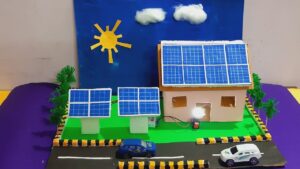
⚡ Solar Energy Model (Renewable Electricity)

This project demonstrates how sunlight can be converted into electrical energy using a solar panel. It is one of the best models for science exhibitions because it is simple and highly practical.

To make it, you need a small solar panel, LED bulb, connecting wires, switch, and a cardboard base. First, fix the solar panel on a cardboard sheet so it can directly face sunlight. Then connect the positive and negative terminals of the solar panel to the LED bulb using wires. You can also add a switch in between for control. When sunlight falls on the panel, electricity is generated and the LED glows.

This project helps you understand renewable energy, solar power conversion, and real-life applications like solar street lights and solar calculators.


💧 2. Water Purification System (Filtration Model)

This project explains how dirty water can be cleaned using natural filtering materials. It is very useful to understand how clean drinking water is produced.

To build it, take a plastic bottle and cut it into two halves. Place the upper half upside down like a funnel. Add layers inside: cotton at the bottom, then charcoal, sand, and gravel at the top. Now pour dirty water from the top slowly. The water will pass through all layers and come out cleaner at the bottom container.

Each layer has a role: gravel removes large particles, sand removes smaller impurities, and charcoal removes smell and color. This project teaches water purification techniques used in real water treatment plants and helps understand the importance of clean water.


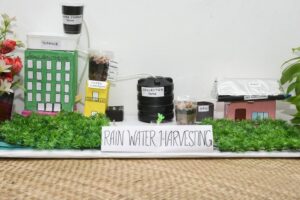
🌧️ 3. Rainwater Harvesting Model

This model shows how rainwater can be collected, stored, and reused instead of wasting it. It is very important for saving water resources.

To make it, create a small house model using cardboard. Attach small pipes or straws from the roof to act as rainwater channels. Under the pipe, place a container to collect water. You can also add a simple filter system using cotton and sand before water enters the tank. Pour water on the roof to simulate rainfall and observe how it flows into the storage tank.

This project teaches water conservation, groundwater recharge, and sustainable living. It also explains how cities use rainwater harvesting systems to prevent water shortage.


🌬️ 4. Wind Energy Model (Wind Turbine)

This project shows how wind energy is converted into electrical energy using a turbine. It is an important renewable energy source.

To make it, use cardboard or plastic to create 3–4 blades. Attach them to a small DC motor. Fix the motor on a stand made of cardboard or wood. Connect wires from the motor to an LED bulb. Now, when you blow air or use a fan, the blades rotate and the LED glows due to electricity generation.

This model explains how wind turbines work in wind farms. It teaches energy conversion, mechanical motion, and green energy concepts that are used to produce electricity without pollution.


🌱 5. Plant Growth Experiment (Effect of Sunlight)

This experiment shows how sunlight affects plant growth and explains the process of photosynthesis in a simple way.

To perform it, take two identical plants in pots. Keep one plant in direct sunlight and the other in a shaded area. Water both plants equally every day and observe them for 1–2 weeks. You will notice that the plant in sunlight grows faster, greener, and healthier, while the shaded plant becomes weak and pale.

This project helps you understand how plants need sunlight to prepare food through photosynthesis. It also teaches the importance of environmental conditions for plant growth and agriculture.


❓ Frequently Asked Questions (FAQs)

1. What are the easiest best science project ideas for Class 10 students?

The easiest science project ideas include solar energy models, water filtration systems, and pH indicator experiments. Moreover, these projects require simple and easily available materials. In addition, they are very easy to build, explain, and demonstrate in front of teachers. Therefore, they are highly recommended for school exhibitions.


2. How much time does a science project take?

Usually, simple science projects take around 3–7 days to complete. However, the exact time may vary depending on the design and level of detail. Furthermore, if the project is more complex or includes working circuits, it may take a little longer. As a result, proper planning is very important to complete it on time.


3. Can I use internet ideas for my project?

Yes, you can definitely take inspiration from the internet. However, it is important that you understand the concept clearly instead of copying it directly. In addition, you should try to modify or improve the idea in your own way. Therefore, your project will look more original and impressive to teachers.


4. Which subject is best for science projects?

Physics, chemistry, and biology all offer excellent project ideas. Therefore, students should choose the subject they understand the most. Moreover, selecting a familiar topic makes it easier to explain during viva. Consequently, it increases the chances of scoring higher marks.


Final Thoughts

The best science project ideas for Class 10 students are simple, practical, and highly creative. Therefore, students should mainly focus on understanding the scientific concepts instead of building overly complex models. In addition, they should try to keep their project neat, organized, and easy to explain, because presentation plays a very important role in scoring good marks.

Moreover, when students connect science with real-life applications, learning becomes much more meaningful and interesting. As a result, they not only perform better in exams but also develop a stronger understanding of how science works in everyday life.

Furthermore, teachers often appreciate projects that show clarity, effort, and creativity rather than difficulty alone. Consequently, even a simple model can earn high marks if it is explained well.

Finally, if you want even more creative options, you can explore additional ideas in this guide on 15 best science projects for students, which includes more detailed explanations and project suggestions for school exhibitions.

👉 15 Best Science Projects for Students

10 Major Current Environmental Problems on Our Planet

The Earth’s environment is facing numerous challenges, many of which are escalating in severity and impact as the global population continues to grow and industrialization accelerates. From climate change to pollution and biodiversity loss, these environmental issues pose a significant threat to our planet’s health and well-being. In this article, we will explore 10 major current environmental problems and delve into their causes, consequences, and potential solutions.

  • Climate Change

Climate change, driven primarily by human activities, is one of the most pressing environmental issues of our time. The burning of fossil fuels, deforestation, and other industrial processes release greenhouse gases like carbon dioxide (CO2) into the atmosphere, trapping heat and causing global temperatures to rise. This phenomenon has far-reaching consequences, including more frequent and severe weather events, rising sea levels, and disruptions to ecosystems and agriculture. Mitigating climate change requires transitioning to cleaner energy sources, reducing emissions, and implementing sustainable land-use practices.

  • Air Pollution

(Photo from iStock)

Air pollution, resulting from the release of pollutants into the atmosphere, poses a severe threat to public health and the environment. Emissions from vehicles, industrial facilities, and agriculture release harmful substances such as particulate matter, nitrogen oxides, sulfur dioxide, and volatile organic compounds into the air. These pollutants can lead to respiratory diseases, cardiovascular problems, and damage to the environment. Addressing air pollution involves stricter regulations on emissions, increased use of clean energy, and promoting public transportation.

  • Water Pollution

Water pollution is the contamination of water bodies like rivers, lakes, and oceans with harmful substances, including chemicals, pathogens, and nutrients. Agricultural runoff, industrial discharges, and inadequate waste management are significant contributors to water pollution. The consequences of water pollution are dire, affecting aquatic ecosystems, endangering drinking water sources, and harming human and wildlife health. To combat water pollution, we need better wastewater treatment. Consequently, sustainable farming practices, and responsible waste disposal.

  • Deforestation

(Photo from iStock)

Deforestation is the deliberate removal of forests to make way for agriculture, urban development, and other activities. This practice not only leads to the loss of biodiversity but also contributes to climate change, as forests play a crucial role in sequestering carbon. Deforestation disrupts habitats, releases stored carbon into the atmosphere, and can lead to soil erosion and water quality issues. Halting deforestation necessitates sustainable land management, afforestation efforts, and the enforcement of anti-deforestation laws.

  • Biodiversity Loss

The ongoing loss of biodiversity is a global crisis that threatens the stability of ecosystems and our planet’s ability to sustain life. Factors contributing to biodiversity loss include habitat destruction, overexploitation of natural resources, pollution, and the introduction of invasive species. The consequences of this loss are profound, affecting food security, disease control, and overall ecosystem resilience. Addressing biodiversity loss involves establishing protected areas, implementing sustainable fishing and logging practices, and conserving endangered species.

  • Ocean Acidification

(Photo from iStock)

Ocean acidification is a direct consequence of the increased concentration of atmospheric CO2. As the oceans absorb excess CO2, their pH levels decrease, making the water more acidic. This change has a detrimental impact on marine life, particularly organisms with calcium carbonate shells or skeletons, such as corals, mollusks, and some species of plankton. Ocean acidification disrupts marine food chains, harming fish populations and the livelihoods of coastal communities. To combat this issue, we must reduce CO2 emissions and protect vulnerable marine ecosystems.

  • Land Degradation

Land degradation refers to the deterioration of land quality, resulting from a variety of factors, including soil erosion, deforestation, and unsustainable agricultural practices. This problem reduces the productivity of land, leading to food insecurity and displacement of communities. Sustainable land management, reforestation, and responsible agriculture are vital to mitigating land degradation and preserving arable land for future generations.

  • Plastic Pollution

(Photo from iStock)

The widespread use and improper disposal of plastic products have led to a global crisis of plastic pollution. Plastics do not readily biodegrade, and they persist in the environment for hundreds of years, leading to plastic waste accumulation in oceans, rivers, and landscapes. This pollution harms wildlife, disrupts ecosystems, and poses risks to human health through microplastic ingestion. Solutions to plastic pollution involve reducing plastic production and consumption, improving waste management. Furthermore, promoting the development of biodegradable alternatives.

  • Resource Depletion

Human consumption of finite natural resources, such as minerals, metals, and fossil fuels, is outpacing the Earth’s ability to regenerate them. Resource depletion not only drives environmental problems like deforestation, water pollution, and air pollution but also threatens economic stability. Specifically, transitioning to a circular economy, reducing waste, and promoting sustainable consumption can help alleviate the strain on our planet’s resources.

  • Overpopulation

(Photo from iStock)

The world’s population is steadily increasing, and this demographic trend exacerbates many environmental problems. Overpopulation places greater demands on resources, leads to urban sprawl, and results in increased pollution and habitat destruction.  Especially, to address this issue, we need to promote family planning, education, and equitable access to healthcare and contraception.

Solutions and Conclusion

The 10 major environmental problems discussed in this article are interlinked, and addressing them requires a coordinated effort at the individual, community, national, and global levels. Moreover, while it may be challenging to tackle these issues. It’s essential to recognize that many solutions exist, and we have the capacity to mitigate and even reverse some of the damage that has already been done.

Individual actions, such as reducing energy consumption, recycling, and supporting sustainable products and practices, can make a difference. Communities can implement local initiatives to reduce pollution, conserve resources, and protect ecosystems. Governments and international organizations must enact and enforce policies.  Evidently, that encourage responsible environmental stewardship. Promote renewable energy sources, and incentivize sustainable agriculture and forestry.

In conclusion, our planet’s environmental problems are urgent and pressing, but they are not insurmountable. With concerted effort, innovation, and global cooperation, we can work towards a more sustainable and harmonious relationship with the Earth. It is our responsibility to address these challenges and protect the environment for current and future generations. Eventually,  by taking action now, we can build a brighter, more sustainable future for our planet.

Reference:

Ecobin

Your little friend needs a toy, confused between what to choose?, what are you waiting for click on the link below:

How to choose right dog toy on your own


15 Best Science Projects for Students

Science is all about curiosity, exploration, and discovery. It’s a subject that fuels our understanding of the world around us and opens up doors to countless possibilities. Engaging in science projects not only enhances students’ knowledge but also fosters critical thinking, problem-solving skills, and a passion for learning. Whether you’re a parent looking for fun activities to do with your child or a student seeking an exciting project for a science fair, here are 15 of the best science projects for students.

Science projects for students are a perfect blend of education and entertainment, offering a hands-on approach to understanding complex scientific concepts. Whether you’re a parent looking for engaging activities or a student preparing for a science fair, here are 15 science projects that promise both learning and fun.

  1. Volcano Eruption

(Photo from iStock)

Creating a volcanic eruption model is a classic and visually captivating project. It helps students understand the basics of chemical reactions. You’ll need baking soda, vinegar, and a small model volcano made of clay or papier-mâché. Add the baking soda to the volcano, then pour in vinegar to simulate an eruption.

  1. Solar System Model

Build a scale model of the solar system to comprehend the relative sizes and distances of planets. You can use various materials like Styrofoam balls, paint, and a wooden dowel. Research each planet’s characteristics and arrange them according to their distance from the Sun.

  1. Homemade Slime

Slime-making experiments are both fun and educational. Create a non-Newtonian fluid by mixing white school glue, water, borax, and food coloring. Discuss the science behind polymers and how they interact with the ingredients.

  1. Growing Crystals

Growing crystals is a fascinating way to learn about chemistry and mineral formation. Common household items like sugar, salt, or alum can be used to grow crystals. Students can experiment with different solutions and conditions to optimize crystal growth.

  1. Potato Battery

(Photo from iStock)

Demonstrate the basic principles of electricity generation using a potato battery. Insert two different metal electrodes into a potato and connect a small LED or clock. This project helps students understand the concept of chemical energy conversion into electrical energy.

  1. Water Filtration System

Develop a DIY water filtration system to understand the importance of clean water. You’ll need materials like sand, gravel, charcoal, and containers. Show how these components can effectively filter impurities from dirty water.

  1. Paper Airplane Aerodynamics

Explore the science of aerodynamics by designing and testing paper airplanes. Students can modify their planes to improve stability, distance, and accuracy. This project is an excellent introduction to the principles of physics and engineering.

  1. Electromagnetic Train

Construct a simple electromagnetic train using a battery, a coil of wire, and a magnetic object. When the circuit is closed, the electromagnetic field propels the train forward. It’s a great way to learn about electromagnetism and its applications.

  1. Egg Drop Experiment

(Photo from iStock)

The egg drop experiment challenges students to design a contraption that protects a raw egg from breaking when dropped from various heights. This project teaches about the principles of physics, engineering, and impact forces.

  1. Dissolving Candy

Explore the concept of solubility by dissolving different types of candy in water. This project allows students to observe and record how different candies dissolve at various rates, teaching them about the science of solutions.

  1. Static Electricity

Investigate static electricity by creating a simple static electricity generator. You’ll need a plastic comb, a piece of fabric, and some small pieces of paper. Rub the comb against the fabric to generate static electricity and observe its effects on the paper pieces.

  1. pH Experiments with Cabbage Juice

Use cabbage juice as a natural pH indicator to test the acidity or alkalinity of common household substances. This project offers hands-on experience with acids and bases and can be a great introduction to chemistry.

  1. Magnet Experiments

(Photo from iStock)

Explore the properties of magnets and magnetic fields through various experiments. Test different materials to see if they are attracted to magnets, make a compass, or build a simple electromagnetic crane to pick up small objects.

  1. Sound Vibrations

Discover the science behind sound by building musical instruments. Create a simple drum, a xylophone, or even a kazoo to explore how vibrations create different sounds. This project introduces students to the physics of sound waves.

  1. Density Tower

Construct a density tower with layers of liquids like oil, water, and syrup. This project showcases the concept of density and the principle that objects of higher density sink in substances of lower density. It’s a visually striking way to teach this fundamental scientific concept.

Conclusion

Engaging in science projects is a fantastic way for students to explore the wonders of the natural world and develop critical thinking skills. These 15 science projects cover a broad range of scientific principles, from chemistry to physics, and are suitable for students of various ages and skill levels. Whether you’re a teacher, a parent, or a student looking for an exciting project, these ideas can inspire a lifelong love of science and learning. So, roll up your sleeves, gather your materials, and start exploring the fascinating world of science through these engaging projects.

These 15 projects are not only informative but also incredibly entertaining. They foster a love for science while encouraging students to explore the intriguing world of scientific phenomena. So, gather your materials, let your curiosity run wild, and embark on a journey of discovery through these delightful science projects.

In conclusion, science kits are invaluable tools that foster a love for learning and exploration in the field of science. These kits provide students with a hands-on, immersive experience that goes beyond textbooks and traditional classroom teaching. They inspire curiosity, critical thinking, and problem-solving skills, making science not only understandable but also enjoyable.

By offering a wide range of experiments and activities, science kits cater to different ages and skill levels, making science accessible to all. They instill a sense of wonder and discovery that can lead to a lifelong passion for scientific inquiry. Additionally, science kits are a fantastic resource for parents and teachers, simplifying the process of teaching complex concepts in a fun and engaging way. Overall, science kits play a pivotal role in nurturing the next generation of scientists and innovators, making the world of science more accessible and exciting for everyone.

Reference:

Byjus

Your little friend needs a toy, confused between what to choose?, what are you waiting for click on the link below:

How to choose right dog toy on your own


Top General Knowledge Questions and Answers About Science

Science is the systematic pursuit of general knowledge through observation, experimentation, and analysis. It has played a pivotal role in shaping our understanding of the natural world and the universe. Science is not only about complex equations and laboratory experiments; it is an integral part of our daily lives, influencing everything from technology and medicine to the environment. In this article, we will explore the top  general knowledge questions and answers about science to broaden our understanding of this fascinating field.

(Photo from iStock)

  • What is the scientific method?

It entails gathering data through experiments, generating hypotheses, collecting observations, and drawing conclusions.

  • Who is considered the father of modern physics?

Answer: Albert Einstein is often regarded as the father of modern physics.

  • What is the fundamental unit of life?

The cell is the fundamental unit of life. It is an organism’s smallest functional and structural unit.

  • Who developed the periodic table of elements?

Answer: Dmitri Mendeleev, a Russian chemist, is credited with developing the periodic table of elements.

  • What is the Earth’s closest celestial body?

Answer: The Moon is the Earth’s closest celestial body, located approximately 238,855 miles (384,400 kilometres) away.

  • What is the process by which plants convert sunlight into energy?

Photosynthesis is the process by which plants convert sunlight into energy. Nevertheless, they use sunlight to convert carbon dioxide and water into glucose and oxygen.

  • What gas do plants absorb from the atmosphere during photosynthesis?

Answer: Plants absorb carbon dioxide (CO2) from the atmosphere during photosynthesis.

  • What is the chemical formula for water?

Answer: The chemical formula for water is H2O, indicating that it consists of two hydrogen. Henceforth, atoms and one oxygen atom.

  • What is the Earth’s largest organ?

Subsequently, the skin is the Earth’s largest organ, serving as a protective barrier and regulating body temperature.

  • Which gas is the most prevalent in the atmosphere of Earth?

Answer: Nitrogen is the most abundant gas in Earth’s atmosphere, comprising approximately 78% of the air we breathe.

  • What is the heart’s main purpose in humans?

Answer: The primary function of the human heart is to pump oxygenated blood throughout the body, providing oxygen and nutrients to cells.

  • What is the smallest planet in our solar system?

Mercury is the smallest planet in our solar system, characterized by its extreme temperatures and lack of a substantial atmosphere.

  • Which is the largest organ in the human body?

Answer: The liver is the largest internal organ in the human body, playing a crucial role in metabolism, detoxification. Finally,  various other functions.

  • Who formulated the laws of motion?

Answer: Sir Isaac Newton formulated the laws of motion, which are fundamental principles in physics that describe the relationship between an object’s motion and the forces acting upon it.

  • What is the world’s most widely spoken language?

With over a billion native speakers, Mandarin Chinese is the most commonly spoken language in the world.

  • What is the smallest particle in an element?

Answer: An atom is the smallest particle in an element. It is made up of an electron-orbiting nucleus that is composed of protons and neutrons.

  • What is the study of fossils called?

It involves the examination of ancient life forms and the reconstruction of Earth’s prehistoric past.

  • What is the Earth’s largest ocean?

The Pacific Ocean is the Earth’s largest and deepest ocean, covering approximately one-third of the planet’s surface.

  • What is the study of the Earth’s physical structure and processes called?

Answer: Geology is the study of the Earth’s physical structure and processes, including the study of rocks, minerals, and the forces that shape the planet.

  • Who discovered penicillin, the first antibiotic?

Sir Alexander Fleming discovered penicillin in 1928, revolutionizing medicine and leading to the development of antibiotics.

  • What gas do humans exhale when they breathe out?

Answer: When humans breathe out, they exhale carbon dioxide (CO2), a waste product of cellular respiration.

  • Which metal is the most prevalent in the crust of the Earth?

Answer: Aluminium is the most abundant metal in the Earth’s crust, making up approximately 8.2% of the Earth’s solid surface.

  • What is the process by which plants and animals convert food into energy?

Cellular respiration is the process by which plants and animals convert food into energy. Explicitly, it involves the breakdown of glucose to produce ATP (adenosine triphosphate).

  • What is the world’s largest desert?

Answer: The world’s largest desert is the Antarctic Desert, covering the continent of Antarctica.  Conversely, it is a cold desert characterized by its extreme climate and low precipitation.

  • What is the second law of thermodynamics?

Answer: The second law of thermodynamics states that in any energy transfer or transformation, the total entropy (disorder) of a closed system will always increase over time.

  • What mechanism allows plants to lose water through their foliage?

Especially, it is part of the plant’s water and nutrient transportation system.

  • What is the world’s largest land animal?

Answer: The African elephant is the world’s largest land animal. Specially,  with males reaching weights of up to 13,000 pounds (5,897 kilograms).

  • What is the human lung’s principal purpose?

Answer: The primary function of the human lungs is to exchange oxygen and carbon dioxide with the blood. Despite, enabling the body to receive oxygen and eliminate waste carbon dioxide.

Conclusion

Undoubtedly, Science is a vast and ever-evolving field that offers a profound understanding of the natural world and its many facets. Essentially, these  general knowledge questions and answers about science cover a wide range of topics. Hence,  from basic principles to complex phenomena. Certainly, by delving into these questions, we gain a deeper appreciation for the world around us and the role that science plays in shaping our lives and our understanding of the universe. Eventually, science continues to push the boundaries of general knowledge, and the quest for answers to new questions is a testament to the enduring curiosity of humanity. Hence, this helps you to increase your knowledge.

Reference:

Examsbook
Making your home fireproof is important, searching for some effective tips?, your wait is over click on the link below:
Tips to make your home fireproof

10 Top High-Paying Courses After 12th Grade Science

Introduction

Top 10 high-paying courses after 12th Science is one of the most searched topics among students today. After completing Class 12, Science students face many career choices. Therefore, selecting the right course becomes very important for future success.

Moreover, Science stream opens doors to multiple high-income and stable careers. In addition, these careers offer growth, job security, and global opportunities. However, students often feel confused due to the wide range of options.

Because of this, understanding each career path clearly helps in making better decisions. This guide explains the top 10 high-paying courses after 12th Science in detail. As a result, students can choose a career that matches both interest and earning potential.

1. Engineering – Top Career in High-Paying Courses After 12th Science

(Photo from iStock)

Engineering remains one of the most popular choices in the top 10 high-paying courses after 12th Science. Moreover, it offers multiple branches such as Computer Science, Mechanical, Civil, and Electrical Engineering.

Engineers design, build, and maintain systems that support modern life. Therefore, they are in high demand across industries. In addition, engineering provides strong salary growth from the beginning of a career.

However, the earning potential depends on specialization. For example, Computer Science Engineering often leads to higher-paying tech jobs. Meanwhile, Mechanical and Civil Engineering offer stable government and private sector opportunities.

Moreover, engineering is a global career path. As a result, graduates can work in India or abroad. Therefore, it remains one of the safest and most rewarding choices after 12th Scienc

2. Medicine – High-Paying Healthcare Career After 12th Science

Medicine is one of the most respected options in the top 10 high-paying courses after 12th Science. Moreover, it requires dedication, long study years, and strong academic performance.

Doctors diagnose and treat diseases, which makes their role extremely important. Therefore, medical professionals are always in demand. In addition, specializations like Cardiology, Neurology, and Orthopaedics offer very high salaries.

However, becoming a doctor requires completing MBBS followed by specialization. Consequently, the journey is long but rewarding. Moreover, doctors gain social respect along with financial stability.

In addition, healthcare demand is increasing globally. As a result, medical careers offer long-term job security. Therefore, Medicine is a top choice for Science students seeking both income and purpose.

3. Computer Science – Fast-Growing Tech Career After 12th Science

Computer Science is one of the fastest-growing fields in the top 10 high-paying courses after 12th Science. Moreover, it powers industries like software, AI, and cybersecurity.

Students learn programming, algorithms, and system design. Therefore, they become eligible for high-paying tech roles. In addition, companies worldwide hire Computer Science graduates.

However, this field requires continuous learning. Because technology evolves quickly, professionals must upgrade skills regularly. Consequently, those who stay updated earn higher salaries.

Moreover, careers like Software Engineer, AI Developer, and Cybersecurity Expert are in high demand. As a result, Computer Science offers global job opportunities. Therefore, it is one of the most future-proof careers after 12th Science.
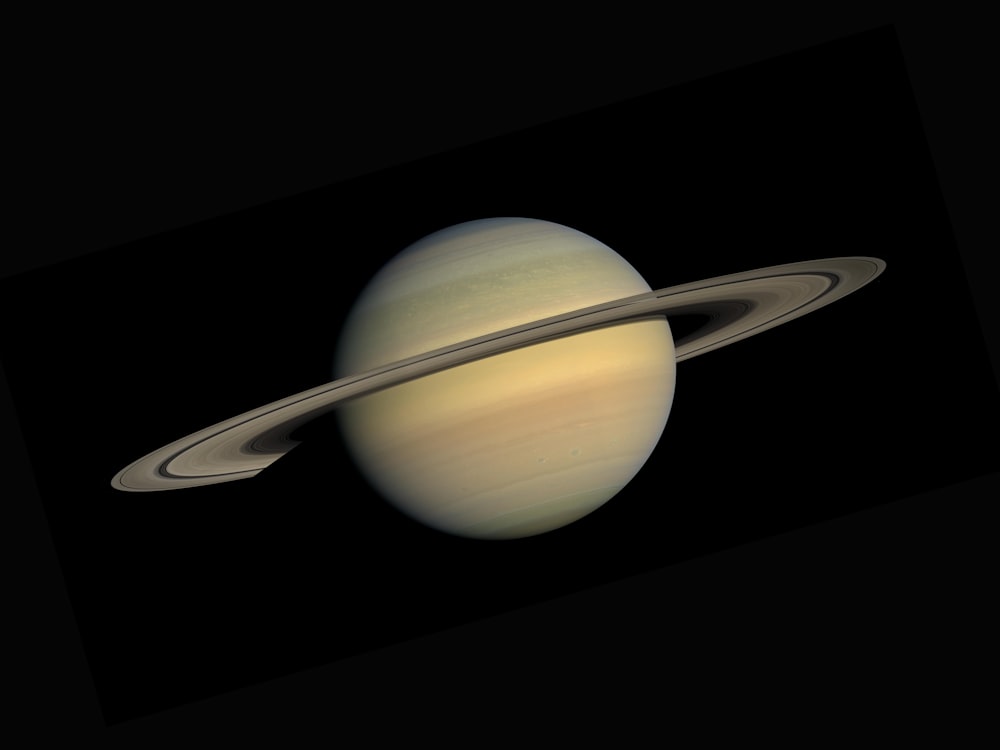
4. Pharmacy – Stable Healthcare Option After 12th Science

(Photo from iStock)

Pharmacy is another strong option in the top 10 high-paying courses after 12th Science. Moreover, it focuses on medicine development, distribution, and patient safety.

Pharmacists work in hospitals, research labs, and pharmaceutical companies. Therefore, they play a key role in healthcare systems. In addition, demand for medicines ensures job stability.

However, students must study subjects like chemistry and biology deeply. Consequently, pharmacy requires strong academic focus. Moreover, higher qualifications lead to better salaries.

In addition, the pharmaceutical industry is growing globally. As a result, career opportunities are increasing rapidly. Therefore, Pharmacy is a secure and rewarding career path.

5. Aerospace Engineering – Elite Career After 12th Science

Aerospace Engineering is one of the most advanced options in the top 10 high-paying courses after 12th Science. Moreover, it involves designing aircraft and spacecraft.

Engineers in this field work with organizations like ISRO, NASA, and SpaceX. Therefore, the career is highly prestigious. In addition, salaries are among the highest in engineering fields.

However, the field is highly competitive. Consequently, students need strong mathematics and physics skills. Moreover, advanced training is often required.
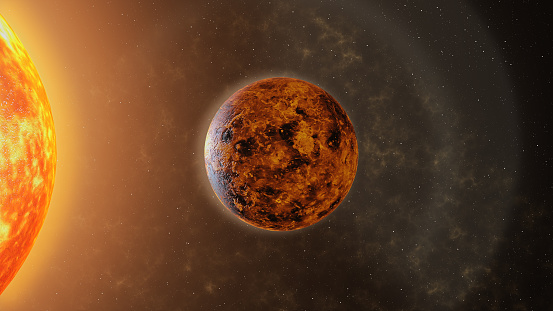
In addition, space technology is expanding rapidly. As a result, job opportunities are increasing. Therefore, Aerospace Engineering is ideal for students interested in innovation and space science.

6. Data Science – Future-Oriented Career After 12th Science

Data Science is one of the most in-demand fields in the top 10 high-paying courses after 12th Science. Moreover, it focuses on analyzing large data sets to find patterns and insights.

Data scientists work in finance, healthcare, and e-commerce industries. Therefore, their skills are highly valuable. In addition, companies use data science for decision-making.

However, this field requires knowledge of mathematics, statistics, and programming. Consequently, it demands analytical thinking. Moreover, professionals must keep learning new tools.

In addition, demand for data experts is increasing worldwide. As a result, salaries are very competitive. Therefore, Data Science is a top modern career option.

7. Biotechnology – Science Innovation Career After 12th Science

(Photo from iStock)

Biotechnology is a growing field in the top 10 high-paying courses after 12th Science. Moreover, it combines biology and technology to create new solutions.

Biotechnologists work in medicine, agriculture, and environmental science. Therefore, they contribute to important global challenges. In addition, research roles offer high earning potential.

However, the field requires strong biology knowledge. Consequently, students must focus on life sciences. Moreover, advanced degrees improve career growth.

In addition, biotechnology is expanding rapidly. As a result, research opportunities are increasing. Therefore, it is a strong choice for science-oriented students.

8. Architecture – Creative Career After 12th Science

Architecture is a creative option in the top 10 high-paying courses after 12th Science. Moreover, it combines design, mathematics, and construction.

Architects design buildings, cities, and infrastructure. Therefore, their work shapes the environment. In addition, experienced architects earn high salaries.

However, the course requires creativity and technical skills. Consequently, students must balance both art and science. Moreover, practical experience is very important.

In addition, construction industries are always active. As a result, job opportunities remain stable. Therefore, Architecture is ideal for creative Science students.

9. Geology – Earth Science Career After 12th Science

Geology is a lesser-known but valuable option in the top 10 high-paying courses after 12th Science. Moreover, it studies Earth’s structure and natural resources.

Geologists work in mining, oil, and environmental sectors. Therefore, their work supports major industries. In addition, fieldwork plays a big role in this career.

However, it requires strong knowledge of physics and geography. Consequently, students must be interested in Earth sciences. Moreover, field conditions can be challenging.

In addition, natural resource industries offer high salaries. As a result, geology professionals are well paid. Therefore, it is a strong but underrated career option.

10. Actuarial Science – High-Salary Analytical Career After 12th Science

(Photo from iStock)

Actuarial Science completes the top 10 high-paying courses after 12th Science. Moreover, it uses mathematics and statistics to assess financial risks.

Actuaries mainly work in insurance and finance sectors. Therefore, they play a key role in risk management. In addition, salaries are among the highest in analytical fields.

However, the profession requires passing multiple exams. Consequently, it demands patience and discipline. Moreover, strong math skills are essential.

In addition, global demand for actuaries is increasing. As a result, job opportunities are expanding. Therefore, Actuarial Science is a highly rewarding career choice.

Conclusion

Education plays a pivotal role in shaping your future, and choosing the right course after 12th Science is a significant milestone in this journey. The fields we’ve explored are known for their high earning potential, but they also come with unique challenges and opportunities.

Engineering, for example, offers a wide range of specializations, from civil engineering, which involves the design and construction of infrastructure, to computer engineering, where you develop cutting-edge software and hardware. The demand for engineers remains strong across the globe.

In conclusion, a career in Science can open doors to a wide variety of high-paying and rewarding opportunities. Consider your interests, strengths, and long-term goals as you choose a path that not only offers a generous salary but also aligns with your passion and purpose. With dedication and continuous learning, you can embark on a fulfilling and prosperous career journey after completing your 12th-grade education in Science.

FAQ – High Paying Courses After 12th Science


What are the best high paying courses after 12th Science?

The best high paying courses after 12th Science include engineering, medicine, computer science, data science, pharmacy, and biotechnology. Moreover, actuarial science and aerospace engineering also offer excellent salary opportunities. However, students should choose based on interest and skill set for long-term success.


Which career has the highest salary after 12th Science?

Medicine, data science, and computer science offer some of the highest salaries after 12th Science. Moreover, specialized fields like surgery, AI engineering, and actuarial science provide even higher income. However, experience and skills play a major role in salary growth.


Is computer science a good career after 12th Science?

Yes, computer science is one of the best career options after 12th Science. Moreover, it offers jobs in software development, AI, cybersecurity, and data science. Therefore, it provides high salary packages and global career opportunities.


Is biotechnology a good career option?

Biotechnology is a good career option for students interested in biology and research. Moreover, it offers opportunities in healthcare, agriculture, and pharmaceuticals. However, strong scientific knowledge is required for success in this field.


Can I get a high salary without engineering or medicine?

Yes, many high-paying careers exist outside engineering and medicine. Moreover, fields like data science, pharmacy, actuarial science, and architecture offer excellent income opportunities. Therefore, skill development is more important than just degree choice.

Reference:

Brainwonders
Making your home fireproof is important, searching for some effective tips?, your wait is over click on the link below:
Tips to make your home fireproof


Quantum Realm: Mind-boggling things you should know

Quantum Realm: Mind-boggling things you should know

Quantum realm over time has attracted attention of not only scientists but makers of science fiction movies. This is interesting place to explore and know about. Join us in this article to discover the quantum realm.

The world of quantum is lumpy: quantum realm

IMAGE CREDITS: istockphoto.com

There are many parallels between the quantum world and shoes. You can’t just walk into a store and choose a pair of sneakers that perfectly fit your feet. You are compelled to pick from pairs that have fixed sizes.

The world of the atom is comparable. For demonstrating that energy is quantized, Albert Einstein was awarded the Nobel Prize. Similar to how shoes can only be bought in multiples of half a size, energy is only available in multiples of the same “quanta.”. The quanta in question is the Planck constant, so called in honor of quantum physicist Max Planck. He was attempting to resolve an issue with our comprehension of the sun and other hot objects.

Both wave and particle: quantum realm

Since J. J. Thomson discovered that electrons are particles, he was awarded the Nobel Prize in 1906. The discovery that electrons are waves, however, earned his son George the 1937 Nobel Prize. Who was correct? The two of them are the solution. The foundation of quantum physics is what is known as the wave-particle duality. Both electrons and photons are affected by it. Thoughts of light as electromagnetic waves are sometimes advantageous; it is sometimes more beneficial to consider them as tiny particles known as photons.

In addition to focusing light waves from far-off stars, a telescope also serves as a massive light bucket for photon collection. It also implies that light can apply pressure on an item as photons collide with it.

An object; two places; same time

Superposition is demonstrated by wave-particle duality. It is a quantum object that exists in several states at once. For instance, an electron exists concurrently in both locations. Only after we conduct an experiment to determine its location does it settle into one or the other.

As a result, probability science is created out of quantum physics. After we look, we can only speculate as to which condition an object is most likely to be in. A mathematical concept known as the wave function has these chances. The wave function is said to “collapse” when an observation is made, eradicating the superposition and reducing the object to just one of its many potential states.

Into the multiverse: quantum realm

IMAGE CREDITS: Unsplash.com

The Copenhagen interpretation of quantum physics holds that observation causes the wave function to collapse and compels a quantum ‘choice. It’s not the only choice available, though. According to proponents of the “many worlds” interpretation, there is absolutely no decision to be made. Instead, reality splits into two versions of itself at the point of measurement, one in which we experience outcome A and the other in which we observe outcome B come to pass. It avoids the tricky question of whether a dog or a robot counts as an observer when something needs to happen.

Instead, there is just one extremely bizarre reality made up of numerous entangled layers as far as a quantum particle is concerned.

Characterizing stars: quantum realm

Niels Bohr, a Danish physicist, demonstrated to us that electron orbits within atoms are likewise quantized. They are available in fixed dimensions known as energy levels. A photon with an energy equal to the width of the gap is released when an electron jumps from a higher energy level to a lower energy level. A particle of light can also be absorbed by an electron, which can then harness that energy to advance to a higher energy state.

Astronomers frequently employ this effect. We can discern missing colors when we divide a star’s light into a spectrum like a rainbow, and this allows us to determine what the star is comprised of.

Quantum tunnelling

IMAGE CREDITS: istockphoto.com

Nuclear fusion is the method used by the sun to produce energy. The positively charged protons in an atom must cling together for this to occur. Yet, they repel one another due to their equal charges, acting similarly to the two north poles of a magnet. It resembles a wall between the two protons and is known as the Coulomb barrier in physics.

Consider protons as particles that just slam into the wall before dispersing: No fusion, no sun. Nevertheless, if you consider them as waves, the situation changes. The leading edge of the wave has already passed through when the wall is reached by its crest.

Where the proton is most likely to be is represented by the height of the wave. In light of this, even though it is improbable to be present there, it occasionally is. Fusion takes place as if the proton has broken through the barrier. Physicists call this effect “quantum tunnelling”.

Pauli exclusion principle: quantum realm

Our star will eventually stop fusing fuel, and the sun will cease to exist. Gravity will eventually cause the sun to collapse, but not permanently. As it gets smaller, more material is crammed inside. Eventually, the quantum physics concept known as the Pauli exclusion principle comes into play. According to this, some particle types, like electrons, are not permitted to dwell in the same quantum state. Degeneracy pressure is the name given by astronomers to the resistance that gravity encounters when attempting to do just that. Once the collapse is over, a brand-new white dwarf, an object the size of Earth, appears.

Boundary of a black hole: quantum realm

IMAGE CREDITS: istockphoto.com

It is impossible to concurrently fully understand two properties of a system, according to the Heisenberg uncertainty principle, a quantum law. The more clearly you understand one, the less precisely you understand the other. This holds true for both momentum and position as well as for energy and time individually.

It resembles getting a loan in certain ways. You can borrow a lot of money for a brief period of time or a little money for a longer period of time. Virtual particles are the result of this. A pair of particles can momentarily form if sufficient energy is “borrowed” from nature, then vanish quickly so as not to miss payments.

Stephen Hawking thought that this process would take place at a black hole’s edge, where one particle would escape (as Hawking radiation) and the other would be sucked in. As it doesn’t pay back the whole amount it has borrowed, the black hole steadily disappears over time.

USEFUL LINKS:

Explore the quantum realm more:

10 things to know about the quantum 

Know about aliens and exoplanets:

Exoplanets that could host alien life 

Check out some unanswered questions in Physics:

Biggest unanswered questions in Physics


Wildest planets in the Milky Way: Universe facts

Wildest planets in the Milky Way: Universe facts

Our understanding of the deep space mysteries is continually expanding. There are wildest planets out there. The Perseverance rover landed on Mars in February 2021, and the first image of a black hole was revealed on April 2019. We are now able to examine light coming from the very beginnings of our universe thanks to the James Webb Space Telescope. It has given insight into many wildest planets in the universe. The first definitive proof of carbon dioxide in an exoplanet’s atmosphere was recorded by Webb in August 2022. The planet is a gas giant that orbits a Sun-like star 700 light-years away (but we do not yet have an image of it).

Even if these amazing mechanical achievements have increased our capacity to understand the universe, there is still a vast amount of space, including a great number of exoplanets in distant systems, that needs to be explored. Exoplanets, which are planets that are found outside of our solar system, can be incredibly bizarre. One might be the Earth’s twin, another resembles a rugby ball, and a third circles a supernova. Since 1992, we have found more than 5,000 exoplanets as a result of our constantly expanding view of the cosmos. In fact, the Kepler Telescope found that there are more exoplanets in our galaxy than stars. By measuring their diameters and masses, scientists can determine whether they are rocky, gaseous, ice, or streaming with lava, yet some still defy explanation.

TOI-1452b’s: wildest planets

IMAGE CREDITS: istockphoto.com

A “promising candidate for future atmospheric characterization” was recently discovered by the James Webb Space Telescope in this exoplanet orbiting a red dwarf star 100 light-years away. Researchers found this exoplanet because, like many others, it obstructs a portion of the star’s light whenever it passes in front of it.

Researchers can infer from this data that this planet is 70 percent larger than ours, giving it the moniker “super-Earth,” and that it revolves very quickly, once every 11 days or so. Its density would suggest that it has a deep ocean surface in addition to having a similar composition of rock and metal to our planet.

Remarkably, water might account for 30% of TOI-1452b’s mass, a much higher percentage than the planet’s 1% water mass.

WASP-39

The exoplanet WASP-39 b was thoroughly studied by Webb’s Near-Infrared Spectrograph (NIRSpec), which also discovered convincing evidence of carbon dioxide in the atmosphere. This gas, which is common on Earth, has never before been found on a planet outside of our solar system. It is possible to detect water and methane, which are signs of potential life, in the 3- to 5.5-micron range, which is in the infrared region of the transmission spectrum.

WASP-39 b, a hot gas giant 700 light-years away and with a surface temperature of almost 1,600 degrees Fahrenheit, has a mass roughly one-quarter that of Jupiter but a diameter that is 1.3 times larger. It makes one lap around its Sun-like star every four Earth days due to its brisk orbit and near approach.

WASP-103 b: wildest planets

IMAGE CREDITS: istockphoto.com

The first non-spherical exoplanet discovered is WASP-103 b, which resembles a rugby ball. Tidal forces on the planet have pushed it into a rugby ball form, according to studies, as it whips around its star in less than a day.

The unusual planet within the constellation of Hercules was found by the Characterizing ExOPlanet Satellite, or Cheops, of the European Space Agency. WASP-103 b, which is twice the size of Jupiter, is quite close to its star, WASP-103, whose gravitational pull on it is constant. The planet’s apparent distance from its star seems to be increasing with each orbit, which is perhaps even more perplexing. Perhaps it’s too close to handle.

TYC 8998-760-1 b

IMAGE CREDITS: istockphoto.com

An incredibly young Sun-like star, only 17 million years old, is orbited by a gas giant. And its companion planet more than 300 light-years from Earth. Its planets must likewise be young. As we can detect from our ground-based telescopes. That they emit a light when they are still developing.

As a result, TYC 8998-760-1 b is a somewhat uncommon occurrence. Since, brightness typically at least partially conceals the planets themselves. This exoplanet was discovered by Chile’s Paranal Observatory in the Atacama Desert.

There is a possibility that TYC 8998-760-1 b is a brown dwarf. Which is a type of planet that is halfway between a failed star. And a typical planet in size and temperature. With a mass that is 14 times that of Jupiter, it is still a giant.

Barnard’s Star: wildest planets

The planets that Barnard’s Star lacks are more well-known than the ones it does have. I’ll explain. Since the 1960s, there has been a contentious debate in the astronomical community. About whether or not the star—the fourth closest to Earth—had planets. Right now, the answer is no. Nonetheless, for at least ten years after Peter van de Kamp made an official declaration in 1963. A lot of people held the mistaken belief that Barnard’s Star had two gas giants in orbit around it.

Van de Kamp persisted in his assertions, but Hubble observations in the late 1990s disproved them. But here’s the thing. Hubble didn’t rule out the possibility of planets around Barnard’s Star.

PSR B1257+12 A: wildest planets

IMAGE CREDITS: istockphoto.com

Throughout the past 20 years, planets around sun-like stars have been found. But, we have been aware of planets outside of our solar system for a while. They were simply fundamentally different from any solar system we had imagined. say, in the vicinity of a supernova remnant.

The record for the smallest exoplanet still belongs to the first one found. PSR B1257+12 A, also known as PSR B1257+12 b, is a pulsar-orbiting object that is hardly larger than the moon. In 1994, the planets in the system were found thanks to the drag they produced on their star of origin. The “most precise clocks in the cosmos” are pulsars, which are referred to as cosmic timekeepers. But, something was slightly off-centering PSR B1257+rhythm. 12’s.

USEFUL LINKS:

Learn more about wildest planets:

13 coolest exoplanets in the universe

Learn about disposing your old electrical appliances:

How to dispose your old appliances 

See about conserving electricity:

How to conserve electricity effectively 

Exoplanets that could host alien life: Universe facts

Exoplanets that could host alien life: Universe facts

The list of planets with the best chances for supporting life outside of our solar system is available in the Habitable Exoplanets Catalogue as of April 2014. The ecosystems of these planets remain largely unexplored, and not all of them have been verified. Yet, the catalogue offers astrobiologists a fantastic starting point when discussing life that exists in other solar systems.

Since the first exoplanet was confirmed to be orbiting a sun-like star in 1995, more than 4,000 have been found, according to NASA’s Exoplanet Exploration page. More than half of these discoveries come from the NASA Kepler space observatory, which was launched in 2009 with the aim of figuring out the frequency of Earth-like planets throughout the Milky Way galaxy.

The University of Puerto Rico at Arecibo has listed the planets that are known to us and are most likely to contain extra-terrestrial life. Discover these mind blowing exoplanets here.

Kepler-186f: exoplanets

IMAGE CREDITS: istockphoto.com

The first truly Earth-sized exoplanet discovered in the habitable zone of its host star is Kepler-186f. The extra-terrestrial Planet, which is 490 light-years away from Earth, is just 10% larger and probably certainly made of rocky material.

Gliese 581

It’s a contentious discovery, this planet. Although it was found in 2010, getting it verified has proven to be challenging. The University of Puerto Rico at Arecibo continues to consider Gliese 581 to be the best candidate for extra-terrestrial life. If confirmed, this rocky planet is two to three times as large as Earth and is located around 20 light-years from the sun. It rotates approximately every 30 days around its parent star Gliese 581 in the constellation Libra.

Gliese 667Cc: exoplanets

Gliese 667Cc, another “super-Earth,” is a nearby object, only 22 light-years away in the constellation Scorpius. The planet takes 28 days to complete one circle of its parent star and is at least 4.5 times larger than Earth. The parent star, GJ 667C, is actually a triple-star system. The star has an approximate mass of the sun and is an M-class dwarf star.

Kepler-22b

IMAGE CREDITS: istockphoto.com

Kepler-22b is larger than Earth, but it orbits a star that is similar to the sun in terms of size and warmth. It is predicted that the surface temperature of Kepler-22b, which is 2.4 times the size of Earth and has a greenhouse effect similar to that of our planet, is 72 degrees Fahrenheit. This star system is located in the constellation Cygnus, 600 light-years from the sun.

HD 40307g

The habitable zone of its parent star is peacefully occupied by the super-Earth HD 40307g. It is located 42 light-years away from Earth in the constellation Pictor.  Future telescopes might be able to look at its surface because it is so close by. Just over half of the 93 million mile (156 million km) distance between the Sun and Earth, it orbits its parent star at a distance of 56 million miles (90 million km) (150 million kilometers.)

HD 85512b: exoplanets

HD 85512b was one of 50 planets discovered by the High Accuracy Radial Velocity Planet Searcher instrument, or HARPS, in Chile, and was first reported in 2011. This planet has a mass that is roughly 3.6 times that of Earth. It lives in the constellation Vela, about 35 light years from the sun (the Sail). Researchers believe that one day it may be feasible to tell whether there is water present on its surface.

Tau Ceti e: exoplanets

IMAGE CREDITS: Unsplash.com

The distance between Earth and the planet candidate Tau Ceti e, which was discovered in December 2012, is only 11.9 light-years. A “super-Earth” at least 4.3 times as large as Earth is this world. Tau Ceti e might either be a moderately hot planet suitable for simple life or an extremely hot planet like Venus, depending on its atmosphere.

Gliese 163c: exoplanets

Gliese 163c is in a grey area due to its bulk. The planet, which is seven times as massive as Earth, may be a dwarf gas giant or a very huge rocky planet. The distant planet Gliese 163c, which is 50 light-years away, rotates around its weak star every 26 days. Its progenitor star is in the constellation of Dorado.

Gliese 581d: exoplanets

According to at least one study, Gliese 581d might contain a dense atmosphere of carbon dioxide. It is the sister planet of the similarly potentially habitable Gliese 581g, which is nearly seven times as large as Earth and circles a red dwarf star. Gliese 581d is only 20 light-years from Earth, making it practically a neighbour.

Tau Ceti f: exoplanets

IMAGE CREDITS: istockphoto.com

Like its twin Tau Ceti e, Tau Ceti f is a potential super-Earth, but it orbits very near the outer boundary of Tau Ceti’s habitable zone. Tau Ceti f, which has a mass at least 6.6 times that of Earth, might support life if its atmosphere retains a considerable quantity of heat.

Proxima Centauri b

The closest exoplanet to Earth, Proxima Centauri b, is barely four light-years away, according to NASA Exoplanet Exploration. The mass of the exoplanet is 1.27 times higher than that of Earth.

The exoplanet is close to the habitable zone of the Proxima Centauri star, but is exposed to strong UV radiation. This is brought on by its 11.2-day short orbital period and close proximity to its parent star.

Discovering alien earth: exoplanets

IMAGE CREDITS: istockphoto.com

Astronomers have long dreamed of finding the first real “alien Earth”. And recent exoplanet discoveries have demonstrated the galaxy is full of small, rocky worlds similar to our own. A planet must circle in the “habitable zone” of its star. Which is informally defined as a region where water can exist on a world’s surface in liquid form. And be relatively tiny (and so rocky), in order to be considered potentially life-friendly. Other aspects, like the planet’s atmosphere and its parent star’s level of activity, will be taken into account as telescope technology advances.

USEFUL LINKS:

Discover the exoplanets which could host aliens:

10 exoplanets which could host alien life
Learn about science kits:
Best science kits for kids: learn and play

Check out space gifts for your beloved:

Best  space gifts for space lovers


Ways Scientists Can Help During The COVID-19

Ways scientists can help during the COVID-19

The coronavirus epidemic has forced decision-makers, community leaders, and regular citizens to carefully consider what creates healthy and resilient communities. The pre-pandemic catastrophes of climate change, food insecurity, and social injustice have all been made people reevaluate their approaches to dealing with them. At its inter-sessional panel for 2020–2021, scheduled for January 18–22, the UN Commission on Science and Technology for Development (CSTD) will discuss how to make science and technology work for everyone in order to meet these issues. Scientists have crucial role to play. Scientists can help in tackling the problem in various ways.

The first examines how innovation, science, and technology can be leveraged to bridge the gap on SDG3’s goal of promoting health and wellbeing. The second examines how blockchain technology might contribute to sustainable development.

Collaboration at an international level: scientists and COVID-19

IMAGE CREDITS: Unsplash.com

Since the COVID-19 outbreak, scientists from various nations have worked together mostly in accordance with the tenet of “open science,” which promotes the free and open sharing of information.

Open research collaborations, particularly the mapping of the virus’s genome, were important in the creation of the COVID-19 vaccinations currently being used in a number of nations.

Governments must band together in solidarity to make sure that everyone, especially the poorest, has access to the vaccines, according to Shamika N. Sirimanne, director of technology and logistics for UNCTAD. “In the same way that the development of the vaccines greatly benefited from scientists collaborating in unity for a common cause, governments must also unite in solidarity,” she said.

Keeping unexpected outcomes at bay: scientists and COVID-19

Digital health technologies carry a number of unanticipated dangers that may have an impact on the resiliency of social, cultural, and political institutions. Experts advise tempering and controlling these to the greatest extent possible.

For instance, it may be challenging to find trustworthy and credible information about the COVID-19 pandemic due to “infodemics,” the overflow of incorrect health information online.

The risk is rising in the domain of digital technologies like blockchain. Blockchain technology is widely used in the cryptocurrency industry, with Bitcoin being the most well-known. During the first week of 2021, the price of Bitcoin surpassed the $40,000 barrier and hit an all-time high, only to fall by more than 20% the following week.

Although cryptocurrencies hold great promise for ensuring financial inclusion for underserved populations, there is an increasing need to guard against systemic risk from speculative actions that blow asset bubbles.

For instance, if investors incur debt to buy significant amounts of cryptocurrency using fiat currency (such as the US dollar or euro), and there is a devaluation in the exchange rate – as is clearly the case right now – this could result in payment defaults in the relevant fiat currency, potentially resulting in personal financial ruin.

Public health authority: scientists and COVID-19

IMAGE CREDITS: Unsplash.com

Listen to advice from your local public health authority, and spread them within your own networks. Social distancing and #FlattenTheCurve are not well-known concepts. Use this chance to explain medical language to your loved ones, dispel myths, and explain why basic precautions like washing your hands are so important in this pandemic.

Donate PPE: scientists and COVID-19

Provide any personal protective equipment (PPE) you may have in the lab for donation. Consider giving unused PPE supplies to the neighbourhood hospitals if you have some in your lab. The #GetUsPPE campaign lists organizations to which you can give.

Donate instruments and reagents

In many regions, a scarcity of crucial chemicals and resources is holding back COVID-19 testing. Aim to provide resources whenever you can in response to requests for reagents from your institution or the regional public health authority. As an illustration, the RNA Society is compiling a list of supplies in the US.

Examining the information: scientists and COVID-19

IMAGE CREDITS: Unsplash.com

Examine the preprints. Pre-prints about COVID-19 are presently flooding platforms like the Outbreak Science Rapid PREreview, bioRxiv, and medRxiv. Consider reviewing contributions, offering suggestions, and highlighting any issues. It can be really effective at providing right information to all people.

Contribute in research

Contribute your talents to the COVID-19 research community. Using programs like Crowdfight COVID-19 and the COVID-19 Pandemic Shareable Scientist Reaction Database, COVID19 researchers are able to work with volunteer scientists on activities like data transcription and image annotation.

Challenge yourself to a COVID-19 task

IMAGE CREDITS: Unsplash.com

Many competitions have been started, such the $200,000 Code Life Ventilator Challenge and the COVID-19 Open Research Dataset Challenge, which aim to develop text mining algorithms to extract data from a corpus of machine-readable literature. Get your colleagues together and think about taking on a challenge right now.

Give away your computer resources

To learn more about the COVID19 coronavirus, including its structure and folding, Folding@Home is running simulations. Downloading the desktop application and contributing computer resources will enable the team to run additional simulations.

Answering the queries

Offer to assist ChatBots in answering COVID-19 queries. The COVID-19 Ask-A-Scientist ChatBot service was created by the Federation of American Scientists, the New Jersey Office of Innovation, and the Governance Lab.  The Jennifer COVID-19 Chatbot was created by the National Academies of Science, Engineering, and Medicine (NASEM). You can volunteer to respond to inquiries and add to the ChatBot’s knowledge base.

Editing and updating Wikipedia

IMAGE CREDITS: istockphoto.com

Edit COVID-19-related Wikipedia pages. During this pandemic, the public is looking to Wikipedia for information; the main COVID-19 pandemic article has had over 10 million page views. You can access COVID-19-related sites to add and validate information by creating an account.

Virtually share your study: scientists and COVID-19

In order to engage pupils who are at home, virtually share your study.  Consider registering with websites like Skype A Scientist. Which will connect you with families interested in learning more about your area of expertise.

USEFUL LINKS:

Learn about science and covid-19:

How scientists can help during covid-19

Know more about  scientific discoveries:

Top scientific discoveries of the decade you must know

See some best science books:

Best science books you must read


Venus: Interesting facts you must know

Venus: Interesting facts you must know

The second planet from the sun and closest planetary neighbour to Earth, Venus, is peculiar in many respects. The scorching, hellish planet revolves backward and may contain life within its impenetrable clouds.

It is frequently referred to as “Earth’s twin” since the two planets are comparable in size and density and are the sixth largest in the solar system. So don’t be deceived; although appearing to be similar, they are drastically dissimilar in practically every other way.

Venus has days that are longer than a year.

Venus takes longer to complete one rotation on its axis than it does to complete one orbit around the Sun. Just 224.7 Earth days are needed to complete an orbit around the Sun, which is the shortest orbital period of any planet in the Solar System at 243 Earth days.

Venus is hotter than Mercury

IMAGE CREDITS: istockphoto.com

Although being further from the Sun than Mercury, 462°C is the mean temperature there. This is due to Venus’ atmosphere having a high carbon dioxide concentration, which has a strong greenhouse effect. The planet’s temperature is substantially higher than its closeness to the Sun would imply due to heat being held in the atmosphere like a blanket.

Venus’ axis rotates in a clockwise direction.

All other planets orbit the Sun in an anticlockwise path and rotate anticlockwise on their axes. Despite having an odd axis rotation due to being upside down after being pushed off its upright posture earlier in its history, Venus also circles the Sun anticlockwise. According to astronomers, Venus was tilted so far from its original position by a collision with another celestial body that it is now upside down. The only other planet that rotates strangely is Uranus, which spins on its side due to an earlier impact that likely caused it.

The bright Venus

After the Moon, Venus is the second-brightest natural object in the night sky. Venus’ atmosphere, which is reflective and shiny due to the Sulphur acid clouds, blocks our view of its surface. Its brightness makes it visible even during the day – if it’s clear and you know where to look.

The earliest discovery

Although Venus is visible to the unaided eye, it is impossible to pinpoint the person who discovered the planet. Venus was the first planet whose motions were mapped across the sky as early as the second millennium BC. The uncommon Venus transit, in which the planet seems to cross in front of the Sun, has also allowed us to track Venus’ travels over the years.

Clunky etymology

Often, we pronounce Venerian as “Venusian.” According to the standards of Latin, we should use the adjective “venerean” to characterize anything having to do with Venus. The word “venereal” is considered to be too near to this. Despite its awkward derivation, the word “Venusian” is more frequently employed.

The historical Venus

IMAGE CREDITS: Unsplash.com

Venus research dates back to 1600 BCE with the ancient Babylonians. They observed multiple planets and stars as they moved. The earliest known astronomical record is a 21-year-old Venus journal kept in Babylonia. Ancient civilizations like the Mayans and Greeks all had significant representations of Venus in their mythologies. The Roman goddess of love and beauty is where the term “Venus” originates.

Venus pressurizes

The intense pressures on the surface of Venus are just one of many factors that make walking about their intolerable. A pressure created by the atmosphere that is nearly 90 times greater than that on Earth is comparable to the pressure found around 0.6 miles (one kilometer) beneath the surface of the ocean.

Venus is like Earth

Venus is extremely similar to Earth when compared just on the basis of its physical characteristics. They are about the same in size and density, have comparable compositions, and appear to have relatively new surfaces that are encircled by a cloudy atmosphere. But, it’s important to note that the majority of Venus’ clouds contain sulfuric acid, which isn’t something you want falling on you!

Phases of Venus

Venus goes through various phases, just like the moon. Every nine and a half months or so, Venus switches from being a “morning star” to a “evening star” as it revolves around the sun within Earth’s orbit. It fluctuates between various illumination percentages during this time, which is a characteristic that everyone typically associated with the moon.

Rarity of ‘transits’

IMAGE CREDITS: istockphoto.com

One of the two planets that revolve around the sun in Earth’s orbit is Venus. These two planets, together with Mercury, can occasionally pass in front of the sun, casting shadows that occasionally travel across the sun over the course of hours. These trips are called “transits,” and Venus is known to make them in pairs, with more than a century separating them. This makes it an extremely unusual occurrence.

It’s a king-size oven

Venus is the sun’s hottest planet, hotter even than Mercury’s dayside, which reaches temperatures of 801 degrees Fahrenheit (427 degrees Celsius). Venus’ dense, carbon dioxide-rich atmosphere effectively retains the heat, resulting in surface temperatures greater than 880 degrees Fahrenheit (470 degrees C).

Many volcanoes

In addition to having the most volcanoes on its surface of any planet in the solar system, it has a hellish appearance. There are 1,500 active volcanoes known to exist on Earth, while Mars is most renowned for having Olympus Mons, the biggest volcano in the solar system. But even excluding the lesser ones or any that haven’t yet been discovered, it has around 1,600 large volcanoes that are known to exist.

Venus has no moon

IMAGE CREDITS: istockphoto.com

Our solar system’s only planets without their own moons are Venus and Mercury. Mercury’s lack of a moon is somewhat more reasonable. Given that any candidates would be adversely affected by its close proximity to the sun. And that it is even smaller than some of the known moons, such as Jupiter’s Ganymede and Saturn’s Titan. The explanation for its’ lack of a moon, according to some academics, is more complex.

USEFUL LINKS:

Know about more Venus:

Interesting facts about Venus

See predictions in the field of physics:

Biggest predictions in the field of physics

Universe is quite scary, know more:

Scary universe which will blow your mind 


Biggest Unanswered Questions in Physics

Biggest Unanswered Questions in Physics

If Isaac Newton appeared from the past, he would be overjoyed to see how far physics had advanced and had answered unanswered questions. Topics that were once highly mysterious are now covered in introductory physics courses (the composition of stars is one good example).

Huge experiments like the Large Hadron Collider (LHC) in Switzerland would astound Newton. He would also likely be miffed to find that Einstein’s theory of gravity has supplanted Newton’s. Although modern scientists share his opinion, he would likely find quantum mechanics odd.

Formation of matter: unanswered questions

IMAGE CREDITS: istockphoto.com

We are aware that matter is formed of atoms, and that protons, neutrons, and electrons make up each atom. We also know that quarks, which are smaller particles, make up protons and neutrons. Will going further reveal even more fundamental particles? We are unsure for sure.

The Standard Model of particle physics, which is what we do have, is extraordinarily effective at explaining the interactions between subatomic particles. The existence of previously unidentified particles has also been predicted using the Standard Model. The Higgs boson was the last particle to be identified in this manner; it was found by LHC physicists in 2012.

Weird gravity: unanswered questions

Gravity is the most familiar force since it maintains our feet on the earth.  But compared to the other three forces known to science, gravity is a trillion times less (electromagnetism and the two kinds of nuclear forces that operate over tiny distances).

One hypothesis is that there are hidden extra dimensions that are “curled up” in a way that makes them difficult to see in addition to the three dimensions of space that we regularly observe. Why gravity looks so faint to us might be explained if these extra dimensions are real and if gravity can “leak” into them.

Why does it seem like time moves in only one direction?: unanswered questions

IMAGE CREDITS: Unsplash.com

Since Einstein, space and time have been viewed by physicists as constituting a four-dimensional structure known as “spacetime.” But there are several very basic ways that space is different from time. Hence, have complete freedom to move around in space.  We age, not get younger. We also have trouble remembering the future. Physics experts refer to this favoured direction as the “arrow of time” because time, unlike space, appears to have one.

According to some physicists, the second rule of thermodynamics might hold the key.

The antimatter disappeared, but where?: unanswered questions

In fiction, antimatter may be more well-known than it is in reality. The warp drive that propels the U.S.S. Enterprise at faster-than-light velocities in the original Star Trek is powered by an interaction between antimatter and conventional matter. Contrary to popular belief, antimatter exists in the actual world. We are aware that an identical particle with the opposite electrical charge can exist for every particle of conventional matter. For instance, an antiproton is a proton with a negative charge. The positively charged positron, on the other hand, is the antiparticle to the negatively charged electron.

In the lab, physicists have produced antimatter. But, they produce an equivalent amount of matter when they do. It implies that matter and antimatter must have been produced in equal amounts during the Big Bang.

What transpires in the transitional state between liquid and solid?

IMAGE CREDITS: Unsplash.com

Yet, certain substances behave both like a liquid and a solid, making it difficult to predict their behavior. One instance is sand. A single grain of sand is as solid as a rock, but a million can practically flow like water through a funnel. Highway traffic can act similarly, flowing smoothly until a bottleneck causes it to become congested. So, a deeper comprehension of this “grey zone” may have significant practical implications.

Can a single unified theory of physics be discovered?

These days, general relativity, the theory of gravity proposed by Albert Einstein, and quantum mechanics serve as the two overarching frameworks for virtually all physical phenomena. From golf balls to galaxies, the former is effective at explaining motion. Even in its own sphere, the world of atoms and subatomic particles, quantum mechanics is astounding.

The problem is that the two theories have quite different descriptions of our environment. What would the structure be of a quantum theory of curved space-time? Carroll states that we are unsure. We have no idea of what we are attempting to quantify.

How did life begin in the absence of living things?

IMAGE CREDITS: istockphoto.com

Earth was lifeless for its first half-billion years. Life then began to flourish and has done so ever since. Yet, how did life begin?  So what was the first catalyst for this process?

Dr. Jeremy England, an MIT physicist, recently proposed a theory that seeks to explain the genesis of life in terms of basic physics. According to this theory, increasing entropy must eventually lead to life. According to England, if the idea is accurate, the emergence of life “should be as unsurprising as rocks sliding downhill,” a magazine in 2014.

The concept is quite speculative. But, recent computer simulations might be supporting it. The simulations demonstrate that typical chemical interactions, such as those that would have occurred often on a freshly formed Earth, can produce highly structured molecules, which appear to be an essential first step on the way to the development of living things.

The field of physics continues to grapple with several profound unanswered questions. One such question is the nature of dark matter, an invisible substance that makes up a significant portion of the universe. Additionally, understanding the fundamental forces that govern the universe, such as unifying gravity with the other fundamental forces, remains a challenge. Quantum gravity, the behaviour of matter at the smallest scales in the presence of gravity, also presents a major enigma.

USEFUL LINKS:

See some disturbing questions in physics:

The 7 biggest unanswered questions in Physics 

Check out some predictions in physics:

Biggest predictions in the field of physics 

Explore the scary universe:

Scary universe facts which will blow your mind

Biggest predictions in the field of physics

Biggest predictions in the field of physics

Theoretical physicists perform computations, make predictions, and squint at blackboards. Equipment is built, observations are made, and data sets are analysed by experimental physicists. (At least, that’s how things work when things are going well.) Predictions made by the scientists sometimes turn out to be a discoveries.

The two groups depend on one another because experimenters can be looking to show that a theory is true (or false), while theorists might be looking to explain experimental findings. Experimentalists will be shocked to hear that we won’t accept any evidence that isn’t supported by theory, as the British theoretical physicist Arthur Eddington memorably said.

The three laws of kepler, by Isaac Newton (by 1687): predictions

Early proponents of prediction using mathematical calculation were British physicist and mathematician Issac Newton. He made it feasible to forecast the motion of objects across space and time in 1665 by developing his “fluxions,” or what is now known as calculus.

In order to do this, Newton incorporated concepts from Johannes Kepler’s three laws of planetary motion, Galileo Galilei’s theories on force and acceleration, Robert Hooke’s theories on how a planet’s tangential velocity relates to the radial force it experiences, and Galileo Galilei’s theories on how the gravitational force is an inverse square law directed towards the Sun. All of these ideas were combined by Newton, who also contributed some of his own concepts, to create the three laws of motion and the universal rule of gravity.

Siméon-Denis Poisson’s “The Arago Spot” (1818): predictions

IMAGE CREDITS: istockphoto.com

Siméon-Denis Poisson, a French mathematician and physicist, once made a forecast that he was certain was incorrect. Instead, his prediction regarding the forecast turned out to be false, and he unintentionally contributed to the proof that light is a wave.

Poisson was one of several scientists who suggested in 1818 that the French Academy of Science’s annual competition focus on the characteristics of light, hoping that the submissions would corroborate Newton’s corpuscular theory—that light was composed of “corpuscles”—in this way (little particles). Yet, a French engineer and physicist named Augustin-Jean Fresnel put forth a notion that expanded upon Christiaan Huygen’s theory that light was a wave, with each point on its wavefront serving as the source of secondary wavelets. All of these wavelets, according to Fresnal’s theory, interfered with one another.

James Clerk Maxwell’s Speed of Light (1865): predictions

The Scottish physicist James Clerk Maxwell began to make significant strides in the sciences of electricity and magnetism in 1860 at King’s College London in the United Kingdom by putting Michael Faraday’s experimental discoveries into mathematical form.

The 1865 work “A dynamical theory of the electromagnetic field” was the culmination of a number of publications. In this case, Maxwell generated six wave equations and a set of 20 partial differential equations, three for each spatial element of the electric field, E, and the magnetic field, B. In his conclusion, Maxwell stated that it was “scarcely avoidable” that “light consists in the transverse undulations of the same medium” (i.e., the same medium that causes electric and magnetic phenomena)

Albert Einstein’s Anomalous Perihelion Precession of Mercury (1915): predictions

IMAGE CREDITS: Unsplash.com

Urbain Le Verrier, a French astronomer, meticulously examined Mercury’s orbit in the 1840s. He discovered that the planet’s elliptical orbit’s perihelion, or closest point to the Sun, is moving around the Sun rather than forming a precise ellipse as Newton’s rules would have predicted. The rate of change is extremely slow, only 575 arcseconds per century, but at the time, astronomers could only explain 532 arcseconds of that shift as a result of interactions with other planets in the solar system, leaving 43 arcseconds unexplained.

A variety of explanations were put out, including an undiscovered planet. An almost microscopic adjustment to the exponent of 2 in Newton’s gravitational equation. And an oblate Sun, but each one appeared improvised. The German scientist Albert Einstein was then able to calculate how curved space affected Mercury’s orbit in 1915. While he was finishing up his general theory of relativity, resulting in an additional shift of the perihelion precession.

Second series of rare-earth elements, by Maria Goeppert Mayer (1941)

But, German physicist Maria Goeppert Mayer went a step farther and added a full row.

Enrico Fermi and Harold Urey were people Mayer met while attending Columbia University in the US. As element 93, neptunium, had just been found by Edwin McMillian and Philip Abelson. Fermi was attempting to decipher the decay products of uranium and elements that could lie beyond it. In order to approximate the distribution of electrons in high-Z atoms. Llewellyn Thomas and Fermi independently created the Thomas-Fermi model for the potential energy in 1927. And Fermi asked Goeppert Mayer to calculate the eigenfunctions of Erwin Schrödinger’s equation for the 5f electron orbitals of atoms close to uranium using this model.

Anomalous magnetic moment of the electron, by Julian Schwinger (1949)

IMAGE CREDITS: Unsplash.com

Julian Schwinger, an American theoretical physicist, developed techniques based on Green’s functions. While working on military radar and waveguide technology during World War II. These techniques involve solving a simpler differential equation to obtain the Green’s function. It’s difficult to achieve in practice and frequently requires perturbation. But Schwinger was a master at it.

Following the war, Schwinger used his expertise with Green’s functions to advance the field of quantum electrodynamics (QED). Which studies the interactions between electrons and light. Theorists needed to take into account the self-interactions of the quantum, relativistic electron, and photon fields. After the work of Schrödinger and Paul Dirac in order to fully understand their behaviour. Yet, computations for measurable quantities like mass and charge produced unpleasant infinities. Schwinger published his findings for the so-called first-order radiative correction to the electron’s magnetic moment in a 1947 publication. He was the first to use Green’s functions to navigate at least some of the mathematical minefields. These are physics predictions one find interesting.

USEFUL LINKS:

See some greatest predictions in physics here:

10 Greatest predictions in physics 

Explore the universe here:

Scary universe facts which will blow your mind

Learn about junk shops here:

How to run your first junkshop

Scary Universe Facts which will Blow your mind

Scary universe facts which will blow your mind

Space needs to be eliminated because it is too terrible and black, and everything out there wants to destroy us. The scary universe holds many mysteries. But some of our most well-known billionaires appear to believe that sending humans into space is a better long-term survival tactic than merely working less hard to destroy the one planet we already have. The scary universe out there can be dangerous. The following bizarre and scary universe facts—which will undoubtedly make you grateful you were born on the good old Earth—might be of interest to them.

Galaxies out there: scary universe

IMAGE CREDITS: Unsplash.com

Groups of galaxies are being drawn towards the region that lies between the constellations of Centaurus and Vela. We can’t see this mystery object because it is too far away, but we can tell that galaxy clusters are travelling very quickly in its direction. Scientists surmise that The Thing could be so big it’s essentially tilting the universe.

Gunpowder in space

Returning astronauts after spacewalks describe a strange odor adhering to their spacesuits. Space “carries a distinct sense of ozone, a slight bitter smell…a little like gunpowder, sulphureous,” according to astronaut Thomas Jones. How about SATAN? This sounds scary, isn’t it?

The Galactic Cemetery: scary universe

MACS 2129-1 is its full name, however it is also known as “The Galactic Cemetery.” This young galaxy, 10 billion light years from Earth, stopped producing stars a few billion years after the Big Bang, for reasons that are unknown. Red dwarf stars in decline and dark exoplanets presently make up this system. This year has seen the discovery of six dead galaxies.

Gliese 436 b: scary universe

IMAGE CREDITS: istockphoto.com

Neptune-sized exoplanet Gliese 436 b is around 30 light-years away from Earth. The planet’s water has been compressed into Ice-X by strong gravitational forces, and despite the planet’s temperature being around 1000 degrees, Ice-X does not melt.

Exoplanet HD 189733b

Exoplanet HD 189733b is a nightmare world that appears tranquil and blue from a distance, but close up, molten glass is raining down and winds can reach 5,400 mph. If you were stupid enough to go, you would be hacked to ribbons and your body would be tossed around in the air until it disintegrated.

Dead animals in the orbit

Non-human test pilots were often launched into space during the early stages of space exploration, sometimes without consideration for how they could return. Dogs, chimps, mice, cats, frogs, and other animals made some safe returns, including several dogs. Some perished upon reentry or landing, while others flew on aircraft that were never found. So, it is conceivable that they are still in orbit, permanently preserved and drifting aboard abandoned ship.

White hole: scary universe

Some physicists assert that white holes exist, just as black holes sling all matter and light into some unfathomable existence (or non-existence). They are, in theory, the polar opposite of black holes, which are spaces in space-time where nothing can enter and everything can escape. Scientists believe that white holes, which eject everything at once, form entire universes, and it’s possible that the Big Bang was a white hole.

The attacking space: scary universe

IMAGE CREDITS: Unsplash.com

The Carrington Event differs from other space terrors in that it didn’t occur very far from you in either space or time. When a solar coronal mass ejection struck Earth in 1859, it caused a geomagnetic storm. Across the world, strange, vibrant auroras that were brighter than the moon were visible, and telegraph systems everywhere malfunctioned, with some people reporting that they caught fire. Our entire electricity and communication grid might be destroyed in a moment if a similar incident occurred right now (and it could happen at any time). Then, all that’s left up here is Mad Max.

Being astronaut sucks

I have bad news for those hoping for the day they can join Starfleet: Star Trek lied. It’s awful being an astronaut. Your feet’s skin begins to peel off. Unless you use a space diaper, floating poop is a serious worry. Many health problems could be brought on by cosmic radiation. You might go insane from the loneliness and boredom. Or to put it another way: Just remain.

Aliens: scary universe

You’re probably going to be let down if you expect pleasant aliens to appear, dance around, and pay your rent. According to the Dark Forest idea, aliens are intentionally hiding since they believe that any other extra-terrestrial race will kill them, which is why we haven’t heard from them. And right now, we are sending them broadcast messages. We could as well be inviting people to eat us!

Invisibility in space: scary universe

IMAGE CREDITS: Unsplash.com

Scientists have been successful in making people believe they are invisible. They were shown an empty space where their body should have been using virtual reality.

And convinced people by using paintbrushes on the arms of these subjects while simulating the usage of the identical brushes in empty space. They went one sadistic step further and used kitchen knives to stab at the air, which made the participants’ blood pressure rise because they believed it was a threat to their unseen bodies.

Colliding with Andromeda

Even though Andromeda, the greatest galaxy in our Local Group, is 2.5 million light-years away from Earth, it is travelling in a scary direction and may eventually crash with the Milky Way galaxy. Yet it will rule the night sky just before it does. Fortunately, Andromeda won’t get here for 3 to 5 billion years (opens in new tab).

Tremendous solar flare: scary universe

IMAGE CREDITS: Unsplash.com

High-energy solar particle bombardment on Earth is continual. The planet’s magnetic field typically deflects these solar assaults. A solar flare, a rapid flash of light that hurls enormous amounts of X-rays and energy in all directions and travels at the speed of light, is occasionally caused by magnetic contortions inside our star realigning. Signals for communications and navigation may go dark as a result. A coronal mass ejection (CME), a slow-burner that launches magnetized particles into space, is another possibility. A few days later, if the CME is directed towards Earth, geomagnetic storms occur, which have the potential to interfere with communications and electrical networks.

USEFUL LINKS:

Check out scary facts about universe:

10 scary universe facts 

See some best sci-fi movies:

Best science fiction movies with IMDb ratings

It’s never late to have a telescope:

Best Beginner telescope: Handpicked for you


Top courses for science students: Career Guide

Top courses for science students: Career Guide

How to select a safe, secure, and exciting job option among top courses is a topic that continues resurfacing in every 12th grader’s mind. For Science students. Which stream should they choose in the 12th grade from the number of top courses can be challenging. This article attempts to provide you with a general overview of the top courses in science available after 12th grade. Understanding how to select a degree that completely meets your future aspirations is crucial. Before selecting the best graduation course in the Science stream after Class 12th is completed.

Key takeaways:

  • Recognize the industry that suits your interests.
  • Don’t expect immediate results.
  • Always keep in mind that everyone has room to grow.
  • Be truthful to yourself and your work.
  • Avoid comparisons and concentrate.

Bachelors of Technology (B.Tech): top courses

IMAGE CREDITS: istockphoto.com

Due to the variety of chances, it offers, this degree is the most popular choice. For the four-year professional program known as B.Tech, you must have received at least a 50% on your 12th-grade board exam. If you want to enroll in this course after 12th grade, you must successfully complete your 12th grade boards in Physics, Chemistry, and Mathematics.

You will gain a comprehensive and adaptable understanding of several science and technological topics from this course. If one wants to pursue a specialization, they can pick a certain field. The best companies in the nation may hire you after taking this course.

Bachelors of Science (B.Sc.): top courses

The list of science courses beyond 12th grade must include the bachelor of science. After finishing your 12th grade boards with at least a 50% grade point average, you can enrol in this three-year undergraduate programme.

Pure sciences and information technology are just two of the specialization areas covered in the course. The potential for a job raises the course’s grade. You can anticipate possibilities like developer, software engineer, scientist, and analyst.

Bachelors in computer application (BCA)

This course has become one of the greatest possibilities for students who took science in class 12 as a result of technological advancements. You must have successfully finished your 12th grade with a minimum of 50% on any recognized board to be eligible for this course.

The course you take after your 12th grade year will give you in-depth knowledge of computer technology and its uses. Prospective careers include those as a systems analyst, IT manager, software programmer, network programmer, or cyber security manager.

Bachelors in Architecture (B.Arch): top courses

IMAGE CREDITS: Unsplash.com

A full-time 5-year bachelor’s degree in architecture requires you to have finished your 12th grade boards with an overall average of 50%. In order to understand the craft of planning and creating, this course combines theoretical and practical knowledge.

Prospective careers include those as an urban planner, project architect, and architecture designer.

Bachelor of Medicine and Bachelor of Surgery (MBBS)

The most popular medical program you may enroll in after graduating from high school with a minimum GPA of 50% is MBBS. It is a five-year undergraduate program. To gain admission into the best colleges, one must pass the NEET exam.

Prospective careers include those as a physician, dentist, endocrinologist, pathologist, neuroscientist, cardiac surgeon, or Gynaecologist.

Bachelor of Dental Surgery (BDS): top courses

The five-year BDS undergraduate program provides a thorough examination of the dental industry. The only accredited dental program in India is this one. One of the top medical courses after 12th science needs passing the 12th boards with a minimum of 85% of the possible points. You learn about dental sciences and procedures in this course.

There are opportunities for dentists, lecturers, and scientists in dental research.

Bachelor of Homeopathy Medicine and Surgery (BHMS)

A four to five-year undergraduate program, this one. An additional year of internship requirements is included in this medical course following the 12th grade.

To pursue this course, a student must have successfully finished their 12th grade with a cumulative grade point average of at least 50% from any recognized board. The homoeopathic medical system is covered in BHMS.

Jobs in the field of homoeopathy include those of a doctor, medical consultant, professor, or pharmacist. Administrator, physician, and researcher of a hospital

Bachelor of Pharmacy (B.Pharma): top courses

IMAGE CREDITS: Unsplash.com

For those who want to work as pharmacists, a medical course following high school is required. You must have passed the 12th board examination with a minimum cumulative score of 50% in order to enrol in this 4-year undergraduate program.

Medical transcriptionist, drug inspector, and analytical chemist are all possible careers.

National Defence Academy (NDA)

One of the most coveted careers is in the defence industry. For the Indian Army, Indian Navy, and Indian Air Force, NDA opens doors. It may be the ideal opportunity for you to give back to your country if you studied PCM in high school. The NDA entrance test is administered twice a year by the Union Public Service Commission.

Eligibility:
  • The applicant’s age must fall between 16.5 and 19.5 years of age.
  • Both single men and women can apply to take the NDA entrance examinations.

Bachelors of Physiotherapy (BPT): top courses

IMAGE CREDITS: istcokphoto.com

For students who have completed their 10+2 with PCB, BPT is a four-year undergraduate degree. Additionally, you will be required to complete a six-month internship.

Eligibility:
  • You must obtain at least 50% in 10+12 Physics, Chemistry, and Biology from an accredited board in order to enroll in BPT programs. For BPT Admissions, there isn’t a specific national-level entry exam.

Post Basic BSc – Nursing

The post basic BSc in Nursing is a two-year undergraduate degree that aids students in comprehending the goals and obligations of the nursing profession. Students who completed the GNM (General Nursing and Midwifery) program after completing their 10+2 in science and received at least a 50% overall grade point average are qualified for the course. Students should register with any state nursing registration council to practice as nurses and midwives.

How to choose a right course:

IMAGE CREDITS: Unsplash.com

Making the appropriate choice after your 12th grade year is essential if you want to have a prosperous and fulfilling career. After the 12th grade, picking the correct course requires a lot of thought and research. You should – to make the best decision possible.

  • Decide which course you want to enrol in.
  • Research on the best colleges and universities offering certain courses, course evaluations, cost information, and national course rankings
  • Determine whether the course’s subject matter and syllables are interesting to you and relevant to your job objectives.
  • Investigate the salary and job options for your preferred field of study.

USEFUL LINKS:

Check out the best courses for PCM:

10 Professional courses after 12TH PCM

Know how to lessen water pollution:

How to lessen water pollution 

Know about managing ideological conflicts:

How to prevent ideological conflicts 


Apps to help students with their science homework

Apps to help students with their science homework

Science can be difficult. It can be more difficult to complete science homework when the teacher isn’t there to assist. Regardless of the precise scientific area, many parents nowadays find it difficult to assist pupils with their STEM and Common Core related science assignments. Students can utilize these applications to assist themselves with their schoolwork rather than shelling out money for a tutor, spending hours online, or attempting to snag some teacher downtime. Students can control their own learning and assignment skills in this way.

The Chemical Touch: students guide

IMAGE CREDITS: istockphoto.com

Students who use this fantastic tool will excel in Chemistry. On the app, a complete periodic table is provided. When a learner touches a particular element, they can learn more about it, including its atomic mass and characteristics. A detailed chart of amino acids is also included. There is a link to a Wikipedia article for each element and amino acid as well.

Frog dissection

Frog dissection, one of the most clichéd scientific experiments, is now possible virtually. This software is a great substitute for students who feel sick or who would want to skip this experiment for religious reasons. Featuring step-by-step instructions, there is plenty of in-depth information on each of the frog’s organs including anatomical comparisons to human organs.

Kahn Academy: students guide

IMAGE CREDITS: istockphoto.com

Kahn Academy  is the ideal software for students of all ages to learn with more than 40,000 interactive Common Core aligned practice problems and more than 10,000 videos and explanations in math, science, economics, history, and more. For students who are having trouble with science, Kahn Academy is the ideal study tool and tutoring software (as well as other subjects).

Stephen Hawking’s Snapshots of the Universe

This software is a fantastic interactive source of information for space science and is based on the writings and work of Stephen Hawking, one of the most well-known scientists in the world. To assist kids in learning about the universe, this app offers 10 interactive experiments and video clips.

NASA Visualization Explorer

This NASA app encourages students to further their understanding of things they have already covered in class or to conduct research for projects. Students can learn more in-depth information about the earth, the solar system, and other topics through articles and images. Every week, NASA uploads fresh content to the app to keep it current.

Project Noah: students guide

Project Noah “is a platform to harness the potential of citizen scientists everywhere and a tool to explore and photograph nature.” With interactive homework tasks, this app is a terrific way to get youngsters interested in biology and ecology at home. Students can go outside and snap pictures of the given animal or plant instead of studying them in a textbook. The fact that they can even earn “badges” makes this a fantastic app for Boy Scouts.

Got It: students guide

IMAGE CREDITS: Unsplash.com

This software offers additional assistance and explanations for those studying for the SAT, chemistry, or physics. Students can share a screenshot of their homework question and receive one-on-one assistance from STEM experts to grasp the problem. Each assignment includes a free 10-minute consultation. Even SAT practice tests and preparation questions are included.

Anatomy 4D: students guide

An excellent resource for learning anatomy for kids in high school and college is Anatomy 4D. The complete body or individual body components can be studied by students. Views can be changed between male and female bodies. To give students using the app a more realistic experience, views are in three dimensions. Students can read information as they research particular organs or systems.

Physics calculator

This program can be useful for high school students who need additional assistance with their physics assignments. This program provides a quick solution tool for those challenging physics questions, including fill-in-the-blank equations for kinematics, motion, energy, power, gravity, temperature, thermodynamics, and many other physical variables.

icell app

This 3-D cell app made it simpler to study the cell. The cell movements and architecture of bacteria, plants, and other organisms are visible to students. There are also many informational levels for students of various ages and grade levels. Students can compare cells to one another and zoom in on various cell features. Even color-coded DNA and more in-depth details on skin, cell size and scale, and other topics are included.

PhotoMath: students guide


 Users may snap images of equations they’ve typed into the new, seemingly magical program, which subsequently generates a step-by-step answer. The app is currently the top-rated free app on the App Store as of Wednesday. Although many kids will use the program to cheat, the major problem, according to one teacher, is not whether they will. Instead, the question is how teachers will adjust. Although educators have given the app high evaluations, a PhotoMath representative claimed the program is still “very contentious.”

ihomework

You will undoubtedly have many assignments, whether you are a high school student taking eight periods every day or a college student taking dozens of courses. You can organize and categorize your work with iHomework to keep track of it all. The software is more organized than a Trapper Keeper and allows you to categorize it by due date, week, month, or course. Additionally, you can link your reading materials to your assignments using data from Questia, saving you from having to go through many  documents in search of the necessary information.

HwPic

With the help of the tutoring service HwPic, students may email photographs of their assignments to their tutors, who will then answer any queries they have with a step-by-step solution within minutes. If a student needs the answers right away, there is also a fast-forward option. Tiklat Issa, a co-founder of HwPic, claimed that the software was first turned down by Apple’s App Store because they thought it would encourage cheating. However, he was successful in arguing that just because an app is used contrary to its intended purpose, it shouldn’t be penalized.

Wolfram Alpha: students guide

IMAGE CREDITS: istockphoto.com

Similar to PhotoMath, Wolfram Alpha targets older pupils learning high levels of mathematics and does not include photo help. The program also provides step-by-step answers for complex problems like differential equations and vector calculus, making it a well-liked tool for college students.

USEFUL LINKS:

Check out 5 apps for science students:

5 apps to help students with science homework 

Learn about managing your kid while you work:

Keep your kids entertained while you work

Know everything about homeschooling:

Homeschooling while working from home


Top science apps for Android to help you out

Top science apps for Android to help you out

It may be time to employ some of that processing capacity and give your brain a little exercise if you frequently find yourself playing the same old games on your smartphone. Here are some of the top science apps for android for those interested in science, including some VR, lavish nature, and yes, a calculator (we swear it’s nice). These science apps are a perfect source of knowledge. Moreover, the science apps given here can help you in many ways.

Bioblox: science apps

IMAGE CREDITS: istockphoto.com

With the help of this free Tetris-style game, created by researchers at two London institutions, you can better understand one of the most challenging biological problems.

The challenge of protein docking, which involves determining how precisely compounds like vitamins and medications connect to complicated proteins in the body, served as the inspiration for BioBlox.

The game also has a 3D version that its developers intend to employ in citizen science initiatives to address actual protein docking issues.

acceleratAR

With the help of this brilliant program, you can build your very own (virtual) particle accelerator with just a smartphone and some paper cubes.

Use the included app to bring the accelerator to life on-screen after placing the cubes in the proper positions (each cube represents a different portion of the accelerator, such as a particle source and an electric field).

Collin bird guide

This digital version of Collins’ bird bible is the perfect companion for any professional birder, covering over 700 European species with 3,500+ drawings to help you identify your ruddy shelduck from your red-crested pochard.

Once the bird has been identified, research its habitat and range before utilizing the listing tool to report your sighting.

SketchAR: science apps

This program offers a clever method for anyone who has ever wished to learn how to draw. With SketchAR, you can select an image and then project it onto a blank sheet of paper by holding your phone or tablet over it. The result will be something even Picasso would be proud of if you simply copy what you see, line by line.

Pocket Code

With the use of a visual, “Lego-style” interface, you can use this cool introduction to programming to make, play, and distribute your own games, animations, and music videos.

Visit download and remix other people’s works, including Space Invaders-style shooters and a visual demonstration of Pythagoras’s theorem, go to pocketcode.org.

All-in-One Calculator: science apps

IMAGE CREDITS: istockphoto.com

We all like a good calculator, and this attractive Android app claims to meet all of our mathematical requirements.

In addition to unit conversions, it has more than 50 different calculators, covering everything from algebra and geometry to health and finance.

Thinkrolls: Kings & Queens

In this sequel to the acclaimed Thinkrolls 2, traverse a region of perilous castles.

For children aged 5 and up, there are 228 puzzles intended to hone their problem-solving abilities, test their memory, and introduce them to forces and fundamental mechanics.

Physics, dragons, and ghosts what’s not to like?

Attenborough’s Story of Life

This app compiles more than 1,000 (count ’em!) of Sir David Attenborough’s best TV highlights in honor of the legendary broadcaster’s 90th birthday.

Along with curated collections of movies and secret extras created specifically for the app, there are highlights from more than 40 programs, including Planet Earth, Blue Planet, and Africa.

Notes on Blindness VR

Theologian John Hull went blind in the 1980s. He started recording audio diaries, which became the foundation for the critically acclaimed movie Notes on Blindness, which was released earlier this year. John’s audio diary is masterfully recreated in this companion VR experience, which transports the user to a “world beyond sight.”

Cosmolander – Missions in the Solar System

Use this primer on our Solar System to motivate the next generation of astronomers. Children aging six and older will study the science and background of each planet before doing activities to test their understanding, such as fixing a Martian rover or gathering diamonds on Neptune..

Amazing Science: science apps

IMAGE CREDITS: Unsplash.com

This program makes learning interesting for subjects like physics, chemistry, and the natural sciences. The intriguing information it provides about the world around us will undoubtedly motivate you and your pupils.

Periodic Table 2019

One of the most important components of any chemistry class is having access to the periodic table. With the help of this program, your pupils will have a portable table they may use whenever they choose. Additionally, as the table is dynamic, you can sort the components by group or use a name search to find specific ones.

Toco Lab: Elements: science apps

IMAGE CREDITS: Unsplash.com

Want to instill a passion of chemistry in your younger students? Then you should use this app in your class. It’s entertaining and interesting to engage with the elements while learning about their personalities (or chemical characteristics).

Chemist: Virtual chem Lab

Encourage your kids to do safe experiments in the classroom or at home. You can experiment with combining various molecules and chemicals in this virtual lab to see what occurs. Students can also experiment with techniques and tools that your lab might not have. Nothing compares to really seeing how acids and water react improperly when combined.

Physics Studio: science apps

IMAGE CREDITS: Unsplash.com

In this virtual lab, bring the world of physics to life. Instead than only watching an experiment on a video, your students can participate in the experiment. They can also look more closely at the causes of events and the implications for the real world.

Starfall Catalyst for Students

With the aid of this game, you may convince your kids that science is enjoyable. It features all the hallmarks of well-known third-person shooter games while also requiring the user to complete chemistry-related tasks. They will undoubtedly learn while having fun.

Cosmic Watch: science apps

IMAGE CREDITS: istockphoto.com

One of the better science applications is Cosmic Watch. An app called Cosmic Watch combines captivating and lifelike 3D images to show the relative positions and motions of various Space components. The software shows views of the sun, planets, and other celestial bodies in real time.

Cosmic Watch allows users the option to alter the positions of various celestial bodies, create and personalize their views, and customize each experience to the user in order to help them better grasp the always changing nature of the cosmos. Users of this program can comprehend and visualize ideas that are challenging to understand theoretically. The capacity of the app can give users a “sky view” so they can see the locations of bigger stars.

USEFUL LINKS:

Check out best science apps:

Top 10 of the best science apps

Read these books for intelligence:

Books to assist you in your quest of intelligence 

Learn how to handle workplace errors:

How to correct workplace errors


Best Science Kits for Kids: Play and Learn 

Best Science Kits for Kids: Play and Learn

There is a misconception that science is a difficult topic that should only be presented to older children. However, that is untrue. Everyone can learn science. Science project kits can help both your elementary school student and your child. Simply look for science kits with instructional value that are age-appropriate. You’ll be astounded by the sheer number of intriguing science kits for kids that are now offered.

The following are the top science kits for children of all ages to strengthen their STEM skills:

Smithsonian Mega Science Lab: science kits

IMAGE CREDITS: Unsplash.com

For older children, this science lab kit is ideal. They may learn many scientific ideas and tenets as a result. It features various chemicals, goggles, and other enjoyable components to occupy your child. Your child can gain additional knowledge about dinosaurs, space, and volcanoes. Your child’s interest in astrology may increase with detailed Earth and Moon models.

Key features:

  • Your youngster may benefit from learning about the habitats of frogs, ants, and other reptiles.
  • To keep your child interested, it features chemicals, crystals, models, and other exciting science components.
  • There are six different science experiments in this set.

Einstein Box Science Experiment Kit

One of the broadest homeschool science kits available for youngsters. This package includes more than 40 experiments, plus an additional 60 experiments you may perform at home using basic materials. You may teach your children about the wonders of chemistry by using the Einstein Box. The simple chemical interactions that cause colors to shift and soap to be created will astound your children.

Key features:

  • Numerous explosives, colors, water, soaps, and further experiments are included.
  • a full kit that complies with both the European Toy Safety Directive and US Toy Safety Requirements.
  • A fantastic kit for fostering early scientific literacy.

NATIONAL GEOGRAPHIC Gross Science Lab: science kits

IMAGE CREDITS: istockphoto.com

A science set with forty-five experiments is gross and messy. However, National Geographic has created a clever STEM kit to teach difficult scientific concepts in an unorganized manner. Your children will enjoy performing gross experiments such as busting blood arteries, dissecting the brain, making snot bubbles, and more.

  • It teaches ideas including biology, luminescence, pH science, chemical reactions, and polymer science.
  • Since children must use their hands to play, it aids in the improvement of sensory impairments.
  • This kit can help kids develop their motor abilities and enjoy science.

NATIONAL GEOGRAPHIC Earth Science Kit

Do you want to encourage your kid to pursue a career in archaeology? This is one of the best scientific education kits for kids to teach them about the earth’s wonders. Your youngster may create a volcano that can be used again and again, dig for quartz, and more. The more than fifteen projects in this science kit will captivate your child’s interest in Earth and its wonders.

  • With two geologic dig kits, competing water tornadoes, and more, this activity is useful for teaching geographic concepts.
  • The ideal opportunity for family play.
  • guidelines for doing studies with great child safety.

MEL Science Megapack Projector Science Experiment Box: science kits

IMAGE CREDITS: istockphoto.com

Beyond the dull STEM toys, encourage your children to attempt some fun DIY chemistry projects with the help of genuine scientists. Teens will love this scientific kit. It includes a number of practical chemical experiments as well as VR courses on atoms, physics, and other topics.

  • adherence to safety rules set forth by the US and EU.
  • introducing science experiments into educational games.
  • sixteen VR classes with lifetime access
  • It is a science kit for youngsters that is set in the future and expands STEM education beyond optics and lenses.

UNGLINGA Science Kit: science kits

For young children, this is a delightful science kit. Your children can grow in their interest in science while you spend some quality time with them. This set includes thirty practical science activities, as well as interesting chemical bottles. In addition, it features safety goggles and lab coats to safeguard your child scientist.

  • improves math, sequencing, and problem-solving abilities.
  • enables you to teach your children about the science behind everyday home ingredients.
  • It is ideal for giving as a gift.

Ivy Step Dinosaur Fossil Dig Kit

IMAGE CREDITS: Unsplash.com

Is your child a dinosaur enthralled? The finest educational toy package for them is this one, then. Twelve different dinosaur species are included in the kit to encourage your child’s creativity. Parents can also engage children in interactive play while teaching them interesting dinosaur information.

  • Let your kid live the life of a real paleontologist.
  • Cool dinosaurs, vibrant, entertaining fact book.
  • Your child’s motor skills will be enhanced through practical fossil excavation.
  • A torch, a magnifying glass, twelve dinosaur eggs, chisel tools, and cards for excavation.

Abacus Brands Bill Nye’s VR Science Kit

Do you want Bill Nye to instruct your child in science? It is made possible by the science kit for kids! Your children can study the scientific theories underlying thirty experiments using VR headsets. To have more fun and instill a love of science in your child, download the app supporting kit to your phone.

  • An outstanding toolkit for immersive learning.
  • The foundational ideas of physics and chemistry are covered.
  • Augmented reality tutorials and instructions that are detailed.
  • The kit includes fifty pieces, and even a pair of VR goggles.

Professor Maxwell’s VR Universe: science kits

Another virtual reality science kit for children to explore space. The 80-page book has immersive learning tools and covers a variety of subjects, including the solar system, the universe, planets, and more. With the aid of this package, your child can study through a variety of mediums and improve their memory.

  • learning through doing through a variety of crafts and activities.
  • a set of virtual reality spectacles to make learning immersive.
  • There are twenty-one pieces total, including puzzles, crafts, games, and other activities.

Little Tikes STEM Jr. Wonder Lab: science kits

IMAGE CREDITS: Unsplash.com

Young children will be ecstatic with the Little Tykes Wonder Lab since they love a fantastic life-size play set. Eventually, twenty practical experiment ideas that use everyday products are included in the package. The lab is eye-catchingly coloured and emits a variety of entertaining noises to retain their interest.

  • Kids can pretend to be scientists and carry out actual experiments with the help of the maze pieces, test tubes, stirring spoons, lab goggles, and other items.
  • More than forty amusing sounds and phrases are included in this STEM learning kit to aid children in developing their speech.

USEFUL LINKS:

Check out best science kits:

20 best science kits for all ages

See some amazing science kits:

Science kits for elementary kids

Click below to see some best science books:

Best science books ever written

Learn why do we need political parties:

Why do we need political parties

Become an environmentalist now:

How to take good care of the environment 


Best Beginner Telescopes: Handpicked for you

Best Beginner Telescopes: Handpicked for you

If your first telescope is too big, awkward, or complicated, you’ll get discouraged, find it difficult to carry, and your scope may end up in the garage or garden shed where it will never be used again.  Beginner telescopes are important. However, how would you know where to begin? The best advice is to join your local astronomy group, go to a star party, or locate the retailer of your local astronomy kit. If you talk to the experts, you can even get the chance to try something out before you buy it. Choosing  Beginner telescopes can be hectic.  View our selection of the top beginner telescopes ideal for astronomy beginners. You can read our tips to picking your first telescope for further in-depth assistance. It is indeed your beginner telescopes guide.

Skymax-127: Beginner telescopes

IMAGE CREDITS: Skyatmagazine.com

Due to its portability and simplicity of setup, tabletop telescopes are a fantastic choice for novices. They only need to be placed on a table or other firm surface to be used. The Sky-Watcher Skymax-127 Virtuoso GTi is a small telescope with a Go-To mount that is Wi-Fi programmable, enabling quick observation of selected subjects.

Observing the Moon, planets, double stars, as well as some brighter deep-sky objects, is made possible by its large focal length.

Celestron StarSense Explorer

IMAGE CREDITS: Skyatmagazine.com

Computerized Go-To telescopes found night-sky objects automatically that a novice might not have been able to find, but they still need to be oriented.

Why not use the same smartphone app to orient the telescope? This can be challenging for novices and frequently requires the use of a smartphone app to navigate the night sky. The heart of this combination is the StarSense Explorer app from Celestron.

Two 1.25-inch eyepieces, measuring 25mm and 10mm and providing 26x and 65x power, respectively, are also included with the DX 130AZ. These are helpful for beginners.

Sky-Watcher StarQuest

The shortness of the Sky-Watcher StarQuest 130P Newtonian makes it a pleasant, simple scope for novices to use. Also, it is simple to assemble and only weights 8kg. This makes it a wonderful option for beginners while also decreasing the likelihood that it will be put in storage and go unused by seasoned astronomers. Despite the fact that the 130P Newtonian is not an imaging telescope, we were able to connect a smartphone adaptor to the 25mm eyepiece and use our iPhone to take a picture of the Moon.

The StarQuest 130P is well-made and simple to operate. It’s an excellent option for novice astronomers as a result, but it might also function as a grab-and-go scope for seasoned observers.

Acuter Voyager: Beginner telescopes

IMAGE CREDITS: Skyatmagazine.com

The MAK80 is portable and suitable for a variety of tasks, including practical astronomy and birdwatching. The telescope’s 800mm focal length and the tube’s short length result in an f/10 focal ratio. As a result, it is suitable for viewing the Moon, planets, and double stars.

The MAK80 is packaged with a soft carrying case, two eyepieces with magnifications of 40x and 80x each (sizes 20mm and 10mm), and an 8x 21mm finder scope. If you want to take pictures of what you’re seeing and post them on social media, there is also a phase-coated 90-degree roof prism star diagonal included.

Celestron StarSense Explorer: Beginner telescopes

The StarSense Explorer phone dock transforms this straightforward manual telescope into one that can quickly find objects using a touchscreen phone and the StarSense app. It includes a smartphone holder and a mirror. This refractor is durable, dependable, and a fantastic value for people just starting out in amateur astronomy.

Sky-Watcher Heritage

Once the clouds part, this small, light-weight scope is simple to store and practical for pulling out at a moment’s notice. You might even put it on a reliable patio table while you’re watching. Furthermore, the scope offers clear views of a variety of cosmic wonders, especially the planets. For a young astronomer just starting out, this would be the perfect first telescope.

Celestron Omni: Beginner telescopes

IMAGE CREDITS: Skyatmagazine.com

This scope includes a finder scope, a diagonal, an eyepiece, and a mount with settings for slow motion. Because the mount and tripod are already put up, setting it up takes only a few minutes. All you have to do to get started is install the telescope to the mount, then add the diagonal and eyepiece. It provides razor-sharp views of stars and galaxies and, at just 6.2kg, is light enough to be carried to dark-sky locations or simply moved around your viewing area.

Bresser Messier

This 3-inch telescope has an easy-to-use altaz mount and may be used to observe a variety of astronomical objects. The entire setup process is simple. The included red dot finder makes it simple to locate brilliant celestial objects, while an aluminum dew shield reduces glare and deters dew. It is a good “grab and go” tool to inspire newcomers to leave the light pollution behind and head for a dark-sky setting because the emphasis is on lightweight items.

Celestron Inspire: Beginner telescopes

IMAGE CREDITS: Skyatmagazine.com

Although all of Celestron’s Inspire refractors are designed with beginners in mind, the 100mm model is our top choice. It has a decent aperture, a 660mm focal length, and many features. Younger astronomers would be drawn to the scope because of its low cost and beautiful appearance. It includes a tripod, two eyepieces, a diagonal, and an LED flashlight with a red light. One perk is its smartphone adaptor, which is great for those considering astrophotography or for posting your views on social media.

Meade Lightbridge Mini

A list of beginner’s scopes should obviously include tabletop telescopes, and the Lightbridge Mini 130 allows you to start observing right away. Simply place it on a stable garden table or even a rolling trolley for rolling in and out of storage without the need for a tripod, mount, or polar alignment. Additionally, this scope has two wide-view eyepieces that provide pleasing observations of a variety of targets.

Sky-Watcher EVOSTAR-90: Beginner telescopes

IMAGE CREDITS: istockphoto.com

In amateur astronomy, it’s said that the best telescope is the one you’ll actually use. The Evostar-90 AZ is easy to put together and, at 6.25kg, is light enough to lift. With locking clamps that can be loosened to move it manually and slow-motion controls to assist you fine-tune onto targets, the AZ Pronto mount and tripod system is simple to operate. The tripod is strong and offers an adjustable height range of 78.5-150 cm, which helps reduce excessive vibration.

USEFUL LINKS:

Check out best beginner telescopes:

18 best beginner telescopes for astronomy 

See best beginner telescopes in India:

Best telescopes in India for beginners

Click to read about mind-blowing scientific discoveries:

Top scientific discoveries of the decade

Check out our nail-biting collection of sci-fi books:

Best Science fiction books ever written

Surprise your friends with these gifts:

Best space gifts for space lovers: Your gift guide

Best Cameras for Astrophotography: Be a Pro

Best Cameras for Astrophotography: Be a Pro

Here, we’ve compiled a list of the top astrophotography cameras that will, in our opinion, enable you to produce some breath-taking Astro-photos. Additionally, you may view each camera’s best prices. Having one of the best cameras for astrophotography has the added benefit of being a versatile camera with excellent daytime performance. As the cost of living continues to climb, we all want to avoid having to spend money on new equipment.

Nikon D850 DSLR: Astrophotography Cameras

IMAGE CREDITS: Unsplash.com

Despite being over five years old, the Nikon D850 DSLR competes favorably with more recent models in several photographic fields, including astro. The D850’s 45.7-megapixel image sensor captures incredibly detailed still images while minimizing image noise. Even 4K UHD 30 frames per second video can be captured for individuals who want to make star-studded movies.

It is noticeably heavier, thicker, and bulkier than Astro-specific cameras or its mirrorless competition, in part because of when it was made. No matter what location you choose to shoot in, it will still last for many years because of its durable design and superb weather sealing.

Sony A7R IVA

IMAGE CREDITS: Unsplash.com

With a few small modifications, the Sony A7R IVA is essentially the same as the Sony A7R. As you can see from our evaluation of the Sony A7R, despite its high price, we think it is an amazing camera with unmatched performance and image quality.

Because it provides superb clarity, even in the deepest depths, and has no trouble with dazzling highlights, this camera shines at astrophotography. At speeds up to ISO 6400, you can utilize the photographs right out of the camera, but noise will start to show up after that, which is not surprising.

Better news for photographers who take night-time photos while donning gloves is that the buttons and autofocus joystick are more tactile than those on earlier Sony models.

Fujifilm X-T5: Astrophotography Cameras

The most recent member of Fujifilm’s X-series, the X-T5, has taken the position of the company’s now-discontinued X-T4 in this guide. The XT-5 offers a number of enhancements for not a significant price increase.

The camera’s timeless design makes it fashionable, but once you get used to which dials do what—which, as we discovered in our Fujifilm X-T5 review, will take some practice—it is easier to use in the dark. The processing engine on the 40.21MP CMOS sensor is twice as fast as the one on the XT-4, providing even greater image quality than the 26.1MP predecessor.

Sony A7 III

IMAGE CREDITS: Unsplash.com

One of the brightest lights in the field of astronomical cameras, the Sony A7 III is a favorite among Astro-photographers who like to use mirrorless cameras (pardon the pun). Its electronic viewfinder offers a helpful exposure-ramped view to help in composing Astro-photographs, even if it is less detailed than the others we’ve listed. Even though it is not as complex as some on this list, low light autofocus detection still works effectively at -3 EV. We were very struck by the Sony A7 III’s excellent dynamic range, which enables you to recover incredible information from the shadows.

Nikon Z6 II: Astrophotography Cameras

IMAGE CREDITS: istockphoto.com

It makes sense to discuss the Nikon Z6 II, which is the sequel to the Nikon Z6, as the Nikon Z6 is also covered in this article. There aren’t enough improvements to justify moving from one model to the next, and if you’re only going to use it for astronomy photography, it’s not worth the extra money, as we explained in our hands-on Nikon Z6 II review.

Having said that, let’s say you’re upgrading from a novice model, taking videos, and shooting more types of photography in addition to Astro. If you have the extra cash available, the Z6 II is a good option because it is a little more sophisticated in that situation. Observe all the features the Z6 has, but add a second memory card slot for more storage and security.

Nikon Z6: Astrophotography Cameras

The Z6 (one of the first two mirrorless cameras Nikon ever created) is still a fantastic camera and performs exceptionally in low light, despite having been replaced by the improved Nikon Z6 II some time ago. In our opinion, the Z6’s lower resolution makes it superior to its bigger brother, the Z7, for Astro-photographers. A full-frame image sensor with a reduced resolution produces final images with less image noise. Additionally, the Z6 is considerably less expensive than the Z7.

Canon EOS 6D Mk 2

IMAGE CREDITS: Unsplash.com

If you want to try astrophotography but don’t want to spend a fortune. The Canon EOS 6D Mk 2 is a good option. Even though it lacks some contemporary features, this full-frame choice is excellent for the price.

Even when the camera is pointed upward, it is simple to construct the scene. Thanks to its convenient vary-angle touchscreen display. The EOS 6D Mk 2 is ideal for capturing detailed films of the night sky. Because it can shoot 4K time-lapses (in timelapse mode), which is especially useful when combined with a slider or a star tracker. In our study of the Canon EOS 6D Mk 2. We discovered that you should stay away from this model if you want to capture quick action in low light.

ZWO Optical ASI183MC Pro: Astrophotography Cameras

This small, full-color camera has a built-in cooling system to reduce noise when taking long exposure photos. The ZWO Optical ASI183MC Pro, which is the color version of the ZWO Optical ASI183. It is one of the greatest astrophotography cameras currently available.

In our evaluation of the ZWO Optical ASI183MC Pro. We discovered that it is a fantastic option for Astro-photographers searching for a specialized Astro-imaging camera. When going on a shoot, you won’t need to bring many  RGB filters. Other Astro cameras are considerably larger and heavier than this one. Still, at 1.6e read noise, it’s a serious camera.

Canon EOS R: Astrophotography Cameras

IMAGE CREDITS: Unsplash.com

Canon’s first full-frame mirrorless RF system camera, which is already four years old, nevertheless competes favorably with more contemporary models.

You’d have to be a little kinder with it than you would with other of the more robust models. Like the Nikon Z6, and the layout of the buttons could be clearer. As we highlighted in our Canon EOS R review. It’s also not the sleekest or best-built chassis. While none of these would be grounds for not purchasing this model, they would require some getting accustomed to.

USEFUL LINKS:

Check out the best cameras for Astrophotography:

Best Cameras for Astrophotography: Shoot for Stars 

Read the FAQ’s from businessmen:

Frequently asked questions from people who run a company

Know about apps which could help you at managing your life:

iPhone and Android apps to help you manage your life

Best Star Projectors: Make your Nights Amazing

Best Star Projectors: Make your Nights Amazing

By projecting a realistic-looking galaxy on your wall or ceiling, the greatest star projectors can bring the night sky within. Without leaving the house, recreate the splendor of the night sky at home. The best star projectors can produce an immersive experience that can ignite imagination, add fun to a party or game room, or help you fall asleep. They are full of stars, constellations, and galaxies. Although they are all simple to put up and use, star projectors exist in a variety of sizes, shapes, and levels of scientific accuracy, and the price ranges between them can be rather wide.

Sega Toys Homestar Flux: star projectors

IMAGE CREDITS: Unsplash.com

The satin black Sega Toys Homestar Flux, one of the most svelte and potent star projectors available, is tiny yet has a high price and ambition to match. We discovered that the Homestar Flux’s multilevel glass lenses provide realistic-looking night skies from the comfort of your own home and are plenty bright, even for rooms that aren’t completely black. It functions more like a home planetarium than a simple star projector. You will see 60,000 stars after changing the focus to your projection surface; this is a significant increase over its rivals.

You can select from 30 additional discs by visiting Astrial, the official online store of Sega Toys. The highlights could be a simulation of the aurora borealis and the aurora australis. A disc that displays the planets of the solar system is also included, but it is the other discs that really wow, such as those that show galaxies, nebulae, and numerous NASA-based images. For instance, the strange seven-star system known as Jabbah (formally known as Nu Scorpii and IC 4592) as imaged by NASA’s WISE mission and the North America nebula as captured by NASA’s Spitzer Space Telescope. Additionally, you can purchase discs that imitate fireworks, “night jellyfish,” and a festival of hot air balloons.

Encalife Atmosphere Smart Galaxy Star Projector

We can’t decide whether we adore the Atmosphere Smart Galaxy Projector(opens in new tab) from Encalife more for its beautiful 16.7 million nebula color options or for its voice control via Alexa and Google. In our evaluation of the Atmosphere Smart Galaxy Projector, we were impressed by its stylish appearance, which is guaranteed to please a lot of people. It is contemporary and small, allowing the user to put it pretty much anywhere in the home without compromising the aesthetic. This unit can even be adjusted to four different angles, making it flexible enough to project from your selected surface onto the wall or ceiling.

National Geographic Astro Planetarium: star projectors

IMAGE CREDITS: istockphoto.com

The National Geographic Astro Planetarium is an excellent indoor planetarium with a lot of accessories for a fair price that faithfully depicts the night sky. Two projection discs are included, one of which shows 8,000 stars. And the other overlays the rules for the main constellations. The blue-illuminated controls make it easy to rotate the image. And use the focus wheel in the dark. The ceiling is left with a clear and vibrant projection (the optics are from German optics brand Bresser. Which makes binoculars, telescopes, and microscopes). But stars close to the projection’s edge could be obscured. An innovative feature is a selectable “falling star” mode. That, although remaining stationary all the time, shows a flashing meteor once every 40 seconds.

Aurora Borealis Northern Lights Star Projector

Again, we can’t decide what we adore most about this feature-rich Aurora Borealis Northern Lights Star Projector. Which is number one on this list of Encalife items (opens in new tab). With the help of your smartphone, the included remote control. Or the device’s buttons, you may choose between 16.7 million Aurora hues with ease. All Android and iOS devices are compatible with this Northern Lights projector. You can adjust the colors of the “Aurora Borealis”. The full moon’s activation, and the star visibility to fit your mood. The green lasers and LED light can be adjusted from hardly visible to extremely vivid.

Bresser Junior Astro-Planetarium Deluxe: star projectors

The Bresser Junior Astro-Planetarium Deluxe is nearly identical to the National Geographic Astro Planetarium, which is also built by Bresser(opens in new tab). This version, which is offered in a silver and black chassis, has the same basic features and projections and functions the same manner, but there are some noticeable variations.

The same Astro Planetarium Multimedia discs are provided; one has overlays of constellations while the other has a starry night sky. Both are completely correct for the time and day you are using them.

Astronaut Starry Sky Star Projector: star projectors

IMAGE CREDITS: Unsplash.com

To be honest, we weren’t expecting much from what seems to be a novelty. Item with a pricing that varies greatly between online and in-store merchants. When we finally got our hands on this little fellow for our Astronaut Starry Sky Star Projector Review. This is mainly due to the fact that there are so many stores offering it. And a perceived “price war” between them. Anything less than $35 would be a great deal in our book!

Brainstorm Toys Deep Space Home Planetarium and Star Projector

After writing a recent review of the Brainstorm Toys Deep Space Home Planetarium and Star Projector. We believe it warrants a spot in this buying guide as a great STEM toy. That will captivate kids between the ages of six and above. And, in our opinion, inspire their interest in all things space-related.

It is geared towards kids, and unlike the more “adult” Sega Homestar Flux. The stars aren’t at all scientific. Nevertheless, it has a slide projector and three manageable discs with 24 color images from the Hubble Telescope and NASA. Nebulae, Spacecraft & Astronauts, and Planets & the Moon are the themes of each disc, respectively.

Ambience Galaxy & Star Projector: star projectors

IMAGE CREDITS: Unsplash.com

Although the Atmosphere Smart Galaxy Projector has more lighting settings, the Ambience Galaxy & Star Projector doesn’t suffer as a result. Users can mix the shades with the included remote control and change the brightness to suit. The lamp comes in four colors: blue, green, white, and red.

The small star projector’s high-quality construction has really caught our attention. Additionally, it functions as a music player, allowing users to listen to their favorite music. Or sounds while viewing galaxy shades dance across their ceiling and walls. Its sleek, black hue helps it to blend in with many home decors.

USEFUL LINKS:

Check out amazing star projectors:

Best Star projectors: Transform your home

See these exciting space gifts:

Best space gifts for space lovers

Check out best sci-fi books:

Best science fiction books ever written


Top Scientific Discoveries of the Decade You Must Know

Top Scientific Discoveries of the Decade You Must Know

Field of science never fails to surprise humanity with scientific discoveries. The scientific discoveries have been such that we almost entirely forget the count. To trace and acknowledge such scientific discoveries, we are here to help you out. In this article we have provided you with top scientific discoveries of the decade which will blow your mind. 

The First Synthetic “Life” in 2010: scientific discoveries

IMAGE CREDITS: istockphoto.com

At the J. Craig Venter Institute, researchers produced the first living being with a fully synthetic genome in 2010. This development might be the starting point towards creating synthetic life. Computer-designed genomes are put together in a lab and can work in a donor cell to reproduce completely functional living things.

More than one million base pairs of DNA were used to build the Mycoplasma mycoides bacterium’s genome. Then, Mycoplasma capricolum, which had been stripped of its genome, received the transplanted genome. In the end, the machinery of the Mycoplasma capricolum translated the directives and created naturally existing Mycoplasma mycoides.

Higgs boson in 2012

IMAGE CREDITS: Unsplash.com

In July 2012, experiments at the Large Hadron Collider confirmed the existence of the final particle that the standard model of particle physics has not yet identified. After 500 years of development, the model was finally finished and could fully describe the fundamental forces of the cosmos.

The Higgs boson, a particle related to the Higgs field, had been identified. The Higgs boson provides mass to all other particles, allowing them to unite and grow into larger things like stars. So, a substantial energy flare-up in a particular area of the field will release a Higgs boson.

Gravitational waves in 2014: scientific discoveries

In 2014, gravitational waves provided clear proof of the cosmos’ expansion. These waves, which are traces of the first fraction of a second after the Big Bang, altered the polarization of the cosmic microwave background. The Background Imaging of Cosmic Extragalactic Polarization 2 (BICEP2) telescope in Antarctica discovered the polarization changes, known as B-modes. Gravitational waves can unlock the universe’s many mysteries, including the physics of black hole and neutron star collisions. Gravitational waves may also be possible to gauge the speed of the universe’s expansion.

2015 saw the first human embryos edited by CRISPR.

IMAGE CREDITS: Unsplash.com

CRISPR-Cas9, also known as clustered regularly interspaced short palindromic repeats, is a gene-editing technique that was developed in 2015. The procedure makes use of a number of repetitive gene sequences coupled to the Cas9 enzyme, which acts as a pair of molecular shears. Scientists can utilize this method to genetically change any living creature by snipping out and replacing undesirable DNA with a protein called Cas9.

The potential for treating genetic disorders and creating custom-made children are some applications of CRISPR. For instance, researchers at Sun Yat-sen University in China declared in 2015 that they had used CRISPR to alter human embryos’ DNA for the first time ever. The operation was only marginally successful, and the embryos did not survive.

2019: The Year of the Black Hole

A black hole in the M87 galaxy’s Centre was seen in 2019 by the Event Horizon Telescope. Thanks to the image, which appears to show a brilliant ring of light around a wide area of darkness, scientists may now determine how the cosmos came into being. In 2020, the researchers received the Breakthrough Prize, one of the top accolades in science.

Measuring the cosmos: scientific discoveries

IMAGE CREDITS: istockphoto.com

Albert Einstein probably had no idea that, 100 years after he originally published the general theory of relativity in 1915, astronomers would put the theory to the test using some of the most advanced tools ever created. According to general relativity, the cosmos is a “fabric” of space-time that has been deformed by massive objects.

The acceleration of masses may result in “ripples” in space-time or the propagation of gravitational waves, according to one prediction of this model. These ripples could even be seen by astronomers on Earth if they are caused by an object with a mass great enough, such a neutron star or a black hole. The first gravitational wave detection was made in September 2015 by the LIGO and Virgo collaboration, travelling from a pair of merging black holes 1.3 billion light-years away.

Hottest year recorded

The Paris Agreement, an agreement on climate action agreed by the United Nations Framework Convention on Climate Change (UNFCCC) in 2015, is known as. Limiting global temperature increases to 1.5 degrees Celsius over pre-industrial levels is the main objective of the Paris Agreement. Major societal changes will be necessary to accomplish this goal, including switching from fossil fuels to clean energy sources like wind, solar, and nuclear; changing agricultural practices to reduce emissions and protect forested areas; and possibly even developing man-made mechanisms to remove carbon dioxide from the atmosphere.

Editing of the DNA: scientific discoveries

Genetic engineering is more accurate and accessible than ever before, mostly because of a new technology called CRISPR-Cas9, which was first used to alter eukaryotic cells (complex cells with a nucleus) in 2013. The Cas9 enzyme is used to “cut off” a specific piece of DNA after being located by the gene editing tool. The third stage is an optional replacement of the deleted DNA with fresh genetic material. The method can be used to treat diseases like cancer by removing immune system cells from a patient, altering them to better fight a disease, and then reinjecting them into the patient’s body. Other applications include increasing the muscle mass of livestock, producing resistant and fruitful crops, and increasing the muscle mass of livestock.

Revelation of ‘other’ world: scientific discoveries

IMAGE CREDITS: Unsplash.com

Over the past ten years, telescopes and spacecraft have provided a wealth of knowledge about planets other than our own. The first close-range observations of Pluto and its moons were made in 2015 by the New Horizons spacecraft. During a close approach of the dwarf planet. The spacecraft discovered a very lively and energetic planet. With shifting plains that are less than 10 million years old and frozen mountains that rise up to over 20,000 feet. Indicating that the planet’s geology is continually changing. Pluto’s geological activity shows that even frigid. Distant worlds could obtain enough energy to heat their interiors. Perhaps housing underground liquid water or even life. Pluto is an average of 3.7 billion miles from the sun. Or approximately 40 times the distance of Earth.

USEFUL LINKS:

Check out the scientific discoveries of the past decade:

Scientific discoveries in the past decade 

Discoveries ranked by the scientists:

New scientists ranks the top 10 discoveries 

Learn everything when you choose a business name:

What to do while choosing a business name 

Build team activities in your company:

Some Tips on building team activities in your company 


Best Science Fiction Books Ever Written: Must Reads

Best Science Fiction Books Ever Written: Must Reads

Mankind has long dreamed while gazing up at the stars, but it wasn’t until recent generations that humans began putting those dreams into stories. And what amazing dreams they are, of otherworldly beings, creatures from another dimension, parallel universes, AI, and so much more. These days, we refer to those as science fiction books.

Snow Crash, by Neal Stephenson: science fiction

IMAGE CREDITS: istockphoto,com

In this cyberpunk acid trip of a novel, Stephenson invented the phrase long before Facebook’s Metaverse. The protagonist of Snow Crash, Hiro, has a dual identity: in the real world, he delivers pizzas for the Mafia, while in the metaverse, he is a hacker and a warrior prince. When he learns of a deadly virus that is eliminating hackers one by one, his haste to track down the virus’ villainous creator sends him soaring across everything from modern technological conspiracies to prehistoric Sumerian legend. You’ll want to secure your seat for this dazzling techno-thriller, which is sexy, action-packed, and downright prescient in its portrayal of our virtual future.

Contact, by Carl Sagan: science fiction

IMAGE CREDITS: BlackGateMagazine.com

The brilliant Carl Sagan only produced one novel, Contact, which became a Jodie Foster movie in 1985. Sagan produced dozens of nonfiction works. Dr. Ellie Arroway, a moral astronomer who discovers and decodes a deep-space message from a planetary system far, far away, sheds light on Sagan’s concerns about intelligent life. The globe races to construct a mystery machine at the direction of the message, but religious leaders cast doubt on the project (and the logic of science). Sagan explores the frequently hostile relationship between science and religion through this insightful, multilayered tale and wonders if perhaps both are looking for contact in different ways. The universe is a pretty huge place, after all, and adherents from each camp may agree on that.

A Canticle for Leibowitz, by Walter M. Miller Jr.

IMAGE CREDITS: Etsy.com

After World War III, society is in ruins, and Earth has entered a new Dark Age. The majority of the United States is a radioactive wasteland. The monks of St. Leibowitz protect the history of the past by smuggling essential books into their monastery while ferocious bands of survivors burn books and kill people who can read. Many aspects of modern life change as the novel moves through the ages and a new Renaissance gives way to a second space age, but inside the monastery, many things stay the same. Miller’s epic science fiction classic, as seen through the cyclical rise and fall of civilization, captures the propensity for self-destruction in humans.

Solaris, by Stanislaw Lem: science fiction

Stanislaw Lem, who mocked little green guys and instead placed the alien in alien, is the only author who writes about sentient life quite like him. Scientist Kris Kelvin visits the planet Solaris in this complex and intellectual book to investigate the enigmatic ocean that surrounds its surface. As they explore this vast ocean, Kelvin and his team soon learn that it is sentient and that it is distant, unfathomable, and mysterious, reflecting their most traumatic experiences back to them. What if aliens aren’t interested in getting to know us and we’re not even capable of imagining how to communicate with them? Lem never got weary of asking these questions, but Solaris tops our list because it perfectly captures his unique worldview.

Neuromancer, by William Gibson

IMAGE CREDITS: TheNerdDaily.com

The backdrop of William Gibson’s Neuromancer is described as “Cyberspace: a consensual hallucination experienced everyday by billions of authorized operators, in every nation”—sounds quite familiar, doesn’t it? Neuromancer, the recipient of the Hugo, Nebula, and Philip K. Dick Awards, is frequently referred to as the classic book in the cyberpunk genre (it went on to heavily influence the creators of The X-Files and The Matrix). Case is our hero, a former cyber cowboy who was exiled from cyberspace by his previous employers. The book changes into a vibrant spy thriller when a criminal organization comes calling, offering to restore Case’s uplink in exchange for his hacking services. You won’t soon forget the rollercoaster that is Neuromancer, which is trippy, bizarre, and slick as heck.

The Book of Phoenix, by Nnedi Okorafor: science fiction

This intriguing prologue to Okorafor’s World Fantasy Award-winning Who Fears Death combines science fiction and magical realism. Phoenix, a “accelerated woman” grown in New York’s Tower 7 is introduced here. Despite being just two years old, she possesses superhuman talents as well as the body and brains of an adult in their middle years. Phoenix experiences a jarring awakening when her lover ends his life in questionable circumstances, demonstrating that Tower 7 is more like a prison than a place of residence. She makes a daring escape and ends up in Ghana, where she discovers the harsh realities of colonialism and makes a commitment to rebel against her captors. Phoenix’s quest for justice is just thrilling, bursting with love and rage.

A Clockwork Orange, by Anthony Burgess

IMAGE CREDITS: Pinterest.com

A Clockwork Orange has been a staple of high school curricula for so many years. Since, its debut in 1962 that it’s simple to overlook how excellent it truly is. In Burgess’ transgressive dystopia, Alex, a young gangster, inspires his fellow Droogs to commit horrific acts of “ultra-violence”. Before being caught by the oppressive police. During his severe reconditioning in prison. Alex becomes a different, weaker person. A Clockwork Orange is a postmodern achievement, told in high-flying, pyrotechnic patois that has since filtered into the cultural vocabulary.

The Hitchhiker’s Guide to the Galaxy, by Douglas Adams

The Hitchhiker’s Guide to the Galaxy isn’t your typical science fiction book. Which is why so few science fiction books can claim to have generated their own holiday (the holiday is Towel Day, if you must know). Adams’s defining pieces have had a significant impact on mainstream culture. And for good cause. The protagonist of this absurdist comedy is hapless commoner Arthur Dent. Who wanders the universe after Earth is obliterated to make room for the galactic highway. Dent’s travels show how “utterly small” our “little blue green world” really is as he romps through space with alien travel author Ford Prefect and a crew of android oddballs. Adams reminds us that the only thing we can do in the face of absurdity is to laugh.

USEFUL LINKS:

Check out some best sci-fi books:

50 best science fiction books of all time 

See GOAT sci-fi books:

Top sci-fi books of 2022

Learn about the gifts to give to a space lover:

Best space gifts for space lovers

Apart from sci-fi, see best science books:

Best science books you must read

Learn tips on company branding:

Colors to include with the company’s branding


Best Space Gifts for Space Lovers: Your Gift Guide

Best Space Gifts for Space Lovers: Your Gift Guide

Being a space enthusiast at this time is exhilarating. As more businesses launch space tourism missions, NASA’s Artemis program takes us back to the moon, and the new JWST observatory is already altering how we view the cosmos and ourselves. There is a lot of merchandise available thanks to the continued and growing interest in space. There has never been a better time to be interested in space or to buy some amazing space gifts for someone who does. Any fan of space will enjoy these space gifts, which are some of our favourites. These space gifts are fascinating and exciting.

A beginner telescopes: Space Gifts

IMAGE CREDITS: istockphoto.com

You should definitely consider the Celestron StarSense Explorer DX 130AZ if you’re looking for a beginner’s telescope. It is lightweight and portable, easy to put together, and provides a clear, sharp picture of objects in the night sky. The telescope costs less because there is no engine. Because it works with the StarSense app, using this telescope is really simple and substantially reduces the time and effort required to find fascinating objects in the night sky.

Cosmic sneakers

Since June 2022, when JWST has been fully operating, it has provided us breath-taking photos of the cosmos. One is the Cosmic Cliffs, a star-forming region in the Carina Nebula whose greatest peaks are 7 light years high! and you can get this stunning graphic on a stylish pair of high-top sneakers from the STEM fashion label Sartorialist. Remember that because these are bespoke orders, shipping may take a few weeks.

Astronauts and space bookends

IMAGE CREDITS: istockphoto.com

Want to make someone’s book shelves look nicer? Any space enthusiast would adore these cute astronaut moon bookends. Depending on whether you want them to stand out or fit in, they are available in two colors: grey and gold. The craftsmanship on the moons is a really lovely touch. They aren’t the heaviest bookends, so you definitely don’t want to use them to support a large stack of hardcovers, but they look good from both a distance and up close.

The story  of milky way

By telling the tale of the Milky Way from the perspective of the galaxy, Moiya McTier uses a novel approach. It offers scientific facts in an approachable and frequently entertaining manner and takes a humorous and intelligent look at our galaxy (and the place of humans inside it). This is undoubtedly a distinct viewpoint, regardless of whether you’ve read every space book there is and are seeking for something fresh or are unsure where to begin.

Space jewelry: Space Gifts

In the market for some space jewelry? Former Senior Editor of The Planetary Society and planetary scientist Emily Lakdawalla runs a space-themed jewelry store on Etsy. And her designs are just lovely. Everything from solar system bracelets to Hertzsprung-Russell star diagram necklaces are available.

Space binoculars

IMAGE CREDITS: istockphoto.com

Looking to view the night sky on the go? Instead of a telescope, think about using a set of binoculars. They don’t require nearly the setup that a telescope does, are considerably more transportable, and are simple to use. This Nikon ATB set is widely regarded as the best for observing the night sky because it is portable, lightweight, and costs less than most entry-level telescopes.

Astronomy activities for kids: Space Gifts

This activity book is a terrific option if you have a five to seven year old child on your holiday gift list who is interested by distant galaxies. It includes games and crafts about space, details on how to discover constellations and significant astronomical phenomena like meteor showers, and more. It was written by a former NASA scientist and is exquisitely drawn.

Space shuttle discovery

Buying for a person who enjoys construction projects? Space models made by LEGO are unsurpassed. The Space Shuttle Discovery is made up of 2,354 pieces and includes a display stand. It includes a tiny Hubble Space Telescope and is based on the STS-131 Hubble Servicing mission from 1990. It’s important to remember that this year, LEGO is retiring a handful of their fantastic space sets.

Cool space facts: Space Gifts

IMAGE CREDITS: Unsplash.com

This book is exactly what you think it is from the title: packed with hundreds of space facts, along with full-color photographs, if the child on your gift list is more into amazing facts and less into hands-on tasks. In all honesty, it’s a terrific book for the adults in your life who are curious about space but don’t know where to begin. It’s a great choice for any younger space enthusiast.

Night sky poster

There are many of beautiful instructional material and items on Kurzgesagt. But the Night Sky poster is unquestionably the standout. It’s a thorough star map with constellations, planets, and “messier objects” like nebulas and star clusters marked. A brief history of astronomy and the relationship between humans and the stars is provided at the bottom.

Space tourism wallpapers

These “Visions of the Future” posters were initially developed by designers at NASA’s Jet Propulsion Laboratory (JPL) in 2018. The wacky posters, which envision a space tourism sector in the future, were designed in the same manner as the historic National Parks posters that have long been a favorite among travelers. Since then, they have continued to add to the collection. Whether it’s Venus’ peach-hued clouds, Jupiter’s multicolored auroras, or the imagined nightlife on PSO J318.5-22, each one also serves as a short education about a certain region of our solar system. Certainly, you may download the entire collection from NASA’s website or purchase actual prints (framed or unframed) from allposters.com.

Planet collection

IMAGE CREDITS: istockphoto.com

This collection of planets is perfect for the professor or teacher in your life who teaches physics, astronomy, or both. In order to accurately represent the real planets, each gemstone has been handcrafted and meticulously chosen.

Click here to  buy this planet collection

Portable telescope: Space Gifts

This top-rated portable manual focus telescope has a 400mm focal length, a 70mm aperture, and a completely coated optical glass lens. Eventually,  a remote control, a travel bag, two interchangeable eyepieces, and a Barlow lens are all included.

 Click here to buy this telescope

3d lamp for space lovers: Space Gifts

This lamp appears to be an actual space shuttle poised for launch from a distance, yet up close, it is actually a thin, perfectly flat glass acrylic sheet.

This lamp will look fantastic in your child’s space-themed bedroom and could also be used as a nightlight. It has 16 different color settings, a clever touch button for quick color changes, and uses LED bulbs that consume less energy.

Click here to buy this lamp

USEFUL LINKS:

Check out the ultimate gift guide for  space lovers:

Ultimate  gift  guide of space lovers  

Find some hand-picked gifts for space lovers:

30 best gifts for astronomy nerd 

Want to read some science books? Click below:

Best science books you must read

See how to write a dedication to someone retiring:

Retirement dedication and excitement  of a person 


Best science books you must read

Best science books you must read

Amazing discoveries, sad statistics on the rise in illness and mortality from viruses, and significant technology advancements in space were all part of this year’s scientific output. After flying over the rainforest, researchers uncovered lost settlements in the Bolivian Amazon. Monkeypox, often known as Mpox, spread throughout the United States, while Covid-19 claimed more than six million lives worldwide. And the James Webb Space Telescope opened up to take stunning pictures of the cosmos. We delved into longer works on a number of fascinating scientific topics in between the breaking news reports in science books.  Science books are preferable if one wants to become intelligent.

An Immense World: How Animal Senses Reveal the Hidden Realms Around Us by Ed Yong: science books

IMAGE CREDITS: istockphoto.com

With a seemingly infinite source of astounding data, science journalist Ed Yong delves into the enormous variety of animal senses in An Immense World. Humans travel through the world within their Umwelt, a concept Yong derives from the German biologist Jakob von Uexküll of the Baltic region. However, we can hardly conceive the unique Umwelt that every living thing on Earth has. Yong uncovers the astounding specifics of other creatures’ sensibilities through interviews with specialists all throughout the world, revealing us to their incredible Umwelten. Scallops, for instance, have up to 200 eyes with amazing resolution, but it’s unlikely that their brains are sophisticated enough to handle such clear images.

Vagina Obscura: An Anatomical Voyage by Rachel E. Gross

IMAGE CREDITS: W. W. Norton

The vagina is arguably the most fascinating and misunderstood part of our anatomy, even in terms of the fairly common definition of that word. Not all of a woman’s reproductive anatomy is contained within her vagina. Instead, the vagina is a muscular canal that is a common component of both male and female reproductive systems, whether it was surgically created or was present at birth. There is nuance in this area that is frequently obscured by a tangle of myth, science, and cultural views, and journalist Rachel E. Gross has written an engaging, sympathetic book that is applicable to everyone, regardless of your personal topography.

Breathless: The Scientific Race to Defeat a Deadly Virus by David Quammen

IMAGE CREDITS: Goodreads.com

Breathless, a masterfully written book by David Quammen, is about scientists’ attempts to comprehend SARS-CoV-2, the virus that causes Covid-19. Without a certain, the book is not about healthcare or how we handled Covid-19. The coronavirus SARS-CoV-2 is the primary character in this story, and Quammen creates a detective story about it by describing the efforts of researchers from all over the world to identify it, trace its origins, comprehend how it mutates, and respond to it. He spoke with 95 experts and gave readers a behind-the-scenes peek at several of them as they conducted in-depth research on the virus. He describes the work of a genetic epidemiologist here to demonstrate how the scientific method operates on an international level.

Starry Messenger: Cosmic Perspectives on Civilization by Neil deGrasse Tyson: science books

When viewing Earth from space, astronauts have experienced a change in perspective. The overview effect, which refers to this feeling, makes people more likely to conserve the environment and unite civilizations. These are the emotions that astronomer and scientific broadcaster Neil deGrasse Tyson hopes Starry Messenger will evoke. Regarding the contentious topics that currently dominate politics, he makes the case for a “cosmic,” evidence-based perspective. Tyson urges readers to reject the notion that “the world revolves around ourselves and our beliefs,” much like early astronomy forced people to recognize Earth is not the center of the universe. He works to expose the ridiculousness of our prejudices, particularly ones that are racial and gender-based, through a number of thought experiments.

The Last Days of the Dinosaurs: An Asteroid, Extinction, and the Beginning of Our World by Riley Black: science books

IMAGE CREDITS: The Joplin Globe

I knew The Last Days of the Dinosaurs by Riley Black would be one of the year’s most captivating books. As soon as I cracked open an advance copy. Black conjures up the conditions of existence just before and after a seven-mile boulder slammed into Earth from space and sparked a global extinction event some 66 million years ago. She begins by describing a scene from the Hell Creek Formation of Montana before the asteroid hit. A Triceratops carcass attracts flies, pterosaurs fly above it on warm thermals, and a Tyrannosaurus rex with lesions in her mouth from parasites that burrowed through her teeth is drawn to the fragrance.

Uncommon Measure: A Journey Through Music, Performance, and the Science of Time by Natalie Hodges

Natalie Hodges, a once-promising young violinist with aspirations of becoming a soloist. Laboured away at her craft for almost two decades before giving it all up in her early 20s due to performance anxiety. Hodges exchanged her bow for the pen in an effort to understand her choice. Her collection of personal essays, Uncommon Measure, combines concepts from quantum physics and neurology with instances from her love-hate connection with music. Her thoughts stray far and wide, frequently in unexpected places, to highlight the startling parallels between music and science. The voice reverberates with clarity. And melancholy throughout the entire book about “this thing I adored, that I will both always have and can never have again.”

Fresh Banana Leaves: Healing Indigenous Landscapes Through Indigenous Science by Jessica Hernandez: science books

IMAGE CREDITS: WBUR.COM

Banana trees originated in Southeast Asia and were introduced to the Americas by European settlers in the 1500s. Indigenous societies were fed by the fruits’ adaptability. And growth, which helped to preserve the plants and include them in traditional foods.  Like Jessica Hernandez’s family, who find methods to adapt to their changing environments and feed themselves.

Hernandez was born to immigrants who were forcibly removed from their own countries and raised in Los Angeles. Her Maya Ch’orti father is from El Salvador, and her Zapotec mother is from Oaxaca, Mexico. Professors regularly discounted Hernandez’s Native knowledge and viewpoints when she pursued graduate degrees in environmental sciences in the US.

USEFUL LINKS:

Check out the top-10 science books of 2022

Top-10 science books of 2022 

Update your reading list with these science books

Science books to read in 2023

Check out the films on entrepreneurs

The best films featuring entrepreneurs 

Know about youtubers who are also entrepreneurs

The best youtubers who are also entrepreneurs 

Know how does influencers affect your business decisions

Influencers’ effect on your business decisions