Category Archives: Recreation

Red vs Green Light Flashlights: Which One Wins?

Red vs Green Light Flashlights: Which One Wins?

When choosing between red vs green light flashlights, many outdoor enthusiasts, hunters, and tactical operators find themselves facing a tough decision. Each colored light interacts differently with human night vision, animal eyesight, and electronic gear. Understanding these differences helps you make an intelligent choice for your specific nocturnal needs. Whether you are navigating a dark trail, preserving your night-adapted vision, or tracking game across an open field, the right color matters immensely. According to guidelines from the National Park Service, managing artificial light properly protects both human night vision and local wildlife behaviors. This comprehensive guide answers the top questions about red and green illumination to help you decide which option truly wins.

What Are the Differences Between Green and Red Flashlights?

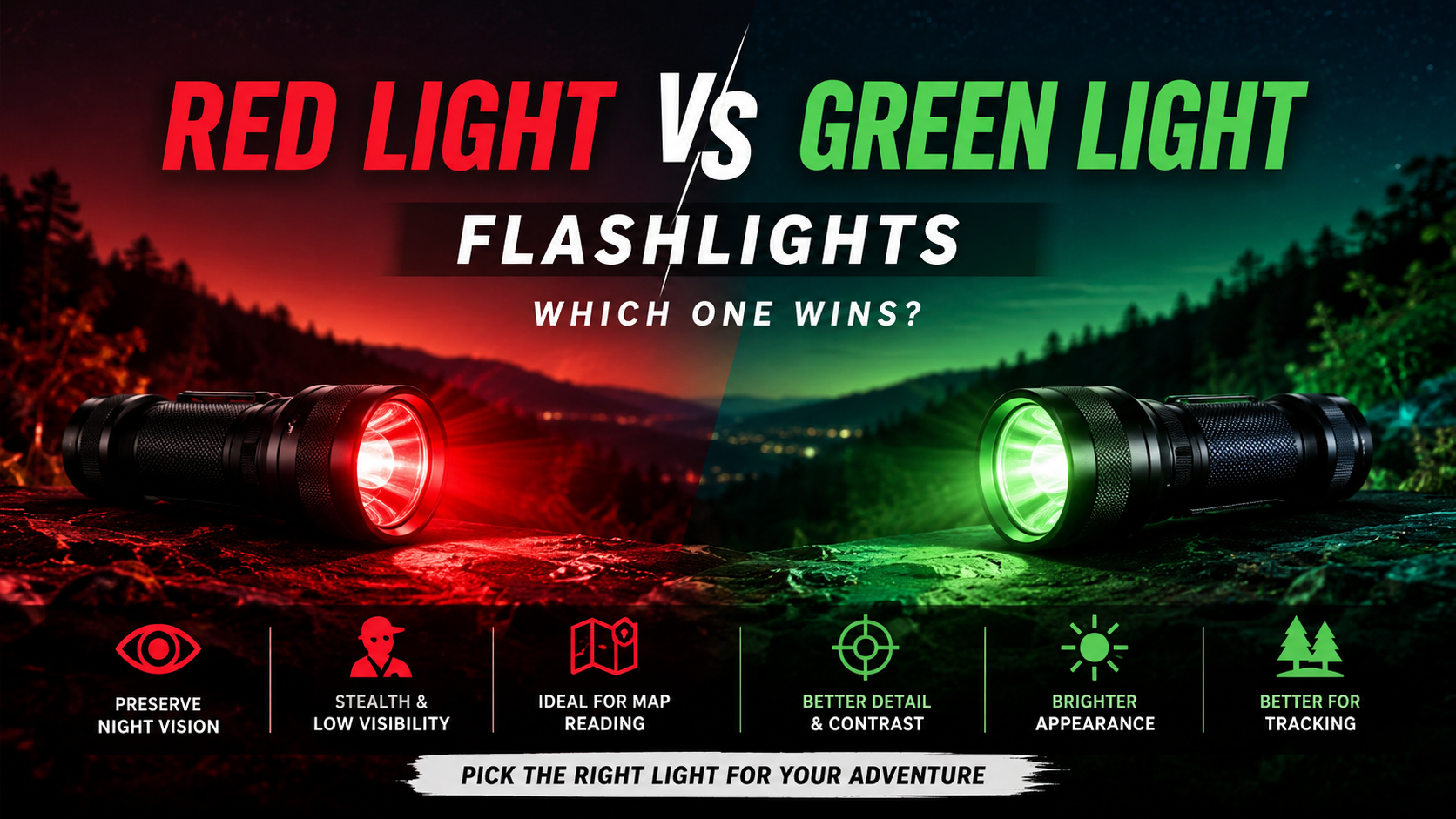
The main differences between green and red flashlights involve brightness, visibility, night vision, and practical use. Red light has a longer wavelength and produces less stimulation of the eye’s rod cells. This makes it useful for preserving dark adaptation during nighttime activities. Green light has a shorter wavelength and appears brighter to human vision at similar output levels. As a result, green illumination can reveal details, shapes, and surface changes more clearly in dark environments.

Red light is generally preferred when maintaining night vision is the priority. It can help users read maps, check equipment, or move around without severely affecting dark adaptation. Green light works well when visual clarity and contrast matter more.

For more information about how red light behaves in other everyday optical devices, see our guide on why optical mice use red lights.

Understanding Wavelength and Visibility

Wavelength helps explain why these colors perform differently. Red light has a longer wavelength, while green light has a shorter wavelength within the visible spectrum. Human vision is especially sensitive to green wavelengths, so green often appears brighter at comparable power levels. Red light, however, is less disruptive to dark-adapted vision.

Environmental conditions can also affect performance. Fog, smoke, dust, and vegetation may scatter or absorb light differently. Neither color is automatically superior in every condition. Your surroundings and intended use should guide your choice. For outdoor activities, a red flashlight can support low-profile illumination, while green light can improve visual detail and contrast. Understanding these differences makes it easier to choose the right flashlight for hiking, camping, hunting, astronomy, or tactical applications.

Why Do the Military Use Red Flashlights?

Military personnel and tactical users often choose red flashlights to help preserve night vision. When the eyes move from a bright environment into darkness, they need time to become fully dark-adapted. This process can take many minutes, and full adaptation may take longer. Bright white light can significantly reduce that adaptation and temporarily make it harder to see in darkness.

Red light generally has a smaller effect on dark adaptation than bright white light. This makes it useful for tasks that require limited illumination at night. Soldiers may use red light to read maps, check equipment, or move through a dark area while reducing the impact on their night vision.

Red light does not make a user invisible. It can still be detected, especially at close range. However, a dim red beam may be less visually conspicuous than a bright white beam. This makes red illumination useful when preserving night vision and limiting unnecessary light are important.

Tactical Advantage and Stealth

Stealth is an important consideration during nighttime military and tactical activities. A bright flashlight can create a noticeable beam and make the user’s position easier to identify. Red light can provide enough illumination for simple tasks while reducing the impact on dark-adapted vision.

This balance can be helpful during navigation, equipment checks, or map reading. Users can perform basic tasks without relying on a bright white beam. Red illumination may also reduce the amount of visible light produced around the user, particularly when a low-output setting is used.

However, red light is not completely hidden from other people or cameras. Its visibility depends on distance, brightness, surroundings, and the observer’s equipment. For that reason, red light should be viewed as a low-impact lighting option rather than a guaranteed stealth solution.

The main tactical benefit is preserving useful night vision while providing limited illumination. This can reduce the need to repeatedly adjust to darkness after using a flashlight.

What Is the Best Light Color for a Flashlight?

The best flashlight color depends on what you need the light to accomplish. White light remains the most versatile option for everyday use because it provides strong illumination and natural color recognition. It is useful for walking, emergencies, repairs, and general outdoor activities.

Colored light becomes more valuable for specialized situations. Red light is a popular choice for astronomy, camping, map reading, and nighttime navigation. It can provide enough illumination for simple tasks while having less impact on dark adaptation than bright white light. Green light can appear brighter to human vision and may provide useful contrast when examining terrain or objects at night.

Your environment also matters. A flashlight used around a campsite may need different features from one used for hunting or professional work. Multi-color flashlights offer a practical solution because they let users switch between white, red, and green modes.

Before choosing a flashlight, consider brightness, beam distance, battery life, and the type of activity involved.

Matching Light Color to Tasks

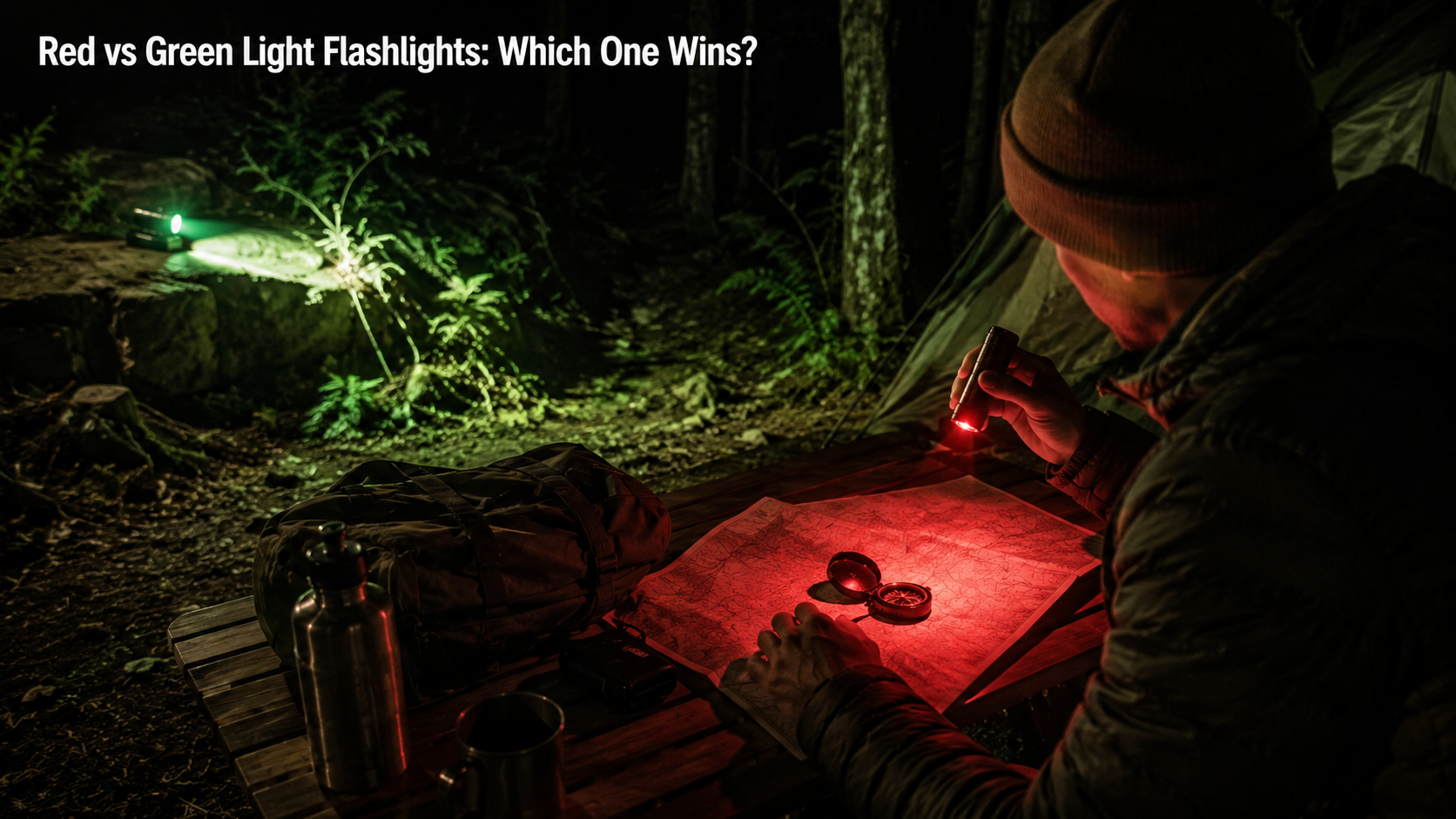
Choosing the right light color starts with identifying the task. Red light is well suited to activities where preserving dark adaptation matters. It can help with reading maps, checking gear, and moving around a campsite without using a bright white beam. Astronomers also commonly use red illumination because it can reduce disruption to dark-adapted vision.

Green light can be useful when visual clarity and contrast are more important. Human eyes are highly sensitive to green wavelengths, so green illumination can appear bright at relatively low output. This may help users distinguish terrain features, objects, or surface details in darkness.

White light remains the best all-purpose choice for most everyday situations. It provides broad illumination and makes it easier to identify colors accurately.

A multi-color flashlight can provide the most flexibility. Look for models with separate brightness controls and reliable switching between colors. The right combination depends on your environment, activity, and need for night vision preservation.

Is Red Light or Green Light Better?

Neither red nor green light is universally better. Each color provides different benefits, so the right choice depends on your activity and surroundings. Red light is generally better for preserving dark adaptation and providing low-level illumination at night. It is especially useful for camping, astronomy, map reading, and nighttime navigation.

Green light can appear significantly brighter to human vision at similar output levels. This can make it useful when you need to identify details, objects, or terrain features in low-light conditions. It may also provide strong visual contrast for certain outdoor applications.

Your priorities should determine which color you choose. If maintaining night vision is important, red is usually the better option. If visual clarity and perceived brightness matter more, green may have an advantage.

Environmental conditions can also change the result. Fog, dust, moisture, vegetation, and background lighting all influence visibility. Testing both colors in your typical environment can help you make a practical decision. A flashlight with multiple color modes can provide the greatest flexibility.

For a deeper look at the different applications and characteristics of red illumination, read our guide to red light flashlight differences.
Performance in Variable Environments

Environmental conditions can significantly affect flashlight performance. Humidity, fog, dust, smoke, and vegetation can scatter or absorb light. These effects may change how bright a beam appears and how far you can see.

Green light often appears brighter to human observers because the eye is highly sensitive to green wavelengths. This can make green useful when identifying objects or terrain in low-light conditions. Red light usually provides less apparent brightness, but that lower visual impact can be beneficial when preserving dark adaptation.

Background lighting also matters. A colored beam may perform differently under moonlight, streetlights, or complete darkness. The surface being illuminated can affect contrast as well. Light-colored objects may reflect a beam differently from dark or heavily textured surfaces.

For outdoor use, there is no universal winner. Test your flashlight in the environment where you plan to use it. Compare brightness, beam visibility, contrast, and night-vision impact. This practical approach can help you select the most suitable color for your needs.

Red Light vs Green Light for Night Hunting

When comparing red light vs green light for night hunting, the better choice depends on the species, terrain, and equipment being used. Many hunters prefer red light because some game animals appear less responsive to longer-wavelength light than humans. However, animal responses vary by species and individual conditions, so red light should not be considered completely invisible to wildlife.

Green light can appear brighter to humans and may provide better visibility for identifying objects or navigating uneven terrain. This can be useful when a hunter needs greater visual clarity. However, a brighter beam may also be more noticeable to wildlife, depending on the species and situation.

The best choice also depends on local hunting regulations. Some areas restrict artificial lighting for certain types of hunting. Always check the applicable rules before using a colored flashlight.

For hunters, red light generally favors reduced visual impact, while green light can favor brightness and visibility. The ideal option depends on the target species, hunting conditions, and legal requirements.

Choosing for Specific Game Species

Different animals can respond differently to artificial light. Their visual systems are not identical to human vision, and reactions can vary between species. This means hunters should avoid assuming that every animal will ignore red or green light.

Some nocturnal mammals have vision that differs substantially from human color perception. Certain species may be less sensitive to longer wavelengths, while others may still detect a red beam under specific conditions. The intensity, distance, movement, and direction of the beam can also influence an animal’s response.

Green light may provide stronger apparent illumination for the human observer. This can help when scanning terrain or identifying objects in darkness. However, greater brightness does not necessarily mean better hunting performance.

Before choosing a hunting flashlight, consider the target species, terrain, and local regulations. Researching the visual behavior of the specific game animal can provide more useful guidance than relying on general color claims. When possible, use the lowest practical brightness and avoid unnecessary illumination. This can help maintain visibility while reducing disturbance to the surrounding environment.

FAQ SECTION

Do All Animals React the Same Way to Red and Green Light?

No, animals do not all react the same way to different light colors. Their eyes contain different photoreceptors, which affect how they detect specific wavelengths. When comparing red vs green light, some mammals may respond less strongly to red, while birds and insects can detect these wavelengths differently. Brightness and beam intensity also matter. Always research your target species before choosing a hunting or wildlife flashlight.

Can Green Light Attract Insects During Outdoor Activities?

Yes, green light can attract insects more than red light in many situations. Many insects are sensitive to shorter wavelengths, including blue, ultraviolet, and some green wavelengths. This makes red vs green light an important consideration during camping and other nighttime activities. Red light generally attracts fewer insects, although no color completely prevents insect activity. Using a dim red flashlight can help reduce unwanted insects around your campsite.

Will Red Light Affect My Ability to Sleep After Using It?

Red light generally has less impact on melatonin and circadian rhythms than blue or bright white light. This makes it useful for nighttime activities such as reading or moving around camp. In a red vs green light comparison, red is usually less disruptive to dark-adapted vision. However, brightness still matters. A very bright red flashlight can affect your nighttime environment, so use the lowest practical brightness when preparing for sleep.

Which Colored Light Uses More Battery Power?

Light color alone does not determine flashlight battery consumption. Power usage mainly depends on the LED, driver efficiency, brightness setting, and battery capacity. In a red vs green light comparison, green may appear brighter because human vision is more sensitive to green wavelengths. However, this does not mean green LEDs always use less power. Check the flashlight’s specifications and use lower brightness settings when longer battery life is important.

Conclusion

Choosing between red and green flashlights depends on your activity, environment, and lighting needs. The red vs green light comparison shows that both colors have practical advantages. Red light is useful for preserving dark adaptation and reducing visual disruption at night. Green light can provide stronger perceived brightness and useful contrast. Consider your surroundings, required visibility, and local regulations before choosing. A multi-color flashlight can offer greater flexibility for outdoor activities, hunting, camping, and nighttime navigation.
What Makes Red Light Flashlights Different From Regular Ones

What Makes Red Light Flashlights Different From Regular Options

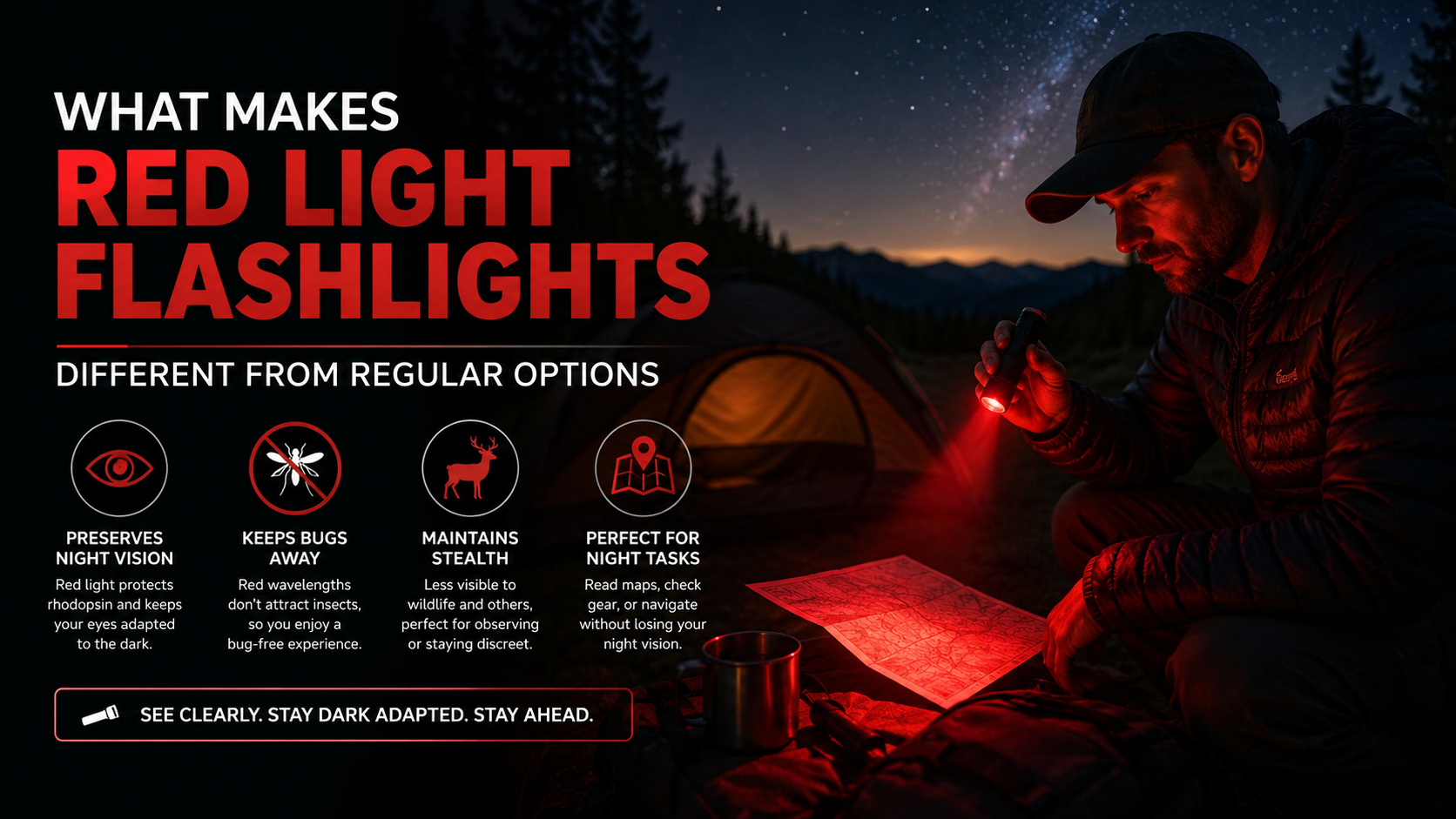
If you spend any time outdoors after dark, you already know how blinding a standard white LED can be. Whether you are setting up a campsite, checking a trail map, or looking through a telescope, bright white beams completely ruin your natural ability to see in the dark. This is exactly why outdoor enthusiasts, astronomers, and tactical professionals rely on red light flashlights instead.

But what exactly sets them apart from the standard flashlights you keep in a kitchen drawer? The difference fundamentally comes down to biology and physics. When you use a standard white flashlight, your pupils constrict immediately. This biological reaction forces your eyes to constantly readjust to the darkness every time you turn the beam off.

Red light, however, operates on a much longer wavelength. According to experts at Sky & Telescope, red wavelengths do not bleach the light-sensitive pigment in your eyes. This scientific fact allows you to navigate effectively without destroying your hard-earned dark adaptation.

In this guide, we will explore exactly what makes these specific tools different from regular options. We will cover the science behind human vision, the practical benefits of using red illumination, and the best real-world applications for your outdoor gear kit. By the end, you will understand exactly why a red beam is mandatory for nighttime exploration.


Are red light flashlights better?

Red light flashlights are not universally better than regular torches, but they excel in specific night tasks. They outperform white light whenever you need to preserve your natural night vision in pitch-black settings. Regular white beams cause immediate pupil constriction, blinding you temporarily when you turn the device off. Red beams bypass this harsh reaction, letting your eyes stay adjusted to the dark environment effortlessly. However, white light remains far superior for general tasks, color differentiation, and maximum illumination distance. Therefore, choosing the right tool depends entirely on your specific activity and immediate lighting needs.

Wavelength Physics and Human Eye Sensitivity

The superiority of red beams stems directly from human biological optics and light physics. Rod cells in our eyes handle low-light vision and remain largely insensitive to long-wavelength red light. When you switch on a red beam, your rods do not bleach their rhodopsin pigments entirely. This clever biological quirk lets you see map details without triggering a reset in your dark adaptation timeline.


Why do astronomers use red flashlights?

Astronomers rely heavily on red light flashlights because deep space observation demands absolute dark adaptation for hours. Stargazers spend considerable time letting their eyes adjust to faint starlight and distant nebulae through telescope eyepieces. Turning on a bright white flashlight instantly ruins this hard-earned night vision, requiring another thirty minutes of dark adaptation. Red illumination provides just enough localized light to read star charts or adjust camera settings without interfering with sensitive eye receptors. This practical habit ensures astronomers can read equipment dials while maintaining optimal vision for observing faint celestial objects across the night sky.

Protecting Faint Starlight Viewing Capabilities

Stargazing requires maximum sensitivity from human eye photoreceptors to detect faint photons traveling across the universe. White light overwhelms these delicate cells and forces pupils to close rapidly, obscuring dim stars entirely. Red illumination avoids this disruption, allowing scientists and hobbyists to maintain peak visual acuity while working efficiently under dark rural skies.


Why use a red flashlight at night?

Using a red flashlight at night prevents temporary blindness and keeps your pupils dilated in dark environments. Whether you walk down a dark campsite trail or navigate a tent, white light creates harsh glare and disturbs sleeping companions. Red beams emit a soft, localized glow that illuminates your immediate path without casting blinding reflections. This discreet nature also prevents you from attracting unwanted attention or ruining the night vision of fellow campers. Furthermore, insects are notoriously less attracted to red light wavelengths compared to harsh white LED bulbs.

Preserving Night Vision and Camp Comfort

Navigating a dark campsite requires careful balance between personal safety and minimizing disruptions to others nearby. Blasting a high-lumen white beam wakes up fellow campers and destroys everyone’s night vision instantly. A gentle red glow provides adequate visibility for finding gear or walking paths while maintaining a peaceful, dark environment for the entire group.


What Are Red Light Flashlights Good For?

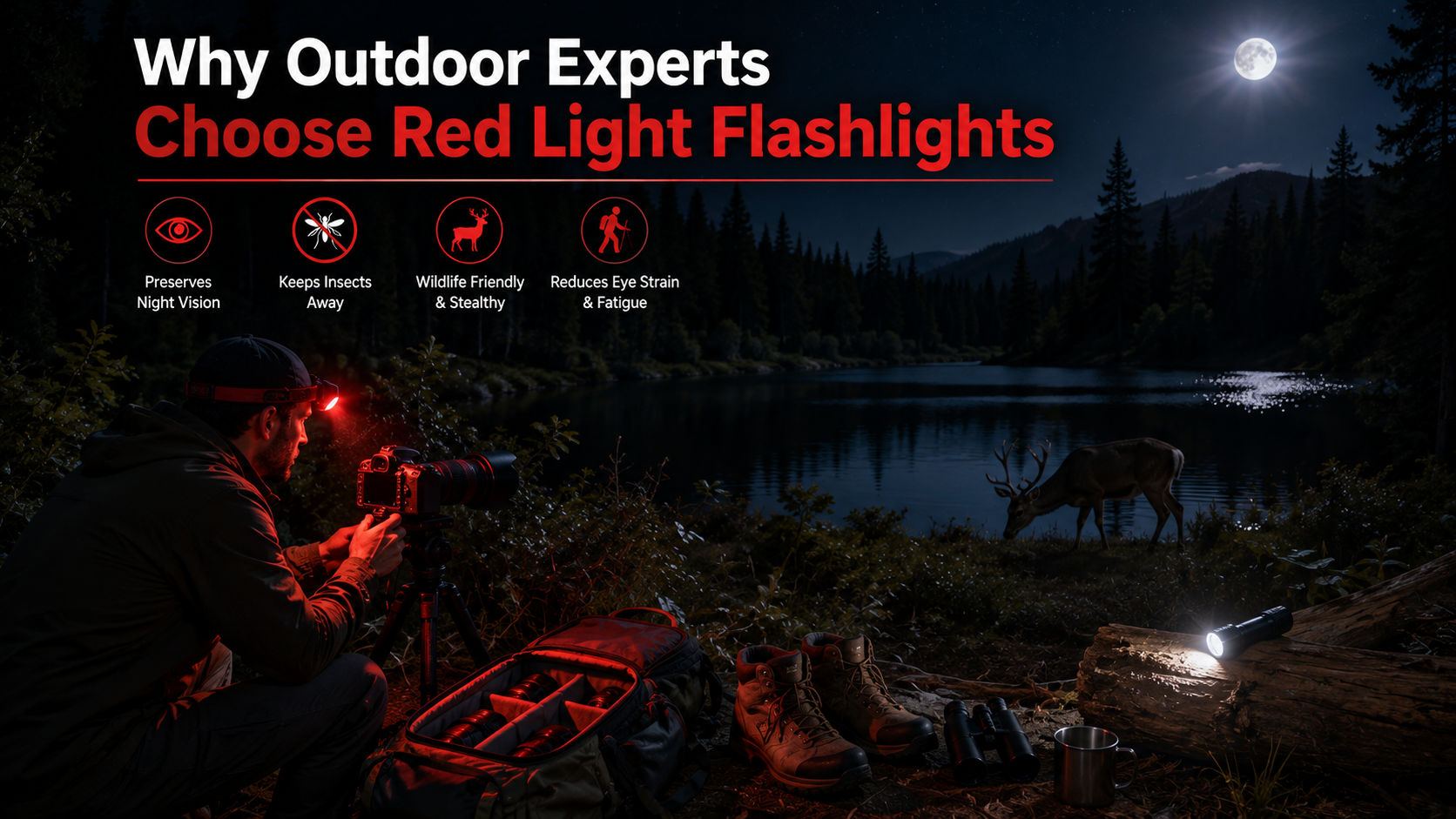
Red light flashlights prove exceptionally useful across a wide variety of specialized outdoor, tactical, and industrial applications. Hunters frequently use red beams because many game animals cannot perceive red wavelengths clearly, allowing hunters to track targets without startling them. Military personnel and tactical operators rely on red settings to read maps discreetly during night operations without giving away their position. Photographers working in darkrooms or night landscapes use red illumination to adjust camera settings safely. Additionally, automotive mechanics and emergency responders utilize red filters or bulbs to preserve night vision during roadside repairs.

Tactical Stealth and Wildlife Observation

The unique properties of red illumination make it invaluable for discreet nighttime operations and wildlife tracking. Because many animals lack sensitivity to long red wavelengths, observers can watch wildlife without causing behavioral distress or flight responses. Similarly, tactical professionals use low-intensity red beams to maintain operational security and preserve situational awareness during high-stakes nighttime deployments.


Is a 200,000 Lumen Flashlight Real?

A flashlight advertised as producing 200,000 lumens in a handheld consumer device is generally unrealistic. While extremely powerful lighting systems do exist, they require large power sources, advanced cooling systems, and much larger housings than a typical flashlight.

Lumens measure the total amount of visible light emitted by a source. Producing 200,000 lumens generates enormous heat and consumes significant electrical power. A pocket-sized flashlight cannot safely sustain that output using standard rechargeable batteries.

Many online listings exaggerate brightness figures to attract buyers. Some confuse lumens with beam distance or peak beam intensity, while others simply use inflated marketing claims. Before buying a high-output flashlight, look for products tested under the ANSI FL1 standard or supported by trusted independent reviews. Reputable manufacturers usually publish realistic performance data, including runtime and regulated output, making it easier to compare different models accurately.

Understanding Marketing Hype and Thermal Limits

Many budget flashlight brands advertise extremely high lumen ratings that cannot be verified through independent testing. These claims often exceed the physical limits of compact handheld electronics.

High-powered LEDs generate substantial heat. Without efficient heat sinks and thermal regulation, excessive temperatures can reduce brightness, damage components, or shorten the LED’s lifespan. Quality flashlights automatically reduce output when temperatures become too high.

When comparing flashlights, focus on verified specifications rather than headline lumen numbers. Look for regulated output charts, ANSI FL1 certification, realistic runtime data, and reviews from trusted testers. These details provide a much more accurate picture of real-world performance than exaggerated marketing claims.


How Do I Make My Flashlight a Red Light?

Converting a standard white flashlight into a red light flashlight is simple and affordable. In most cases, you can make the change without replacing the flashlight itself.

The easiest solution is to install a red filter over the flashlight lens. Slip-on silicone filters and dedicated red lens caps block most other wavelengths while allowing red light to pass through. Another option is applying a transparent red lighting gel or vinyl film that fits securely over the lens.

If your flashlight uses a modular design, you may be able to replace the white LED with a dedicated red LED emitter. Some premium tactical flashlights also include built-in red LEDs alongside white and green modes, allowing you to switch colors with a single button. The best option depends on your flashlight design and how often you plan to use red illumination.

Using Slip-On Filters for Easy Conversion

Slip-on red filters are one of the most convenient ways to convert a flashlight temporarily. They install in seconds and can be removed just as quickly when white light is needed.

This flexibility makes them popular with campers, hunters, astronomers, and outdoor enthusiasts. Instead of carrying separate flashlights, you can switch between white and red illumination whenever conditions change. It’s an inexpensive upgrade that adds versatility while helping preserve your night vision during nighttime activities.


Why Do Military Use Red Flashlights?

Military personnel use red flashlights because they help maintain night vision while reducing visibility during nighttime operations. Bright white light can reveal a person’s position from long distances and temporarily reduce the user’s ability to see in darkness.

Red light produces a lower visual signature and is generally less disruptive to dark-adapted eyes. Soldiers use it to read maps, inspect equipment, review checklists, and move inside vehicles or command posts without flooding the area with bright illumination.

This allows units to remain more prepared when transitioning between lit and dark environments. While red light can still be detected, it is often preferred for close-range tasks that require discretion and minimal light output. These characteristics make red tactical flashlights valuable tools in military, law enforcement, and other professional nighttime operations.

Tactical Concealment and Operational Readiness

Maintaining operational security often requires limiting unnecessary light. Red illumination provides enough visibility for close-range activities without producing the intense glare associated with white LEDs.

Military personnel commonly use red light for equipment checks, weapon maintenance, reading maps, and communicating inside vehicles or temporary shelters. Because their eyes remain better adapted to darkness, they can respond more quickly when lights are switched off.

Many tactical flashlights include dedicated red LEDs or compatible red filters for this reason. While no light source is completely invisible, controlled red illumination offers a practical balance between visibility and reduced visual disturbance during nighttime missions.


Frequently Asked Questions

Can Red Light Attract Bugs?

Red light generally attracts far fewer insects than white, blue, or ultraviolet light. Most flying insects are much more responsive to shorter wavelengths, especially UV and blue light, which they use for navigation.

Because red light has a longer wavelength, many insects show little interest in it. This makes a red light flashlight an excellent choice for camping, fishing, hiking, and other outdoor activities where insects are common. Although it won’t eliminate bugs completely, it can significantly reduce the number drawn to your light source.

Does Red Light Help You Sleep Better?

Red light has a much smaller effect on melatonin production than blue or bright white light. Melatonin helps regulate your body’s natural sleep-wake cycle, and exposure to blue-rich light before bed can suppress its production.

Using a dim red flashlight at night allows you to move around without exposing yourself to intense white light. While a red flashlight is not a sleep treatment, it is generally less disruptive to your circadian rhythm and may make it easier to return to sleep after nighttime interruptions.

Is Red Light Better for Hunting?

Many hunters prefer red hunting lights because several game animals have limited sensitivity to red wavelengths. Deer, feral hogs, coyotes, and other species often perceive red light less distinctly than humans do.

This can help reduce the chance of startling animals while scanning fields or tracking movement. However, animal vision varies by species, and red light does not make a hunter invisible. Always follow local hunting regulations and use lighting responsibly during nighttime hunting activities.

Can Red Light Pass Through Fog Better?

Red light generally experiences less scattering than shorter wavelengths such as blue light. Because of its longer wavelength, it can reduce glare in fog, smoke, and dusty conditions compared to bright white or blue-rich light.

However, the improvement is often modest rather than dramatic. Vehicle fog lights are commonly yellow or amber because those colors also reduce scattering effectively while providing good visibility. Even so, a red flashlight can perform well in misty environments and may offer a clearer view than a standard white beam in certain conditions.


Conclusion

Understanding what makes red light flashlights different from regular options ultimately comes down to basic biology and practical purpose. Regular white flashlights certainly dominate when you need extreme brightness, long-distance visibility, and highly accurate color rendering.

However, standard beams are actively detrimental when you need to maintain your natural night vision in the wilderness. By utilizing extremely long red wavelengths, these specialized flashlights allow you to see your immediate surroundings without destroying the rhodopsin in your eyes.

This simple shift in color provides undeniable advantages. You can navigate your campsite comfortably without attracting swarms of insects, observe wildlife without startling animals, and read maps without painful glare. If you’re planning a family camping trip, pairing the right lighting with engaging outdoor activities can make the experience even better. Check out our guide on fun games that both parents and children will enjoy for ideas to keep everyone entertained after sunset.

If you spend considerable time outdoors after dark, relying solely on a standard white flashlight is a mistake. Instead, choose a high-quality dual-mode headlamp or durable handheld flashlight with independent white and red light modes. Investing in a reliable red light flashlight will enhance your nighttime adventures while preserving your vision, improving wildlife observation, and making every outdoor experience more enjoyable.

Buying a used fishing boat

Buying a used fishing boat

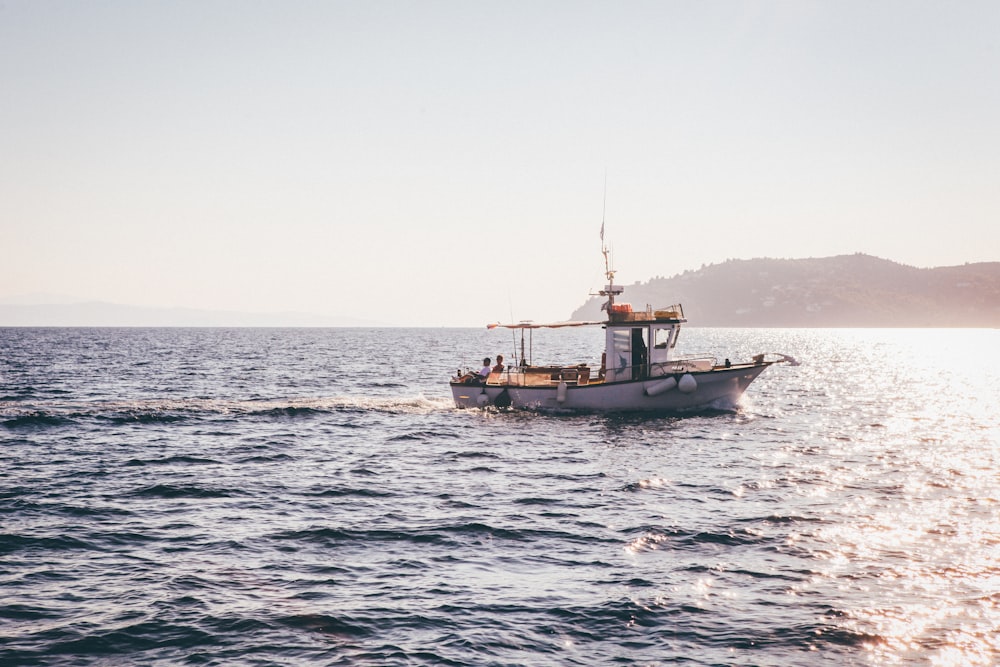
There’s always the option of buying a fishing boat if fishing from the dock simply isn’t rewarding enough. The likelihood of bringing home a respectable catch is substantially increased by being able to enter the center of almost any lake.

The most recent fishing boats aren’t always a good choice for budget-conscious people. Fortunately, finding a reliable second-hand fishing boat that might be an excellent substitute for forking over the cash for a new model has never been simpler.

Identifying a boat: buying a fishing boat

Image via Unsplash.com

When selecting a boat to buy, potential purchasers should take into account a number of factors, including:

Size: There are many different sizes of fishing boats, from small craft you can keep in your shed to enormous craft that need boathouses. Make sure the boat you choose can be stored properly, and don’t push yourself too far. Inclement weather can cause irreparable harm to a poorly stored watercraft.

Cost: The price of a boat increases with its size. The majority of sellers will be open to negotiating, but it would be a good idea to set a maximum price you’re ready to pay and adhere to it regardless of what. Be patient and broaden your search if you are having problems finding anything you like that is within your price range.

Purpose: Are you a recreational fisherman seeking a catch to bring out on the lake behind your cottage? Or are you a tournament angler looking for a boat to offer you an advantage in the upcoming match? In order to avoid making a series of unproductive visits, you should focus your search on what you intend to do with your boat.

Engine kind: You must choose how much engine power you want if you decide to buy a powerboat. Choose your engine based on where you intend to operate the boat. You don’t need a powerboat with a loud motor if your favorite fishing spot is on a tiny, serene lake.

What kind of fishing boat you need

Image via Unsplash.com

Select the boat type that you want. There are several possibilities available here:

For anglers who want to keep things simple, inshore fishing boats are straightforward and affordable. They are recognized for being simple to transport and store and are useful in shallow water and on flat surfaces.

Due to the harsh ocean waves they must survive, offshore fishing boats are significantly bigger and more complicated. It is rare to find old offshore fishing boats, thus these boats are only available to fishing aficionados with a lot of money to invest.

Fishing on calm, flat surfaces is ideal for Jon boats, which are flat, square boats with pointed bows. They are among the simplest boats to maneuver and are often made of wood or aluminum.

The design of drift fishing boats is similar to that of a canoe, but with much more room in the center. These boats are the best option for fishing in swift-moving water, such as active lakes or rivers, thanks to their design. These boats are typically made of aluminum, wood, or fiberglass.

The most distinctive of the lot are pontoon fishing boats, which have a seating space and pontoons on either side to keep the craft afloat. Individual anglers who don’t want a lot of extra space will love these boats. They are also inexpensive and simple to keep.

Sport or jet fishing boats are powered vessels that enable users to travel long distances quickly. Sport fishing boats have blade-propelled motors.

Look for classifieds: buying a fishing boat

Image via Unsplash.com

Every vendor has a preferred method for publishing an advertisement. Some people will use newspapers, while others will choose classified ads or car magazines, and many people will use free online services. Look through each one carefully, and build a list of the second-hand boats that most closely match your requirements. Keep in mind the situation as it is described in the advertisement as well.

Do not delay: buying a fishing boat

A good price on a used yacht, like most luxury second-hand products, won’t stay long. As soon as you can, write down the phone number and give it a call. If you wait too long, you risk missing everything.

Take some out to look the fishing boat

Image via Unsplash.com

Work around the seller’s schedule, when possible, but make sure to give yourself enough time to view the yacht. If the seller needs to reach you before the appointment, leave your phone number.

Inspecting the fishing boat

A smaller boat shouldn’t take very long to inspect, however a larger vessel might. You should be aware of the following issues as you examine it:

  • If you’re buying a motorboat, be sure the engine is functional.
  • ensuring that there is no water in the bilge, which can accumulate during storms. A manual or automatic bilge pump may come with the boat, at the owner’s discretion.
  • Ensuring that the throttle and steering both works properly.
  • Checking the electrical components to verify sure they are functioning properly.
  • searching for wear, damage, or other issues on the hull and sides (this should be done out of the water).
  • confirming the normal operation of the propeller and propeller shaft.
  • If you’re purchasing a sailboat, be sure the rigging, hardware, and sails are in good condition.

Testing the fishing boat: buying a fishing boat

Image via Unsplash.com

Only after a trial run might some of the aforementioned issues be resolved. The majority of trustworthy boat sellers will consent to this, as it will only increase the likelihood of closing a deal. Make careful to address each of your worries separately. Make left and right turns to test the steering, or change the motor’s speed to make sure it is operating properly.

Payment arrangements

If you like what you see, you should either accept the price that is listed or try to negotiate for a lesser price. Many sellers are at least open to considering an offer, but some are adamant about their asking price (and even state as much in their adverts). The choice is ultimately up to the vendor.

USEFUL LINKS:

Click here to keep hovering on the topic 
Know how to sell your own house