Can You Use Vinegar to Clean Solar Panels?
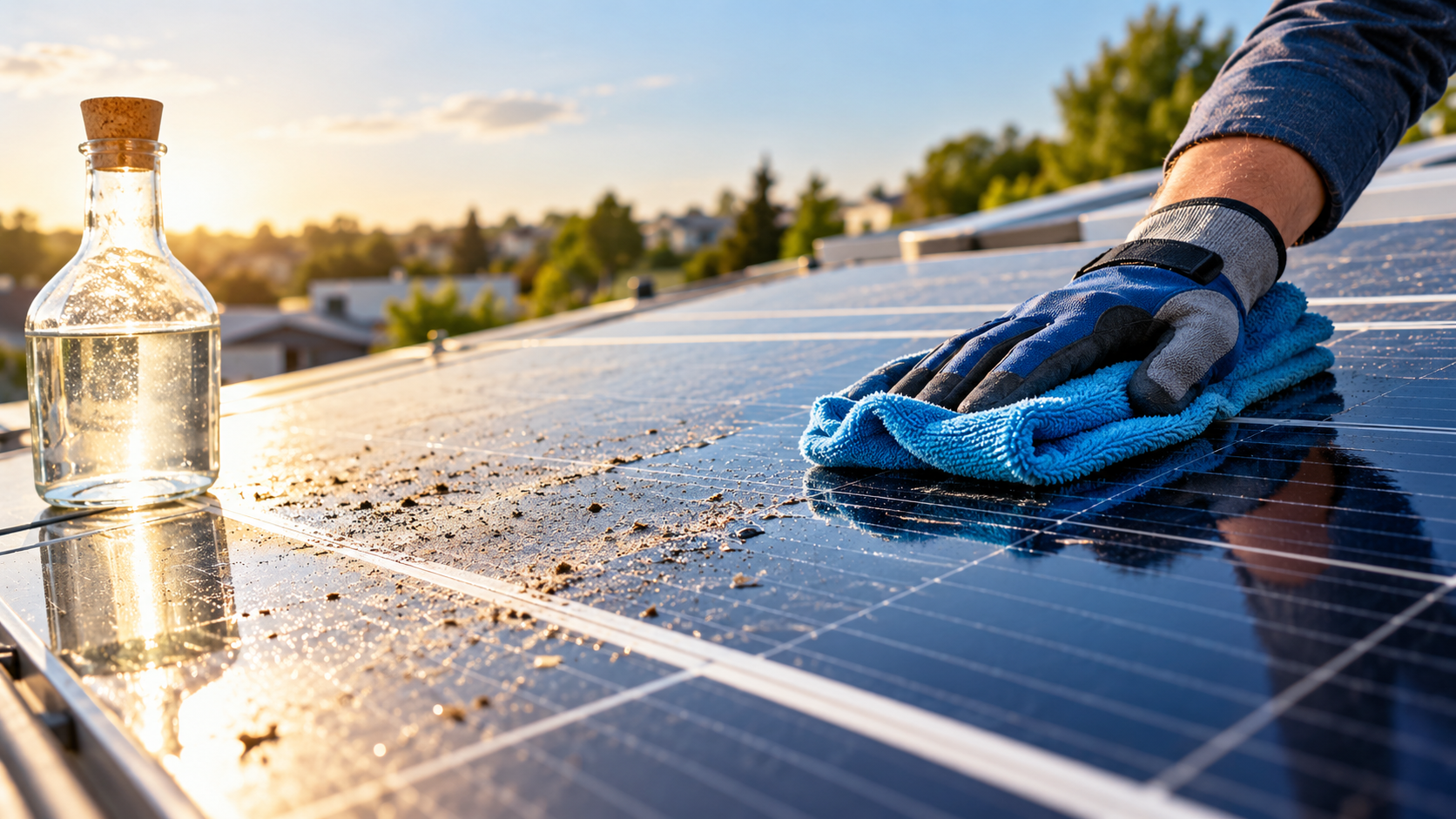
Homeowners often ask, can you use vinegar to clean solar panels without damaging the glass? Vinegar works well on many household surfaces. That does not mean it is suitable for photovoltaic modules.
Solar panels are designed to handle outdoor conditions. However, their glass surfaces and coatings can still require careful maintenance. Some modules also have manufacturer-specific cleaning requirements.
Dust, pollen, bird droppings, and other debris can accumulate on photovoltaic modules. This buildup can reduce energy production, particularly when panels remain heavily soiled. The U.S. Department of Energy’s solar operations and maintenance guidance explains that regular maintenance helps reduce soiling and maintain PV system performance.
Cleaning can restore some lost production when soiling becomes significant. However, using the wrong cleaner or tool can scratch the glass or damage a surface coating.
The safest approach is simple. Use the cleaning method recommended by your panel manufacturer. When those instructions allow wet cleaning, use clean water and a soft, non-abrasive tool.
What Is the Best Thing to Clean Solar Panels?
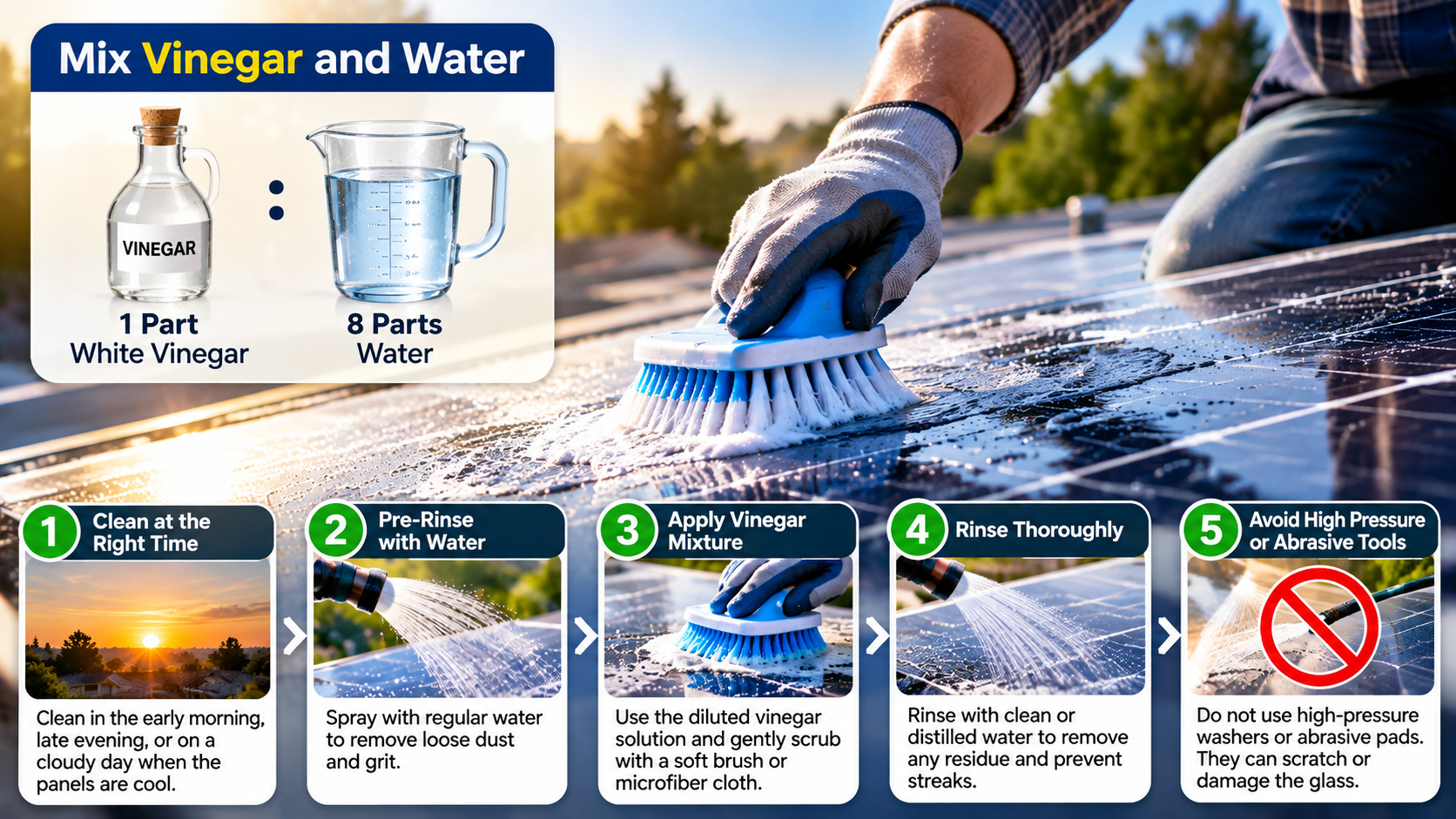
The best cleaning method depends on your solar panel manufacturer and module design. For many standard glass modules, clean water and a soft, non-abrasive cleaning tool provide a simple starting point.
A microfiber cloth or soft cleaning pad can help remove loose dust. A soft squeegee may also work when the manufacturer permits it. Avoid tools that can scratch the glass or damage a surface coating.
Before cleaning, check the manufacturer’s maintenance instructions. Some panels have specialized coatings that require specific cleaning methods. For example, First Solar provides different requirements for certain anti-reflective-coated modules.
For difficult-to-reach rooftop systems, an extendable cleaning pole can reduce the need to climb onto the roof. If you are planning a new system, understanding the basics of residential solar panel installation can also help you consider panel placement and maintenance access. However, the attachment should remain soft and non-abrasive.
Follow these basic principles:
- Use clean water when possible.
- Choose a soft, non-abrasive cleaning tool.
- Rinse away loose dirt before wiping.
- Avoid dragging dry grit across the glass.
- Follow the panel manufacturer’s instructions.
The goal is to remove dirt without creating scratches or damaging the module surface.
Soft Cleaning Tools Help Prevent Scratches
A soft microfiber cloth or approved cleaning pad can reduce the risk of scratching solar-panel glass. This matters because dirt can contain tiny particles that behave like abrasives during wiping.
Do not immediately scrub a dusty panel with a dry cloth. First, loosen and rinse away loose particles when the manufacturer’s instructions allow wet cleaning. This reduces the amount of grit dragged across the surface.
Also, keep your cleaning equipment clean. A dirty cloth can collect sand, dust, and other particles during previous cleaning jobs. Those particles can then create fine scratches during the next pass.
Avoid wire brushes, abrasive pads, scouring powders, and stiff cleaning equipment. These tools can damage the glass or surface treatments.
However, do not assume every panel allows the same cleaning technique. Some specialized modules have stricter requirements. First Solar, for example, prohibits certain wet-contact cleaning methods on specific anti-reflective-coated modules.
For that reason, the safest rule is simple: check the manufacturer’s cleaning instructions before choosing a tool. A soft tool is generally preferable, but the manufacturer’s approved method takes priority.
What Is the Best Cleaner for Solar Panels?
For routine cleaning, clean water is usually the simplest starting point. The exact type of water depends on the manufacturer’s instructions and the mineral content of your local water supply. Choosing the right maintenance approach is also important when managing the long-term performance of a home solar system.
If a panel has stubborn contamination, check the manufacturer’s instructions before adding any detergent. Some manufacturers permit mild cleaning solutions, while others specify particular products or prohibit certain chemicals.
Avoid assuming that a product marketed as a glass cleaner is automatically safe for solar modules. Household glass cleaners can contain ingredients that are unnecessary for photovoltaic glass. They may also leave residue behind.
NREL’s solar operations guidance recommends avoiding solvents, abrasives, harsh detergents, and high-pressure water during PV cleaning.
If your manufacturer approves a specialized solar-panel cleaner, follow its dilution and application instructions carefully. Do not use more cleaner simply because the panel looks heavily soiled.
A suitable cleaning process should:
- Remove dirt without scratching the surface.
- Avoid leaving a visible residue.
- Remain compatible with the module surface.
- Follow the manufacturer’s maintenance requirements.
The important point is that more cleaning chemicals do not necessarily mean better cleaning. For most routine dirt, careful cleaning with an approved method is more important than using a powerful chemical.
Choose Cleaning Products Made for PV Modules
A cleaner designed specifically for photovoltaic modules can be appropriate when the manufacturer permits chemical cleaning. However, the label alone should not replace the module manufacturer’s instructions.
Solar panels can have different glass types, coatings, frames, and seals. A product that works on one module may not be appropriate for another. This is particularly important when panels use anti-reflective or other specialized surface treatments.
Avoid cleaners that contain abrasive particles. Also avoid products that leave a heavy film after drying. Residue can attract additional dust and reduce the cleanliness of the glass.
Biodegradable formulas may be preferable from an environmental perspective, but biodegradable does not automatically mean panel-safe. Compatibility with the module remains the key consideration.
Before buying a solar-panel cleaning product, check:
- Whether the manufacturer permits chemical cleaners.
- Whether the product is intended for photovoltaic modules.
- Whether it contains abrasives.
- Whether it requires dilution.
- Whether it leaves residue after rinsing.
When the panel manufacturer recommends water-only cleaning, follow that instruction instead. A specialized cleaner is not automatically better than plain water.
For routine residential maintenance, simple cleaning methods are often enough. Save stronger cleaning products for situations where the manufacturer specifically permits them.
What Chemical Can I Use to Clean My Solar Panels?
Do not assume that a common household solvent is safe for solar panels. Isopropyl alcohol, vinegar, ammonia, and other chemicals should only be used when the module manufacturer specifically allows them.
The original advice to use diluted isopropyl alcohol for tree sap or paint is too broad. NREL’s PV maintenance guidance recommends avoiding solvents during general module cleaning.
Some manufacturers may provide specific procedures for unusual contamination. Those instructions should take priority over general cleaning advice.
For sticky substances such as tree resin, begin with the least aggressive approved method. Use clean water and an approved soft cleaning tool if the manufacturer’s instructions permit it. Do not immediately reach for a chemical solvent.
If a substance cannot be removed safely, contact the panel manufacturer or a qualified solar professional. This approach is especially important when dealing with paint, construction residue, chemical deposits, or other unusual contamination.
Remember these rules:
- Do not experiment with household chemicals.
- Check the module cleaning instructions first.
- Avoid solvents unless specifically approved.
- Never mix different cleaning chemicals.
- Do not spray chemicals around electrical connections.
The safest chemical cleaner is often the one you do not need to use.
Handle Sticky Tree Resin With Care
Tree sap and resin can be harder to remove than ordinary dust. However, aggressive scrubbing can create a bigger problem than the original stain.
Start by checking your panel manufacturer’s cleaning instructions. If wet cleaning is permitted, use clean water to soften the residue. Then use only an approved soft cleaning tool.
Do not use a knife, razor blade, abrasive sponge, or scouring pad to scrape the resin. These tools can scratch the glass or damage a surface coating.
If the residue remains after gentle cleaning, check whether the manufacturer recommends a particular cleaning solution. Some module designs have strict restrictions on chemicals and contact cleaning.
Avoid spraying an unknown solvent directly across the entire module. Even when a chemical appears harmless on ordinary glass, the same product may not be suitable for a photovoltaic surface.
After removing an approved cleaning solution, rinse according to the manufacturer’s instructions. The objective is to remove the contaminant without leaving chemical residue.
If the stain is caused by paint, tar, construction material, or another unusual substance, professional assistance may be safer. Protecting the module surface is more important than removing one stubborn spot quickly.
What Should You Not Clean Solar Panels With?
You should not clean solar panels with abrasive powders, wire brushes, scouring pads, harsh detergents, or unapproved solvents. High-pressure water should also be avoided unless the manufacturer specifically permits it.
NREL recommends avoiding high-pressure water, brushes, solvents, abrasives, and harsh detergents for PV module cleaning.
The answer to can you use vinegar to clean solar panels therefore needs some qualification. Vinegar contains acetic acid, but there is not a universal rule that it damages every solar-panel coating. The bigger concern is that manufacturers can specify different cleaning requirements.
If your manufacturer does not approve vinegar, do not use it simply because it works on household glass. The same principle applies to bleach, ammonia, and other household cleaners.
Also avoid scraping dried bird droppings with hard objects. Soften the material first using an approved cleaning method.
Hard water can create mineral deposits after drying. If your local water contains many dissolved minerals, consider whether your manufacturer recommends deionized or otherwise treated water.
The safest products to avoid include:
- Abrasive cleaning powders.
- Wire or stiff brushes.
- Unapproved solvents.
- Harsh household chemicals.
- High-pressure water.
- Sharp scraping tools.
When in doubt, use the manufacturer’s approved method rather than experimenting with household cleaning products.
Avoid Cleaning During Extreme Heat
Timing matters when cleaning solar panels. Avoid cleaning very hot modules when possible, especially if your cleaning method involves cooler water.
A large temperature difference between the glass and cleaning water can create thermal stress. The risk depends on the module, temperature difference, water temperature, and other conditions. It is therefore misleading to say cold water will automatically shatter tempered glass.
A safer approach is to clean during early morning, late afternoon, or cooler overcast conditions. The glass should not be extremely hot when you begin.
Cleaning during cooler conditions also makes the work more comfortable. Water is less likely to evaporate immediately, which can make it easier to rinse away dirt and avoid visible mineral deposits.
Always follow the manufacturer’s instructions. Some manufacturers specify particular temperature or cleaning requirements.
Before cleaning:
- Check the module manufacturer’s instructions.
- Avoid extremely hot glass when possible.
- Use water at a reasonable temperature.
- Do not use sudden, extreme temperature changes.
- Allow the panels to cool before starting if they are very hot.
These precautions reduce unnecessary thermal stress and make the cleaning process easier. They also help prevent rushed cleaning when water dries before you can rinse the surface properly.
What Is the Best Cleaning Liquid for Solar Panels?
For routine cleaning, clean water is usually the simplest starting point. The exact type of water depends on the manufacturer’s instructions and the mineral content of your local water supply.
Hard water contains dissolved minerals. When droplets dry on the glass, those minerals can leave visible spots or deposits. Repeated buildup may become difficult to remove.
Deionized or distilled water contains far fewer dissolved minerals. This can help reduce spotting during cleaning, especially when the water is allowed to dry on the module.
However, you should not assume that every system requires distilled water. A normal water supply may be suitable when the manufacturer’s instructions permit it and the water does not leave significant mineral deposits.
For heavier dirt, use only a cleaning solution approved by the manufacturer. Do not automatically add dish soap or household detergent. Some detergents can leave residue or may not be compatible with the module surface.
A practical approach is:
- Start with clean water.
- Use a soft, approved cleaning tool.
- Rinse thoroughly.
- Consider low-mineral water if spotting is a problem.
- Use approved cleaners only for stubborn contamination.
The objective is not to make the water chemically powerful. It is to remove dirt without leaving deposits or damaging the module.
Deionized Water Can Reduce Mineral Spots
Deionized water can help produce a cleaner finish because it contains very few dissolved minerals. That makes it useful when ordinary tap water leaves white spots on solar-panel glass.
Professional cleaning operations may use water-treatment systems to reduce mineral deposits. However, homeowners do not always need specialized equipment.
If your local tap water is relatively soft and does not leave visible residue, it may be suitable for routine cleaning. If it leaves noticeable spots, consider using deionized or distilled water when the manufacturer’s instructions permit it.
Do not rely on the idea that pure water will automatically clean every type of contamination. Water can remove loose dust and many ordinary deposits, but hardened bird droppings, tree resin, and other contaminants may require an approved cleaning procedure.
Also avoid letting dirty water dry on the panel. Rinse thoroughly after cleaning when required.
Most importantly, follow the module manufacturer’s maintenance instructions. Solar panels differ in their surface coatings and cleaning requirements.
Clean water, gentle tools, and the correct cleaning method matter more than using a strong chemical. Regular inspection can also help you decide when cleaning is actually necessary. NREL notes that cleaning needs vary with local soiling conditions, rainfall, and other site factors.
Conclusion
So, can you use vinegar to clean solar panels? It is better not to use vinegar unless your panel manufacturer specifically approves it. Vinegar contains acetic acid, and different solar modules can have coatings or surface treatments with specific cleaning requirements.
For routine maintenance, start with clean water and a soft, non-abrasive cleaning tool. If your panels have stubborn stains, check the manufacturer’s instructions before using any detergent or chemical cleaner. Avoid abrasive materials, harsh household chemicals, sharp tools, and high-pressure water.
Cleaning your panels does not need to be complicated. The safest approach is to use the least aggressive method that effectively removes the dirt. By following the manufacturer’s recommendations, you can keep your solar panels clean while reducing the risk of scratches, residue, or surface damage. Regular inspection can also help you determine when cleaning is actually necessary.