
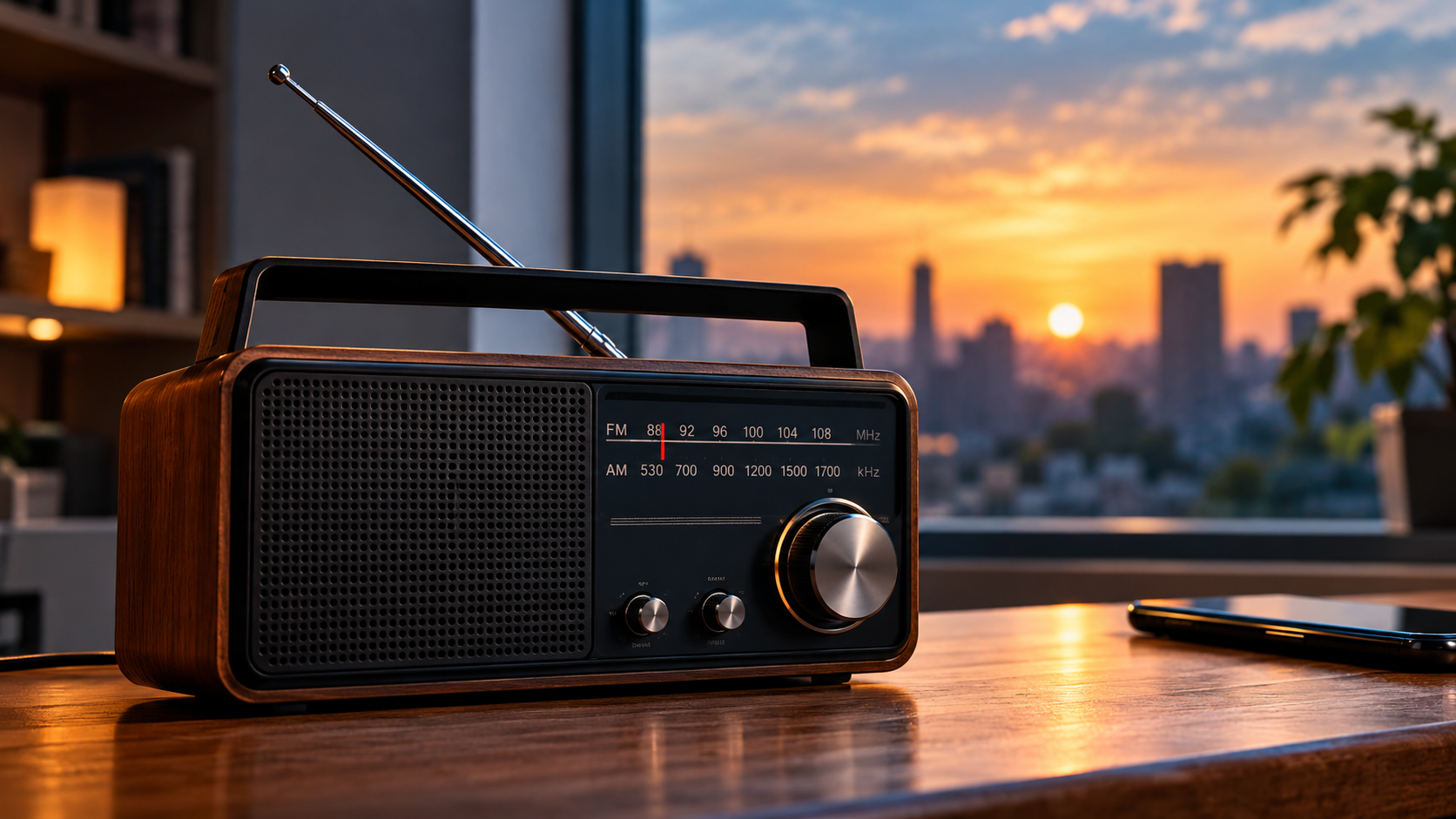
Is There Any Point in Buying a Radio in 2026?
With streaming apps, podcasts, and smart speakers everywhere, you might wonder whether buying a radio in 2026 still makes sense. Modern technology offers endless entertainment, but traditional radio continues to provide several practical benefits.
Unlike internet-based services, broadcast radio does not require Wi-Fi, mobile data, or a paid subscription. A battery-powered receiver can also provide important information when internet access becomes unavailable. Local stations deliver weather forecasts, traffic updates, breaking news, and community announcements.
Radio also offers something different from on-demand entertainment. You can discover new music, listen to live presenters, and enjoy programmes without constantly choosing what to play next.
However, radio is not essential for everyone. Your listening habits, location, and emergency needs will influence its value. This guide explores radio’s relevance in 2026, emergency preparedness, younger listeners, future technology, and changing popularity. By the end, you can decide whether a traditional radio deserves a place in your home.
Is Radio Still Relevant in 2026?
Yes, radio remains relevant in 2026, although its usefulness depends on how you listen to audio. Streaming platforms offer convenience and extensive libraries, but broadcast radio provides a different experience. It delivers live programmes, local news, music, interviews, and community updates without requiring an internet connection.
One of its biggest advantages is accessibility. Anyone with a compatible receiver and adequate signal coverage can listen without paying a monthly streaming fee. This makes radio useful in homes, workplaces, vehicles, and locations with unreliable internet access.
Traditional radio also works well for people who prefer simple controls. You can switch stations without managing playlists, accounts, or recommendations. However, reception quality varies by location, and some broadcasts may have limited coverage.
Radio is not necessarily better than streaming. Instead, it serves a different purpose. If you prefer on-demand music, compare Spotify and Apple Music to see how popular streaming services differ. For listeners who value live content, local information, and internet-independent access, buying a radio in 2026 can still be worthwhile.
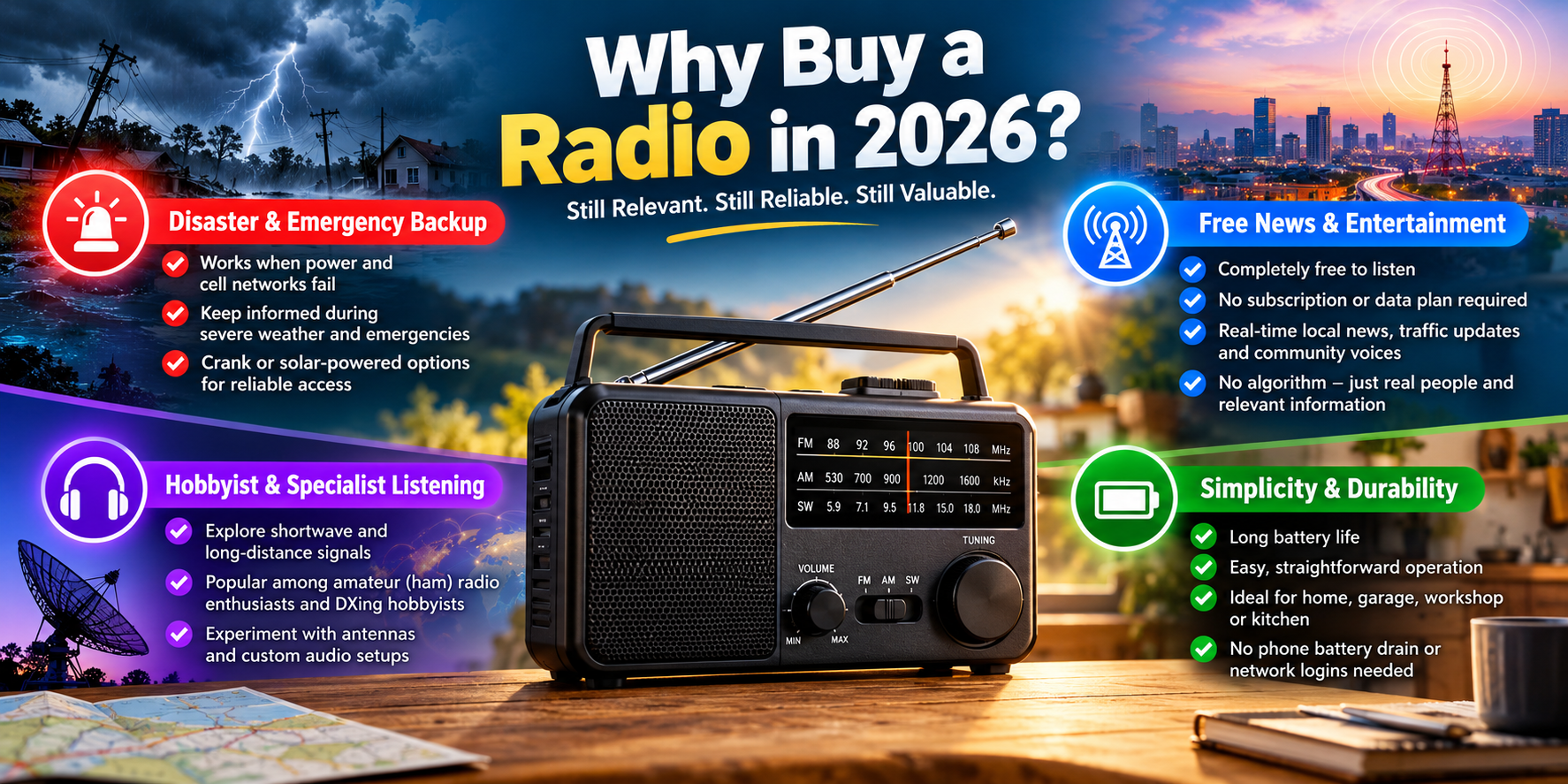

The Power of Local Broadcasts
Local radio stations offer information that national streaming platforms may not provide. Their programmes often focus on nearby communities, regional events, and issues affecting local residents. This makes them useful sources of everyday information.
For example, local presenters may share updates about road closures, school announcements, community events, and changing weather conditions. During severe weather, some stations also broadcast public safety messages and official emergency instructions.
These broadcasts can be especially valuable when mobile networks become congested or internet services experience interruptions. However, radio reception and station availability depend on your location. Not every station provides continuous emergency coverage.
Local radio also creates a sense of community. Presenters discuss regional concerns, interview local guests, and highlight events that might receive little attention elsewhere.
For listeners who want more than music, these local connections remain an important advantage. A radio receiver can provide useful updates while you work, travel, or complete household tasks. Nevertheless, you should verify critical announcements through official sources whenever possible.
What Is the 3-3-3 Rule for Radios?
The 3-3-3 rule is sometimes discussed in survival and emergency preparedness, but it is not specifically a radio rule. A commonly cited version suggests that people may survive approximately three minutes without air, three hours in harsh environmental conditions without adequate protection, three days without water, and three weeks without food. These are rough guidelines, not precise medical limits.
A radio can support emergency preparedness by helping you receive weather warnings, evacuation instructions, and public safety announcements. However, owning one does not automatically make you prepared for every emergency.
Choose a receiver that suits your local broadcasting system and likely risks. Depending on your location, a portable AM/FM radio or a compatible weather-alert receiver may be useful. Battery-powered and hand-crank models can offer additional flexibility during power cuts.
You should also keep spare batteries, drinking water, essential medicines, and a basic first-aid kit. Follow instructions from local emergency authorities rather than relying on general survival rules alone.
Essential Emergency Preparedness Guidelines
An emergency radio can help you stay informed when electricity, mobile networks, or internet services become unreliable. However, the right model depends on your location, available stations, and household needs. A radio is just one part of a preparedness plan, so consider other essential emergency tools for your home to help you prepare for unexpected situations.
Consider these features when choosing a radio for an emergency kit:
- Battery operation: Choose a model that works without a mains power supply.
- Hand-crank charging: Some models let you generate limited power manually.
- Solar charging: A built-in solar panel can provide an additional charging option.
- AM/FM reception: Check which bands local stations use before purchasing.
- Weather alerts: Where supported, dedicated weather-alert receivers can provide relevant warnings.
- Built-in flashlight: This can be useful during power cuts, although it may increase battery consumption.
Test your radio periodically and learn how to tune into local stations. Keep spare batteries in a dry, accessible place.
Most importantly, treat radio as one part of your emergency plan. It cannot replace reliable shelter, clean water, first aid, or official emergency guidance. A simple, dependable receiver may be more useful than an expensive model with features you never need.
Does Gen Z Still Listen to Radio?
Younger audiences have grown up with streaming services, smartphones, and on-demand entertainment. These platforms make it easy to access music and podcasts whenever convenient. As a result, traditional radio faces competition for their attention.
However, this does not mean younger listeners have abandoned broadcast audio entirely. Some enjoy discovering music through college stations, community broadcasters, and independent presenters. Others purchase vintage radios or modern devices with retro designs because they appreciate physical controls and distinctive styling.
Radio can also provide a different listening experience from algorithm-driven playlists. A live presenter might introduce an unfamiliar artist, discuss a local event, or play music a listener would not normally choose.
Still, it is important not to mistake interest in retro electronics for a widespread return to traditional radio. Someone may enjoy collecting vintage equipment without listening regularly.
For Gen Z, radio is best understood as one option among many. Its appeal depends on music preferences, local programming, convenience, and the desire for a break from screen-based entertainment.
The Appeal of Retro Audio Gear
Retro audio equipment appeals to people who enjoy physical objects, distinctive designs, and simpler technology. Vintage radios often feature tuning dials, tactile buttons, textured finishes, and compact wooden or plastic cabinets. These details can make them attractive decorative pieces as well as functional devices.
Modern manufacturers also produce retro-inspired radios that combine traditional styling with newer features. Depending on the model, these devices may include Bluetooth connectivity, USB charging, digital displays, or rechargeable batteries. If you plan to connect compatible wireless devices, understanding how far Bluetooth can reach can help you choose a suitable setup.
For younger listeners, such products can offer a change from smartphones and wireless earbuds. Turning a physical dial and exploring available stations can feel more engaging than scrolling through an endless list of songs.
However, appearance alone should not determine your purchase. Older radios may have worn components, limited reception, or outdated power requirements. Some vintage models also need repairs before they work reliably.
If you want both style and everyday usefulness, compare reception quality, battery options, speaker performance, and connectivity. A modern retro-styled radio may offer a practical balance between nostalgic design and contemporary convenience.
Does Radio Have a Future?
Radio is evolving rather than disappearing. Traditional broadcasting remains useful because it can reach listeners without requiring an individual internet connection. At the same time, broadcasters increasingly combine conventional transmission with digital platforms and online services.
Depending on the country, listeners may have access to AM, FM, DAB+, or HD Radio broadcasts. These technologies are not available everywhere, so buyers should check which standards local stations support before choosing a receiver.
Many broadcasters also offer websites, mobile applications, podcasts, and online streams. These services help stations reach audiences who prefer listening through smartphones or connected devices.
The automotive market presents another important challenge. Drivers increasingly have access to streaming apps and connected infotainment systems, while discussions continue about retaining traditional broadcast receivers in vehicles. Radio’s role in emergency communication also remains important.
Its future will depend on accessibility, audience demand, investment, and regional broadcasting policies. Rather than replacing every modern audio service, radio is likely to remain one part of a broader media environment.
Hybrid Broadcasting and Digital Evolution
Hybrid broadcasting combines traditional radio transmission with internet-based services. This approach allows broadcasters to reach listeners through conventional receivers while offering additional features through connected devices.
For example, a station might broadcast its regular programme over FM or digital radio while providing an online stream for listeners outside its coverage area. Its website or app may also offer programme schedules, presenter information, podcasts, and on-demand content.
Digital broadcasting can provide improved audio quality and additional information where supported. However, the benefits depend on the technology, receiver, signal conditions, and local broadcasting infrastructure.
Internet connectivity also introduces a limitation. Online streaming requires a suitable connection, while conventional broadcasting can continue without mobile data or Wi-Fi. If you rely on mobile internet for audio, understanding whether 5G is strong enough for streaming can help you decide when streaming is practical. These different strengths explain why the two approaches can complement each other.
When buying a radio in 2026, consider whether you need a basic broadcast receiver or a hybrid device. A simple radio may suit everyday listening, while a connected model could provide more flexibility. Choose features based on actual needs rather than assuming the most advanced device is always the best.
Is Radio Declining in Popularity?
Radio faces strong competition from music streaming, podcasts, video platforms, and other digital entertainment services. These alternatives let listeners choose specific songs, skip unwanted content, and listen whenever they want.
However, broadcast radio continues to serve audiences who value live programming and convenient access. Drivers may listen during their commutes, while shops and workplaces often use radio as background entertainment. Local stations can also attract listeners through interviews, regional news, and specialist programmes.
The extent of radio’s decline varies by country, age group, and listening method. Traditional broadcast listening may lose ground in some audiences while remaining an established habit in others. Online radio streams also complicate comparisons because people can listen to stations without using a physical radio.
Therefore, it would be misleading to assume that every market is experiencing the same trend. Radio’s long-term position depends on audience behaviour, station quality, advertising demand, and competition from other services.
For consumers, the more relevant question is whether radio fits their routines. If you value live content, local updates, and simple operation, it may still offer practical benefits.
The Undeniable Value of Car Commutes
Car journeys remain an important listening opportunity for traditional radio. Many drivers use broadcast stations for music, news, weather updates, interviews, and traffic reports. Radio can be convenient because drivers can listen without selecting individual tracks or managing a streaming playlist.
Local stations may also provide timely information about congestion, road closures, and changing travel conditions. These updates can help drivers understand what is happening nearby, although navigation apps and official traffic services may offer more detailed route information.
Radio’s availability in vehicles varies by market and model. Some cars include AM/FM receivers, while others emphasise connected infotainment systems and smartphone integration. Buyers should check the equipment included with a particular vehicle rather than assuming every model supports every broadcast band.
For people who drive regularly, radio can provide easy access to live programming throughout the day. It can also reduce reliance on mobile data when listening to terrestrial broadcasts.
However, commuting is only one reason to own a radio. Home listening, outdoor activities, and emergency preparedness may also influence your decision.
Is Buying a Radio in 2026 Worth It?
Buying a radio in 2026 can still be worthwhile, but it depends on how you plan to use it. A traditional receiver offers straightforward listening, access to local broadcasts, and independence from internet services. These advantages remain relevant even as streaming becomes more widespread.
Before purchasing, consider the following factors:
- Everyday listening: A basic AM/FM radio may suit music, news, and talk programmes.
- Emergency preparedness: Battery-powered models can provide information during power or internet outages.
- Portability: Compact radios are useful for travel, outdoor activities, and moving between rooms.
- Connectivity: Bluetooth and internet streaming may be useful if you want more than conventional broadcasts.
- Budget: Compare reception quality, durability, battery life, and essential features before paying for extras.
A radio may be unnecessary if you already rely entirely on streaming and rarely listen to live broadcasts. However, it can be a useful secondary audio device for households that value simplicity and backup communication.
The best choice is not necessarily the most expensive or technologically advanced model. Select a radio that fits your listening habits, works with local stations, and offers features you will genuinely use.
Final Verdict
Radio has changed considerably, but it still serves a purpose in 2026. Streaming platforms offer greater control over music selection, while traditional broadcasting provides live programmes, local information, and access without an internet connection.
Its value depends on your priorities. If you enjoy local news, live presenters, simple audio equipment, or a reliable information source during outages, a radio may be worth buying. A battery-powered model can also complement other emergency supplies.
On the other hand, you may not need a dedicated receiver if streaming already meets all your audio needs. Your location, available stations, and intended use should guide your decision.
Ultimately, buying a radio in 2026 is a practical choice for some people, not a necessity for everyone. Consider how you plan to use it before making a purchase. If you value local broadcasts, live programmes, or backup access to information during power outages, a radio may still be worthwhile. For practical advice on choosing an emergency receiver and understanding its features, consult the National Weather Service’s guide to NOAA Weather Radio receivers. Choose a model that suits your needs, supports the broadcasts available in your area, and offers reliable battery operation.