All posts by Anish

Gorgeous Outdoor Photos: Tips you need to know 

Gorgeous Outdoor Photos: Tips you need to know

Whether you want to take elegant shots for business or informal pictures of friends and family, being able to take exceptional outdoor portraits is a crucial talent. Outdoor portraiture is also highly gratifying because it allows you to get stunning images in glorious light while also taking in stunning views of the  outdoor landscape and urban environment.

However, taking beautiful pictures is no easy task. Working with your subject, making the appropriate settings, managing the light, thinking about your compositions, and many other things are all necessary. It’s understandable why so many aspiring portrait photographers find it difficult to get started.

Choosing the right camera: outdoor shoot

IMAGE CREDITS: Unsplash.com

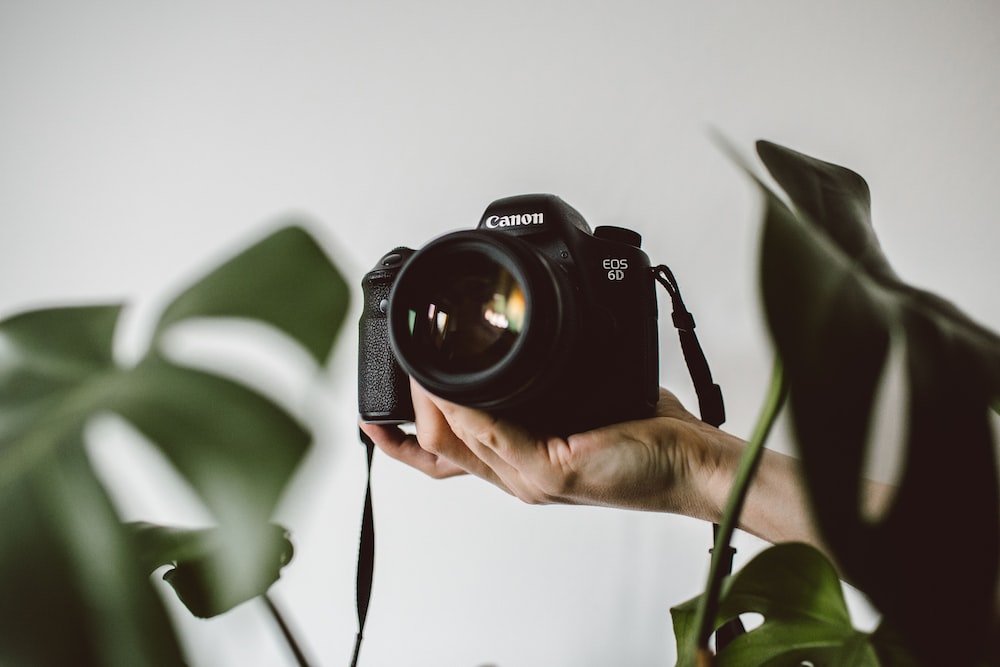
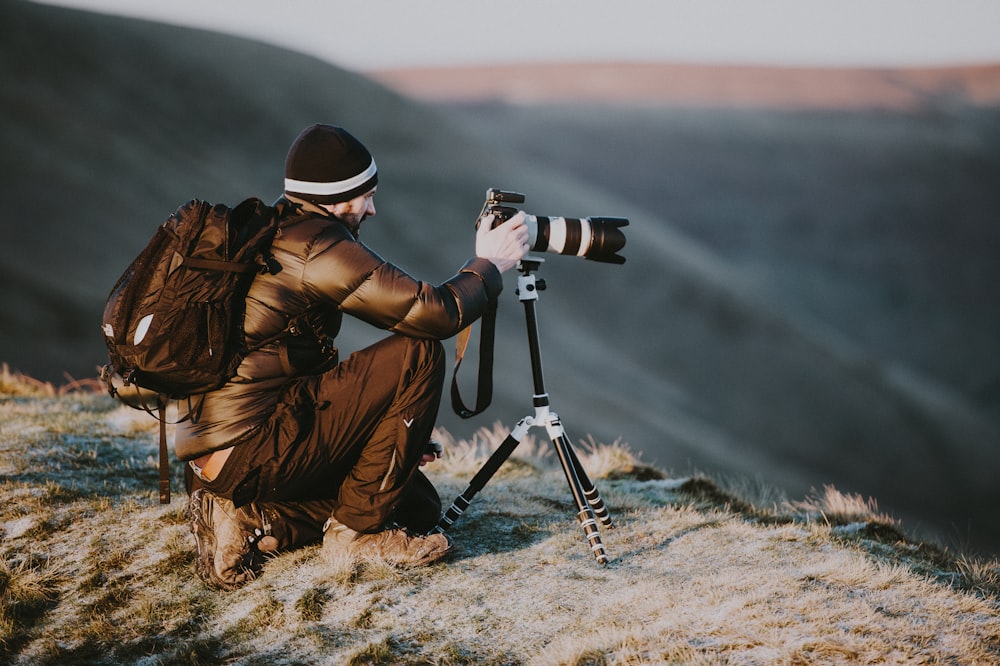
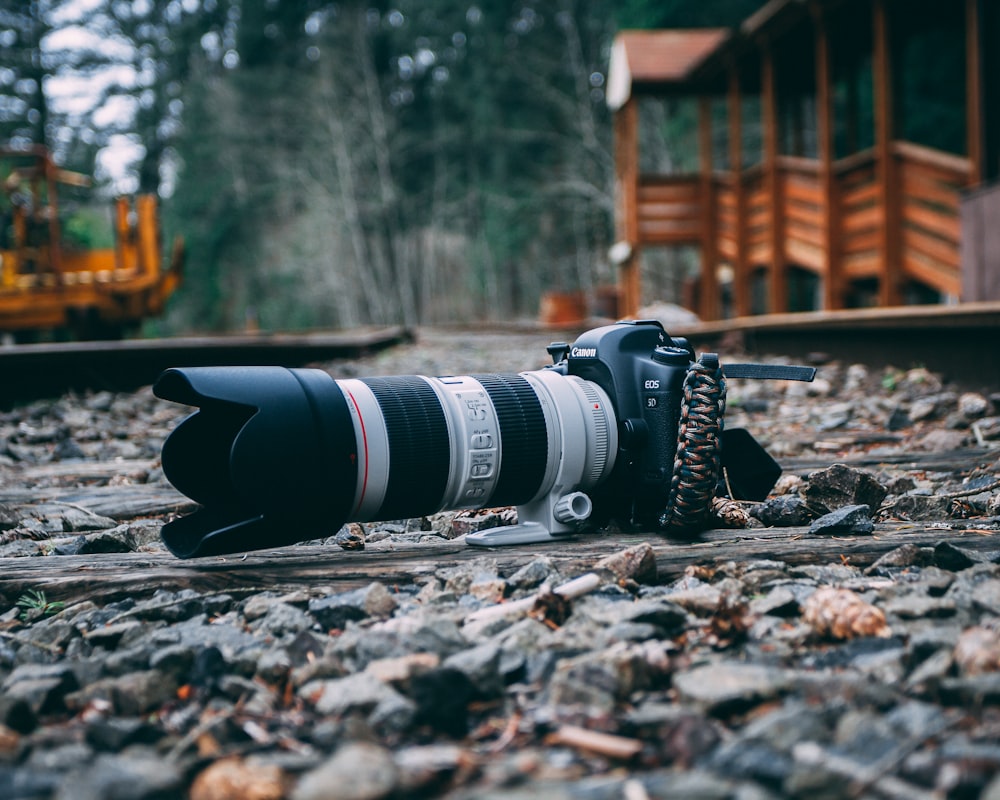
You may take stunning outdoor photos with practically any camera model, from the most basic smartphone to the most sophisticated full-frame DSLR. However, if you want to increase your chances of success, I strongly advise that you pick your camera carefully.

Be sure to first get a DSLR or mirrorless model. One big advantage these cameras have over fixed-lens point-and-shoot cameras is the ability to use a range of lenses to capture different angles and looks. Your decision on a full-frame, APS-C, or Micro Four Thirds camera will be based on your level of interest, your financial situation, and how portable you need the camera to be.

Proper focal length

Although focal length and lens selection may not appear crucial, they can have a significant impact on your images. Because differing focal lengths call for you to be nearer or farther from your subject, perspective distortion will become more pronounced the closer you are.

Unchecked perspective distortion frequently produces unattractive body proportions; if you’re not careful, you’ll wind up with a long list of dissatisfied customers. (After all, asking “Why does my head look swollen?” from a client is the last thing you want to hear).

Remember that you don’t need to buy a specific portrait lens because almost every kit lens includes some of these focal lengths. If all you have is the lens that came with your camera, you’ll be OK.

Always shoot in RAW, avoid JPEG: outdoor shoot

IMAGE CREDITS: Unsplash.com

I’ve said these words a thousand times, and I’ll say them a million times more. The RAW file format is an unaltered compilation of the data collected by your sensor during the exposure. It is a digital negative of yours. Additionally, it offers you tremendous post-processing freedom and enhances image quality.

On the other side, a lot of what you record is lost when you photograph in JPEG format. You lose a lot of important details, such as tone range and colour nuance. It will only end in tragedy.

Shooting with right aperture and shallow depth

A shallow depth of field effect from a wide aperture will blur the background and highlight your subject. This is a crucial component of the “look” that expert portrait photographers adore, and it’s the kind of thing that can quickly transform your photos from ordinary to outstanding.

Therefore, if you can, shoot at f/2.8 or possibly f/1.8. Naturally, not every lens can operate at such a wide aperture; some stop functioning at f/5.6 and higher. If you can, I’d suggest investing in a wide-aperture lens (there are many fantastic low-cost ones, such a 50mm f/1.8).

Don’t include all points for focus: outdoor shoot

Always keep in mind that you must master focus if you hope to consistently get excellent outdoor pictures.

And a major, major focusing error I observe novices making? employing a lot of focus points in the hopes that one will capture the subject, or using the Auto AF area option where the camera chooses the focus point for you. Unfortunately, neither of those approaches is effective, and you’ll frequently get fuzzy, out-of-focus pictures, especially if you’re using a wide aperture.

Always focus on the eyes

IMAGE CREDITS: Unsplash.com

Yes, it’s crucial that you get your portrait images’ focusing right, but what exactly does it entail? maintaining razor-sharp vision, of course!

As the windows to the soul, eyes are the natural subject of any good portrait. The eyes should also be represented properly because they are the feature on the face with the highest detail.

When utilizing a wide aperture and focusing on the eyes, the shallow depth of field effect will also soften the skin.

Using a grey card: outdoor shoot

Grey cards are not always used by outdoor portrait photographers. However, I’m a major admirer of grey cards, therefore I strongly advise using one for each and every photo session.

Why? I’m going to explain this backwards to avoid any misunderstanding. There is always a way to choose a custom white balance when opening Adobe Camera Raw or any other RAW image processing program. Typically, you can use an eyedropper of some sort to click on the area of the image that you believe to be neutral grey.

Natural reflector is always beneficial

IMAGE CREDITS: Unsplash.com

While it might seem like there aren’t many reflectors available for outdoor photography, there are actually a lot of both natural and man-made reflectors that you can use to improve your pictures. Therefore, you can always rely on the environment around you if you don’t want to bring a reflector (or you forget yours for a photo).

You see what I mean? Additionally, double- and triple-check your setup to ensure that you have a natural reflector if you’re going to a place where one might not exist. You can buy pop-up reflectors, as I indicated above, but you can also create your own out of foam core or white cardboard.

Powerlines and signs to be avoided: outdoor shoot

We’ve already talked about keeping your camera focused on the subject’s eyes, but you also need to retain the viewer’s attention on the image as a whole and on your portrait subject in particular.

One or two trees, powerlines, signs, long blades of grass, a single item of trash, or even lengthy bits of grass can seriously detract from an otherwise excellent outdoor portrait shot.

Therefore, pay close attention to the space around your subject before taking even a single photo. Do you observe any deterrents? Anything that could detract from the picture? If so, remove it or reposition your topic so that any backdrop distractions are hidden.

USEFUL LINKS:

Click here to know some more tips on outdoor photography 

We have some alternatives to display your photos, see here 


Themed Photo Sessions: All you need to know about it!

Themed Photo Sessions: All you need to know about it!

In 2020, life underwent a significant transformation that persisted through 2021, 2022, and 2023. Our personal lives and our art were both affected, but in the thick of it all, fresh concepts and intriguing trends arose. Check out some amazing ideas for your themed photo session. These themed photo ideas will make your photography amazing.

Variety and togetherness: themed photography

IMAGE CREDITS: Unsplash.com

The experience of being in a pandemic led a substantial portion of society to reflect more deeply on many of the greater problems that face humanity. We came together as a result of the darkness, and we started to turn to our neighbours for support.

Look to variety and togetherness as a photo topic in 2023 as both life and art are imitating one another. Show how we are all in this together and that working as a team is how we survive.

Project the space: themed photography

Many of us now gaze at the stars and ponder what else might exist in the universe. Photography has greatly benefited from new technology; we can now use projections and computer representations in our work.

Why not use the expanse of the universe as inspiration to make some astronomical projections? Combine pictures of space with portrait, still-life, and other subjects!

Revive the renaissance vibes

IMAGE CREDITS: Unsplash.com

The past can always be usefully examined. The lovely appearance of Renaissance Europe is growing in popularity, particularly as more people rediscover past interests like attending Renaissance festivals! Bring out the corsets, puff sleeves, and gorgeous embroidered fabrics for your upcoming picture shoot.

You can achieve fantastic results by fusing contemporary culture with touches of Renaissance attire.

Engulf in mystery: themed photography

Everything in the world is mysterious. Why not make it a themed photo session?

The concept allows for so much creative freedom, even if you don’t personally practice mysticism! To take jaw-dropping portraits, you can employ accessories, fog machines, lights, and a variety of incredible shooting techniques. In addition to being a terrific technique to get out of a creative rut, it’s also a lot of fun.

Bold and exciting colors

Bold, energetic, exciting, and joyful are all attributes of color! All four of these things can significantly improve your photography. Try out dramatic backdrops, bold cosmetics, and bold haircuts. Have fun with the colors!

Get a little quirky: themed photography

IMAGE CREDITS: Unsplash.com

Let’s be kooky! In 2023, personalities are prominently displayed, and flat-lay product photography demonstrates this well. You are challenged to think creatively by this theme. Do something bizarre without fear!

Who gives a damn what people think? Give routine things a quirky spin.

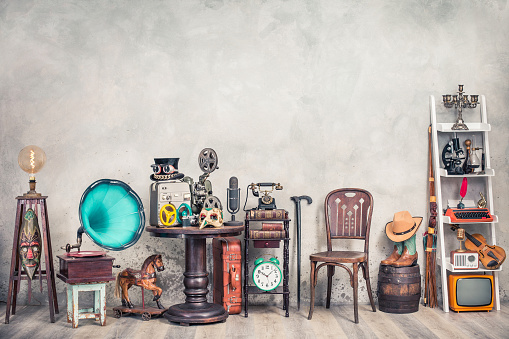
Vintage is never outdated: themed photography

Throwbacks are popular on social media because we like reliving the past. Grab a throwback camera or experiment with editing to give your upcoming photo shoot a retro vibe. Additionally, utilize a flash without a diffuser and aim for a lot of brown and orange tones while setting up pictures. You might also think about making your photos black and white or sepia.

This topic may be found in a lot of recent branding imagery! There is great power in nostalgia.

Be around greenery

Slowing down allows you to experience nature’s beauty and unite with it. Why not make a whole series where the importance of flora is equal to that of your picture subject? To generate interesting photos, have your model stand in front of flowers and trees.

See what you can create by experimenting with shallow and deep depths of field!

Click while you nap: themed photography

We’ve wanted to normalize naps for a while, and we finally have! Play around with this entertaining photoshoot topic idea. There are so many funny and amusing ways to portray the wonderful feeling of a nap.

You can make fresh compositions with cushions and blankets, and you can add some hilarious stances for some amazing pictures.

A little bit of geometry

IMAGE CREDITS: Unsplash.com

Visual art has frequently used geometry throughout history (repetition is actually what makes humans grow!). So instead of taking typical portraits, start incorporating geometric shadows into your pictures to make them more fascinating.

There are several methods to accomplish this, most of which may be carried out at home:

  • Put a pattern on the wall or the target.
  • Place a cut-out stencil in front of a light source.
  • On a sunny day, cover windows with blinds.

Be a cowboy: themed photography

People have recently begun to pay attention to their origins and have even developed an interest in living off the land, which implies cowboy and western dress! A life of grit, honor, and pride may be incredibly beautiful.

Visit a ranch and document life in the American wilderness.

Distort reality

IMAGE CREDITS: Unsplash.com

What is reality, exactly? Recently, mine developed a warp and is still regaining its original shape. Use special items and photographic techniques to alter the viewer’s vision of the world by capitalizing on this sensation.

Try applying Vaseline to a glass window and then shooting through it. Or perhaps use a creative filter and have fun creating unique images. Do anything you can to distort it!

Capture the ordinary: themed photography

Due to the epidemic, the commonplace was elevated to the exceptional, and now that more businesses are operating normally, the commonplace is wonderful. There are countless photos that tell a narrative and highlight the commonplace.

Click from below

IMAGE CREDITS: Unsplash.com

It’s always a good thing to shift our perspectives, and one of the wonderful things about photography is that it allows us to give audiences a fresh viewpoint. Why not record life while you are lying on the ground? On the bottom, everything appears different!

Shoot your workplace

Even if not everyone enjoys their profession, you must record it if you do! The pandemic left a lot of passion projects unfinished, but now is the perfect opportunity to get started again. Capture the passion for work and the people who work hard to continue doing what they love.

Adventure as a theme: themed photography

Spending too much time indoors may cause you to yearn for adventure, and what better place to find adventure than in nature? Plan a photo session with a concept based on exploration. Show your subjects sprinting through the breath-taking vistas of our planet.

It’s a wonderful justification to venture outside and discover something new!

USEFUL LINKS:

Discover some more theme ideas for your photo session 

Make your family photoshoot a fun with these tips 


How to Choose a Professional Photographer?

How to choose a Professional Photographer?

Where should I look to get the best photographer? Or how to choose a wedding photographer. We sincerely hope that these ideas assist you to choose the right photographer.

You want the photographer you hire to provide perfect images. After all, these images—which capture a moment in the life of your kid, family, or loved one—will be preserved in time forever. especially when choose a wedding photographer because your wedding images can only be taken once.

Research to choose

IMAGE CREDITS: istockphoto.com

Consult with family and friends for recommendations, peruse websites, and read reviews. Your chances of discovering a diamond increase as you examine more images. Avoid asking questions in Facebook groups since you can receive unfavorable feedback.

Always choose a professional

Everyone knows someone who “takes photos,” but shooting excellent shots while travelling, setting up a fantastic shot, interacting with clients, providing ideal lighting, and editing photos are all talents that require training and expertise. Hire a qualified professional photographer rather than someone who only declares to be a photographer. Check out their portfolios, websites, and reviews. Genuine photographers maintain websites.

Check experience of the chosen one

IMAGE CREDITS: Unsplash.com

Similar to step number 2, examine the photographer’s work for consistency, qualifications, education, and experience. Everyone must start somewhere, but the best outcomes require a professional with knowledge of the industry. As this can significantly affect the quality of the final output, find out if the potential photographer has any training in art, photography, or picture editing.

Talk to former clients

Make sure to carefully read any reviews you come across online. You could inquire about getting in touch with former customers to receive their feedback. Customers who were satisfied with the photographer’s work would be able to elaborate on it for you. This will help you better comprehend the creative process. Speaking with a professional photographer’s clientele might reveal a lot about them.

Choose according to your style

To examine the photographer’s portfolio, go to their website and social media accounts. Does the photography approach fit your desired end results? Do you appreciate how the colors and edits have changed? The whites and the blacks are they both white? Which type of lighting, natural or artificial, do you prefer? If the results are produced in an entirely different manner from your own, you won’t be pleased. Selecting a photographer whose work you find lovely will increase the likelihood that you’ll appreciate the finished product.

Interview your photographer

IMAGE CREDITS: Unsplash.com

Request a consultation once you’ve reduced the number of prospects in your search. If you initially talk to potential photographers on the phone or in person, it will be simpler for you to decide how well your personalities will mesh.

You should feel at ease and able to talk honestly with your photographer. You’re more likely to feel completely at ease throughout the session if you feel comfortable speaking on the phone. Ensure that neither you nor your companion are bothered by the photographer.

By taking advantage of this opportunity to discuss the kinds of shots you are looking for, you may ensure that the photographer is comfortable working with kids, infants, and dogs if they will be present in the pictures. Ask to see all of the galleries they are required to give their customers.

Focus your priorities when you choose

As with other professions, photographers usually specialize in one or two areas of photography, such as weddings, maternity, children, families, landscapes, and animals. For example, choosing a wedding photographer may not be the greatest option for capturing your new-born’s first moments. Though it’s possible that a nature photographer wouldn’t be the best choice to capture your wedding. To get the photographs you want, find a photographer who specializes in them.

Talk about editing process

The best picture editors are also the best photographers. However, not all editors are created equal. Set clear expectations and enquire about the photographer’s experience and editing tools. Are you seeking extensive editing, little editing, or some combination of the two? Verify that the photographer you choose can meet your needs both throughout the shooting and editing processes. Each photographer offers their clientele a unique editing approach.

Always consider the fee when you choose

IMAGE CREDITS: Unsplash.com

Although hiring the photographer that charges the lowest price could be enticing, this is typically a sign of inexperience and lack of skill. Photographers seek a fair price for their services as well as what is necessary to keep their businesses operating. Ask whether there are any other costs not included in the upfront price, such as whether printing, editing, and other services are included or not. Although working with a skilled photographer doesn’t have to break the bank, you should be ready to invest a sizable sum of money to ensure the best results.

Location is very important

Location is key, particularly if you’re hiring a portrait photographer. whether you have a specific site in mind, investigate whether it will fit for your project or ask the photographer about her favorite shooting spots. Make certain the website is flawless. You can also check the area in advance to make sure it’s what you intended. Last but not least, find out if there is an extra fee for the photographer to travel to the place of your choice.

Wedding photography

IMAGE CREDITS: Unsplash.com

Compared to other photography genres, wedding photography is the most competitive. Ask a wedding coordinator or the wedding vendors if you still need help finding a photographer for your big day. If you simply ask, you are sure to receive more advice during the course of arranging your wedding. If this is something you are interested in, ask if they offer wedding albums because not all photographers do. The most crucial thing is to look at galleries from actual weddings rather than the themed wedding they created for their website.

USEFUL LINKS:

Choose your professional photographer with these simple steps given here

Click here to know most influential leaders in the history 

Questions You Should Be Asking Your Photographer

Questions you should be asking your photographer

What questions ought to you make of a photographer if you encounter them? What photography-related questions will clarify how they operate? What tips can you glean from their experience to enhance your own photography?

These are the questions that will help you understand how the photographer handles their own photography as well as provide you with the best, most helpful advice.

So, you’ll know how to get the most useful information the next time you run into a photographer you adore or simply interact with a photographer on a website or forum.

What is the one thing you wish you had known before you began taking pictures?: # questions

IMAGE CREDITS: Unsplash.com

Every photographer faces challenges when they first start out, but they all get better with practice. Accordingly, every photographer has one, two, or even hundreds of things they wish they had known when they first started.

How did you become a skilled photographer? # questions

Regardless of how good a photographer is, they weren’t born with photographic genius. Every photographer has gone on a trip because mastering camera settings, composition, light, and post-processing takes work.

So, question them on it. Inquire about their transition from amateur to professional status (or skilled amateur, semi-professional, etc.). What did they do that most benefited them? Was it studying photography-related books? courses in photography? watching a photograph? Practicing? A certain kind of magic bean?

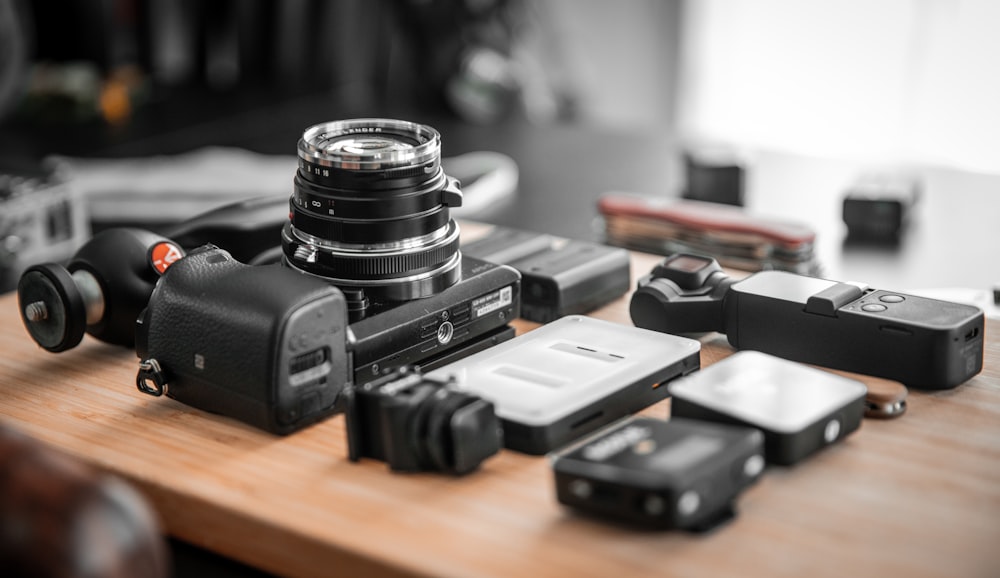
Which gear do you use?

IMAGE CREDITS: Unsplash.com

Since this issue seems a little superficial and outstanding image are created by photographers, not equipment, I don’t advise you to start with it.

Nevertheless, equipment does matter, and comprehending a photographer’s setup can be beneficial for two reasons in particular:

It will provide suggestions for your own equipment (after all, if a photographer you admire uses a particular lens and produces razor-sharp shots, the lens is unquestionably capable glass!).

You’ll gain knowledge of the tools required for various types of photography. For instance, if you’ve never taken a panorama of a landscape, you might not be aware that you require a specific kind of tripod.

Which lens do you prefer to use? Why? # questions

This additional photography gear-related query seeks to ascertain why a photographer employs the particular lenses they do as well as what distinguishes some lenses from others. A talented photographer can create shots with any lens, but other factors like focal length, maximum aperture, autofocusing speed, and more can have an impact on your pictures (perhaps much more than you might believe!).

By the way, selecting from a group of high-quality lenses is less about figuring out which lens is sharpest. Instead, it’s about figuring out which lens best suits your own preferences and needs, so you can get the photos you want.

Do you bring anything else with you when you go out to shoot besides a camera and a lens?

The majority of photographers have one or two indispensable accessories, such as a cleaning kit, a portable charger, or even a specific pair of hiking boots.

According on the type and manner of photography, these items differ from photographer to photographer.

Asking a photographer about their necessities may be a lot of fun. Ask them why they carry the particular goods they do. And soon you’ll have a few things to put on your own wish list for gear!

Is there anything you regret buying among the photography equipment you bought? Why?

IMAGE CREDITS: Unsplash.com

The fact that it isn’t a frequently asked question contributes to its intrigue. What wouldn’t you buy if you were a photographer?

You’ll get a lot of varied responses to this, which is fantastic. Encourage the photographer to be as general or detailed as they’d want. Photographers may mention their dusty lenses, their tripods shaking on still days, their broken lights after five uses, or something completely different.

Take note of every component, but don’t allow that deter you from purchasing the tools on your own since what works for one person could not work for another!

What settings do you prefer? # questions

I advise you to keep this question open-ended because you want to discover the optimal parameters for particular situations as well as the settings that a photographer can’t live without. You don’t want to know the exact settings that a photographer employs occasionally.

While some photographers are quite picky about their settings, others like to leave everything on Auto and concentrate on lighting, composition, and processing. Therefore, if the photographer doesn’t provide much information, don’t press the issue (and don’t limit the photographer if they go on and on about the settings!).

What sort of post-processing equipment do you employ? How does your process look?

Post-processing is quite specific to each photographer, and it may be intimidating for new photographers, so if you have trouble with it, this is an important question to consider.

The program the photographer uses may be your starting point, but explore further. Inquire about particular tools and methods. (Do they assign colors? Which sliders are their favourites? Do they evade detection? And if they appear receptive, inquire about their process. In other words, how do they create an image from beginning to end? How does the procedure appear?

The secret of a photographer’s style may be found in the slightest of elements, so pay close attention when they are being discussed.

Which of all your pictures is your favourite? Why? # questions

IMAGE CREDITS: Unsplash.com

This is a terrific icebreaker question and a great way to get even the most reserved photographers talking about themselves and their work because photographers often adore discussing their own work.

A photographer will frequently describe how they approached the composition, why they appreciate the shot, and sometimes even the techniques they employed to create it if you ask them about their favorite work. It’s a treasure trove of knowledge!

Whose work has the greatest impact on you? # questions

The “influence” question is the most challenging to answer of all the questions to ask photographers on our list, but if you have the time and the photographer is open to it, it may provide amazing insights into their work.

USEFUL LINKS:

Click here to learn more about conversing with a photographer 

Discover some tips for photoshoot with children 


Unique Photo Session Ideas You’re Going to Love

Unique Photo Session Ideas You’re Going to Love

Nothing compares to making memories with your loved ones. Do you appreciate capturing lovely photos of your family and yourself? You are undoubtedly constantly looking for ideas for your next photo shoot. You’ll adore the unique photo ideas we’ve provided below.

Photo session on family history

IMAGE CREDITS: Unsplash.com

Do you like the pictures your grandparents or even great grandparents have taken? Why not try making your own? You can get the same appearance and feel with a little bit of editing.

Alternately, go all out with historical attire and a posed photo shoot.  A lot of photographers offer photos with historical attire and accessories.

Find photographers that have a good selection of costumes or shop online for attire. Look for those who specialize in the appearance and atmosphere of the historical period you want to recreate.

Generational photo-session

Why not make a photo that future family members can treasure? Photos are one of those commodities that are passed down through generations.

To represent the different generations of women in your family, take a photo with your daughter, mother, and grandmother. You can also include any other combination of family members in the shot.

Capture photo on pregnancy

Pregnancy growth may be shown in a variety of entertaining ways, and photographing it is the best way to remember this period of your life. Take a selfie with the pregnancy stick, the ultrasound image, or a sign indicating the gestational week in which the shot was taken.

Then, with the father and siblings present, professional maternity photographs are taken at 30-34 weeks.   Years from now, you’ll be able to share that precious moment with your child and walk them through your journey leading up to meeting them.

Click with your pets

IMAGE CREDITS: istockphoto.com

If you have pets at home, they will be very obedient models for a portrait session.

The way that dogs and cats act and react when being photographed varies greatly. Dogs will remain motionless for a photograph if a treat is included.

We’ve discovered that cats are most photogenic while sunbathing. Cats will wander from a sunlit patch to a sunny windowsill solely for warmth and like following the light throughout the day.

Take a picture of your cat from outside the window if it enjoys sitting on a sunny windowsill.

The quality of the golden light and how it highlights the subject are advantages of taking pictures of pets lounging in the sun.

Still photography

Another wonderful concept for a home photo shoot that is simple to set up and entertaining to capture is still life photography. Art that depicts scenes of inanimate objects has been around for ages in the form of painting and sketching.

Consider lighting and background aspects when creating scenarios with flowers in vases, fruit platters, other commonplace items.

Instead of using your ceiling lights, which cast a yellow glow, position yourself near a window to get the most of the natural light. Or, to make a scene stand out, employ flash equipment either on or off camera.

The best props for still life creative photography are probably already lying around your home. Or when taking your daily walk, collect any random items that come your way, such shells, driftwood, and dried marine life.

Capture your toys

IMAGE CREDITS: Unsplash.com

You have the ideal subjects for toy photography if you have kids or collect cool toys. It’s without a doubt one of the most pleasant ideas for a home photo session because you may set up intriguing scenarios in which to pose your subject.

Toys are popular collectibles that make people nostalgic and yearn for their younger selves.

Pose Star Wars figures in the sandpit in the backyard. To capture a lone Storm Trooper exploring the deserts of Tatooine, adjust the depth of field and angle. Here is my comprehensive guide to photographing toys.

Photo session on a rainy day

Our most ambitious photography intentions frequently come to an end on rainy days. The wettest of days can be creatively successful thanks to a few at-home photo shoot concepts.

As any street photographer would attest, shooting after a rainstorm makes the streets come alive.  Large puddles make excellent mirror images of the clouds overhead.

For a photo of morning dew developing on leaves and spiderwebs, get up close to the plants and foliage as water beads on the surface.

Click photo with water drops

Photographing a water drop that has been frozen as it falls is one of the best ideas for a home photo shoot. To capture the droplet as it develops a beautiful tear shape, use a quick shutter speed.

Put a full bowl of water on the table, position the camera near the bowl, and pour a drop into the bowl’s middle. Check your pictures after each shot to fine-tune the timing between releasing the droplet and pushing the shutter.

Click with your neighbor or friend

IMAGE CREDITS: Unsplash.com

A nice option is to include your neighbors in a portrait project if you get along well with them. They’ll be seeking for something to break up the boredom while everyone is under lockdown.

Take amusing pictures of your neighbors at their front gates with the backdrop of their houses. Invite your neighbors to join you on your daily walk.

No neighbors nearby? Instead of planning a romance photo shoot, coordinate a best buddy photo session. Use this inspiration to produce amazing images if your pals are commemorating a momentous occasion, such as an anniversary.

Conduct a fashion photo shoot

You could think that a fashion photography picture shoot is out of your league. If you share a room with a fashionista, put together a variety of attractive looks for your photo shoot.

The model should be directed and posed to best display their sense of style in a variety of full-body pictures. For gorgeous lifestyle fashion photographs, work in the yard, garden or park.

These photo shoots hone your model direction abilities for upcoming jobs.

USEFUL LINKS:

Check out some more unique ideas on photoshoot. Click here

Don’t be indecisive about your future:

High paid Salary courses after 12th Science  


Senior Photoshoot: Top tips you should consider  

Senior Photoshoot: Top tips you should consider

Graduation involves more than just crossing a stage and hoisting your cap in the air. It marks the beginning of your new chapter in life. Whether you’re a college graduate or a high school senior, a senior photo session may be much more than just the corny yearbook shot on picture day. Purchasing senior pictures gives you the ability to record the highlights of this period of your life for future reflection. For the best senior portraiture advice, keep reading.

Investment of many kinds: Senior Photoshoot

IMAGE CREDITS: istockphoto.com

Senior pictures aren’t simply for your graduation announcements or to improve your Instagram feed, although in our opinion, either of those reasons is plenty in and of itself. To perfectly capture who you are at this point in your life, you can completely customize your photo session.

  • Make a list of your interests and pastimes. There are countless ways to include things you adore in your photographs to further enhance their individuality. Take pictures of the activities you most enjoyed doing while in school, whether you were involved in a club, a group, or a sport. Your photographs will reflect real excitement and joy, capturing the true you.
  • Regarding careers… You can also get a couple professional headshots for your résumé, LinkedIn profile, or social media during your senior session. Choose a neutral background for your session and a straight-on smile for the standard headshot. You can also choose more relaxed lifestyle images, which are great for adding variation to your professional web presence.
  • Being proud of your school. If you have a strong sense of school pride, this is your last opportunity, before you graduate and become an alumnus, to proudly display your school’s colors, give the school’s hand sign, and document the “good old days” while you still have them.

Show your interest and passions

The focus of your senior portrait session is you! During your session, your family may join you for a few family shots, but the most of the photos will focus on you and your achievements. You probably feel most confident in what best represents you!

Bring an item to represent your sport, such as a ball, jersey, or hat, if you were active in athletics. the band? your instrument with you.  Art? Bring some of your work or your supplies with you. Yearbook? Take a camera with you. Show off your proudly earned patches if you have a letterman jacket!

Planning beforehand: Senior Photoshoot

IMAGE CREDITS: Unsplash.com

The senior portrait session is not the time to put off doing something (like you did on that term paper ), because everyone in your class is graduating at the same time.

As graduation draws closer, college students may find it more difficult to take photos on campus. Your campus probably has a few popular photo locations, including a landmark, statue, or sign that seems to be the focus of everyone’s attention.

By making a plan in advance, you can obtain the photos you want without feeling rushed or pressed for time.

Regarding your photographs, consider the weather as well. If your campus is lush and green, springtime, when the grass is verdant and the flowers are blooming, can provide the ideal backdrop.

The spring season is typically the busiest for senior sessions, so plan ahead to secure the photographer of your choice and have your photographs ready in time to order and notify family and friends of your graduation.

Fall is a fantastic season for senior portraits, particularly if you’re graduating that semester. Additionally, there may be less competition for shots in the most popular locations during this time of year, making it the ideal time to capture the gorgeous autumn colors.

Add props: Senior Photoshoot

IMAGE CREDITS: Unsplash.com

Props are a great way to add variation to your images during your senior portrait photography session. It can be unsettling to have your picture taken alone, but never worry! With the greatest postures and suggestions to help you stand out, your senior photographer has you covered. Including items in the mix will assist give your session even more posing alternatives and distinctive photos.

You can rejoice in front of the camera by holding placards, tossing biodegradable confetti, and, if you’re graduating from college, popping some champagne. Don’t forget your cap, gown, stole, and any cords, of course. We advise carrying a jacket or dress shirt to throw on over your attire for a close-up shot if you want to squeeze in a headshot.

If you intend to bring a change of clothes, let your photographer know so that they can factor in your changing time. If you’re bringing a variety of props, we suggest bringing a friend or family member along to help carry your necessities. Bring any cosmetics, a tiny mirror, a comb, or anything else you might need for a fast touch-up.

Choosing right location

Traditional senior photo sessions used to conjure up images of dull backgrounds, artificial lighting, and stiff posing, but nowadays they are thrilling experiences that go along with your degree that you worked so hard to obtain.

Take into account that your senior pictures are more of a lifestyle session. Take your photographs outside of the studio so you can capture your life anyway you want to. It might take place at one of your favorite places on campus, in the middle of your city or town, or even at the coffee shop where you used to stay up late studying.

Keep your clothing simple: Senior Photoshoot

IMAGE CREDITS: Unsplash.com

Bring nothing that has logos, wild prints, words, stripes, or images on it. The focus should be on your face, eyes, and expression rather than the shirt’s emblem.

Additionally, check to see that the color of your undershirt matches the rest of your outfits and doesn’t peek through. Please bring a strapless bra if you require one to your session. You may not always be able to tuck or move straps, and you probably don’t want a hot pink bra strap showing.

USEFUL LINKS:

Keep on hovering to know more:

Tips for senior photoshoot you should know

Click here to know how to choose props for your photography 

Choosing the Best Camera for Your Child

Choosing the Best Camera for Your Child

It’s never too early to start, and finding the best camera for your kids can be a terrific way to encourage creative engagement while having fun. With a best camera in hand, kids are liberated to discover their surroundings and make lifelong memories of the people and places they encounter.

However, it can be difficult than it may seem to choose the perfect camera for your youngster. You can choose from a broad variety of children’s cameras, some of which are perfect for growing older kids and others of which are made exclusively for smaller children.

To assist you in selecting the camera that will best suit your child, we have tried, tested, and searched the internet for the greatest kids’ cameras at the best costs.

Fujifilm Instax Mini 11: best kids cameras

IMAGE CREDITS: Unsplash.com

The Instax Mini 11 from Fujifilm makes instant photography simple and available to everyone. This round-edged camera, which comes in a variety of six colors, fits smaller hands perfectly and makes lovely prints.

The sole user-controlled aspect of the camera is the option to activate the optional selfie mode. The minimum focus distance in selfie mode is 0.3 meters, and there is even a small mirror next to the lens to ensure that you are in the picture.

The prints, which are about the size of a credit card and take around 90 seconds to develop, are perfect for putting in albums or sharing with loved ones.

VTech Kidizoom Duo 5.0

The Kidizoom Duo is the ideal first camera because it was created especially for young children. It has 5MP sensors on both the front and back, a 4x digital zoom, built-in effects, and it can even record videos.

The Duo’s controls are logically organized, with big buttons for the shutter release and lens selector on the grips and a zoom wheel on the back. Either the 2.4in LCD screen or the binocular viewfinder can be used to frame photos.

Additionally straightforward and user-friendly, the menu system provides access to a variety of filters and effects for images, videos, and voice recordings. Even a variety of built-in games are available.

Fujifilm Instax Mini Evo: best kids cameras

IMAGE CREDITS: istockphoto.com

The hybrid Fujifilm Instax Mini Evo provides all the excitement of instant photography without any of the customary uncertainty. The Evo is a hybrid instant and digital camera that takes 4.9MP images that can be saved to a computer, printed on Fujfilm’s credit card-sized Instax Mini film, or shared on social media via a smartphone app.

Instead of wasting expensive film on misfires or photos where someone has their eyes closed, the Evo allows images to be examined on the rear LCD display before printing. This is in contrast to most other instant cameras, which start printing as soon as the picture is taken.

Canon IXUS 185: best kids cameras

Compact cameras have had difficult few years, with camera phones virtually consuming the entry-level market. The Canon IXUS 185 is a very capable point-and-shoot camera, though, and it can compete with more expensive smartphones.

It has a 20MP sensor and can generate great, high-resolution photographs. Cam also has an 8X optical zoom, which gives it an outstanding range of vision. It isn’t exactly bursting with features because it is an entry-level compact, but it is specified for the price. It has amazing minimum focus distance for close-up macro pictures, face detection auto focuses, and smart auto mode.

Canon EOS 2000D

IMAGE CREDITS: Unsplash.com

Beginner photographers wishing to purchase their first “real” camera can choose Canon’s EOS 2000D. The 2000D is a real DSLR with an optical viewfinder, manual settings, and support for the whole line of EF lenses from Canon.

There are totally automatic modes for novices that include intelligent scene settings for food photography, night photography, sports photography, and more. Additionally, manual modes and built-in creative filters are available for individuals who want to enhance their creativity. The 2000D can connect to your smartphone over Wi-Fi using the Canon Connect app and supports Full HD video recording as well.

Apple iPhone 8 (Refurbished): best kids cameras

The finest tiny camera may possibly be a phone, as smartphone camera technology advances with each new generation. Apple’s iPhone 8 was the best smartphone when it arrived and continues to take excellent pictures and movies even if it is no longer the flagship model.

It has a 12MP primary camera, a 7MP selfie camera. It supports up to 4K video recording. A wide variety of photo programs are available on the App Store for iOS devices, and sharing photos online is simple.

Harman Reusable 35mm: best kids cameras

The reusable has replaced the disposable. Despite the fact that you can still purchase a vintage disposable, prices have been rising recently. Single-use cameras have long been a must-have for children on holiday shopping lists. the Harman Reusable comes in.

It functions just like a typical single-use camera; the only distinction is that it may be reloaded. It is made completely of plastic, making it lightweight and portable but sturdy enough to give to a child. There is a shutter button, a wheel for winding the film. And a switch to turn on or off the flash, making it quite simple in terms of features. Simply point and shoot now.

Polaroid Now

IMAGE CREDITS: Unsplash.com

Few cameras can match Polaroid’s classic design. While the Fujifilm Instax Mini 11 (also included in our collection) is a little more affordable instant choice.

A straightforward point-and-shoot instant camera, the Now stays faithful to Polaroid’s One-step tradition. It has automatic exposure with exposure compensation.

The images are precisely what you would expect from a Polaroid: drool-inducingly soft, vibrant, and brimming with retro elegance. Additionally, the prints are substantially bigger. Than what you would get from an Instax Mini camera from Fujifilm, making them perfect for exhibiting.

USEFUL LINKS:

Check out some more best cameras for your kids, click here
Know some tips to protect and preserve your drawing

Surviving Family Photoshoot: Make it fun event

Surviving Family Photoshoot: Make it fun event

Getting family photoshoot is important. Everyone want their family to be celebrated and documented in creative ways. You want to leave your children with lovely pictures that include their mother.

We have some great tips to help you survive those important family photo shoots stress free. Getting out from behind the camera and in front of it can be a stressful experience.

Planning beforehand: family photoshoot

IMAGE CREDITS: Unsplash.com

Planning ahead is crucial when you have young children. Selecting and ironing everyone’s attire shouldn’t be left until the last minute. Do this the week prior, and identify each garment before hanging it up.

This includes any footwear and accessories you are thinking of purchasing. Prepare everything in advance to avoid being frazzled on the big day. If you are, the pictures will reflect that!

Bring some snacks: family photoshoot

For children, snacks are a need! They might become finicky in the middle of the shoot, for one. The ideal method to give them a rest and, of course, keep them hydrated, is with a snack and a beverage.

Despite how tempting it may seem, refrain from rewarding smiles with food. With young children, it could really have the reverse effect of what you desire because you suddenly aren’t providing them what they want quickly enough.

If the photographer asks you to bring out some treats as encouragement, then keep the nibbles hidden.

As a side note Bring only clean-up-able food. Anything like ice cream or fruit that could stain hands or clothing is off limits. Bring some pretzels instead.

Keep the event simple

IMAGE CREDITS: Unsplash.com

It’s important to keep things basic when it comes to attire and accessories. Avoid over accessorizing, especially when it comes to children. Many parents like to dress their little daughters in enormous headbands.

Try to stay away from these unless you are certain that they won’t touch or tug on it. Jewellery is the same. In fact, it might become a toy that they won’t let go of, causing them to hold their hands or arms in front of their faces.

Less props will be easier on everyone involved in the process. Select a manageable-sized handful of goods. If not, you may wind up frustrated and possibly sweating while hauling items back and forth.

Please be on time: family photoshoot

It might sound apparent, but it’s crucial that you show up at the shooting location on time. This will simplify things for both you and the photographer in terms of getting the photos you want. You’ll feel pressured if you arrive late and have less time for photos.

The whole experience and the memories you will create may be seriously harmed by this. Be on the safe side and come 15 to 20 minutes early!

Take it easy!

The way you want things to go will not always be the case. For starters, if you have young children, you will need to abandon the idea of posing. It is advisable to accept their decisions and go with the flow.

Lifestyle photography is fantastic for this reason.  Tears and tantrums are another situation I frequently go into. You shouldn’t worry; they will pass.

You’ll still capture some fantastic pictures even if your child won’t smile. Let it go, just trust me on this one!

Stay relaxed ad calm: family photoshoot

IMAGE CREDITS: Unsplash.com

Make sure that the night before a photo shoot, the entire family gets an adequate amount of sleep. If you get enough sleep, you’ll feel wonderful and be better equipped to deal with the minor stresses that are certain to arise. You’ll look your best if you get enough sleep, and without the puffy bags under our eyes, everyone smiles more.

Your clothing choices

Consider your outfit choices carefully, and make them as far in advance as you can. It can be difficult to find or put together costumes for a family of five that match, look well in photos, and reflect the individual styles of each member. To achieve the look you want, use web resources. Ask your photographer if they have any advice, or go on Pinterest. Think about hiring a personal stylist to go clothing shopping with you for a single day. You won’t be sorry!

Choose Photographer wisely: family photoshoot

Your level of stress during a picture shoot can be significantly reduced by selecting the correct photographer. Find a photographer you can meet in advance if you can, and make sure your personalities mesh. You must feel at ease around this person if they will be taking pictures of your family.

View the work of your photographers. Do they have images of households with the same number of children as yours? How old are they, exactly? If your photographer has expertise working with your kind of family, they will feel more at ease and contribute to a calm atmosphere.

Communicate with your photographer: family photoshoot

Are there any unique circumstances in your family that the photographer needs to be aware of? Make certain they are aware in advance.

They won’t waste your time attempting to coax your son into doing something that is unlikely to happen if they are aware that he has autism and refuses to look at the camera at all.

Alternately, they can arrange to be farther away and utilize a special zoom lens to give your family more privacy.

Make sure your photographer is aware if Aunt Sue and Uncle Bob are divorcing and won’t want to stand alongside each other in family portraits with a larger group.

Take care of your kids

IMAGE CREDITS: Unsplash.com

Before your shoot, give the kids a healthy snack; it will do them the world of good. To keep them satisfied and grounded, consider proteins, fruits, and vegetables. For further hydration and sustenance during the class, bring water bottles and snacks with you.

USEFUL LINKS:

Click here to know more:

How to survive a family photoshoot without stress
Now you can start your art business easily, click here to know more


Photoshoot with children: Tips to remember 

Photoshoot with children: Tips to remember

Do you have trouble getting quality pictures of kids and babies? To photoshoot with children can be difficult. But the photoshoot also offers a lot of rewards. So how can you capture stunning images of kids? How do you portray the wonder of childhood in a photograph? You’ll learn  expert tips in this lesson for taking beautiful pictures of kids and babies and making photoshoot less difficult.

Choosing a perfect location for photoshoot

IMAGE CREDITS: Unsplash.com

Of course, the youngster is the focal point of the picture. However, you must also pick a venue for your shoot.

Even though it frequently seems blurry in a portrait photograph, the background is nevertheless a crucial component of the finished product. What then creates a fantastic setting for taking pictures of kids?

The good news is that even the most unimpressive surroundings can be transformed into magical settings. Detail, texture, and color are the main factors to take into account. Look for a backdrop that gives your photo more detail. Without any texture or detail, it won’t be possible to achieve that lovely background blur.

Photoshoot in natural daylight

Your images will take on a magical look with good lighting.

The same place might appear entirely different in various lighting conditions. Additionally, some types of light are more attractive to your subject than others. What kind of lighting is ideal for photographing kids, then?

First of all, prefer taking photos in daylight. There is no requirement for pricy studio lighting or flash equipment.

And soft or diffused light is the ideal type of illumination. This kind of light is skin-flattering and softens details. Additionally, it softens the image’s atmosphere, which is ideal for taking lovely pictures of kids.

Use backlight or sidelight

IMAGE CREDITS: Unsplash.com

The majority of people believe that when taking shots, the sun should be behind you. But this isn’t the case for lovely child photographs.

The face of your subject will be directly illuminated by the sun if it is behind you. You definitely don’t want the child to squint as a result of this. The skin may be overexposed (too bright) if your subject has intense light shining directly on their face.

Therefore, where should the light be placed in relation to your subject? Using backlighting creates enchanted pictures with a lovely glow all around your subject.

Make sure the sun doesn’t dominate the scene for optimal effects. You might place the sun behind your topic or behind additional background elements.

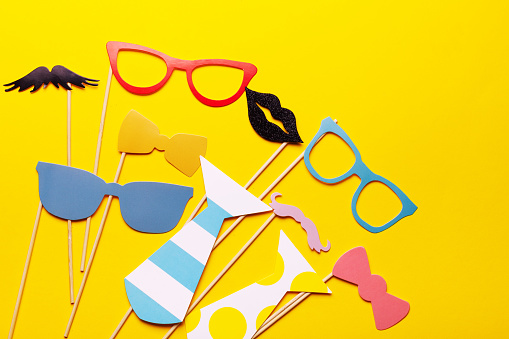
Use innovative props for photoshoot

Props are a great way to enhance your child photos. Your images gain visual interest thanks to them. They aid in story-telling. Additionally, they amuse older babies and kids while the photo shoot is taking place.

The scene can then be embellished with additional objects, like soft toys or flowers. There are so many different props you may use for older babies and kids.

Toys, teddy bears, balloons, cakes, lanterns, and flowers are a few wonderful examples.

Click natural poses and emotions

IMAGE CREDITS: Unsplash.com

It’s challenging to get kids to pose for pictures. And the outcomes are typically awkward stances and forced smiles. So how can you capture genuine facial expressions and stances that depict childhood emotion? The secret is to avoid asking your subject to grin or pose!

Instead, attempt directing the child with clear, motivating directions. Talking to them softly will help you put them at ease. Tell them you two will have a lot of fun together. Pose them inquiries. Inspire them to engage in play.

Once the infant is at ease, they will begin to move more freely. And you’ll be able to record genuine happiness and passion while they perform.

Perfect focal length of the lens for the photoshoot

What is the ideal lens for photographing children? What kind of focal length should you use? Actually, there is no one ideal focal length or lens. Everything depends on the kind of pictures you wish to take.

Do you wish to take a picture from a wide perspective with a lot of background scenery? If so, a focal length or lens of 35mm is ideal. For pictures when you wish to look down on your subject from above, 35mm is also fantastic.

Wise aperture for beautiful blurry background

How do you achieve the lovely fuzzy backgrounds you frequently see in portrait photographs? Actually, it’s very simple. All you need to do is utilize a large aperture.

The size of the lens’s opening is referred to as the aperture. The depth of field will be shallower the wider the aperture. Only a small section of your photograph will be in sharp focus when you have a shallow depth of field, and the rest will be blurry.

So, how do you adjust the camera’s aperture setting? The mode dial must first be set to either Manual mode (M) or Aperture Priority mode (A or AV).

We would advise using Aperture Priority mode if you are unfamiliar with full Manual mode.

Subject should be in sharp focus for photoshoot

IMAGE CREDITS: Unsplash.com

Only a small section of your image will be in sharp focus when you photograph with a wide aperture (low f/number). Thus, it is crucial that the child be the focal point.

If you focus incorrectly, the background may be sharp while the child is blurry. We suggest utilizing Selective Focus for the most precise focus. (For instructions on how to change the focus setting, consult your camera’s handbook.)

You can relocate the focus point to a particular area of the scene using selective focus. To move the focus point, which is typically represented by a little square on the screen, simply press the arrow buttons.

When taking a portrait, you should concentrate on the subject’s face, especially their eyes.

Click sharp photos when the subject moves

Children are never still. Of course, this results in incredibly vibrant and energizing visuals. However, it can sometimes be difficult to get sharp pictures of moving objects.

As the motion is being captured by the camera, the subject could appear blurry. Additionally, it can be challenging to catch the person in the ideal stance at the exact moment. So what’s the trick to taking stunning pictures of moving objects?

USEFUL LINKS:

Click here to know more about photoshoot with children
We assist you in choosing props for your photography session, see here 


Creative Alternatives to Displaying Your Photos

Creative alternatives to displaying your photos

Get creative with DIY alternatives to photo displays instead of using frames. Your office, bedroom, living room, or kitchen will look better with one of these  creative alternatives photo display ideas. You may create something more unique by removing your images from those outdated frames. One of these alternatives will make for a fun project and let you change how you display your pictures of loved ones, friends, pets, or vacations while you’re trapped at home or if you simply want to freshen up your area.

Photo board: creative alternatives

IMAGE CREDITS: Unsplash.com

Ribbon or corkboard can be used to create a photo board. They can be positioned above a desk or even a bed and serve as the room’s focal point. This strategy, which is most frequently used in kitchens and offices to display a limited number of images, is organized.

Photo wall

Want to make your photo display look nicer? Boost the light! Why not adorn the string lights that are frequently found in bedrooms and offices with some additional décor? Polaroids or pictures can be easily added to the string of lights by using micro close pins. Wall art and lighting are instantly available. Lighting displays typically line a piece of furniture, hang from the ceiling, or cover the room’s perimeter.

Display on wood and wire: creative alternatives

Using a wood and wire arrangement to display your images can give them a more upscale or contemporary appearance. You merely need to arrange your images on the wire that is fastened to the wood using miniature closure pins or clasps, much like a light show. The kitchen or living room seem to be the preferred settings for this technique.

Display by a photo clock

A photo clock is a wonderful way to customize a typical household item. Choose 12 images, then arrange them in a circle. A clock motor and some hands are all that are required to finish this. This is a different way to display your photos and may also be used as home décor. Although, the greatest places for a photo clock are a bedroom, office, or living room.

A shape collages

IMAGE CREDITS: Unsplash.com

You have complete creative freedom while using a shape collage. A shape collage can be anything you want it to be, whether it’s a heart, star, circle, triangle, etc. Depending on how big or small it is, the form may take up the entire wall or serve as a small accent, depending on its size. Some people have used specific colors or themes (such as hearts and stars) to create works of art, but this alternative photo technique gives you the freedom to express yourself.

Create a photo mobile: creative alternatives

These days, mobiles aren’t just for nurseries. Using a foundation constructed of any material you like and hanging or suspended images tied to a thread, you may create a photo mobile. Flowers, cut-out forms, or streamers are just a few additional embellishments or accents that can be added to the strings. These mobiles serve as a backdrop and rest against a wall.

Different kinds of photo frames

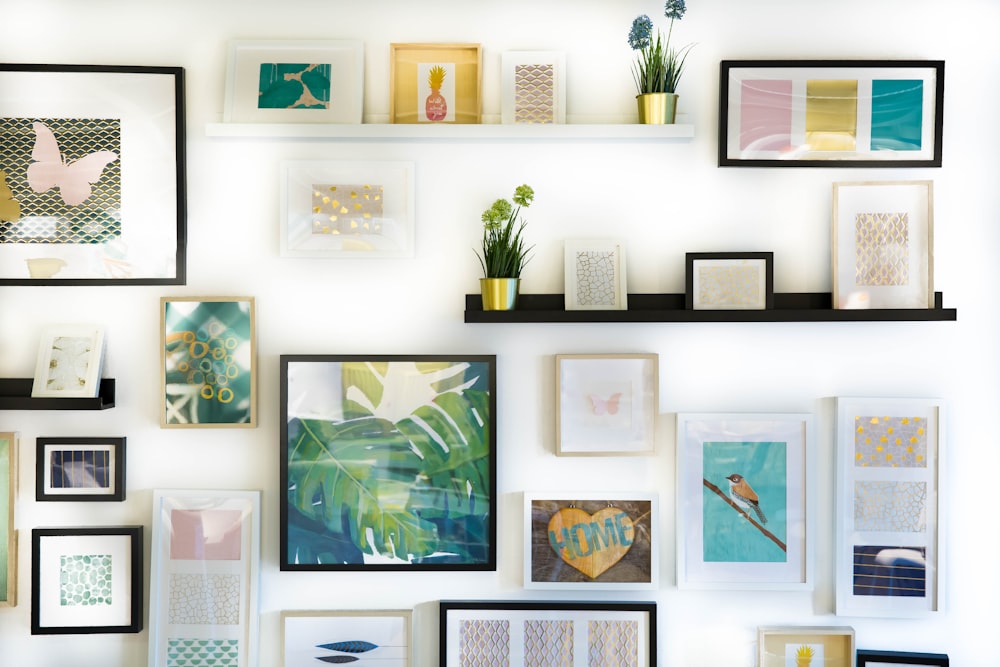
If you like frames, why not buy several in various shapes, hues, and designs to make a large photo wall that showcases a range of memories. Specially, you may customize your photo wall in a variety of forms and styles to make it uniquely yours.

Use your imagination no matter which approach you select. One of the most memorable and striking ways to express your family’s narrative is to fill your walls with a lifetime of memories, so start hanging.

Always be creative with alternatives

IMAGE CREDITS: Unsplash.com

If you like a more rustic and stylish look, consider turning old pieces of wood into stained photo clipboards and hanging the pictures from the clips against the wood. Another interesting choice is to hang your pictures from a thin rope so they resemble a clothesline. Binder clips are also excellent for this.

There is an option to make frames out of washi tape if you have some extra time and are the creative sort. Moreover, this will allow you to surround your images with various patterns and colors to truly make your walls shine.

Display your Instagram photos: creative alternatives

Instagram pictures don’t have to exist online only. Simply select a few of your favourites, give in the links, and arrange the finished result on your fridge however you like.

Acrylic photos

IMAGE CREDITS: Unsplash.com

Acrylic prints may give your images a contemporary, clean appearance.  Chiefly, ideal for showcasing a beloved family image or a collection of pictures from a noteworthy event.

Metal prints: creative alternatives

These  prints may make a statement.  Furthermore, metal prints are a striking exhibit for any space in your house due to their vivid colors and polished surface.

Framed canvas

Framed canvas prints are mounted such that there is space between the canvas and the frame, giving the impression that the image is floating inside the frame.

This classy and classic alternative is ideal for showcasing family portraits, holiday pictures, or any other precious memories you wish to display in a distinctive and lovely way.

Mounted prints: creative alternatives

IMAGE CREDITS: Unsplash.com

With mounted prints, you can keep your memories front and center. Eventually, various mounting solutions are available to provide a sturdy background for larger prints.

Enjoying your memories with your images in a creative way without frames is wonderful, but having them in digital format is even better. In addition to being a useful tool for keeping track of the people and things that are most important to you, photos can also be considered modern art.

Probably the most popular way to use family photos to decorate your home is to frame them and fasten them to the wall. This will make your walls look beautiful.

USEFUL LINKS:

Keep on hovering here to know more:

How to DIY creative photo ideas 

Know some tips on winter photography:

Tips on winter photography you should know 


Winter Photography: Tips you should consider 

Winter Photography: Tips you should consider

Although it’s a common topic, winter photography is challenging to perfect. Here are some pointers and ideas from professionals to aid you in growing your skills at winter photography

Photographers can capture everything from stunning snow-covered vistas to the northern lights in wintery, frigid locations. You can capture some absolutely amazing winter photography images if the lighting is favourable. However, the chilly winter climate also presents particular difficulties for photographers — and we don’t just mean the possibility of frostbite!

Exposure composition in Winter

Adjust your exposure adjustment by +0.3 or +0.7 when shooting in sunny, bright winter weather or while attempting to capture the pristine whiteness of fresh snow. As a result, you must inform the camera that you are taking a photo of something bright and change your exposure because cameras can’t identify that you are photographing snow (technically, they can’t see color either). Otherwise, your snow would appear grey rather than white.

Batteries should be warm

IMAGE CREDITS: Unsplash.com

Low temperatures cause batteries to lose their power. The number of shots you can take in one charge can reduce significantly in cold weather—less than 50–70% of what you are used to—from the few hundred you might be used to in warm weather. By keeping your backup batteries warm, you may easily avoid the winter weather. Simply keep the extra batteries close to your body heat in your inside pocket.

Camera shouldn’t be foggy: winter photography

Shooting something in sub-zero conditions is difficult. Be aware of your camera when you’re ready to warm up in any nearby indoor location. If you simply dash inside with your camera, the moisture build-up will cause your lens to fog up right away. This will make you wait for the lens to defog painfully for a few minutes (and perhaps cost you a beautiful image). Before you enter any warm environment, put your camera in a photo bag with a lens cover to prevent this.

Gloves to keep hands warms: winter photography

You’ll almost certainly wind-up shooting while wearing gloves if you’re shooting outside. If you use standard gloves, like I do, you could get upset when you can’t reach all the dials and buttons because of the thickness of the gloves. To provide complete camera control, most photo shops sell specialized photo gloves with thin thermal cloth around the fingertips. For a firm grip, these gloves also contain a unique fabric on the palms. Try these gloves out at your neighbourhood photography store. They might prevent frostbite and a horrible headache for you.

Take care of your nose mate

Winter is a great time to take photos since the lovely hats and mittens really make the picture. Red cheeks are fantastic, but a red nose is not so fantastic if your model is out in the cold. Don’t be upset if your model gets a red nose in every photograph. Adobe Lightroom only requires a saturation adjustment. Sliders for the Orange Saturation and Red Saturation should both be moved significantly to the left (at -5 and -10, respectively). Red noses can be tamed by reducing the red and orange saturations. Give it a go!

Capturing the snowfall: winter photography

IMAGE CREDITS: Unsplash.com

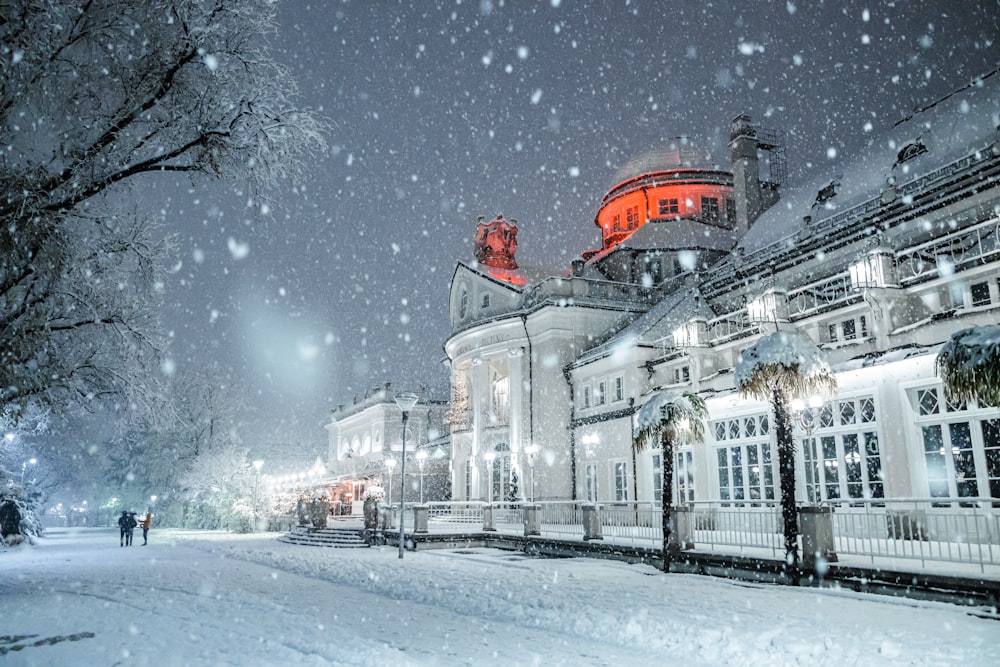
Snowfall is one of the most beautiful subjects for photography. Consider purchasing a telephoto lens—anything with a focal length of 70mm or higher—to obtain the greatest shot. Use a lens that is 200mm or longer and shoot with a narrow aperture (f/4.5–6.3 is a good range to think about). Set your shutter speed as quickly as you can (1/400 of a second or faster).

With such a depth of field, you’ll want to capture the appearance of larger snowflakes directly in front of the lens and beyond the focal point. It will look more mystical if there are enormous, somewhat blurred snowflakes in front and behind your subject.

Don’t miss the sun set and sun rise: winter photography

The dawn and sunset can be even more dramatic than typical during the winter, especially just before or after snowstorms. They are probably lot simpler to take pictures of. Why? Because the sun rises later and sets earlier during the winter, landscape photographers can take a break and sleep in. Photographers must arrive on location as early as 4 a.m. in the summer. The sun rises as late as 7-8 a.m. in the winter.

Keeping your gear box safe

IMAGE CREDITS: Unsplash.com

Invest in a nice snow or rain cover if you are out and about a lot during snowstorms. During picture shoots, it will keep your camera and lenses dry, reducing the possibility of moisture residue getting close to your camera’s electronic components. A snow cover can be purchased for as little as $6, but high-quality covers cost between $60 and $100. Even so, it’s a fantastic purchase that is considerably less expensive than camera repairs.

Drying your camera: winter photography

Bring your camera indoors if it ever gets wet, then wrap it with a dry towel. Give it some time to rest. You run the danger of pushing the snow or water within the seams where the electronic components are if you try to wipe it off, which can effectively destroy your camera. Just place your camera in a towel and let it soak up all the wet for a little while.

Always keep yourself warm

Maintaining your heat is the absolute last step. It’s crucial to be equipped to withstand the wind and the cold when shooting outside because it can be difficult. Overdressing is never a terrible idea. If all else fails, you can always unzip your winter coat. Get ready for a fun day of outside shooting by donning Gore-Tex boots, thick gloves, and a cap.

Be moody buddy

IMAGE CREDITS: Unsplash.com

Of course, there won’t be a dazzling focal point in every picture. Perhaps the total desolation and mortality of winter best describes the tone of your landscape. So, choose a different path and accept the grimness. Use minimalism in your compositions to draw attention to a single element that affects the entire scene. For this kind of composition, ruins or abandoned buildings are ideal subjects.

USEFUL LINKS:

Click here to learn more about Winter photography 
Learn about the skills needed to start 
Writing about your work in no longer difficult, check out

Finding the Perfect Location for Your Shoot

Finding the Perfect Location for Your Shoot

You know as a professional photographer that the setting of your photo shoots can make or break the quality of your pictures. How then can you choose the perfect location and make sure that your clients get the attention they deserve? In order to make your life a little easier, we’ve compiled some helpful advice and tips if you’re having trouble finding appropriate photographic locations.

Location with a flattering light

IMAGE CREDITS: Unsplash.com

Avoid places with poor lighting options; dark spaces are difficult to work in and frequently unattractive. Organizing an outside picture shoot during the most flattering part of the day is one of the simplest methods to get around this. The softest and warmest types of natural lighting are typically available for early morning or late evening shots.

Find a site with lots of space to set up artificial lighting equipment as part of your portable photo studio setup if you’re planning an interior photo session. After all, you might need to add additional lighting to the sun’s natural rays that is properly aimed to showcase your subjects’ greatest features and mimic natural lighting.

Location suiting you purpose

You should think about what story your photos will tell before choosing a place. You need to establish a theme and narrative for the shoot whether you’re seeking for family photo ideas or unique settings for lifestyle portraiture. Consider the scenario when you are working on a high-concept fashion shoot with sharp, fitted suits and expensive velvet dresses. Find a setting that exudes glamour and elegance, like a ballroom, a posh drawing room, or an art gallery. Additionally, you might want to consider hiring props to give some artistic flair to the pictures, but be careful not to go crazy and make them appear overly “busy”.

Always have a backup location

IMAGE CREDITS: Unsplash.com

In the days and hours prior to your shoot, try to pay attention to the weather predictions. While a downpour could completely halt an outdoor photo studio shoot (unless you’re trying for the wet appearance! ), an overcast sky could substantially change the quality of your lighting. Obviously, rescheduling a shoot at the last minute could interfere with your hectic schedule and frustrate your clients. As a result, it’s a good idea to pick a site with a climate that is primarily sunny, warm, and dry. If you want to be extra cautious, you could also find a backup spot to utilize in the event of a storm.

Location with variety angles

You should aim to photograph your subjects against a variety of backgrounds when doing a photo session. Finding a location with a diversity of objects, colors, and textures is therefore a smart idea. We advise you to locate at least five appropriate backdrops for each site you visit when looking for settings and photo studios.

Accessibility of your location

Look for a place that is both accessible and not too far away. Along with annoying your clients, spending hours in a car or van will cut into the time allotted for the actual session. Additionally, it could make your models feel drowsy and exhausted before the job even begins, which is when you need them to be at their best. We advise picking a location that your employees, clients, and models can get to easily and via a range of transportation options.

Do not undervalue color

IMAGE CREDITS: Unsplash.com

Don’t undervalue the impact of color while deciding where to go. For instance, if you are shooting a project for a corporate client, you must create images that complement their brand’s color scheme and look great on their website and other marketing touchpoints. Making visuals that clash with these hues could make your job useless and frustrate your clients. Similar to this, before choosing a venue, ask your non-corporate clients what color scheme they prefer because they probably have a few different ideas about it!

Work with your client

The choice of where to shoot should ultimately be made by your customer. Therefore, it’s crucial to outline all of their demands and requirements in advance to save time and effort. During the first meeting, inquire about things like:

  • Are there any particular places I should stay away from?
  • Do you have any preferences for certain themes?
  • Do you have any illustrations you’ve seen that you’d want to copy?
  • Are there any particular items you feel are crucial to have in the background?

Location shouldn’t distract

In portrait photography, finding the right setting is essential, but it should never overshadow the rest of the image. Check your images periodically while you are shooting; if your attention is pulled more to the background than the subject, you are placing too much emphasis on the wrong item.

Simply widening the aperture on your lens is a quick and efficient trick. This blurs the background, keeping it from being overly obtrusive, giving the scene depth, and directing the viewer’s attention to the main topic.

Search license to photoshoot

IMAGE CREDITS: Unsplash.com

This might be an essential idea to think about. The local government may require you to obtain a license or permit before entering certain public spaces, parks and gardens, historical landmarks, and structures.

This is particularly relevant if you’re utilizing photo-shooting tools like tripods, modifiers, and generators that could annoy other people.

Contacting the local authorities and obtaining the necessary authorization letter in advance will help you save a lot of trouble and misunderstanding later on.

Finalize your theme

Look around your neighbourhood for locations that fulfil your needs if a specific structure or natural backdrop would fit your theme well. If you’re unsure of the backdrop you want, travel about your city for inspiration throughout the afternoon. Beautiful places that are virtually in your backyard are simple to miss. For more suggestions, talk to your photographer, family, or friends.

USEFUL LINKS:

Check out the five to find perfect locations for your photography 
Collect historical items at a low budget, see more here 
Learn about the difference between Old and New testaments 

Choosing Props for Your Photography Session

Choosing Props for Your Photography Session

Without the appropriate way of choosing props, any photographic session feels completed. Whether they are expensive or inexpensive, props definitely bring a unique flavour to your photos. They are particularly helpful when taking portrait photos. However, selecting props requires careful planning. You must watch out that they are neither overbearing nor overly straightforward. So that you can have the ideal picture shoot, we have put together a list of suggestions that will assist you in selecting your prop for your upcoming photographic session. After all, photography is supposed to be fun.

Props should be meaningful

IMAGE CREDITS: Unsplash.com

Your images can be greatly improved by using props that have some significance for the subject matter or the model. While taking pictures of your child, you might include their favorite stuffed animal or utilize an item that has special meaning for you. Meaningful accessories instantly give your photo additional depth.

Purposeful props

Make sure the props you choose are appropriate and realistic. Setting a theme for your picture shoot and selecting a venue and coordinating props that are linked to it are the best ways to accomplish this. You could go to a library, for instance, and utilize props like books, rustic tables and chairs, or watches for a photo shoot with an academic atmosphere.

Try to be real and genuine

Choose a topic for which you can genuinely obtain props if it is not something. Consider whether you’ll be able to locate appropriate costumes for everyone in the picture to suit, for instance, if you want to include seasonal props. Seasonal props will be easier to find if you try to find them during that season.

Consider the size of  props

IMAGE CREDITS: Unsplash.com

The grandpa’s farm tractor can be used as a background or support piece for a photo shoot at the farm, for example, as a larger prop that works exceptionally well in picture sessions. However, some props have the potential to completely detract from the beauty of the image. Make sure your prop enhances rather than detracts from the image.

Props should be meaningful

Include a favorite toy of your child’s, a treasured musical instrument you own, a beloved pet, or a passion for dance in your images. There are countless options, and this will give your photos greater significance and help you and your family create wonderful memories.

Don’t be too trendy

Even though you may have just seen a few images with a particular item, try to avoid using anything that won’t appear significantly out of date in a few years. We can advise you on both traditional and contemporary photographic styling. There are many enjoyable options to pick from, but classic is unquestionably better.

Props elevates you boring photos

IMAGE CREDITS: Unsplash.com

Whatever kind of photography you want to do, using photo props is a simple way to change things up and convey various moods through your pictures. According to photographer Julia Cox, “I basically do it to add another dimension or another layer to photos.”

Even the most basic photographs, like a headshot, may be made to look more unique and individualized by the use of props. They enable photographers to take engaging and entertaining pictures.

Use a stool

A stool, one of the most popular photography props, can be used simply as a seat or your model can get creative with it. Encourage your subject to utilize the stool in a variety of ways rather than just having them sit on it. They can sit on the floor next to it and place a different prop on the stool itself, ride it like a horse, or perch on it like a bird.

Test your perspective with props

IMAGE CREDITS: istockphoto.com

Photography props also include anything placed in front of your lens, such as a filter, glass, or prism, to produce special effects in your images.

“Try shooting through objects when you’re on location. Take hold of something and shoot through it. Try experimenting with that to see what affects you can produce, advises Cox.

For a dramatic effect, tinker with your camera’s lenses, crystals, and sunglasses to alter the lighting in your pictures.

These suggestions will help you get started if you lack inspiration or are unsure of which props will work best for the kind of picture you want to take.

  • Wooden cutting boards, wine glasses, white China, parchment paper, or marble slabs are good props for food photography.
  • Images that relate to travel include postcards, money, maps, clothes, local cuisine, vehicles or bicycles, and landmarks or locals.
  • Signs and banners, old pictures, fireworks, balloons, toys and books, umbrellas, or picture frames can all be used in family portraiture.

Know the occasion

If you’re doing a seasonal photo shoot, be sure to incorporate seasonal-appropriate items. Props like present boxes, Christmas trees, wreaths, and even small north pole signs should be available if you’re doing a shoot with a holiday theme, for instance.

 Props Coordination with the background

Coordinating your prop selection with the appropriate backdrop is a simple approach to pick the best ones for your session. Work monochromatic by matching the accessories to the backdrop, or choose hues and textures that work well with it. Use your imagination to add depth and aesthetic appeal to the photograph by incorporating accessories like flowers or set designs (such as arches, seats, or boxes).

Capture in the act

IMAGE CREDITS: istockphoto.com

You can use your subjects’ participation in an activity or action as a prop. This is a terrific method to acquire a dynamic shot, it lets your subjects relax, and it makes the shooting environment enjoyable.

When your participants are engaged in an activity together, you may easily capture their real relationship. Examples include blowing bubbles, painting, painting with confetti, eating cake, taking a picnic, dancing to music, and popping bottles.

USEFUL LINKS:

Keep hovering here to learn more
Check out the most influential leaders in the history of the world today
See the complete Art gift guide here 

Art Business: Things you need to know today

With the expansion of art business, its mechanism requires understanding. Art business like every other business has its own areas.

The myth of the starving artist still exists today. Young children have been advised that creatives and artists must “grow up” or “find other ways to make a living”. However, the reality is that it is quite possible to support oneself financially and create a thriving business as an artist.

Picking a right niche for business

(Photo from Unsplash)

Whether you want to focus on becoming more creative or commercially successful, there are several factors to take into account when choosing the right niche for your artistic endeavours.
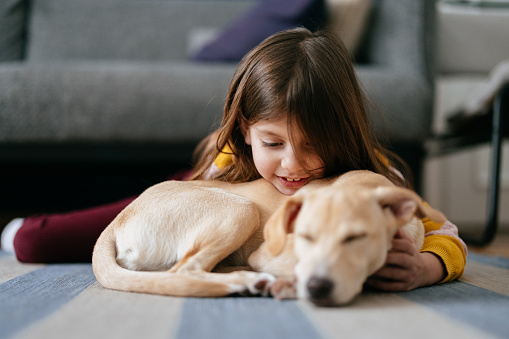
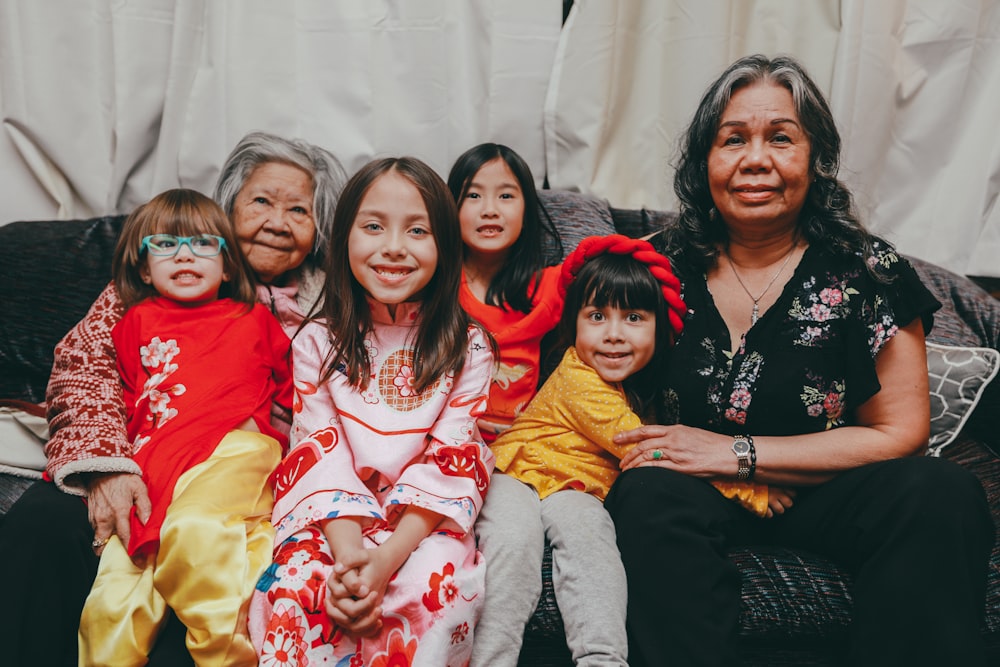
What type of audience is most intriguing to you? Which fashion do they prefer? Do they favour abstractionism or realism above impressionism? How much would buyers pay for paintings with these characteristics at galleries or on auction websites.

Decide your business marketing strategies

You can start marketing yourself as an artist in a variety of ways.

Try some of the following strategies if you’re seeking for ways to market your artistic career:
  1. To display your artwork, build a website for your art business. Gather the email addresses of those who are interested in your work so you may reach out to them when new works are released or events are happening.
  2. Post your artwork on social networking platforms like Facebook and Instagram, where it may be seen by other artists and potential customers. Post images of your creative process, workspace, and sources of inspiration to promote yourself.

You might also look for prospective networking possibilities on websites like LinkedIn and Twitter.

  1. Create a YouTube channel to showcase your ongoing projects and describe the themes of your artwork. Connect your YouTube channel to your website to enable art sales.
  2. Display your creations in art galleries, fairs, exhibitions, and even your neighbourhood malls and artisan shops. anywhere there is a chance for people to see your art.

Professional materials

(Photo from Unsplash)

Ensure that the supplies you utilize are of a high calibre for artists. All of the paints, canvases, and other supplies you use to create your artwork should be archival, or long-lasting and resistant to fading. Using hobby paints and inexpensive canvases from the dollar store will result in a poor customer experience. These materials are susceptible to fading or degradation in a matter of weeks or even months.

Spend the extra cash on high-quality supplies if you want to be perceived as a professional artist.

Pricing your art sale

Pricing is a hotly debated subject. You don’t want to oversell yourself, but you also don’t want to undersell yourself since you are an unproven talent.

Here are two approaches to setting a fair price.

  • To begin with, you can choose the hourly wage you want to pay yourself. Add the cost of materials and multiply by the number of hours it takes to complete the painting. Your work should be fairly compensated as a result.
  • The second option is to bill by the square inch. For a novice painting, $2 to $3 is the standard fee. As your work gains greater recognition, you can raise this price.

Prints of  business

Choose whether you want to manufacture prints from your paintings if you’re a painter. Prints can be offered for a much less money and in larger quantities, making them more profitable for your company.

The prints can be sold matted or unmatted. Of course, prints that were matted would fetch a larger sum. Your prints will be shielded from damage and bending by mats.

Additionally, get some archival clear bags to package your prints in when you sell them or mail them. The bags provide the print with still another layer of defence.

Remember to factor the price of mats and bags into the cost of your print.

Laws and legalities about business

(Photo from Unsplash)

Although I have experience with bookkeeping and tax preparation, I advise you to speak with an accountant to make sure your firm is set up correctly from the beginning.

Even within a same country, states and provinces have different tax and commercial rules. It is important to seek advice from someone who is knowledgeable about the laws and regulations in your nation.

 Smart branding

(Photo from istock)

The term “branding” describes how your company shows itself visually. These components can say volumes about your company and aid in differentiating you from the competition for your target market.

Creating a clever brand identity can be done in a variety of ways. You can do that on your own using graphic editors or you can rely on a professional designer’s abilities. You can also use specialized brand identity builders. Here’s some advice: make sure you use the same visual language when interacting with your target market on all platforms, including social media accounts and business cards.

Registering your business

You need to familiarize yourself with the legal aspects of entrepreneurship before registering your business.

  • Select the appropriate organizational structure for your company. Depending on the nation in which you plan to establish your firm, the number of employees, and other variables, you must decide on a business structure.
  • acquire a license. You require a special license to carry out some sorts of art business activity. To learn more about licensing, be sure to contact your local company registration office.

Great products

Any firm needs a good product that customers desire to purchase, regardless of the industry. There are criteria for every media even though the term “great” in the creative world is relative. Potters must make functional pottery, painters must think about composition, and musicians must write music with specific notes in mind.

When selling art, your craft is essential. Although you have the natural skill for being an artist, you also want to make sure that the art you’re producing is the finest it can be. This could entail spending money on art education, honing your skills, and even picking up tips from other artists.

References:

Your business guide is here:

A complete guide on starting your won Art Business 

Learn how to defend your in public area by clicking here


Pencils for beginners: Different types you must know

No matter our age, even as young as two or three, we have all used  pencils for a variety of purposes, whether it be to scribble down notes on paper, sketch, or simply make doodles. Have you ever thought about the variety and varieties of pencils available, though? We will walk you through each type of pencils that is available and how to use it in this article.

Discovery of pencil

One of the most common writing and sketching tools is the pencil, which comes in a range of various varieties. Millions of people use pencils every day, but have you ever pondered how the pencil got its start?

The first pencil was found by the Romans, who utilized it as a powerful writing instrument and termed it a stylus. The scribes’ stylus was a tiny metal rod that provided stability while leaving a legible imprint on the papyrus.

Types of pencils

(Photo from Unsplash)

Everyone’s life seems to revolve around a pencil, from academics and students to artists and regular office workers. Each of these guys need a particular kind of pencil. Pencils are available for writing, sketching, and general use around the house. While some have a metal barrel, some of them have a wood casing. To meet your specific requirements, you must choose the proper types of pencils.

Graphite pencil

The graphite pencil is the most widely used and well-known of all the numerous kinds of pencils. The proportion of clay and graphite used to make lead or graphite determines the color and hardness of the resulting substance, which is then converted into lead or graphite.

The marks will be darker and softer and the pencil will wear out more quickly if it is more graphite-rich. The lead of this graphite pencil is enclosed in wood.  This pencil enables the artists to create realistic images, light guidelines, expressive lines, and smoother strokes.

Solid graphite pencils

The term “solid graphite pencil” (also known as “wood less pencil”) refers to a pencil made entirely of graphite without a wooden barrel like a typical pencil. The diameter is comparable to a regular pencil with a case made of wood. This pencil’s advantage is that it can cover a wider area in a lot less time. Additionally, the pencil can produce a variety of effects and is more cost-effective because you use the entire pencil. These pencils, which are mostly used by artists for drawing and art, are also offered in the same hardness and grades as the standard graphite pencil.

Liquid graphite pencils

(Photo from amazon)

Since they can write like a pen, liquid graphite pencils—also known as “Liquid Lead”—were created for the first time in 1955. The liquid graphite pencils are available in a variety of colors, including grey, yellow, red, and blue. It can be applied with a nib, brush, or any other kind of art tool. Artists use the liquid graphite pencil to make pencil sketches and authentic graphite pencil effects.

Charcoal pencil

Unlike a graphite pencil, which is totally formed of wood, a charcoal pencil may produce tones with great contrast. It is much more fragile than a graphite pencil, yet it smudges more readily and is much more abrasive on paper. This particular pencil is ideal for writing since if you make a mistake, it is quite simple to simply wipe the charcoal from your paper.

They are available in a variety of styles, including paper-wrapped charcoal, wooden charcoal, and white charcoal pencils. This lessens the chance of an artist’s hand becoming inscribed.

Carbon pencils

The lamp black and clay, or a combination of graphite and charcoal, used to make carbon pencils give them their distinctive texture and blending ability. The carbon pencils themselves have a consistent and dependable softness. Compared to the graphite pencil, the carbon pencil generates thicker, darker, and more erasable black lines.

Colored or crayons pencil

(Photo from Unsplash)

The core of coloured pencils is made of an oil or wax-based material that includes binding agents, additives, and pigments and is made from coloured pastels, chalk, and charcoal. Also available is a coloured pencil or pastel that is dissolve in water. They come in a broad variety of colours, including white, which is ideal for adding shadow or bringing out darker colours while painting. Architects and kids who like to color and draw with pencils are frequent users of them.

Grease pencils

These pencils are ideal for usage on glossy, non-porous surfaces including polished stone, glass, porcelain, rock, plastic, and ceramics.

They are also perfect for marking on x-rays and editing films and tapes. Due to its ability to write on wet surfaces, some artists also favour utilizing grease pencils.

Watercolour pencil

(Photo from amazon)

The watercolour pencil, sometimes known as “The Water-soluble Pencil,” is a highly adaptable pencil since it can be used dry, just like a regular pencil, and it creates strong, precise lines.

Artists will first apply some dry pigment with a wet brush before going over it with another wet brush. This aids in spreading the pigment, which makes the colors more vibrant. Additionally, there is a method you can employ with this pencil to merge the colors on your artwork. There are 60 to 72 different colors available for the artist-grade watercolour pencil.

References:

Know some more types of pencils:

Types of pencils- Guide to pencils for drawing and coloring 

See some unforgettable occurrences:

Top historical occurrences you’ll never forget 


Best books on art business you must read

Searching for key business of art guides? Even though blogs and webinars are great, it can be nice to learn something off-screen occasionally. Books about the business of art are a great substitute. There is a book for practically anything you want to know, from legal advice to grant writing to job growth and art promotion. So settle in, get a beverage of choice, and start learning from the professionals.

Here’s the list of some amazing books:

(Photo from istock)

The Artist’s Guide: How to Make a Living Doing What You Love by Jackie Battenfield

For more than 20 years, Jackie Battenfield has successfully supported herself by selling her artwork. She additionally offers professional development courses for artists at Columbia University and Creative Capital Foundation. This book is, in the words of art business coach Alyson Stanfield, “quickly becoming the standard for artist career development.” Jackie’s book is jam-packed with practical advice on how to launch and sustain a successful art career.

Fine Art Tips with Lori McNee: Painting Technique & Professional Advice is best among books

Discover fine art and career advice from 24 of the most talented and best artists working today. The book features 26 step-by-step demonstrations in oil, pastel, and acrylic and covers a wide spectrum of subject and style. The well-known site FineArtTips.com is written by professional painter and social media guru Lori McNee. You have the chance to “peep into the brilliant minds of twenty-four fine art professionals,” she says, in her book.

I’d Rather Be in the Studio: The Artist’s No-Excuse Guide to Self-Promotion by Alyson Stanfield

This book was written by art marketing specialist and consultant Alyson Stanfield to assist you in bringing your artwork out of the shadows and into the public eye. She has worked with working artists for more than 20 years, and she is the face of the well-known The Art Biz Blog. Her book offers a wide range of topics, from informative newsletter and artist statement recommendations to social networking and blogging secrets.

How to Profit from the Art Print Market: Creating Cash Flow from Original Art by Barney Davey

Barney Davey is an expert in the field of giclee prints and fine art reproductions. This book is for you if you want to benefit from the print business. It is jam-packed with useful advice on marketing via email and social media, online art sales, distribution, and publicity. A detailed list of 500 resources for the business and promotion of art is also included in the book. Consult Barney Davey’s book to increase your print revenue!

Legal Guide for the Visual Artist by Tad Crawford

Tad Crawford, a specialist on art law, has written an essential legal manual for artists. Everything you could possibly want to know about contracts, taxes, copyright, litigation, commissions, licensing, interactions between artists and galleries, and much more is covered in this book. Each topic is supported by a set of concise, complete, and useful examples. Along with ways to find reasonably priced legal counsel, the book also provides a tonne of sample legal forms and contracts.

Arts & Numbers: A Financial Guide for Artists, Writers, Performers, and Other Members of the Creative Class by Elaine

In order for artists to be successful in their commercial endeavors, this CPA and artist wants them to feel confident managing their finances. Additionally, this is not your typical, dry finance book. Elaine incorporates relevant personal anecdotes and engaging examples. For assistance with taxes, budgeting, money management, business etiquette, and much more, read this!

The Artist’s Guide to Grant Writing by Gigi

Want to better your financial situation? The friendly and interesting book by Gigi demonstrates how to make the most of all available money opportunities for artists. The book contains tried-and-true suggestions and guidance from grant officers, exceptional grant writers, and fundraising experts. Use this as your go-to manual for fundraising and grant writing to support your artistic career.

Inside the Business of Illustration by Steven Heller

What it’s like to work as a freelance illustrator is realistically depicted in Inside the Business of Illustration. Professional illustrators are not allowed to simply sit around and draw whatever they want.

It’s actual work, and a lot goes into it, including interacting with clients and managing briefs, contracts, and payments. In the hectic life of a working artist, this manual by Steven Heller is an invaluable tool.

It reads more like a biography with hints for new readers thrown in than like a narrative. Advice from working experts, such as illustrators and art directors, is featured in many chapters.

Working for Yourself is best among books

The lengthy book Working for Yourself has more than 500 pages of information on taxes, contracts, and the legal aspects of working for yourself.

When you work for yourself, your pay fluctuates, and you are responsible for handling all of your taxes. Although it can be a frightening process, you can learn everything you need to know if you have this guide close at hand.

Book Yourself Solid by Michael Port

Most independent contractors still need to network and develop a clientele. You’ll still need to network with new clients while working on projects in order to secure funding for next months.

You can learn how to market yourself and your skills in the most effective ways imaginable by reading Michael Port’s book Yourself Solid. Naturally, this entails a lot of social media, but it also offers branding advice and suggestions for connecting with the right contacts to establish enduring customer relationships.

Sell With Confidence! by Barry Watson is best among books

The word “sales” has a bad reputation thanks to unethical used car dealers. There is no need to be sleazy while selling a fantastic product, but there is still a need to make a sale.

(Photo from istock)

Barry Watson offers practical tips in Sell With Confidence! to boost your self-assurance as a salesperson. You will discover why sales can seem frightening and why it need not be in the first chapter.

References:

Artwork Archive

Memorize historical dates easily:

How to memorize historical dates in simple methods 


Skills needed to start Art Business

Today’s American artists typically have numerous sources of income. Consider a successful musician who performs in the symphony of his city. He provides musical accompaniment for regional theatrical performances. Teaches private lessons, is an adjunct professor at the university. And leads a small band, and writes original music. These are numerous examples of skills.

These business skills are used by successful entrepreneurs in the arts to handle many projects and sources of income:

Financial knowledge

Multiple sources of income and expenses necessitate an organized system of meticulous record keeping. While some employers might pay you wages. And deduct your social security and taxes, other employers might pay you as an independent contractor. It becomes crucial for tax filing that you keep track of these income variations. In addition to noting your costs associated with each of these activities.

Marketing and social media strategies

(Photo from istock)

Many independent artists are replacing traditional marketing with an active online presence. This involves having a website that is attractive and being active on social media. Being active in your professional network can be achieved by participating in online discussions and showcasing your peers. Strive to strike the right balance between highlighting your own achievements and encouraging those of your peers.

Development of business

Finding funding for your endeavours and nurturing supporters of your cause are both parts of development. Crowdsourcing, grant writing, fellowships from the arts council, corporate collaborations, individual donations, and in-kind contributions are all forms of funding. In this field, business knowledge enables artists to select the best funding methods for any specific project.

Communication

In dance ensembles, music ensembles, and production teams throughout your training, you have honed your collaboration and communication skills as performing artists. These abilities will aid you in navigating the professional obstacles you’ll face, such as contract negotiations, media interviews, and developing a shared project vision.

Management and organization skills

Business activities are often not enjoyable for artists, and they eat up important time that could be spent on creative endeavours. In addition to practicing, giving a class, finishing a new piece of work, and performing, an artist might also pay bills, secure a gig, submit a grant application, react to emails, and compose a press release on any given day. The time you spend being an artist is maximized by excellent management abilities.

Understanding composition

Understanding composition, which encompasses learning about artistic techniques including color, texture, form, material, and space, is essential for a good artist. This composition enables artists to work with challenging materials, backgrounds, and concepts. It enables individuals to comprehend how their artwork appears in various lighting, space, and angles. Additionally, it helps the artist become familiar with fundamental principles like symmetry, the rule of thirds, and golden ratios.

Knowledge of art materials and skills

The basic instruments used by artists to express their thoughts on paper or in other media are called art supplies. A fine artist is skilled at successfully utilizing various art supplies, such as paints, brushes, and other tools, in their project. The fine artist can select the right supplies for the job by being aware of the benefits and drawbacks of various art supplies.

Knowledge of art mediums

A fine artist may employ clay, charcoal, oil paints, fabric paints, acrylic paints, and other materials to create their works of art. The artist can produce their work more skilfully and precisely by being familiar with these tools and methods. An artwork may be created using a variety of media, and prior knowledge is essential for its execution.

Thinking creatively

When developing concepts and giving creative direction for a project, creative thinking is a crucial fine arts skill. It entails conducting a comprehensive analysis of the issue and offering innovative solutions to a company. Moreover, artists can develop in fields like fashion, marketing, and advertising by using their creative thinking.

Networking

(Photo from istock)

Developing a network of like-minded professionals in the field could help you enhance your career. Working with various artists and business experts broadens your portfolio and may increase your chances of landing new possibilities. Hence, for the purpose of showcasing your work and growing your network, you can think about creating a website or a social media account.

Proportions of arts

Understanding dimensions and relative sizes is necessary for drawing people, landscapes, and objects. It enables viewers to associate the art to real-life objects, places, or people and aids artists in creating realistic artwork. Hence, artists who comprehend dimensions can produce symmetrical, balanced pieces of art.

Constantly gaining new skills

If you want to study new art skills like digital art, sculpture, or carving, think about enrolling in short or lengthy courses. It aids in building a portfolio with a variety of work that could aid in improving your professional chances. Additionally, acquiring new skills enables you to stay current with shifting market trends.

Mentorship

You can practice and learn under the direction of an accomplished artist to develop your craft and advance your career. It enables you to pinpoint your areas for development, pick up vital skills, and broaden your network. Furthermore, working with a mentor might also open up new chances and projects that will help you develop your skills and reputation.

Time management

An artist may work on several projects at once or have tight deadlines, so effective time management is crucial. Moreover, you might also need time to network, develop new skills, or even partake in private pursuits like exercise or meditation.

Problem solving skills

A fine artist’s responsibility includes critically evaluating a client’s request and offering suitable creative alternatives. Hence, the artwork you produce is influenced by your capacity for analysis.

Art branding skills

(Photo from istock)

You need to be able to build your own artist brand if you want your marketing and sales activities to be truly successful. Here are some fundamentals for developing your individual artist brand:

Name: The name you will use for your artistic work. Which name—your own or another—will you use? For more information on why we believe every artist needs a brand catchphrase, see our blog.

Every artist, in our opinion, should have a brand and logo. Does An Artist Art Brand Need a Logo? is a blog post where you can learn more. by visiting this.

References:

The New School

Want some beauty tips?, click on the link below:

How to conceal you dark circles at home


Most influential leaders in the history 

Most influential leaders in the history

There have been many influential leaders throughout history, each leaving behind unique and enduring legacies. These figures made a really historic and influential difference to the world.

At some point, you have to gain the respect of your followers if you want to be a leader. Loyalty breeds respect, and respect breeds’ triumph. What is the secret to respect, though, is the actual query. There have probably been millions of times that this question has been posed, and there have probably been many times that responded. Mutual respect, power, and experience are all said to be essential elements by some, while others contend that respect between people is the key to success.

Nelson Mandela: influential leaders

IMAGE CREDITS: istockphoto.com

Nelson Mandela’s name can be included on several lists of world-changing leaders. There are times when a single person’s spirit can motivate a whole generation, both living and dead. Nelson Mandela was a great example of a spirit that was unbreakable, as he often demonstrated.

Throughout his lifetime, Mandela held a variety of positions, including revolutionary, activist, prisoner, and even prisoner. He was not hesitant to stand out for what he believed in, whether it was battling apartheid in his native South Africa or speaking out against discrimination there.

Due to this, he was imprisoned and received a life sentence, during which he astonishingly served 27 years. Although this soul-crushing life trial is incredibly difficult, it didn’t break him. After a successful international campaign for his release, Mandela was at last let free once more. He later went on to become South Africa’s first black president.

Martin Luther King, Jr.

IMAGE CREDITS: Unsplash.com

This historical figure is worthy of much discussion, and there are numerous lessons to be drawn from his sage example. Dr. King was a fervent advocate for civil rights in the US and even played a key role in the struggle to advance equal rights for minorities there. His contributions to the eradication of segregation undoubtedly left their effect on the United States.

But Dr. King also made a significant impact on the world, both at the time of his movement and well into the present. He achieved this by serving as a shining example of how peaceful civil disobedience can be a powerful tool for bringing about change in an unattractive environment.

Sadly, on April 4, 1968, Martin Luther King Jr. was killed. However, he was honored for his humanitarian efforts before passing away when he was given the Nobel Peace Prize, and after his passing, he was also given the Congressional Gold Medal and a posthumous Medal of Freedom.

Mahatma Gandhi: influential leaders

IMAGE CREDITS: istockphoto.com

There are instances of one leader’s deeds encouraging another leader’s success throughout history. This is best illustrated by Mahatma Gandhi, whose campaign of nonviolence and civil disobedience served as the inspiration for the subject of our last leader, Martin Luther King, Jr.

In the early 1900s, Gandhi led the struggle for Indian independence from British rule. As was previously said, he advanced this cause by instilling in his followers the importance of peaceful civil disobedience during his fight for civil rights.

He undoubtedly succeeded in showing people all around the world that using violence is not always the best course of action and that a strong spirit can overcome immense obstacles to achieve great things.

On January 30, 1948, Mahatma Gandhi was shot and killed, yet his legacy lives on in today’s moral sensibility.

Abraham Lincoln: influential leaders

Abraham Lincoln, the 16th president of the United States, had a difficult task on his hands while in office. Not only did he favor the abolition of slavery in the United States, but his administration also saw one of the biggest problems the young nation had ever encountered. The North and South of the United States were divided by the outbreak of the American Civil War.

President Lincoln demonstrated outstanding leadership qualities during the trying time, demonstrating his political maverick status and ability to effect significant change. Lincoln was able to put the United States on a path to ending the war and abolitionist slavery with his famous speech, The Emancipation Proclamation.

Winston Churchill

IMAGE CREDITS: istockphoto.com

Winston Churchill was the Prime Minister of the United Kingdom during an extraordinarily terrible period in recent history. He is renowned for many things, including his quick wit and long list of noteworthy titles.

His work as a politician in Britain, an army officer, and a writer all contributed to his development as a fiery leader who could guide a nation through the horrors of World War 2. Without his guidance, one of the biggest battles the world has ever known may have had a very different outcome—probably not for the better.

Marie Curie: influential leaders

Marie Curie established new scientific directions during her lifetime and amassed a long list of achievements. The science of radioactivity was the physicist’s most significant discovery. He was born in Poland. A few successful cancer treatments were among the many world-changing developments brought on by this discovery.

She accomplished far more than that, though, becoming the first female professor at the University of Paris, the first person to ever receive a second Nobel Prize, and the first woman to ever win a Nobel Prize.

She passed quite tragically as a result of her work with radiation, but her legacy will ensure that she is remembered for many years to come.

Henry Ford

Henry Ford used his leadership and commercial prowess to turn the goal of quick transportation into a reality. Despite the fact that he did not invent the automobile. Ford was a well-known leader who transformed the globe by making automobiles accessible to the general public at a reasonable price. This development made the car a common mode of transportation. Which altered trade, transportation, and the course of history.

Queen Victoria: influential leaders

IMAGE CREDITS: istockphoto.com

From June 20, 1837, until her passing in 1901. Queen Victoria reigned over the United Kingdom of Great Britain and England. During her reign, which is referred to as the Victorian era. There were significant changes in politics, science, industry, culture, and the military.

The size of the British Empire doubled during Queen Victoria’s reign. And she worked to maintain peace while also having some say in international affairs.

USEFUL LINKS:

Check out some female leaders here
See some influential historical figures, click here 
Learn some unusual facts about monarchs 


How to collect historical items with a small budget

How to collect historical items with a small budget

Some people love to collect historical items. But some collect antiques professionally. This guide is for both kinds of people. Collect antiques without disturbing your budget.

Supply and demand: collect antiques

IMAGE CREDITS: Unsplash.com

Some people gather enormous collections of tiny objects, such as bottle caps or Polaroid pictures. These exist because, despite the fact that there is a large supply, the general public does not have a need for them. It’s not that little things aren’t interesting or old. They are simply ignored since most people consider them to be uninteresting, disposable things. Nevertheless, you can frequently locate a niche within these categories to produce something distinctive.

Search for goods that are location-based to accomplish this. You could, for instance, solely collect scents from the Soviet Union. However, in order to do that, you most likely need a connection to the Russian market or populace. This leads us to our following recommendation.

Consider feasibility: collect antiques

This advice is individualized for each person. Some people enjoy the thrill of the hunt, whether it’s for an original comic book or a priceless piece of Edwardian jewelry. If uniqueness is your only concern, you might be happy with a modest or even digital collection. Others, on the other hand, might favor packing as much variety as they can. However, there are some categories where a happy medium can be found.

In Europe, locket jewelry has become highly well-liked. Designers first created them in the sixteenth century, and consumers frequently decorated them with images of departed family members. There were lockets for middle- to upper-class budgets. To begin your collection, you could assemble oval-shaped and brass-made items.

Starting simple and easy

There are several reasons why dipping your toes in a collection is preferable to diving in. You should first spend some time becoming knowledgeable about the items you are collecting. Consider choosing to amass French francs, the country’s currency before the Euro was introduced in 1999. It’s vital to learn how to distinguish between real and fake coins because a counterfeit coin could lower the value of your collection.

Any collection should be aware of the need to avoid purchasing fake items. This is true particularly if you amass cosmetics or other items that you use on your skin. Items that are counterfeited may not follow safety regulations, rendering them harmful as well as counterfeit.

Talking to people: collect antiques

IMAGE CREDITS: istockphoto.com

By starting modest, you can enlist others’ assistance in growing your collection. People may astonish you with gifts to complete your collection or introduce you to an expert in your field. This is related to picking something that isn’t excessively big, expensive, or difficult to find.

The only drawback to this is that your loved ones might not know what to get you. Consider discussing the background of all you have thus far with a close friend.

Your listener might pick up a new skill, which advances your hobby.  You have the opportunity to at least share your passion with someone. You might need to search online to find somebody who can teach you instead.

Join a community: collect antiques

Both offline and online collecting communities are accessible. To uncover hidden jewels, search for nearby conferences, flea markets, and antique shops. Pen enthusiasts can think about attending the yearly San Francisco International Pen Convention, for instance.

Collectors could connect with more seasoned hobbyists or find dealers with hundreds of possibilities for them. By doing this, you gain access to a wider range of websites and social media profiles that can keep you informed of changes in your industry.

There are numerous websites that are solely devoted to one pastime. Readers looking for rare book editions might be interested in Abe Books. Some websites, like PCGS CoinFacts for U.S. currency, are devoted to cataloguing every coin ever made in a country.

Collecting and knowledge

IMAGE CREDITS: Unsplash.com

The best thing about collectors is that they are always willing to impart their knowledge on how to start a collection. Attending exhibitions, conferences, and live auctions is a terrific opportunity to meet collectors and dealers. The framework for a knowledgeable collector is provided by this observation and integration.

To distinguish trustworthy sources from dubious ones, new collectors must get to know merchants and learn about them. Due to the abundance of message boards on websites, the internet has grown to be a useful tool. Collectors can use this as an opportunity to discuss their interactions with various dealers and auction houses.

Research and pursue: collect antiques

It might be intimidating for people who are new to the industry to start a collection on a tight budget. The price of those objects will be influenced by pricing trends based on popularity and rarity, so collectors must choose a collecting emphasis they want to pursue.

The budget for collecting must match the aims for collecting. When goods are bought outside of a reasonable budget or too many collectibles are bought quickly, a collection can turn into a stress-inducing activity rather than a relaxing hobby.

Preserving your collection

The next step after purchasing a collectible is to take care of it. To avoid harm from the glue and pricing that might transfer through the price sticker to the item underneath, price tags should be removed. Never write the purchase price on an item; instead, keep a record of the prices paid, the dates, and the location of the purchase.

When displayed in fluorescent lighting, direct sunlight, or unheated attics and basements, collectibles are susceptible to damage.

Selling your pieces: collect antiques

IMAGE CREDITS: Unsplash.com

If the collector’s tastes have changed or evolved, they might want to sell some of their collectibles, if not their entire collection. Alternatively, if a collectible that is already in their possession becomes available in better condition, they might decide to buy the copy in better condition and sell the original. Selling can improve a collection, give ideas on how to continue to grow as a collector, and establish positive relationships with dealers and auction houses.

USEFUL LINKS:

Keep hovering here to learn more 
Check out hottest trends in art business by visiting this site
Your art business gift guide is here, click to know 

Drawing paper: Tips for protecting and preserving 

It’s crucial to give your drawing some sort of protection once you’re done with it. Wax paper, frames, and page protectors are just a few of the alternatives available for preserving your drawing

Put wax paper between the pages of your sketchbook to prevent scuffs and dust from damaging the pages. Remember to use fixative to store your drawings properly away from moisture and light to prevent them from being damaged by these factors.

Sealing a pencil drawing

(Photo from istock)


Use page protectors, fixative, wax paper, frames, or wax paper to preserve your sketches and drawings. Wax paper should be placed in between the pages of your sketchbook to prevent damage.

Paintings that will be displayed in public spaces like galleries or museums, where they can be vulnerable to rubbing and scratching from other visitors’ hands, benefit particularly from fixative.

Protecting drawing with Fixative

Fixative, a type of adhesive, can be used to protect drawings from fading and water damage. You can purchase fixative in art supply stores or online. Apply fixative to your drawing with a brush, Roller ball Pencils, or even your fingers. Let the fixative dry completely before framing or storing your artwork. Keep in mind that fixative will make drawings heavier, so you might want to consider using it only temporarily, if necessary.

Protection with wax papers and frames

Your drawings can be kept secure and conserved by using wax paper, frames, or page protectors. Waxing a drawing will prevent future paint smudges and paint peeling.

If you decide to frame your drawings, make sure to measure the artwork first so you can purchase the appropriate size frame. For protection and organization, page protectors are reusable adhesive sheets that stick straight onto the pages of a book or document.

Wax paper between sketchbook

(Photo from Unsplash)

Wax paper should always be kept between the pages of a sketchbook to stop moisture and dirt from deteriorating the pages over time. Start by pressing down with your palm to spread an even layer of wax across the entire sheet to seal a pencil drawing.

Before cutting out the drawing with a sharp knife or pair of scissors, allow it to cool fully. The firmer the surface, the better. To ensure that your drawings appear beautiful for many years to come, keep them safe in their original sketchbooks. Your pages can be easily safeguarded and given a longer lifespan by waxing them.

Preserving pencil drawing

Follow these easy procedures to preserve a pencil drawing for future use or merely as a work of art: Get parchment paper first, and if required, cover the drawing with a piece of paper to protect it.

Before presenting the drawing, let it entirely dry, even if only for a short while. Be cautious when storing drawings away because they might be ruined by heavy dampness and sunlight.

Hairspray as a fixative for drawing

Pencil drawings can be sealed with hairspray, although this is not a long-term fix. The drawing will start to come loosen again if the hairspray is taken off too soon. As an alternative to hairspray, you might try utilizing a common adhesive like glue or sticky tape.

A fixative that can be used to shield drawings from erasing and smudges is hairspray. Since professional art fixatives are usually preferable but hairspray also works in a pinch, it is also helpful outside of the beauty salon. Avoid overusing hairspray since it could harm your hair.

Hairsprays- easy to apply and remove

(Photo from Unsplash)

When using hairspray as a fixative, you don’t have to worry about getting it on your hands or clothes; just spray it on the area you wish to protect and let it dry naturally.

Additionally, you can always clean your artwork if necessary without having to turn to harsher chemicals or solvents because hairspray is readily removable with soap and water.

Professional fixatives

Instead of utilizing expensive art fixatives like varnish or resin-based treatments, try using hairsprays if you need to fix pencil drawings quickly. These substitutes cost more than hairsprays, but they are often more dependable and less prone to harm things.

Sealing pencil sketchbooks

When using H-Grade pencils or ink, fixative sprays can be used to seal pencil sketches in hardbound sketchbooks, as well as hairspray for loose drawings. Rubber bands and wax paper between pages will keep the book closed tightly when not in use, protecting your sketches from smearing.

H-grade pencil or ink drawings need to be fixed using an archival fixative like glycerine or urea combined with water after being completely dried out (waxing it first is optional). If you lose your notebook, your sketchbook will still be safe.

Can pencil drawing be varnished?

(Photo from Unsplash)

For best results, wait until the vanishing process is finished, dust off any dirt and other materials that may have been applied, and then apply a light coat of varnish or fixative before varnishing your pencil drawing. For a neater finish, use a fine-pointed brush to apply the finishing touches in specific areas.

Laminating pencil drawing

You’ll need fixative sprays, laminating or framing supplies if you wish to laminate a pencil drawing. You should carefully follow the directions before beginning because the application time is dependent on the size of your drawing.

Once it has been applied, take care not to move or handle the artwork improperly as this could cause harm. Then, exercise patience. An image typically needs 24 hours to completely dry out. Remember that you have a variety of alternative options for displaying your drawings, including framed prints and mosaic tiles.

Can pencil drawing be sealed?

(Photo from Unsplash)

Your pencil drawings might not even require sealing if you’re careful with them. Use a fixative, such as acetone or methyl ethyl ketone, to prevent smudging or fading, though.

By framing them or keeping them in an airtight container, you can further safeguard your drawings from fading and dampness. Finally, make sure to store your drawings in a locked drawer to protect them from harm such as dust, fingerprints, and other factors.

References:

Learn about protecting your drawings:

How to protect you pencil drawings

See some beauty tips:

How to conceal you dark circles at home

Creative tips for framing art professionally 

Framing art needs some tips. And it serves best when these tips are creative. Regarding these creative tips, we have something for you.

Since having your artwork professionally framed can be pricey. Learning how to frame your own art could help you save money. Pre-made frames are a less expensive option, but they are only appropriate if your artwork is of a regular size, such A4 or A3. You can create your own frames if you want a practical solution that can handle artwork of unusual sizes. It’s not as difficult as it seems.

Tips on Organizing your tools

(Photo from Unsplash)

To get started, you’ll need to buy a minimal set of tools, but if you start making frames at home. The cost of those tools will be quickly recouped. You can get second-hand equipment of high quality from places like eBay or Gum tree. Since cheap tools typically deliver subpar outcomes. And don’t last as long, when purchasing tools, you usually get what you pay for.

The best purchasing advise I can give is to start constructing frames with whatever tools you already own. Making sure that your tools are clean and your blades are sharp. It will become clear what you need to acquire very quickly. Like with other things, the more you do it, the more you’ll build your own working techniques. After which you can get the instruments that are best for you.

Measuring is important

Make sure the workspace you choose is tidy, flat, and big enough to support the object you are working on completely. Measure your artwork first. Your frame should be the same size as the artwork. If you’re not using a mount board or mat. Naturally, the dimensions of the mount board will decide your frame size if you’re utilizing one.

Put your artwork out of the way after you have the proportions to avoid contamination from glue or dust. I construct a card blank the same size as the artwork I’m framing when working on a particularly priceless piece of art so I can test fit it in the studio.

Assembling tips

Calculate the perimeter of the entire frame by adding your measured width and height dimensions, then multiply that result by two to determine how much moulding you’ll need. To account for the metered edges (the 45-degree cuts that will line up to make the corners of the frame), measure the width of the moulding you’ll be using, multiply this measurement by eight, and then add it to your overall length.

10% more should be added to account for waste. Check your moulding sticks for transit damage or wood knots, and if you find either, cut around it to prevent it from affecting the frame’s final appearance.

Make your lengths

(Photo from Unsplash)

The rebate, a tab of material that protrudes from the bottom of the frame moulding, should be measured from the inside. The aperture that keeps the glass and artwork in place is created by the rebates once the frame is put together. To ensure a tight fit, this must precisely match the dimensions of your artwork.

Aim to cut slightly larger pieces than necessary because once anything is sliced too small, there is little that can be done. It is simple to skim off a few centimetres to fine-tune the size. Therefore, cut the longest lengths first so that you can re-cut them to create one of the smaller sides if you do make a mistake.

Cutting and sizing tips

Molding lengths are cut in two phases. To begin, roughly cut the lengths with a meter saw. Use the sharpest saw blade you can find; the cleaner the cut, the finer the teeth.

It’s worth taking the time to set up your saw so that it cuts accurately; test cuts can be made on some of the extra moulding to check the correctness of the angle and determine whether the finish will be splintered by the saw blade. If this does occur, you can stop it from splintering by wrapping some sticky tape across the area you’re cutting.

Tips on Joining the parts

Using a meter guillotine to finish the moulding cuts will generate a flat, smooth surface that will bind properly and result in a good-looking flawless meter once united. After rough cutting a piece of moulding, use the guillotine to remove a centimetre or two from the edge. Next, check that all the edges are angled at either 45 or 90 degrees.

To ensure that the two length and two breadth pieces you’re using are exactly the same size and the finished frame will be square, hold them back-to-back. To disguise any minor flaws in the join, color the top of the cut edges with a marker before attaching them.

Make sure to join lengths

(Photo from Unsplash)

Test-fit the components to ensure that they fit together smoothly, and if necessary, make small changes. Make sure the surface is clean and level and that the frame is flat by doing this. The faces of the meters should next be joined together using some PVA wood glue. While the glue cures, put a band clamp around the edge of the frame and tighten it to apply even pressure.

Underpin is important

Utilizing a handheld V-nailing tool, drive a nail into the underside of each corner. These metal wedges, which are V-shaped, will draw the frame’s edges together, strengthening it and protecting it from being damaged by the weight of the picture when it is hung on the wall.

Make sure to insert the v-nail into the wood correctly, with the sharper end pointing down into the corner of the back of the frame and the point of the V-shape contacting the angled joint. If your moulding is wide, you should place several v-nails along the joint. Here, I’ve added strength by using two v-nails.

Tips on measuring the glass

(Photo from Unsplash)

That is large enough to accommodate the glass’ entire surface. Use a sharp cutter and a steady, non-slip edge to achieve square, straight cuts. A T-square works well for this.

By placing the square underneath your ruler and shifting it into the proper position. You can measure the glass to match your artwork while keeping in mind the cutter’s own width. Make sure everything is in the right place and that you have enough space around you to cut the entire length of the glass without any obstacles or distractions before you start cutting. This shows a person love for art. Art is very important in life.

References:

Discover tips on framing and preserving art

Memorize historical dates easily:

How to memorize historical dates in simple methods 

The importance of international relations

In today’s globalized village, the importance of IR rises. IR has a great role to play. The importance is amazingly crucial when it comes to relation between nations.

If it had to be summed up in one line, the  importance of international relations (IR) would be the cooperation between nations and entities around the world. IR is at the center of many significant topics facing the world today. Such collaboration has enormous advantages and can influence international policies.

Globalization is closely related to the field of international relations, which is the scientific study of relationships between states. Due to technological, social, political, and environmental advancements. That have facilitated improved global communications, globalization is presently at an all-time high.

Empower humanity to manage crises: IR importance

Many people who pursue degrees in international relations and diplomacy do so out of a deep desire to change the world, unrelated to any particular career goals. Diplomats, activists, and ambassadors who use their degrees to work in policy might fulfill their own objectives. By creating and putting into practice pertinent methods that could improve people’s lives all over the world. By working together and sharing resources, nations can better manage the effects of crises. Like natural disasters, droughts, floods, famine, and even diseases like the Covid-19 pandemic.

Promotes peace: IR importance

(Photo from Unsplash)

You learn about politics and the social-historical repercussions of global development through the study of international relations. Through cooperation and communication, nations can reach a deal. That will bring about a lasting peace and allow them to resolve their differences amicably. Large IR “arenas” like the UN provide each side a chance to state their case and have their voice heard, even when things don’t always run as smoothly as they could. This ultimately forces you to settle your issues with your adversaries verbally. Despite the fact that there are still many unresolved conflicts, these “arenas” are still very important.

Better organization of human capital

In the world in which we currently reside, the general level of life is higher than it has ever been. Humanity still faces a variety of issues and difficulties, despite our ongoing technical advancements and discoveries. Professionals, scientists, technocrats, diplomats, and talented individuals in every position are needed to solve these problems, and many governmental and international organizations, including the UN, aim to organize the best human capital that is available. This tactic, which aims to put the best individuals from each nation in key decision-making roles, can be viewed as being supported by international affairs.

Promotes exchange and cultural development

If you want to be a successful international diplomat, ambassador, lobbyist, or corporate leader focused on a specific country or region, you must totally immerse yourself in a new culture. The profession does, however, mandate learning the language, traditions, and culture of a different country. This facilitates communication and collaboration among nations. This advantageous effect also benefits the populous because good connections between two states can result in two peoples who are deeply connected and share ideas, customs, and traditions.

Travelling and new experiences: IR importance

(Photo from Unsplash)

Collaboration between cultures not only increases your productivity at work but also fosters tremendous personal growth and discovery, which many people find to be immensely gratifying. For many people, having new experiences, going to new places, seeing new things, and meeting new people can expand their horizons and present them with new chances. The nations of the world are able to offer the aforementioned chances to many more individuals than they would be able to without the assistance of friendly international relations.

Assists in technological innovations: IR importance

Since the beginning of time, civilizations have recognized the importance of sharing innovations and inventions with one another, and this tendency has been prevalent. In addition to making life easier and safer through advancements in infrastructure, housing, and medical, to name a few, this close cooperation between nations on technological challenges has also prompted nations to forge deeper ties with one another.

Important for security and stability

(Photo from Unsplash)

International relations can promote, among other things, cross-border cooperation in law enforcement. Since the formation of nation-states in the 19th century, questions of jurisdiction and sovereignty have come up frequently. They are now more crucial than ever because of globalization, which has spread throughout the world and given international criminal organizations, terrorists, human traffickers, and other bad actors much more power than in the past. States can work together to expand beyond their national borders and enforce their laws far more effectively in order to ensure accountability and justice as well as to provide stability and security for their inhabitants.

Promotes trade and financial independence

By carefully coordinating their financial efforts and integrating their respective economies, nations can ensure that their populations increase and that trade is fair and free between their peoples. A significant component of global politics is the predominance of strong economic relations and financial interdependence among nations.

Democracies in developing nations: IR importance

A country with many allies and strong international ties has many opportunities. Because they never seem to be able to choose between the present and the future. Developing countries are more prone to instability. Although corruption seems unending and progress unreachable. A nation with friends may always find assistance when it is needed. There are numerous instances of developing nations who have benefited from support, expert advice. And, most critically, money through their IR to accomplish their objectives and greatly hasten the path to democracy.

Promotes women’s and children’s rights

(Photo from Unsplash)

For better or worse, most, if not all, of the current international organizations have their origins in the West and have been influenced by Western ideas. Even those that have only recently been founded. Through the use of international relations, concepts like democracy, the rule of law, human rights. And equality have so far stood the test of time quite successfully. Many countries have taken steps to respect and acknowledge the rights of women. And children in order to aggressively spread these ideas and this culture.

Contrarily, many reactionary nations have resisted this change as well. However, the world of international relations is a vast arena. And nations must offer certain guarantees to advance the rights of the weaker segments of society if they hope to benefit from cooperation with other nations.

References:

See why studying IR is important:

5 top reasons why you should study IR

Know the importance of United Nations here:

What are the main functions of United Nations?

Old and New Testaments difference between the two

Old and New Testaments difference between the two

The Bible most frequently refers to a covenant when the word “testament” (or testaments) is used, such as the covenant that God formed with Israel at Mount Sinai when He made them His people and gave them His rules (Exodus 19:3-6; 20:1-17; 24). The testaments “Old Testament” and “New Testament” are defined in this context.

The Testaments are the two sections that make up the Bible. All the writings connected to the covenant arrangement God made with Israel during Moses’ lifetime are found in the Old Testament (Exodus 24:8). The prophet Jeremiah declared God’s intention to establish a new covenant with His people some 1,000 years after Moses (Jeremiah 31:31–34).

The Old and New Testaments, foundational to Christianity, offer distinct narratives and teachings. The Old Testament comprises ancient Hebrew scriptures, exploring the history of God’s covenant with Israel. In contrast, the New Testament introduces the life and teachings of Jesus Christ, the establishment of Christianity, and a new covenant with humanity.

General differences between testaments

The Old Testament and the New Testament differ from one another even though the Bible as a whole is one book. They are complementary in many respects. The Old Testament serves as the cornerstone, while the New Testament adds to it with more revelation from God.  The New Testament fulfils a number of Old Testament prophecies. The Old Testament provides information on a people’s history, whereas the New Testament focuses on a Person. The Old Testament depicts God’s wrath towards sin (with hints of His grace), whereas the New Testament depicts God’s grace towards sinners (with hints of His wrath).

Messiah in both testaments

According to Matthew 16:18, God primarily dealt with His church in the New Testament as opposed to His chosen people, the Jews, in the Old Testament. Spiritual blessings under the New Covenant take the place of the material blessings promised under the Old Covenant (Deuteronomy 29:9) (Ephesians 1:3).

On Christ…!

IMAGE CREDITS: Unsplash.com

Despite being very detailed, the Old Testament’s predictions about the coming of Christ contain some uncertainty that is resolved in the New Testament.  It is made explicit in the New Testament that the Messiah would make two entrances: in the first, He would suffer, die, and rise again; in the second, He would establish His kingdom.

Ideas in old and new testaments

The New Testament emphasizes ideas that were first revealed in the Old Testament since God’s revelation in Scripture is progressive. In the book of Hebrews, it is explained that Jesus is the real High Priest and that all other offerings in the past were merely shadows of what was to come.

Paradise Lost and Paradise Regained

In the Old Testament, Adam experienced the loss of paradise; in the New Testament, Christ—the second Adam—shows how paradise is reclaimed.

The holy and righteous God in testaments

IMAGE CREDITS: istockphoto.com

The Old Testament prepares people for the coming of the Messiah. Who will make His own sacrifice to atone for humankind’s sins(1 John 2:2). The New Testament recounts the life. And career of Jesus before reflecting on what He accomplished and advising us on how to respond. The God who is revealed in both testaments is the same holy. Forgiving, and righteous God who hates sin but longs to save sinners through an atoning sacrifice. God exposes Himself to us and instructs us. On how to approach Him through faith in both testaments (Genesis 15:6; Ephesians 2:8).

Difference of time period of testaments

The time periods are different.  The events that took place over this roughly 1,000-year span extend from the universe’s genesis to the Jewish people’s return to Jerusalem.

Difference of prophecy

The creation of offerings, festivals, and related practices involved a lot of specifics. Jesus offered Himself as the object of worship in the New Testament. Claiming to be the only one who could lead people to the Father. And to be the way, the truth, and the life.

Focus of testaments

IMAGE CREDITS: istockphoto.com

There are various types of prophecy.  More than 300 prophesies from the Old Testament.

There is a distinction in focus. Looking ahead to the Messiah’s imminent arrival, the Old Testament records God’s activity and deeds. With His life and teachings serving as the cornerstone for the church and the proclamation of the gospel.

In conclusion, the differences between the Old and New Testaments are profound and significant. The Old Testament presents the history, laws, and prophetic teachings of the Hebrew people. While the New Testament introduces a radical shift, focusing on the life, ministry, and teachings of Jesus Christ. It marks the beginning of a new covenant, emphasizing forgiveness, grace, and salvation through faith.

The Old Testament lays the foundation, while the New Testament builds upon it, offering a transformative message of love, redemption, and eternal life. Together, these two sections of the Bible provide a comprehensive narrative that spans generations and offers guidance, hope, and moral teachings to countless individuals. The contrast between the old and the new reflects the evolution of religious thought and doctrine, illustrating the enduring relevance and influence of the Bible in the lives of believers and the world at large.

USEFUL LINKS:

Keep on hovering to know more:

Difference between Old and New Testaments  
See the main functions of United Nations by clicking here 

Know about Human Development Index:

What is Human Development Index


Complete Art Business gift guide you must know

Art gift guide should be perfect in it. When it comes to art, artists needs that which they need. So, its better to consult an art gift guide before you present someone something.

Stabilo Pencil: Art gifts

Any artist would appreciate receiving a set of specialized coloured pencils, and according to artist Peter Shire, these are his favorites. “I use these for everyday tasks like taking notes with a pencil. But when I’m making anything, they’re incredibly helpful,” he says. They amazingly write on anything, so Shire uses them to mark metal, glazed pottery, and even glass.

Watercolours

(Photo from istock)

While not all artists are painters, many like to try with watercolours occasionally. A set like this one, suggested by artist Ashley Longshore, is therefore sure to be a hit unless watercolour is their area of expertise. Longshore describes her preferred watercolour palette as having “one of the best pigmentation and one of the widest ranges of colors.”

Quad dual-pad: Art gifts

While there are many expensive artist pads you could offer, there are times when getting a lot of something far more useful is the better option. Since I mostly develop geometric motifs, graph paper is a crucial component of my creative process, according to textile designer Aelfie Oudghiri. This little pad will be greatly appreciated whether you include it in a larger gift or spend a lot of money on a full year’s worth.

Studio storage

The sense of finally becoming organized may not seem like the most *fun* gift of all, but believe us when we say that it is a gift that goes on giving all year long! Check out these rolling carts, this do-it-yourself pegboard or a drying rack for your pricey brushes if you’re an artist who needs help organizing your studio space. Not sure exactly what would be the most beneficial? A gift certificate to IKEA or The Container Store works nicely in its place!

Art supplies gift card: Art gifts

In relation to studio equipment and supplies… When we asked artists to list the best presents they’ve ever gotten, a gift certificate to their preferred art supply store came out on top. Simple, but so adored by artists at all skill levels! Certificates are available from Blick Art Materials online or delivered right to your home. Or check to see if your neighbourhood art supply business is also giving away any discounts!

Everlasting flower bouquet: Art gifts

(Photo from istock)

Sometimes the gift is the card itself. You can send a heartfelt message on an everlasting bouquet of flowers by using 3D cards as exquisitely designed as Love pop’s thank you cards. Have you ever known a landscape artist? The complex blooms featured on the flower bouquet cards are long-lasting works of art that can serve as inspiration for paintings and never wither. The Wildflower Bouquet is one of our personal favourites since it may be presented at any time to that particular artist in your life as a way of saying “thank you” for adding color to the world. It will brighten up any studio.

Art books

Starting your own art business might be challenging because you no longer have an established support network. There isn’t a manager you can go to when you start to question your development, or someone instructing you what time to arrive at the studio. Therefore, books are the ideal solution! It’s a real place where you can go for ideas or business guidance to make artists feel less isolated on their journey! Artist Dana Piazza remembers Art/Work as being among the nicest presents he’s ever received.

Art games: Art gifts

Not cutting it on game night with Pictionary? Try playing a game where you can bid on well-known pieces of art and try to amass the biggest prices. In a game about an art museum, you take on the role of a world-class curator, gather well-known pieces of art, and plan exhibitions in an effort to maintain the institution. a board game featuring Bob Ross in which you get “chill points” by using your card hand to paint various landscape aspects with various colors and brushes. Or, a color puzzle that can only be put together by using one’s intuition for color, challenging even the most accomplished artist’s visual palette.

Original art

It goes without saying that artists adore art! Additionally, we wager that they have made indications about which artists they have a crush on. The nicest gift ever, according to artist Tammy Medlin, was a painting of one of her favorite artists. Another excellent notion? A watercolor portrait of herself painted by her best artist friend was Tina Tepe’s favorite gift. Which she described as a complete surprise. Spend some extra money on some fascinating ceramic pieces or a charming image of your pet, house, or preferred vacation place.

Scissors

Teflon-coated scissors were a present that artist Daniele Frazier got a few years ago and adored. The Teflon coating on the scissors allows you to cut tape. Even sticky tape like duct tape, without the scissors becoming sticky over time. Which is why she loves them in addition to their stunning appearance. We all know the disgusting feeling of a pair of scissors that have been used too frequently on packing tape. Which is why these make a wonderful gift. However, nobody really buys themselves beautiful scissors. These are long-lasting and created in Japan, so the recipient can keep them for a while.

Paint brush: Art gifts

For us artists, buying paint brushes and pens, especially the higher-grade ones, may be pretty pricey. Therefore, if you’re seeking for a suitable gift for an artist. This leather brush purse can be a nice option. It serves as a fashionable yet secure location to store a painter’s most crucial tools, protecting them from being misplaced or harmed. This rolls out pouch can hold carving tools, pens, and pencils in addition to brushes. Making it useful for a variety of artistic mediums.

A coffee machine is must

(Photo from istock)

The next present suggestion for artists is a coffee maker, which obviously depends on your financial situation. However, it might be a good way to impress your painter. Who likely consumes too many mugs every day as it is. You should be able to discover something within your budget with a short search. If not, though, consider giving them a designer coffee set that they may create on their own in the studio. Stylish packaging or a device that will look fantastic in the home of a creative person? Better still.

References:

See some best gifts for artists:

35 best gifts for artists 2022
Learn about some world’s top environmental risks, by clicking here 


Ways to write about your artwork

At one point, galleries and art shows were the only places where art could be purchased. As a result of the widespread use of digital technology and the internet. Which they use to write about work. It is now much simpler for aspiring artists to present their work to viewers. Nowadays, the majority of artists use the internet and its cutting-edge technologies to showcase and market their works. This not only helps businesses efficiently sell their products, but it also costs them very little money.

However, to effectively promote your artwork on a website, blog, or social media page. It’s important to write creative descriptions for each item that entice visitors to buy your works.

What is an Artist Statement?

A brief set of phrases describing what you do and why you make it constitutes an artist statement. It serves as a substitute for you, the artist. Communicating to someone about your work in a way that enhances their viewing experience.

An artist statement is neither a manifesto, an art history lesson, a narrative about how one came to discover art, a short tale, a self-psychoanalysis, a list of adjectives, a grand theory of everything one has ever created, or a resume of one’s professional achievements.

Write about the inspiration behind your art

(Photo from istock)

Even while the proverb “a picture is worth a thousand words” holds true, marketing a picture may necessitate using more than a few words to make your point. The attraction of your designs might be increased by how you express the inspiration for them. Although there are no rigid rules for product descriptions, one fundamental guideline is that they must be enticing.

Describe your motivation in the outset, whether it was a historical occurrence, a person, an unusual encounter, or just something that caught your attention. Don’t just say you were inspired by something; also describe how it affected your design, from the use of shadow play and lighting to the color scheme you used.

You can discuss the reasons behind your decision to use a certain texture, the precise style you were going for, and how your choice of color scheme aided in the creation of the final result. Allow the words to flow; once you’ve identified the desired emotion you want to communicate, you may make changes to the final draught.

Write the facts which are bare

(Photo from istock)

It’s time to concentrate on more factual information after you’ve addressed the inspirational component of your artwork description. For this, think like a customer and consider the kinds of details you’d like to find out before making a decision. Most of the physical information would be included in this, such as:

  • The exact measurements of the object
  • materials incorporated into the artwork
  • The nature of the technique
  • Describe the delivery method or process.

The good news is that, with a few slight adjustments depending on the work of art, you may use this method for all the art listings that appear on your website or blog. Think of every information the buyer could be interested in knowing and provide a detailed explanation to ensure there is no misunderstanding or ambiguity.

Create a Call to Action (CTA) at the end of the description to encourage your target audience to get in touch with you with any additional questions or concerns. This will inspire them to give you the reaction you want.

Suitable phrases and keywords

It’s advised to choose the most appropriate keywords or phrases that clients might use to seek for art similar to yours before you start to compose the ideal description for your art piece. Despite being one of the most affordable marketing strategies available today, search engine marketing is frequently skipped by people. This calls for you to conduct some keyword research so you are aware of the appropriate keywords to include in your description before the item is put up for sale.

As long as the wording makes sense, you can sprinkle the key phrases you’ve chosen throughout your product description. A maximum of two to three times would be the best frequency. Overdoing it would be considered keyword stuffing and would clearly jeopardize your Google results.

When maximizing your art descriptions, you may also seek the assistance of a digital marketing firm or a marketing specialist. They will technically enhance your art description so that the most customers can view your work. Their industry expertise and experience may help you avoid errors when boosting SEO.

Searchable title of the product

(Photo from istock)

Not only is the appropriate keyword used in the description’s body, but it is also used in the artwork’s title. It’s crucial to incorporate a keyword related to the context of your art when choosing a title for your creation. You want viewers to be able to comprehend the image through the title and for the title to accurately convey the final product. This is particularly crucial when selling your art online because the majority of art collectors and buyers conduct keyword-specific searches for items. Therefore, it might affect your chances of being found online if your title does not contain the relevant term. If your artwork doesn’t contain the right term, the search engine algorithm will inevitably skip it.

It’s okay if your descriptions tend to be on the wordier side. You are free to speak as elegantly as you like about the various facets of your artwork and the creative process. Just keep in mind that you want your tale to be successful in grabbing the audience’s attention and convincing them to buy. Your sales won’t ever have to suffer again with descriptions that are beautifully written. Play with language, and be sure to describe your artistic journey in a way that appeals to collectors and encourages them to feel a connection to your work.

Last but not least…

it’s crucial to use words in the same way that you use art to express yourself. Collectors and art fans are sure to pay attention to your description if you have a gripping tale to share. People are drawn to things that have emotion, therefore if you can successfully convey a strong message. Praise will always be at your door. You won’t ever be out of commission again if you keep coming up with intriguing descriptions for your artwork.

References:

artBUSINESSNEWS

35 best gifts for artists 2022
Learn about some world’s top environmental risks, by clicking here 

Hottest trends in the art business industry right now

Despite the fact that design is the result of creative minds, trends can develop from the historical context of their time. Design trends last year favoured cozy nostalgia and vibrant expressiveness while the world was recovering from a pandemic.

The rising global inflation this year, the intensifying climate problem, and the Russian invasion of Ukraine have all put a strain on the optimism that still exists in 2023.

Mysticism: art trends

(Photo from Unsplash)

Design mysticism includes astrological and divinatory iconography. Sacred geometry, the zodiac, all-seeing eyes, lotus flowers, and popular iconography are some examples of the trend’s popular iconography. These symbols serve as talismans, just as they did in earlier times, imbuing the natural and heavenly world with occult and deeper meaning.

These designs have an innate tenderness just from a visual perspective. They are built with thin, delicate lines and natural curves. When colors are softened using soft tones, they become soothing. Images of moons, stars, and thoughtful faces also evoke an uplifted calm and a reprieve from earthly concerns that provides solace and hope.

Risoprint re-imagined

The Japanese company Riso Kagaku Corporation invented the Risograph printing method in the middle of the 1980s. It paved the way for low-cost bulk printing by using dots and de-saturated colors, but as a result, photos were typically grainy and unintentionally designed with double exposures.

In 2023, risograph printing will be re-imagined for use with digital, abstract designs. Granular textures add depth and noise to austere designs. This served as the basis for the surreal abstraction valleys with a vintage touch created by several designers. The familiar is made alien when risograph textures and colors are blended with exaggerated caricatures and simplified features to depict real characters.

Revival of punk: art trends

(Photo from Unsplash)

The Dada movement of the 1920s is where the rebellious counterculture known as punk got its start. Since it was initially developed outside of society, where it still remains, it has practically not changed. But as people find more and more reasons to criticize flawed systems, its universal appeal is returning in 2023.. Furthermore, the death of the UK’s monarch in 2022 has sparked fresh hostility to the monarchy and its colonial past, making the exponential wealth difference even more obvious as a recession gets underway.

Retro line art: art trends

In 2023, a lot of designers are adopting straightforward line art to create amusing and entertaining pictures. This retro style brings back pleasant memories of felt-tip marker doodles.

The simplicity of the line art lends itself to a cartoonist appearance (such as thick outlines and rubber hose limbs), making the trend a natural fit for more comical projects. Additionally, due to their simplicity, these drawings can manage extremely vivid colors without tiring out the observer. To enhance the retro vibe, several designers mix these graphics with vintage bubble typefaces and design components from vintage magazine advertisements, such as oval borders and starburst stickers.

Airbrush surrealism

(Photo from Unsplash)

Surrealism is a perennially popular design technique due of its novelty and never-ending inventive weirdness. However, in 2023, as soft retro filters are added on top of bizarre, chimeric artwork, surrealism unexpectedly couples with 80s airbrush techniques.

This gives the picture a gauzy appearance that uniformly envelops it in haze and diminishes the typical sensation of uncertainty that surrealism provokes. It seems as though we are remembering a picture from a vague dream. In some cases, color blurring creates a soft glow that gives the picture a cozy, ethereal appearance. In general, airbrush surrealism promotes approach-ability by suggesting that the extraordinary has now become the norm.

Folk botanical: art trends

Graphic designers frequently employ patterns as backgrounds or frames for content. Nature itself serves as a frequent inspiration for patterns, as combinations of leaves, fruits, and vines produce works that are as vivid as a forest. But in 2023, unsteady doodling, uneven textures, and discordant coloring make nature patterns appear a little less elegant.

This style transforms well-known environmental motifs into surreal, amusing illustrations. Additionally, it rejects the excessive geometrical accuracy demanded by vector drawing tools. However, the unstable flaws of the human hand as well as the plants’ vibrant colors contribute to the brightness of these patterns. The result is that digital artworks start to feel more natural in a variety of ways.

90s space psychedelia: art trends

By drawing visitors into crowded, vibrant worlds, graphic design from the 1960s made a comeback last year. The trend is carrying on through 90s space psychedelia in 2023, carrying this momentum to infinity and beyond.

While psychedelia frequently draws inspiration from nature (think of the swirling clouds and melting mushrooms in many such compositions), space psychedelia is about fusing the present with the past. Retro 90s elements include Saturday morning cartoon styles, Memphis Design patterns, and colors evocative of Lisa Frank’s school supplies.

Mixed dimension: art trends

(Photo from Unsplash)

The distinctions between the two can become less distinct the more time we spend online as opposed to in actual settings. Graphic designers are totally erasing this barrier in 2023 by fusing digital graphics with actual photos.

The trend of fusing the artificial with the real may sound gloomy, but it is actually far more about fun and whimsy Cartoons with cheery faces and vivid color splashes highlight how distinct the components are from one another.

Acid graphics

Acid graphics, often known as Y2K grunge, is the next phase of the Y2K resurgence. Which started last year. Grimy textures, chrome metallics, fractured grids, and amorphous shapes are characteristics of this movement. Given that it originated in the goth subculture of the late 1990s. It is an uncommon form of nostalgia that values gloom over pleasant memories.

The melancholy acid graphics trend, which frequently incorporates computer glitches, packed lettering, and disorganized layers. Blends well with nearby influences like brutalism and anti-design. The darker side of the internet is best portrayed via acid visuals on websites, album covers, and social media posts, as it has in previous movements.

Experimental escapism: art trends

(Photo from Unsplash)

Escapism became a recurring theme in graphic design last year as designers tried to draw visitors into exciting, imaginative worlds. Escapism will remain popular even after 2023, but it is currently evolving into something more experimental.

References:

See more art trends here:

18 trends that will move art forward  

See some parenting tips:

How to keep you children entertained while you work 


Explain the three waves of democracy

The waves of democracy in political science are significant upsurges of democracy that have happened throughout history. Despite the fact that the phrase dates back at least to 1887 political scientist Samuel P. Huntington of Harvard University popularized it in a 1991 book. Titled The Third Wave: Democratization in the Late Twentieth Century and in an article, he wrote for the Journal of Democracy. Rapid changes in the balance of power among the major countries have been linked to waves of democratization. Which provide opportunities and motivation to enact extensive domestic reforms.

The exact number of democratic waves is a topic of academic discussion. Huntington talks about three waves: the first, “slow” wave of the 19th century, a second wave following World War II. And a third wave starting in South Europe in the middle of the 1970s, followed by waves in Latin America and Asia. Several academics have expanded the “Third Wave” to include the democratic changes of 1989–1991. Despite the fact that his book does not address the fall of the Soviet Union. 13 waves spanning the 18th century to the Arab Spring have been mentioned by other academics. Including Seva Gunitsky of the University of Toronto.

FIRST WAVE

The First Wave of Democracy, 1828–1926 started in the early 19th century when the majority of white males in the United States were given the right to vote (referred to as “Jacksonian democracy”). Then, before 1900, came the following countries: France, Britain, Canada, Australia, Italy, and Argentina. After the collapse of the Ottoman, Russian, German, and Austrian empires in 1918. The first wave peaked with 29 democracies around the world.

When Benito Mussolini became the leader of Italy in 1922, the tide started to turn. Newly established democracies were largely affected by the collapse. Because they were unable to withstand the aggressive growth of fascist, totalitarian, and military authoritarian movements. That systematically rejected democracy. The first wave’s low point occurred in 1942, when there were only 12 democracies left in the world.

SECOND WAVE

The second wave started after the Allies won World War II and peaked in 1962. When there were 36 certified democracies worldwide. At this point, the Second wave also began to wane, and between 1962 and the middle of the 1970s. There were only 30 democracies left in existence. The third wave, however, was about to rise in a way no one had ever seen, thus the “flat line” would not survive for long.

When women’s suffrage is taken into consideration, scholars have observed that the appearance of “waves” of democracy mostly vanishes. In addition, certain nations shift their stances rather dramatically: Typically regarded as a member of the first wave. Switzerland did not grant women the right to vote until 1971.

THIRD WAVE

The third wave started in 1974 with the Carnation Revolution in Portugal and the transition to democracy in Spain in the late 1970s. Then, during the 1980s, there were historic democratic transitions in Latin America, Eastern Europe following the fall of the Soviet Union, and sub-Saharan Africa starting in 1989. In certain places, democracy has grown astonishingly. By 1978, just three Latin American nations—Colombia, Costa Rica, and Venezuela—were democratic, and by 1995, when the wave had swept through twenty nations, only two—Cuba and Haiti—remained totalitarian.

Three-fourths of the people of the new democracies were Roman Catholics, according to Huntington. The majority of Protestant nations were already democratic. He draws attention to the 1962 Vatican Council, which transformed the Catholic Church from a supporter of the status quo into an opponent of totalitarianism.

(Photo from istock)

Democracy can regress in nations that are experiencing or have recently undergone a wave of democratization. Political scientists and theorists predict that, like its forerunners in the first and second waves, the third wave has peaked and will soon start to ebb.

After the September 11, 2001 assaults on the United States, the “war on terror” officially began, but there was considerable backsliding in the interim. It is yet unclear how extensive or long-lasting that degradation is. Countries from the third wave, such as Portugal, Spain, South Korea, and Taiwan, have fully consolidated their democracies rather than regressing. They even had more robust democracies as of 2020 than many of their rivals who had considerably longer histories as democratic nations.

THE ARAB SPRING

Experts link the Arab Spring phenomenon, which has seen the fall of various dictatorships in the Middle East and North Africa, to the events that followed the Soviet Union’s collapse in Eastern Europe. The two occurrences’ similarities gave rise to the prospect of a fourth wave of democratization. However, most of the Arab political openings closed a few months after the shift appeared to be starting, prompting an eventual pullback.

The military-controlled government in Egypt was one of the most concerning situations, as it did nothing to aid the country’s transition to democracy. A specific illustration is given by the case of Egyptian blogger Maikel Nabil, who was sentenced to three years in prison for “insulting the military establishment.” Corruption, unemployment, social injustice, and autocratic political systems are seen as the primary reasons of the decline and catastrophe in all the impacted nations.

DIGITAL MEDIA AND ARAB SPRING

Digital media did not do this alone or as quickly as some observers have suggested. Rather, it had a much longer-term role in fostering the right conditions for upheavals. Assisted in making important sparking events public. And then facilitated those uprisings and their spread. According to Howard and Hussain, the story of the Arab Spring began more than ten years ago as Internet connectivity. And mobile phones spread quickly throughout North Africa and the Middle East.

The wealthy and influential residents who could afford internet access. Were largely responsible for the protests in Bahrain, Egypt, and Tunisia. Online criticisms of regimes over time increased in visibility and frequency. Paving the way for the Arab Spring. Digital media also made it possible for women and other underrepresented groups to participate in these political debates. Ultimately, the protests and revolutions that followed.

Reference:

Brewminate
Click here to know about NGOs:

How influential are NGOs in real life 


Top tips and tricks for productivity you must adopt 

In modern times, one needs to be productive. For that requires some tips, smart work more than hard work. If you have tips are apt, you are tend to be productive. Its a game of tips and tricks.

There are many jobs that fall under the umbrella of “art director.” Some art directors work on films, while others plan large-scale marketing campaigns, design magazine layouts, or manage an organization’s whole branding.

These are only a few of the many tasks that art directors perform, but they all have one thing in common: they plan the project’s overall design, in whatever form that may take. Being an art director might help you merge all of your creative talents if you have a passion for styling, photography, graphic design, and typography.

Some tips Streamline your space


(Photo from Unsplash.com) 

At the beginning of each day, spend a few minutes organizing and de cluttering your workplace before getting started. You may substantially improve your productivity and decrease the amount of time you spend looking for things by organizing and cleaning up your workspace.

Adding Color to our lives:  productivity tips

According to Jenny Gauld, interior designer for office furniture and accessory shop Turnstone, color may have a significant impact on your mood and productivity throughout the day. Red might be the best color for tasks demanding precision and attention to detail, while blue can promote relaxation and concentration. Additionally, plants can aid with concentration. According to a research by the American Society for Horticultural Science, workers who were near plants produced more and felt less stressed.

Decorating your workspace

Along with adding some color and plants to your workstation, personalizing your desk or cubicle with a few trinkets can increase your productivity by making you feel more at ease. Gauld advised including motivational and significant career artifacts, such as certificates, honours, and other decorative pieces, to your workspace.

Dreaded task out of the day:  productivity tips

There is always at least one task that people put off because they don’t want to complete it. Actually, Matthews says, that’s the one you should finish first. As soon as you can, get it done; avoid waiting until the last minute. Because you won’t stress about that one task all day, making your other chores look simpler in comparison, you’ll be more productive overall.

Prioritizing and delegating:  productivity tips

(Photo from Unsplash.com) 

Consider everything you do and how crucial or unimportant each work is. Your focus should be on the most crucial things initially. In order to spend more time on the tasks that offer more value to your position and the company, Kathleen Kobel, productivity business coach and founder of Smart Business Mom, advocated setting aside the low-priority tasks if you can and developing a plan to delegate or outsource them.

Turning off your email notifications:  productivity tips

Instead of reading every email as soon as it enters your inbox, try turning off your notifications and checking your messages only at predetermined intervals. Why? Constant email notifications on your desktop or mobile device may distract you from what you’re doing. After being stopped by an email message, it takes 64 seconds for someone to recover, said Alex Moore, CEO of the email productivity tool Boomerang.

Identify your most productive time

(Photo from Unsplash.com)

Depending on the person, different times are when people are most productive. Are you a night owl or a morning person, for instance? It’s essential to identify your peak mental and physical states throughout the day in order to schedule your most important tasks during those times. If you have control over your schedule and work from home, this is very useful.

Consider allocating your priorities in your current schedule in accordance with the times of day when you feel the most alert if you are unable to plan your day so that you may work at your most productive period. The majority of the time, your production peaks last between 90 and 120 minutes.

Consider taking short breaks:  productivity tips

Taking brief breaks from work that are unrelated, whether it be a stroll. A trip to your favorite coffee shop, reading a magazine. Or a chat with a co-worker, can significantly improve your performance. Your productivity declines as you go longer duration without a break. It is advised that people labour no more than eight to ten hours per day, according to Kobel. She claimed that at a certain point. Your body and mind simply run out of energy.

Keep hustling

Beyond just improving physical health, exercise can also increase productivity at work. Studies have proven that physical activity has an effect on mental health and focus. According to Sam McIntire, creator of Desk bright, an online learning platform geared to helping organizations and employees. An excellent way to feel more awake and productive? McIntire suggested going for a morning run or working out first thing in the morning. Getting some exercise while your breaks is also beneficial.

Listening to your music:  productivity tips

(Photo from Unsplash.com)

Not all people who use headphones are solitary. According to Gauld, playing your favorite music while working can help you focus and finish your to-do list. .Music may aid in the occurrence of flow experiences, but it can also occasionally act as a deterrent.

Try switching locations

Fortunately, employees can typically choose between remote and hybrid working arrangements. Take sometime during the week to work somewhere new, if your job permits it. According to Meghan Khaitan, the creator of the seat belt accessory My Buckle Mate. A change of scenery can greatly increase productivity. Visit the library, a local park (if the weather is fine), or some other serene, well-lit place. According to Khaitan, this may inspire original thought or enlighten an old issue.

Note your daily goals

(Photo from Unsplash.com)

Writing down your daily objectives in the morning will help you stay organized as remembering everything you need to do is not always simple. According to McIntire, you can utilize the list to keep you on course when your focus wanders or you see yourself falling behind. He suggested writing your list down on a Post-it or similar item that is visible from your desk so that you may go to it when you need a reminder of what you ought to be working on. Then you can make use of it.

References

See some more tips here:

Top 30 productivity hacks and tips 

Learn about designing a company’s logo:

How to design a logo that best represents your company 

What are the main functions of the UN?

The United Nations is a global organization created to facilitate for nations throughout the world. The enforcement of international law, security, and human rights as well as economic development and social advancement. 193 nations are members of the UN, and there are also two non-voting permanent observers. Its main office is located in New York City.

Some important points about UN are written below:

History and principles of UN

(Photo from istock)

The League of Nations served as the international body in charge of ensuring world peace and cooperation before the United Nations (UN). To “promote international cooperation and to achieve peace and security”. It was established in 1919. The League of Nations was successful when it had 58 members at its peak. Its popularity declined in the 1930s as the Axis Powers (Germany, Italy, and Japan) rose to power. Finally precipitating the outbreak of World War II in 1939.

Winston Churchill and Franklin D. Roosevelt then used the phrase “United Nations” in the UN Declaration in 1942. This statement was made to formally acknowledge the Union of Soviet Socialist Republics, Great Britain, and the United States as Allies during World War II.

However, the UN as we know it today was not formally established until 1945, when the San Francisco, California-based UN Conference on International Organization produced the first draught of the UN Charter. Participants in the summit, including ambassadors from 50 different countries and various non-governmental organizations, all signed the charter. The UN’s charter was ratified, and on October 24, 1945, the UN became a legally recognized organization.

Organization of united nations

The UN is currently divided into five branches in order to effectively tackle the challenging task of enlisting the cooperation of its member states. The UN General Assembly comes first. Through its policies and recommendations, its principal decision-making and representative assembly is in charge of maintaining the UN’s founding ideals. It meets every year from September to December, is made up of all member states, and is presided over by a president chosen by the member states.

Another arm of the UN is its most powerful body, the Security Council. It can sanction the deployment of military forces from UN member states, order a cease-fire during hostilities. And impose sanctions on nations which disobey orders. Ten rotating members and five permanent members make up the group.

The UN’s next division is the International Court of Justice, which is located in The Hague, Netherlands. The General Assembly then receives help from the Economic and Social Council in promoting social and economic development as well as member state cooperation. To summarize, the Secretariat is the division under the Secretary-General’s leadership. Its main responsibility is to provide other UN branches with studies, data, and other resources when they need them for conferences.

Membership of united nations

(Photo from istock)

Nearly all independent states in the world today are UN members. In order to join the UN, a state must accept peace as well as all of the charter’s commitments. And be prepared to take any necessary steps to uphold them. After the Security Council makes a recommendation, the General Assembly makes the final decision regarding admission to the UN.

Functions of United Nations

Today, as in the past, the UN’s primary duty is to uphold international peace and security for all of its member states. The UN has peacekeeping forces that are funded by its member states, despite the fact that it does not maintain its own military. These peacekeepers, for instance, are dispatched to areas where armed conflict has recently ended to deter combatants from renewing hostilities with the UN Security Council’s approval. The peacekeeping force was awarded the Nobel Peace Prize in 1988 for its efforts.

The UN seeks to uphold peace while also defending human rights and offering aid to those in need. The Universal Declaration of Human Rights was adopted by the General Assembly as the benchmark for its human rights initiatives in 1948. Currently, the UN offers technical support for elections, aids in the improvement of judicial systems, draughts constitutions, educates human rights authorities, and provides food, water, shelter, and other humanitarian services to people who have been displaced by famine, conflict, and natural disasters.

Last but not least, the UN’s UN growth Program significantly contributes to social and economic growth. This is the world’s biggest source of technical grant aid. The UN Population Fund, the World Health Organization, UNAIDS, The Global Fund to Fight AIDS, Tuberculosis, and Malaria, to name a few, and the World Bank Group all play crucial roles in this area. The parent company also releases the Human Development Index every year to place nations according to their levels of poverty, illiteracy, education, and life expectancy.

Maintenance of peace and security

(Photo from istock)

The major responsibility of the UN is to maintain international peace and security. Chapter 6 of the Charter, as implemented by the Security Council. Advocates for the peaceful settlement of disputes through methods such as negotiation, mediation, arbitration, and judicial decisions. The Security Council is empowered to investigate any conflict or situation to determine whether it endangers global peace and security. If the parties are unable to resolve the problem amicably, the council may also offer terms of settlement. The council may make suitable methods or strategies of adjustment at any stage of the conflict.

UN and Millennium Development Goals

The UN created what it called the Millennium Development Goals at the turn of the century. The majority of its member nations and other international organizations concurred that by 2015, targets should be set for lowering poverty and child mortality, combating diseases and epidemics, and creating an international development partnership on a global scale.

In addition to praising efforts made in developing countries, a report released as the deadline drew nearer noted the shortcomings. That require continued attention, including those who continue to live in poverty. Without access to services, gender inequality, the wealth gap, and the effects of climate change on the world’s poorest people.

References:

Thought.Co

Thinking about why we need Political Parties, click on the link below:
Why do we need Political Parties


How to write history collectively: History made simple

How to write history collectively: History made simple

If you wish to write history collectively, then you are at right spot. When it comes history, to write is challenging. Your decision to write must be well-planned. We are here to help you in planning.

A better start: write history

IMAGE CREDITS: Unsplash.com

Skip the arrogant, dull beginnings. Don’t begin your essay with something like, People from all cultures have engaged in numerous, protracted disputes over a variety of political and diplomatic matters throughout recorded human history, which has piqued historians’ curiosity and led to the development of several historical theories. Suppose you’re writing a paper about, say, how the British handled the 1857 insurrection in India. This is total dreck, it bores the reader, and it shows that you have nothing worthwhile to say. Bring it home quickly.

Better to begin with: The 1857 uprising forced the British to reconsider how they ran their Indian colony. This line clarifies for the reader what the topic of your paper is and makes it possible for you to present your thesis in the remaining sentences of the introduction. You might continue by saying, for instance, that it was disingenuous of the British to show more sensitivity to Indian customs.

A convincing thesis: write history

You must have a thesis, whether you are writing a senior thesis or an exam essay. Do not simply redo the assignment or begin summarizing your knowledge of the subject. Think to yourself, “What exactly am I trying to prove?” Your thesis includes your position on the matter, your point of view, and your defence. Despite being true, the factual statement “Famine struck Ireland in the 1840s” is not a thesis. The argument is that “The English were responsible for the famine in Ireland in the 1840s”; whether or not it is tenable depends on the context.

A strong thesis responds to a crucial issue regarding how or why something occurred. Who was accountable for the 1840s famine in Ireland? Once you’ve typed down your thesis, don’t forget about it. logically from paragraph to paragraph as you develop your point. Your argument should always be clear to the reader as to its origin, progress, and conclusion.

Analyzation is must

IMAGE CREDITS: Unsplash.com

Students frequently wonder why their lecturers penalize them for merely narrating or summarizing rather than engaging in in-depth analysis. What does the word “analyse” mean? To analyse means to divide anything into its component pieces and to research how those component parts interact. Hydrogen and oxygen can be separated out of water through analysis. Historical analysis, in a larger sense, examines the causes and import of events.

The goal of historical analysis is to uncover connections or differences that are not immediately apparent. Historical analysis is important because it assesses sources, gives causes importance, and examines conflicting theories.

However, you might consider summary and analysis in the following manner: The elements of a summary are who, what, when, and where; the elements of an analysis are how, why, and how it will affect. Many students believe that in order to prove to their professors that they are knowledgeable of the material, they must first provide a lengthy overview. Instead, make an effort to start your analysis as soon as you can, often without any sort of summary.

The facts will “shine through” in a sound analysis.

Critical usage of evidence: write history

Historians evaluate their sources critically and double-check them for accuracy, just like skilled detectives. You wouldn’t think highly of an investigator if they simply used the adversary of a suspect to verify an alibi. Similarly, you wouldn’t be too impressed with a historian who attributed all of World War I’s causes to the French. Consider the two arguments below regarding the causes of World War I: 1) “Germany is to blame for the 1914 calamity.

Only a seasoned liar would claim otherwise. 2) “The claim that Germany started this war is incorrect. The public, the government, and the Kaiser all opposed war. 

You need to conduct some investigation because they cannot both be correct. The greatest strategy is to always inquire: Who wrote the source? Why? When? under what conditions? who for?

Be precise and straightforward

IMAGE CREDITS: Unsplash.com

Vacuous claims and broad generalizations imply that you haven’t taken the time to learn the subject. Take a look at these two phrases: “The people overthrew the government during the French Revolution. The Revolution is significant because it demonstrates the necessity for independence among people. Who are they? Unemployed peasants? urban squatters? wealthy attorneys? what authority? How, when? Who precisely need freedom, and what did they interpret freedom to mean? A clearer description of the French Revolution is as follows:

The Parisian sans-culottes pushed the Convention to implement price controls in 1793 as a result of the threat of rising prices and food shortages. Although this assertion is more constrained than the grandiose generalizations about the Revolution, it differs from them in that it has the potential to lead to a thorough examination of the Revolution.

Be careful about chronology: write history

Establish a clear chronological structure for your thesis and avoid making illogical transitions. Be careful to avoid date ambiguity and anachronisms. If you write, “Napoleon abandoned his Grand Army in Russia and caught the redeye back to Paris,” the error is clear. The issue becomes more subtly evident if you write, “Despite the Watergate scandal, Nixon easily won re-election in 1972,” but it’s still a serious one. (The scandal wasn’t made public until following the election.)

Your lecturer might think you haven’t researched if you write, “The Chinese revolution finally succeeded in the twentieth century.” the revolution? When did the 20th century begin? Keep in mind that history is built on chronology.

Citations and referencing is important: write history

IMAGE CREDITS: Unsplash.com

In a brief paper with one or two sources, your professor could use parenthetical citations, but you should utilize footnotes for any research work on history. Parenthetical citations are ugly; they mar the text and disrupt the reading process. Even worse, they fall woefully short of capturing the depth of historical sources. With good reason, historians are proud of the enormous variety of their sources.

Parenthetical citations like (Jones 1994) may be appropriate for the bulk of social sciences and humanities fields where the source base is often limited to recent English-language books and articles. But historians need the versatility of a complete footnote.

USEFUL LINKS:

Click here to know how to write a good history paper
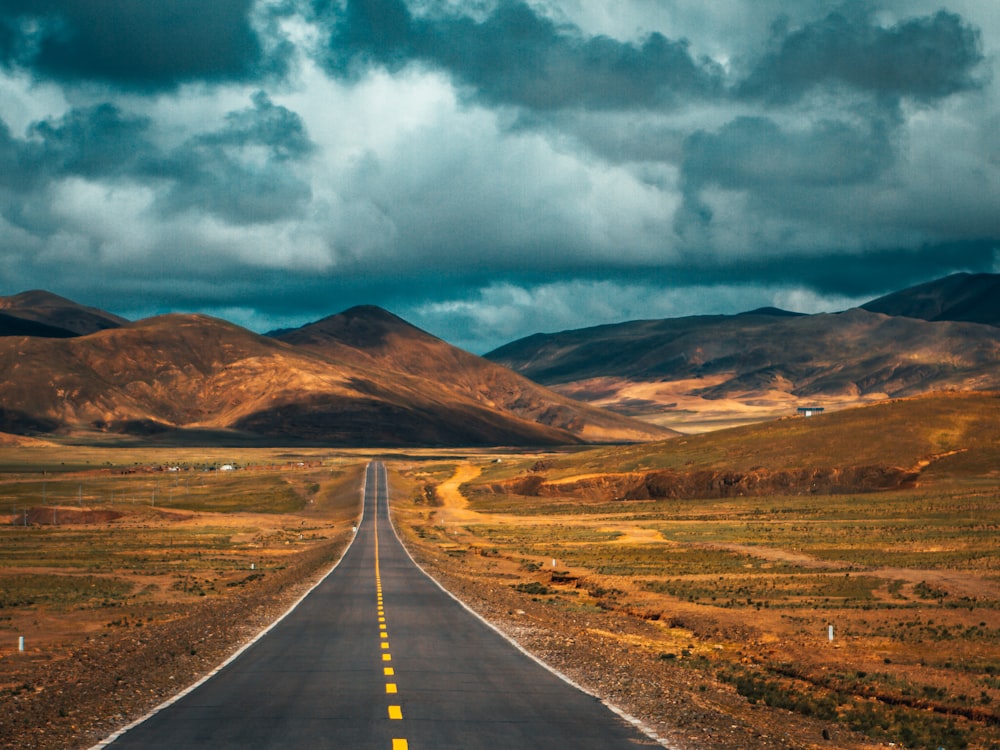
See some of the unforgettable historical occurrences here 

Learn about top strongest armies in the ancient world