All posts by Anish

How to become a good historian: Your history Guide

How to become a good historian: Your history Guide

To find the answers to all kinds of historical questions, historians research the past and examine the available evidence. Even though many historians are academics with advanced degrees, it is also feasible to become one by developing a set of talents outside of the conventional classroom. Its never late to become a historian. When one become a historian, the person is knowledgeable.

To succeed as a historian, you’ll need a passion for the past, excellent reading and writing abilities, and a love of collaboration.

Get a degree in history or a related field from a college: become historian

IMAGE CREDITS: istockphoto.com

At the college level, majoring in history is recommended, but degrees in English, legal studies, or other humanities or social science fields can also be helpful. A B.A. is a requirement for pursuing a career as a professional historian. Transferring to graduate school or finding a job in the real world will be made simpler by getting into a top university and maintaining a good GPA. Take use of whatever chances you have to set yourself apart as a history expert, such writing an honors thesis. Even if you decide on a major unrelated to history, make sure to schedule many history classes.

It’s crucial to sign up for classes where you’ll have the chance to conduct research using resources from earlier eras. Plan your courses such that you will have repeated contact with the same professors before your senior year. This makes it simpler for them to compose strong letters of recommendation for you.

Concentrate on a period of interest in history: become historian

Start paying attention to the historical eras, locales, or topics that interest you as an undergraduate. Consider asking yourself which historical mysteries pique your interest. If you decide to pursue a graduate degree, you will have plenty of time to focus your studies in further detail after college.

For instance, you could want to concentrate on the minute particulars of people’s lives. Or maybe you’ll want to research a specific era, like the 1950s.

Enroll in graduate program: become historian

IMAGE CREDITS: istockphoto.com

Choose whether you wish to enroll in a doctoral (PhD-granting) program or a master’s program alone. By speaking with your undergraduate teachers and sending emails to active historians and potential mentors, you can research potential schools. Prepare and submit your application package, which should include all necessary documents such as your GRE results, the application fee, a letter of introduction, a sample of your writing, and any letters of recommendation.

Obtain letters of recommendation from the professors who know you the best

By researching the educational backgrounds of your favorite historians, you can further reduce the number of schools you are considering.

One of your undergraduate teachers might offer to put you in touch with another professor to find out about graduate programs. If they volunteer to help you with this, thank them and accept their assistance.

Graduate schools will send you admission and financial offer letters in the middle of the spring. Any fine print pertaining to fellowships or assistantships should be reviewed in full.

Ace your graduate-level curriculum: become historian

IMAGE CREDITS: istockphoto.com

For the first two to three years of any program, you’ll often take both colloquia (reading and analysis classes) and seminars (research and writing classes). Make sure to give these courses your full attention in order to achieve excellent grades. An “A” or “A+” is a good grade, however a “B” can indicate that you need to work harder.

Try to enroll in courses that are both related to your particular historical interests and unrelated to them. This will provide you with a solid base of knowledge for your teaching or research.

Pass your thorough exams

Following the completion of your curriculum, you will take qualifying tests, commonly known as comprehensive exams or “comps.” These tests typically consist of two components: an oral examination and a collection of written essays. They are made to cover the material you have already mastered in your graduate-level history studies.

After passing, you move on to the “ABD” or “All But Dissertation” stage.

Create a dissertation or a thesis

IMAGE CREDITS: Unsplash.com

You must use original resources to finish your thesis project if you are a master’s student. If you are enrolled in a PhD program, your dissertation will be a book-length piece that shows your command of your field and your capacity for utilizing sources. The completion time could be three years or longer.

You will have at least one academic mentor or advisor who will oversee the progress of your study and provide expert guidance as you go through graduate school.

A dissertation is longer than a master’s thesis. A dissertation might be more than 250 pages long, while a thesis might be 150 pages long.

You will typically need to visit archives and libraries as part of your research for your thesis and dissertation.

Look for chances to publish: become historian

With or without a degree, you can publish all throughout your life. Local historical periodicals are always looking for intriguing contributions from amateur historians. Aim for publications published by university presses and peer-reviewed journals as a professional historian. One obvious method to stand out in your field is to publish.

Expect a demanding publication requirement, which amounts to one journal paper every two years and a book every five or so, if you want to become a professor at a research university.

When attempting to publish, be patient. You’ll probably receive both rejections and chances to edit and resubmit.

Attend meetings and conferences

IMAGE CREDITS: istockphoto.com

Around the world, historians like congregating in conferences and meetings. A lot of these events are planned around a certain historical topic or theme, like medical history. These are fantastic chances to meet like-minded individuals and broaden your knowledge of history.

Make a proposal to present at a conference if you have original historical research. Consider starting with a small, neighborhood group and progressing to a larger, national or worldwide environment.

The majority of conferences issue a Call For Papers (CFP) months before the gathering. How to submit your paper for consideration is described in the CFP.

USEFUL LINKS:

Keep hovering to learn more here

See how to run your first junk shop by clicking here 

Learn how to get people to invest in your product 


What is the Human Development Index?

Since 1990, the United Nations has created and compiled the Human Development Index (HDI) as a statistic to assess. The levels of social and economic development in various nations. It consists of the average number of years spent in school, the projected number of years spent in school. The average age at birth, and the gross national income (GNI) per person.

What is Human Development Index?

In addition to typical economic growth data like GDP. Assessing a country’s capacity for individual human development offers an additional criterion for assessing its level of development.

When two countries, for instance, have almost the same GNI per capita but have vastly different results in terms of human development. (Photo from istock)

  • The United Nations uses a measurement system called the Human Development Index (HDI) to assess each nation’s degree of individual human development.
  • In 1990, the UN first made it official.
  •  Instead of relying solely on economic growth to gauge a nation’s development.
  • In order to evaluate and compare nations. The HDI takes into account factors including average annual income and educational expectations.
  • Both social activists and economists have criticized the HDI for offering little more information. Beyond straightforward measures of the economic standard of living.

How is Human Development Index measured?

The Human Development Index (HDI) provides a comprehensive measure of a nation’s achievement in fundamental human development factors. To determine a nation’s HDI, we first calculate the average of the indices representing three key aspects of human development: knowledge and understanding, living a long and healthy life, and having an acceptable standard of living.

  • The health component of the HDI is based on life expectancy at birth for each country.
  • Education is quantified on two levels. Firstly, we consider a child’s predicted years of schooling at the typical age for starting school. Secondly, we look at the mean years of schooling for a country’s citizens.
  • For the economic metric, we use GNI per capita based on purchasing power parity (PPP) as an indicator of average income and the standard of living.
  • To compute the final HDI score for each nation, we take the cube root of the product of the normalized component values.


Drawbacks of HDI

The HDI has drawn criticism. It is a condensed and admittedly incomplete assessment of human progress. The HDI does not directly reflect aspects of quality of life, such as movements for female empowerment or a general sense of security. The U.N. Human Development Report Office (HDRO) provides additional composite indices to assess various aspects of life, including inequality issues like gender disparity or racial inequality, in acknowledgement of these facts.

Given the strong connections between the HDI, its components, and more straightforward measures of income per capita. Many economists claim that the HDI is virtually redundant. Both in terms of values and ranks, the GNI per capita (or even GDP per capita) strongly correlates with both the overall HDI and the other two components. According to them, it would be simpler and clearer to compare per-capita GNI across nations given these strong and consistent connections than to spend time and money gathering data for additional components that offer little to no new information to the overall index.

Indication in HDI

The four elements that make up the Human growth Index (HDI)—mean years of schooling, expected years of schooling, life expectancy at birth. And Gross National Income (GNI) per capita—measure each nation’s social and economic growth.

Does a high HDI mean Good or Bad?

The HDI should be as high as possible. A high HDI basically indicates that the nation in question provides a high standard of living, with respectable healthcare, education, and employment possibilities.

Which are the highest HDI countries?

(Photo from istock)

Switzerland came out on top in the most recent HDI ranking from 2022 with an HDI score of 0.962. The top five was completed by Australia, Hong Kong, Norway, and Iceland. With an HDI score of 0.921, the US was only rated twenty-first.

SO BASICALLY…

The Human Development Index (HDI), developed by the United Nations. Aims to measure a nation’s prosperity in terms of both economic and non-economic elements. The length of life expectancy and level of education are non-economic determinants. Gross national income (GNI) per capita is used to gauge economic parameters. The U.N. claims that the HDI advances our knowledge of global relative well-being. Although economists have criticized the index as being excessively simplistic and methodology-defective.

Conclusion

In conclusion, the Human Development Index (HDI) stands as a pivotal tool in assessing and comprehensively understanding the overall well-being and development of a nation. Developed by the United Nations, the HDI takes into account three fundamental dimensions of human life: health, education, and income, providing a more holistic perspective on a country’s status than traditional economic metrics alone.

The HDI considers life expectancy at birth, providing an essential snapshot of a nation’s healthcare and healthcare infrastructure, and emphasizes the need for citizens to live long and healthy lives. It evaluates education through measures of expected and mean years of schooling, recognizing the importance of access to quality education from an early age and over one’s lifetime. Finally, it factors in Gross National Income (GNI) per capita, adjusted for purchasing power, to gauge the standard of living in a country.

By normalizing these diverse components on a scale from 0 to 1, the HDI allows for cross-country comparisons that transcend mere economic indicators, providing a more balanced assessment of human development. This index brings forth a paradigm shift by focusing on the well-being of individuals and their access to opportunities rather than purely economic growth.

The HDI has proven instrumental in guiding policies and interventions. That aim to improve the living conditions and prospects of individuals in countries around the world. By promoting a holistic approach to development. The HDI encourages governments, international organizations. And individuals to work collectively towards ensuring that everyone has the opportunity to lead a fulfilling life. Filled with good health, education, and economic prosperity. It reflects the values of human development and underscores the importance of equity, dignity. And sustainable progress for all, making it an indispensable tool in the pursuit of a better and more just world.


Reference:

Investopedia
Thinking about why we need Political Parties, click on the link below:
Why do we need Political Parties


How to memorize historical dates in simple methods

How to memorize historical dates in simple methods

If you didn’t have to memorize a huge list of dates when significant events occurred and the names of famous historical personalities, we think the majority of students would agree that learning history would have been lot more pleasurable. To memorize is to challenge your capability.

Learning about our ancestors’ exploits through the ages is surely fascinating, but if you want to succeed on the history exam, you must memorize their names and the dates when they accomplished something noteworthy.

The issue is that many students find this to be very difficult, and as a result, some of them completely give up on history. If you belong to this group of pupils, we have some good news for you: there are methods you can use to remember dates and names more quickly. Do you wish to learn what they are? then continue reading!

There are numerous approaches for the learner to memorize historical dates and names; below, we have compiled the strategies we think are the most effective. You are not required to employ all of these strategies; feel free to try a few out and pick the ones that are most effective for you.

Divide the numbers to make the dates easier to understand

IMAGE CREDITS: istockphoto.com

You might not even need to memorize the first two digits if you’re trying to remember numerous dates from the same century. For instance, you already know that the first two digits will always be 19, therefore all you have to do is memorize the last two digits if you need to remember the dates of many events that happened in the 20th century. Make an effort to mentally connect the event with the final two digits of the date. To put it simply, remembering two numbers is far simpler than remembering four.

Make good use of math: memorize easily

Although math and history may appear to be unrelated disciplines, your aptitude in addition and subtraction will be very useful when it comes to memorizing dates. Hypothetically, you can focus on how many years later or earlier it happened if you remember the date when one event occurred rather than memorizing the date for the second occurrence. For instance, if you already know that World War One began in 1914 and that it lasted four years, the answer to when it finished is 1914+4.

The Method of Loci: memorize easily

It is a well-known method for making memorizing dates simpler. All you have to do is picture something familiar to you, like your house or school. Next, try assigning various numbers to various locations there. You can picture your TV, for instance, having a huge number 17 on it, and the sofa next to it having the number 76 painted on the cushion. These numbers will be simpler to remember if you associate them with well-known items. And presto! You now have the date of the signing of the American Declaration of Independence.

Put it in writing with a vibrant pen or pencil: memorize easily

IMAGE CREDITS: Unsplash.com

According to research, our brain is better able to memorize numbers and characters if they are put down in a unique typeface or using color. The time has come to dust out any coloured pencils you may have stashed away in a drawer. Simply take a sheet of paper and repeatedly write the same date or name on it using one particular color. For an even more remarkable experience, you can even use your non-dominant hand.

Include the times and people’s names in your illustrations

Why not combine these two tasks if you enjoy doodling and need to memorize a lot of historical dates and names before the test? Include the name or date in your painting by including something that is thematically related to them. Your drawings will be more memorable if they are unique and vibrant.

Say it aloud or sing it

Your sense of hearing is a strong ally when it comes to memorizing dates and names, so make the most of it. Saying the date or name clearly out loud can make a big difference. If you sing it aloud to your favorite song, you’ll perform even better. If you have musical talent, you could even compose your own song utilizing the names, dates, and details of the historical event as the lyrics.

Words that rhyme: memorize easily

IMAGE CREDITS: Unsplash.com

Alternatively, there is no reason why you can’t use your poetry and rhyming prowess to help you better memorize historical information. If you are skilled at those things. The phrase “in 1492 Columbus sailed the ocean blue” is one that all American schoolchildren are familiar with. As you might have predicted, the date is simpler to recall when “two” and “blue” are pronounced similarly.

Connect the numbers to someone or something you are familiar with

Associations with actual individuals and events are possible. The number 10 or 7 on the back of one of your favorite football players’ shirts might just chance to be the final digits of the date you were trying to memorize. You’ll remember the date more easily if you associate that person with the occasion.

Overall, you are attempting to interact with the dates through as many of your senses as you can in order to develop a variety of relationships. It will be simpler to memorize the dates. And pull them out whenever you need them if you use a wider variety of resources to engage with them. And of course, persistence is one of the key ingredients for success in history. Just like it is in any other subject. Do not give up if you do not see the expected effects right away.

Taking help of graph: memorize easily

IMAGE CREDITS: istockphoto.com

You can use a number line or a bar graph to visualize the number 1776. As an additional memorizing technique to help you ingrain. It permanently in your memory. If 1776 were shown as a bar graph, the first number would be extremely low. The second and third numbers would be in the middle. At the top of the graph, and the third number would be only slightly lower than the middle two.

A line linking the several bars can also be used to depict this. Consider it moving from a very low point to a very high point before slightly decreasing. Alternatively, since we’re talking about historical dates, you may use a different kind of line to make a chronological timeline.

USING LINKS:

Check out 9 simple methods to memorize historical dates 

Do you think that nuclear weapons should be banned? Give your opinion here 

Wait, why do we need political parties at all? See here

How to formulate the best history topics in simple ways

How to formulate the best history topics in simple ways

When it comes to the work of a history class, students frequently find it difficult to decide and formulate on their areas of interest or study, so they are unsure of where to begin. Here are some things to think about when you start to formulate your best history. Deciding among vast topics requires efforts. But we will help to formulate best topics for you.

Making sure you can maintain interest in the topic is crucial when selecting a topic for a history class in college. Make a list of the topics, eras, and situations that you are interested in first. Then think about whether you might want to concentrate on a specific person, one particular event, a movement that spanned several eras, or another facet of the past.

Access to the sources: formulate history topics

IMAGE CREDITS: Unsplash.com

Finding out if you have access to the sources you need to respond to your research topic is the second most crucial factor. Do primary sources exist? Do you have any knowledge of—or are you able to locate—some of the secondary sources, or the historians who came before you and wrote on the subject? History from the distant past, such as that of an indigenous people or the ancient or medieval periods, may pique your interest.

Unfortunately, the likelihood that a primary source will be available to a student at a public university decreases with the age of the source or its distance from the US experience. A unique collection of primary sources may occasionally be published or digitized, but relying on such a find is dangerous.

Narrow down research question

After selecting your topic or issue, structure your assignment by posing the appropriate historical questions. The foundation of historical analysis is questions, which also serve as a guide for the historian as they conduct their research for the project. Historians can create effective and efficient parameters for their research as they start examining the amassed data by coming up with the right set of questions. What part did women play, for instance, in the American Revolution? This question guides our reading of the papers while also defining the research’s topic (women) and time frame (the American Revolution).

This last query will show you how important it is to specify the parameters of your historical inquiry so that you may narrowly focus on your subject. Despite the fact that you began with a broad interest—women in the American Revolution—your research topic has allowed you to narrow your attention to a person who left sources and a question that needs to be answered—what did Warren do in the context of her own community in the years leading up to the American Revolution?

Typically, undergraduate history students choose topics that are excessively broad out of concern that they won’t be able to “fill up ten pages” (or twenty, or five) if they don’t aim broadly. However, this presumption sets students up for failure since they are unable to display the primary source analysis abilities that their professors most want to see because they are attempting to answer a broad subject that has already been well explored by previous historians. The best practice is to focus your topic into a query that is precise by time, place, and primary source collections, though you should also closely work with your instructor.

How to find best research topics for your paper: –

IMAGE CREDITS: Unsplash.com

Be interested in a subject where primary sources are available, whether they be in a local archive, published original sources, or a digital collection. What do you actually want to know? Create a list of inquiries. You might possibly start with:

  • What was the cause of an event (a strike, an invention, a conflict, a treaty, or a new law)? Who was in charge? Why should I choose him/her? Why did it occur at that time? Can I make a comparison to another similar occurrence to assess what was special about this cause or result?
  • What was it like to be a part of an ongoing trend (protests, women smoking, anti-tobacco movement)? Why did they decide on their decisions? Why aren’t there more? How did they decide to take part?
Pick one of these questions that can be answered in the best way. By focusing the inquiry, for example, your research question can be Why did x behave in the way she did throughout the discussion leading up to this law’s initial passage? as opposed to a more thorough investigation into the causes. OR “What were your three main concerns when you joined that enduring trend?” Here are some tips for narrowing:
  • Taking into account a specified time frame (the past or 10 years following a new discovery)
  • Evaluating the effects in a different place. Like a town you are familiar with or have access to the newspaper for.
  • Concentrating on a single person. And tracing their experience in relation to a significant event or new trend.

Create a thesis or argument based on that query, making ensuring it is rooted in historical context. And avoids using a transhistorical “people are like this” justification. For instance,

  • X sought this legislation because her father, a reformer himself, had inspired and educated her.
  • This slaves who wrote letters to his master in the 1850s spoke in a kind of code, infrequently expressing genuine annoyance or rage.

Preliminary research: formulate history topics

Get the most recent reliable generic source on your topic and read it for general orientation if you do not already have a general understanding of it. Create the most concisely focused question you can based on the reading. At that time, you should typically discuss with your lecturer whether your question is realistic.

Preparing your bibliography

IMAGE CREDITS: Unsplash.com

Use the bibliography and notes in MUSE, your first general source, as well as Historical Abstracts. On CD-ROM in the library reading room (the computer in the front row. That is furthest to the left as you pass by the reference desk. If you have any questions, go to the desk). You should study any specialized bibliographies on your subject as well, albeit these are frequently a little out of date.

USEFUL LINKS:

Check out how to write a history research paper here

We’ve for you some books to assist in the quest for your excellence, click here

Credit card needs serious attention; check out some tips you need to know here

Asian History: Best Books You Must Read

Asian History: Best Books You Must Read

Introduction to Asian History: Best Books You Must Read

Asian History: Best Books You Must Read helps readers understand one of the most diverse and influential regions in the world. Asia includes ancient empires, powerful dynasties, colonial struggles, and modern economic transformations. Therefore, studying its history requires well-structured and reliable books.

Moreover, Asian history connects civilizations such as China, Japan, India, Mongolia, and Southeast Asia. Because of this complexity, readers need carefully selected books to build strong foundational knowledge. In addition, the right books make difficult topics easier to understand.

This guide focuses on the best Asian history books that explain major regions and events clearly. As a result, you will gain a balanced and complete understanding of Asia’s historical journey.

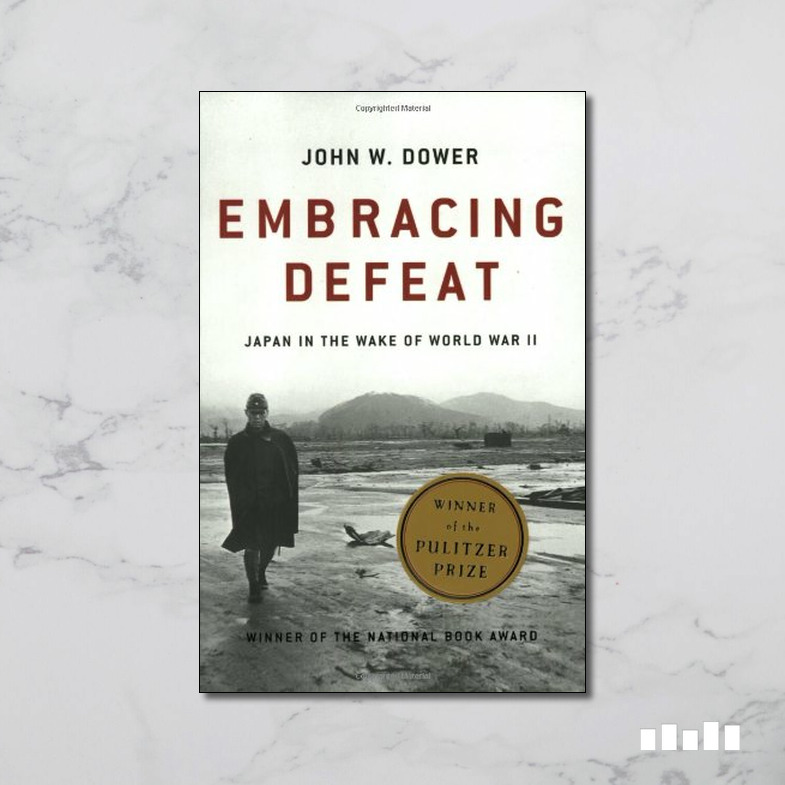
Embracing Defeat: Japan in the Wake of World War II – John Dower

IMAGE CREDITS: FiveBooks.com

Embracing Defeat is one of the most important books on modern Japanese history. It explains how Japan rebuilt itself after World War II. Moreover, it focuses on the years of American occupation and the deep transformation that followed.

John Dower carefully shows how Japan moved from destruction to recovery. Therefore, readers understand not only political changes but also social and cultural shifts. In addition, the book highlights how ordinary Japanese citizens experienced defeat and rebuilding in daily life.

However, this is not just a story of recovery. Instead, it also explores identity crisis and national memory. For example, Japan had to rebuild its economy while also redefining its national identity. Consequently, the book presents both progress and tension.

Moreover, Dower uses detailed research and real-life accounts. As a result, readers get a human perspective instead of only political analysis. Therefore, the book becomes essential for anyone studying post-war Asia or modern Japan.

Khubilai Khan: His Life and Times – Morris Rossabi

This biography explores the life of Kublai Khan, one of the most powerful rulers in world history. He controlled the Mongol Empire at its peak and ruled China during the Yuan Dynasty.

Moreover, Morris Rossabi explains how Kublai Khan built and managed one of the largest empires ever created. Therefore, readers learn about governance, military strategy, and cultural integration across Asia.

In addition, the book shows how the Mongol Empire connected East and West. For example, trade routes expanded, and cultural exchange increased. Consequently, Asia became more interconnected during this period.

However, the book also highlights internal struggles. Kublai Khan faced resistance, administrative challenges, and political conflicts. Therefore, his rule was not only powerful but also complex.

Moreover, Rossabi provides clear explanations that make medieval history easier to understand. As a result, even beginners can follow the story of the Mongol Empire. Ultimately, this book is essential for understanding imperial Asia.


The Miracle: The Epic Story of Asia’s Quest for Wealth – Michael Schuman


This book explains Asia’s rapid economic rise in the 20th century. It focuses on countries like Japan, South Korea, China, and Taiwan. Moreover, it connects economic growth with political and historical developments.

Michael Schuman uses real stories and historical analysis. Therefore, readers understand how Asia transformed from poverty to global economic power. In addition, the book highlights key leaders and policies that shaped development.

However, the book does not only celebrate success. Instead, it also discusses challenges such as inequality and political pressure. Consequently, readers get a balanced view of modernization.

Moreover, Schuman explains how global trade and industrialization played a major role. For example, export-driven growth helped many Asian economies expand quickly. As a result, Asia became central to the global economy.

Therefore, this book is ideal for readers interested in economics, globalization, and modern Asian history.

A History of Southeast Asia – Arthur Cotterell


This book provides a complete overview of Southeast Asian history. It covers countries like Vietnam, Thailand, Indonesia, and the Philippines. Moreover, it explains how geography, trade, and culture shaped the region.

Arthur Cotterell writes in a clear and structured style. Therefore, readers can easily understand complex historical developments. In addition, the book covers ancient kingdoms, colonialism, and modern nation-building.

However, Southeast Asia is highly diverse. Therefore, the book carefully compares different countries and their unique histories. As a result, readers see both similarities and differences across the region.

Moreover, Cotterell explains the impact of foreign influence, especially European colonialism. Consequently, readers understand how modern borders and identities were formed.

In addition, the book is suitable for beginners. It provides a strong foundation before moving to advanced studies. Therefore, it is one of the best entry points into Asian history.

Midnight’s Furies: The Deadly Legacies of India’s Partition – Nisid Hajari

This book explains one of the most tragic events in South Asian history: the Partition of India in 1947. It describes how British India was divided into India and Pakistan.

Moreover, Nisid Hajari explores political decisions that led to this division. Therefore, readers understand how leadership choices shaped history. In addition, the book shows how quickly violence spread during Partition.

However, the book also focuses on human suffering. Millions of people were displaced, and many lost their lives. Consequently, the emotional impact is deeply felt throughout the narrative.

Moreover, Hajari compares political intentions with real outcomes. As a result, readers see the gap between plans and reality. Therefore, the book is both historical and deeply emotional.

In addition, it helps readers understand modern tensions in South Asia. Because of this, it remains highly relevant today.

Wild Swans: Three Daughters of China – Jung Chang

This powerful memoir tells the story of three generations of women in China. It covers major events such as the fall of the Qing Dynasty, Mao’s revolution, and the Cultural Revolution.

Moreover, Jung Chang connects personal life with national history. Therefore, readers experience history through real human stories. In addition, the book shows how political changes affected families deeply.

However, it is not only about politics. Instead, it also explores identity, survival, and resilience. Consequently, readers understand both emotional and historical dimensions.

Moreover, the storytelling style is simple yet powerful. As a result, complex history becomes easy to understand. Therefore, it appeals to both beginners and advanced readers.

In addition, the book provides a unique perspective on modern China. Because of this, it is one of the most recommended Asian history books worldwide.


This Earth of Mankind – Pramoedya Ananta Toer

IMAGE CREDITS: Amazon.in

This novel explores colonial Indonesia through a fictional yet historically accurate story. It follows a young man navigating identity under Dutch colonial rule.

Moreover, Pramoedya Ananta Toer highlights cultural oppression and resistance. Therefore, readers understand how colonial systems affected personal lives. In addition, the story reflects real historical conditions in Indonesia.

However, the book is not only political. Instead, it also explores love, identity, and social class. Consequently, it becomes both emotional and historical.

Moreover, the narrative shows how education and awareness shape resistance. As a result, readers see the importance of knowledge in colonial societies.

Therefore, this book is essential for understanding Southeast Asian colonial history and identity formation.

The River of Lost Footsteps – Thant Myint-U

This book provides a personal and political history of Myanmar (Burma). It combines memoir with historical analysis.

Moreover, Thant Myint-U explains how Burma’s past shaped its present struggles. Therefore, readers understand modern political challenges in context. In addition, the book explores colonial history and military rule.

However, the narrative remains accessible and personal. Consequently, readers connect emotionally with the country’s history.

Moreover, the author uses family history to explain national events. As a result, history feels more human and relatable. Therefore, the book is both informative and engaging.

In addition, it is especially useful for understanding lesser-known parts of Southeast Asia. Because of this, it fills an important gap in Asian historical literature.

Final Conclusion

These books together create a complete picture of Asian history. Moreover, each book focuses on a different region, period, or theme. Therefore, readers gain both depth and balance.

In addition, they combine academic research with storytelling. As a result, they are suitable for both beginners and advanced learners.

Ultimately, these are some of the best books on Asian history you can read to understand how Asia shaped the modern world.

USEFUL LINKS:

Keep hovering for more, best books on Asian history

Discover some of the top facts about human civilization here

We’ve for you some basic facts about human history


How influential are NGOs?

Nongovernmental organizations (NGOs) were traditionally thought of as benevolent organizations whose goal was to impartially. And disinterestedly influence public policy. However, this impression has evolved. They are increasingly seen as organizations that put their own beliefs above those of the communities they represent or that act in accordance with the interests of their patrons, sponsors, and members.

Some pivotal points about NGOs are mentioned below:

(Photo from istock)

NGOs and Global Politics

NGOs have risen to the forefront of negotiations throughout the global association revolution. Particularly when advocating for human rights, world peace, and the environment. They have also taken the lead in providing help for development. Humanitarian relief, and disaster relief. Many NGOs have also had their own efficacy, accountability, and legitimacy called into question. Despite their reputation for challenging the legitimacy, effectiveness. And accountability of both governments and the private sector.

According to Trent of the Center on Governance at the University of Ottawa. Many NGOs are as much a part of domestic and international politics as any other interest group. And their practices and activities are not necessarily in the interest of a “good society” (Trent 2013). Their openness and accountability have come under growing scrutiny. Particularly in instances when they have misrepresented the poorest and most destitute people in order to raise money.

Funding and effectiveness of NGOs

Historically, NGOs have worked together with both state-sponsored and non-state entities. More recently, the latter have included international companies more frequently. Depending on the type of initiative, the availability of human and financial resources. And the possible benefits that can be realized, including financial gains. The degree of collaboration between the various partners has varied. Collaboration has also been heavily influenced by ideologies, goals, and self-interest.

NGOs have a wide range of effects on civil society. However, appraisals of the initiatives and programs they carry out are uncommon. Because there are typically insufficient accurate data, evaluations are typically restricted to the investigation of perceived effects at the local level. And do not frequently focus on development outcomes or outputs. At tiny geographic scales, it is exceedingly difficult to find credible information on social development indexes.

Agendas and ideologies

(Photo from istock)

Governments in the Organization for Economic Cooperation and Development (OECD) believe that NGOs can significantly reduce poverty. Although research suggests otherwise.   And to be better at working closely with poor communities and promoting their direct participation. Because they are smaller than governments.

Such as adherence to a country’s aid policies, with priorities shifting over time and across donors. Increasing pressure from co-financing governments to show project-related poverty outcomes or by compelling them to adopt a target-driven rather than a process-driven approach may also damage aid to NGOs with a focus on poverty reduction. The Steering Committee for the Evaluation of the Netherlands Co-financing Program commissioned a research that found that partner NGOs were concerned about rising government involvement in Dutch-co financed NGO initiatives in the Andes.

Question of the common good

Compared to governments, NGOs are said to have a lower bureaucratic structure, more effective decision-making procedures, and the capacity to change course swiftly through strategic alliances. These qualities are anticipated to enable individuals to perform a variety of roles in society, including acting as alternative forms of leadership for governments and acting as catalysts, triggering agents, mobilizers, and opinion leaders (Cooper et al. 2002).

The present relevance of NGOs

(Photo from istock)

One is that while public participation is valuable in and of itself, it cannot improve policy making on its own. The creation of a forum where various parties can express their opinions, worries, and values and come to an agreement on how to move forward with whatever process they are involved is the end goal of any meaningful participatory process. This is true even when the parties’ opinions are divergent and in conflict. Governments and society stand to gain significantly from participatory procedures, and NGOs have the ability to transform from being impediments to governance to powerful providers of knowledge, information, and mobilization.

The promotion of a culture of assessment, not just among government and private-sector groups but also in NGOs, is a unique method, albeit a different difficulty, for efficient decision-making processes that provide results and hopefully more successful policy creation. This also holds true for non-governmental organizations. NGOs frequently lack even the accountability of their constituency, whereas the public sector is answerable to the voters and the commercial sector to the shareholders.

Final thoughts

NGOs have helped shape policy on important problems. However, significant flaws in the sector’s accountability, transparency, and capacity to address equitable issues have come to light. Due to these, the world society is becoming increasingly skeptical of their effectiveness, and the previously positive global perception of the NGO sector has changed to one that is more critical and even calls into question their legitimacy.

References:

Wiley Online Library
Thinking about why we need Political Parties, click on the link below:
Why do we need Political Parties


Good books about American history: Your History Guide

Good books about American history: Your History Guide

These top-notch books highlighting the most significant events in American history are as fascinating as they are educational. These books cover many aspects of American history. From civil war to revolution, these books are best to understand American history.

The history of America is replete with coincidences and unlikely events, lofty goals and horrible tragedies, abrupt transformations and the passage of time slowly. Or, the stuff that makes for great literature. From the entrance of European explorers to the Vietnam War, these crucial volumes chronicle American history at its most crucial junctures. Each book on American history is instructive, enjoyable, and, above all, a memorable read.

Washington’s Crossing by David Hackett Fischer: history books

IMAGE CREDITS: Wikipedia

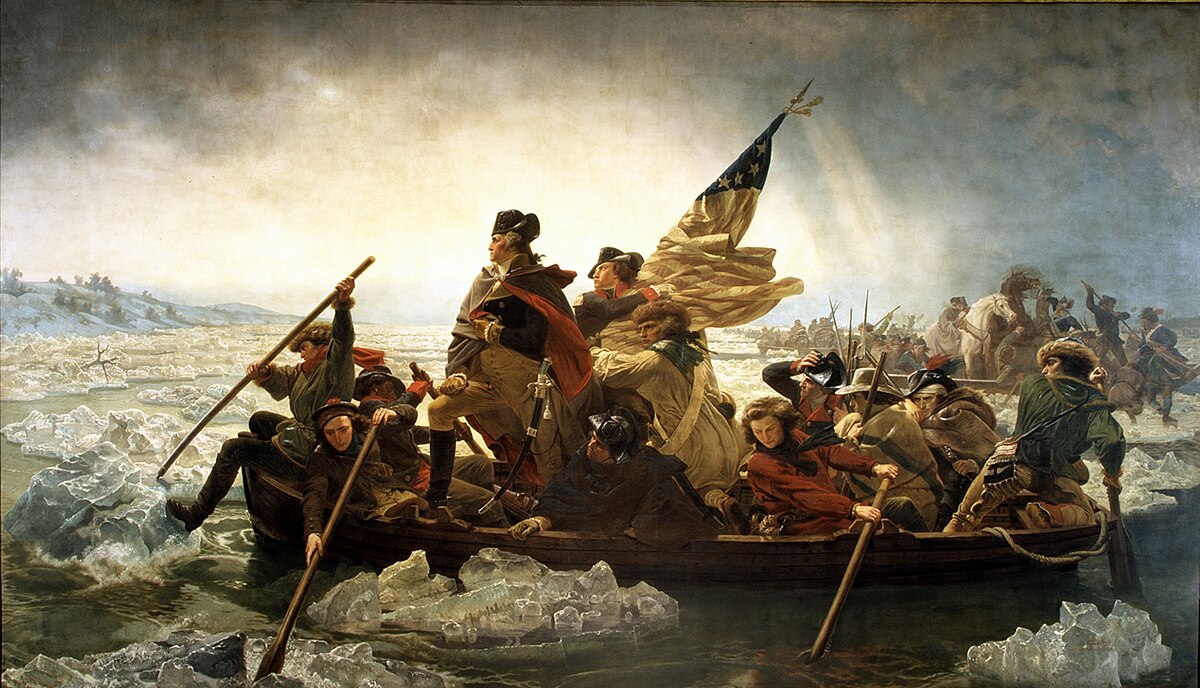
The December 1776 assault on Hessian troops stationed in Trenton, New Jersey, commemorated in Emanuel Leutze’s famous—but historically incorrect—painting, was a critical victory for George Washington and the Continental Army after a succession of disastrous defeats in New York. The Delaware River was traversed by several types of boats, which Fischer’s dramatic, painstakingly researched account clarifies. Fischer also shows how perilously near the Americans were to losing the war before it had even begun.

Founding Brothers by Joseph J. Ellis: history books

The decades that followed the American Revolution and the Constitutional Convention were anything but peaceful, as Ellis makes clear. The young republic was in danger of failing due to disagreements between Federalists and Republicans, the possibility of war with France, and the third-rail of slavery. Ellis explains that the success of the American experiment depends not just on the foresight of its Founding Fathers but also on a great deal of luck and happenstance in this enlightening episodic history.

A Stillness at Appomattox by Bruce Catton

IMAGE CREDITS: Biblio.com

Author Catton, who won the Pulitzer Prize and the National Book Award, vividly recounts the historic battles that helped the North win the Civil War, such as the Wilderness, the Bloody Angle, and the Crater. Few historians have done a better job of evoking the perspective of a soldier in battle, or of understanding how each tactical choice fits into the overall picture.

This Republic of Suffering by Drew Gilpin Faust: history books

Approximate 620,000 soldiers, or 2% of the American population, lost their lives in the Civil War. The number of deaths at such pace today would be 6.5 million. However, statistics alone cannot capture the entire impact of such immense suffering on the American mind. Faust’s sombre, elegiac work serves as a potent reminder that armed combat has a terrible cost by cutting through the gauzy sentimentalism that surrounds so many popular portrayals of the war.

Empire of the Summer Moon by S.C. Gwynne

IMAGE CREDITS: Rakuten Kobo.com

The Great Plains were previously governed by the Comanche Indians, who used their superior riding and fighting prowess to subjugate other tribes and slowed the advance of Manifest Destiny. However, the Comanche were doomed by the repeating rifle and railroads by the late 1860s. The Comanche are given their due recognition in American history thanks to Gwynne’s eloquent and captivating depiction of the tribe and their last and greatest chief, Quanah Parker, which vividly portrays the blood and ferocity of westward advance.

Hard Times by Studs Terkel: history books

Terkel evokes the painful memories of Americans whose lives were forever changed by the Great Depression, from well-known figures like Pauline Kael, Cesar Chavez, and Dorothy Day to the hobos who crisscrossed the country looking for work and the mothers who faced each day not knowing what their children would eat. This crucial oral history practically drips with the humour, tenacity, and bravery of these survivors.

The Worst Hard Time by Timothy Egan: history books

The terrible confluence of drought, wind, and overworked fields that caused the Dust Bowl couldn’t have occurred at a worse time than the stock market fall of 1929. With foresight and more consideration for the environment, the calamity could have been avoided, as Egan explains in this intriguing and colorful history. It’s important to keep in mind how the nation once overcame a natural calamity of its own making at a time when catastrophic storms and record heat waves are occurring more frequently.

An Army at Dawn by Rick Atkinson

IMAGE CREDITS: Amazon.in

This Pulitzer Prize-winning chronicle of the Allied invasion of North Africa. Features the storytelling talent of a war correspondent, Atkinson, who also writes novels. The first large American military operation outside of the Pacific Theatre. Operation Torch served as both a crucial proving ground for American troops. And a significant turning point in the liberation of Europe. The boring facts of history are transformed into an exhilarating thrill trip by Atkinson’s perceptive character portraits and captivating action scenes.

With the Old Breed by E.B. Sledge: history books

To ensure he wouldn’t miss the conflict, Sledge dropped out of an officer training program and enlisted in the U.S. Marines. At Peleliu and Okinawa, where he immediately encountered some of the worst fighting of World War II, he quietly wrote his experiences in a small New Testament. He eventually converted those notes into this harrowing, thrilling, and extraordinarily poignant narrative of the Pacific War more than 30 years later.

Parting the Waters by Taylor Branch: history books

Branch skilfully traces a period of profound upheaval in American history, from Martin Luther King Jr.’s organizing of the Montgomery Bus Boycott through his involvement in the crucial Birmingham campaign. Branch provides crucial pictures of fellow activists including John Lewis, Wyatt Tee Walker, Ella Baker, and Stanley Levison in addition to portraying the characteristics that made King such an inspirational leader.

Fire in the Lake by Frances FitzGerald

IMAGE CREDITS: istockphoto.com

FitzGerald referred to her account of America’s involvement in Vietnam. When it was originally published in 1972 as “a first draught of history.” But Fire in the Lake has stood the test of time better than most. Following a succinct account of Vietnam’s resistance to foreign invasion for a millennium. FitzGerald delivers the sobering, persuasive. And deadly conclusion that almost every element of American policy. In Indochina was based on a fundamental misunderstanding of the people and their culture.

The Best and the Brightest by David Halberstam: history books

The authoritative story of how the U.S. government crossed a line. In Vietnam is included in this #1 New York Times book. It is chock full of vivid character profiles. And eye-opening stories, including Gen. William Westmoreland’s custom of eating breakfast. In his trousers “in order to keep his fatigues pressed.”

USEFUL LINKS:

Check out some of the best books on American History 

Get familiar with the world history simply by clicking here 

Its never late to be good at History, click here to know more


How to write a history book of your own

How to write a history book of your own

Are you interested in history and ready to write a history book, but unsure of how to organize your information? Well to help you write one, we’re here to assist you. Now you can easily write or start to write with help of this article.

Your readers can be presented with history in a variety of ways, and each one has specific benefits. No one strategy is superior to another. It really just comes down to figuring out what suits you and your content the best.

To write a Biography

IMAGE CREDITS: Unsplash.com

Seeing history through the viewpoint of a person who was there can be enlightening. By allowing you, as the author, to fully immerse your readers in the characters, sights, sounds, and ideas of the time and location, as well as its distinctive character, the biography format aids in bringing history to life. You can also delve extensively into your subject’s life to discover how and why he came to be who he was and how he came to be so crucial to the story’s theme.

Scientific incident: write history book

A thorough examination of one historical occurrence enables you to concentrate on an incident (or related series of objects) that illuminates the context of the event’s period and location. You can assist readers comprehend the event, the people, the place, and the time, as well as the matter’s enduring importance, by using your imaginative storytelling abilities to establish the scene.

Personal response

IMAGE CREDITS: Unsplash.com

Even if it may have a bigger impact on us than we think, the past can seem irrelevant to the present. Examining a period of history and considering how it affected your life is a brilliant way to learn more about yourself. When you, the author, see history through such a personal lens, you can both evoke strong feelings in your readers and impart important knowledge.

Consider relationships to write

One of the most important aspects of history is how people interact with one another. History might have been altered if any of the key players had chosen differently. You can learn about the backgrounds and occasionally opposing viewpoints of the major characters in a historical circumstance by delving into the interpersonal relationships that brought them together to produce a single special event.

Alternative history: write history book

The counterfactual method rewrites history and is frequently referred to as “alternative history.” Here, the conclusion of a known factual event or a string of events that have been documented is altered. As the Minutemen attack the British on their way to and from Concord, for instance, the British soundly destroy them, perhaps changing the direction of the American Revolution and the future of the United States.

Another possibility is that the War of the Roses would not have taken place if England’s King Edward IV had wed a French princess rather than Elizabeth Woodville. In counterfactual history literature, characters who time travel to influence previous events are a recurrent motif, including alternative outcomes to significant events like World War II or a presidential murder attempt.

Historical Novel: write history book

IMAGE CREDITS: Unsplash.com

The easiest way to define a historical novel is as fiction that heavily draws inspiration from real-life people, places, and events. To create a better, clearer story, what actually happened might be somewhat changed. Dialogue may be made up or paraphrased, but the fictional exchanges must be true to what is known about the individuals, the setting, and the time period. This is a clever technique for educating readers about a specific era while simultaneously emotionally involving them in the story.

A photographic book

Sometimes it’s preferable to omit those 1,000 words and present a visual aid instead. Historical drawings, diagrams, maps, and copies of documents with the original handwriting can all communicate a richness of information that is challenging to describe in words.

When trying to capture the atmosphere of a location or time period, a photographic book might be helpful. It is particularly helpful when writing about conflicts, discoveries, or other complex topics that call for maps, diagrams, or other illustrations.

Context of historical events: write history book

IMAGE CREDITS: Unsplash.com

When reading about what life was like years or millennia ago, it might be challenging for current readers to comprehend why historical figures acted the way they did. Readers can better comprehend the justification for decisions and actions done during these events by reading a history book that places an incident inside the era in which it occurred. It’s possible for readers to leave with a fresh viewpoint.

Topical history

By concentrating on a particular idea, subject, or human endeavour and following it through time, you can discover history in a fascinating new way. With this approach, you and the reader can examine how the subject changed as the world around it did and how the subject’s development affected how we live now. This method can open up the human experience to a completely new viewpoint.

See Cause and effect to write history

You can investigate how specific people, events, ideas, or technologies had an impact on the globe, similar to how something changed over time. With this approach, readers are drawn into the “life” of the subject at hand and how it relates to their own contemporary perspective.

Concealed history: write history book

IMAGE CREDITS: Unsplash.com

Every one of us studied significant historical events in school. There is, however, a limited amount of time for teachers to provide information beyond the fundamentals. Because of this, some historical titbits are less well-known than others. You may have the opportunity to learn about. And share these individuals’ tales by concentrating. Your history book on subjects, ideas, objects, or connections that have been mostly ignored by history.

History quiz books

By including fascinating details about a specific era, nation, or subject, your history book can entice trivia buffs. These can be brief anecdotes to illustrate events that many people won’t be familiar with or simply one-line facts. These entertaining facts can be used by readers to win game shows. Dominate trivia nights at local bars, and make small chat at business gatherings.

Choose what interests you: write history book

Discovering or selecting a tale is a subject unto itself, but in a nutshell. Look for something that speaks to you or fascinates you. It should be something you are proud of and wish to support. Even once the book is finished. Keep in mind that you will be trapped with it for a very long time.

Knowing yourself helps in selecting the “correct” topic, idea, or story. Because some people fall in and out of love with certain ideas more readily than others. For it to be fascinating and have lasting power. It should ideally have numerous facets and fresh directions to meander down.

USEFUL LINKS:

Check out 12 ways to write a history book

Learn a little about banning nuclear weapons 

Have a peek into the Medieval life: A historic Era


How to master the timeline of human history

How to master the timeline of human history

With continuous revelation of human history, it becomes important to learn and master it. To be a master at human history means a better understanding of it. Timeline of human history can be difficult to master, but now when approached right.

The scientific study of evolution examines how traits of a set of organisms evolve over the course of successive generations. In their research on the evolution of humans, experts have proposed that extinct non-human primates and other creatures that resembled humans in the past gave origin to current humans.

Natural selection is a concept important to the hypothesis of human evolution and was proposed by renowned biologist Charles Darwin. Natural selection is the process through which a species’ genetic make-up evolves over time to make it more able to thrive in its environment. Pioneering work in the area of human evolution was done by Darwin.

Regarding Darwin’s assertions regarding the connections between apes and the timeline of human evolution, a substantial amount of genetic data was gathered. This over time has allowed researchers to determine the precise 94% similarity between the genetic makeup of humans and apes.

Going about Human Evolution

IMAGE CREDITS: Unsplash.com

The capacity to walk on two legs marked the beginning of the change from apes to humans. Bipedalism is the term for this. The species Sahelanthropus tchadensis was one of the oldest known ancestors of humans, a subject we will cover in greater detail later in this article. Around 6 million years ago, Sahelanthropus tchadensis was the first species to start walking on two legs. Homo sapiens, the species to which all modern humans belong, did not arise for around 5 million years after this shift. Several diverse human species lived, evolved, and perished during this significant void in the timeline of human evolution.

Now that we are aware of what human evolution actually entails, we may discuss the timeline of human evolution in more detail. 55 million years ago, to be exact, is when it all started.

55,000,000 years ago: master timeline

Primates evolve from their earliest forms.

eight to six million years ago

The earliest gorillas develop. Following this, the various chimpanzee and human lineages start to diverge from one another.

58,000,000 years ago: master timeline

As the earliest known human ancestor is thought to have started walking on two legs, bipedalism is introduced. Orrorin tugenensis, the species, is this ancestor.

5.5 million years ago

The ape, Ardipithecus, shares characteristics with gorillas and chimpanzees. The habitat of this species is forests.

4,000,000 years ago: master timeline

Australopithecine primates, a species of primate, appear. These primates walk on two hind legs and have brains that are equivalent in size to chimpanzees. The first known human ancestors to inhabit the Savannah were the Australopithecines.

 3.2 million years ago

IMAGE CREDITS: istockphoto.com

Australopithecus afarensis lived in Hadar, Ethiopia, according to a specimen of its skeleton fossils found in East Africa in 1974. Since then, this specimen has gone by the name Lucy.

2.7 million years ago: master timeline

Around this time, Paranthropus, a species of ape, inhabited meadows and woodlands. These primates possessed enormous jaws that they used to chew on rough plant material and roots. This species vanished about 1.2 million years ago.

2,500,000 years ago

Homo habilis as a species first appears. The face of this species is notably less projecting yet nevertheless retains many characteristics with apes. During this time, hominids also started using stone tools, which they made by breaking stones, more often. Around this stage in the evolution of humans, certain hominids also started consuming a lot of meat. Due to the increase in meat eating and the resulting increase in energy, hominids were able to grow their brains bigger.

2,000,000 years ago: master timeline

In Africa, remains from this era of the ape Homo ergaster have been discovered. Compared to earlier species, this ape had a larger brain.

1.8–1.5 million years ago

Asia is the location of the Homo erectus species. The earliest living examples of hunters and gatherers are primates. They were also the first in substantial numbers to travel outside of Africa. This species’ brain is even larger, with a capacity of about 1000 cm3.

1.6 million years ago: master timeline

Based on relics discovered in Kenya, it is thought that this period of time saw the earliest usage of fire. Very sophisticated stone tools were also being developed and used at this period. The majority of early humans continued to use these tools up until about 100,000 years ago.

 600,000 years ago: master timeline

IMAGE CREDITS: Unsplash.com

Homo Heidelbergensis is a species that now exists in Africa and Europe. The brain size of this species of monkeys was quite comparable to that of modern humans.

 500,000 years ago

This is the period when the earliest signs of intentionally constructed shelters first appeared.

400,000 years ago: master timeline

The first humans began using spears for hunting.

325,000 years ago

IMAGE CREDITS: Unsplash.com

It is possible to date the earliest human footprints to 325,000 years ago.

 280.000 years ago: master timeline

The first sophisticated grinding and cutting stones are made.

230,000 years ago

Neanderthals start to appear around this time.  When modern humans take over about 28,000 years ago, they eventually go extinct.

195,000 years ago: master timeline

IMAGE CREDITS: istockphoto.com

Homo sapiens, or modern humans as we know them, initially appear at this time. Human migration spans Asia and Europe. This is the time frame for the earliest indications of Homo sapiens remains. The average human brain’s volume at this period was 1350 cm3.

170,000 years ago: master timeline

It is thought that around this period, Africa was home to the earliest direct ancestor of all modern humans. This ancestor is known as Mitochondrial Eve by scientists.

150,000 years ago

The ability to communicate first appears in humans 150,000 years ago. Research suggests that at this time, Homo sapiens began to create a sophisticated system of symbolic and speech.

140,000 years ago: master timeline

IMAGE CREDITS: istockphoto.com

Long-distance trading was first observed 140,000 years ago, according to fossil evidence.

50,000 years ago

Human culture begins to evolve at a significantly faster rate at this stage in the timeline of human evolution. A few cultural shifts included the adoption of ritualistic burial practices. the production of clothing from animal skin, and the development of more clever, efficient hunting methods.

33,000 years ago: master timeline

The earliest indications of cave art date around 33,000 years ago. During this time, Homo erectus goes extinct entirely in Asia.

18,000 years ago: master timeline

IMAGE CREDITS: istockphoto.com

On the Indonesian island of Flores, there is a species of diminutive, prehistoric humans known as Homo Floresiensis. These prehistoric people are little over a meter tall, and their brains are around the same size as chimpanzees’.

USEFUL LINKS

Keep hovering here to know about Timeline of Human evolution 

Check out most civilizations throughout mankind here 

Learn some top facts on Human Civilization, click here


Most influential historical figures that you should know

Most influential historical figures that you should know

Who is larger: Lincoln or Washington? Napoleon or Hitler? Jane Austen or Charles Dickens? Depending on how you view it, yes. History has witnessed many influential historical figures. These people have been influential in every way. The influential historical figures we discuss here are must known.

We made the decision not to approach the project the way historians might, through a moral evaluation of each person’s unique accomplishments, when we started out to rank the importance of historical people. Instead, we used a computational data-centric approach to evaluate each person by combining millions of opinion traces. By combining a variety of metrics regarding each historical figure’s reputation into a single consensus number, we were able to rank them similarly to how Google ranks web pages.

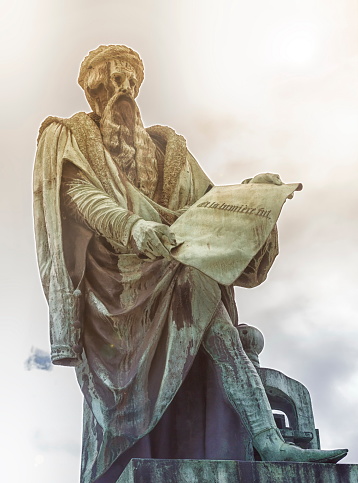
Johannes Gutenberg: influential figures

IMAGE CREDITS: istockphoto.com

The invention of printing in Europe is credited to Johannes Gutenberg, a German blacksmith, goldsmith, printer, and publisher. The Printing Revolution was started by Gutenberg’s invention of mechanical moveable type printing.

It is frequently cited as the most significant occasion in the modern era.

Napoleon Bonaparte

During the French Revolution, Napoleon Bonaparte rose to prominence as a military and political figure in France. From 1804 to 1814, Bonaparte ruled France as Emperor.

He led France against a number of alliances for over two decades, controlling European affairs.

Martin Luther: influential figures

IMAGE CREDITS: Unsplash.com

German theologian Martin Luther served as a priest, friar, and friar. His significance in the Protestant Reformation is what makes him most famous. He eventually came to disagree with a number of the Roman Catholic Church’s doctrines and rituals. Luther refuted the notion that one may use money to escape God’s wrath for sin.

Karl Marx: influential figures

German socialist, economist, sociologist, and philosopher Karl Marx was also a journalist. Much of the present understanding of labor and its relationship to capital is based on the economic work he did. He has released a lot of novels during the course of his life. He became interested in the philosophical theories of the Young Hegelians while he was a student at the Universities of Bonn and Berlin.

Julius Caesar

Gaius Julius Caesar was a renowned Latin prose author as well as a Roman general, statesman, and consul. The events that brought about the fall of the Roman Republic were significantly influenced by Caesar. In order to control Roman politics for several years, Caesar, Crassus, and Pompey forged an alliance.

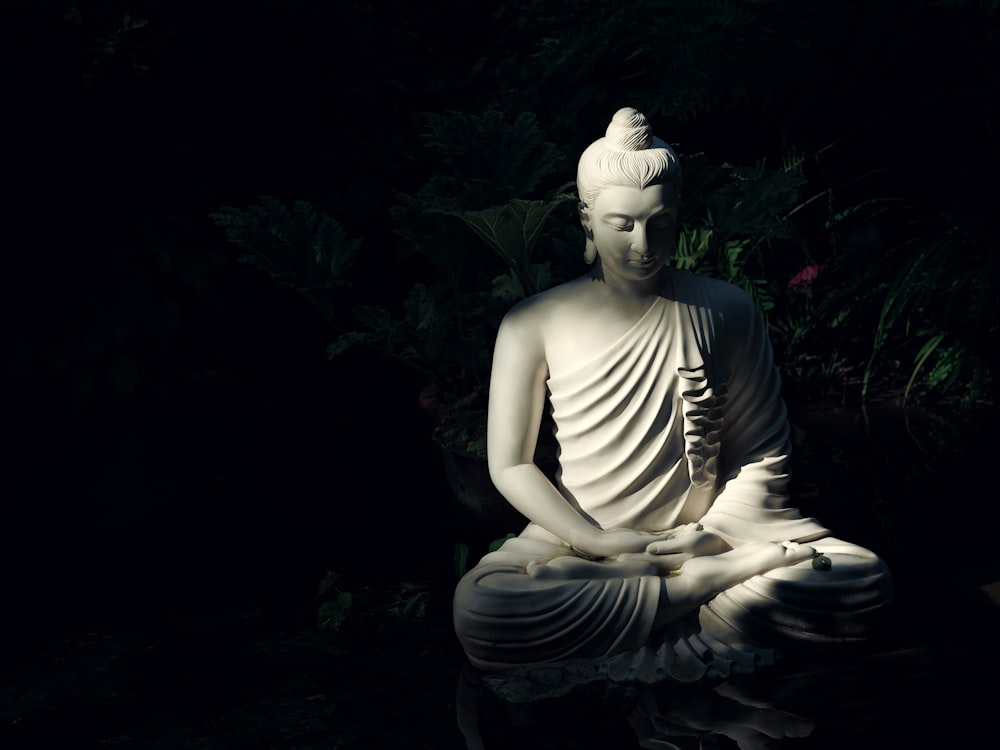
Gautama Siddhartha Gautama: influential figures

IMAGE CREDITS: Unsplash.com

Gautama Siddhartha Gautama, often known as Buddha or simply “The Buddha,” was a sage whose teachings formed the basis of Buddhism. Between the sixth and fourth centuries, Buddha spent the most of his life and taught in eastern India. The name ‘Buddha’ means “awakened one” or “the enlightened one”.

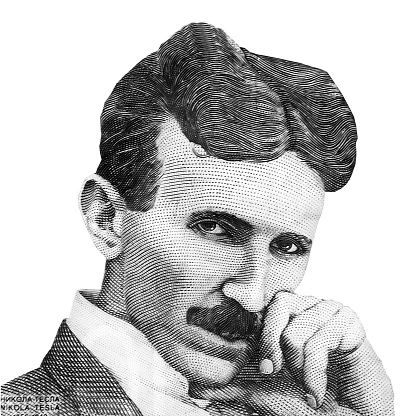
Nikola Tesla: influential figures

IMAGE CREDITS: istockphoto.com

Electrical engineer, mechanical engineer, scientist, and American of Serbian descent, Nikola Tesla. The design of the contemporary alternating current electricity supply system is what made Tesla famous. Before moving to America, he worked in the fields of electrical engineering and telephony.

Adolf Hitler

German politician Adolf Hitler served as the Nazi Party’s supremo. From 1934 to 1945, Hitler served as the Nazi Party’s Führer. In addition to being a wicked guy, Hitler was also the driving force behind World War II in Europe. From 1933 through 1945, he was controlling and in charge of the German people.

Moses: influential figures

The Hebrew Bible describes Moses as a former Egyptian royalty who subsequently became a prophet, a religious leader, and a lawgiver. Archaeologists and Egyptologists disagree about Moses’ existence, and biblical critics point to logical contradictions as evidence.

George Washington: influential figures

IMAGE CREDITS: Unsplash.com

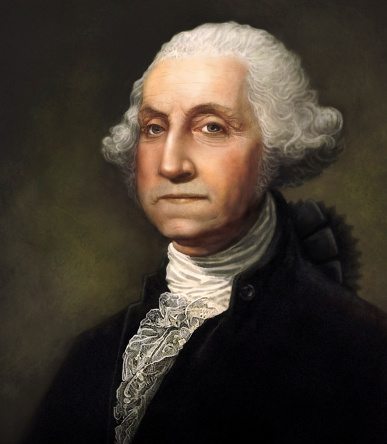
George Washington served as the United States’ first president. He served as the chairman of the convention that wrote the United States Constitution, which succeeded the Articles of Confederation. He was also one of the Americans who helped found the country.

Abraham Lincoln: influential figures

The sixteenth American president was Abraham Lincoln. He was in charge of the country at its worst moral, constitutional, and political crises. Lincoln maintained the Union while bolstering the federal government.

Mohandas Karamchand Gandhi

The foremost figure in the Indian independence movement under British control in India was Mohandas Karamchand Gandhi. He oversaw the independence of India and sparked freedom and civil rights revolutions around the globe. People all throughout the world have been motivated to great things by Gandhi.

Socrates: influential figures

One of the pioneers of Western philosophy was the Greek thinker Socrates. He assisted scholars like Plato and Xenophon. One of the most thorough accounts of Socrates to have survived from antiquity is found in Plato’s dialogues.

Martin Luther King Jr.

IMAGE CREDITS: Unsplash.com

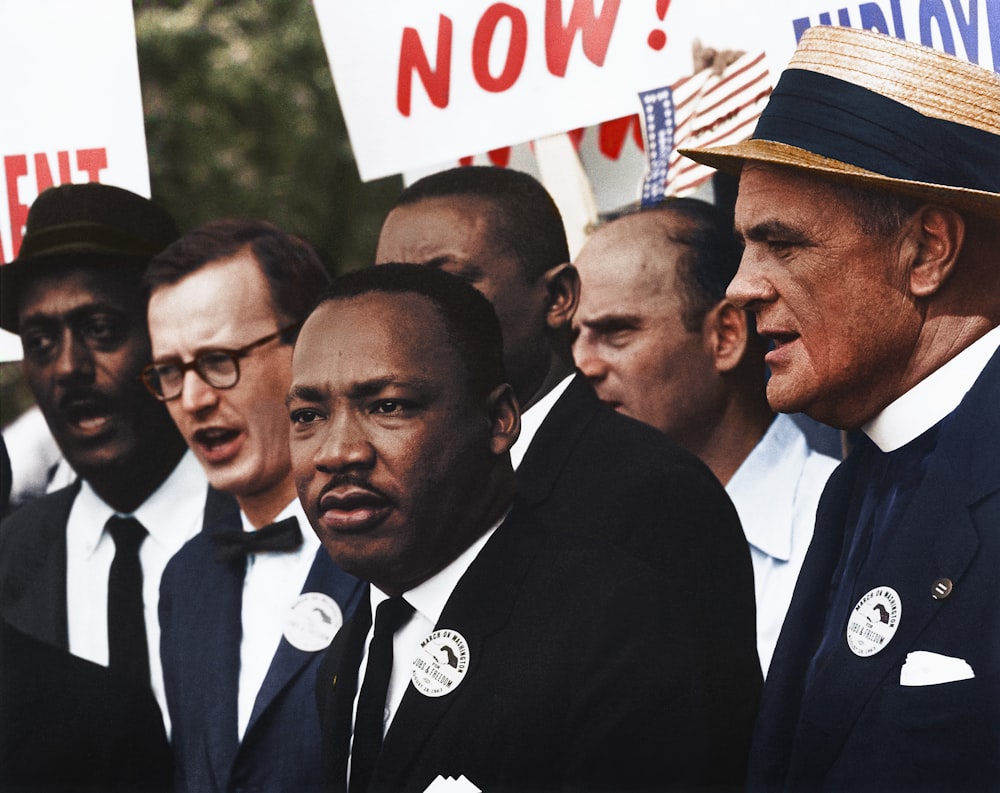
Martin Luther King Jr., an American Baptist minister and activist, was the movement’s de facto leader. King Jr. is most known for his part in advancing civil rights through peaceful civil disobedience in accordance with his Christian convictions.

Shakespeare

Shakespeare was an English playwright, poet, and performer. He is regarded as the finest dramatist in the entire globe and one of the greatest writers in the English language. Shakespeare is referred to be the national poet of England and the “Bard of Avon” quite frequently.

Plato: influential figures

Both a philosopher and a mathematician, Plato. He is regarded as a pivotal figure in the growth of philosophy. Along with his mentor Socrates and his most well-known pupil Aristotle, he established the Academy at Athens, laying the groundwork for Western philosophy and science.

Charles Darwin: influential figures

IMAGE CREDITS: Unsplash.com

An English naturalist and geologist by the name of Charles Darwin. Darwin is most recognized for his theory of evolution. He proved that all living things have shared ancestors over the course of time. Together, they published Alfred Russel Wallace’s scientific theory that the mechanism he dubbed “natural selection” was responsible for the branching pattern of evolution.

Alexander the Great

A descendant of the Argead dynasty, Alexander the Great ruled the ancient Greek nation of Macedon. He spent the most of his reigning years leading a historic military battle against Alexander III of Macedon in Asia.

Galileo Galilei: influential figures

Italian mathematician, physicist, engineer, astronomer, and philosopher Galileo Galilei. His accomplishments include support for Copernican-ism, advancements to the telescope, and astronomical observations that followed.

Muhammad: influential figures

IMAGE CREDITS: Unsplash.com

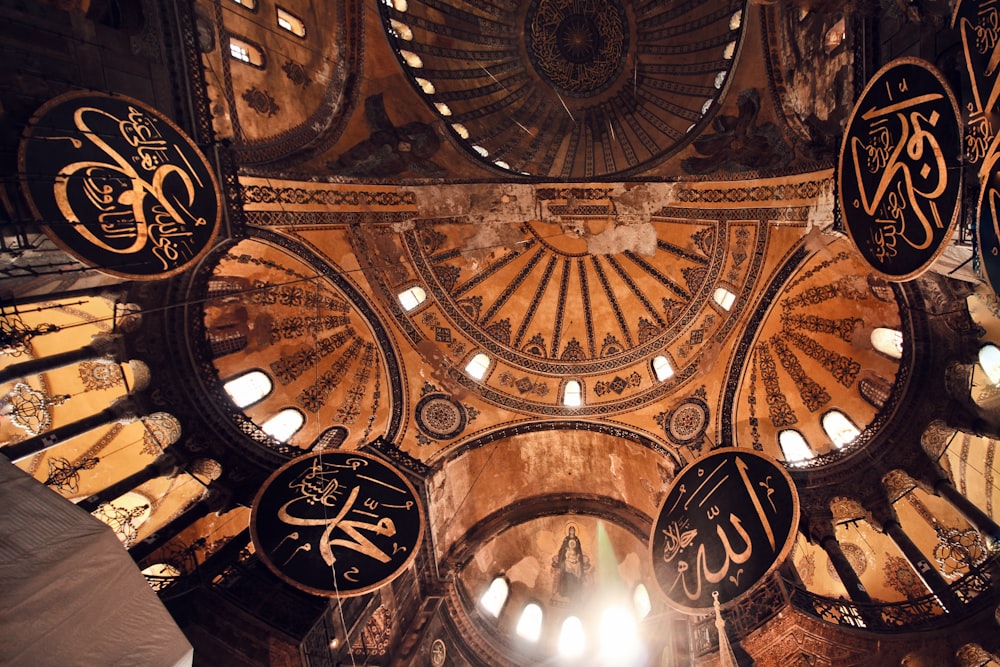
Islam was created by Muhammad. Who is believed to be a prophet and a messenger of God by Muslims and Bahá’s. Muslim communities virtually generally view Muhammad as the final prophet given by God. He was sent to summaries and reaffirm the monotheistic doctrines that Adam, Abraham, Moses, Jesus, and other prophets had previously proclaimed.

USEFUL LINKS:

Check out the Ranking of most influential people in history here

See some of the famous people in history that Bankrupt 

Learn more wealthiest monarchs in the world 


Top historical occurrences you’ll never forget

Top historical occurrences you’ll never forget

Occasionally, something occurs that leaves a lasting impression. Some of the historical events does same. These historical occurrences are so crucial that they are internal to understanding of history.

Anyone may recall certain locations and activities when they first learned about certain historical events. These recollections are referred regarded as “flashbulb” memories because they were so significant and strong that they had the effect of a mental “flashbulb,” creating an image in your mind similar to a snapshot that you will always identify with that important historical event.

Setting foot on Moon: historical events

IMAGE CREDITS: Unsplash.com

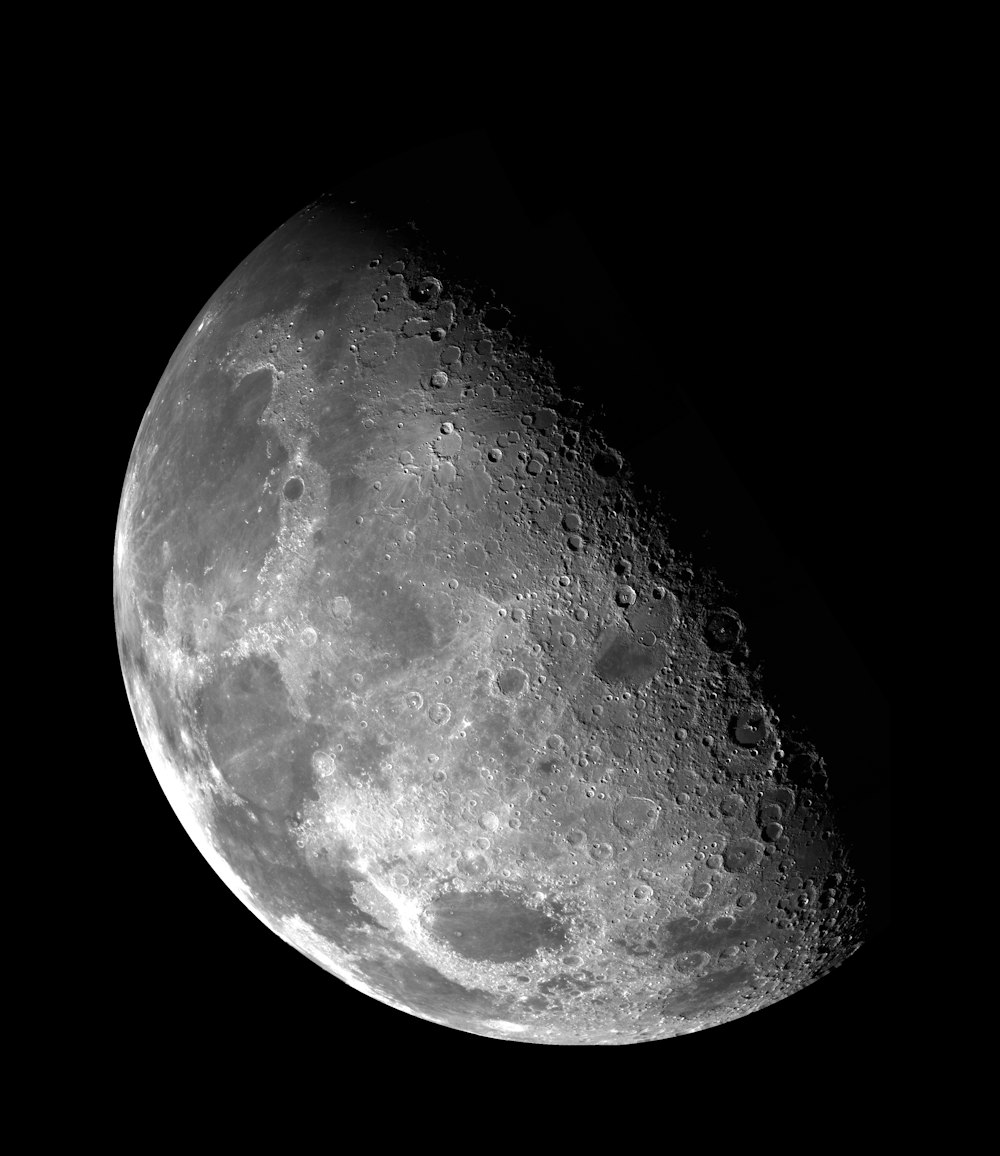
It’s hardly unexpected that tragic events are more likely to startle and amaze people than pleasant ones, but terrible news and upsetting events frequently dominate flashbulb memories. Yet one memorable event is the moon landings in 1969. Nearly the entire nation—and a large portion of the rest of the globe, as well—stayed at home from work and school to watch the television transmission of Neil Armstrong and Buzz Aldrin exiting their lunar module and setting foot for the first time on the moon. It was a momentous occasion that demonstrated that nothing was impossible and that no desire was too huge for those in attendance. It was more than just a historic event. Children of a certain generation learnt that they could aim for the moon and succeed.

When Martin Luther King was assassinated: historical events

The 50th anniversary of Martin Luther King, Jr.’s death was recently marked. Generations of Americans have been motivated to struggle for civil liberties and human rights by Martin Luther King, Jr.’s legacy of nonviolent civil disobedience. On April 4, 1968, he was murdered in Memphis, Tennessee, and it appeared that the aspirations and goals of a whole movement were also dashed. When Martin Luther King was killed where were you? was a question that every American found themselves asking at the time.

When John F. Kennedy was assassinated

IMAGE CREDITS: Unsplash.com

When they learned that President Kennedy had been shot and killed by Lee Harvey Oswald, 95% of Americans who were older than 8 at the time can still recall where they were. Kennedy was a very well-liked president whose passing seemed to signify the passing of a zeitgeist as a whole and has been the focus of a plethora of conspiracy theories.

Sinking of Titanic: historical events

“The unsinkable ship” was the Titanic’s moniker in 1912. Everyone thought it couldn’t possibly sink, and that went for both England and America. No one was alarmed when word of the Titanic’s collision with an iceberg reached England, which increased the shock when it was revealed that the ship had sunk. The news that 1,517 individuals had died and only 700 had survived made early morning newspaper headlines, shocking and astonishing the entire nation.

Killing of Archduke Ferdinand

When Gavrilo Princip killed Archduke Franz Ferdinand of Austria in Sarajevo in 1914, it was dubbed “the shot heard around the world” and served as the ignition for World War I. Despite the fact that several members of the European aristocracy had been murdered in the months prior, it was Archduke Ferdinand’s death that had the greatest impact and the most vivid memory for people at the time. It is still referred to as a classic flashbulb memory even though many of the people who went through this are no longer alive.

End of WW2: historical events

IMAGE CREDITS: istockphoto.com

The British population became accustomed to the routine of a protracted, difficult war after anticipating its end by Christmas of 1914. Even though there had been reports of armistice negotiations, the actual ceasefire was somewhat unexpected. The entire United Kingdom, France, Belgium, and all of their allies rejoiced, celebrated, and felt relieved when the Armistice was announced at 11 a.m. on November 11, 1917. When the peace was announced Where were you? was a question that people from all around the world asked one another at the moment.

Pearl Harbour: historical events

America learned on December 7, 1941, that she may be attacked on her own grounds. It was “a date that will live in infamy,” in the words of the then-president Franklin D. Roosevelt, and it served as a rude awakening to the possibility of war for millions of Americans. The next day, America declared war on Japan.

9/11 attack on WTC: historical events

IMAGE CREDITS: Unsplash.com

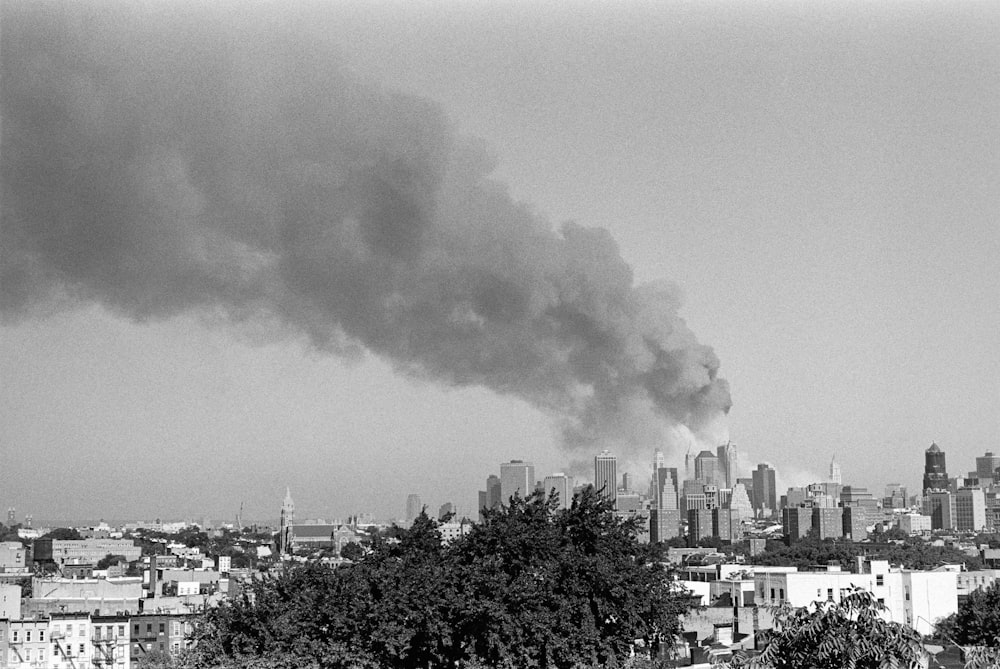
Two aircraft colliding with the Twin Towers of the World Trade Center in New York City resulted in 2,606 fatalities and thousands more injuries, making it the deadliest terrorist assault to ever take place on American territory. Everyone who witnessed the frightening scene of the powerful towers disintegrating into ash has never forgotten it. It was aired over the world. 97% of People are able to recall precisely where they were and what they were doing.

The royal wedding

Prince Charles and Diana Spencer were married in 1981, and Prince William and Catherine Middleton were married in 2011, and both weddings were celebrated with a day off for the British people to take part in the festivities. More Americans, roughly 23 million, tuned in to see the coverage of Prince William and Kate Middleton’s royal wedding than are believed to have watched Prince Charles and Diana’s wedding, which drew an estimated 17 million viewers.

The Renaissance: historical events

A wonderful era in human history known as the Renaissance—a term that literally translates to “rebirth”—started in Florence, Italy, in the 14th century. And quickly swept throughout all of Europe. During the Middle Ages, there was a period of cultural, political, and economic regeneration. That featured the rediscovery of classical art, literature, and philosophy. This led to an enormous flood of innovative ideas that persisted until the 17th century. It was a shift away from fear and towards beauty, truth, and knowledge in general.

Invention of internet: historical events

IMAGE CREDITS: istockphoto.com

Millennials find it challenging to envision a world without the internet. It’s difficult for anyone alive to recall life before the internet. Which has had such a significant impact on how things operate.

The US Department of Defence created ARPANET, the first functional prototype, in the late 1960s. Although the internet didn’t become widely used until later. The first message was sent across it from UCLA to Stanford on October 29, 1969. Stanford only received the first two letters of this message (“LOGIN”). Since the system broke while transmitting it: LO, which seems appropriate given that the word “lo” is an archaic term. It is used to bring attention to an astounding, fascinating thing: lo and behold!

Useful links:

Know some important moments of history by clicking here
Learn about top historic countries by visiting this site 
See some famous civilizations throughout mankind 


Unusual facts about monarchs which you must know

Unusual facts about monarchs which you must know

The British royal family’s private life intrigues and fascinates many people. But there are some beautiful and unusual facts hidden behind this curtain of secrecy that you wouldn’t believe. These unusual facts about monarchs are attention grabbing.

Intrigued? Learn about the Queen’s two birthdays, how she invented a new breed of dog, and other fascinating oddities about the royal family.

The British Royal Family has long been a subject of interest and awe for people all around the world. There are so many fascinating facts about the Royals that it can be difficult to keep track of them all, from their lavish weddings and majestic residences to their humanitarian endeavours and dedication to public service. Let’s examine a few of the most fascinating Royal Family facts.

Queen’s two birthdays: unusual facts

IMAGE CREDITS: Unsplash.com

Of course, even monarchs only have one birth each lifetime. The Queen nevertheless celebrated two birthdays despite this. On her real birthday, April 21st, she wanted to spend time with her family. Her “official” (not actual) birthday, which can vary around the commonwealth, was typically celebrated with parades in the Capital on the second Monday of June.

Why did Her Majesty celebrate two birthdays? the lovely weather in Britain. King George II, who was born in October, decided to celebrate both his birthday and the annual military march in the summer of 1748. Every king since has done the same.

Touching a royal member is forbidden

Nobody other than a royal is permitted to make personal contact with a member of the royal family, especially the Monarch. However, in modern times, this rule is frequently broken. The Queen was famously hugged by Michelle Obama in 2009 at Buckingham Palace. That’s typically a big no-no, but the Queen seemed to welcome it—some even claim she started it.

Marrying doesn’t ensure a throne: unusual facts

IMAGE CREDITS: istockphoto.com

Planning to wed a royal in the hopes of orchestrating a coup to seize the throne is pointless. Royal marriages prevent anyone from ever rising to the top. Your title would be either queen- or king-consort if you married a monarch.

King sets tone for dinner: unusual facts

Guests may perceive eating with kings and queens as a bit of a race because they are required to put their forks and knives down as soon as the monarch finishes eating. Naturally, royal dinners are quite expensive, but you’d better keep up if you don’t want anything to be wasted.

Monarchs make their own money

Many people think the royals exclusively receive their wealth from the tax payer, but in reality, they receive money from a variety of sources. Their main source of income is the Duchy of Lancaster, a collection of residential, commercial, and agricultural holdings. And of course, many visitors travel to London just to see royal residences like Clarence House and Kensington Palace.

A king needs no passport: unusual facts

IMAGE CREDITS: istockphoto.com

Although it’s a little-known truth, the fact that all UK passports are issued in His Majesty’s name makes sense when you think about it. Why would His Majesty require his own consent before travelling abroad? King Charles III is among the few people in the world who can go abroad without a passport.

Royal family can’t play monopoly

Royal family members aren’t supposed to play Monopoly, which may seem strange. Even monarchy appears to be susceptible to the inevitable rifts and infighting, just like the rest of us. The Duke of York disclosed in 2008 that the Mountbatten-Windsor family’s annual Christmas game sometimes devolves into violence.

Burials at Abbey: unusual facts

IMAGE CREDITS: Unsplash.com

Westminster Abbey has hosted royal weddings, coronations, and even deaths. Within its grounds are the graves of seventeen British kings and queens, with King Edward being the first in the 13th century. Except for Henry III, all of the Tudor kings are present. On an abbey tour, pay your respects by going to the Royal Tombs.

Queen’s invention of dog breed: unusual facts

Famous for her love of corgis, the Queen gave birth to the new mixed-breed Dorgi species of dog when she had one of her corgis’ mates with a Dachshund. Nearly all Dorgis are regarded as being as lovely and caring as they are cute, thanks to their loyalty, intelligence, and friendliness.

  • Monarchs own a lot of property
  • The estimated $14 billion value of the Crown Estate’s properties span the whole UK and include a variety of specialized areas, such as: Royal palaces
  • Agriculture and farming Forests and parks
  • Minerals for commercial and domestic use, including gold and silver, plus a lot more. Additionally, they own the rights to commercial malls and racetracks like Royal Ascot.

Monarchs should stay away from politics: unusual facts

It is forbidden for members of the Royal Family to declare their support for a specific political party. Although having the legal right to vote, they choose not to do so in order to avoid appearing to have a particular political stance.

Queen Anne and pregnancy

IMAGE CREDITS: Unsplash.com

One cannot but feel bad for poor old Queen Anne. She not only went through seventeen pregnancies, but none of her kids made it through labor or infancy. Elizabeth was also denigrated as a useless monarch throughout her reign and for many years after. Most things about her that people could say were that she was overweight, pregnant, foolish, and not very smart. According to contemporaneous accounts like those of Sarah Churchill, the Duchess of Marlborough, Anne’s adversary, who depicted the monarch as “extremely ignorant, very timid, with very little judgement,” this false depiction endured.

Charles I softness for thieves: unusual facts

He is best known today as the “merry monarch” who ascended the throne after fourteen dreadful years of Cromwellian reign. Less well remembered, though, is Charles’ response to having his crown jewels taken.

Once Charles ascended to the throne, Colonel Thomas Blood, a military commander in the English Civil War, emigrated to Ireland. Blood finally made his way back to England, where he lived as a parson while using a false name. He made friends with Talbot Edwards, the Tower of London’s keeper of the Crown Jewels. Blood won Edwards’ confidence and convinced the Keeper to show the gems to him and a few of his friends.

USEFUL LINKS:

Click here to keep on hovering on Royal Family
Visit this site to know some wealthiest monarchs in the world 
Learn about most powerful empires here 


List of historical events that had the biggest impact

List of historical events that had the biggest impact

Many historical events have had a strong impact when it comes to shaping our present. The fields and degree of these historical events vary. In this article we some of these important historical events.

The neolithic revolution: historical events

IMAGE CREDITS: Unsplash.com

Imagine a society without towns, cities, boundaries, or regions. Unthinkable, yes? If people had never stopped in pursuit of food and instead began cultivating and rearing their own food, this is how our globe may have appeared.

There is no documentation of the turning points that led to this change (like when people realized that seeds could be planted and how to enrich soils). Undoubtedly, the shift away from wild harvests was gradual, but about 12,000 years ago, the advent of agriculture led to a significant change in how people lived. Permanent settlements and farms were preferred over nomadic, hunter-gatherer lifestyles because they provided more consistent supplies of food and sustenance.

First city in Mesopotamia: historical events

Paleolithic time was when Mesopotamia was first populated by humans. People in the area were residing in compact villages with round homes by 14,000 B.C. Following the domestication of animals and the advancement of agriculture, particularly irrigation methods that made use of the Tigris and Euphrates rivers’ closeness, these homes eventually gave rise to farming towns five thousand years later.

The dominating Ubaid culture, which had previously assimilated the Halaf culture, was responsible for the advancement of agriculture. These dispersed agrarian settlements began in the northern section of ancient Mesopotamia and moved south, expanding for several thousand years until they formed what modern people would identify as cities, which were thought to be the Sumerian People’s creation.

Roman Gladiator

IMAGE CREDITS: istockphoto.com

An ancient professional fighter known as a “gladiator” specialized in particular weapons and armor styles. From 105 BCE to 404 CE, they engaged in public combat in wildly popular organized games staged in enormous purpose-built arenas all around the Roman Empire.

Gladiators were men who fought to the death for the amusement of others, as is addressed in the “History on Fire” podcast by author and college lecturer Daniele Bolelli on Luminary. According to the episode titled Gladiators in Ancient Rome, the earliest gladiators were slaves who simultaneously served as celebrities and loathed outcasts.

Black death in England: historical events

Imagine the dread that must have gripped the populace of England in 1346 as the plague outbreak spread across the nation. The epidemic, sometimes known as the “Black Death,” decimated towns and villages and killed nearly a fifth of the local population. The primary carriers of the plague were flea-infested rats and individuals who had already contracted the illness on the continent. Rats served as the reservoir hosts for the Y. pestis bacteria, and the Oriental rat flea was the primary vector. The disease had a significant impact on society, bringing temporary tranquilly and raising wages for the remaining peasants. It helped bring an end to slavery and serfdom by paving the ground for the peasants’ uprising.

Death of Roman empire

IMAGE CREDITS: Unsplash.com

Caesar led a lone legion across the Rubicon River in 49 BC, setting off a civil war that would eventually bring an end to the Roman Republic. The Triumphant Caesar is a topic that is covered in the History of Rome podcast on Luminary.

The Battle of Pharsalus, which took place on August 9, 48 BC, close to Pharsalus in central Greece, was the turning point in Caesar’s Civil War. A line of battle was drawn up between Pompey’s Roman Republic army and Julius Caesar and his supporters. Victorious from the Civil War, he went back to Rome and started his extensive reform initiatives.

The beginning of the end: historical events

From 176 until his father Marcus Aurelius’ death in 180, and then all by himself until 192, Commodus ruled the Roman emperor. Commodus’ sister poisoned his food, but he threw the poison back up, so the plotters dispatched Narcissus, his wrestling partner, to strangle him in his bathtub.

It’s covered in depth on the Luminary podcast History of Rome. In reality, Buying Power, an episode of the show, discusses Commodus’ rule, his murder, and how it marked the beginning of the end.

He was designated a public enemy by the Senate after his death, and the old names of Rome’s institutions and city were reinstated.

Industrial revolution

Which sped up the industrialization processes that are still happening today. During the Industrial Revolution. Which occurred in Britain, continental Europe. And the United States between roughly 1760 and sometime between 1820 and 1840, new industrial processes were adopted.

This change included moving from manual to mechanical production techniques, developing new techniques for producing chemicals and iron, utilizing steam and water power more extensively, developing machine tools, and expanding the mechanized industrial system.

The rate of population growth also increased at a never-before-seen rate as a result of the Industrial Revolution. During the Industrial Revolution, economies based on agriculture.  New equipment, power sources, and labour arrangements helped existing industries become more productive and effective.

The first vaccine: historical events

IMAGE CREDITS: istockphoto.com

When English physician Edward Jenner found that milkmaids with cowpox were resistant to smallpox in 1796. That is when vaccinations first became popular. When English physician Edward Jenner found that milkmaids with cowpox were resistant to smallpox in 1796. Which is when vaccinations first became popular. In order to attain 80% vaccine coverage in each nation. Mass vaccination drives were first deployed as part of the global eradication effort. Case detection and ring vaccination of all known.  These are very important for existence of human beings.

End of cold war: historical events

The fall of the Berlin Wall was its climax. And one of the most well-known historical occurrences. The wall crumbled during a wave of upheavals that almost brought an end to the Soviet-led communist bloc. And contributed to establish a new global order. 

USEFUL LINKS:

To know Most important events in human history, click here
Check out strongest armies in the ancient world by clicking here
Learn about prosperous dynasties of China


Top 10 Most Powerful Armies in Ancient History

Top 10 Most Powerful Armies in Ancient History

From the disciplined phalanxes of Sparta to the unstoppable cavalry of the Mongols, the ancient world witnessed some of the most powerful military forces in history. But which military force in history would be deemed to be the most potent? Was it the ferocity of the Spartans, the numbers of the Persians, or the strategy of Alexander the Great?

In this article, we’ll explore the top strongest armies in the ancient world, examining their size, organization, tactics, and historical impact. These ancient armies of the world left legacies that shaped empires—and the world we know today.

1. The Army of Urik – The Dawn of Warfare

IMAGE CREDITS: Unsplash.com

Era: 4100–2900 BCE
Region: Mesopotamia (modern-day Iraq)
Strength: ~4,000 soldiers (5% of population)

One of the earliest organized military forces in history, the Urik army was formed in the ancient city of Urik, ruled by King Enmerkar. Equipped with spears, axes, bronze helms, and early armor, these troops operated in small units of 50–100.

Although not massive by today’s standards, this was one of the top 10 strongest armies in history for its time. Urik’s military model laid the foundation for later Mesopotamian empires such as the Akkadians and Babylonians.

2. Xia Dynasty Army – Early Chinese Military Power

Era: ~2000 BCE
Region: Ancient China
Strength: ~12,000 soldiers

Recognized as the first recorded dynasty in Chinese history, the Xia Dynasty had a surprisingly advanced army. Under Emperor Yu the Great, these troops weren’t just fighters—they also built infrastructure like canals.

In their only major military campaign, they defeated the Sanmiao tribe and pushed them south, solidifying Yu’s rule.

3. Egyptian Army – Ramesses the Great’s Military Might

IMAGE CREDITS: isotckphoto.com

Era: ~1250 BCE
Region: Ancient Egypt
Strength: Over 100,000 soldiers

Ramesses II (Ramesses the Great) built one of the largest ancient armies in history. With infantry, archers, cavalry, and even a navy, this force fought against pirates and powerful enemies like the Hittites.

Their army expanded across Libya, Nubia, and Lebanon, making it one of the most feared armies in history.

4. Persian Empire – The Immortals and Military Innovation

Era: 500 BCE
Region: Persian Empire (Achaemenid)
Strength: ~500,000–1,000,000 soldiers

Led by Cyrus the Great and later Xerxes I, the Persian army was one of the largest and most powerful military forces in ancient history. Their elite unit, the Immortals, functioned as the world’s first special forces.

Persia’s military might was necessary to govern an empire that controlled 44% of the world’s population at its peak.

5. Maurya Empire – The Elephant Powerhouse of India

IMAGE CREDITS: isotckphoto.com

Era: 322–185 BCE
Region: India
Strength: ~600,000 infantry, 30,000 cavalry, 9,000 war elephants

The Mauryan army under Chandragupta Maurya was a giant of its era. Combining infantry, cavalry, and war elephants, this force rivaled even the largest of the ancient world. After Alexander’s death, Maurya secured key western regions and allied with the Seleucids.

Their use of elephants in battle gave them a distinct advantage and made them one of the top strongest armies in the ancient world.

6. Spartan Army – Discipline and Legend

Era: 5th Century BCE
Region: Ancient Greece
Strength: ~10,000 active soldiers

While not the largest, the Spartan army was perhaps the most elite and feared. The Battle of Thermopylae, featuring the legendary 300 Spartans, cemented their place as one of the most famous military units in history.

Spartan warriors were trained from childhood, making them a professional and deadly force.

7. Macedonian Army – Alexander the Great’s Engine of Conquest

Era: 336–323 BCE
Region: Macedonia (Greece)
Strength: ~50,000–70,000

Under Alexander the Great, the Macedonian army conquered the known world—from Greece to Egypt to India. Their phalanx formations, combined arms tactics, and lightning-speed campaigns made them unstoppable.

Alexander turned back only because his troops grew weary, not because of defeat.

8. Roman Army – Engineering & Expansion

Era: 753 BCE – 476 CE
Region: Roman Empire
Strength: Up to 400,000 soldiers at peak

The Roman legions were a force of discipline, strategy, and innovation. Known for building roads, fortresses, and siege machines, they conquered most of Europe and parts of Asia and Africa.

Roman soldiers were trained rigorously and had a strict chain of command, making them one of the most effective military systems in ancient history.

9. Han Dynasty Army – Guardians of the Silk Road

Era: 202 BCE – 220 CE
Region: China
Strength: ~600,000 troops

The Han military played a crucial role in defending and expanding the Silk Road trade routes. They used crossbows, cavalry, and large-scale fortifications to protect their borders.

Their military and technological innovations helped them withstand invasions from northern tribes like the Xiongnu.

10. Ming Dynasty Army – The First Million-Man Force

IMAGE CREDITS: isockphoto.com

Era: ~1500 CE
Region: China
Strength: ~1.3 million troops

The Ming Dynasty fielded what is likely the first standing army of over one million soldiers. Their forces were organized by family lineage through a system of “Military Households,” ensuring a continuous supply of manpower.

The army featured archers, cavalry, gunpowder weapons, and strict internal control.

USEFUL LINKS:

See some powerful military forces:

10 largest and powerful military forces in the ancient world

Take a step to conserve the electricity:

How to conserve electricity effectively  

Check out the high paid courses after 12th:

High paid courses after 12th

Top Environmental Organizations in India

Introduction to India’s Leading Environmental Organizations

Introduction

Top environmental organizations in India play a crucial role in protecting nature, improving air quality, and fighting climate change. India faces serious ecological challenges such as air pollution, water contamination, deforestation, and waste management issues. Therefore, environmental NGOs and sustainability groups have become extremely important.

Moreover, rapid industrial growth and urbanization have increased pressure on natural resources. As a result, ecosystems are degrading at a faster rate. However, several environmental protection groups in India are actively working to reverse this damage.

This article explores the most important environmental organizations in India. In addition, it explains how they contribute to sustainability, conservation, and public awareness across the country.

(Photo from istock)

CHINTAN – Waste Management and Urban Sustainability NGO

CHINTAN is one of India’s leading waste management and sustainability-focused NGOs. It works to improve urban waste systems and reduce environmental pollution caused by improper disposal.

Moreover, the organization supports waste pickers and marginalized communities. Therefore, its work combines environmental protection with social justice. In addition, CHINTAN collaborates with local governments to improve recycling systems.

However, India’s waste crisis continues to grow due to urban expansion. Consequently, CHINTAN promotes awareness campaigns and sustainable consumption habits. Moreover, it encourages cities to adopt circular economy models.

As a result, CHINTAN plays an important role in improving urban environmental health and reducing landfill pressure.
Official website: https://www.chintan-india.org


GREENPEACE INDIA – Climate Action and Environmental Advocacy

Greenpeace India is a well-known advocacy group operating as part of the global Greenpeace network. It focuses on climate change, renewable energy, forest protection, and pollution control.

Moreover, the organization runs campaigns against industrial pollution and unsustainable development practices. Therefore, it plays a strong role in activism in India.

In addition, Greenpeace India maintains independence by avoiding corporate and government funding. This allows it to take unbiased positions on issues affecting nature and public health.

However, challenges in India are complex and long-term. Consequently, Greenpeace focuses on public awareness and policy influence. As a result, it remains one of the most influential advocacy groups in the country.
Official website: https://www.greenpeace.org/india/


HELP DELHI BREATHE – Tackling Air Pollution in Cities

Help Delhi Breathe is a citizen-driven initiative focused on reducing air pollution in urban India, especially Delhi. It was created in response to extremely poor air quality levels.

Moreover, the organization educates people about health risks linked to pollution. Therefore, it promotes awareness campaigns and public engagement activities.

In addition, it works toward long-term solutions such as cleaner transport and stricter emission controls. However, urban pollution remains a major challenge.

Consequently, the organization focuses on sustained behavioral and policy changes. As a result, it has become an important voice in India’s air quality movement.


CLEAN AIR ASIA INDIA – Scientific Air Quality Solutions

Clean Air Asia India is a research-based organization focused on improving air quality across cities. It uses scientific data to guide environmental decision-making.

Moreover, it works with governments and urban planners to design better pollution control systems. Therefore, it plays a key role in policy development.

In addition, it promotes clean transport and sustainable urban planning. However, many Indian cities still face severe air pollution problems.

Consequently, Clean Air Asia provides evidence-based solutions to improve air quality. As a result, it is widely respected among environmental policy organizations.

Official website: https://cleanairasia.org


WILDLIFE PROTECTION SOCIETY OF INDIA – Saving India’s Wildlife

The Wildlife Protection Society of India focuses on protecting endangered species and preventing illegal wildlife trade. It plays a major role in conservation efforts across the country.

Moreover, it works closely with forest departments and law enforcement agencies. Therefore, it helps combat poaching and trafficking of wildlife species.

In addition, the organization studies human-wildlife conflict issues. However, habitat loss continues to threaten biodiversity.

Consequently, WPSI promotes stronger conservation policies and enforcement systems. As a result, it remains a key organization in wildlife protection efforts.


NAVDANYA – Protecting Seeds, Farmers, and Biodiversity

(Photo from istock)

Navdanya is a sustainability-focused organization working on seed conservation, organic farming, and biodiversity protection.

Moreover, it supports farmers through training programs and community seed banks. Therefore, it promotes agricultural independence and environmental sustainability.

In addition, the organization encourages natural farming methods. However, industrial agriculture has negatively impacted soil health and biodiversity.

Consequently, Navdanya promotes eco-friendly farming alternatives. As a result, it strengthens rural livelihoods and environmental resilience.


TOXICS LINK – Fighting Environmental Pollution and Toxic Waste

Toxics Link is an environmental research organization focused on toxic pollution and chemical safety. It works to spread awareness about environmental health risks.

Moreover, it collects and shares data on pollution sources. Therefore, it helps policymakers and citizens understand environmental hazards.

In addition, it runs awareness campaigns and educational programs. However, toxic pollution remains a hidden but serious issue in India.

Consequently, Toxics Link promotes safer alternatives and better regulations. As a result, it contributes significantly to environmental awareness.


ENVIRONICS TRUST – Research-Based Environmental Action

Environics Trust focuses on research-driven environmental and social solutions. It studies the relationship between communities and ecosystems.

Moreover, it works with vulnerable populations to develop sustainable solutions. Therefore, it ensures environmental justice alongside ecological protection.

In addition, it provides research support to institutions and policymakers. However, environmental issues are often linked with social inequality.

Consequently, Environics Trust integrates both environmental and social perspectives. As a result, it supports long-term sustainable development planning.


Conclusion

Top environmental organizations in India are essential for building a cleaner and more sustainable future. Moreover, each organization focuses on a different issue such as air pollution, waste management, biodiversity, or climate change.

In addition, these groups combine research, activism, and community engagement. However, environmental challenges continue to grow due to urbanization and industrialization.

As a result, the role of environmental NGOs in India is becoming even more important. Ultimately, these organizations are helping shape a healthier and more sustainable future for the country.


Frequently Asked Questions (FAQs)


1. Which NGO is best for the environment in India?

There is no single “best” NGO for the environment in India because different organizations focus on different problems. However, some of the most influential environmental NGOs include Greenpeace India, CHINTAN, Navdanya, and Toxics Link. For example, Greenpeace India focuses on climate change and renewable energy, while CHINTAN works mainly on waste management and recycling systems. Similarly, Navdanya promotes organic farming and seed conservation, and Toxics Link works on reducing toxic pollution.

Moreover, each NGO plays a unique role in environmental protection. Therefore, the “best” organization depends on what issue you care about most. If you are interested in air pollution, groups like Clean Air Asia are more relevant. However, for biodiversity and farming, Navdanya is more suitable. As a result, India’s environmental progress depends on the combined efforts of all these organizations rather than a single group.


2. What do environmental organizations in India do?

Environmental organizations in India work to protect nature, reduce pollution, and promote sustainability. Moreover, they focus on issues such as air pollution, water contamination, waste management, deforestation, and wildlife protection. These organizations also run awareness campaigns to educate people about environmental risks and solutions.

In addition, many NGOs work directly with communities and governments to implement real-world solutions. For example, some groups promote recycling systems in cities, while others support farmers in adopting organic farming methods. However, their work is not limited to field activities. They also conduct research, influence policies, and push for stronger environmental laws.

As a result, these organizations act as a bridge between citizens, governments, and scientific experts. Therefore, they play a crucial role in improving India’s environmental health and building a sustainable future.


3. Why are environmental NGOs important in India?

Environmental NGOs are important in India because the country faces serious ecological challenges. Rapid industrialization, urban growth, and population pressure have increased pollution levels and reduced natural resources. Moreover, issues like air pollution in major cities and water scarcity in rural areas require urgent attention.

Environmental organizations help by creating awareness, influencing policies, and promoting sustainable practices. In addition, they often fill gaps where government systems alone may not be enough. For example, NGOs like WPSI help protect wildlife from poaching, while others like Help Delhi Breathe focus on improving urban air quality.

However, solving environmental problems requires long-term effort. Therefore, NGOs play a continuous role in education, research, and activism. As a result, they are essential partners in India’s fight against climate change and environmental degradation.


4. How do environmental NGOs help fight climate change?

Environmental NGOs help fight climate change by working on both prevention and awareness. Moreover, they promote renewable energy, reduce pollution, and support sustainable development practices. Organizations like Greenpeace India campaign for cleaner energy sources such as solar and wind power, which reduce dependence on fossil fuels.

In addition, many NGOs conduct research to understand climate risks and propose solutions. They also educate people about lifestyle changes that can reduce carbon emissions, such as using public transport or reducing waste. However, their impact is not only educational. Many NGOs also influence government policies by presenting scientific data and reports.

As a result, environmental NGOs act as key drivers of climate action in India. Therefore, their work helps both individuals and governments move toward a more sustainable and climate-resilient future.


References:

Our Endangered World 
Worried with water pollution, want to lessen its hazardous effects? What are you waiting for!, click on the link below:
How to Lessen Water Pollution

How to promote the environment more powerfully

Recent years have seen a rise in the prominence of young environmental campaigners. Young people are driving the effort promote our world. Starting with Greta Thunberg and the many people she has inspired to promote. You can contribute to promote the movement of environmental action in a variety of ways. Such as by giving your time to environmental causes. Here are a few ideas to get you going.

The only way to truly combat conservation and climate change is through legislation changes, organized environmental campaigning, and large-scale education campaigns.

Knowing the science and politics of climate change is essential if that is the level of environmental involvement you’re interested in. The greatest method to firmly establish your idealistic beliefs in the realm of science is to delve into the ideas of biology, chemistry, geology, and physics.

(Photo from Unsplash.com)

The majority of colleges and institutions that offer a major in environmental studies offer an interdisciplinary curriculum that includes courses in environmental sciences, politics, economics, urban planning, ethics, and communication. Beyond the actual degree, graduating from a formal program gives you access to a network of academics and students who share your idealistic outlook.

You will research ecological systems, energy cycles, and sustainability objectives with your peers. You’ll build practical answers in addition to knowing the problems. Both lab experiments and field research will be taught to you. You’ll also see the career paths that fit with your values.

  • Following are a few ideas by which you can become an effective environmental advocate:

PLANT TREES

If The Lorax taught us anything, it is the importance of speaking out in favor of trees. We owe these leafy creatures a debt of gratitude for all the benefits they bring to the environment. They provide food and habitat for wildlife, minimize soil erosion, and balance carbon emissions, to name a few. Get your hands dirty by planting and maintaining trees in your neighborhood.

STOPPING PLASTIC POLLUTION

 The Surfrider Foundation’s Rise Above Plastics Activist Toolkit is a step-by-step manual for implementing single-use plastic reduction in your community. It gives advice on raising awareness of plastic pollution issues through education and outreach, and it will assist you in passing a plastic bag ban (or a measure of a similar nature).

PROTECT PUBLIC LANDS

(Photo from Unsplash.com)

Unbeknownst to you, the US National Parks are quite gorgeous. Look at this! These parks are home to buffalo, mountain goats, foxes, bears, and occasionally even us. Their sizes range from canyons to mountain peaks.

WILDLIFE AND PROTECTING LAND

Threats to our public lands include those posed by pollution, climate change, exploitation of natural resources, and development. If we want to save certain wild lands for future generations, Americans must be willing to fight for them.

HOST A CLEANUPTO PROMOTE ENVIROMENT

You don’t necessary need to put together a crew and concentrate on a broad area to have a great cleanup (but it’s wonderful if you do!). It could be as easy as asking a few friends to help you pick up rubbish in your neighborhood. By picking up trash, you protect the quality of habitats, lower groundwater pollution, and remove direct dangers to species. Also, it is possible to perform it everywhere, even on beaches and in rivers.

SUSTAINABLE AGRICULTURE TO PROMOTE ENVIROMENT

(Photo from Unsplash.com)

The Beyond Pesticides Action of the Week offers a specific action you can take each week to make your opinion known about laws that harm the environment and public health, increase the use of pesticides in general, or impede the development of organic, sustainable, and regenerative practices and laws.

GROW A COMMUNITY GARDEN TO PROMOTE ENVIROMENT

Those with green fingers, unite! People can come together to cultivate a variety of things in communal gardens, such as fruits, vegetables, and herbs. In addition to enhancing neighborly ties, they also support pollinator habitats, absorb carbon, and reduce the need to transport food over great distances. You can either start your own garden or work in a local one as a volunteer.

HELP OUT WILDLIFE TO PROMOTE ENVIROMENT

(Photo from istock.com)

This one is for anyone who periodically cries when watching lovely animal videos on social media (it couldn’t be just us, could it?). Volunteer to help with office or animal-care tasks for wildlife rescue and rehabilitation initiatives. Bird rehabilitation is one popular type of rescue effort.

  • These are a few of the more well-liked environmental activism routes:
  • Restoration of forests, grasslands, wetlands, and watersheds; control of land use; environmental reclamation; and ecological restoration are all part of the conservation of national resources.
  • Researching various fuels and energy systems, such as bio energy and sustainable engineering, and studying renewable energy regulations within the context of the national conversation about climate change are examples of alternative energy.
Further:
  • Water filtration, waste management, recycling, and environmentally friendly manufacturing are all examples of environmental engineering, which aims to minimize the effects of technology and engineering on the built environment and the natural environment.
  • To protect the health of the oceans and atmosphere, oceanic and atmospheric scientists collaborate with governmental organizations, consulting firms, and aviation businesses.
  • Whatever niche you choose, you and your coworkers will share a deep sense of stewardship and accountability for the planet, whether that entails reducing pollution, repairing habitat damage, conserving finite resources, or enhancing education and outreach.

(Photo from istock.com)

The public is becoming more and more interested in goods and services that are more environmentally friendly. Students have a wide range of possibilities to obtain practical experience while taking part in and producing cutting-edge sustainability projects for both the public and private sectors because to our metropolitan city location.

To provide a thorough learning experience, field visits, guest lecturers, and practical experiences are blended with classroom instruction, internships, fieldwork, and research projects.

There is an increasing need for environmental professionals due to the seriousness of the worldwide situation. Depending on their interests, qualifications, and work history, environmental studies graduates pursue professions in a wide range of industries.

References:

To know how to protect our environment, click here
Know some recycling tips by visiting here
Visit this site to know irrigation methods


List of the most prosperous dynasties in China

List of the most prosperous dynasties in China

Beijing, the Chinese capital, hosted the 2008 Summer Olympics. Although though China has lately been in the news and people are aware of some current events there. Few are aware that China has a long and difficult history filled with shifting and prosperous dynasties. This article subject exposes readers to the prosperous dynasties that mark the first 2800 years of Chinese culture in honour of the 2008 Beijing Olympics. These prosperous dynasties plays huge role in the world history as well. 

Shang Dynasty: Prosperous China

IMAGE CREDITS: istockphoto.com

One of the earliest real dynasties is regarded as the Shang Dynasty, which was concentrated in Northern China and did not extend across most of modern-day China. It had a significant cultural impact on the region, leaves behind written records that offer a glimpse into their vision of the world, and is supported by archaeological findings. The Shang Dynasty was characterized by city-states with substantial palaces, temples, and altars that were encircled by residential neighborhoods and an industrial sector. Kings who governed the Dynasty were significant for two main reasons: their superior military might and for religious reasons.

The king served as a priest in the Shang religion in order to honor the supreme god Di and the regal ancestors. It was believed that Di could best speak with the royal ancestors, and that the monarch could do the same with them. Writing was initially introduced into Chinese culture during the Shang Dynasty. Initially pictographic in nature, the writing gradually evolved into a more sophisticated ideographic script. Due to being written on strips of bamboo, the majority of the Shang Dynasty writing samples have been lost. On bronze objects and oracle bones, some of the writing from that time period has survived, though.

The Zhou Dynasty

The Shang were vanquished by the Zhou in 1050, greatly expanding Chinese territory. The Zhou described their successful conquest as a triumph of righteous and honorable warriors over the morally corrupt king and courtiers of the Shang. The Zhou Dynasty maintained the city-state system of government. However, unlike the Shang monarchs, the Zhou rulers sent out trusted family members or subordinates with troops to build walled garrisons in the areas rather than attempting to dominate all of them. Local chiefs were chosen to act as the emperor’s envoy if the emperor could not send a reliable agent they knew. Many of the significant philosophical concepts and thinkers who would define China throughout the centuries emerged during the Zhou Dynasty.

Confucianism, which he developed in the fifth and fourth century BC, gave moral guidelines for Chinese society by emphasizing filial piety within the family and community as well as the family as a microcosm of society. The government might help the populace by serving as a sort of “figurehead” to its family or community, according to Confucianism. Confucius’s students, particularly Mencius, developed and disseminated his ideas on family and society, which had a significant impact on China for approximately 2,000 years. Daoism and Legalism, the other two significant ideologies created during the Zhou Dynasty.

The Han Dynasty


IMAGE CREDITS: istockphoto.com

The Han Dynasty is distinguished by military conquests, the growth of the Silk Road, and appointments to government positions based on ability rather than birth. Those who had been taught in Confucianism and the application of Confucian ideas became crucial elements of the government during the Han Dynasty.

the Sui Dynasty: Prosperous China

China experienced 400 years of political split following the Han Dynasty. During which no one party was able to establish firm control over all of the country’s regions.  And later the Tang Dynasty. A new code of law that blended the legal cultures of the North. Civil service exams were first implemented during the Sui Dynasty to develop a sizable administrative workforce. In order to make sure that the men nominated to civil service jobs were knowledgeable about Confucian philosophy, the exams emphasized the Confucian classics.

The system permitted many gifted men from unrelated families to climb in the political ranks while many of the aristocratic families retained their political influence by inculcating the Confucian classics in their offspring. Buddhism started to ingrain itself into Chinese culture during the Tang Dynasty. Buddhist monks offered housing for travelers, schools for young children, and gathering spaces for social events. By establishing businesses like mills and oil presses, the monasteries also emerged as major economic forces. They were subsequently able to create money-lending and pawn-broking businesses thanks to these financial resources. Buddhism also contributed cultural value through the stories and artwork that the monks produced.

the Tang Dynasty

IMAGE CREDITS: istockphoto.com

Centralized political and military power began to fall apart around the end of the Tang Dynasty. After that, in 960, a general by the name of Taizu, Zhao Kuangyin, was able to restore peace in China.  To ensure that China would remain under his authority, he hired temporary civil officials to lead the military. And replaced the military governors with them. The Song Dynasty, also known as the Sung Dynasty. Which was unable to increase its political. And military sway outside of the boundaries of China, unlike some of the prior dynasties.

The Jurchens from the north invaded, occupied the capital, and eventually the entire northern section of the Song kingdom. Despite all of the military advancements, the Song were unable to repel them. Up until the late 13th century, the Southern Song Dynasty was able to retain political stability. The spread of rice cultivation contributed to the economic growth of the Song Dynasty. The enormous population growth and agricultural prosperity that rice farming contributed to made it possible for the economy. And commercialization to expand.

This list explores the most prosperous dynasties that have played pivotal roles in China’s cultural, economic, and political development over the centuries.

USEFUL LINKS:

Keep on hovering on the topic:

6 greatest dynasties of China 

Get good at history subject:

Tips to be good at history subject

Get familiar with the world history:

How to get get familiar with the Big History

Should nuclear weapons be banned?

International Day for the Complete Elimination of Nuclear Weapons is celebrated by the UN on September 26. One year after the historic approval of a treaty aimed at outlawing these weapons. It is critical that we speed up the treaty’s implementation and remind ourselves of the reasons why these weapons of mass destruction must be outlawed in order to create a peaceful world.

One should consider the following points regarding the nuclear weapons:

Nuclear creates havoc

(Photo from istock)

“My lovely Hiroshima instantly turned into a wasteland, with piles of ash and ruins, skeletons, and burned bodies,” the poet wrote. Hibakusha (survivor) of the Hiroshima bombs is Setsuko Thurlow.

This chilling eyewitness story serves as a reminder of the nuclear weapons’ immense devastation potential. They cause destruction, have long-term radioactive impacts that damage future generations. And strike soldiers and civilians without discrimination.

When it was used twice during the war, in 1945, on the Japanese cities of Hiroshima and Nagasaki, around a quarter of a million citizens were instantly destroyed. Or died horribly in the days and weeks that followed the attacks.

Nuclear weapons

What protection does the atomic bomb offer against the great concerns of our time, such terrorism, climate change, and cyberattacks? Nuclear weapons are completely out of date and unable to handle the problems of today. On the contrary, they do the opposite. Of preserving peace by fostering mistrust and anxiety among nations.

These weapons cost a lot

Since the middle of the 1980s, nuclear arsenals have shrunk, but the cost of maintaining nuclear weapons is steadily rising. Each nation that has nuclear weapons follows this trend of public spending. During the ten-year period of 2010–2020, estimates (Global Zero, 2011) place it close to $1000 billion.

Imagine if this money were used to support programmes that would assure human security. Such as those that promote health, education, the fight against climate change, and help to survivors.

Weapons are catastrophic

(Photo from istock)

The risk of proliferation is that nuclear-armed states will build up their arsenals or that new governments will acquire nuclear weapons. An international non-proliferation pact went into effect. In 1970 with the goals of preventing non-nuclear states from developing nuclear weapons. And persuading nuclear powers to reduce their arsenals in order to battle these enormous hazards.

Regrettably, most of these initiatives are still just platitudes. How is it possible to assert that a country’s security is based on a nuclear deterrence strategy. While simultaneously requesting that other countries refrain from using this form of “security”?

Weapons of mass destructions not banned yet!

(Photo from istock)

But everything might soon change. Nuclear weapons have not been restricted as of yet, although biological. And chemical weapons have been outlawed on a global scale since 1972 and 1993, respectively. This is a legal quirk that will eventually be entirely rectified with the entry into force of the Treaty on the Prohibition of Nuclear Weapons in 2020. Which was accepted in 2017 by 122 governments at the United Nations.

Of course, nations that possess nuclear weapons, like France, have abstained from signing this Treaty. Yet, pressure is mounting on the nine nuclear-armed states, with thousands of individuals speaking out against them around the world and an increasing number of countries and financial institutions refusing to support the development of these weapons systems.

Treaty to prohibit nuclear weapons

The Treaty on the Prohibition of Nuclear Weapons, as it is officially known, has entered into force and outlaws the use, threat of use, development, testing, production, manufacturing, acquisition, possession, and stockpiling of nuclear weapons. Additionally, it is banned from aiding, motivating, or inducing anybody to engage in any of the Treaty’s prohibited activities.

The Treaty will become enforceable as of January 22, 2021 for the 51 States that have ratified it or joined it, and it will also become enforceable as other States join it in the future.

In particular, by mandating governments to assist victims of nuclear testing and use and clear polluted areas, the Treaty is the first piece of international legislation to help limit the disastrous humanitarian effects of using and testing nuclear weapons. It codifies a widespread consensus among States and civil society that any use of nuclear weapons, regardless of its justification, is unacceptable.

The TPNW sends a strong message that using nuclear weapons would not only be unacceptable from a moral and humanitarian perspective, but also illegal under international humanitarian law by expressly and unequivocally forbidding such use.

But will the treaty destroy the weapons?

No and yes. The TPNW’s provisions will become enforceable once it enters into force for the states that have ratified or acceded to it. States that possess nuclear weapons would have to either destroy them before ratifying the Treaty or promise to do so in accordance with a “legally binding, time-bound plan” that would completely end their nuclear weapons development.

The nuclear weapon states, who have yet to sign the Treaty, must do so in order for this to go into effect.

Monitoring and controlling

Efforts to better control nuclear weapons can reduce the risk even more by reducing the frequency of close calls. Better monitoring systems would also lessen the possibility of erroneous warnings.

Putting nuclear weapons off “hair-trigger alert” would lessen the possibility that any catastrophe may quickly get out of hand.

Reducing nuclear stockpiles

(Photo from istock)

Experts believe that continued inventory reduction is a crucial and doable objective. Because lower stockpiles would still offer the advantages of nuclear weapons’ deterrence, it is thought to be feasible. Also, it is crucial because it lowers the possibility of mishaps and the possibility that a nuclear war could wipe out civilization.

Make world a peaceful place

Several parts of the world where our ancestors waged ruthless wars for many centuries are now remarkably tranquil. Some of the factors credited with this development include the democratization of societies, the expansion of trade and diplomacy on a global scale, and a cultural movement away from the glorifying of war.

Lessening the likelihood of nuclear conflict will make the world a more peaceful place.

References:

International Committee of the Red Cross 

Thinking about why we need Political Parties, click on the link below:
Why do we need Political Parties

Electoral systems around the world

In India, there are two electoral systems combined. While proportional representation is utilised for Rajya Sabha and presidential elections, first-past-the-post is used for Lok Sabha and state assembly elections.

According to Indian Express, an all-party parliamentary commission is currently looking into “other systems of elections” in addition to the first-past-the-post (FPTP) system.

All parties and the Election Commission have received a six-page “Questionnaire on Electoral Reforms” from the Parliamentary Standing Committee on Personnel, Public Grievances, Law and Justice.

The many electoral methods used around the world are briefly explained below:

(Photo from istock)

First-past-the-post:

It is a very basic system. The winning candidate is the one who receives the most votes. Unlike other systems, it is simple to comprehend. Other than India, numerous African nations as well as the US and Canada use it.

Single Transferable Vote: as electoral method

Based on the total number of valid votes cast and the number of seats to be filled, a minimum number of votes must be obtained in order to proclaim a winner. Candidates who obtain enough first-preference votes to meet the required threshold are declared elected. According to a paper by Canadian MP Linda Duncan, a two-step count is carried out if there are still seats open.

Extra Member System: as electoral method

It combines party lists and first-past-the-post districts. Two ballots are provided to each voter. The voter selects their chosen candidate from a list of candidates representing various political parties. The other is a list of parties, each of which has a candidate list prepared in advance. In this case, choosing a party on the second ballot also means choosing that party’s candidate list.

The Alternative Vote Plus:

is another convoluted voting mechanism. To make the total result more proportional, voters use the Alternative Vote, rank candidates in order of preference, and then vote again on a short top-up list. Voters may select their preferred party or candidate from the top-up list, and the votes are then distributed to fairly reflect each party’s share of the vote, according to the top-up list.

Additional Vote:

This is a system of preferential voting. The first box in each column is used by voters to indicate their favourite candidate, while the second box is used to indicate their second favourite. When all of the votes for the candidates with the most support have been counted, the winner is declared if they receive more than 50% of the vote. The top two candidates advance to the run-off round if no contender can pass the halfway point. This continues until one candidate receives the most votes, according to electoral-reform.org.uk.

Two-Round System:

This is much easier to understand. Voters mark the candidate they choose. A candidate is declared elected if they receive 50% of the vote. If not, another vote is taken. Just the top two candidates advance to the second round in some nations.

Alternate Vote:

It’s a little difficult to understand this one. Each contender is given a number by the voter. Whoever receives the most support from voters wins. Your votes will be cast for the second-place contender if the required number of candidates is not met. This goes on until a candidate is victorious.

Supplementary Vote:

This is a system of preferential voting. The first box in each column is used by voters to indicate their favourite candidate, while the second box is used to indicate their second favourite. When all of the votes for the candidates with the most support have been counted, the winner is declared if they receive more than 50% of the vote. The top two candidates advance to the run-off round if no contender can pass the halfway point. This continues until one candidate receives the most votes, according to electoral-reform.org.uk.

Borda Count:

This one isn’t too challenging to understand, according to Borda Count. Voters rank candidates in this form of preferential voting according to their preferences, and those preferences are then translated into points. The winner is the contender with the highest rating.

Party List Proportional Representation:

Each district in this elects a number of MPs, and each area is rather large. Both closed and open lists exist.

  • Closed List: On election day, the ballot paper will include a list of the parties, as well as a list of candidates for each area. Voters mark the party they support.
  • Open List: A list of candidates is provided by each party. In certain systems, voters have the option to select a specific candidate. In others, voters have the option of supporting a party or a particular candidate.

A little something about electoral system

(Photo from istock)

One of the primary causes of institutional variety among democratic nations is the voting system. The most widely used distinction is between plurality-majoritarian regimes and proportional representation systems. A party’s vote share determines their share of election seats under proportional representation, a system that frequently results in multiparty coalition governments.

In contrast, in plurality systems the party that receives the most votes usually has sole control over policy. Even if the results have been somewhat conflicting, it is not surprising that the election system influences the incentives for choosing particular types of exchange-rate strategies.

According to several studies, majoritarian electoral systems in democracies are more likely to favor stable exchange rates and to see less exchange-rate volatility during cabinet reshuffles than proportional ones.

Majoritarian, plurality, and proportional electoral systems are the most common varieties. Party-list and single transferable vote (STV) systems are the two primary variations of the former; plurality, majoritarian, and (so-called) semi proportional systems are the three primary variations of the latter.

References:

Governance Now

Thinking about why we need Political Parties, click on the link below:
Why do we need Political Parties

Top historic countries in the world you must know

Top historic countries in the world you must know

Travel and history go together naturally, especially some historic countries. Travel links the past to the present and enables us to appreciate its significance both now and in the future, whereas history aids in our understanding of the past in general. Consequently, engaging with history with respect to historic countries is one of the few things that might be more enjoyable for travellers. Likewise, travelling is one of the best things you can do if you love history. Historic countries are attention worthy.

Since we’re all confined at home right now, this is a wonderful time to learn about the past in order to get ready for the trips we’ll take when travel resumes. As a result, we’ve listed some of the top places for history fans to travel, which should make it easier for us to decide how to spend our time now.

Italy: historic countries

IMAGE CREDITS: istockphoto.com

Italy has a lot to offer, whether you are interested in the ancient world, the mediaeval era, or the inventions of the Renaissance. Start in Rome, which served as the capital of the ancient Roman Empire and is the ideal location to learn about the development of the culture that dominated most of the western world.

The Forum, Palatine Hill, the Colosseum, and the Pantheon all provide a window into this world from 2,000 years ago. the Medici Family, who governed throughout the early stages of the Renaissance, by travelling to Florence. The Uffizi Gallery and the dell ‘Accademia are two world-class museums where you may follow their influence on art and culture.

At Venice, historical sites like St. Mark’s Basilica and the trading empire that dominated most of the Aegean and the larger Mediterranean can be explored. No matter whatever location you concentrate on in Italy, you will encounter historical landmarks and discover how the country has influenced the world. It is a land rich in historical wealth.

Jordan: historic countries

Jordan contains many ancient sites that date back several thousand years, just like many other Middle Eastern countries. But unlike some of its neighbors, Jordan is also extremely safe, making it a great Middle Eastern destination for history enthusiasts. The Citadel, which overlooks the city from a slope in the capital Amman and was once occupied by the Assyrians, Babylonians, and Romans, is visible. You can also discover more about how this country came to be after the collapse of the British and Ottoman Empires. Perhaps, the most impressive historical site in the nation is the ancient city of Petra, located in the south.

Greece

IMAGE CREDITS: istockphoto.com

Greece should be quite high on the travel wish lists of most history fans because it was the cradle of democracy and the ancient Hellenic empires. Start in Athens where you may get a taste of the heights of Hellenic culture by visiting the renowned Acropolis ruins. Arrange a trip to the Greek Islands to view archaeological sites and discover how history and myth interact on these sun-bleached, rocky islands after you’ve seen the Parthenon and these other well-known ruins. For instance, in Delos, you can learn about mysterious cults and visit ancient monuments that are comparable to Olympia and Delphi, or you can visit Rhodes and tour the mediaeval old town and discover the Colossus that once spanned the harbor.

Egypt: historic countries

Egypt is a place of immense historical significance, as should be obvious. Let me stress, though, that Egypt was the site of one of the world’s oldest civilizations, which left behind incredibly spectacular monuments like the pyramids. You may explore the old world in Cairo by taking tours of the Giza pyramids, which include the Great Pyramid of Khufu, the only surviving example of the Ancient Seven Wonders of the World. Other historical sites, including the ancient city of Memphis and the Valley of the Kings and Valley of the Queens outside of Luxor, which is home to the tomb of King Tutankhamun among many other pharaohs, will be revealed to you on a subsequent voyage down the Nile River.

Peru: historic countries

IMAGE CREDITS: istockphoto.com

Any list of the top historical sites in the world would have Machu Picchu, the Lost Citadel of the Incas, towards the top. Peru is a must-visit place for history enthusiasts just for that reason. Machu Picchu is a beautiful hilltop citadel in the Sacred Valley of the Incas, but there is more to this nation’s history than that. The entire Sacred Valley should enthrall both ardent history lovers and ordinary tourists, from the cliffside castle of Ollantaytambo to the ruins of Pisac to the agricultural terraces of Moray and the salt pans of Maras.

England: historic countries

For those who enjoy history and are interested in western civilization, England is a natural fit. London is a historical wonderland and a fantastic starting point because it was once the center of the British Empire and the capital of England. With so many historical objects on exhibit (some of them, let’s say, “stolen” from other locations throughout the world), the British Museum alone is somewhat of a historical paradise in its own right. You may get a better idea of how prominent London is when you include British sites like Windsor Castle, Buckingham Palace, the Tower of London, and Westminster Abbey, among others.

Cambodia

The splendour of Angkor Wat, the former capital of the Khmer Empire during the 12th century and one of the most amazing collections of temples in the world, justifies Cambodia’s position on this list, as does Peru. Angkor Wat, a collection of Buddhist and Hindu temples from the ninth to the fifteenth centuries, is situated in the northwest of the nation, just outside the city of Siem Reap. The northern temple Ta Prohm demonstrates how the natural world has gradually engulfed much of the empire over the years while some of the temples, such as Angkor Wat and Angkor Thom, are enormous exhibitions of the kingdom’s grandeur.

Germany: historic countries

IMAGE CREDITS: istockphoto.com

Germany encourages history enthusiasts, whether they are interested in mediaeval or modern history, like so many other countries in Europe. The Brandenburg Gate, which was once the emblem of Prussia’s imperial might but now stands as a symbol of German reunification, is located in Berlin. At the remnants of the Berlin Wall and Checkpoint Charlie, where a select few were able to cross the border between East and West Berlin, you may learn more about the Cold War. Nuremberg, a city outside of Berlin, provides sobering insight into the history of the Nazi Party and the trials of party leaders in the years following World War Two.

USEFUL LINKS:

Keep hovering:

10 best countries for history buffs 

See best generals of WW II:

List of best generals of world war 2

Learn about civilizations:

The most famous civilizations throughout the world 

How to chase insect pests away without using insecticides

Every home eventually deals with a pests issue, whether it be ants, roaches, spiders, or bed bugs. But, you don’t need to look for the harshest insecticides available every time an insect is skulking around. Almost any pest problem can be treated at home with natural remedies that are widely accessible. We’ll show you how!

Despite the fact that powerful insecticides and pesticides are quite effective, you may not always want to use them inside or around your home. While some people find smells to be unsettling, others won’t use chemicals around their children or animals. Whatever your reason, natural treatments provide a safe solution to your pest problem.

  • Following are a few natural insecticides:

Oil essentials insecticides

(Photo from istock)

Essential oils, such those from lavender, peppermint, spearmint, and eucalyptus, not only have pleasant scents but may also be used to kill bedbugs and dust mites in addition to purifying the air and enhancing mood. You can mix a few drops of the oil with water and spray it directly on trouble spots like sofas, mattresses, carpets, rugs, and mats because these oils are typically found in highly concentrated form.

Use salt

Another fantastic element for ant and flea control is salt. To keep ants out of your house, scatter salt around the windows and doors. The easiest way to get rid of fleas—which typically hang out around the carpet—is to sprinkle salt directly onto carpets and rugs.

(One additional suggestion: Sprinkle some finely powdered rosemary leaves on your pets’ bedding to help repel fleas.)

Vinegar as an insecticides

(Photo from istock)

Vinegar is one of nature’s best remedies for cleaning and keeping pests like ants and fruit flies away. In fact, according to HGTV, ants are deterred from leaving scent-based trails. For navigation by the potent stench of vinegar. It attracts fruit flies, which you may use as bait to catch and kill them at the same time.

Usage of lemon to control pest

(Photo from istock)

Lemon and lime juice work well as deodorizers and are effective in keeping ants, spiders, and snails away. Spiders don’t like citrus, so if you lightly spritz either kind of juice around your doors and windows. They won’t go there. Since it typically comes in concentrated solutions. You can mix this juice with water and spray it all over your window glass and door frames.

Mint

Another excellent component that deters a variety of pests without creating a mess is mint. It deters common annoyances including flies, mosquitoes, and ants. Just place mint leaves around your windows, doors, and any potential entry points for insects into your home. Even better, you can grow mint plants close to home doors. It will not only keep bugs out. But it will also give your entranceways a revitalizing aroma!

Baking soda as an insecticides

An effective remedy for roaches is baking soda. Also, it is the most effective at getting rid of them when coupled with powdered sugar. The two elements can be mixed together and applied liberally to the region where the pests are visible. It is one of the best, however slightly filthy, ways to get rid of bugs.

Cucumber peels

Also, very powerful against ants are cucumber peels, particularly the bitter ones. Pest control companies like Planet Natural even strongly advise it. To keep ant colonies away, place peels around windows and doors.

Detergent as an insecticides

Although not entirely natural, detergent is less harsh than the potent chemicals found in pesticides and insecticides. They can easily be used to trap and eliminate fruit flies. Along with adding some detergent to your bait, you may also leave out some wine or apple cider vinegar to attract flies. This will quickly capture and destroy the pests.

A clean soil

Pest garden insects can actually be discouraged by good soil. But getting ready takes time. Here’s a technique that really works:

  • When the growing season starts, turn organic stuff like compost into the soil first. By including natural components and pest-repelling substances. This will help keep your soil clean.
  • After tilling, cover your garden for six months with cardboard or black plastic. The majority of garden pests, including their eggs, weeds, parasites. And a variety of other dangerous germs, will be killed by the heat that accumulates underneath it.
  • Lightly cultivate the soil after removing the plastic. You are now prepared to plant.

Disease and pest-resistant seeds

Pests and illnesses are simpler to prevent than to eradicate after they have invaded your garden. Look for letters like V, F, N, or T after a seed’s name when browsing through a seed catalogue. These letters denote the issues to which the seed is most resilient. The letters V and F stand for the tomato illnesses verticillium and fusarium, respectively; N is for nematodes; and T stands for the tobacco mosaic virus, which causes the plant’s leaves to wilt and turn yellow as well as causing harm to the roots.

Watering plants in the morning

Why? Well, plants use water primarily to promote photosynthesis, which occurs during the day. Also, watering later in the day will result in damp leaves during the chilly night-time. Which is excellent for the growth of fungus and other illnesses. As you water, make sure to drench the roots rather than the foliage. Hoses that drip or soak are a wise investment. Use these recommendations to save water in your garden.

Keep your garden clean

Because decaying plant waste serves as a perfect habitat for fungus, garden bugs, and diseases, it is crucial to remove faded blossoms, fallen leaves, and weeds. Every time you enter your garden, bring a small pail or bucket with you and use it to gather garden waste.

Try using insect traps

Almost all garden centres sell yellow “adhesive” cards. If you put them on the ground and in between plant shoots or branches, they will catch a lot of garden pests that are running around your garden. Contact your local garden center or county extension agent to learn how to identify between good and hazardous garden bugs.

References:

Birds&Blooms
Worried with water pollution, want to lessen its hazardous effects? What are you waiting for!, click on the link below:
How to Lessen Water Pollution


How to Dispose of Medical Waste Items Appropriately

Produced in hospitals, laboratories, and other healthcare facilities. But, it’s crucial to remember that any institution that works with needles and/or syringes. Including families, generates its own clinical waste.

As always, using the services of medical waste removal businesses will ensure that you don’t pollute the environment or put yourself or your co-workers in any danger.

(Photo from istock)

They are the ones with the most resources and the most appropriate knowledge to effectively manage your clinical waste. So, how do they manage to do it?

  • Following are a few ways for medical waste disposal:

Collection and segregation of medical waste

The best practices for managing trash begin at the point of generation, which is when garbage is formed, as is the case with all waste. As each category of medical waste needs to be segregated from the other sorts. It is first necessary to be aware of precisely what should be collected. In actuality, this implies employing the appropriate containers.

  • Sharps waste collection in red bins (e.g., needles, blades, razors).
  • Collecting infectious garbage in red containers marked with the biohazard sign (e.g., blood, contaminated equipment, IV tubing).
  • Yellow containers: collection of trace chemotherapeutic waste (e.g., empty vials, gloves, gowns).
  • Black containers: collection of hazardous trash (e.g., hazardous meds, P-listed drugs, bulk chemo)
  • Pharmaceutical trash collecting in blue containers (e.g. pills, injectables, antibiotics).
  • Radioactive waste collection uses yellow shielded containers with a radioactive emblem (e.g. lab research liquids, anything contaminated by radiotherapy).

Transportation and storage

(Photo from istock)

If you have a relationship with a medical waste disposal business, they will take care of the secure storage. And transportation on your behalf. Warehousing is necessary while waiting for bulk disposal of medical waste. Regarding transportation, the majority of medical waste management businesses offer specialized cars with cutting-edge protective equipment.

Waste disposal and treatment

This is why it’s crucial to work with a reliable rubbish removal company. In addition to incineration, there are other biomedical waste disposal methods available, such as the use of autoclave chambers (used to dispose of sharps and infectious material) or the use of a medical waste shredder (used for the disposal of pathological and pharmaceutical waste).

(Photo from istock)

There are various-sized autoclaves available here at Celitron. For instance, large autoclaves like the Azteca A are better suited for large hospitals and Central Sterile Supply Departments, and medium-sized autoclaves like the Azteca AC are great for dental and veterinary clinics. There is no performance difference, so don’t worry.

Of course, Celitron Integrated Sterilizer and Shredder, which cleverly combines the advantages of steam sterilization and shredding, can manage hazardous medical waste disposal (such sharps waste) with ease if you’re seeking for the best on-site equipment.

Autoclaving

Autoclaving merely introduces very hot steam for a set period of time as opposed to expensive incineration. This procedure is especially efficient because it is far less expensive than alternative approaches and poses no dangers to the individual’s health.

Incineration

One of the key benefits of incineration is that it is quick, easy, and straightforward. It safely eliminates any bacteria while completely removing the trash. Yet, emissions while burning poisonous materials might be extremely harmful.

Chemical disinfection

Chemical disinfection is a typical biomedical waste management technique for liquid waste. In this technique, chlorine is frequently used to destroy diseases and microorganisms by adding it to the liquid waste. Solid wastes can also be disposed of chemically, although for the best disinfection, it is advisable that they be ground first.

Microwaving

To remove bacteria and other potentially harmful elements, waste is cut into little bits, mixed with water, and then internally heated. The shredding component of this procedure reduces the amount of biomedical waste and is said to be more energy-efficient than incineration. This is one of its key advantages.

But which method to choose?

Autoclaving, according to some, may be the most sensible and secure option. Steam is much less expensive, has no pollutants, and is not toxic. It’s also crucial that it functions for the majority of biological waste. To make sure that all biological waste is suitable for disposal, BWS performs autoclaving. Contact us right away if you’re searching for the ideal biomedical waste collection service so we can get to work cleaning up and securing the planet.

Types of medical waste

Laboratory waste

(Photo from istock)

Research facilities frequently have laboratory trash, as do hospitals and academic labs. This waste could be solid, liquid, or compressed gas.

Pharmaceutical waste

Based on its ignitability, corrosivity, reactivity, and toxicity, certain pharmaceutical waste is regarded as hazardous.

Chemotherapy waste

Controlled chemicals like morphine and hydrocodone are examples of chemotherapeutic waste, as are trace materials such IV bags, tubing, vials, and syringes.

Reference:

Celitron
Worried with water pollution, want to lessen its hazardous effects? What are you waiting for!, click on the link below:
How to Lessen Water Pollution


How to properly dispose of your plastic wastes

A significant amount of plastic garbage has been produced by the widespread use of plastic products. We must educate people about their applications and regular management as part of our way of life.

Such as packaging for goods produced by various food and beverage, cosmetics, pharmaceutical, and other manufacturing industries. In order to convey goods to the public more effectively and safely. If processed and managed improperly, post-use plastic trash has a number of negative effects on the environment.

(Photo from istock)

Plastics have several uses in commercial and industrial products and are an important commodity due to their exceptional physical and chemical properties. Worldwide, large-scale production of fibbers. And resins has increased as a result of increasing community demand. However, due to poor waste management practices and the production of plastics, their use has a number of negative environmental effects.

  • Following are a few ways of plastic disposal:

Recycling plastic

(Photo from istock)

Recycling is a waste management practice that involves gathering waste materials and turning them into raw materials that may be used again to create other useful products. In order to safeguard the environment and society, it is also referred to as “renewing or reusing.”

Due to their carbon-based composition and use of additional polymers, plastics are not biodegradable. It includes bottles and other items that can be melted down and used to make furniture made of plastic, such as tables and chairs.

When plastic waste is recycled rather than disposed of in undesirable locations, the world can benefit in a number of ways. One of these benefits is the protection of human life by reducing carbon dioxide and other harmful gases in the atmosphere, which can occur during incineration or combustion of the wastes.

Incineration of plastic

The term “waste incineration process” refers to the burning of wastes in oxygen, sometimes referred to chemically as “full combustion,” which emits carbon dioxide and water vapor into the environment [51]. A small amount of hydrochloric acid, ash, and other volatile chemicals make up the waste created by incineration. Generally speaking, not all plastic garbage is a viable candidate for combustion; some of it is explosive and oxygen heating resistant.

To prevent these unforeseen explosive mishaps, we must be cautious when choosing plastics for incineration among non-combustible garbage. Energy, commonly referred to as fuel, can be produced through the combustion of organic molecules. The fuels utilised in the propulsion of cars and airplanes can be found in a variety of physical states, including liquid, solid, and gas. Instead of producing energy, this method of incineration has a number of positive effects on society.

Landfills

Landfills are any locations or areas where we discard all disposable plastic garbage after use before burrowing it beneath the surface of the earth

It necessitates a lot of work on the part of the community, such as excavating a deep pit or dumping in it, filling it with waste, and allowing it to decay. Each organic molecule goes through biodegradation and decomposition throughout this landfill processing. In landfill processing, plastic bags and other long polymer wastes can take ten to one hundred years to breakdown.

Pyrolysis

Pyrolysis is the process of converting gases and fatty oils in order to extract hydrocarbons and recover crude petrochemicals. There are media types based on high temperature, medium temperature, and low temperature.

This is based on their simple molecular reformation capability during heat treatment and their changeability.

Bioremediation

(Photo from istock)

The term “bioremediation” refers to a subfield of biotechnology that uses microorganisms to treat all-natural substances through the biodegradation of plants, algae, fungi, and bacteria. Its main principles are detoxification and decontamination. It requires a variety of culture medium parameters.

These speeds up the process of trash biodegradation. Enzymes function as a chemical catalyst in the bioremediation process by lowering the activation energy and turning substrate into product.

Hazards of plastic

(Photo from istock)

Plastics are useful in everyday life in various communities.  Some of these consequences could be detrimental to the environment and even to people. Prior to managing plastic waste, it is crucial to go into detail. About some of the negative consequences that improper plastic management can have. Poor waste management and non-biodegradability can lead to a number of environmental risks. Including clogged sewers in urban areas and other production locations. Plastics’ durability advantage, which supports their usefulness and wastes after utilization.

Conclusion

In conclusion, the responsible disposal of plastic waste is not just an environmental obligation but a moral imperative in our modern world. As our planet grapples with the devastating consequences of plastic pollution, it is crucial that we all play our part in mitigating its impact. By following the principles of reduce, reuse, and recycle, we can significantly reduce the volume of plastic waste that ends up in our oceans and landfills.

Properly disposing of plastic waste is not only about segregating it for recycling but also reducing our overall plastic consumption and reusing items whenever possible. Furthermore, raising awareness about the importance of plastic waste management and supporting policies and initiatives aimed at reducing single-use plastics can make a significant difference.

In our collective efforts to safeguard the environment, we must embrace sustainable alternatives, encourage innovation, and educate ourselves and future generations about the importance of responsible plastic waste disposal. Only through concerted global action can we hope to create a cleaner, healthier planet for ourselves and for generations to come.

In our pursuit of convenience, we’ve unwittingly unleashed an environmental crisis. Beyond the three “Rs” (reduce, reuse, and recycle). Adopting biodegradable alternatives and supporting government policies to curb plastic production and encourage eco-friendly practices is essential. The onus is on individuals, businesses, and governments to collaborate in finding sustainable solutions. By collectively embracing responsible plastic waste disposal and reducing our reliance on single-use plastics, we can pave the way for a greener, cleaner, and more sustainable future for our planet.

References:

Science Direct

Worried with water pollution, want to lessen its hazardous effects? What are you waiting for!, click on the link below:
How to Lessen Water Pollution


The most famous civilizations throughout history

The most famous civilizations throughout history

Around 12,000 years ago, human beings hunkered down. Though they had earlier traversed the planet to forage for food, humans made the selection to dedicate themselves to agriculture and spent their days planting seeds, choosing produce and accumulating the world’s first meals surpluses.  Eventually giving rise to famous civilizations; civilizations which became so famous that they shaped our present. These famous civilizations are crucial part of our famous history.

Ultimately, the safety furnished through ample meals allowed parts of the human populace to listen on changing small, agrarian settlements into vivid cities.

They might also want to assemble imposing temples and palaces and engage in the developing fields of philosophy, politics, and the arts. Here are seven historic societies that have received a recognition for their ingenuity and innovation. (The precise timelines for these civilizations are approximate and concern to educational debate.)

Civilization of Sumerians: famous civilizations

IMAGE CREDITS: Unsplash.com

The first civilizations in recorded human history are said to have originated in ancient Sumer, a region of Mesopotamia located above the shared floodplains of the Tigris and Euphrates rivers. Around ten thousand B.C., Mesopotamia’s “Fertile Crescent” allowed historic populations to settle and assist themselves with farming. By about 4500 B.C., these communities (who we presently name the Sumerians), ought to domesticate plants in such extra that they should forge the world’s first cities besides feeling puckish.

Tall temple and palace complexes could be seen in Sumerian cities like Eridu, Uruk, and Ur. The historical Sumerians are additionally credited with developing the written word: As many as 5,000 years ago, they scratched clay capsules with a writing device known as cuneiform. This machine allowed them to music the motion of grain all through their territory, share tales and myths, and unfold recommendation on agriculture and cooking, amongst different purposes.

These improvements secured Mesopotamia’s cutting-edge title: the “Cradle of Civilization.” The Sumerians additionally pioneered mathematics, astronomy and astrology, invented irrigation, started out the first schools, codified the first codes of regulation and usual our present-day conceptions of time by using dividing the day into hours, minutes and seconds.

Indus Valley Civilization

IMAGE CREDITS: isotckphoto.com

Around 7000 B.C., agriculturalists began out developing small villages for the length of the Indus River Valley in present-day India and Pakistan. Starting spherical 3300 B.C., these settlements grew in specific bustling. Although the Sumerians invented cities, the human beings of the Indus Valley perfected them. For instance, their cities of Harappa and Mohenjo-Daro, which housed 40,000–50,000 men and women, had baked-brick structures. These cities were kept clean by sophisticated sewer and water supply systems, and their wide streets were laid out in a precise grid pattern, indicating that these websites had been carefully planned.

The painstaking city planning that transpired in Harappa and Mohenjo-Daro point out the humans of the Indus Valley sought uniformity. Their ubiquitous bricks had common dimensions, and among their most important inventions were standardized weights and measurements. Other innovations blanketed a mysterious writing gadget that stays undecipherable, and novel methods in metallurgy.

Egyptian civilization: famous civilizations

IMAGE CREDITS: isotckphoto.com

By 6000 B.C., settlers arrived at the banks of the Nile and located an asylum from the sizzling sands. They tilled the soil and constructed villages, and round 3100 B.C. These outposts developed into thriving metropolises under the rule of pharaohs who served as divine mediators between the people and their deities. As well as statesmen who made laws, imposed taxes, waged war, and governed their domains.

The Egyptians thrived for heaps of years beneath the pharaohs and located repute for their advances in countless fields of knowledge. For instance, they possessed a enormous consciousness of what grew to be arithmetic, astronomy and anatomy, and have been credited with inventing clinical surgical treatment thanks to their competencies in stitching wounds and placing broken bones. (It’s simply theorized that their mummification practices influenced their clinical talents.)

Ancient China

The Yellow River Valley in China fostered one of the world’s first civilizations. In 5000 B.C., there were the first farming towns, and from these humble beginnings, a centralized government developed. Starting with the Xia (2070-1600 B.C.), a number of successive dynasties dominated Chinese civilization. These kingdoms supposedly sustained themselves by means of divine decree, a thought that developed into the “Mandate of Heaven.” This political philosophy influenced rulers to act as stewards of their human beings and warned towards awful behaviour.

In each tranquil and stricken times, Chinese lifestyle flourished. In the Shang Dynasty (1600-1046 B.C.), Chinese scribes wrote with characters that resemble these used today, and through round four hundred B.C., the thoughts of well-known figures such as Confucius started blossoming into full-fledged faith structures stressing advantage and filial piety.

They additionally normalize the first block printing strategies and maritime compasses. The traditions of acupuncture and natural medicinal drug have come to be one of China’s longest-lived contributions. Additionally, Chinese builders are famed for putting up and connecting the first components of one of the most brilliant architectural accomplishments of all time: the Great Wall. This extraordinary work commenced as early as the seventh century B.C

The Ancient civilization of Maya

IMAGE CREDITS: isotckphoto.com

Around 7000 B.C., Mesoamerican communities commenced cultivating maize. And beans and creating everlasting dwellings targeted in what is now south-eastern Mexico, Guatemala. And Belize, as properly as sections of Honduras and El Salvador.  Which unfold round huge administrative and ceremonial complexes that appeared to contact the stars.

The Maya discovered the sky fascinating. They constructed giant observatories and made meticulous information of planetary motion with a state-of-the-art gadget of writing that mixed pictorial and phonetic characters. They additionally made predictions of the positions of celestial objects that range proper some distance into the future.

In fact, the Maya people’s grasp of the actions of Venus, Mars. And the moon stimulated their well-known machine of timekeeping. This machine included complicated interlocking calendars. That timed their agricultural things to do and spiritual rituals to coincide with positive astronomical arrangements.

USEFUL LINKS:

Click below to learn more:

7 ground-breaking civilization which influence us today

See some deadliest epidemics in history:

The deadliest epidemics which the history witnessed 

Check out most powerful empires:

Most powerful empires which existed in the world


World War 2: List of the best generals in the armies

World War 2: List of the best generals in the armies

The World War 2 used resources on a scale that was significantly greater than any other conflict in history and raged across vast areas. One of the bloodiest periods in human history, World War 2 saw the deployment of more than 100 million soldiers from more than 50 nations. In a brutal game of survival, men fought, outlasted, and outwitted one another for six long years in the World War 2.

Great leaders and commanders are among the great men (and women) that wars generate. Some are current-war fighters who have been thrown into the fray by veterans of earlier conflicts, while others have emerged from those conflicts to fight in the present conflict and move on to the next.

Bernard Law Montgomery: World War 2

IMAGE CREDITS: Unsplash.com

Bernard Law Montgomery, a British general who was born in 1887, saw action in both the First World War and the Irish War of Independence before rising to fame and becoming one of the best generals in World War II.

The Spartan General, often known as “Monty,” was a cautious leader who was primarily driven by concern for the wellbeing of his troops. He contrasted sharply with US general George Patton in this regard. Montgomery learned to fight slowly and methodically during the First World War after witnessing the loss of countless soldiers to shoddy preparation and hasty actions. He had a sturdy manner and an unyielding outlook.

George Patton: World War 2

George Patton was unquestionably one of the most divisive figures of the Second World War. He slapped two PTSD-afflicted subordinates during the Sicilian campaign and told them to return to the front lines.

Because of strong domestic criticism, Patton was relieved of duty for 11 months until Eisenhower concluded that Patton’s zeal and attitude would be useful in the European battle. He was well-liked by his guys notwithstanding his scandal. He was regarded as a soldier’s soldier and held a high degree of respect among those who reported to him. Used aggressive strategies as a result to make quick progress. He was also a brilliant general with creative problem-solving skills.

Erwin Rommel

IMAGE CREDITS: Unsplash.com

Erwin Rommel was the most renowned Nazi general in the eyes of the Allies. Because of how well-liked he was, Field Marshal Montgomery had to admonish his own soldiers to stop praising Rommel.

During the war against France, this brilliant general became well-known. At the Battle of Sedan, he commanded from the front, which improved his comprehension of the dynamics of the battlefield. He had a natural aptitude to spot chances, and he would seize them using his inherent military skills. He rarely erred when he took chances.

Rommel served as the commander of the Afrika Korps, an organization created to relieve pressure on the Italians in North Africa.

Georgy Zhukov: World War 2

The most well-known and significant Russian commander during the Second World War was Georgy Zhukov. He was enlisted in the military at the age of 19 and served in World War I as well as the Russian Civil War on the side of the Bolsheviks. He was an 1896 baby, the son of a farmer and a shoemaker. Along the Mongolian-Manchurian frontier, Zhukov fought the Japanese from 1937 until 1939. He won incredible battles and was honoured as a Soviet Hero. Zhukov received a promotion to general and Red Army chief of general staff in 1941, just before Germany invaded the Soviet Union.

After successfully defending Moscow, Zhukov planned a counterattack that drove the Germans between 60 and 150 kilometres away from the capital. Subsequently, he helped to draught the Operation Uranus plans, which called for surrounding the German 6th Army in Stalingrad. The tactic was a complete success and assisted in turning the tide of the battle. As Zhukov helped win the Kursk War, the siege on Leningrad was eventually lifted.

Heinz Wilhelm Guderian: World War 2

IMAGE CREDITS: Unsplash.com

His innovative approach to combat was where Heinz Wilhelm Guderian excelled. He invented the “Blitzkrieg” strategy, which involved deploying a variety of weapons coordinated with one another during an assault to overwhelm the opposition with firepower. He also suggested massing tanks where previously they had been scattered among infantry divisions to provide support.

During the Battle of France, he accomplished one of his finest feats. It was very poorly defended because it was thought that the Ardennes forest on the western flank of the Maginot Line was impassable. By breaking through the French defences with seven divisions and 1,112 tanks, Guderian proved the French incorrect and displayed his skill as a general. The German forces that ultimately destroyed the French were led by Guderian.

Throughout the Soviet Union assault, Guderian continued to have success, and his 2nd Panzer Army completed sealing the Minsk pocket, leading to the capture of 300,000 Soviet soldiers. After that, the 2nd Panzer Army joined the assault on Kiev and contributed to the largest encirclement in history, which resulted in the capture of 600,000 Soviet soldiers.

Douglas MacArthur

Douglas MacArthur, who was born into a military family in the American Old West and graduated as valedictorian from the West Texas Military School, was a crucial Commander in the fight against Japan. His innovative tactical operations saw the emphasis of military operations placed on the speed and mobility of amphibious and air forces operating across great distances. He was a dynamic leader.

MacArthur fought in the First World War, where he received numerous decorations and quickly advanced from major to colonel to brigadier general. During his time serving on the Western Front, he was twice nominated for the Medal of Honour, once given the Distinguished Service Cross, and seven times given the Silver Star.

Fritz Erich Georg Eduard von Manstein: World War 2

IMAGE CREDITS: istockphoto.com

Fritz Erich Georg Eduard von Manstein was a Prussian nobleman who was born in 1887. He enlisted in the military at a young age. And served in the First World War on both the Western and Eastern Fronts.

His skill as a general was evident during the Second World War’s invasion of France. Manstein devised a strategy to get past the French defences along the Maginot Line. By attacking France through the Low Countries and directing their major armoured thrust through the Ardennes Forest. The Germans achieved an astounding victory during Operation Sickle Cut.

USEFUL LINKS:

List of generals who shaped WW2:

7 Talented generals who shaped WW2

Discover facts of human history:

The basic facts about humans history

See some info about modern history:

How to memorize the modern history


Human civilization: Top facts you must know

Human civilization: Top facts you must know

Homo sapiens emerged in Africa between 200 and 150,000 years ago, but history of human civilization as a species goes much further back with prehistoric human forebears. In addition, the story of human civilization and evolution is convoluted, full of unresolved issues and tragic family drama. These are some top facts regarding the history of human civilization and evolution that you might not be aware of.

Early humans leaving Africa: human civilization

The majority of us have heard the tale of how Homo sapiens migrated from Africa into Europe and Asia beginning 80,000 years ago. You might be surprised to learn that Homo erectus had been travelling the same routes out of Africa intermittently for more than a million years. In fact, when Homo sapiens left Africa, they would have come across other people that resembled us a lot. These people would be the Homo erectus and Neanderthal descendants of our common ancestor. These individuals were all primitive humans. They had also been roaming Eurasia for tens of thousands of years.

Low genetic diversity

IMAGE CREDITS: Unsplash.com

Because we all seem to be descended from a single small group of early humans who lived in East Africa, humans are among the least genetically diverse ape species. Population geneticists use a metric known as “effective population size” to describe genetic diversity. Effective population size, put very simply, is the number of people required to reproduce the genetic variety of the whole human population. This number for humans is usually around 15,000, which is absolutely absurd when you think that there are 7 billion of us in the world. For example, there are 733,000 mice in certain species, which is the effective population size.

Our Neanderthal self: human civilization

Although this is very well known, it still has to be said. Neanderthal genes have entered some modern non-African populations, according to a recent genomic examination of Neanderthal bones. This shows that Cro-Magnons likely had children with the local Neanderthal populations when they colonized Europe, the Middle East, and Asia. We are one big happy family of people.

Human population 80,000 years ago

Around 80,000 years ago, an unexplained event decreased the actual number of humanity. Remember that the effective population size is a measure of genetic diversity and is not the same as the actual population size. In other words, 80,000 years ago, our genetic variety significantly decreased. There are several hypotheses as to why this would be the case, from an end-of-the-world catastrophe brought on by the Toba volcano eruption to something more commonplace like interbreeding among small communities.

Humans navigating oceans 50,000 years ago: human civilization

IMAGE CREDITS: Unsplash.com

About 50,000 years ago, Homo sapiens landed in Australia. From the coast of Africa, how in the world did they get there? They used little boats that were possibly tied together with reeds. (These were most likely vessels akin to those that transported humanity from Asia to the Americas more than 17,000 years ago.) It was like the Paleolithic version of taking a tin can on a moon-shot. The fact that it did so defies logic. We colonized an entire continent while making numerous trips across the Pacific in those little boats.

Recent culture of humans: human civilization

While we’re talking about all the amazing events that occurred 50,000 years ago, it’s important to note that many anthropologists today think that early humans did not likely create what we would now define as civilization until approximately that time. The “mitochondrial Eve” theory contends that we are all derived from a single East African woman who lived 200–150,000 years ago, which makes this astonishing. Assuming that Homo sapiens emerged around the time of mitochondrial Eve, it follows that our species persisted for a very long time before we produced amazing things like ornaments, art, symbolic communication, and sophisticated bone tools.

Pre-cultural humans undoubtedly possessed fire and rather advanced toolkits, but there is scant evidence that they possessed art and symbolic communication, the two pillars of what we now refer to as “culture.” It’s very impossible to establish one way or the other, but some anthropologists think that before that cultural explosion, we hadn’t even developed language.

Fire as a tool: human civilization

IMAGE CREDITS: Unsplash.com

After our ancestors domesticated fire and began manufacturing tools, Homo sapiens began to develop. Although it seems straightforward at first, the repercussions are significant. We as a species have never existed without tamed fire, one of the most crucial instruments for creating a civilization. We humans are tool and fire makers by nature. Since that our species has always been enhanced by the development of artificial fire and tools, some would even argue that this proves we are all cyborgs by nature. Whoa.

A continuous evolution

Excellent news to all! As long as Homo sapiens continues to develop, our descendants will eventually be as different from us as we are from Homo erectus. A small portion of the human genome has been identified by evolutionary biologists as being subject to fast selection. It implies that population-wide gene alterations are disseminating quickly. Several of these mutations have to do with the size and development of the brain, while others have to do with how well we can tolerate particular foods (like dairy) and how resistant we are to disease.

Given that our brains are actually shrinking, some biologists have begun to ask if humans are evolving to be more intelligent. Yet, it is still unclear whether the evolutionary changes we are witnessing have anything to do with intelligence. It’s nevertheless encouraging to know that the genes that regulate one of my favorite anatomical systems are continually changing.

Given that our brains are actually shrinking, some biologists have begun to ask if humans are evolving to be more intelligent. Yet, it is still unclear whether the evolutionary changes we are witnessing have anything to do with intelligence. It’s nevertheless encouraging to know that the genes that regulate one of my favorite anatomical systems are continually changing.

Some quick facts about homo sapiens: human civilization 

IMAGE CREDITS: istockphoto.com

  • Over a period of 6 million years, as our early human ancestors adapted to a changing environment, the traits that now distinguish our species from other species emerged.
  • A new species of human evolved in East Africa about 200,000 years ago. It was a member of the Homo sapiens genus. Scientists have discovered that these hunter-gatherers were all of the humans who are alive today through studying the DNA of those who do.
  • As the lone survivor of a large family tree of earlier human species, we currently inhabit a unique stage in the evolution of humanity. Homo sapiens, or modern humans, lived alongside other early human species on Earth and occasionally in the same region.

USEFUL LINKS:

Click below know more about:

8 incredible facts you may not know 

Know about world history here:

World history: How to get familiar with big history

Check out the worst calamities in history:

The worst calamities that history witnessed

Top weapons during the Vikings era: The Combat Army

Top weapons during the Vikings era: The Combat Army

The Vikings are also frequently connected with their weapons in addition to their ships. Weapons were essential for self-defence and on raids for loot. And they played a significant role in Scandinavians’ daily lives. We are familiar with a variety of weapons that show how war was fought a thousand years ago. These weapons are discovered by archaeologists in Viking-era tombs, lakes, next to fords, and at combat sites. Each discovery adds a tiny element to the overall picture of Viking combat.

During the Viking Age, swords, axes, bows and arrows, lances, and spears were among the weapons utilized. A handful of the weapons the Vikings used to protect themselves in battle included shields, helmets, and chain mail. The availability of weapons depended on how wealthy the Vikings were. Axes and lances were inexpensive weapons for warriors in the general population, while swords were the expensive weapons of the elite. Nonetheless, there are differences in how the various kinds of tools and weaponry are preserved. For instance, while helmets and chain armor are extremely uncommon to discover, rather high quantities of swords and axes have persisted until the present.

The Viking axe: weapons

With a weapon in hand, every Viking rode the waves and charged into battle. The Viking axe was the weapon of choice for them the majority of the time.

The Viking axes’ long handle and a cutting edge that varied in length from 3 to 18 inches, depending on the owner’s wealth, offered the user a significant advantage in reach. They were normally fastened in place by a belt and worn around the waist.

Ulfberht, or Viking sword

IMAGE CREDITS: istockphoto.com

Vikings were a people who were born into fighting, therefore it should not be surprising that they would not limit themselves to just one type of armament, despite being frequently linked with the axe.

As opposed to the Viking axe, the Ulfberht, or Viking sword, was less frequently seen. Iron was scarce during this period of mediaeval weaponry, therefore it was normally exclusively owned by the wealthier members of Viking society.

The standard Viking blade was still a powerful tool for destruction, nevertheless. The 35-inch-long, double-edged blade was slung over the shoulder and made reachable with the right hand.

Bow And Arrow: weapons

Although close-quarters fighting is what the Vikings were most famous for (and they most certainly were), they were not only adept at it. The bow and arrow, which the Vikings first used for hunting, were soon found to be a potent weapon for defeating enemies.

A proficient Viking archer could fire twelve arrows on average every minute before the inevitable close combat started. The Viking spear, which spanned in length from three to ten feet and consequently came in a wide variety of forms, was one Viking weapon that served both close combat and ranged combat purposes.

The Viking spear: weapons

IMAGE CREDITS: Unsplash.com

The Viking spear, which spanned in length from three to ten feet and consequently came in a wide variety of forms, was one Viking weapon that served both close combat and ranged combat purposes.

While some Viking spears were made to be thrown long distances, others were far more robust and were better suited for close quarters battle.

Knives were the final type of weapon the Vikings carried in their massive utility belts of murder. Even slaves were allowed to possess one of these blades, thus even though they varied in size and quality, they were always within reach during the Viking era.

The affluent members of Viking culture held the Seax, a knife of far greater quality. Compared to the normal fighting knife, it was significantly bigger and more deadly, with an often bent blade. Although the Scandinavian people during this time in mediaeval history most frequently utilized these top 5 Viking weapons, they were by no means the only ones.

The Vikings were incredibly skilled fighters who were more than able to pick up any type of weaponry and use it, if necessary, in an emergency. As many people would have them depicted, the Vikings were much more than just ferocious warriors.

In addition, they were talented artisans who could create gorgeous pieces of art like the Viking longboat as well as defensive weapons.

The Armor of the Vikings

IMAGE CREDITS: istockphoto.com

The Vikings were renowned warriors known for their ruthlessness. And cunning who were feared throughout the nations for the destruction. They wreaked along the shoreline during the Viking age. Yet, they were not naïve; they understood that in order to maintain their way of life, they needed to arm themselves with shields, helmets, and body armour.

Viking armour was frequently made of heavily cushioned leather, which provided some defence against sharp weapons. The typical Viking frequently donned it to combat. Another popular type of armour at the time was chainmail, which was only worn by the wealthier classes due to the great demand and high cost of iron.

Viking Helmet: weapons

Although not all Vikings wore helmets, those who could did so because the extra protection it provided during close battle saved many lives. The Viking helmet was made of relatively simple materials and frequently had a simple bowl form with a metal nose guard sticking out of the middle

Contrary to common perception, there isn’t much proof that Viking helmets actually had horns, despite how frequently they were shown as having them. Horns offered very little extra protection and served only as another object for the enemy to grip onto during combat. No fighter was more practical than a Viking.

Viking shield: weapons

IMAGE CREDITS: istockphoto.com

It’s fascinating to learn about the Viking shield’s history. Because so few of them have been preserved throughout history. There have been several arguments among historians over how they were built. Some important artefacts have been discovered, providing some answers.

Warriors in the Viking Period raced into battle brandishing shields. Which were typically round in shape and varied in diameter from 30 to 35 inches on average.

Typically, a warrior makes their own shield, modifying it to fit their fighting style and size. A Viking shield couldn’t be too huge or too little. Since, doing so would make the bearer too exposed or slow. All of the surviving Viking shields are constructed from strong butted planks of spruce, fir, or pine.

USEFUL LINKS:

Keep hovering to know more about Viking weapons:

Top 5 Viking weapons

Learn about investment:

How to get people to invest in your product 

Design the logo for your company:

How to design the logo that represents your company


Medieval Life: A Peek into the Historical Era

Medieval Life: A Peek into the Historical Era

The High Middle life saw a significant increase in population. Between 1000 and 1347, Europe’s population is thought to have increased from 35 to 80 million, but the precise reasons for this growth are still unknown. Among the theories are improved agricultural practices, a drop in slave trade, a warmer climate, and a lack of invasion during medieval life. Up to 90% of Europeans continued to live as rural peasants. Many no longer lived in remote farms, but instead had formed small settlements known as manors or villages. In a system known as manorialism, these peasants living medieval life were frequently under the control of noble overlords and owed them rent and other duties.

Throughout this time and beyond, a small number of free peasants persisted, though they were more numerous in southern European countries than in the north. Another factor in the population growth was the practice of asserting, or putting new lands into production by rewarding the peasants who settled them.

Town started developing: medieval life

IMAGE CREDITS: istockphoto.com

In reaction to the chaos of the time, castle construction started in the ninth and tenth centuries. These structures offered defense against invaders and rival lords. They were first constructed out of wood, subsequently out of stone. Once castles were constructed, towns grew up everywhere around them.

Early Medieval Ages Viking invasions, which forced settlements to build walls and protect their locations, were a significant influence in the growth of towns. After then, huge mediaeval walled cities with enclosed residences, stores, and churches were built. The most significant mediaeval city walls still exist in England are in York, which had prosperity for much of the later mediaeval period. York is famous for its mediaeval walls and bars (gates).

In towns as opposed to the countryside, it was more typical to send kids off to work as servants. The majority of town dwellers were merchants or craftspeople, and this activity was carefully regulated by guilds. These guilds’ members would take on young people, mostly boys, as apprentices so they could learn the trade and eventually become guild members. The master’s offspring and these apprentices both contributed to the household, or “family,” in equal measure.

Life of peasants: medieval life

IMAGE CREDITS: istockphoto.com

Peasant farmers made up the majority of the population in mediaeval communities, which were built of dwellings, barns, sheds, and animal pens arranged around the village square. Beyond this, grasslands and ploughed fields around the hamlet.

An agrarian calendar governed peasants’ daily activity, with the majority of their time being spent working the land and attempting to produce enough food to last another year. Church feasts commemorated the sowing and reaping seasons as well as times when both peasants and lords might take a break from their labors.

Strips of land to cultivate and harvest were allotted to the peasants who resided on a manor close to the castle. Typically, they would grow rye, oats, peas, and barley. They would harvest their crops with a scythe, sickle, or reaper. Although though each peasant family had their own individual plots of land, the peasants collaborated on activities like haying and ploughing. They were to clear woods, create roads, and perform other duties as assigned by the lord.

Even in the homes of the wealthy, comfort was not always found. Stone walls, ceilings, and floors were a constant source of heating issues. Little windows let in little light, and candles made of oil and fat frequently gave off an unpleasant smell. Wooden benches, broad tables, cabinets, and pantries made comprised the furniture. When available, linen might be nailed or adhered to benches to add some comfort. Even though they were made of the softest materials, bedbugs, lice, and other biting insects were frequently present.

Nobles during medieval times

IMAGE CREDITS: Unsplash.com

Even though they did not possess land directly, the nobles, including the titled nobility and simple knights, exploited the manors and the peasants under the feudal system. These nobles were awarded rights to the income from a manor or other lands by an overlord. These lands, or fiefs, started to be regarded as hereditary during the 11th and 12th centuries, and in most places, they were no longer divided among all the heirs as they had been in the early mediaeval period. Instead, the eldest son received the majority of fiefs and territory. The nobility’s power was based on their ownership of the land, military service as heavy cavalry, control over the castles, and a number of exemptions from paying taxes or other levies.

Women during medieval ages

Throughout the Medieval Ages, women had to formally submit to a male, such as their father, spouse, or another kin. While though widows frequently had some autonomy over their own lives, they were nonetheless subject to legal limitations. According to the depictions seen in Psalters from southern Germany and England, the three main tasks carried out by peasant men and women were raising food, caring for livestock, and producing textiles. Women from various social classes engaged in various activities. Middle-class women worked in the textile, innkeeping, shopkeeping, and brewing industries, while wealthy urban women may become money lenders like their husbands or become merchants themselves. Like peasant women, townswomen were in charge of the home and had access to trade.

Children during medieval times

IMAGE CREDITS: istockphoto.com

The first year of life was one of the most perilous for most children growing up in mediaeval England. With as many as 50% of infants dying from a fatal illness in that period. Moreover, 20% of women died during giving delivery. Children were nurtured and cared for throughout their first year of life. Either by their parents if they came from a peasant or noble family, or maybe by a wet nurse.

A youngster started to take on a more meaningful role in family responsibilities around the age of twelve. Although girls may legally get married at the age of twelve. This wasn’t very usual unless the kid was an heiress or came from an aristocratic household. At this age, peasant children remained at home and continued to study. And advance in household and animal husbandry skills. Children in urban areas left their homes and moved in with their employers’ or masters’ homes. Noble girls studied fundamental housekeeping skills, while noble lads learned military abilities. The transition from childhood to adolescent was signified by leaving home and moving in with one’s employer or master, enrolling in college, or starting church activities.

USEFUL LINKS:

Learn more about medieval age:

Daily medieval life| Western Civilization 

See some facts about modern history:

How to memorize modern history quickly 

Get in touch with the big history:

Get familiar with the world history 

Medieval Castles: Most Extravagant in History

Medieval Castles: Most Extravagant in History

Despite the Middle Ages also being known as the Dark Ages, a time following the fall of the Roman Empire linked with a general decline, some lovely artefacts, like medieval castles, have endured through the ages. These medieval castles are timeless.

These fortresses can be found all over Europe, each with its own distinctive characteristics. Given that many were used as retreats by kings and nobility, mediaeval castles had to be both practical, sturdy, and attractive. Some were built on top of mountains, others appeared to float over water, and some were almost buried by the leafy canopy of trees. While some of Europe’s mediaeval castles are well-known and iconic, others are less well-known.

Eltz Castle of Germany: Medieval castles

IMAGE CREDITS: Unsplash.com

With many landscape photographers opting to capture it during the gloomy hours of the day, Eltz Castle has progressively risen to the top of the most photographed castles on Instagram. The castle’s location on a hill, encircled by a dense forest, adds to the eerie atmosphere. It is tucked away in Rhineland-Palatine, the Moselle wine area famous for Riesling wine, and it feels like a world apart because of that.

Eltz Castle, like many other mediaeval castles, has experienced its fair share of conflict but has remained intact throughout the ages. It’s interesting to note that the Eltz Family still owns the castle.

Eilean Donan of Scotland: Medieval castles

One of the most recognizable mediaeval castles, Eilean Donan, is probably known to practically everyone. Due in part to its appearance in the 1986 movie Highlander, but also because it is one of the Western Highlands of Scotland’s must-see locations. On an island between three sea lochs, Loch Duich, Loch Long, and Loch Alsh, is this highland treasure.

It was founded in the 13th century and served as a stronghold for the Clan Mackenzie. Regrettably, the ancient castle was destroyed during the Jacobite rebellions in the 18th century, and it was rebuilt in the 20th.

The Edinburgh Castle of Scotland

IMAGE CREDITS: Unsplash.com

The Edinburgh Castle is another stunning Scottish landmark. It looks over Scotland’s capital from atop Castle Rock. Unsurprising, given that the majority of mediaeval castles were situated in advantageous areas; the trick was to be able to watch the adversary while remaining out of reach.

Edinburgh Castle was not spared by a turbulent past because of the conflicts between England and Scotland. The castle went through multiple Scottish and English ownership changes during the First and Second Wars of Scottish Independence.

Even today, people still flock to the city to see Edinburgh Castle, where they may partake in a number of activities and guided tours. If none of that appeals to you, why not just take in the breath-taking scenery?

Bran Castle of Romania: Medieval castles

Romania must be mentioned when discussing mediaeval castles. Most people’s first thoughts will likely be of Dracula and Transylvania. There are no known direct connections between Bran Castle in Central Romania and the persona created by Bram Stoker, despite popular belief to the contrary.

The castle itself first appeared in records in 1377, but it is built on top of a mediaeval Teutonic Knights fortress that dates to the early 13th century.

The castle rises out amongst the surrounding forests at a height of about 2500 feet above sea level. With numerous towers and turrets, it exudes mystery as it views over the lovely village of Bran.

Today, visitors to the castle can meander along the steep stairs that lead to 60 rooms with timbered ceilings.

Kilkenny Castle of Ireland

IMAGE CREDITS: Unsplash.com

In the second part of the 12th century, Kilkenny Castle, an iconic Anglo-Norman stone fortress in Ireland, was originally a wooden fort. The castle has undergone numerous renovations over the years and continues to contain features of different architectural styles, primarily Gothic Revival.

In the past, it was situated at a key strategic location that controlled the River Nore crossing. Nowadays, tourists may leisurely appreciate and take in the castle as it is surrounded by large gardens with well-kept lawns. The interiors of the castle are also open for tours, allowing guests to fully experience the majesty of history.

Mont-Saint-Michel Bay of France: Medieval castles

The French bay of Mont-Saint-Michel is one of the most magnificent spots on earth. Awe-inspiring and singular is the island that separates Normandy and Brittany. Anyone would find it impossible to dispute its grandeur, despite the fact that it isn’t officially a castle.

The island’s summit is occupied by a mediaeval monastery that has long drawn tourists. According to mythology, Bishop Aubert of a nearby town was given the go-ahead to construct a church on top of the island by Archangel Michael himself. The late 10th century saw the beginning of Benedictine abbey construction.

The environment around the island is always changing due to how swiftly the bay’s tides can recede and reveal a completely different scene.

Windsor Castle of England: Medieval castles

IMAGE CREDITS: istockphoto.com

Windsor Castle in England, which served as the residence of British royalty for centuries, is arguably one of the most well-known castles in all of Europe. This Berkshire palace has been used by the ruling monarch continuously since Henry I ruled England in the 12th century, making it the European palace with the longest continuous occupancy.

13 acres of land surround the castle, which has a fortification, a palace, and a small hamlet. The castle now has Gothic elements and a Georgian and Victorian style that is based on a mediaeval building. The castle is filled with impressive and renowned works of art, as one would anticipate in any royal residence.

Castel del Monte of Southern Italy: Medieval castles

Unsurprisingly, when most people see mediaeval castles, they picture angular towers rising above treetops. A notable exception is Castle del Monte in Southern Italy, however not all meet this criteria.

Emperor Frederick II constructed the Apulia region’s castle in the thirteenth century. Elements from ancient antiquity, the Islamic East. And north European Cistercian Gothic can be found on the austere and fortress-like octagon façade. The castle itself has not undergone any substantial structural alterations. And it is perched on a steep peak in a remote woodland.

USEFUL LINKS:

Keep hovering on the topic:

25 most beautiful medieval castles 

See some famous bankrupt people:

Famous people who went bankrupt

Adorn your home with a garden:

Garden tips to make it greener


The worst wars happened throughout mankind

The worst wars happened throughout mankind

Like most battles, the majority of casualties in the deadliest conflicts in history have been innocent civilians. Throughout the beginning of time, wars have been in human history. The earliest evidence of human combat points to the first fight occurring near the boundary between Egypt and Sudan some 13,000 years ago. This battle is thought to have started as a result of rivalry for resources, in this case, water. The majority of conflicts in human history have occurred for a variety of causes, including poverty, weak governmental leadership, civil unrest, religion, territorial disputes, lack of resources, and a host of other issues. After that, let’s take a look at the historically worst wars.

Second Congo War (1998–2003)

IMAGE CREDITS: Unsplash.com

One of the bloodiest conflicts in history and the deadliest in contemporary African history was the Second Congo War (1998–2003). Over the course of this five-year war, around 5.4 million people perished. Even while the genocides caused a significant portion of the deaths, the war’s effects on diseases and famine also contributed.

Napoleonic Wars (1803–1815)

During the Napoleonic Wars (1803–1815), a confederation of European states faced forth against the French Empire and its allies. The Napoleonic Wars are the collective name for a string of battles between the French Empire and the coalitions that opposed it, including the War of the Third Coalition, the Fourth, the Fifth, the Sixth, and the Seventh and Last Coalition. According to estimates, the fighting at this time killed between 3.5 and 6 million people directly or indirectly.

Thirty Years’ War

IMAGE CREDITS: istockphoto.com

The Thirty Years’ War, as its name suggests, took place between Catholic and Protestant governments in Central Europe from 1618 to 1648. The battles finally attracted the major European powers, leading to one of the bloodiest, deadliest, and longest wars in European history. According to estimates, 8 million people—both military personnel and civilians—died as a result of the war.

Chinese Civil War

Between the Kuomintang, which was supported by the government, and the Communist Party of China, the Chinese Civil War broke out in August of 1927. By 1950, more than 8 million people had died as a result of the murders and other atrocities committed by both sides.

Russian Civil War

IMAGE CREDITS: Unsplash.com

More than 9 million people died in the Russian Civil War, 8 million of whom were civilians. The conflict, which was fought between the Red Army and the White Army, lasted from 1917 to 1922, immediately following the Russian Revolutions of 1917.

The Dungan Rebellion

The Dungan Rebellion was a conflict that took place in 19th-century China’s Qing Dynasty between the Hans, an East Asian-born Chinese ethnic group, and the Huis, a group of Chinese Muslims. 20 million people died as a result of the war, mainly due to famine and migration brought on by the conflict.
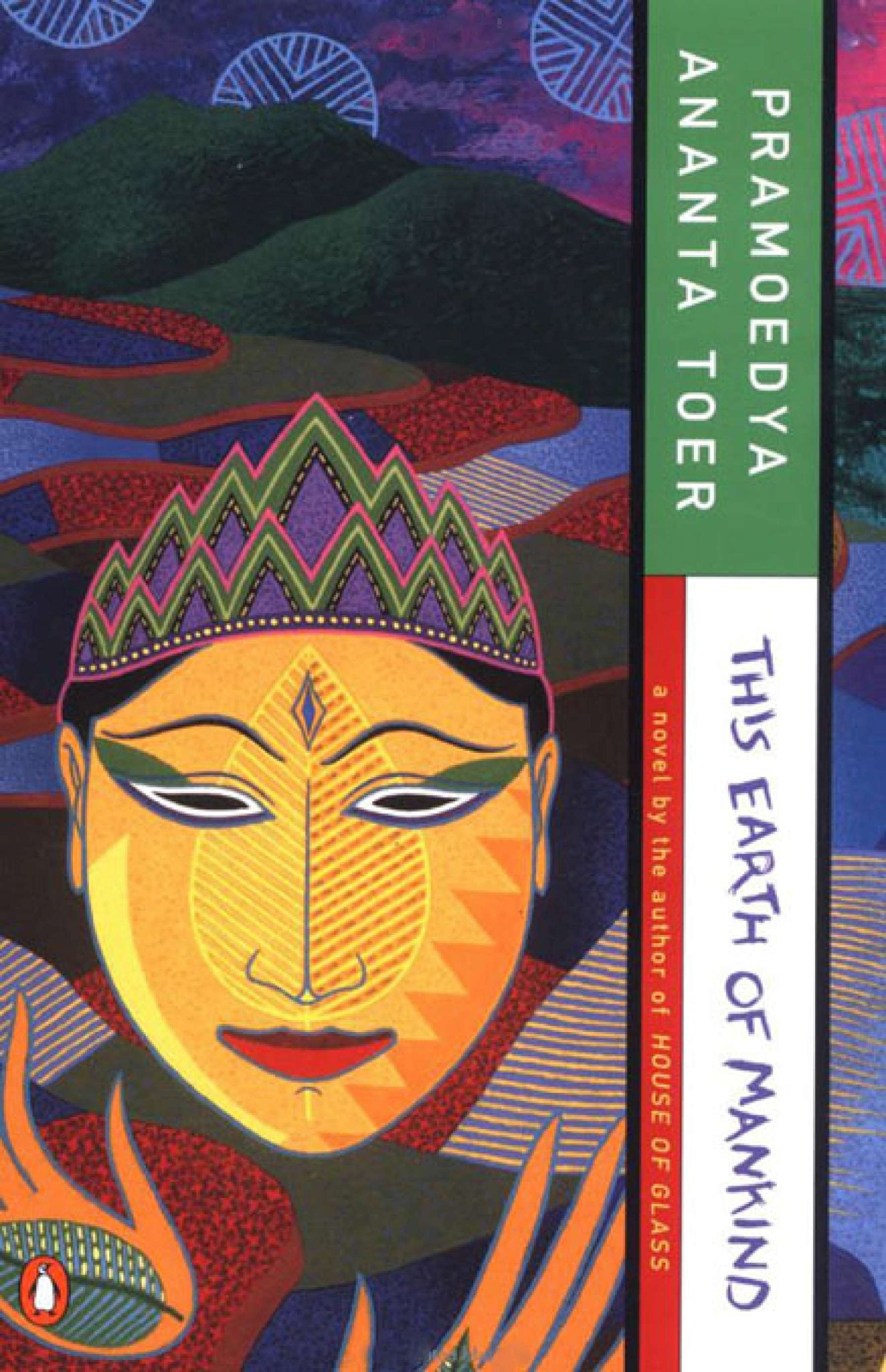
Lushan Rebellion: worst wars

Between the years 755 and 763, there was a revolt in China called the An Lushan Rebellion. Although the death toll is difficult to estimate, census data from the years after the war suggests that about 36 million people—roughly two-thirds of the empire’s population—were lost.

First World War

The Central Powers and the Allies fought each other in the First World War. Despite only lasting 4 years, from 1914 to 1918, the war killed over 18 million people. About 11 million of the 18 million fatalities were caused by military people, and about 7 million were civilians.

The Taiping Rebellion: worst wars

IMAGE CREDITS: istockphoto.com

The Taiping Rebellion, which took place from 1850 and 1864, was yet another major conflict in China. The Taiping Heavenly Kingdom’s Christian millenarian movement and the Qing Dynasty engaged in combat. Although there isn’t a precise figure, most estimates place the death toll from the Taiping Rebellion between 20 and 30 million.
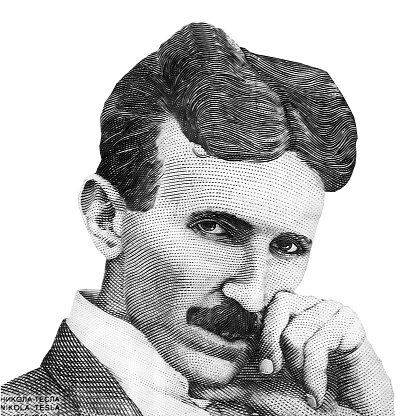
Second Sino-Japanese War: worst wars

Between 1937 and 1945, the National Revolutionary Army of the Republic of China and the Imperial Japanese Army fought in the Second Sino-Japanese War. It is generally accepted that the Marco Polo Bridge Incident served as the catalyst for the war, which later erupted into a full-scale conflict that claimed the lives of nearly 4 million Chinese and Japanese soldiers as well as 25 million civilians.

World War II: worst wars

Almost 70 million people died in the conflict, which pitted the Allies and the Axis powers in the worst conflict in history. The war, which is notorious for its genocide against the Jewish people, also resulted in the deaths of more than 50 million civilians.

American Civil War

In terms of deaths, the American Civil War was the bloodiest and deadliest conflict ever waged in human history. The conflict stands out as one of the bloodiest conflicts ever fought in human history. The union and the states of the confederacy fought this conflict. The bloody conflict is also known as the conflict between the states. The American Civil War portrayed a situation in which simmering hostility existed between the southern and northern states of America (which had been thrust into a state of conflict due to urgent issues like the rights of the states, slavery, and sectional disputes, etc.). Between the years of 1861 and 1865, the blood feud persisted.

The Kalinga War

IMAGE CREDITS: istockphoto.com

One of the fiercest and bloodiest feuds in human history is attested to by the Kalinga War. The brutal conflict was fought in 261 BCE, under the Mauryan empire’s rule. Emperor Ashoka fought a war against the Kalinga state in India. The conflict was caused by Ashoka’s desire to incorporate Kalinga into his empire. Ashoka’s army attacked Kalinga, and after a bloody battle, his army was able to defeat Kalinga’s army. But, the Kalinga war was so harsh and deadly that it permanently altered Ashoka.

Dafur Conflict: worst wars

Early in 2003, rebel groups began to take up arms against Sudanese President Omar al-regime Bashir’s in Khartoum, rekindling long-simmering tensions in the western Sudanese region of Darfur. The U.S. administration later referred to the conflict’s outbreak as the first genocide of the twenty-first century. The Sudanese government equipped and funded Arab militias that became known as Janjaweed. After rebel groups won a number of notable battles against the country’s military.  And ethnic cleansing against Darfur’s civilian population.

USEFUL LINKS:

Keep hovering on the worst wars:

Top 12 most deadliest wars in history

Learn about worst calamities in history:

The worst calamites that history witnessed

Become an environmentalist with us:

Environmental Risks: World’s top concerns