All posts by Aarshiya Jaidka

Life Events that require a Professional Photographer

When there are family events, a special occasion, or a small gathering, we begin to consider whether we need a photographer to capture images. Why should we hire a professional photographer for an event when we can just do it ourselves?

How often do you take pictures with your phone, iPad, tablet, etc. to preserve those priceless memories? almost always, right? Everyone now carries a camera with them at all times because to the advancement of technology and the creation of cell phones. Nowadays, people may instantly capture special events. The need for professional photographers has been questioned in light of this development, though.

A significant portion of important life events that you wish to document involve professional photographers. Years have been spent studying every aspect of photography, including artistic and creative aspects of the present.

A professional’s work can never be compared to that of an amateur. You run the danger of not giving the moment in your life that you want to capture enough justice if you choose amateur photography over professional photography.

Family events

(Photo from Unsplash.com)

Similar to your family doctor, family and portrait photographers. They are excellent at capturing not only the members of a family but also the love, joy, feelings, and story of that once-in-a-lifetime occasion because they are familiar with your culture, traditions, and most likely your friends and family as well. Family photographers that have received specialized training may highlight much more than just things or individuals.

The ability to express emotions and tell a story is a natural talent for family and portrait photographers. They use their extensive knowledge and profound insights to get the ideal family photo. One of the greatest investments you will make in your lifetime to capture and preserve memories for a lifetime and beyond is choosing your family photographer.

High school photography

High school dances and commencement exercises are happy occasions. They serve as signs of fresh starts. There is no going back in time to those school years to freeze those moments in time and remember them. You won’t regret spending the money to hire an expert photographer to document your child’s high school years. All the memories you would like to save and pass on to your grandchildren and children include those prom shots, high school senior sessions, growing up group photo-shoots, etc. Your fantasy can come true with the help of your family’s professional photographer.

Your wedding events

(Photo from Unsplash.com)

A wedding is the one event that necessitates expert photography. For such a significant day, you cannot possibly forgo hiring a professional photographer! In the midst of all the confusion and commotion, only a professional can complete the task. If the nicest memories are not preserved in time, the first dance, first kiss, and all other wedding-related activities may go undetected. A skilled wedding photographer will use their many years of experience and expertise to record those priceless moments so you can look back on them afterwards.

Events like New pets

While you can just use your iPhone to take a photo of your new pet, only a professional can do the job well. Pet photography is a serious endeavour. It demands a lot of practice and understanding, just like an art form. The photographer will be aware of techniques to entice your new pet to smile for the camera.

You can choose from a variety of backdrops if you hire a professional photographer. And nothing compares to having a pro record a moment that you’re sure to cherish and look back on.

New-born babies

Kids mature so quickly. Because of this, it’s crucial to appreciate each moment while you can before they’re all gone. A new-born photo session is the ideal method to accomplish this. Photographers of new-borns have training and experience. They take extraordinary photos that are incomparable to those you snap of your child with your phone.

You must not cut corners when it comes to new-born photos. To ensure that these priceless moments are captured, hire the best new-born photographer in your area.

Special birthdays events

(Photo from Unsplash.com)

Your kids are developing quickly. They graduate from high school and then college in the space of a single blink of an eye.

Birthdays mark significant junctures in a child’s life. This is why it’s crucial to hire a skilled child photographer to take your child’s portraits. So that you may go back and remember all the fun times, capture them as they are.

Sporting events

Sports leagues are a major deal. You’ll want to record the moment your youngster first experiences the excitement and camaraderie that come with being a member of a team. There are very few occasions that can compare to the happiness of friendship and the competitive spirit that sports foster in kids.

The only way to properly record these moments of triumph and discovery is to hire a professional photographer. The emotion of the game as well as the team can only be captured by a professional sports photographer, even though an iPhone may be able to take good-quality images.

Holiday card photos

(Photo from Unsplash.com)

Any Christmas season should include sending out family holiday cards. To tell our family members about our recent activities, we typically use family pictures. Some people even enjoy going a bit too far and dressing in character for a particular subject.

Hiring a photographer is the greatest way to document you and your family in the holiday mood, whether you’re dressing for Halloween or Christmas. It won’t be their first time using your photos.

They have years of experience, so they are aware of what works and what doesn’t. Holiday family cards can serve as a way for you to keep track of changes in the family as well as a way to share the events of the year with your loved ones.

Professional business head-shot

Selfies simply won’t do in a professional business situation. Professional photography is required in professional contexts. You will require the assistance of a professional photographer to comprehend lighting and camera equipment for career-appropriate backdrops, whether you are a consultant, real estate agent, or actor. You can even get posing advice from professional photographers so you can get the perfect business head-shots.


References:

Life events which require professional photographer 

How to choose professional photographer?

How to Write an Appreciation Letter for Mom

Mom has always loved you more than anyone else. Consider the possibility that it wasn’t “Mom”—possibly it was a stepmother, grandmother, aunt, or another important person in your life—instead. Whatever their names may be, you are tremendously appreciative of the care and assistance they have given you over the years. Therefore, it is always beneficial to show these people your gratitude.

Do you want their affection to feel as significant as your words of gratitude? Writing a letter on paper using a pen is, in our opinion, the greatest approach to express your gratitude. Here are some reasons why you should say it, along with some more ideas to help you express it in a way that feels genuine to you and your relationship.

What is a letter of appreciation?

(Photo from istock)

A letter of appreciation is exactly what it sounds like: it expresses your gratitude for the person’s presence in your life as well as your appreciation and affection for them.

Although it can be any length, it usually lasts more than a few phrases. Being able to say all you want to say in a letter of thanks is, after all, one of its benefits.

Why should one thank Mom in a letter?

It makes sense considering that Mom taught the majority of people how to love. Not to mention learning how to brush their teeth, use a fork to eat, and generally operate in society. She has contributed significantly over the years, and that usually motivates individuals to express their gratitude at some time.

The recipient need not be a biological mother. It can be your biological mother or stepmother. She might be a godmother, aunt, or granny. It can be someone who encouraged you and your aspirations, consoled you, or offered wise counsel. It might also be a non-family member who has become “like a mom” to you because of their love, support, or wisdom.

OK, but…But why write a letter?

People generally enjoy receiving handwritten notes. They are extremely personal, to start. You’re expressing what they really mean to you using your own words and stories. Mom is the only one who truly understands your handwriting.

Second, taking the time to write a letter by hand demonstrates that you are concerned enough to put up an effort. Of course, sincere and thoughtful letters frequently end up as priceless mementos that are read again and over as the years pass.

You could also be surprised by how satisfied you feel after finishing an appreciation letter. You’re making something special for a person you care about. Additionally, writing down your feelings of gratitude might help you appreciate the person you’re thanking—in this example, Mom—even more.

  • Following are a few ideas to get you started on your mom letter:

(Photo from istock)

Knowing where to start can occasionally be the hardest aspect of writing. So, to help you get started, here are a few straightforward ideas. The most important aspects of your letter, regardless of the idea—or ideas—you decide to utilize, are the work you put into it and the memories it will help Mom revisit.

  • Give Mom a specific compliment

Writing an appreciation letter gives you the chance to go into great depth, which is one of its best features. The person you are writing to will benefit from feeling accepted and loved for who they are.

Therefore, let Mom know what you appreciate about her while also explaining why .As an illustration, perhaps Mom makes the BEST dish. She makes the best mac and cheese, though, when you stop to think about it.

  • Thanking Mom for a particular thing

Thanking Mom for specific things she has done for you is another chance to go into depth and demonstrate how much you appreciated all of her thoughtful efforts. You can discuss what it meant at the time or how it affected your life later on.

  • Make a top-ten list

Moms are no exception to the rule that everyone enjoys a nice “Top Ten” list. Additionally, there are PLENTY of options: you can be hilarious or nice, focus on memories or the future. Here are a few “Top Ten” suggestions you might want to include in your letter of gratitude to Mom.

  • Go digital

Do you feel like writing is not your thing? Although we adore handwritten letters, video communications are also a fantastic alternative.

You may tell Mom all the nice things you would have otherwise written down using Hallmark Video Greeting Cards. Additionally, she has the option of downloading the video to preserve or even posting it on social media to boast about her kind and kind child.

  • Create a letter from your previous self

Don’t be put off by the fact that this concept requires a little more imagination and originality. It’s a lot of fun, and she will enjoy the chance to relive her time with you. Write your letter form a different point in time in each paragraph to bring this concept to life.

  • Finish with a warm closing

Add a cordial closing right before you put your name down. You can either create your own or choose from the ones on this list.

How to deliver your letter

(Photo from istock)

Once you have your letter written, you may either put it by itself or in an envelope with a Mother’s Day or birthday card. Then, all that is left to do is mail it or, if that is a possibility, deliver it personally. Perhaps with a few flowers!

Check out these suggestions for gifts you can include in a letter.

Alternately, you might embellish your envelope. Ask your children to help you design the envelope if you have any, or, if they’re old enough, have they written their own messages of gratitude to Grandma. It doesn’t matter how you give it to Mom, just know that it will be one of the nicest gifts you’ve ever given her.

References:

Hallmark

Looking for perfect age gap between siblings, click on the link below for some prior knowledge:

What should be siblings ideal age gap?


Family command centre ideas you should explore 

Any busy family must have a family command centre to stay organized! You can control the mayhem with the aid of a command centre. Therefore, I advise you to establish a family command centre as soon as possible if you don’t already have one. The top choices are listed below. Choose the option best suited to your family’s requirements!

What is command family centre?

The term “family command center” simply refers to a specific area in your home that is used to organize the daily chaos (schedules, incoming mail, car keys, etc.).

What to include in Family command center?

Your family’s demands will determine exactly what you put in your command center, but common items include a family calendar, a space for papers, a spot for notes and messages, your menu, and hooks for keys. For simple visual planning, some families even choose to incorporate a whole calendar wall (our monthly wall calendar shown below is ideal for that).

How to set up a Family command centre?

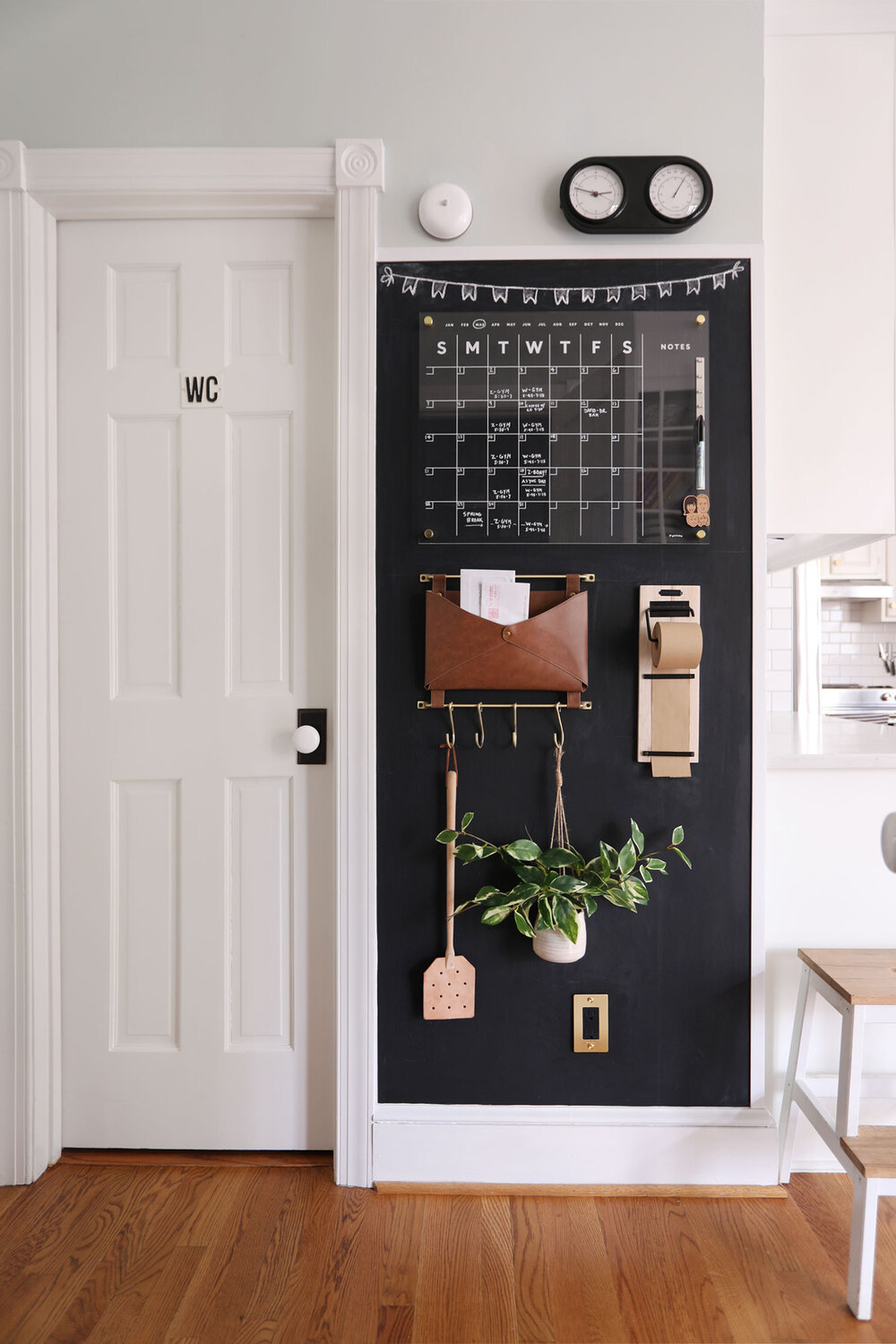
(Photo from Organized-ish.com)

Our “family command center” is one of the most important systems we set up years and years ago. A family command center is simple to set up!

Every time we leave the house, we “check-in” and “check-out” at our family command center in the kitchen. Any documentation that enters the house is sorted at our command center, which has an area set aside for shredding, paying bills, filing records, and scanning receipts. In order to always know where our car keys are, we hang them there as well. And by ALWAYS, I mean it. Going paperless will revolutionize your life, thus I strongly advise it.

Location of family command center

The secret to using a family command center is to make a commitment to using it every single day, thus it should be put in a prominent place. It should ideally be close by or possibly a piece of your “drop zone.” You know, the spot in your house where you leave your bags, keys, and mail after entering. That way, you can sort them out right away and keep things organized by putting them in your command center rather than dumping them all on a horizontal surface where they would clumsily pile up.

In every home we’ve owned, the kitchen or a nearby room has served as our family command center.

Purpose of family command center

(Photo from Sunny Circle Studios)

The idea is to have everything you require in one convenient location so that your life may function smoothly. It’s a lot simpler to stay organized even when your days are crazy when your keys, schedule, bills, etc. are placed/sorted daily in a visible location. You can keep your kitchen countertops clean, stay on top of filing and shredding, and more with the aid of a command center.

Maintaining control of the bills, receipts, and other paper that enters your home requires no time at all once you make using your command center a habit. Usually, at least one family member finds it difficult, but if you make it as simple as you can and promote consistency, everyone will ultimately get used to it!

Utilize your wall

This is a fantastic illustration of a family command center that uses very little desk space. The majority of the system is mounted on the wall, which also has a sweet key holder. Take note of the vivid colors and the unique details.

Make file folders

Making gorgeous, personalized folders for organizing is a great way to spice up a family command center. To learn how to do it with contact paper and regular manila folders, click on the source link.

Keep it simple

(Photo from Better Homes & Gardens)

This family command center is totally contained within itself and is mounted entirely on the wall. It is really straightforward and simplistic, as you can see. However, there are instances when you really do need that. Everything does not necessary need to be in one location. As you enter or exit the residence, you can quickly and conveniently check your notes and get what you need here.

Your design doesn’t need to be extravagant, and command centers shouldn’t be too intimidating. In your home, it’s simple but effective to set up a hub. Install a matched pair of wall organizers that go with your decor near the entrance. All you actually need is a combination of chalkboards, baskets, and a few hangers. Utilize the boards for memorandum, the baskets for incoming and outgoing mail, and the hooks for jackets and bags. Write down planned activities for yourself or your family, or make a list of things you’ll need when you run to the shop.

Occupy space behind door

Setting up a command center in a tiny doorway requires careful consideration of every inch. If you have limited wall space, combine several storage options and make use of every square inch, even the space behind a door. For putting notes you need to remember before you leave the house, hang a chalkboard or a magnetic dry-erase board. Combining a wall-mounted organizer with file boxes for hiding paperwork can help you make the most of your vertical space. You can also hang huge bulldog clips on the wall to keep other important documents in plain sight.

Cooking command center

(Photo from istock)

With this smart command center concept, take meal planning to the next level. Make a little hub for all things related to the menu and meal preparation using the interior of a kitchen cabinet. You can come up with meal ideas using a little dry-erase weekly planner that is peel-and-stick. You can make ingredient shopping lists on a hanging notebook. Attach some fundamental cooking instructions so you won’t have to look them up every time, such as ingredient replacements, meat temperature ranges, and measurement conversions. This keeps your kitchen organized and makes it simpler to serve dinner quickly.

References:

Creative command centers ideas to keep your family organized 

How to conceal dark circles with makeup

Screen free activities for families to try

The top screen free kid projects and at-home activities have been compiled by us. We have the most entertaining activities that will encourage youngsters to put down their screens. Including crafts, games, and learning activities. These screen free at-home crafts, activities, projects, and games are sure to be a hit with kids of all ages. Ideal for young children, pre-schoolers, and even older elementary school students! You won’t be disappointed if you check out all of our screen free activities for the house.

 Screen free Reading

(Photo from Unsplash.com)

There isn’t a kid-friendly screen-free activity that can compare to reading! According to a National Literacy Trust research. Electronic gadgets are partially to blame for pupils reading less now than they did in generations past. Buy your kid some books that are appropriate for his age and interests. To avoid overwhelming them, start with shorter books. By creating a modest reading area with a cozy chair and a box or basket to hold books, you may make it more fascinating. Give them daily 15-minute sessions to begin with, and as they become more engaged, you may progressively expand the time.

Board games- screen free activity

Playing board games was a frequent pastime when we were kids, but now that video games. And computer games are more popular, board games are less popular. However, the pandemic has sparked a resurgence in popularity, particularly for timeless board games like Monopoly, Connect 4, Pictionary, and Scrabble. New ones include Dr. Eureka, Tumbling Monkeys, and Hungry Hippos. The entire family will enjoy playing board games, which keep them occupied for a long time.

Writing a screen free letter

Everyone bemoans the demise of the art of the handwritten letter as emoticons, instant chats, and now emails have replaced them as the primary means of communication. Allow children to resurrect this skill by having them write letters to their classmates, grandparents, or cousins. It might be a straightforward letter to Grandma about their day, something new they tried, a movie they saw or even a complaint about Mom! Encourage children to decorate their letter with drawings, colours, and stickers. Nothing beats the appeal of a handwritten letter, and they will discover how enjoyable the experience is when they receive letters from their loved ones.

Trying STEM activities

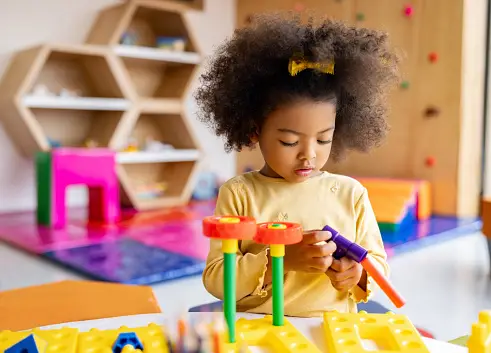
(Photo from Unsplash.com)

Science, Technology, Engineering, and Math are referred to as STEM. Children are encouraged by STEM education to ask questions, look for solutions, and experiment. Because science and technology are developing so quickly, STEM has become an essential component of contemporary education. Engage your children in some STEM activities at home to make up for the practical experiences that they may lose out on in online education. Simple activities like evaluating density, creating structures, sprouting seeds, playing with magnets, and many more are accessible to even young children. Allow older children to keep a science journal where they can keep track of their research and findings.

Make your screen free journal

Anxiety has increased since the pandemic, in both children and adults. Kids are more affected than adults by the unpredictability of life and the fear of getting sick, especially since they frequently have more irrational anxieties. One of the best ways to reduce this worry and gain some mental clarity is by journalism. Starting with a thankfulness journal will help you get comfortable writing in a journal before moving on to daily writing. List the three to five things you are thankful for today. They can gradually begin writing about their experiences and emotions. Some kids might prefer drawing or doodling to writing; let them express themselves whatsoever makes them feel most comfortable.

Cooking and baking


(Photo from istock.com)

Boys and girls should both be able to cook. It’s a life skill. It is far simpler to start teaching children while they are young rather than waiting for them to figure it out on their own as they get older. Even small kids can find a way to assist in the kitchen by measuring, stirring, pouring, washing dishes, and setting the table, for example. Pre-teens and teenagers can learn the fundamentals of knife safety and hob operation, while older kids can start making simple dishes like sandwiches. They may even find their calling, who knows! By preparing their preferred dishes, you can engage kids. Children enjoy watching watery batter transform into fluffy cupcakes and pastries when baking.

Drawing screen free

Adult colouring books are increasingly popular for a reason: they are believed to reduce stress and boost attention, and they are also quite inexpensive! This is another reason why youngsters should enjoy drawing and colouring because it allows them to express feelings that they find difficult to put into words or draw. You can even utilize the backs of old documents if you only need a few blank sheets. It’s simple to download and print free colouring pages. You can give them prompts, such as to draw something from a dream or an image of a present they’d like for their next birthday, if they find the blank paper to be too intimidating.

Gardening

(Photo from istock.com)

Many of us started gardening as soon as lock-down started, and studies from all across the world demonstrate that this is no longer only a panic hobby. Many people are growing their own herbs and veggies in addition to expanding their gardens. Children can benefit greatly from gardening, which is also a very soothing exercise. Even those who reside in metropolitan high rises have the chance to connect with nature. It teaches kindness, patience, and the value of simple daily tasks. If cultivating your own micro-greens is new to you, start with something relatively low care, like a money plant or mint.

Solving puzzles screen free

People of all ages like solving puzzles, but children who enjoy a challenge in particular find them to be particularly enjoyable. There are many other types of puzzles, including crossword, Sudoku, and word searches in addition to real jigsaw puzzles, Rubik’s cubes, magnetic puzzles, and many others. There are several incredibly sophisticated puzzles on the market right now, and you may pick one based on the amount of difficulty your child is comfortable with. You can print out many of the word puzzles that are freely available online.

References:

Screen free activities for kids 

Fun activities to do with your kids 


Fun games that both parents and children will enjoy

Do you need quick, fun games for kids that don’t take much preparation? The majority of children’s fun games are quite instructive for them. Even short, 5-minute fun games can help kids master a range of abilities they’ll need in the future. Even if you can’t always see learning happening, it still does.

Play earth and moon: fun games

(Photo from istock.com)

The Earth and Moon game was created when Melanie was 4 years old by Bill Herbert, a father of three and veteran third-grade teacher.

Give your child a torch with a wide beam so they may play, and take a torch with a narrow beam (a laser pointer will also do the trick). Face up on a bed, in complete darkness. It is the responsibility of your youngster to move the Earth (the wide beam) in broad, slow circles around the ceiling. Your task is to maintain the moon’s orbit around the Earth (the narrow beam).

Scarp boxes: fun games

Gather items unique to that location, like shiny rocks or acorns, when on an excursion to a park or other favorite location. Take pictures of fleeting souvenirs, such as vibrant leaves.

Once you get home, work with your kid to paint the box that will hold your collection. For instance, ask them to sketch or print an image of the location and stick it to the box top. Then give them free rein to decorate and color it whatever they choose. To represent each of your favorite locations, create a unique box.

Then, when you have to stay inside, you can cuddle up with your kid and go over the treasures you’ve gathered, remembering your favorite adventures.

Bird feeder: fun games

(Photo from istock.com)

Here are two fast DIY bird feeder ideas to draw more avian visitors to your yard. You’ll need string, birdseed, peanut butter, and cut-up toilet paper or paper towel rolls, as well as an orange or grapefruit.

Birdseed should be placed on a plate or pie tin with a rim to create the initial feeder. Assist your child in spreading a thin layer of peanut butter on the paper rolls’ outside. Next, have them roll the coating of peanut butter in the birdseed until it is thoroughly coated. The feeders can be hung up with string or simply slid across tree branches.

An orange can be used to create two feeders. (A grapefruit is an alternative.) Slice the fruit in half, then carefully remove the fruit, reserving the thick rind. Make a tiny hole with a skewer approximately half an inch from the top on the opposing edges of each orange half. Once the twine is inserted through both holes, tie a knot at each end to create a hanger.

Pour the bird seed and peanut butter mixture into each orange half with the assistance of your youngster. Hang it outside.

A toy-show

Have your kid assist you in assembling a cast of dolls, plush animals, and toy characters. Use various voices for the various dolls and animals as you divide them up between the two of you to act out a play. As you go, improvise since part of the fun is steering the action in a ridiculous direction.

Another choice is to have a talent event where each character performs a song, a joke, or a short narrative.

Food art: fun games

Look through the fruit bowl and refrigerator for “art supplies” that you and your toddler can use to create pictures on a large plate. For ideas, cut up some colourful fruits and veggies like carrots, cucumbers, grapes, or other. From a clown or train to a stunning work of abstract art, the two of you can build anything. There are countless choices, such as using cheese slices as windows, round crackers as wheels, or olives as eyes.

Eating your creation is when the real fun starts!

Bubbly bubble

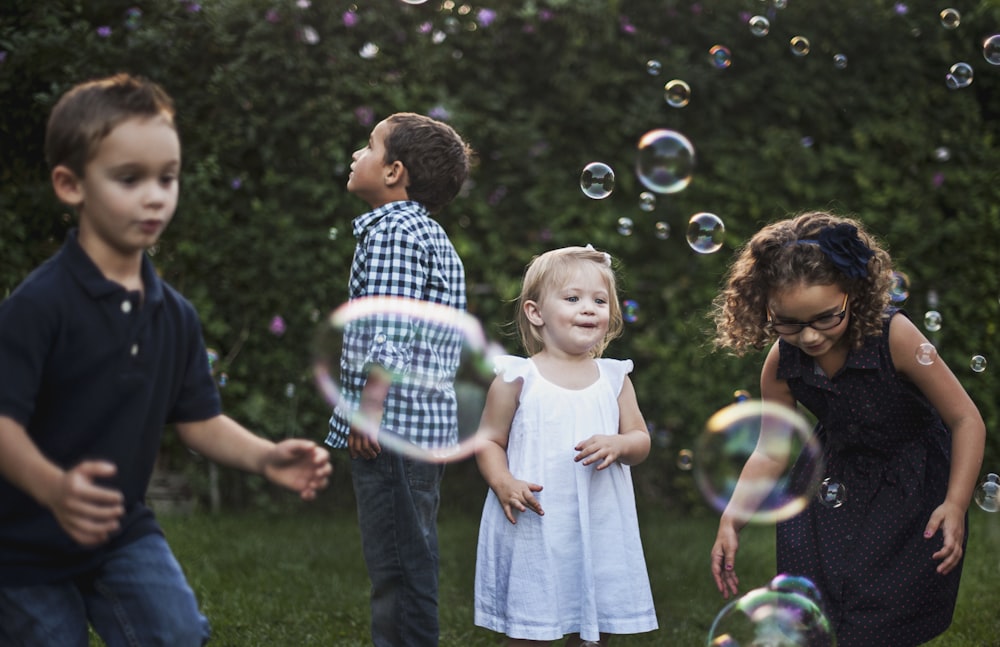
(Photo from Unsplash.com)

Create your own bubble solution by combining one part dish-washing detergent with ten parts waters. To make the bubbles last, you may also add some glycerine or corn syrup. Almost any open-ended object, such as the rings from a six-pack of soda, can be used by your child to create bubbles. Make bubbles that get bigger and bigger!

Camping in the room

Camp-outs are always enjoyable, but the ones that take place in your living room have the extra benefit of having access to amenities like carpets and a kitchen and restroom.

Pitch a small pup tent or create one on your own by covering properly placed furniture with blankets. For a really camping experience, take out the sleeping bags, pillows, and flashlights. You and your youngster can go camping whenever you like because the “tent” can be left up for whatever long you like.

Watching clouds: fun games

Take a blanket and a child, lie on your back in the backyard or a park, and watch the clouds pass by. Compare notes and talk to your child about the shapes they perceive: You might see a whale where your youngster sees a pony. Feel free to be silly or thoughtful (“Is that a dog with an umbrella?”). “That cloud looks like love.”

Make up stories

(Photo from Unsplash.com)

Kids enjoy hearing you make up stories, and your personal music collection can serve as an inspiration while also fostering your child’s love of music. Start off easy with a well-known instrumental melody and narrative, such as those found in Prokofiev’s “Peter and the Wolf.”

You don’t have to retell the tale exactly as you recall it; you can add a few details, such as having your child take the place of the main character or introducing a new character that your youngster will find fascinating, like a dinosaur. Ask your child if they want to add to the story frequently when you pause.

You’ll be astounded at how music advances the story for both of you: Drums beating make a person’s trotting through the forest sound like music. A violin indicates that the sun is setting, and a flute represents a tiny bird in the sky directing animals in that direction. Soon enough, you’ll probably come across several favorite that you and your youngster will love sharing.

References:

Fun activities for kids and schoolchildren

Outdoor games for kids


Bonding ideas for siblings: Family Guide

One of the main obstacles you will likely have as a parent is  Sibling bonding. Sometimes  sibling bonding may seem like all you do is break up conflicts. However, it will undoubtedly pay off if you put in the effort and engage in your children’s relationships. And with these amazing techniques, your family’s sibling bonding will quickly improve.

Assess sibling conflict

(Photo from istock.com)

Quickly assess the severity of your children’s disputes. Stay out of minor to moderate conflicts. Give your children the opportunity to settle their conflict on their own. However, it could be necessary to intervene if the altercation becomes more serious. Siblings Without Rivalry, written by parenting specialists Adele Faber and Elaine Mazlish, is available on Amazon for more information on how to handle sibling conflicts.

Sibling bonding time

By nature, siblings don’t always want to hang out together. Parents must instill this bond and establish the tone for their children. Designate a weekday specifically for the kids. Make it special; parents are not permitted. (Or, if you’re concerned, perhaps your parents are nearby.) Create a fun ritual for the kids, such as a movie night just for them, a sibling scavenger hunt, or a play they develop and perform for the family.

You can also engage in some of what is known as psycho-education in the field of mental health. You can educate your children about sibling rivalry and how to get along with their siblings by using bibliotherapy, or therapy through books. The subject of sibling rivalry and relationships is well-covered in a number of really good children’s books.

Use books for sibling bonding

(Photo from Unsplash.com)

One excellent strategy to teach your children about life and relationships is to encourage reading in your family. Wonderful tales like those in the books mentioned above can promote sibling ties in your family. That can also be used to teach other skills. Every kind of life lesson is covered in children’s books.

Quality one-to-one

Set aside regular, unique times to spend with each child separately. Although it may seem counterintuitive to the idea of sibling bonding, giving each child some particular time reserved only for them really makes room for more constructive sibling connection. When they get plenty of your attention, they don’t require as much rivalry and competition. You might be amazed at how much respect your children have for one-on-one time with their parents, even when it’s not their turn.

Equitable laws for sibling bonding

“Life’s Not Fair” was my mother’s catchphrase when I was a child, and I could have sworn she said it all the time. As a child, I detested it, but as an adult, I realized that my mother was usually right about most things. Fairness and equality don’t always provide the desired results. Giving your children the same treatment can be more detrimental than helpful. They might receive the same care, but it’s doubtful they’ll get what they require.

Every child is unique, and each developmental stage is accompanied by a unique set of needs. Make rules, penalties, and expectations specific to the requirements of each child. By doing so, you can ensure that your kids are prepared for success and that they take responsibility for their own actions.

Role of your family

(Photo from Unsplash.com)

You must keep in mind that every youngster plays a part in any conflictual encounter. A 5-year-old is not necessarily completely innocent just because she is younger than the 10-year-old sibling who just yelled at him.

I’ve seen that happen a lot: a parent is preoccupied and punishes the older child even though “they should know better” while absolving the smaller child. However, in my observation of exchanges, I have witnessed instances where the younger child purposefully badgers the elder sibling until they respond. It’s amusing to observe the young genius at work.

Healthy boundaries for sibling bonding

You must keep in mind that every youngster plays a part in any conflictual encounter. A 5-year-old is not necessarily completely innocent just because she is younger than the 10-year-old sibling who just yelled at him.

I’ve seen that happen a lot: a parent is preoccupied and punishes the older child even though “they should know better” while absolving the smaller child. However, in my observation of exchanges, I have witnessed instances where the younger child purposefully badgers the elder sibling until they respond. It’s amusing to observe the young genius at work.

Negotiations

Start by respecting the disagreement. Children are only encouraged to dig in, escalate, or strengthen their stance when parents downplay the importance of the issue they are arguing over.

Verify the cause of their angst in order to alleviate the issue. They will advance as a result of this. Remember that every behaviour has a cause, even if the child isn’t aware of it, as you model it for the youngster. Kids learn how to solve problems more quickly when you assist them in sharing and communicating the initial source of their annoyance. They learn empathy from this as well. They are more equipped to propose win-win solutions after they are able to understand their brother’s or sister’s point of view.

Don’t play favourites for sibling bonding

(Photo from Unsplash.com)

Most parents have a favorite child, according to research, but try your best not to let that one knows. Your children will feel more secure as long as you don’t show them any favouritism. Moreover, resist the need to compare your children to one another. Your child may not change his behaviour in response to the inquiry “Why can’t you sit still and be quiet like your sister?” but you can be sure that he will begin to detest her.

When dealing with undesirable behaviours and sibling rivalry, be honest and direct and try to avoid taking sides. It’s crucial that your children don’t feel treated differently in order to foster positive sibling relationships. The sibling bond will quickly become tainted by animosity.

References:

Incredible strategies to improve sibling relationships 

What should be siblings ideal age?


Family activities that you can enjoy at night

Spending quality time together is the easiest approach to create a happy family. But it’s not always easy to be deliberate in this regard! Planning a weekly family night is a terrific approach to make sure that your family spends quality time together and has fun on a regular basis. This simple habit will brighten your home and help you create lots of joyful times to spend with your loved ones.

You’ll probably concur that weekends ought to be filled with enjoyment and family time. It is important for parents and kids to spend time together, but because of the busy workweek, this is not always possible. We have some activity suggestions for family night so that everyone may have a good time and remember it! But before, don’t forget to read about the wonderful advantages of spending time with your family.

  • Activities for a Fun Family Night are as follows:

Prepare some food together

Choose a food from a faraway land that your kids haven’t tried. Make a dish for your family from your choice. Include your partner and kids in the preparation of this meal. Introduce your kids to the nation where the meal is from as you are cooking it. Enjoy the meal together as a family and watch your kids gain an appreciation for an entirely new cuisine while having fun in the kitchen.

Go for Fun Movie Watching

(Photo from istock)

A movie night on the balcony or in the backyard sounds like fun! If you don’t have a backyard, set up your DIY movie screen in the living room, choose a film, make it warm by adding pillows, cushions, and blankets, and make sure the popcorn is ready.

Play Board Games together for fun

Board games like Ludo, Carom, Dominoes, Scrabble, and others are a great way to keep the whole family entertained during the weekend. Take part in the exhilarating excitement of marathon board game sessions and watch as your youngster quickly develops problem-solving abilities.

Indulge in Cardboard Craft

Therefore, keep the delivery boxes—large or small—for the upcoming family night so you may create something truly extraordinary. By using cardboard boxes to make something useful, you can teach your children the value of recycling. Use anything you and your kids can find, like glitter, paint, beads, and scraps of fabric, to create something special out of cardboard boxes.

Go for Dress up Games together

Another entertaining activity you must attempt on family night is a game of dress-up. The entire family is required to dress as one of their favorite characters. It could be anything, such as a favorite movie or cartoon character or a famous person. Set the camera to video mode, then speak each line of the character’s well-known phrase in front of it one at a time. When you re-watch this video year from now, we believe you’ll be in for a treat.

Make Ice Cream together

(Photo from istock)

Definitely one of the kids’ favorite concepts is this one! Ice cream can be purchased or made at home. Everyone can make their own ice cream by putting different ice cream flavours and toppings in different containers. Have fun, be inventive, and savour the delicious family night!

Make Pizza for fun

This is a wonderful way to mix family fun and preparing dinner. Purchase the ingredients, and then put them in bowls. Make small pizzas after preparing the pizza dough. One of the little pizzas is made using the ingredients chosen by each family member, who can then customize the decoration. You get to eat them together at supper when the pizzas are ready!

Play Hide and Seek during night

Playing hide and seek in the dark will elevate the activity. To add to the enjoyment, you may purchase some glow-in-the-dark bracelets!

Backyard camping

(Photo from istock)

This is a fantastic activity to do in the summer. Spend the night camping by packing a small backpack and erecting a tent in the backyard.

Stargazing

Another fantastic summertime activity is this! You can admire the stars in your own garden or by driving to a park.

Scavenger hunt

Both younger and older youngsters will enjoy this exercise. Depending on your child’s age, there are numerous scavenger hunt options available. Scavenger hunts in color are ideal for young children! Try scavenger hunts with clues or photo scavenger hunts with older children.

Go for a walk in nature

(Photo from istock)

Long walks are ideal on nature trails and in parks. You can begin them in the late afternoon and complete them in the evening. Alternatively, you might all enjoy some fun in the dark by bringing flashlights.

  • Here are some reasons why these such nights are important:

Family time is prioritized during such nights

It’s simple to become bogged down in routine tasks because life is constantly busy. On occasion, we are unable to simply calm down and appreciate our children because of all the stuff on our to-do lists. Being more purposeful and spending more time with your family is as simple as organizing a weekly family night.

The family night will definitely end up being your favorite night of the week once it becomes a routine.

It will  help kids feel connected

Family nights are pleasant for kids, but they also strengthen their bonds with their parents. A family night is the ideal occasion to interact and have fun as a family!

This simple practice will also help you create a calmer household because kids behave better when they feel connected!

Family gatherings will be cherished recollections

Kids mature so quickly! We believe we will have a lifetime to enjoy them when they are young. However, the reality is that time flies by so quickly that we must treasure any opportunity we have to spend time with our children. A regular family night will bring you a lot of joy and turn into priceless memories when the kids get older.

References:

Playful Notes

Looking for perfect age gap between siblings, click on the link below for some prior knowledge:

What should be siblings ideal age gap?

How kids can help out around the home

From choosing their first school and activity courses to choosing the best doctor to consult with during pregnancy, our objective as parents is to always do what is best for our children. The greatest is what parents always want for their kids. Aside from the obvious need of schooling, activity programs, and nutrition, it’s crucial that kids develop certain life skills.

As kids get older, these life skills are crucial for their confidence or for when they leave their families. Many parents feel bad for forcing their kids do tasks around the house, but they don’t realize how much these fundamental skills teach them. In addition to feeling significant and helpful, they also feel accountable.

  • Here is a list of some fundamental housework tasks that children can assist you with:

Setting up a shoe stand

(photo from istock)

This one is fairly easy. They learn how to organize things in actual life by doing this. Request that they arrange their shoes neatly on the shelf.

Grocery Shopping

You can get assistance from kids when food shopping. Let them choose the fruits or veggies they would want to eat and ask them what they would like to eat. If kids choose something harmful, explain why it is not advised. Additionally, this will promote enthusiasm for nutritious foods and eating options.

Organize Their Room

Encourage your kids to have a tidy bedroom. Help them make their bed and arrange their toys. Clear the rubbish, then stress the value of placing it in a trash can.

Clean Table after Meal

(photo from istock)

Cleaning the table after a meal is one of the most straightforward yet important duties. After supper, ask your kids to clear the table while you choose kitchenware and return it to the kitchen.

Setting Book Stand

Help your children arrange their books alphabetically or by authors. Additionally, always remind students to keep their books, luggage, and study tables neatly organized.

Fold Laundry

Children can assist in folding socks, handkerchiefs, vests, undergarments, and any other tiny articles of clothing. They will experience engagement and form a habit of folding laundry, which would otherwise appear like an arduous activity.

Organize Their Toys

(photo from istock)

Always set aside some time each week to arrange toys with your children. Only allow kids to store toys in their rooms that they will actually use each week. Toys that you believe they haven’t played with recently must be stacked with their assistance in a large box to be kept within the cabinet or in the storage area.

From choosing their first school and activity courses to choosing the best doctor to consult with during pregnancy, our objective as parents is to always do what is best for our children. The greatest is what parents always want for their kids. Aside from the obvious need of schooling, activity programs, and nutrition, it’s crucial that kids develop certain life skills.

  • Further:

By letting the “kids be kids” and engaging in plenty of playtime while they are still young, many parents hope to prolong childhood. Some people might view youngsters as less capable than adults and would rather get the housekeeping done as soon and effectively as possible. These points are valid, but they also fail to mention the many advantages of assigning duties to children.

  • Take into account the following reasons why kids should assist around the house:

Life skills can be acquired through chores

Although they are youthful today, they won’t always be so. When your children finally go out on their own, they’ll need to be able to manage their finances, do their own laundry, and cook. Additionally, these are things that are not entirely taught in schools, making it even more crucial to acquire them at home.

Chores develop teamwork

Children can learn about teamwork and productivity through household chores. Each member of your family’s “team” is responsible to the others, and there are repercussions if you don’t live up to your obligations. Kids can acquire excellent cooperation abilities to apply at school or job by learning these lessons at home, where mistakes are more easily overlooked.

Performing chores develop respect

Most of us can only truly appreciate all the labour our parents put into the house after leaving home. No doubt, our kids are no different; yet giving them chores could hasten the development of this understanding. If kids are given chores around the house, they may grow more conscious of the messes they cause and more appreciative of the effort that goes into keeping a house clean.

Building a strong work ethic through chores

Why not foster a work ethic in your children from an early age? Teachers and employers admire this quality. Commonly, chores are connected to a reward, like money or television time. Children who are rewarded for a job well done may develop an entrepreneurial spirit and begin working outside the home once they are teenagers.

Tasks assist develop your time management and planning abilities

It seems like there are a million things to do each day, and it can be difficult to fit everything into our schedules. Younger children and teenagers can develop positive habits through chores. They develop the time management and priority-setting skills necessary for the working world by balancing the demands of their social lives, household chores, and schooling deadlines.

Family time is enhanced by chores

People sometimes complain that doing chores keeps them from spending time with their children or grandchildren. However, chores can actually lead to memorable interactions between kids and adults. A shared task will make always-helpful young children feel important and will increase their self-esteem. Moody teenagers may also decide to open up.

As kids get older, these life skills are crucial for their confidence or for when they leave their families. Many parents feel bad for forcing their kids do tasks around the house, but they don’t realize how much these fundamental skills teach them. In addition to feeling significant and helpful, they also feel accountable.

References:

Momentum Life

Looking for perfect age gap between siblings, click on the link below for some prior knowledge:

What should be siblings ideal age gap?


How to organize a joint office: See tips

Making a good first impression and having a productive day are both enhanced by having a clean workstation. However, to organize desk in a co working space might be challenging. In shared work-spaces, where space is sometimes at a premium, things might quickly spiral out of control and making it difficult organize.

Organize your space

(Photo from Unsplash.com)

Your level of productivity is greatly influenced by the environment of your workspace. Imagine being in the middle of a phone call when the yearly report you need to discuss vanishes in the background noise. In addition to taking up physical space, an untidy office is mentally taxing. A quick solution to get rid of the jumbled cords and disorganized workspace is to de-clutter.

Organizing the papers, stationery, and other office essentials is the quickest way to make the workstation appear spacious and to create order in the otherwise chaotic office environment. There are numerous ways to improve the functionality and organization of a small shared office space. Spend money on desk organizers, such as those with divisions and holders for different office items, as an example. You will save time searching by doing this, which will ultimately boost your productivity.

Get rid of trash to organize

As we manage the never-ending documents and files, we sigh. The notion of a paperless office still seems like a pipe dream even though we are in the digital age. If your business is one of many that must deal with files, documents, notes, and letters, you may have experienced the difficulty of keeping paper documents accessible.

Any form of paper, if stacked incorrectly, can make your desk look messy and unclean. To prevent a paper backlog, it could be best to utilize a storage tray with compartments to keep paperwork, memorandum, and envelopes. If your workspace is small, think about using a wall-mounted rack to organize your paperwork.

Compact file holder

(Photo from Unsplash.com)

If you need more storage room, think about acquiring a compact cabinet. Some cabinets can be stored next to or below the desk. You can place important and fragile documents in folders and store them in your cupboard while locking it with a key.

Go Digitalization to organize

Because we have so much high-speed internet connectivity, we can use the cloud to help organize our digital information. It’s a great idea to keep things organized and tidy our desktops by putting things in folders. The fact that so many people trust the cloud to store their data despite the fact that keeping all of your office papers on your PC could be risky if you lose access or the computer continues breaking down.

The safety of putting your data on the cloud is enhanced by the ease of access it provides. On your computer, make unique, named files for each type of document you need to view quickly and to keep stacks of irrelevant papers from taking up too much space. To avoid getting overwhelmed by the innumerable emails you receive, create filters and folders for each type of email you receive as you browse through your inbox. By categorizing and ranking the emails using the filtering system, you may decide which ones need your urgent attention.

Your ‘to-do-list’

A calendar or to-do list is required to keep track of the work that has to be done. You may manage your commitments and engagements this way, feel good about completing them, and stick to your strategy. As soon as you awaken, review your list and create a plan for the day. This will keep you motivated and in charge of your affairs while assisting you in getting ready for the day.

After the day is through, you may review your list, see what was accomplished, and make preparations for the next day. We simply cannot remember everything, and we will definitely forget everything that needs to be done, when we rely just on recollection.

Standing desk

(Photo from Unsplash.com)

More people desire to transition from traditional workstations to standing ones. Experts suggest that standing at a desk all day can help you stay more focused. Additionally, stand-up desks take up less space in a workspace than conventional workstations.

Utilize corner places to organize

You can set up your desks in a L shape in your executive office by making use of the corner space. Choosing the right angle will provide you more floor space in addition to additional desk space. Your executive office now has additional room, allowing you to add items like a chair, filing cabinet, or table.

Comfy chair

If you plan to spend a lot of time working from a chair, make sure it is ergonomically sound. Your legs and feet begin to pain, you may still want to take breaks to sit down, even if you have a standing desk. If you have a pleasant spot to sit, you’re more inclined to stay all day at work rather than leaving early.

Tidiness

(Photo from Unsplash.com)

Maintaining a clean office is essential for both your productivity and wellness. You feel better just by being in a clean atmosphere. Because of the nice environment it offers, you become more motivated. When the day is through, put everything back in its place and tidy everything up. If this is the employees’ custom, let them handle it themselves. It’s critical to regularly go through your desk and remove everything that isn’t necessary. It makes more room for you and your continuing responsibilities while avoiding pointless clutter. Grab a trash container and dump the things you don’t need away.

Personal touch to organize

Personalizing the workstation is a great approach to keep oneself inspired and motivated at work. To improve productivity, find ways to enhance your workspace with items that are meaningful to you. You can decorate your workspace and maintain your motivation by adding pictures, containers, flower pots, books, and other works of art. However, be careful that your possessions don’t distract you or your co-workers.

 References:

How do I organize my shared office?

See some tips on home office setup


Traveling with children: Important Tips

Traveling isn’t the most enjoyable experience due to the lengthy security lines, confined airplane seating, and crowded waiting areas. The annoyance is further increased when a toddler is involved. Some small children just aren’t patient enough to wait through airport security while traveling. They may loathe being left alone for extended periods of time, feel nervous during turbulence, or become upset by the jarring changes in air pressure while traveling.

Thankfully, though, with the right planning and preparation, you may enjoy a worry-free travel day. Check out these stress-relieving tips for flying (and traveling) with toddlers, some of which came directly from flight attendants, whether you’re flying to your relative’s home or Disney World.

Departure early while traveling

(Photo from Unsplash.com)

Booking an early morning departure is advised if you are traveling with toddlers or young children. A flight attendant named John explains that these provide you the best chance of avoiding delays during take-off and landing. They are typically less congested as well, he adds. Additionally, everyone is exhausted and just wants to snooze, youngsters in particular.

First class travel or not?

It might be stressful to travel in first class with young children. Mom Myra tells the tale of taking her boisterous baby on a flight with her and having to endure her first-class seatmates’ vocal fury for the duration of the trip. A flight attendant remarks, “It’s unfair, but with kids in economy, you’re just going to get more empathy and support.”

Layer dressing and lace-less shoes

You can and should be prepared for radically changing temperatures when traveling with a toddler, whether you are moving locations or simply coping with in-flight heat and/or air conditioning. In order to ensure that your children can use the lavatory in a timely manner, Sophia, a flight attendant and mother, advises dressing them in layers that are both comfortable and without buttons, zippers or other fasteners.

Applying the same rule to footwear, choose slip-ons rather than laces. The additional advantage, according to her, is speedier airport screening.

Try using a smaller stroller while traveling

(Photo from istock.com)

Some parents can’t imagine traveling without a stroller, so think about switching out your standard-size stroller for a small, compact umbrella stroller or travel stroller. Before you board the airline, make sure you check your pram at the gate; the attendants will have it waiting for you when you exit.

Joana advises thinking about a child harness (also known as a leash) if you are traveling with more than one small child. “Until I saw a mom using them in the baggage claim with three little boys, I was so against them. With the evacuation doors to the outdoors being so close by, she explains, “it made perfect sense. Considerably stressful enough is traveling. Take the necessary action to keep your sanity and your children safe.

Don’t overpack

Parents are advised by flight attendants to bring enough of their child’s necessities. There isn’t any food on a plane that would be appealing to children, which is unfortunate, adds Rachel. Additionally, the range of our comfort items is extremely constrained.

However, parents who compulsively overpack will have trouble. When a single parent is traveling with one or more children, Monica notes that they frequently bring far too much in an effort to make the children happy. They fail to remember that they must bring their children and all of their luggage off the plane with them.

Packing list is must while traveling

(Photo from Unsplash.com)

Consider making a detailed packing list to prevent over packing and make sure you don’t overlook anything important. To make sure you have everything you need before leaving the house, mark or highlight the items that will need to be packed last-minutely (like the lovey your child sleeps with or the iPad that is now charging).

Be alert for air pressure changes

Ask your doctor’s permission before traveling with your child if they have had a cold or an ear infection. Your kid can experience discomfort due to the change in cabin air pressure. After going through security, stock up on water so that everyone can get through any potential delays and still have some for the descent, which is frequently when ear pressure discomfort is most bothersome. Have your children have some immediately following takeoff and throughout the final 30-45 minutes of the descent. Swallowing provides an additional benefit of hydrating the body while assisting with pressure fluctuations.

Use Pull-Ups while traveling

When traveling with a recently potty-trained toddler or small child, pull-up diapers are a terrific option even if your little one has graduated from Pull-Ups to big kid knickers. Mary says, “I even use them on my 6-year-old,” adding that it’s considerably less stressful than having to run to the loo or handle an accident in the car.

Appreciate the crew

(Photo from istock.com)

For taking care of kids, flight attendants adore getting a special tip. Any type of chocolate discovered in an airport and given out during boarding, according to John, works wonders. Of course, it will make little difference to the haphazardly irritable and unreliable cabin crew person. However, it’s still a kind gesture, especially if you’re traveling around the holidays when the majority of flight attendants will be working and away from their families.

It will be greatly valued, he says. “And we’ll keep an eye out for you and keep you in mind. Additionally, you’ll probably get a free drink as a result.

Avoid aisle

The freedom of movement that toddlers may experience in aisle seats makes them potentially unsafe. As a food and beverage cart drives by, for instance. Young hands and feet may be bumped and hot coffee and water may be just out of reach. If at all possible, choose a window seat so you can enjoy the view. And be separated from other passengers in your row by your young child.

Beware of germs while traveling

Toddlers frequently sit down, but you can try to prevent any travel-related illnesses by making sure your child’s hands are kept clean. While settling into your seats on a flight with a toddler. Use sanitizing wipes to clean everything, including your hands and the tray tables. Above all, never send your children to the lavatory without shoes.

References:

Tip for stress free air travel with kids 

The best luggage for traveling

Budgeting ideas for large families

A rich and wonderful experience, having a big family.  But budgeting is the problem. Despite the fact that fewer Americans now consider large families as ideal than they did in the 1950s “baby boom”. Pew Research Center research shows that the proportion of Americans who do so has increased in recent years. According to the survey, up to 41% of Americans consider families with three children or more to be the ideal size resulting is budgeting problems.

However, there are clearly methods to get past the financial stressors and make it work. If having a large family is your top priority—or something you’d desire to pursue in the future. We consulted financial professionals to get their best advice on how to budget well and save money while taking care of a big family.

Have financial goals for budgeting

(Photo from Unsplash.com)

Before creating a budget (more on that to come!), you should take some time to outline additional long-term financial . Advises Kristin Myers, editor-in-chief of The Balance, a personal finance website. Before creating a budget, it’s crucial to understand why you’re doing it. Simply doing something because you “should” is insufficient, according to Myers.

When defining financial objectives, Myers says there are a few important factors to take into account. First, you should think about what your family’s current priorities are (such as being able to pay for your essential needs and any “extras” you hope to enjoy). Then, you should think about your longer-term financial objectives.

Stay within budget

According to Steve Sexton, CEO of Sexton Advisory Group, all families that want to save money need to have a budget. And it’s better to have a written one with a detailed breakdown of all your anticipated spending. “It’s likely you’re missing some key living expenses if you’re just ‘guesstimating’ your expenses instead of listing them out in a tracker. Making it difficult to stick to a budget, especially if things are tight financially,” he says.

According to Jaime Peters, DBA, assistant dean and assistant professor of finance at Maryville University. You should include some flexibility in your budget even if you want to be as exact as you can when making one for your family. You should also check that your budget allows for unplanned and urgent expenses.

Know your needs and wants for budgeting

(Photo from Unsplash.com)

Making wiser purchase decisions will come as a result of fine-tuning your budget and getting a sense of how it functions in practice. According to Sexton, a lot of this comes down to deciding what is and isn’t necessary. From one family to the next, this will differ.

To establish the necessary and non-essential costs you wish to prioritize. Sexton advises having a discussion with your family and spouse. Eliminating non-essential expenditure, according to Sexton, “could include limiting how frequently you eat out each month, switching from cable to more affordable streaming platforms, or putting a limit on those late-night Amazon purchases.”

Your car may be a budgeting issue

Your car will be one of your largest outgoing costs, including the cost of purchasing it, maintaining it. Insuring it, and refueling it. But having at least one car is necessary for a big family. Typically, this entails investing in a bigger vehicle, like a minivan. That can accommodate your children and all of their belongings.

Sexton advises comparing prices to find the best vehicle insurance. He continues, “Joining a carpool can help you save money on gas if you have kids in school.” According to Dr. Peters, setting aside money for routine auto maintenance will help you save money even though it may seem like an unnecessary investment.

Smart shopping

Your family’s food will consume a significant portion of your budget, so using a wise buying approach will help you save a lot of money. Sexton argues that being organized in advance is key.

He advises always having a written list and a set spending limit when you go grocery shopping. Avoid purchasing prepared items (such as salad kits and pre-chopped onions) at the store because they are frequently marked up in price. Find out when stores are having sales, then go shopping then.

Bulk purchases of items you frequently use, such as toilet paper and household cleaning supplies, might be advantageous, according to Sexton. However, Dr. Peters warns that big-box stores occasionally offer extra items that you don’t require, so you should exercise caution while making any bulk purchases.

Meal planning for budgeting

(Photo from istock)

Although eating out can be enjoyable, the cost can quickly mount, especially if you do it regularly. You should prepare yourself for a hefty price while dining out with a big family. Cooking at home is almost always more affordable than eating out, so staying in is usually the healthiest financial decision, according to Myers.

There are methods to save money even when eating at home, according to Myers. here’s supper preparation. You can save money by planning your meals for the entire week before you go shopping. Additionally, it lessens the propensity for impulsive purchasing.

Reusing clothes

When you have a big family, saving your kids’ clothes for hand-me-downs is essential. With a few exceptions, the majority of children’s clothing will keep up well and can be passed from one child to another, which will surprise you given how rapidly your children outgrow it. This will save you a lot of money and is also beneficial to the environment.

But there are other items that can be recycled as well. Dr. Peters revealed that she comes from a big family and that when it came to hand-me-down toys, her mother used to be inventive. Three months before to her birthday, she remembers her mother asking her older siblings to look through their toys.

Budgeting vacations

(Photo from Unsplash.com)

When taking a family vacation, it could seem impossible. An entire trip’s worth of plane travel can break the bank. But if you prioritize travel, you can find a way to make it happen. For starters, setting aside money each month for a trip fund can be helpful.

References:

Money saving tips for large families 

Best personal finance books to build your own finance guide 


New dad’s bond with baby: Ideas to form bonding

When experts discuss bonding, they are talking to the close bond you form with your baby. It’s the emotion of the bond that drives you to want to smother him in adoration or run out in front of a speeding car to save him.

It may take a little while, but that’s completely normal. Some men bond with their infant within the first few minutes or days of birth. In any case, a brand-new infant has just fallen into your lap! Additionally, you might be aiding your partner’s recovery from childbirth, and it’s likely that you haven’t slept for longer than a few hours at a time. Take it easy on yourself; the connection will form soon enough.

Interacting early to bond

(Photo from istock.com)

The link between a father and his child can be strengthened by early connections between fathers and their new-borns. According to Dr. John Klaus and Phyllis Klaus’ book, “Your Amazing New-born,” fathers who have the chance to play with their new-born. And make eye contact in the first few hours after birth spend significantly more time with their children during the first three months than fathers who did not have this close connection. A great opportunity for fathers to spend this early bonding time with their new-borns is when the mother wakes up to take her first shower.

Bond skin to skin

The advantages of skin-to-skin contact with a baby are well established and include control of body temperature, stress reduction, blood sugar stabilization, release of oxytocin (the love hormone), comfort, and security. As soon as it makes sense, fathers can and ought to spend time holding their new-borns in their arms. It is a beautiful opportunity for both of them to profit from the oxytocin release that will take place for them to get comfy in a cozy chair with their shirt off, a nude baby on his chest, and both of them covered by a warm blanket. And is there really anything more pleasant to touch and smell than a new-born child?

Singing to baby to bond

(Photo from Unsplash.com)

There are several advantages to singing to your unborn child while she is still inside of you, as well as employing the same song to soothe and quiet the infant after birth. Fathers can select one or more particular songs and sing them to the unborn child often during pregnancy. After the baby is born, the father can continue to sing the special song to the unborn child. a fantastic chance for the two of them to connect and bond.

Bathing with the baby

Nothing makes new-borns happier than getting a bath while being safely cradled in a parent’s arms. Even though the majority of infants don’t need to be bathed frequently. Taking a body temperature bath with the baby on dad’s chest is a great way to unwind and strengthen the relationship. The parent can take a leisurely bath while concentrating on spending time with their infant while the baby feels safe. And comforted. Keep in mind: safety first! When entering and leaving the tub, always have a second adult nearby to take the infant. When wet, babies are slippery.

Reading to the baby to bond

Every day, fathers may find the time to read to their child. Even though a new-born or young child cannot yet understand words, they are intrigued by the sound of human voices and find great comfort in being held close while listening to their father’s voice, which is both safe and familiar. You can start reading more books with appealing graphics for young children when the baby becomes a little older.

Baby wearing

(Photo from istock.com)

Baby wearing is a wonderful way for fathers and children, including infants, to interact and form bonds. Most new-borns enjoy being worn, and when a father does it in a safe manner. It gives them the chance to further develop their bond. Furthermore, wearing a child makes it simple to go out in public. Perform jobs and duties around the house, or even work, depending on the sort of employment the father may have. Families should always make sure they are using a carrier safely, responsibly. And that it fits both the father and the infant well. There are many different types of carriers available on the market.

Exercising to bond

Fathers can discover methods to spend time with their infant and obtain the exercise they sorely need. When the baby is very small, walking with the infant in a pram or baby carrier is a wonderful method for parents to get some exercise and burn some calories. As the baby gets bigger, another option that enables dad to step up the pace is to place them in a kid seat on a bike. Use a jogging stroller or use a bike trailer. To avoid injuring the child, care should always be made to adhere to the equipment’s age/weight recommendations and operating instructions.

Greet your baby warmly

(Photo from Unsplash.com)

After a long day at work, getting home gives fathers a chance to bond with their child. Fathers may make a smooth transition from the workplace to the house. Take a moment to breathe deeply. And then get ready to be totally present with their child as soon as they come through the door. Having a particular greeting ritual. Receiving the child into your arms after a day (or night) of separation. And taking some time to reconnect may be a great opportunity for bonding and easing back into being at home with those you love.

Father and baby traditions to bond

Fathers may want to carry on the customs and unique activities they shared with their fathers when they were kids or think about creating some new ones. Children can spend meaningful time with their fathers by going to the donuts shop for Sunday morning treats. Watching a family movie on Friday night. Participating in various community activities, and going to athletic events. Do you remember the specific customs you shared with your father or other male role model. And could you carry them on or invent new ones for your own children?

References:

6 ways for dad to bond with the baby

Fun activities to do with your kids 


Introducing first solids to baby: Do’s and Don’ts

When a child is around 6 months old, the American Academy of Paediatrics and the Dietary Guidelines for Americans book suggests introducing them to meals other than breast milk or infant formula.  Introducing  food to a baby until they are 4 months old is not advisable . Each child is different. How do you determine whether your child is old enough to eat solid foods other than breast milk or baby formula? Introducing solid foods requires research.

The American Academy of Paediatrics (AAP) recommends starting your child on solids between the ages of 4 and 6 months. But your infant will ultimately determine the best time. Others may be eager to begin eating while others may be quite willing to wait longer. Looking for indicators of eating readiness is the greatest approach to determine if your baby is ready for food.

What solid foods to offer?

(Photo from istock.com)

Offering a choice of fortified infant cereals, such as oat, barley, and multi-grain. Rather than just rice cereal, is crucial if your child eats infant cereals. Because there is a chance that children will be exposed to arsenic. The Food and Drug Administration does not advise only giving infants rice cereal. For further information, click the external icon for the U.S. Food & Drug Administration.

Introducing solid food, but how?

Start by letting your child try one food created from a single ingredient. You can use this to find out whether your child has any food-related problems, such food allergies. You should wait three to five days between each new food. Your youngster will soon be eating and savouring a variety of new meals, so don’t wait.

Foods that could cause allergies should be introduced along with other foods.

Foods containing cow’s milk, eggs, fish, shellfish, tree nuts, peanuts, wheat, soy, and sesame are among those that may cause allergies. Until your child is at least 12 months old, it is not advisable to offer them cow’s milk or fortified soy beverages. However you can introduce other cow’s milk products, like yogurt, earlier. If your child has severe eczema and/or an egg allergy, ask the doctor or nurse when and how to properly introduce foods containing peanuts.

How to prepare solid food before introducing

(Photo from istock.com)

First, meals that have been mashed, pureed, strained, or have a very smooth texture will be easier for your youngster to eat. It could take some time for your toddler to get adjusted to various food textures. Your child could cough, sneeze, or throw up. As your baby’s oral skills develop, you can start introducing meals that are thicker and lumpier.

Because some meals can be choking hazards, it’s important to provide your child food that has the right texture for his or her stage of development. To help prevent choking, prepare foods that can be easily dissolved with saliva and don’t require chewing. Encourage your infant to eat slowly by giving him or her modest meals. Whenever your child is eating, keep an eye on them.

Check out some quick recipes:

  • To make cereals and mashed cooked grains smooth and simple for your infant to swallow, mix them with breast milk, formula, or water.
  • Vegetables, fruits, and other foods should be mashed or pureed until smooth.
  • Apples and carrots are two examples of hard fruits and vegetables that typically require cooking before being mashed or pureed.
  • Food should be cooked to the point where a fork can be used to easily mash it.
  • Remove all fat, skin, and bones from poultry, beef, and fish before cooking.
  • Fruit should be cleaned of seeds and tough pits before being chopped into little pieces.
  • Slice or cut soft foods into little pieces.

What to avoid while introducing

Your baby will discover a whole new world when they start eating solids, but there are some things that they shouldn’t eat. The following foods should not be given to babies under the age of one:

  • Honey: If administered too early, it can lead to botulism, a deadly sickness.
  • Cow’s milk (as a beverage): Breast milk and formula should continue to be your baby’s main beverages until they turn one year old. Cow’s milk can be used in cooking and baking without issue, though. Yogurt and cheese are also suitable.
  • During your baby’s first year, keep them away from choking risks like popcorn, peanut butter, hot dogs, nuts, seeds, raisins, hard sweets, grapes, and raw, hard vegetables.

Manage mealtimes of the baby

(Photo from istock.com)

It can be difficult to eat meals with small children—and babies especially. You’re probably trying to make dinner when someone is sobbing, wants to be held, or needs their nappy changed. then comes the actual eating process? Let’s just say that we had no idea that a one small human could cause such a mess. Here are some suggestions to make meals a little more fun while you and your child explore the world of solids.

 Introducing solid food is a slow process

It will take some time for your baby to become used to the new feelings that come with eating, such as how a spoon feels in their mouth and how different foods taste and feel. As the co-author of Food Fights, Laura Jana, M.D., assures parents, “You might get grimaces and horrible faces.” “When I placed a spoonful of food in my daughter’s mouth, she used to scream. But she yearned for more.

Introducing food variety

Starting solids is a fantastic time to offer a range of meals, including veggies, seafood, and even spicy dishes, as most new-borns like sampling new things. Early exposure to a wide variety of flavours and textures can help reduce pickiness later on.

Always be careful of allergies

(Photo from istock.com)

Give your child only one new meal at a time, and wait three to four days before introducing another, if your paediatrician has recommended it or if there is a family history of food allergies. This will facilitate quicker allergy detection.

Watch for symptoms of an allergic response or intolerance, such as a rash, hives, asthma, breathing difficulties, vomiting, excessive flatulence, diarrhoea, or blood in their stools. If you experience any of these symptoms—which can take anywhere from minutes to days to manifest—call your paediatrician immediately. If the reaction looks severe, go to the ER.

References:

Baby’s first food: How to introduce sold food

Proper nutrition for children 


Bonding as a family: Ideas to unite together  

Spending time together is one of the nicest gifts that families can give to one another as it results in bonding. Bonding creates a sense of security and belonging is created for everyone in the family by spending quality time together, which also strengthens and builds family relationships.

Research shows that when families engage in fun activities, children not only gain important social skills but also have higher self-esteem. Strong family bonds also encourage better behaviour in children, improve parent-child interaction, boost academic achievement, and teach children how to make great friends.

Set aside time for family for bonding

(Photo from istock.com)

Examine everyone’s schedule to see if there are any times that can be reserved for family time. Try to pick a regular family activity night where everyone gets together for fun, maybe once a week. If it is kept on a regular schedule, everyone will be aware that they must reserve that evening for family time.

Plant trips for bonding

Plan regular day trips as another method to fit family time into your calendar. If your family thinks this might be entertaining, attempt to schedule the trip at least one month in advance. Post the strategy on the family calendar to make sure everyone is aware of it.

Create family traditions

(Photo from istock.com)

Create family traditions during your time together by gathering the first strawberries of the summer or carving pumpkins every Halloween. Some families like signing up for the same neighbourhood festival each year or participating in a 5K walk or run.

Bonding needs family meals

Choose a few days a week when you expect everyone to gather at the dinner table.

Phones and other gadgets are not permitted. Simply have a meal – anything straightforward is acceptable! —and converse with your friends. Try breakfast instead of dinner if your family’s schedules prevent you from sitting down together for dinner. The important thing is to get together and have a distraction-free dinner.

Carry out chores together

Make maintaining your garden or cleaning your house a family-wide obligation. Make a list of tasks and ask everyone to sign up for them. Next, schedule a day or time during the week or weekend when everyone can work on their responsibilities at once.

Give your teenagers a deadline to finish their chores if they have a busy schedule and need a bit extra leeway. However, tell them that working together on a task makes it move far more quickly than working alone.

A spirit of collaboration can also be fostered by performing chores together, particularly if someone finishes their chores early and is eager to assist another family member. Plan a modest reward for when the task is over, such as going out for ice cream, watching a movie, or playing a board game, to make performing chores more enjoyable.

Mission statement for bonding together

(Photo from istock.com)

Most parents associate mission statements with for-profit companies and non-profit organizations. These agreements work well for families as well, though. Making a family mission statement might assist you in determining your family’s objectives, despite the fact that it might sound a little cheesy or overly business-like.

An outline of your family’s values or the traits you value most in one another can act as a family mission statement. It’s a great activity for family night because it’s simple to put together and fun to do together. You don’t have to say something long or complicated. Simple declarations like “In our family, we love each other and support each other” will do (but feel free to let your kids make up a long list if they prefer!).

Bonding through family meetings

Family get-together are a great time for everyone to catch up, air grievances, or make plans for the future. A family gathering, for instance, is a great occasion to plan a future day trip, family vacation, or how you’ll get everything done this weekend.

These gatherings can be scheduled as events on your family calendar or left open-ended so that any family member can call one if they feel the need. At family get-together, goals for the family can also be set.

Read your family mission statement at the beginning of each of these gatherings. whether your family is large, start by asking whether anyone has a concern or an agenda item. Write down the topics that each person wishes to discuss, then go over each one at a time.

Always support your family

(Photo from Unsplash.com)

Feeling supported by your family is one of the most important factors in developing strong family bonds.  Such connections will bind your children for life.

Encourage everyone to find out what is essential to their family members and to try their best to assist one another during the good and the bad times in order to foster a feeling of community. Everyone in the family should feel free to express both positive and bad news and receive a supportive reaction.

Schedule downtime for bonding

Even though spending time with family is a vital component of daily life, everyone also needs downtime. You must set aside time for yourself in addition to encouraging your children to spend some quiet time alone to refuel.

Being a parent is a significant responsibility that may be taxing. So never feel bad about taking a vacation. Companies are required by the U.S. Department of Labour to provide employees with breaks during the working day. Therefore, be sure to give yourself some alone time. As a result, you will improve as a parent.

Volunteering together

According to research, the more we contribute, the happier and more appreciative we are of our own life. Giving your time and effort to improving the lives of others is also a significant learning experience. If everyone takes advantage of these educational possibilities together, your family will become closer.

Additionally, volunteering can expose children to a wide variety of people and foster a greater respect for those who are different from them. Additionally, it teaches children to be more compassionate and less narcissistic.

References:

How to strengthen family bonds 

How to keep your children entertained while you work 


What should be siblings ideal age gap?

After having your first child, you gradually start to consider having more children. When is the greatest time to have another child. You might think if you’ve already made up your mind to have one. Is there a perfect age difference for siblings?

There is truly no one optimal moment to have another kid. Despite the amount of thought and anxiety parents put into the decision. Just as there are advantages and disadvantages to having children spread farther apart. There are advantages and disadvantages to having children spaced closely together. Everything relies on the dynamics of your unique family and what you can or desire for your family.

You can be forced to limit your family to one child due to rising costs, the mother’s health. Or your personal preferences. However, this choice might be jeopardized if a sibling demands it, if there is familial pressure, or even if you decide to change your mind.

The optimal age gap between the two children is frequently a concern for couples planning to have a second child. In spite of the fact that this is a completely personal choice that may be influenced by a number of factors, there are a few things to keep in mind if you want a healthy mother and kid.

  • Let’s compare the advantages and disadvantages of having children that are close together and those that are separated apart:

12 to 18 Month Age Gap between siblings

In general, younger siblings exhibit less sibling rivalry and play well together, which is something many parents appreciate. The first child is still too small to have established a strong sense of identity or jealousy, which is the reason for this.

They are happy to have a playmate. In order to condense all of the sacrifices and work that go into raising small children into one time period, parents also believe that having another kid during the first two years is the ideal time. One parent may choose to stay at home with the kids until they start school if the kids are close in age.

This can reduce the expense of child care, and if and when the parent decides to return to the workforce, it will be simpler for them to adjust to life as a working parent because they will have been out of it for a shorter period of time.

The intensive requirements of babies and toddlers as well as the physical toll on mothers’ bodies are disadvantages of having children close in age. Two small children mean two diaper changes, two children who might not sleep through the night and two children to potty train. Everything is doubled, but after that, everything is finished.

The physical toll on the mother’s body could also be difficult to bear. She might still be nursing, but her body is still healing from the previous birth. Your first child could have to be weaned before you’re ready.

  • Age difference of two years

For the health of the unborn child, many obstetricians advise waiting at least 18 months before trying to conceive again. The drawback is that you will be in the middle of the “Terrible Twos” as a result.

During this time, sibling rivalry is at its height, and parents are frequently already dealing with a toddler who is forging a distinct sense of self and who adores the word “No!”

On the plus side, as the kids get older, a 2-year age difference works out very nicely. They are old enough to get along and have fun playing together, but they also each have their own hobbies and personalities.

  • Three Years and more Older

When siblings are separated by three years or more, sibling rivalry is much less likely to occur. The older child has grown more self-assured and independent. Additionally, the mother’s body has fully recovered from the challenges of pregnancy and giving birth to the first child.

The bigger age gap enables parents to spend more time with each child separately and provides the opportunity to return to work, if desired. Children may not play as well together when they are this far apart, especially when they are younger. You’ll have to restart just when you thought you were finished with diapers, overnight feedings, potty training, and other things of the sort.

  • The choice of when to have a second kid is just as private and individual as when to have your first child. Asking yourself the following questions can help you make a decision. Be honest with yourself regarding your feelings and your capacity.
  • What are you feeling? How do the parents feel about having just one child? Are you able to care for a newborn again, both physically and emotionally?
  • Which Financial Impact Will It Have? Are you able to afford to have more kids? Can you afford to pay for two kids in crèche if you need it? One of you will you stay at home from work? If so, how long will it be and can you survive on only one income at that time?
Further:

  • Your partner and you both agree, right? Does your partner desire to have more children? Being in agreement with one another is crucial. You should both be prepared to welcome a new child.
  • What Age Are You? Sometimes our advancing years force us to have kids sooner than we’d prefer. The window for having another child is rapidly shrinking if Mom is above 35 and her fertility is declining. You have more time to spread out having children if you are in your 20s or early 30s without having to worry as much about fertility issues.

As you can see, there are a lot of considerations when deciding whether to have more children. The ideal moment may not be ideal for your sister, friend, or neighbour. As you plan for your upcoming pregnancy, consider your current family circumstances and how things are currently going.

References:

mom 365

Finding the ways to keep your children entertained while you work, click on the link below:

Keep Your Children Entertained While You Work


Art Business: Things you need to know today

With the expansion of art business, its mechanism requires understanding. Art business like every other business has its own areas.

The myth of the starving artist still exists today. Young children have been advised that creatives and artists must “grow up” or “find other ways to make a living”. However, the reality is that it is quite possible to support oneself financially and create a thriving business as an artist.

Picking a right niche for business

(Photo from Unsplash)

Whether you want to focus on becoming more creative or commercially successful, there are several factors to take into account when choosing the right niche for your artistic endeavours.

What type of audience is most intriguing to you? Which fashion do they prefer? Do they favour abstractionism or realism above impressionism? How much would buyers pay for paintings with these characteristics at galleries or on auction websites.

Decide your business marketing strategies

You can start marketing yourself as an artist in a variety of ways.

Try some of the following strategies if you’re seeking for ways to market your artistic career:
  1. To display your artwork, build a website for your art business. Gather the email addresses of those who are interested in your work so you may reach out to them when new works are released or events are happening.
  2. Post your artwork on social networking platforms like Facebook and Instagram, where it may be seen by other artists and potential customers. Post images of your creative process, workspace, and sources of inspiration to promote yourself.

You might also look for prospective networking possibilities on websites like LinkedIn and Twitter.

  1. Create a YouTube channel to showcase your ongoing projects and describe the themes of your artwork. Connect your YouTube channel to your website to enable art sales.
  2. Display your creations in art galleries, fairs, exhibitions, and even your neighbourhood malls and artisan shops. anywhere there is a chance for people to see your art.

Professional materials

(Photo from Unsplash)

Ensure that the supplies you utilize are of a high calibre for artists. All of the paints, canvases, and other supplies you use to create your artwork should be archival, or long-lasting and resistant to fading. Using hobby paints and inexpensive canvases from the dollar store will result in a poor customer experience. These materials are susceptible to fading or degradation in a matter of weeks or even months.

Spend the extra cash on high-quality supplies if you want to be perceived as a professional artist.

Pricing your art sale

Pricing is a hotly debated subject. You don’t want to oversell yourself, but you also don’t want to undersell yourself since you are an unproven talent.

Here are two approaches to setting a fair price.

  • To begin with, you can choose the hourly wage you want to pay yourself. Add the cost of materials and multiply by the number of hours it takes to complete the painting. Your work should be fairly compensated as a result.
  • The second option is to bill by the square inch. For a novice painting, $2 to $3 is the standard fee. As your work gains greater recognition, you can raise this price.

Prints of  business

Choose whether you want to manufacture prints from your paintings if you’re a painter. Prints can be offered for a much less money and in larger quantities, making them more profitable for your company.

The prints can be sold matted or unmatted. Of course, prints that were matted would fetch a larger sum. Your prints will be shielded from damage and bending by mats.

Additionally, get some archival clear bags to package your prints in when you sell them or mail them. The bags provide the print with still another layer of defence.

Remember to factor the price of mats and bags into the cost of your print.

Laws and legalities about business

(Photo from Unsplash)

Although I have experience with bookkeeping and tax preparation, I advise you to speak with an accountant to make sure your firm is set up correctly from the beginning.

Even within a same country, states and provinces have different tax and commercial rules. It is important to seek advice from someone who is knowledgeable about the laws and regulations in your nation.

 Smart branding

(Photo from istock)

The term “branding” describes how your company shows itself visually. These components can say volumes about your company and aid in differentiating you from the competition for your target market.

Creating a clever brand identity can be done in a variety of ways. You can do that on your own using graphic editors or you can rely on a professional designer’s abilities. You can also use specialized brand identity builders. Here’s some advice: make sure you use the same visual language when interacting with your target market on all platforms, including social media accounts and business cards.

Registering your business

You need to familiarize yourself with the legal aspects of entrepreneurship before registering your business.

  • Select the appropriate organizational structure for your company. Depending on the nation in which you plan to establish your firm, the number of employees, and other variables, you must decide on a business structure.
  • acquire a license. You require a special license to carry out some sorts of art business activity. To learn more about licensing, be sure to contact your local company registration office.

Great products

Any firm needs a good product that customers desire to purchase, regardless of the industry. There are criteria for every media even though the term “great” in the creative world is relative. Potters must make functional pottery, painters must think about composition, and musicians must write music with specific notes in mind.

When selling art, your craft is essential. Although you have the natural skill for being an artist, you also want to make sure that the art you’re producing is the finest it can be. This could entail spending money on art education, honing your skills, and even picking up tips from other artists.

References:

Your business guide is here:

A complete guide on starting your won Art Business 

Learn how to defend your in public area by clicking here


Pencils for beginners: Different types you must know

No matter our age, even as young as two or three, we have all used  pencils for a variety of purposes, whether it be to scribble down notes on paper, sketch, or simply make doodles. Have you ever thought about the variety and varieties of pencils available, though? We will walk you through each type of pencils that is available and how to use it in this article.

Discovery of pencil

One of the most common writing and sketching tools is the pencil, which comes in a range of various varieties. Millions of people use pencils every day, but have you ever pondered how the pencil got its start?

The first pencil was found by the Romans, who utilized it as a powerful writing instrument and termed it a stylus. The scribes’ stylus was a tiny metal rod that provided stability while leaving a legible imprint on the papyrus.

Types of pencils

(Photo from Unsplash)

Everyone’s life seems to revolve around a pencil, from academics and students to artists and regular office workers. Each of these guys need a particular kind of pencil. Pencils are available for writing, sketching, and general use around the house. While some have a metal barrel, some of them have a wood casing. To meet your specific requirements, you must choose the proper types of pencils.

Graphite pencil

The graphite pencil is the most widely used and well-known of all the numerous kinds of pencils. The proportion of clay and graphite used to make lead or graphite determines the color and hardness of the resulting substance, which is then converted into lead or graphite.

The marks will be darker and softer and the pencil will wear out more quickly if it is more graphite-rich. The lead of this graphite pencil is enclosed in wood.  This pencil enables the artists to create realistic images, light guidelines, expressive lines, and smoother strokes.

Solid graphite pencils

The term “solid graphite pencil” (also known as “wood less pencil”) refers to a pencil made entirely of graphite without a wooden barrel like a typical pencil. The diameter is comparable to a regular pencil with a case made of wood. This pencil’s advantage is that it can cover a wider area in a lot less time. Additionally, the pencil can produce a variety of effects and is more cost-effective because you use the entire pencil. These pencils, which are mostly used by artists for drawing and art, are also offered in the same hardness and grades as the standard graphite pencil.

Liquid graphite pencils

(Photo from amazon)

Since they can write like a pen, liquid graphite pencils—also known as “Liquid Lead”—were created for the first time in 1955. The liquid graphite pencils are available in a variety of colors, including grey, yellow, red, and blue. It can be applied with a nib, brush, or any other kind of art tool. Artists use the liquid graphite pencil to make pencil sketches and authentic graphite pencil effects.

Charcoal pencil

Unlike a graphite pencil, which is totally formed of wood, a charcoal pencil may produce tones with great contrast. It is much more fragile than a graphite pencil, yet it smudges more readily and is much more abrasive on paper. This particular pencil is ideal for writing since if you make a mistake, it is quite simple to simply wipe the charcoal from your paper.

They are available in a variety of styles, including paper-wrapped charcoal, wooden charcoal, and white charcoal pencils. This lessens the chance of an artist’s hand becoming inscribed.

Carbon pencils

The lamp black and clay, or a combination of graphite and charcoal, used to make carbon pencils give them their distinctive texture and blending ability. The carbon pencils themselves have a consistent and dependable softness. Compared to the graphite pencil, the carbon pencil generates thicker, darker, and more erasable black lines.

Colored or crayons pencil

(Photo from Unsplash)

The core of coloured pencils is made of an oil or wax-based material that includes binding agents, additives, and pigments and is made from coloured pastels, chalk, and charcoal. Also available is a coloured pencil or pastel that is dissolve in water. They come in a broad variety of colours, including white, which is ideal for adding shadow or bringing out darker colours while painting. Architects and kids who like to color and draw with pencils are frequent users of them.

Grease pencils

These pencils are ideal for usage on glossy, non-porous surfaces including polished stone, glass, porcelain, rock, plastic, and ceramics.

They are also perfect for marking on x-rays and editing films and tapes. Due to its ability to write on wet surfaces, some artists also favour utilizing grease pencils.

Watercolour pencil

(Photo from amazon)

The watercolour pencil, sometimes known as “The Water-soluble Pencil,” is a highly adaptable pencil since it can be used dry, just like a regular pencil, and it creates strong, precise lines.

Artists will first apply some dry pigment with a wet brush before going over it with another wet brush. This aids in spreading the pigment, which makes the colors more vibrant. Additionally, there is a method you can employ with this pencil to merge the colors on your artwork. There are 60 to 72 different colors available for the artist-grade watercolour pencil.

References:

Know some more types of pencils:

Types of pencils- Guide to pencils for drawing and coloring 

See some unforgettable occurrences:

Top historical occurrences you’ll never forget 


Best books on art business you must read

Searching for key business of art guides? Even though blogs and webinars are great, it can be nice to learn something off-screen occasionally. Books about the business of art are a great substitute. There is a book for practically anything you want to know, from legal advice to grant writing to job growth and art promotion. So settle in, get a beverage of choice, and start learning from the professionals.

Here’s the list of some amazing books:

(Photo from istock)

The Artist’s Guide: How to Make a Living Doing What You Love by Jackie Battenfield

For more than 20 years, Jackie Battenfield has successfully supported herself by selling her artwork. She additionally offers professional development courses for artists at Columbia University and Creative Capital Foundation. This book is, in the words of art business coach Alyson Stanfield, “quickly becoming the standard for artist career development.” Jackie’s book is jam-packed with practical advice on how to launch and sustain a successful art career.

Fine Art Tips with Lori McNee: Painting Technique & Professional Advice is best among books

Discover fine art and career advice from 24 of the most talented and best artists working today. The book features 26 step-by-step demonstrations in oil, pastel, and acrylic and covers a wide spectrum of subject and style. The well-known site FineArtTips.com is written by professional painter and social media guru Lori McNee. You have the chance to “peep into the brilliant minds of twenty-four fine art professionals,” she says, in her book.

I’d Rather Be in the Studio: The Artist’s No-Excuse Guide to Self-Promotion by Alyson Stanfield

This book was written by art marketing specialist and consultant Alyson Stanfield to assist you in bringing your artwork out of the shadows and into the public eye. She has worked with working artists for more than 20 years, and she is the face of the well-known The Art Biz Blog. Her book offers a wide range of topics, from informative newsletter and artist statement recommendations to social networking and blogging secrets.

How to Profit from the Art Print Market: Creating Cash Flow from Original Art by Barney Davey

Barney Davey is an expert in the field of giclee prints and fine art reproductions. This book is for you if you want to benefit from the print business. It is jam-packed with useful advice on marketing via email and social media, online art sales, distribution, and publicity. A detailed list of 500 resources for the business and promotion of art is also included in the book. Consult Barney Davey’s book to increase your print revenue!

Legal Guide for the Visual Artist by Tad Crawford

Tad Crawford, a specialist on art law, has written an essential legal manual for artists. Everything you could possibly want to know about contracts, taxes, copyright, litigation, commissions, licensing, interactions between artists and galleries, and much more is covered in this book. Each topic is supported by a set of concise, complete, and useful examples. Along with ways to find reasonably priced legal counsel, the book also provides a tonne of sample legal forms and contracts.

Arts & Numbers: A Financial Guide for Artists, Writers, Performers, and Other Members of the Creative Class by Elaine

In order for artists to be successful in their commercial endeavors, this CPA and artist wants them to feel confident managing their finances. Additionally, this is not your typical, dry finance book. Elaine incorporates relevant personal anecdotes and engaging examples. For assistance with taxes, budgeting, money management, business etiquette, and much more, read this!

The Artist’s Guide to Grant Writing by Gigi

Want to better your financial situation? The friendly and interesting book by Gigi demonstrates how to make the most of all available money opportunities for artists. The book contains tried-and-true suggestions and guidance from grant officers, exceptional grant writers, and fundraising experts. Use this as your go-to manual for fundraising and grant writing to support your artistic career.

Inside the Business of Illustration by Steven Heller

What it’s like to work as a freelance illustrator is realistically depicted in Inside the Business of Illustration. Professional illustrators are not allowed to simply sit around and draw whatever they want.

It’s actual work, and a lot goes into it, including interacting with clients and managing briefs, contracts, and payments. In the hectic life of a working artist, this manual by Steven Heller is an invaluable tool.

It reads more like a biography with hints for new readers thrown in than like a narrative. Advice from working experts, such as illustrators and art directors, is featured in many chapters.

Working for Yourself is best among books

The lengthy book Working for Yourself has more than 500 pages of information on taxes, contracts, and the legal aspects of working for yourself.

When you work for yourself, your pay fluctuates, and you are responsible for handling all of your taxes. Although it can be a frightening process, you can learn everything you need to know if you have this guide close at hand.

Book Yourself Solid by Michael Port

Most independent contractors still need to network and develop a clientele. You’ll still need to network with new clients while working on projects in order to secure funding for next months.

You can learn how to market yourself and your skills in the most effective ways imaginable by reading Michael Port’s book Yourself Solid. Naturally, this entails a lot of social media, but it also offers branding advice and suggestions for connecting with the right contacts to establish enduring customer relationships.

Sell With Confidence! by Barry Watson is best among books

The word “sales” has a bad reputation thanks to unethical used car dealers. There is no need to be sleazy while selling a fantastic product, but there is still a need to make a sale.

(Photo from istock)

Barry Watson offers practical tips in Sell With Confidence! to boost your self-assurance as a salesperson. You will discover why sales can seem frightening and why it need not be in the first chapter.

References:

Artwork Archive

Memorize historical dates easily:

How to memorize historical dates in simple methods 


Skills needed to start Art Business

Today’s American artists typically have numerous sources of income. Consider a successful musician who performs in the symphony of his city. He provides musical accompaniment for regional theatrical performances. Teaches private lessons, is an adjunct professor at the university. And leads a small band, and writes original music. These are numerous examples of skills.

These business skills are used by successful entrepreneurs in the arts to handle many projects and sources of income:

Financial knowledge

Multiple sources of income and expenses necessitate an organized system of meticulous record keeping. While some employers might pay you wages. And deduct your social security and taxes, other employers might pay you as an independent contractor. It becomes crucial for tax filing that you keep track of these income variations. In addition to noting your costs associated with each of these activities.

Marketing and social media strategies

(Photo from istock)

Many independent artists are replacing traditional marketing with an active online presence. This involves having a website that is attractive and being active on social media. Being active in your professional network can be achieved by participating in online discussions and showcasing your peers. Strive to strike the right balance between highlighting your own achievements and encouraging those of your peers.

Development of business

Finding funding for your endeavours and nurturing supporters of your cause are both parts of development. Crowdsourcing, grant writing, fellowships from the arts council, corporate collaborations, individual donations, and in-kind contributions are all forms of funding. In this field, business knowledge enables artists to select the best funding methods for any specific project.

Communication

In dance ensembles, music ensembles, and production teams throughout your training, you have honed your collaboration and communication skills as performing artists. These abilities will aid you in navigating the professional obstacles you’ll face, such as contract negotiations, media interviews, and developing a shared project vision.

Management and organization skills

Business activities are often not enjoyable for artists, and they eat up important time that could be spent on creative endeavours. In addition to practicing, giving a class, finishing a new piece of work, and performing, an artist might also pay bills, secure a gig, submit a grant application, react to emails, and compose a press release on any given day. The time you spend being an artist is maximized by excellent management abilities.

Understanding composition

Understanding composition, which encompasses learning about artistic techniques including color, texture, form, material, and space, is essential for a good artist. This composition enables artists to work with challenging materials, backgrounds, and concepts. It enables individuals to comprehend how their artwork appears in various lighting, space, and angles. Additionally, it helps the artist become familiar with fundamental principles like symmetry, the rule of thirds, and golden ratios.

Knowledge of art materials and skills

The basic instruments used by artists to express their thoughts on paper or in other media are called art supplies. A fine artist is skilled at successfully utilizing various art supplies, such as paints, brushes, and other tools, in their project. The fine artist can select the right supplies for the job by being aware of the benefits and drawbacks of various art supplies.

Knowledge of art mediums

A fine artist may employ clay, charcoal, oil paints, fabric paints, acrylic paints, and other materials to create their works of art. The artist can produce their work more skilfully and precisely by being familiar with these tools and methods. An artwork may be created using a variety of media, and prior knowledge is essential for its execution.

Thinking creatively

When developing concepts and giving creative direction for a project, creative thinking is a crucial fine arts skill. It entails conducting a comprehensive analysis of the issue and offering innovative solutions to a company. Moreover, artists can develop in fields like fashion, marketing, and advertising by using their creative thinking.

Networking

(Photo from istock)

Developing a network of like-minded professionals in the field could help you enhance your career. Working with various artists and business experts broadens your portfolio and may increase your chances of landing new possibilities. Hence, for the purpose of showcasing your work and growing your network, you can think about creating a website or a social media account.

Proportions of arts

Understanding dimensions and relative sizes is necessary for drawing people, landscapes, and objects. It enables viewers to associate the art to real-life objects, places, or people and aids artists in creating realistic artwork. Hence, artists who comprehend dimensions can produce symmetrical, balanced pieces of art.

Constantly gaining new skills

If you want to study new art skills like digital art, sculpture, or carving, think about enrolling in short or lengthy courses. It aids in building a portfolio with a variety of work that could aid in improving your professional chances. Additionally, acquiring new skills enables you to stay current with shifting market trends.

Mentorship

You can practice and learn under the direction of an accomplished artist to develop your craft and advance your career. It enables you to pinpoint your areas for development, pick up vital skills, and broaden your network. Furthermore, working with a mentor might also open up new chances and projects that will help you develop your skills and reputation.

Time management

An artist may work on several projects at once or have tight deadlines, so effective time management is crucial. Moreover, you might also need time to network, develop new skills, or even partake in private pursuits like exercise or meditation.

Problem solving skills

A fine artist’s responsibility includes critically evaluating a client’s request and offering suitable creative alternatives. Hence, the artwork you produce is influenced by your capacity for analysis.

Art branding skills

(Photo from istock)

You need to be able to build your own artist brand if you want your marketing and sales activities to be truly successful. Here are some fundamentals for developing your individual artist brand:

Name: The name you will use for your artistic work. Which name—your own or another—will you use? For more information on why we believe every artist needs a brand catchphrase, see our blog.

Every artist, in our opinion, should have a brand and logo. Does An Artist Art Brand Need a Logo? is a blog post where you can learn more. by visiting this.

References:

The New School

Want some beauty tips?, click on the link below:

How to conceal you dark circles at home


Drawing paper: Tips for protecting and preserving 

It’s crucial to give your drawing some sort of protection once you’re done with it. Wax paper, frames, and page protectors are just a few of the alternatives available for preserving your drawing

Put wax paper between the pages of your sketchbook to prevent scuffs and dust from damaging the pages. Remember to use fixative to store your drawings properly away from moisture and light to prevent them from being damaged by these factors.

Sealing a pencil drawing

(Photo from istock)


Use page protectors, fixative, wax paper, frames, or wax paper to preserve your sketches and drawings. Wax paper should be placed in between the pages of your sketchbook to prevent damage.

Paintings that will be displayed in public spaces like galleries or museums, where they can be vulnerable to rubbing and scratching from other visitors’ hands, benefit particularly from fixative.

Protecting drawing with Fixative

Fixative, a type of adhesive, can be used to protect drawings from fading and water damage. You can purchase fixative in art supply stores or online. Apply fixative to your drawing with a brush, Roller ball Pencils, or even your fingers. Let the fixative dry completely before framing or storing your artwork. Keep in mind that fixative will make drawings heavier, so you might want to consider using it only temporarily, if necessary.

Protection with wax papers and frames

Your drawings can be kept secure and conserved by using wax paper, frames, or page protectors. Waxing a drawing will prevent future paint smudges and paint peeling.

If you decide to frame your drawings, make sure to measure the artwork first so you can purchase the appropriate size frame. For protection and organization, page protectors are reusable adhesive sheets that stick straight onto the pages of a book or document.

Wax paper between sketchbook

(Photo from Unsplash)

Wax paper should always be kept between the pages of a sketchbook to stop moisture and dirt from deteriorating the pages over time. Start by pressing down with your palm to spread an even layer of wax across the entire sheet to seal a pencil drawing.

Before cutting out the drawing with a sharp knife or pair of scissors, allow it to cool fully. The firmer the surface, the better. To ensure that your drawings appear beautiful for many years to come, keep them safe in their original sketchbooks. Your pages can be easily safeguarded and given a longer lifespan by waxing them.

Preserving pencil drawing

Follow these easy procedures to preserve a pencil drawing for future use or merely as a work of art: Get parchment paper first, and if required, cover the drawing with a piece of paper to protect it.

Before presenting the drawing, let it entirely dry, even if only for a short while. Be cautious when storing drawings away because they might be ruined by heavy dampness and sunlight.

Hairspray as a fixative for drawing

Pencil drawings can be sealed with hairspray, although this is not a long-term fix. The drawing will start to come loosen again if the hairspray is taken off too soon. As an alternative to hairspray, you might try utilizing a common adhesive like glue or sticky tape.

A fixative that can be used to shield drawings from erasing and smudges is hairspray. Since professional art fixatives are usually preferable but hairspray also works in a pinch, it is also helpful outside of the beauty salon. Avoid overusing hairspray since it could harm your hair.

Hairsprays- easy to apply and remove

(Photo from Unsplash)

When using hairspray as a fixative, you don’t have to worry about getting it on your hands or clothes; just spray it on the area you wish to protect and let it dry naturally.

Additionally, you can always clean your artwork if necessary without having to turn to harsher chemicals or solvents because hairspray is readily removable with soap and water.

Professional fixatives

Instead of utilizing expensive art fixatives like varnish or resin-based treatments, try using hairsprays if you need to fix pencil drawings quickly. These substitutes cost more than hairsprays, but they are often more dependable and less prone to harm things.

Sealing pencil sketchbooks

When using H-Grade pencils or ink, fixative sprays can be used to seal pencil sketches in hardbound sketchbooks, as well as hairspray for loose drawings. Rubber bands and wax paper between pages will keep the book closed tightly when not in use, protecting your sketches from smearing.

H-grade pencil or ink drawings need to be fixed using an archival fixative like glycerine or urea combined with water after being completely dried out (waxing it first is optional). If you lose your notebook, your sketchbook will still be safe.

Can pencil drawing be varnished?

(Photo from Unsplash)

For best results, wait until the vanishing process is finished, dust off any dirt and other materials that may have been applied, and then apply a light coat of varnish or fixative before varnishing your pencil drawing. For a neater finish, use a fine-pointed brush to apply the finishing touches in specific areas.

Laminating pencil drawing

You’ll need fixative sprays, laminating or framing supplies if you wish to laminate a pencil drawing. You should carefully follow the directions before beginning because the application time is dependent on the size of your drawing.

Once it has been applied, take care not to move or handle the artwork improperly as this could cause harm. Then, exercise patience. An image typically needs 24 hours to completely dry out. Remember that you have a variety of alternative options for displaying your drawings, including framed prints and mosaic tiles.

Can pencil drawing be sealed?

(Photo from Unsplash)

Your pencil drawings might not even require sealing if you’re careful with them. Use a fixative, such as acetone or methyl ethyl ketone, to prevent smudging or fading, though.

By framing them or keeping them in an airtight container, you can further safeguard your drawings from fading and dampness. Finally, make sure to store your drawings in a locked drawer to protect them from harm such as dust, fingerprints, and other factors.

References:

Learn about protecting your drawings:

How to protect you pencil drawings

See some beauty tips:

How to conceal you dark circles at home

Creative tips for framing art professionally 

Framing art needs some tips. And it serves best when these tips are creative. Regarding these creative tips, we have something for you.

Since having your artwork professionally framed can be pricey. Learning how to frame your own art could help you save money. Pre-made frames are a less expensive option, but they are only appropriate if your artwork is of a regular size, such A4 or A3. You can create your own frames if you want a practical solution that can handle artwork of unusual sizes. It’s not as difficult as it seems.

Tips on Organizing your tools

(Photo from Unsplash)

To get started, you’ll need to buy a minimal set of tools, but if you start making frames at home. The cost of those tools will be quickly recouped. You can get second-hand equipment of high quality from places like eBay or Gum tree. Since cheap tools typically deliver subpar outcomes. And don’t last as long, when purchasing tools, you usually get what you pay for.

The best purchasing advise I can give is to start constructing frames with whatever tools you already own. Making sure that your tools are clean and your blades are sharp. It will become clear what you need to acquire very quickly. Like with other things, the more you do it, the more you’ll build your own working techniques. After which you can get the instruments that are best for you.

Measuring is important

Make sure the workspace you choose is tidy, flat, and big enough to support the object you are working on completely. Measure your artwork first. Your frame should be the same size as the artwork. If you’re not using a mount board or mat. Naturally, the dimensions of the mount board will decide your frame size if you’re utilizing one.

Put your artwork out of the way after you have the proportions to avoid contamination from glue or dust. I construct a card blank the same size as the artwork I’m framing when working on a particularly priceless piece of art so I can test fit it in the studio.

Assembling tips

Calculate the perimeter of the entire frame by adding your measured width and height dimensions, then multiply that result by two to determine how much moulding you’ll need. To account for the metered edges (the 45-degree cuts that will line up to make the corners of the frame), measure the width of the moulding you’ll be using, multiply this measurement by eight, and then add it to your overall length.

10% more should be added to account for waste. Check your moulding sticks for transit damage or wood knots, and if you find either, cut around it to prevent it from affecting the frame’s final appearance.

Make your lengths

(Photo from Unsplash)

The rebate, a tab of material that protrudes from the bottom of the frame moulding, should be measured from the inside. The aperture that keeps the glass and artwork in place is created by the rebates once the frame is put together. To ensure a tight fit, this must precisely match the dimensions of your artwork.

Aim to cut slightly larger pieces than necessary because once anything is sliced too small, there is little that can be done. It is simple to skim off a few centimetres to fine-tune the size. Therefore, cut the longest lengths first so that you can re-cut them to create one of the smaller sides if you do make a mistake.

Cutting and sizing tips

Molding lengths are cut in two phases. To begin, roughly cut the lengths with a meter saw. Use the sharpest saw blade you can find; the cleaner the cut, the finer the teeth.

It’s worth taking the time to set up your saw so that it cuts accurately; test cuts can be made on some of the extra moulding to check the correctness of the angle and determine whether the finish will be splintered by the saw blade. If this does occur, you can stop it from splintering by wrapping some sticky tape across the area you’re cutting.

Tips on Joining the parts

Using a meter guillotine to finish the moulding cuts will generate a flat, smooth surface that will bind properly and result in a good-looking flawless meter once united. After rough cutting a piece of moulding, use the guillotine to remove a centimetre or two from the edge. Next, check that all the edges are angled at either 45 or 90 degrees.

To ensure that the two length and two breadth pieces you’re using are exactly the same size and the finished frame will be square, hold them back-to-back. To disguise any minor flaws in the join, color the top of the cut edges with a marker before attaching them.

Make sure to join lengths

(Photo from Unsplash)

Test-fit the components to ensure that they fit together smoothly, and if necessary, make small changes. Make sure the surface is clean and level and that the frame is flat by doing this. The faces of the meters should next be joined together using some PVA wood glue. While the glue cures, put a band clamp around the edge of the frame and tighten it to apply even pressure.

Underpin is important

Utilizing a handheld V-nailing tool, drive a nail into the underside of each corner. These metal wedges, which are V-shaped, will draw the frame’s edges together, strengthening it and protecting it from being damaged by the weight of the picture when it is hung on the wall.

Make sure to insert the v-nail into the wood correctly, with the sharper end pointing down into the corner of the back of the frame and the point of the V-shape contacting the angled joint. If your moulding is wide, you should place several v-nails along the joint. Here, I’ve added strength by using two v-nails.

Tips on measuring the glass

(Photo from Unsplash)

That is large enough to accommodate the glass’ entire surface. Use a sharp cutter and a steady, non-slip edge to achieve square, straight cuts. A T-square works well for this.

By placing the square underneath your ruler and shifting it into the proper position. You can measure the glass to match your artwork while keeping in mind the cutter’s own width. Make sure everything is in the right place and that you have enough space around you to cut the entire length of the glass without any obstacles or distractions before you start cutting. This shows a person love for art. Art is very important in life.

References:

Discover tips on framing and preserving art

Memorize historical dates easily:

How to memorize historical dates in simple methods 

The importance of international relations

In today’s globalized village, the importance of IR rises. IR has a great role to play. The importance is amazingly crucial when it comes to relation between nations.

If it had to be summed up in one line, the  importance of international relations (IR) would be the cooperation between nations and entities around the world. IR is at the center of many significant topics facing the world today. Such collaboration has enormous advantages and can influence international policies.

Globalization is closely related to the field of international relations, which is the scientific study of relationships between states. Due to technological, social, political, and environmental advancements. That have facilitated improved global communications, globalization is presently at an all-time high.

Empower humanity to manage crises: IR importance

Many people who pursue degrees in international relations and diplomacy do so out of a deep desire to change the world, unrelated to any particular career goals. Diplomats, activists, and ambassadors who use their degrees to work in policy might fulfill their own objectives. By creating and putting into practice pertinent methods that could improve people’s lives all over the world. By working together and sharing resources, nations can better manage the effects of crises. Like natural disasters, droughts, floods, famine, and even diseases like the Covid-19 pandemic.

Promotes peace: IR importance

(Photo from Unsplash)

You learn about politics and the social-historical repercussions of global development through the study of international relations. Through cooperation and communication, nations can reach a deal. That will bring about a lasting peace and allow them to resolve their differences amicably. Large IR “arenas” like the UN provide each side a chance to state their case and have their voice heard, even when things don’t always run as smoothly as they could. This ultimately forces you to settle your issues with your adversaries verbally. Despite the fact that there are still many unresolved conflicts, these “arenas” are still very important.

Better organization of human capital

In the world in which we currently reside, the general level of life is higher than it has ever been. Humanity still faces a variety of issues and difficulties, despite our ongoing technical advancements and discoveries. Professionals, scientists, technocrats, diplomats, and talented individuals in every position are needed to solve these problems, and many governmental and international organizations, including the UN, aim to organize the best human capital that is available. This tactic, which aims to put the best individuals from each nation in key decision-making roles, can be viewed as being supported by international affairs.

Promotes exchange and cultural development

If you want to be a successful international diplomat, ambassador, lobbyist, or corporate leader focused on a specific country or region, you must totally immerse yourself in a new culture. The profession does, however, mandate learning the language, traditions, and culture of a different country. This facilitates communication and collaboration among nations. This advantageous effect also benefits the populous because good connections between two states can result in two peoples who are deeply connected and share ideas, customs, and traditions.

Travelling and new experiences: IR importance

(Photo from Unsplash)

Collaboration between cultures not only increases your productivity at work but also fosters tremendous personal growth and discovery, which many people find to be immensely gratifying. For many people, having new experiences, going to new places, seeing new things, and meeting new people can expand their horizons and present them with new chances. The nations of the world are able to offer the aforementioned chances to many more individuals than they would be able to without the assistance of friendly international relations.

Assists in technological innovations: IR importance

Since the beginning of time, civilizations have recognized the importance of sharing innovations and inventions with one another, and this tendency has been prevalent. In addition to making life easier and safer through advancements in infrastructure, housing, and medical, to name a few, this close cooperation between nations on technological challenges has also prompted nations to forge deeper ties with one another.

Important for security and stability

(Photo from Unsplash)

International relations can promote, among other things, cross-border cooperation in law enforcement. Since the formation of nation-states in the 19th century, questions of jurisdiction and sovereignty have come up frequently. They are now more crucial than ever because of globalization, which has spread throughout the world and given international criminal organizations, terrorists, human traffickers, and other bad actors much more power than in the past. States can work together to expand beyond their national borders and enforce their laws far more effectively in order to ensure accountability and justice as well as to provide stability and security for their inhabitants.

Promotes trade and financial independence

By carefully coordinating their financial efforts and integrating their respective economies, nations can ensure that their populations increase and that trade is fair and free between their peoples. A significant component of global politics is the predominance of strong economic relations and financial interdependence among nations.

Democracies in developing nations: IR importance

A country with many allies and strong international ties has many opportunities. Because they never seem to be able to choose between the present and the future. Developing countries are more prone to instability. Although corruption seems unending and progress unreachable. A nation with friends may always find assistance when it is needed. There are numerous instances of developing nations who have benefited from support, expert advice. And, most critically, money through their IR to accomplish their objectives and greatly hasten the path to democracy.

Promotes women’s and children’s rights

(Photo from Unsplash)

For better or worse, most, if not all, of the current international organizations have their origins in the West and have been influenced by Western ideas. Even those that have only recently been founded. Through the use of international relations, concepts like democracy, the rule of law, human rights. And equality have so far stood the test of time quite successfully. Many countries have taken steps to respect and acknowledge the rights of women. And children in order to aggressively spread these ideas and this culture.

Contrarily, many reactionary nations have resisted this change as well. However, the world of international relations is a vast arena. And nations must offer certain guarantees to advance the rights of the weaker segments of society if they hope to benefit from cooperation with other nations.

References:

See why studying IR is important:

5 top reasons why you should study IR

Know the importance of United Nations here:

What are the main functions of United Nations?

Complete Art Business gift guide you must know

Art gift guide should be perfect in it. When it comes to art, artists needs that which they need. So, its better to consult an art gift guide before you present someone something.

Stabilo Pencil: Art gifts

Any artist would appreciate receiving a set of specialized coloured pencils, and according to artist Peter Shire, these are his favorites. “I use these for everyday tasks like taking notes with a pencil. But when I’m making anything, they’re incredibly helpful,” he says. They amazingly write on anything, so Shire uses them to mark metal, glazed pottery, and even glass.

Watercolours

(Photo from istock)

While not all artists are painters, many like to try with watercolours occasionally. A set like this one, suggested by artist Ashley Longshore, is therefore sure to be a hit unless watercolour is their area of expertise. Longshore describes her preferred watercolour palette as having “one of the best pigmentation and one of the widest ranges of colors.”

Quad dual-pad: Art gifts

While there are many expensive artist pads you could offer, there are times when getting a lot of something far more useful is the better option. Since I mostly develop geometric motifs, graph paper is a crucial component of my creative process, according to textile designer Aelfie Oudghiri. This little pad will be greatly appreciated whether you include it in a larger gift or spend a lot of money on a full year’s worth.

Studio storage

The sense of finally becoming organized may not seem like the most *fun* gift of all, but believe us when we say that it is a gift that goes on giving all year long! Check out these rolling carts, this do-it-yourself pegboard or a drying rack for your pricey brushes if you’re an artist who needs help organizing your studio space. Not sure exactly what would be the most beneficial? A gift certificate to IKEA or The Container Store works nicely in its place!

Art supplies gift card: Art gifts

In relation to studio equipment and supplies… When we asked artists to list the best presents they’ve ever gotten, a gift certificate to their preferred art supply store came out on top. Simple, but so adored by artists at all skill levels! Certificates are available from Blick Art Materials online or delivered right to your home. Or check to see if your neighbourhood art supply business is also giving away any discounts!

Everlasting flower bouquet: Art gifts

(Photo from istock)

Sometimes the gift is the card itself. You can send a heartfelt message on an everlasting bouquet of flowers by using 3D cards as exquisitely designed as Love pop’s thank you cards. Have you ever known a landscape artist? The complex blooms featured on the flower bouquet cards are long-lasting works of art that can serve as inspiration for paintings and never wither. The Wildflower Bouquet is one of our personal favourites since it may be presented at any time to that particular artist in your life as a way of saying “thank you” for adding color to the world. It will brighten up any studio.

Art books

Starting your own art business might be challenging because you no longer have an established support network. There isn’t a manager you can go to when you start to question your development, or someone instructing you what time to arrive at the studio. Therefore, books are the ideal solution! It’s a real place where you can go for ideas or business guidance to make artists feel less isolated on their journey! Artist Dana Piazza remembers Art/Work as being among the nicest presents he’s ever received.

Art games: Art gifts

Not cutting it on game night with Pictionary? Try playing a game where you can bid on well-known pieces of art and try to amass the biggest prices. In a game about an art museum, you take on the role of a world-class curator, gather well-known pieces of art, and plan exhibitions in an effort to maintain the institution. a board game featuring Bob Ross in which you get “chill points” by using your card hand to paint various landscape aspects with various colors and brushes. Or, a color puzzle that can only be put together by using one’s intuition for color, challenging even the most accomplished artist’s visual palette.

Original art

It goes without saying that artists adore art! Additionally, we wager that they have made indications about which artists they have a crush on. The nicest gift ever, according to artist Tammy Medlin, was a painting of one of her favorite artists. Another excellent notion? A watercolor portrait of herself painted by her best artist friend was Tina Tepe’s favorite gift. Which she described as a complete surprise. Spend some extra money on some fascinating ceramic pieces or a charming image of your pet, house, or preferred vacation place.

Scissors

Teflon-coated scissors were a present that artist Daniele Frazier got a few years ago and adored. The Teflon coating on the scissors allows you to cut tape. Even sticky tape like duct tape, without the scissors becoming sticky over time. Which is why she loves them in addition to their stunning appearance. We all know the disgusting feeling of a pair of scissors that have been used too frequently on packing tape. Which is why these make a wonderful gift. However, nobody really buys themselves beautiful scissors. These are long-lasting and created in Japan, so the recipient can keep them for a while.

Paint brush: Art gifts

For us artists, buying paint brushes and pens, especially the higher-grade ones, may be pretty pricey. Therefore, if you’re seeking for a suitable gift for an artist. This leather brush purse can be a nice option. It serves as a fashionable yet secure location to store a painter’s most crucial tools, protecting them from being misplaced or harmed. This rolls out pouch can hold carving tools, pens, and pencils in addition to brushes. Making it useful for a variety of artistic mediums.

A coffee machine is must

(Photo from istock)

The next present suggestion for artists is a coffee maker, which obviously depends on your financial situation. However, it might be a good way to impress your painter. Who likely consumes too many mugs every day as it is. You should be able to discover something within your budget with a short search. If not, though, consider giving them a designer coffee set that they may create on their own in the studio. Stylish packaging or a device that will look fantastic in the home of a creative person? Better still.

References:

See some best gifts for artists:

35 best gifts for artists 2022
Learn about some world’s top environmental risks, by clicking here 


Ways to write about your artwork

At one point, galleries and art shows were the only places where art could be purchased. As a result of the widespread use of digital technology and the internet. Which they use to write about work. It is now much simpler for aspiring artists to present their work to viewers. Nowadays, the majority of artists use the internet and its cutting-edge technologies to showcase and market their works. This not only helps businesses efficiently sell their products, but it also costs them very little money.

However, to effectively promote your artwork on a website, blog, or social media page. It’s important to write creative descriptions for each item that entice visitors to buy your works.

What is an Artist Statement?

A brief set of phrases describing what you do and why you make it constitutes an artist statement. It serves as a substitute for you, the artist. Communicating to someone about your work in a way that enhances their viewing experience.

An artist statement is neither a manifesto, an art history lesson, a narrative about how one came to discover art, a short tale, a self-psychoanalysis, a list of adjectives, a grand theory of everything one has ever created, or a resume of one’s professional achievements.

Write about the inspiration behind your art

(Photo from istock)

Even while the proverb “a picture is worth a thousand words” holds true, marketing a picture may necessitate using more than a few words to make your point. The attraction of your designs might be increased by how you express the inspiration for them. Although there are no rigid rules for product descriptions, one fundamental guideline is that they must be enticing.

Describe your motivation in the outset, whether it was a historical occurrence, a person, an unusual encounter, or just something that caught your attention. Don’t just say you were inspired by something; also describe how it affected your design, from the use of shadow play and lighting to the color scheme you used.

You can discuss the reasons behind your decision to use a certain texture, the precise style you were going for, and how your choice of color scheme aided in the creation of the final result. Allow the words to flow; once you’ve identified the desired emotion you want to communicate, you may make changes to the final draught.

Write the facts which are bare

(Photo from istock)

It’s time to concentrate on more factual information after you’ve addressed the inspirational component of your artwork description. For this, think like a customer and consider the kinds of details you’d like to find out before making a decision. Most of the physical information would be included in this, such as:

  • The exact measurements of the object
  • materials incorporated into the artwork
  • The nature of the technique
  • Describe the delivery method or process.

The good news is that, with a few slight adjustments depending on the work of art, you may use this method for all the art listings that appear on your website or blog. Think of every information the buyer could be interested in knowing and provide a detailed explanation to ensure there is no misunderstanding or ambiguity.

Create a Call to Action (CTA) at the end of the description to encourage your target audience to get in touch with you with any additional questions or concerns. This will inspire them to give you the reaction you want.

Suitable phrases and keywords

It’s advised to choose the most appropriate keywords or phrases that clients might use to seek for art similar to yours before you start to compose the ideal description for your art piece. Despite being one of the most affordable marketing strategies available today, search engine marketing is frequently skipped by people. This calls for you to conduct some keyword research so you are aware of the appropriate keywords to include in your description before the item is put up for sale.

As long as the wording makes sense, you can sprinkle the key phrases you’ve chosen throughout your product description. A maximum of two to three times would be the best frequency. Overdoing it would be considered keyword stuffing and would clearly jeopardize your Google results.

When maximizing your art descriptions, you may also seek the assistance of a digital marketing firm or a marketing specialist. They will technically enhance your art description so that the most customers can view your work. Their industry expertise and experience may help you avoid errors when boosting SEO.

Searchable title of the product

(Photo from istock)

Not only is the appropriate keyword used in the description’s body, but it is also used in the artwork’s title. It’s crucial to incorporate a keyword related to the context of your art when choosing a title for your creation. You want viewers to be able to comprehend the image through the title and for the title to accurately convey the final product. This is particularly crucial when selling your art online because the majority of art collectors and buyers conduct keyword-specific searches for items. Therefore, it might affect your chances of being found online if your title does not contain the relevant term. If your artwork doesn’t contain the right term, the search engine algorithm will inevitably skip it.

It’s okay if your descriptions tend to be on the wordier side. You are free to speak as elegantly as you like about the various facets of your artwork and the creative process. Just keep in mind that you want your tale to be successful in grabbing the audience’s attention and convincing them to buy. Your sales won’t ever have to suffer again with descriptions that are beautifully written. Play with language, and be sure to describe your artistic journey in a way that appeals to collectors and encourages them to feel a connection to your work.

Last but not least…

it’s crucial to use words in the same way that you use art to express yourself. Collectors and art fans are sure to pay attention to your description if you have a gripping tale to share. People are drawn to things that have emotion, therefore if you can successfully convey a strong message. Praise will always be at your door. You won’t ever be out of commission again if you keep coming up with intriguing descriptions for your artwork.

References:

artBUSINESSNEWS

35 best gifts for artists 2022
Learn about some world’s top environmental risks, by clicking here 

Hottest trends in the art business industry right now

Despite the fact that design is the result of creative minds, trends can develop from the historical context of their time. Design trends last year favoured cozy nostalgia and vibrant expressiveness while the world was recovering from a pandemic.

The rising global inflation this year, the intensifying climate problem, and the Russian invasion of Ukraine have all put a strain on the optimism that still exists in 2023.

Mysticism: art trends

(Photo from Unsplash)

Design mysticism includes astrological and divinatory iconography. Sacred geometry, the zodiac, all-seeing eyes, lotus flowers, and popular iconography are some examples of the trend’s popular iconography. These symbols serve as talismans, just as they did in earlier times, imbuing the natural and heavenly world with occult and deeper meaning.

These designs have an innate tenderness just from a visual perspective. They are built with thin, delicate lines and natural curves. When colors are softened using soft tones, they become soothing. Images of moons, stars, and thoughtful faces also evoke an uplifted calm and a reprieve from earthly concerns that provides solace and hope.

Risoprint re-imagined

The Japanese company Riso Kagaku Corporation invented the Risograph printing method in the middle of the 1980s. It paved the way for low-cost bulk printing by using dots and de-saturated colors, but as a result, photos were typically grainy and unintentionally designed with double exposures.

In 2023, risograph printing will be re-imagined for use with digital, abstract designs. Granular textures add depth and noise to austere designs. This served as the basis for the surreal abstraction valleys with a vintage touch created by several designers. The familiar is made alien when risograph textures and colors are blended with exaggerated caricatures and simplified features to depict real characters.

Revival of punk: art trends

(Photo from Unsplash)

The Dada movement of the 1920s is where the rebellious counterculture known as punk got its start. Since it was initially developed outside of society, where it still remains, it has practically not changed. But as people find more and more reasons to criticize flawed systems, its universal appeal is returning in 2023.. Furthermore, the death of the UK’s monarch in 2022 has sparked fresh hostility to the monarchy and its colonial past, making the exponential wealth difference even more obvious as a recession gets underway.

Retro line art: art trends

In 2023, a lot of designers are adopting straightforward line art to create amusing and entertaining pictures. This retro style brings back pleasant memories of felt-tip marker doodles.

The simplicity of the line art lends itself to a cartoonist appearance (such as thick outlines and rubber hose limbs), making the trend a natural fit for more comical projects. Additionally, due to their simplicity, these drawings can manage extremely vivid colors without tiring out the observer. To enhance the retro vibe, several designers mix these graphics with vintage bubble typefaces and design components from vintage magazine advertisements, such as oval borders and starburst stickers.

Airbrush surrealism

(Photo from Unsplash)

Surrealism is a perennially popular design technique due of its novelty and never-ending inventive weirdness. However, in 2023, as soft retro filters are added on top of bizarre, chimeric artwork, surrealism unexpectedly couples with 80s airbrush techniques.

This gives the picture a gauzy appearance that uniformly envelops it in haze and diminishes the typical sensation of uncertainty that surrealism provokes. It seems as though we are remembering a picture from a vague dream. In some cases, color blurring creates a soft glow that gives the picture a cozy, ethereal appearance. In general, airbrush surrealism promotes approach-ability by suggesting that the extraordinary has now become the norm.

Folk botanical: art trends

Graphic designers frequently employ patterns as backgrounds or frames for content. Nature itself serves as a frequent inspiration for patterns, as combinations of leaves, fruits, and vines produce works that are as vivid as a forest. But in 2023, unsteady doodling, uneven textures, and discordant coloring make nature patterns appear a little less elegant.

This style transforms well-known environmental motifs into surreal, amusing illustrations. Additionally, it rejects the excessive geometrical accuracy demanded by vector drawing tools. However, the unstable flaws of the human hand as well as the plants’ vibrant colors contribute to the brightness of these patterns. The result is that digital artworks start to feel more natural in a variety of ways.

90s space psychedelia: art trends

By drawing visitors into crowded, vibrant worlds, graphic design from the 1960s made a comeback last year. The trend is carrying on through 90s space psychedelia in 2023, carrying this momentum to infinity and beyond.

While psychedelia frequently draws inspiration from nature (think of the swirling clouds and melting mushrooms in many such compositions), space psychedelia is about fusing the present with the past. Retro 90s elements include Saturday morning cartoon styles, Memphis Design patterns, and colors evocative of Lisa Frank’s school supplies.

Mixed dimension: art trends

(Photo from Unsplash)

The distinctions between the two can become less distinct the more time we spend online as opposed to in actual settings. Graphic designers are totally erasing this barrier in 2023 by fusing digital graphics with actual photos.

The trend of fusing the artificial with the real may sound gloomy, but it is actually far more about fun and whimsy Cartoons with cheery faces and vivid color splashes highlight how distinct the components are from one another.

Acid graphics

Acid graphics, often known as Y2K grunge, is the next phase of the Y2K resurgence. Which started last year. Grimy textures, chrome metallics, fractured grids, and amorphous shapes are characteristics of this movement. Given that it originated in the goth subculture of the late 1990s. It is an uncommon form of nostalgia that values gloom over pleasant memories.

The melancholy acid graphics trend, which frequently incorporates computer glitches, packed lettering, and disorganized layers. Blends well with nearby influences like brutalism and anti-design. The darker side of the internet is best portrayed via acid visuals on websites, album covers, and social media posts, as it has in previous movements.

Experimental escapism: art trends

(Photo from Unsplash)

Escapism became a recurring theme in graphic design last year as designers tried to draw visitors into exciting, imaginative worlds. Escapism will remain popular even after 2023, but it is currently evolving into something more experimental.

References:

See more art trends here:

18 trends that will move art forward  

See some parenting tips:

How to keep you children entertained while you work 


Explain the three waves of democracy

The waves of democracy in political science are significant upsurges of democracy that have happened throughout history. Despite the fact that the phrase dates back at least to 1887 political scientist Samuel P. Huntington of Harvard University popularized it in a 1991 book. Titled The Third Wave: Democratization in the Late Twentieth Century and in an article, he wrote for the Journal of Democracy. Rapid changes in the balance of power among the major countries have been linked to waves of democratization. Which provide opportunities and motivation to enact extensive domestic reforms.

The exact number of democratic waves is a topic of academic discussion. Huntington talks about three waves: the first, “slow” wave of the 19th century, a second wave following World War II. And a third wave starting in South Europe in the middle of the 1970s, followed by waves in Latin America and Asia. Several academics have expanded the “Third Wave” to include the democratic changes of 1989–1991. Despite the fact that his book does not address the fall of the Soviet Union. 13 waves spanning the 18th century to the Arab Spring have been mentioned by other academics. Including Seva Gunitsky of the University of Toronto.

FIRST WAVE

The First Wave of Democracy, 1828–1926 started in the early 19th century when the majority of white males in the United States were given the right to vote (referred to as “Jacksonian democracy”). Then, before 1900, came the following countries: France, Britain, Canada, Australia, Italy, and Argentina. After the collapse of the Ottoman, Russian, German, and Austrian empires in 1918. The first wave peaked with 29 democracies around the world.

When Benito Mussolini became the leader of Italy in 1922, the tide started to turn. Newly established democracies were largely affected by the collapse. Because they were unable to withstand the aggressive growth of fascist, totalitarian, and military authoritarian movements. That systematically rejected democracy. The first wave’s low point occurred in 1942, when there were only 12 democracies left in the world.

SECOND WAVE

The second wave started after the Allies won World War II and peaked in 1962. When there were 36 certified democracies worldwide. At this point, the Second wave also began to wane, and between 1962 and the middle of the 1970s. There were only 30 democracies left in existence. The third wave, however, was about to rise in a way no one had ever seen, thus the “flat line” would not survive for long.

When women’s suffrage is taken into consideration, scholars have observed that the appearance of “waves” of democracy mostly vanishes. In addition, certain nations shift their stances rather dramatically: Typically regarded as a member of the first wave. Switzerland did not grant women the right to vote until 1971.

THIRD WAVE

The third wave started in 1974 with the Carnation Revolution in Portugal and the transition to democracy in Spain in the late 1970s. Then, during the 1980s, there were historic democratic transitions in Latin America, Eastern Europe following the fall of the Soviet Union, and sub-Saharan Africa starting in 1989. In certain places, democracy has grown astonishingly. By 1978, just three Latin American nations—Colombia, Costa Rica, and Venezuela—were democratic, and by 1995, when the wave had swept through twenty nations, only two—Cuba and Haiti—remained totalitarian.

Three-fourths of the people of the new democracies were Roman Catholics, according to Huntington. The majority of Protestant nations were already democratic. He draws attention to the 1962 Vatican Council, which transformed the Catholic Church from a supporter of the status quo into an opponent of totalitarianism.

(Photo from istock)

Democracy can regress in nations that are experiencing or have recently undergone a wave of democratization. Political scientists and theorists predict that, like its forerunners in the first and second waves, the third wave has peaked and will soon start to ebb.

After the September 11, 2001 assaults on the United States, the “war on terror” officially began, but there was considerable backsliding in the interim. It is yet unclear how extensive or long-lasting that degradation is. Countries from the third wave, such as Portugal, Spain, South Korea, and Taiwan, have fully consolidated their democracies rather than regressing. They even had more robust democracies as of 2020 than many of their rivals who had considerably longer histories as democratic nations.

THE ARAB SPRING

Experts link the Arab Spring phenomenon, which has seen the fall of various dictatorships in the Middle East and North Africa, to the events that followed the Soviet Union’s collapse in Eastern Europe. The two occurrences’ similarities gave rise to the prospect of a fourth wave of democratization. However, most of the Arab political openings closed a few months after the shift appeared to be starting, prompting an eventual pullback.

The military-controlled government in Egypt was one of the most concerning situations, as it did nothing to aid the country’s transition to democracy. A specific illustration is given by the case of Egyptian blogger Maikel Nabil, who was sentenced to three years in prison for “insulting the military establishment.” Corruption, unemployment, social injustice, and autocratic political systems are seen as the primary reasons of the decline and catastrophe in all the impacted nations.

DIGITAL MEDIA AND ARAB SPRING

Digital media did not do this alone or as quickly as some observers have suggested. Rather, it had a much longer-term role in fostering the right conditions for upheavals. Assisted in making important sparking events public. And then facilitated those uprisings and their spread. According to Howard and Hussain, the story of the Arab Spring began more than ten years ago as Internet connectivity. And mobile phones spread quickly throughout North Africa and the Middle East.

The wealthy and influential residents who could afford internet access. Were largely responsible for the protests in Bahrain, Egypt, and Tunisia. Online criticisms of regimes over time increased in visibility and frequency. Paving the way for the Arab Spring. Digital media also made it possible for women and other underrepresented groups to participate in these political debates. Ultimately, the protests and revolutions that followed.

Reference:

Brewminate
Click here to know about NGOs:

How influential are NGOs in real life 


Top tips and tricks for productivity you must adopt 

In modern times, one needs to be productive. For that requires some tips, smart work more than hard work. If you have tips are apt, you are tend to be productive. Its a game of tips and tricks.

There are many jobs that fall under the umbrella of “art director.” Some art directors work on films, while others plan large-scale marketing campaigns, design magazine layouts, or manage an organization’s whole branding.

These are only a few of the many tasks that art directors perform, but they all have one thing in common: they plan the project’s overall design, in whatever form that may take. Being an art director might help you merge all of your creative talents if you have a passion for styling, photography, graphic design, and typography.

Some tips Streamline your space


(Photo from Unsplash.com) 

At the beginning of each day, spend a few minutes organizing and de cluttering your workplace before getting started. You may substantially improve your productivity and decrease the amount of time you spend looking for things by organizing and cleaning up your workspace.

Adding Color to our lives:  productivity tips

According to Jenny Gauld, interior designer for office furniture and accessory shop Turnstone, color may have a significant impact on your mood and productivity throughout the day. Red might be the best color for tasks demanding precision and attention to detail, while blue can promote relaxation and concentration. Additionally, plants can aid with concentration. According to a research by the American Society for Horticultural Science, workers who were near plants produced more and felt less stressed.

Decorating your workspace

Along with adding some color and plants to your workstation, personalizing your desk or cubicle with a few trinkets can increase your productivity by making you feel more at ease. Gauld advised including motivational and significant career artifacts, such as certificates, honours, and other decorative pieces, to your workspace.

Dreaded task out of the day:  productivity tips

There is always at least one task that people put off because they don’t want to complete it. Actually, Matthews says, that’s the one you should finish first. As soon as you can, get it done; avoid waiting until the last minute. Because you won’t stress about that one task all day, making your other chores look simpler in comparison, you’ll be more productive overall.

Prioritizing and delegating:  productivity tips

(Photo from Unsplash.com) 

Consider everything you do and how crucial or unimportant each work is. Your focus should be on the most crucial things initially. In order to spend more time on the tasks that offer more value to your position and the company, Kathleen Kobel, productivity business coach and founder of Smart Business Mom, advocated setting aside the low-priority tasks if you can and developing a plan to delegate or outsource them.

Turning off your email notifications:  productivity tips

Instead of reading every email as soon as it enters your inbox, try turning off your notifications and checking your messages only at predetermined intervals. Why? Constant email notifications on your desktop or mobile device may distract you from what you’re doing. After being stopped by an email message, it takes 64 seconds for someone to recover, said Alex Moore, CEO of the email productivity tool Boomerang.

Identify your most productive time

(Photo from Unsplash.com)

Depending on the person, different times are when people are most productive. Are you a night owl or a morning person, for instance? It’s essential to identify your peak mental and physical states throughout the day in order to schedule your most important tasks during those times. If you have control over your schedule and work from home, this is very useful.

Consider allocating your priorities in your current schedule in accordance with the times of day when you feel the most alert if you are unable to plan your day so that you may work at your most productive period. The majority of the time, your production peaks last between 90 and 120 minutes.

Consider taking short breaks:  productivity tips

Taking brief breaks from work that are unrelated, whether it be a stroll. A trip to your favorite coffee shop, reading a magazine. Or a chat with a co-worker, can significantly improve your performance. Your productivity declines as you go longer duration without a break. It is advised that people labour no more than eight to ten hours per day, according to Kobel. She claimed that at a certain point. Your body and mind simply run out of energy.

Keep hustling

Beyond just improving physical health, exercise can also increase productivity at work. Studies have proven that physical activity has an effect on mental health and focus. According to Sam McIntire, creator of Desk bright, an online learning platform geared to helping organizations and employees. An excellent way to feel more awake and productive? McIntire suggested going for a morning run or working out first thing in the morning. Getting some exercise while your breaks is also beneficial.

Listening to your music:  productivity tips

(Photo from Unsplash.com)

Not all people who use headphones are solitary. According to Gauld, playing your favorite music while working can help you focus and finish your to-do list. .Music may aid in the occurrence of flow experiences, but it can also occasionally act as a deterrent.

Try switching locations

Fortunately, employees can typically choose between remote and hybrid working arrangements. Take sometime during the week to work somewhere new, if your job permits it. According to Meghan Khaitan, the creator of the seat belt accessory My Buckle Mate. A change of scenery can greatly increase productivity. Visit the library, a local park (if the weather is fine), or some other serene, well-lit place. According to Khaitan, this may inspire original thought or enlighten an old issue.

Note your daily goals

(Photo from Unsplash.com)

Writing down your daily objectives in the morning will help you stay organized as remembering everything you need to do is not always simple. According to McIntire, you can utilize the list to keep you on course when your focus wanders or you see yourself falling behind. He suggested writing your list down on a Post-it or similar item that is visible from your desk so that you may go to it when you need a reminder of what you ought to be working on. Then you can make use of it.

References

See some more tips here:

Top 30 productivity hacks and tips 

Learn about designing a company’s logo:

How to design a logo that best represents your company 

What are the main functions of the UN?

The United Nations is a global organization created to facilitate for nations throughout the world. The enforcement of international law, security, and human rights as well as economic development and social advancement. 193 nations are members of the UN, and there are also two non-voting permanent observers. Its main office is located in New York City.

Some important points about UN are written below:

History and principles of UN

(Photo from istock)

The League of Nations served as the international body in charge of ensuring world peace and cooperation before the United Nations (UN). To “promote international cooperation and to achieve peace and security”. It was established in 1919. The League of Nations was successful when it had 58 members at its peak. Its popularity declined in the 1930s as the Axis Powers (Germany, Italy, and Japan) rose to power. Finally precipitating the outbreak of World War II in 1939.

Winston Churchill and Franklin D. Roosevelt then used the phrase “United Nations” in the UN Declaration in 1942. This statement was made to formally acknowledge the Union of Soviet Socialist Republics, Great Britain, and the United States as Allies during World War II.

However, the UN as we know it today was not formally established until 1945, when the San Francisco, California-based UN Conference on International Organization produced the first draught of the UN Charter. Participants in the summit, including ambassadors from 50 different countries and various non-governmental organizations, all signed the charter. The UN’s charter was ratified, and on October 24, 1945, the UN became a legally recognized organization.

Organization of united nations

The UN is currently divided into five branches in order to effectively tackle the challenging task of enlisting the cooperation of its member states. The UN General Assembly comes first. Through its policies and recommendations, its principal decision-making and representative assembly is in charge of maintaining the UN’s founding ideals. It meets every year from September to December, is made up of all member states, and is presided over by a president chosen by the member states.

Another arm of the UN is its most powerful body, the Security Council. It can sanction the deployment of military forces from UN member states, order a cease-fire during hostilities. And impose sanctions on nations which disobey orders. Ten rotating members and five permanent members make up the group.

The UN’s next division is the International Court of Justice, which is located in The Hague, Netherlands. The General Assembly then receives help from the Economic and Social Council in promoting social and economic development as well as member state cooperation. To summarize, the Secretariat is the division under the Secretary-General’s leadership. Its main responsibility is to provide other UN branches with studies, data, and other resources when they need them for conferences.

Membership of united nations

(Photo from istock)

Nearly all independent states in the world today are UN members. In order to join the UN, a state must accept peace as well as all of the charter’s commitments. And be prepared to take any necessary steps to uphold them. After the Security Council makes a recommendation, the General Assembly makes the final decision regarding admission to the UN.

Functions of United Nations

Today, as in the past, the UN’s primary duty is to uphold international peace and security for all of its member states. The UN has peacekeeping forces that are funded by its member states, despite the fact that it does not maintain its own military. These peacekeepers, for instance, are dispatched to areas where armed conflict has recently ended to deter combatants from renewing hostilities with the UN Security Council’s approval. The peacekeeping force was awarded the Nobel Peace Prize in 1988 for its efforts.

The UN seeks to uphold peace while also defending human rights and offering aid to those in need. The Universal Declaration of Human Rights was adopted by the General Assembly as the benchmark for its human rights initiatives in 1948. Currently, the UN offers technical support for elections, aids in the improvement of judicial systems, draughts constitutions, educates human rights authorities, and provides food, water, shelter, and other humanitarian services to people who have been displaced by famine, conflict, and natural disasters.

Last but not least, the UN’s UN growth Program significantly contributes to social and economic growth. This is the world’s biggest source of technical grant aid. The UN Population Fund, the World Health Organization, UNAIDS, The Global Fund to Fight AIDS, Tuberculosis, and Malaria, to name a few, and the World Bank Group all play crucial roles in this area. The parent company also releases the Human Development Index every year to place nations according to their levels of poverty, illiteracy, education, and life expectancy.

Maintenance of peace and security

(Photo from istock)

The major responsibility of the UN is to maintain international peace and security. Chapter 6 of the Charter, as implemented by the Security Council. Advocates for the peaceful settlement of disputes through methods such as negotiation, mediation, arbitration, and judicial decisions. The Security Council is empowered to investigate any conflict or situation to determine whether it endangers global peace and security. If the parties are unable to resolve the problem amicably, the council may also offer terms of settlement. The council may make suitable methods or strategies of adjustment at any stage of the conflict.

UN and Millennium Development Goals

The UN created what it called the Millennium Development Goals at the turn of the century. The majority of its member nations and other international organizations concurred that by 2015, targets should be set for lowering poverty and child mortality, combating diseases and epidemics, and creating an international development partnership on a global scale.

In addition to praising efforts made in developing countries, a report released as the deadline drew nearer noted the shortcomings. That require continued attention, including those who continue to live in poverty. Without access to services, gender inequality, the wealth gap, and the effects of climate change on the world’s poorest people.

References:

Thought.Co

Thinking about why we need Political Parties, click on the link below:
Why do we need Political Parties


What is the Human Development Index?

Since 1990, the United Nations has created and compiled the Human Development Index (HDI) as a statistic to assess. The levels of social and economic development in various nations. It consists of the average number of years spent in school, the projected number of years spent in school. The average age at birth, and the gross national income (GNI) per person.

What is Human Development Index?

In addition to typical economic growth data like GDP. Assessing a country’s capacity for individual human development offers an additional criterion for assessing its level of development.

When two countries, for instance, have almost the same GNI per capita but have vastly different results in terms of human development. (Photo from istock)

  • The United Nations uses a measurement system called the Human Development Index (HDI) to assess each nation’s degree of individual human development.
  • In 1990, the UN first made it official.
  •  Instead of relying solely on economic growth to gauge a nation’s development.
  • In order to evaluate and compare nations. The HDI takes into account factors including average annual income and educational expectations.
  • Both social activists and economists have criticized the HDI for offering little more information. Beyond straightforward measures of the economic standard of living.

How is Human Development Index measured?

The Human Development Index (HDI) provides a comprehensive measure of a nation’s achievement in fundamental human development factors. To determine a nation’s HDI, we first calculate the average of the indices representing three key aspects of human development: knowledge and understanding, living a long and healthy life, and having an acceptable standard of living.

  • The health component of the HDI is based on life expectancy at birth for each country.
  • Education is quantified on two levels. Firstly, we consider a child’s predicted years of schooling at the typical age for starting school. Secondly, we look at the mean years of schooling for a country’s citizens.
  • For the economic metric, we use GNI per capita based on purchasing power parity (PPP) as an indicator of average income and the standard of living.
  • To compute the final HDI score for each nation, we take the cube root of the product of the normalized component values.


Drawbacks of HDI

The HDI has drawn criticism. It is a condensed and admittedly incomplete assessment of human progress. The HDI does not directly reflect aspects of quality of life, such as movements for female empowerment or a general sense of security. The U.N. Human Development Report Office (HDRO) provides additional composite indices to assess various aspects of life, including inequality issues like gender disparity or racial inequality, in acknowledgement of these facts.

Given the strong connections between the HDI, its components, and more straightforward measures of income per capita. Many economists claim that the HDI is virtually redundant. Both in terms of values and ranks, the GNI per capita (or even GDP per capita) strongly correlates with both the overall HDI and the other two components. According to them, it would be simpler and clearer to compare per-capita GNI across nations given these strong and consistent connections than to spend time and money gathering data for additional components that offer little to no new information to the overall index.

Indication in HDI

The four elements that make up the Human growth Index (HDI)—mean years of schooling, expected years of schooling, life expectancy at birth. And Gross National Income (GNI) per capita—measure each nation’s social and economic growth.

Does a high HDI mean Good or Bad?

The HDI should be as high as possible. A high HDI basically indicates that the nation in question provides a high standard of living, with respectable healthcare, education, and employment possibilities.

Which are the highest HDI countries?

(Photo from istock)

Switzerland came out on top in the most recent HDI ranking from 2022 with an HDI score of 0.962. The top five was completed by Australia, Hong Kong, Norway, and Iceland. With an HDI score of 0.921, the US was only rated twenty-first.

SO BASICALLY…

The Human Development Index (HDI), developed by the United Nations. Aims to measure a nation’s prosperity in terms of both economic and non-economic elements. The length of life expectancy and level of education are non-economic determinants. Gross national income (GNI) per capita is used to gauge economic parameters. The U.N. claims that the HDI advances our knowledge of global relative well-being. Although economists have criticized the index as being excessively simplistic and methodology-defective.

Conclusion

In conclusion, the Human Development Index (HDI) stands as a pivotal tool in assessing and comprehensively understanding the overall well-being and development of a nation. Developed by the United Nations, the HDI takes into account three fundamental dimensions of human life: health, education, and income, providing a more holistic perspective on a country’s status than traditional economic metrics alone.

The HDI considers life expectancy at birth, providing an essential snapshot of a nation’s healthcare and healthcare infrastructure, and emphasizes the need for citizens to live long and healthy lives. It evaluates education through measures of expected and mean years of schooling, recognizing the importance of access to quality education from an early age and over one’s lifetime. Finally, it factors in Gross National Income (GNI) per capita, adjusted for purchasing power, to gauge the standard of living in a country.

By normalizing these diverse components on a scale from 0 to 1, the HDI allows for cross-country comparisons that transcend mere economic indicators, providing a more balanced assessment of human development. This index brings forth a paradigm shift by focusing on the well-being of individuals and their access to opportunities rather than purely economic growth.

The HDI has proven instrumental in guiding policies and interventions. That aim to improve the living conditions and prospects of individuals in countries around the world. By promoting a holistic approach to development. The HDI encourages governments, international organizations. And individuals to work collectively towards ensuring that everyone has the opportunity to lead a fulfilling life. Filled with good health, education, and economic prosperity. It reflects the values of human development and underscores the importance of equity, dignity. And sustainable progress for all, making it an indispensable tool in the pursuit of a better and more just world.


Reference:

Investopedia
Thinking about why we need Political Parties, click on the link below:
Why do we need Political Parties


How influential are NGOs?

Nongovernmental organizations (NGOs) were traditionally thought of as benevolent organizations whose goal was to impartially. And disinterestedly influence public policy. However, this impression has evolved. They are increasingly seen as organizations that put their own beliefs above those of the communities they represent or that act in accordance with the interests of their patrons, sponsors, and members.

Some pivotal points about NGOs are mentioned below:

(Photo from istock)

NGOs and Global Politics

NGOs have risen to the forefront of negotiations throughout the global association revolution. Particularly when advocating for human rights, world peace, and the environment. They have also taken the lead in providing help for development. Humanitarian relief, and disaster relief. Many NGOs have also had their own efficacy, accountability, and legitimacy called into question. Despite their reputation for challenging the legitimacy, effectiveness. And accountability of both governments and the private sector.

According to Trent of the Center on Governance at the University of Ottawa. Many NGOs are as much a part of domestic and international politics as any other interest group. And their practices and activities are not necessarily in the interest of a “good society” (Trent 2013). Their openness and accountability have come under growing scrutiny. Particularly in instances when they have misrepresented the poorest and most destitute people in order to raise money.

Funding and effectiveness of NGOs

Historically, NGOs have worked together with both state-sponsored and non-state entities. More recently, the latter have included international companies more frequently. Depending on the type of initiative, the availability of human and financial resources. And the possible benefits that can be realized, including financial gains. The degree of collaboration between the various partners has varied. Collaboration has also been heavily influenced by ideologies, goals, and self-interest.

NGOs have a wide range of effects on civil society. However, appraisals of the initiatives and programs they carry out are uncommon. Because there are typically insufficient accurate data, evaluations are typically restricted to the investigation of perceived effects at the local level. And do not frequently focus on development outcomes or outputs. At tiny geographic scales, it is exceedingly difficult to find credible information on social development indexes.

Agendas and ideologies

(Photo from istock)

Governments in the Organization for Economic Cooperation and Development (OECD) believe that NGOs can significantly reduce poverty. Although research suggests otherwise.   And to be better at working closely with poor communities and promoting their direct participation. Because they are smaller than governments.

Such as adherence to a country’s aid policies, with priorities shifting over time and across donors. Increasing pressure from co-financing governments to show project-related poverty outcomes or by compelling them to adopt a target-driven rather than a process-driven approach may also damage aid to NGOs with a focus on poverty reduction. The Steering Committee for the Evaluation of the Netherlands Co-financing Program commissioned a research that found that partner NGOs were concerned about rising government involvement in Dutch-co financed NGO initiatives in the Andes.

Question of the common good

Compared to governments, NGOs are said to have a lower bureaucratic structure, more effective decision-making procedures, and the capacity to change course swiftly through strategic alliances. These qualities are anticipated to enable individuals to perform a variety of roles in society, including acting as alternative forms of leadership for governments and acting as catalysts, triggering agents, mobilizers, and opinion leaders (Cooper et al. 2002).

The present relevance of NGOs

(Photo from istock)

One is that while public participation is valuable in and of itself, it cannot improve policy making on its own. The creation of a forum where various parties can express their opinions, worries, and values and come to an agreement on how to move forward with whatever process they are involved is the end goal of any meaningful participatory process. This is true even when the parties’ opinions are divergent and in conflict. Governments and society stand to gain significantly from participatory procedures, and NGOs have the ability to transform from being impediments to governance to powerful providers of knowledge, information, and mobilization.

The promotion of a culture of assessment, not just among government and private-sector groups but also in NGOs, is a unique method, albeit a different difficulty, for efficient decision-making processes that provide results and hopefully more successful policy creation. This also holds true for non-governmental organizations. NGOs frequently lack even the accountability of their constituency, whereas the public sector is answerable to the voters and the commercial sector to the shareholders.

Final thoughts

NGOs have helped shape policy on important problems. However, significant flaws in the sector’s accountability, transparency, and capacity to address equitable issues have come to light. Due to these, the world society is becoming increasingly skeptical of their effectiveness, and the previously positive global perception of the NGO sector has changed to one that is more critical and even calls into question their legitimacy.

References:

Wiley Online Library
Thinking about why we need Political Parties, click on the link below:
Why do we need Political Parties