
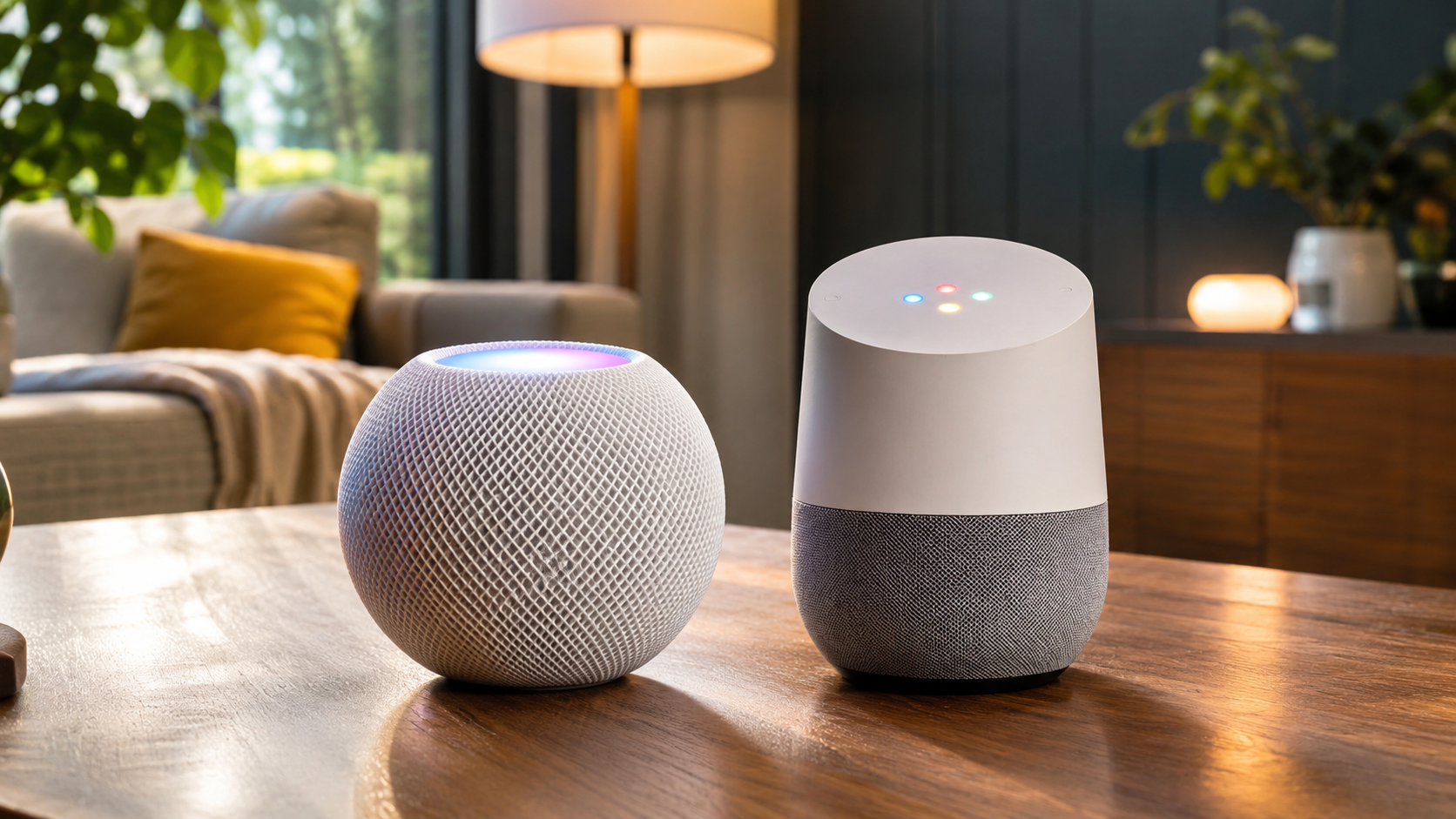
Apple HomeKit or Google Home: The Definitive Comparison
Smart technology should make everyday life easier. However, choosing the right smart home ecosystem can feel overwhelming. Deciding between Apple HomeKit or Google Home is an important step when building a connected home.
Both platforms offer powerful automation, voice control, and device management. However, they approach smart home technology differently. Google focuses on broad compatibility, flexible controls, and Google Assistant integration. Apple emphasizes privacy, security, and integration with its existing devices.
The right choice depends on your smartphone, preferred voice assistant, budget, and privacy expectations. You should also consider which smart devices you already own.
Before purchasing new equipment, explore the Connectivity Standards Alliance and its Matter standard. This technology makes compatible smart home products easier to use across different ecosystems.
This guide compares both platforms across essential features. We will examine compatibility, privacy, voice assistants, hardware, and automation. We will also explain whether Apple HomeKit is still supported.

Is Google Home Better Than Apple HomeKit?
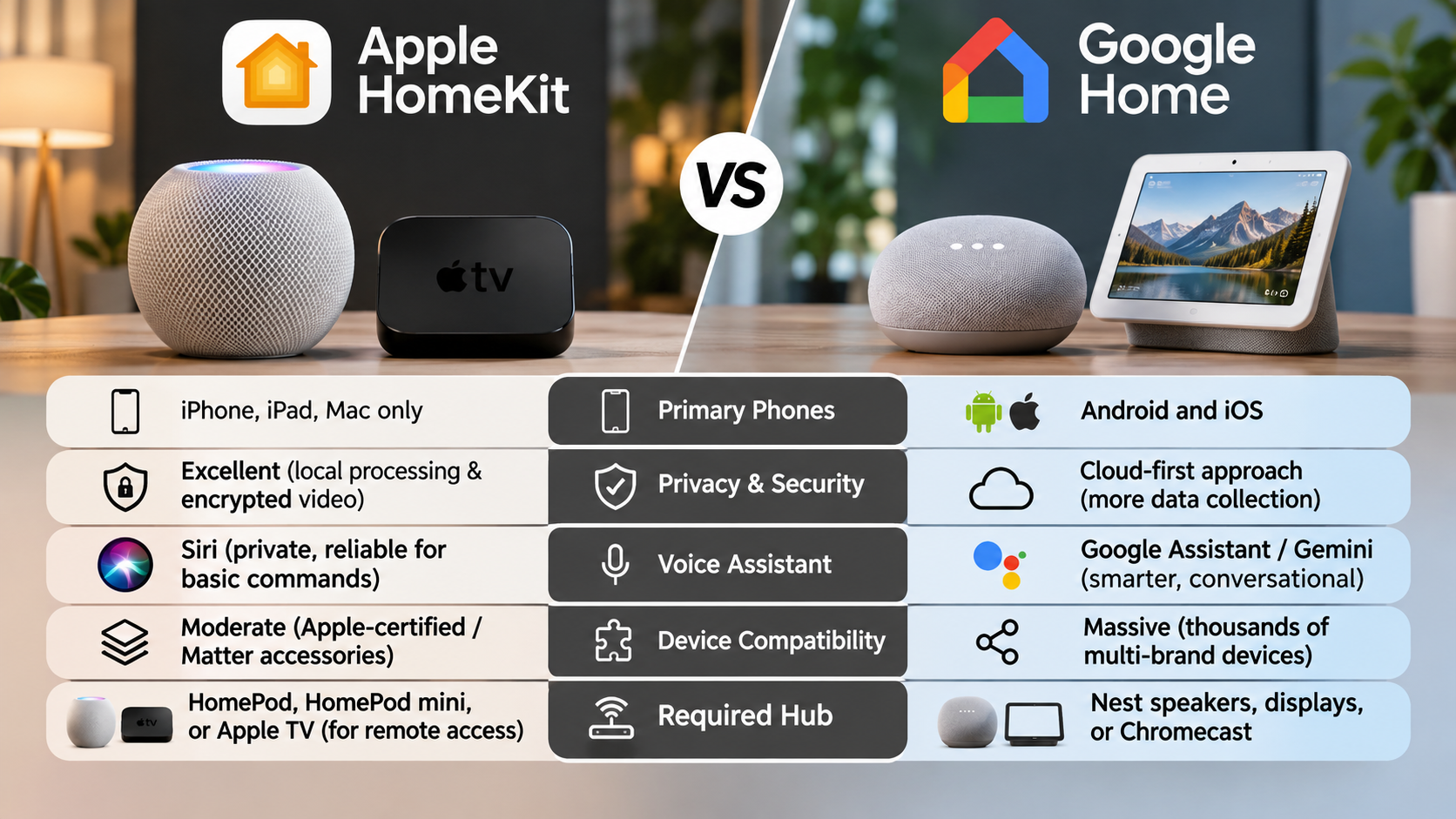
Google Home can be better than Apple HomeKit for people who prioritize affordability and device compatibility. Its ecosystem supports products from numerous manufacturers. This gives buyers more flexibility when choosing smart lights, cameras, plugs, and sensors. You can also explore smart home heaters and their advantages and disadvantages before selecting connected heating equipment.
Google Assistant also offers convenient voice interactions. It handles many conversational requests and connects with Google’s wider services. This makes Google Home particularly useful for households already using Android devices.
However, Apple Home offers advantages that Google cannot completely replicate. Its integration with iPhones, Apple Watches, HomePods, and Apple TVs creates a connected experience. Apple also provides strong privacy controls and secure communication between supported accessories.
Neither platform is universally better. Your preferred smartphone and existing hardware should influence your decision.
- Choose Google Home for broad compatibility and flexible device choices.
- Choose Apple Home for deeper integration with Apple devices.
- Consider Matter if you want accessories that support multiple ecosystems.
Your priorities matter more than brand popularity when choosing a platform.
Local Privacy Versus Voice Assistant Intelligence
Privacy and voice control are two important differences between Apple Home and Google Home. Apple emphasizes privacy protections and secure accessory communication. HomeKit Secure Video also provides encrypted video processing for supported cameras and compatible configurations.
Google focuses heavily on voice assistance and connected services. Google Assistant can understand many natural-language commands. However, some voice features and remote controls depend on internet connectivity and cloud services.
It would be inaccurate to describe Apple as completely local or Google as entirely cloud-dependent. Both platforms use a combination of local networking and online services. Matter devices can communicate locally over compatible home networks. Understanding how to secure a home network can also help protect connected devices and reduce potential security risks.
Consider these differences before choosing:
- Apple: Strong privacy features and encrypted camera storage options.
- Google: Conversational voice control and integration with Google services.
- Both: Local device communication for supported Matter accessories.
Your actual privacy depends on device settings, manufacturer policies, and connected services.
Which One Is Better, Google or Apple?
Choosing between Google and Apple depends on the devices you use every day. Apple Home provides a convenient experience for people already using iPhones, Apple Watches, and HomePods. Its Home app brings supported accessories together in one interface.
Google Home offers greater flexibility across Android and iOS devices. Household members can use the Google Home app without owning identical smartphones. This makes it practical for families with different device preferences.
Both platforms support automation, device sharing, and compatible smart accessories. However, their individual features can vary depending on the device and software version.
Google also connects with services such as Google Calendar and other Google products. Apple offers deeper integration with its own operating systems and hardware.
Before choosing, consider your existing devices, household requirements, and future purchases. Switching ecosystems later can involve additional setup costs and compatibility problems.
Ecosystem Lock-In and Household Hardware
Ecosystem compatibility becomes important when several people share the same smart home. Apple Home works best when household members have compatible Apple devices. Its Home app provides access to supported accessories and shared home controls.
Google Home offers apps for both Android and iOS. This makes it easier for households using different smartphone brands. However, some features may vary between operating systems and devices.
Neither ecosystem eliminates compatibility limitations completely. Certain accessories require specific hubs, subscriptions, or manufacturer applications. Some advanced features also remain exclusive to individual platforms.
Consider these points before purchasing smart home equipment:
- Check whether your smartphone supports the required application.
- Confirm whether accessories support Apple Home, Google Home, or Matter.
- Check whether remote access requires a compatible hub.
- Review subscription requirements for cameras and advanced services.
- Consider whether other household members can access shared controls.
Planning compatibility early can prevent unnecessary hardware expenses later.
Can I Use Google Home With Apple HomeKit?
Yes, you can use Google Home and Apple Home together. However, both platforms do not automatically become one unified application. You need compatible accessories and the correct setup.
Many modern smart home products support multiple ecosystems. Matter-certified devices offer even greater flexibility. They can connect with different compatible platforms without requiring separate proprietary versions.
For example, you can add a supported Matter smart bulb to Apple Home and Google Home. You can then control the same bulb through either application. Each ecosystem still manages its own automations, voice assistant, and household settings.
However, Matter compatibility does not guarantee that every product feature works everywhere. Some advanced functions may remain exclusive to the manufacturer’s application or original ecosystem.
You should also check hub requirements before purchasing. Apple Home and Google Home may each require compatible hardware for particular features.
Connecting Platforms With Matter and Homebridge
Matter makes it easier to connect smart home accessories across different manufacturers and platforms. Its Multi-Admin feature allows compatible devices to work with multiple Matter-supported ecosystems.
For example, you can control a compatible smart plug through Apple Home and Google Home. You do not necessarily need to choose only one platform. However, each ecosystem may require its own compatible Matter hub.
Matter also has limitations. Not every device category or advanced feature receives identical support across platforms. Always check the manufacturer’s compatibility information before buying.
For older accessories, bridging solutions provide another option.
Homebridge allows users to connect certain unsupported accessories to Apple Home. It uses plugins to communicate with compatible third-party products. Home Assistant offers broader automation and integration possibilities.
However, these solutions require additional configuration and maintenance. They are better suited to technically confident users.
For most households, native Matter support is the simpler starting point.
Does Apple Have Anything Like Google Home?
Yes, Apple offers a direct alternative to Google’s smart home ecosystem. Its platform combines the Apple Home app, Siri, HomePod speakers, and compatible accessories.
The Apple Home app lets users manage supported smart lights, cameras, locks, thermostats, and other connected products. You can organize accessories by room and create automated routines.
Apple also sells two smart speaker models: HomePod and HomePod mini. Both provide Siri voice control and integrate with compatible Apple devices. They can also function as smart home hubs.
Google offers similar products through its Nest range. These include Nest speakers and smart displays. The Google Home application provides centralized device management.
One notable difference is hardware variety. Google offers dedicated smart displays with touchscreen interfaces. Apple’s HomePod lineup focuses primarily on audio and voice interaction.
Your preferred control method should influence your hardware choice.
Comparing Smart Speakers and Ambient Displays
Smart speakers and displays provide different ways to interact with connected accessories. Apple and Google approach this experience differently.
Apple’s HomePod lineup focuses on sound quality, Siri, and integration with Apple devices. The HomePod mini offers a compact option for smaller rooms. The larger HomePod provides a more powerful audio experience.
Google offers Nest speakers and smart displays. Devices such as the Nest Hub combine voice commands with touchscreen controls. Users can check timers, view supported camera feeds, and access visual information.
Here is a simple comparison:
| Feature | Apple Home | Google Home |
|---|---|---|
| Smart speakers | HomePod, HomePod mini | Nest Audio, Nest Mini |
| Smart displays | No dedicated HomePod display | Nest Hub |
| Voice assistant | Siri | Google Assistant |
| Mobile integration | Apple devices | Android and iOS |
| Main strength | Apple ecosystem integration | Voice and visual controls |
Google is more suitable for touchscreen-based smart home controls. Apple is better suited to users who prefer voice control and Apple integration.
Is HomeKit Going Away?
No, Apple has not announced that HomeKit is going away. HomeKit remains part of Apple’s smart home technology. Apple uses the Apple Home name for its consumer-facing smart home experience.
The distinction between HomeKit and Apple Home can create confusion. HomeKit refers to Apple’s smart home framework and accessory technology. Apple Home is the application and ecosystem consumers use to manage supported accessories.
Apple also supports the Matter connectivity standard. This allows compatible accessories from different manufacturers to work within Apple Home.
The platform continues to support smart accessories, automation, Siri controls, and home hubs. Users can manage compatible devices through supported Apple products.
However, not every older accessory receives identical support. Some products may require updates, compatible hubs, or manufacturer applications.
If you already own HomeKit accessories, there is no general reason to replace them simply because of the newer Apple Home branding.
Architectural Upgrades and the Matter Evolution
Apple continues to develop its smart home platform through HomeKit and Matter support. These technologies help compatible accessories communicate across different manufacturers and ecosystems.
Matter improves interoperability by providing a shared connectivity standard. It also supports local communication between compatible devices. This can reduce dependence on cloud services for certain home controls.
Apple integrates Matter into its supported operating systems and Apple Home experience. Compatible accessories can be added through the Home app. Some configurations also require a compatible Apple home hub.
Home hubs play an important role in remote access and automation. Supported HomePod and Apple TV models provide essential smart home capabilities.
These developments show that Apple’s smart home technology remains relevant. However, compatibility depends on individual accessories and hardware requirements.
Before purchasing new products, check their Matter certification and Apple Home compatibility. This will help you avoid unnecessary replacements and build a more flexible smart home.
Final Verdict: Apple HomeKit or Google Home?
There is no universal winner between Apple HomeKit and Google Home. Both ecosystems offer useful smart home features. However, they serve different preferences and household requirements.
Choose Apple Home if you already own an iPhone, Apple Watch, or HomePod. Its integration, privacy features, and centralized controls make it a suitable option for Apple households.
Choose Google Home if you prefer Android, broader device choices, and touchscreen smart displays. Its flexible compatibility also makes it suitable for households using different smartphone brands.
If you want flexibility, consider Matter-certified accessories. They can reduce ecosystem lock-in and provide more options when expanding your smart home.
Ultimately, choose the ecosystem that supports your existing devices and future requirements. A reliable smart home depends on compatibility, security, and practical automation rather than brand loyalty.