
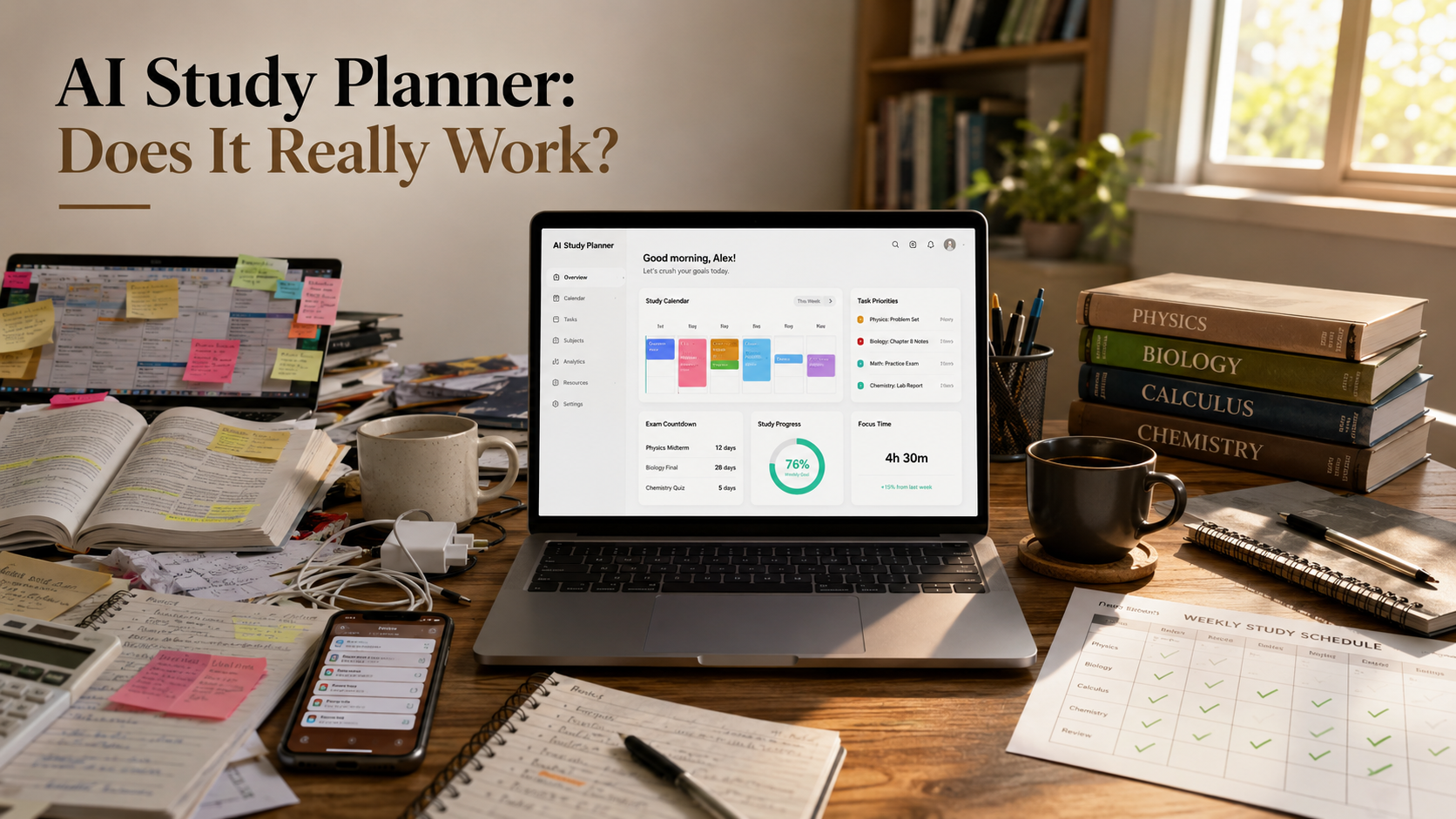
AI Study Planner: Does It Really Work?

Staying on top of coursework can feel like a losing battle for modern students. Between attending lectures, submitting weekly assignments, maintaining a social life, and managing personal commitments, managing your time requires constant, exhausting effort. This ongoing challenge has led many struggling students to turn to a digital AI study planner to fully automate their daily routines. Platforms like Shovel and other smart scheduling tools promise to eliminate procrastination by calculating exactly what to study and when. However, do these digital assistants actually improve your academic performance, or are they just a glorified version of a Google Calendar?
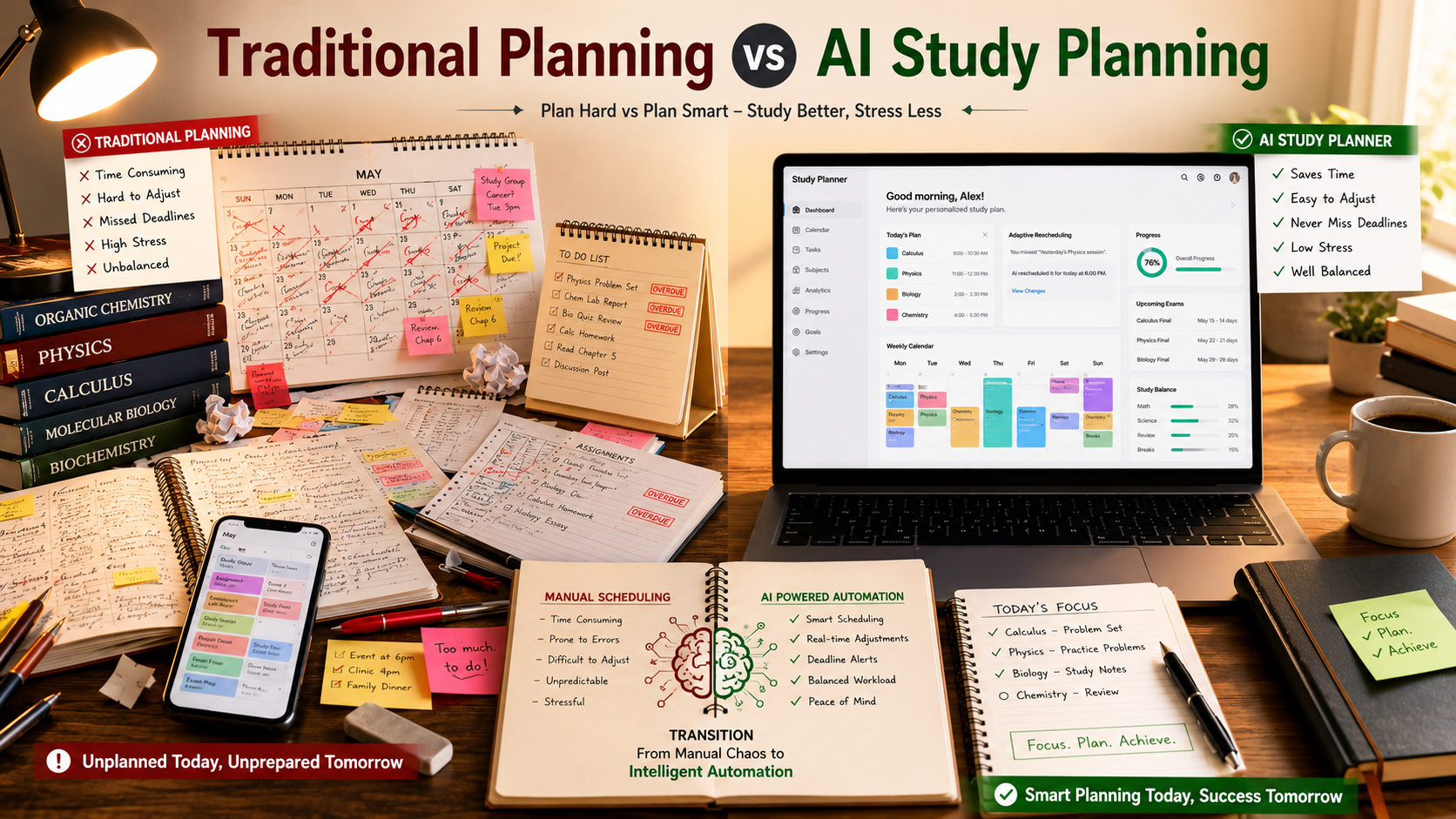
The harsh reality of academic stress is driving this massive shift toward automation. Traditional paper planners and static calendar applications require manual updates every single time a deadline moves or a lecture gets unexpectedly rescheduled. When life gets chaotic, maintaining the planner itself becomes just another tedious chore on your endless to-do list. If you still prefer organizing your study sessions manually, you can also learn how to create a study timetable that complements digital planning tools.
An automated scheduling tool aims to solve this friction by adapting to changes dynamically. This comprehensive review explores how digital study assistants function under real-world conditions. We will analyze their core features, discuss their practical benefits, and highlight potential limitations. By the end, you will know exactly whether integrating an artificial intelligence tool into your academic routine is truly worth the investment.
How Does an AI Study Planner Actually Work?
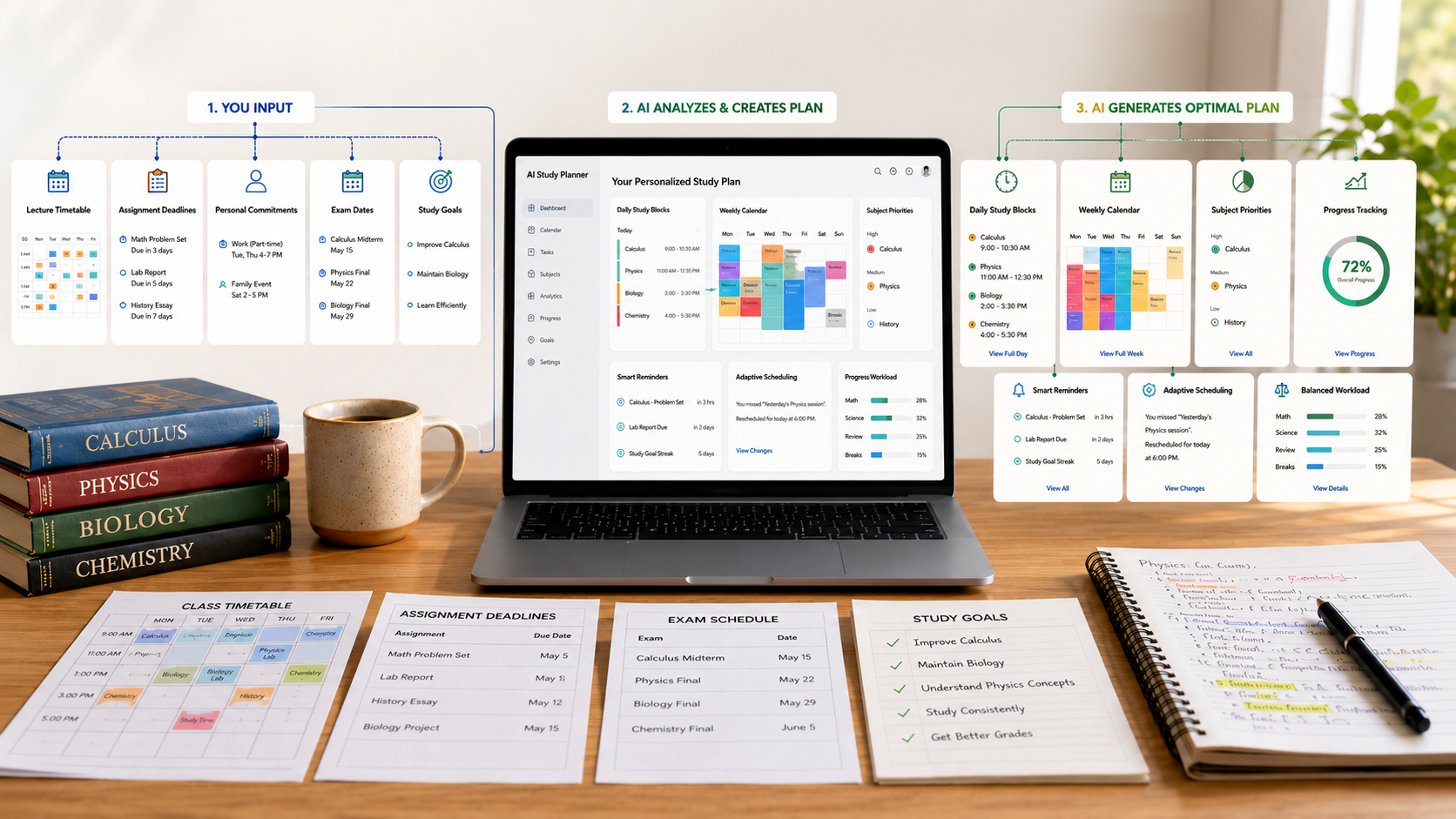
Traditional calendar apps act as passive storage for your tasks, relying entirely on you to sort through the clutter. In contrast, an automated scheduler acts as an active project manager for your education. When you first set up the software, you do not just type in your exam dates and hope for the best. You input your class schedule, recurring personal commitments, target grades, and current confidence levels in specific subjects. The underlying algorithm processes these variables to identify your true available free hours each day.
By calculating these metrics, it breaks massive study goals into bite-sized, manageable daily tasks. If you tell the system that you have a chemistry exam in two weeks, it will not wait until the night before to alert you. Instead, it systematically distributes study blocks across your calendar, ensuring you cover every topic without burning out. Moreover, these platforms learn from your daily behavior over time. If you consistently skip a scheduled study session on Thursday afternoons, the algorithm notices the pattern. It adjusts future recommendations, shifting heavy cognitive tasks to times when you are statistically more focused and productive. This creates a deeply personalized rhythm that matches your natural biological energy levels.
The Benefits of Using an Automated Scheduling Tool
The primary advantage of using a smart scheduler is the complete elimination of decision fatigue. Many students waste valuable energy simply deciding what to study first, which often leads to total avoidance of the task. An automated system removes this mental barrier by presenting a clear, singular directive the moment you open your laptop. You no longer have to choose between history or math; the planner makes the optimal choice for you based on impending deadlines.
Furthermore, every student processes information at a completely unique pace. A smart planner recognizes this variance by allowing you to adjust how much time you dedicate to specific modules. For instance, if a mathematics concept takes longer to master than expected, the software recalculates your remaining weeks automatically. It also builds hidden safety margins into your week, keeping you on track even if unexpected events occur. This predictive buffer time ensures that a single bad day does not ruin your entire monthly preparation strategy. By partitioning a syllabus into thirty-minute daily milestones, the software lowers the barrier to entry, reducing academic procrastination and making massive projects feel achievable.
Potential Drawbacks of Digital Revision Assistants
While the technology offers clear benefits, a digital scheduler is not a magic solution for academic success. The software relies entirely on the accuracy of the data you provide. If you fail to log your assignments or consistently overestimate your daily free time, the generated schedule becomes completely useless. Algorithms lack human intuition, meaning they cannot guess that you are feeling exhausted or that an assignment turned out to be doubly difficult.
Furthermore, some users experience a phenomenon known as optimization anxiety. Watching an algorithm recalculate your entire month because you missed a single study block can feel discouraging and clinical. If you possess a highly unpredictable schedule or a chaotic personal life, the rigid structure of automated time-blocking might feel restrictive rather than liberating. It takes immense discipline to look at a machine-generated plan and follow it precisely without rebeling against the structure. Therefore, students who prefer spontaneous learning might find these digital tools create more stress than they actually solve.
Maximizing the Efficiency of Your AI Study Planner
To get the most out of your digital assistant, you must establish a consistent routine around its functionality. Treat the software as a strict operational framework rather than a casual suggestion. The optimization process works beautifully, but it requires clean data. You must make it a habit to input new assignments the exact moment your professor assigns them, ensuring the algorithm always calculates your workload using real-time parameters.
Additionally, you must sync all personal calendars with the software. Never isolate your academics from the rest of your life, as they constantly influence each other. Integrate your work shifts, social events, and fitness routines into the platform. If the algorithm does not know you work a job on Tuesday nights, it will continue to schedule heavy revision sessions during those hours. Finally, spend ten minutes every Sunday conducting a thorough progress audit. Review the accuracy of your planner and adjust your estimated task completion speeds based on the previous week’s actual performance. This regular maintenance ensures the algorithm stays aligned with your actual operational capacity.
The Verdict: Should You Switch to an Intelligent Planner?
An AI study planner is an incredibly effective tool for students who struggle with time management and organizational consistency. It bridges the gap between knowing what to do and actually finding the physical time to execute it. The software takes away the stress of organization, leaving you with more cognitive energy to actually focus on your coursework. It turns an overwhelming syllabus into a daily step-by-step checklist that guarantees coverage of the material.
However, the software cannot sit at the desk and do the hard work for you. It is a tool for execution, not a replacement for effort. If you are willing to input accurate data and respect the generated schedule, this technology can significantly reduce your academic stress and elevate your final grades. It represents a major upgrade over traditional methods for anyone ready to commit to a structured routine. For those students, the investment yields massive returns in both productivity and peace of mind.
Frequently Asked Questions
Can an AI study planner help me prepare for major standardized exams?
Yes, these specialized platforms excel at preparing students for high-stakes, long-term standardized exams like the SAT, MCAT, or LSAT. These massive tests require months of sustained, structured revision rather than ineffective short-term cramming sessions. The advanced algorithm calculates the total number of study hours required to cover the comprehensive material and distributes them evenly across your remaining timeline. This systematic approach effectively prevents last-minute panic and ensures you allocate sufficient time to practice exams and weak subject areas. By tracking your progress over months, the planner keeps you accountable, ensuring you peak intellectually right when exam day arrives. Additionally, it adapts to your changing performance metrics, dynamically offering more focus on topics where your practice scores lag, acting as a highly efficient, automated personal tutor that optimizes every single study session.
Are there reliable free versions of these automated tools available?
Many platforms offer functional free tiers or trial periods for students on a tight budget. These basic versions usually include core features like deadline tracking and fundamental time-blocking. However, advanced features like predictive analytics, deep calendar synchronization, and hyper-personalized study recommendations usually require a monthly premium subscription. The free versions are typically excellent for determining whether you enjoy the digital workflow before committing financially. It is wise to test a few free tools to see which user interface matches your personal style before upgrading to a premium account. Furthermore, some open-source projects or institutional applications provide robust scheduling algorithms entirely free of charge through university partnerships, meaning you should always check if your academic institution provides institutional access to premium organization software before spending your own money.
How does an AI study planner handle sudden changes in my schedule?
When you miss a deadline or add an unexpected event, the algorithm instantly rebalances your remaining schedule. It looks at your upcoming free blocks and redistributes the missed tasks across the next few days automatically. This real-time flexibility is the main reason students prefer automated tools over static paper planners, as it removes the stress of manually erasing and rewriting your entire week. The system adapts to your life, ensuring that an emergency on Tuesday does not derail your success on Friday, keeping your momentum alive without manual scheduling work. This automatic redistribution process ensures that tasks never pile up into an unmanageable bottleneck, allowing you to easily visualizer a realistic path forward even after taking an unplanned day off due to illness, unexpected work shifts, or personal emergencies.
Will using a smart scheduler eliminate academic burnout?
It can significantly reduce the risk of burnout, but it cannot eliminate it entirely without your active cooperation. The system works to prevent burnout by discouraging dangerous cramming sessions and ensuring you take regular breaks. It visualizes your actual workload, making it easier to see when you are overcommitting yourself. However, you must still listen to your body and explicitly schedule rest days within the application to maintain long-term mental health. The tool provides the framework for balance, but you must possess the wisdom to enforce your own physical boundaries. An algorithm can flag that you are studying ten hours a day, but if you choose to ignore the warnings and bypass the built-in rest periods, the technology loses its preventative efficacy, making human compliance the ultimate deciding factor in long-term wellness.
Is my personal data safe with these online educational platforms?
Most reputable educational software companies prioritize user privacy and employ standard data encryption protocols to protect your information. They collect data strictly to train the scheduling algorithm and improve your overall user experience. Before signing up, you should always review the platform’s privacy policy to ensure they do not sell your personal data to third-party advertisers or data brokers. Look for applications that comply with modern data protection regulations to ensure your academic records and daily habits remain completely secure, private, and out of the wrong hands. Additionally, you can choose platforms that allow you to use an anonymous email alias and minimize the amount of real-world personal identifiers you upload into the cloud database, giving you complete control over your digital footprint while still leveraging the powerful scheduling capabilities of the software.
Conclusion
Embracing an AI study planner can transform the way you approach your academic workload. By transforming your static to-do list into a dynamic, responsive schedule, these tools remove the administrative friction of being a student. They eliminate the daily guesswork of lesson planning, allowing you to focus entirely on deep learning and retention. This shift in focus maximizes your academic efficiency, ensuring that every hour spent at your desk yields real results. The software acts as a supportive digital coach, keeping you moving forward even when motivation wanes.
While they require initial setup and honest data entry to function optimally, the return on investment is undeniable. The technology has matured to a point where it genuinely understands human scheduling conflicts and learning curves. If you want to optimize your time, eliminate procrastination, and reduce exam anxiety, let an intelligent algorithm handle your calendar. Stop fighting your schedule and start mastering it with the help of modern automation.