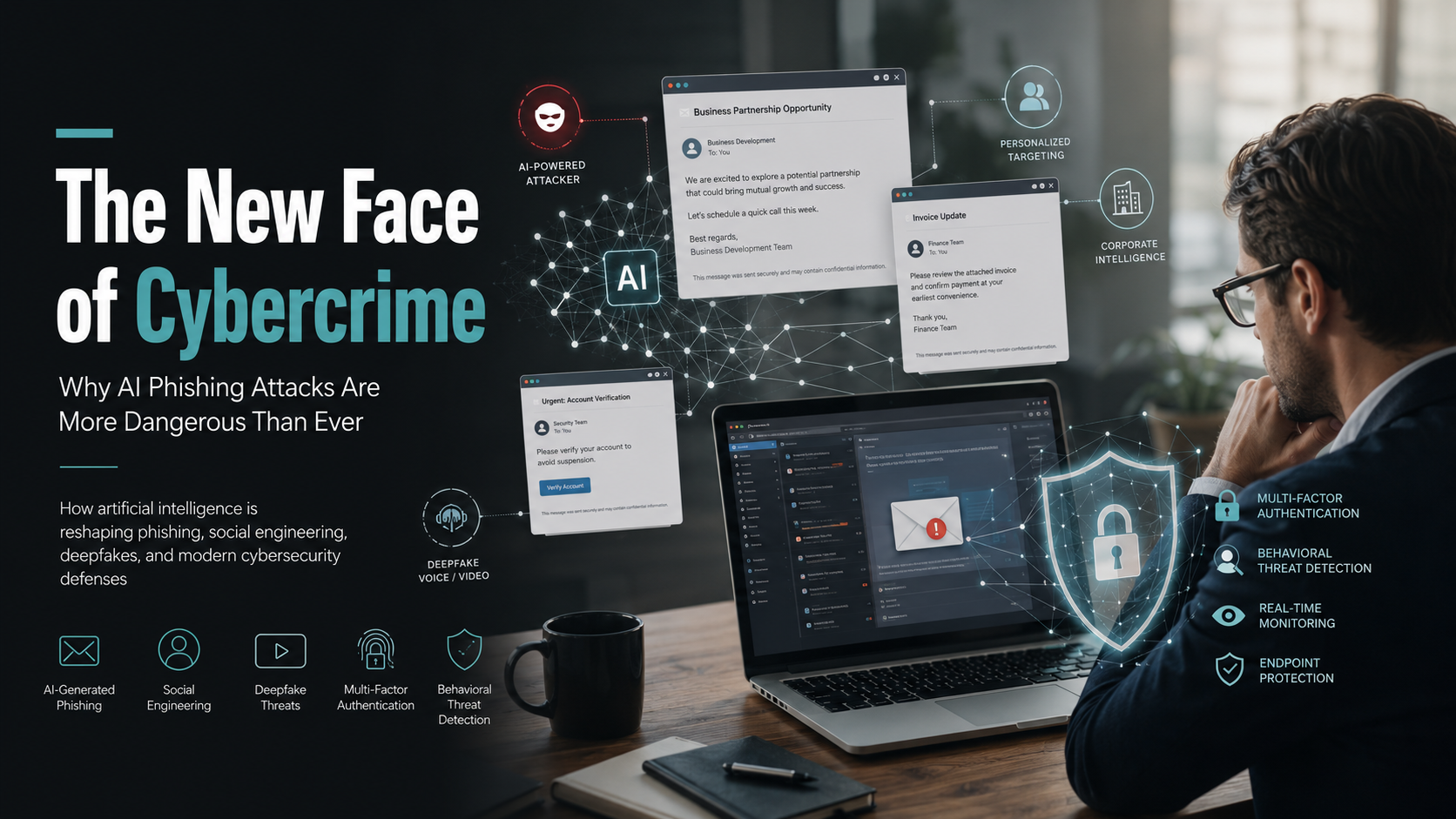
The New Face of Cybercrime: Why AI Phishing Attacks Are More Dangerous Than Ever
Cybercriminals are constantly changing their methods, and traditional email security tools are struggling to keep pace. The biggest force behind this transformation is artificial intelligence. Today, AI phishing attacks represent a new level of social engineering, allowing attackers to create convincing scams that can fool even experienced users.
In the past, phishing emails were often easy to identify. They usually contained poor grammar, spelling mistakes, strange formatting, or obvious signs of fraud. Modern attackers no longer depend on these mistakes. Instead, they use advanced artificial intelligence tools to create professional, personalized, and highly believable messages.
Generative AI platforms can help attackers produce emails that match a company’s communication style. They can imitate the tone of executives, employees, or trusted vendors. This makes fraudulent messages appear much more legitimate than traditional scams.
This shift creates a serious challenge for businesses and individuals. When a malicious email looks identical to a genuine business message, the chances of human error increase significantly. Organizations now face greater risks, including financial losses, data breaches, and unauthorized system access.
As artificial intelligence continues to influence the cybersecurity landscape, businesses must understand how emerging threats operate and how to respond effectively. Guidance from National Institute of Standards and Technology Cybersecurity Framework highlights the importance of managing cybersecurity risks through structured security practices and continuous improvement.
In this article, we will explore how artificial intelligence is changing phishing attacks, why traditional defenses often fail, and what steps organizations can take to improve their cybersecurity protection.
How Artificial Intelligence Powers Modern Phishing Scams
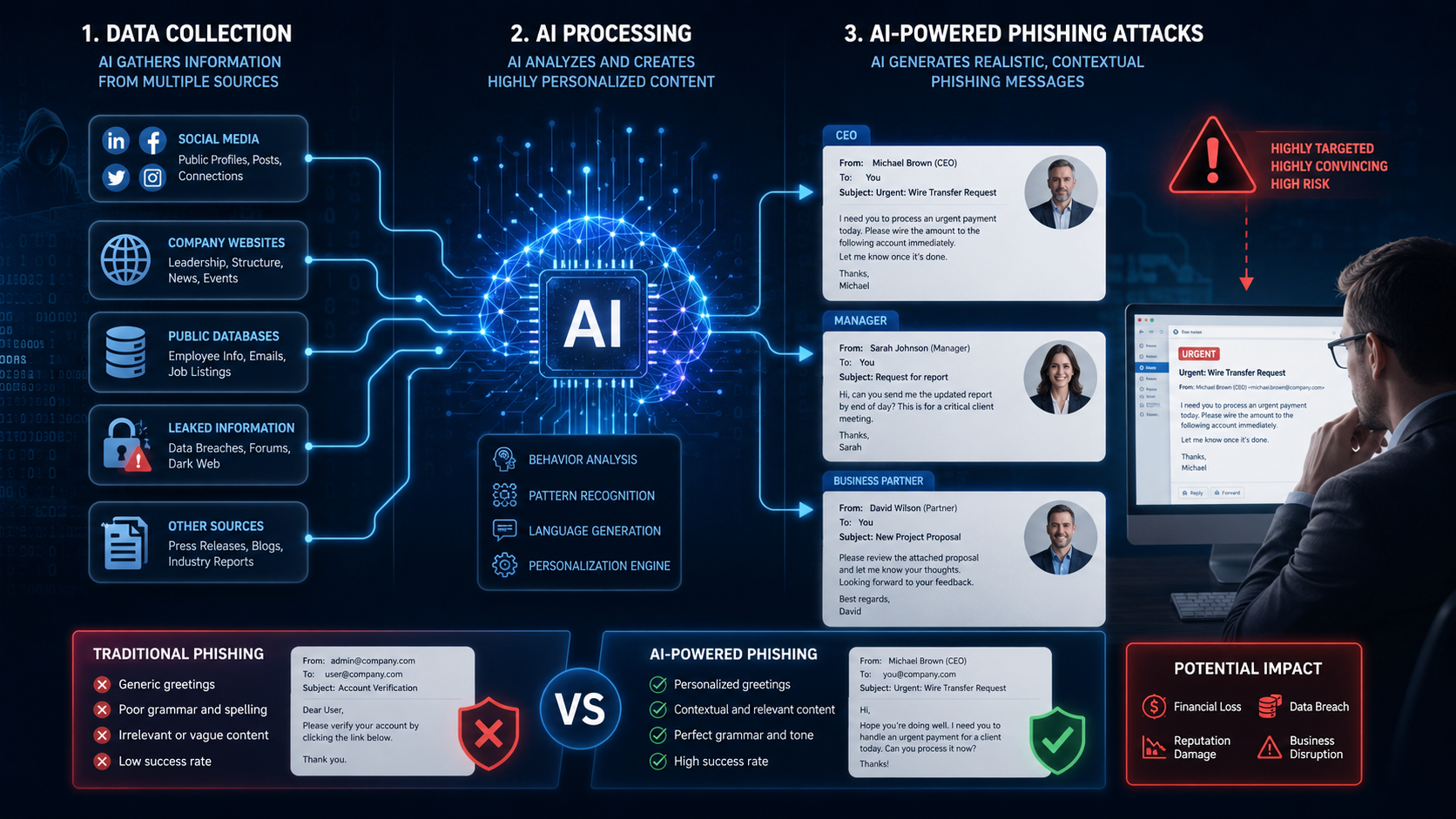
Artificial intelligence has made it easier for cybercriminals to create advanced phishing campaigns. In the past, attackers needed strong writing skills, detailed research, and significant time to create convincing targeted scams. Today, AI tools can automate much of this process within minutes.
Generative language models can analyze large amounts of publicly available information. Attackers may collect details from social media profiles, company websites, and leaked databases. They then use this information to create personalized messages designed for specific victims.
This level of customization makes modern phishing attempts far more dangerous. A scam email may appear to come from a manager, business partner, or company executive. It can include industry-specific language and references that make the message feel authentic.
Unlike traditional phishing methods, AI-powered attacks can be created at a much larger scale. Criminals can generate thousands of unique messages while still maintaining a high level of personalization. This allows them to target more people while increasing the chances of success.
The combination of automation and personalization has transformed phishing from a simple email scam into a sophisticated cybersecurity threat. Businesses must now prepare for attacks that are faster, smarter, and more difficult to identify.
Why AI Phishing Attacks Bypass Traditional Security Defenses
Traditional email security systems often depend on fixed rules, known threat databases, and suspicious activity patterns. These systems commonly detect phishing attempts by identifying harmful links, blocked domains, unusual sender behavior, or common scam phrases.
However, AI phishing attacks can avoid many of these detection methods. Artificial intelligence allows attackers to create fresh content for every message, making it difficult for security tools to recognize repeated patterns.
Several factors make these attacks especially challenging:
- Unique phishing content: AI-generated emails can create different wording for every target. This reduces the chance of detection through traditional email signatures.
- Fewer obvious warning signs: Modern AI tools produce clear grammar, professional formatting, and realistic business language.
- Adaptive conversations: Attackers can use AI to continue email conversations and respond naturally to questions from victims.
Because these messages often appear normal, automated scanners may not detect the danger immediately. The email may pass security checks and only become harmful when a user interacts with the attached file, link, or request.
Organizations must move beyond simple threat detection. Modern cybersecurity requires tools that understand user behavior, communication patterns, and unusual requests.
The Rise of Hyper-Realistic Deepfake Attacks
AI-driven phishing is no longer limited to written messages. Attackers are increasingly combining phishing emails with deepfake technology, including realistic voice cloning and video manipulation.
This creates a more convincing attack experience. For example, an employee may receive an urgent email that appears to come from a company executive. Shortly afterward, they may receive a voice message or video call that appears to confirm the request.
When the voice, face, and communication style match a trusted person, victims may feel confident that the request is genuine. This can lead employees to ignore normal verification procedures.
Deepfake-powered scams are especially dangerous in corporate environments. Attackers can use them to impersonate executives, suppliers, or financial officers. Their goal is often to convince employees to transfer money, reveal sensitive information, or provide access credentials.
The combination of AI-generated text and synthetic media creates a powerful social engineering method. It uses multiple forms of deception at once, making identity verification more difficult than ever before.
Organizations must recognize that digital communication alone may no longer be enough to confirm someone’s identity. Strong verification processes are becoming essential for preventing AI-powered fraud.
The Strategy Behind Smart AI Social Engineering Attacks
Traditional phishing campaigns often rely on sending thousands of generic messages and hoping that a small number of people respond. AI-powered attacks have changed this approach completely. Attackers can now create highly targeted spear phishing campaigns designed for specific individuals, departments, or organizations.
Artificial intelligence helps criminals analyze company structures, employee roles, and communication patterns. This information allows them to identify valuable targets, such as finance employees, executives, or administrators with access to sensitive systems.
AI tools can also improve the timing of attacks. Criminals may study business routines and choose moments when employees are more likely to act quickly. For example, attackers may send urgent payment requests during busy periods or when decision-makers are unavailable.
These techniques make modern phishing attempts more strategic and effective. Instead of relying on random chances, attackers use data-driven methods to increase their success rate.
Organizations must understand that AI phishing attacks are not only about deceptive emails. They are carefully planned social engineering campaigns designed to manipulate human behavior.
Strong security policies, employee awareness, and verification procedures are essential. Technology can detect many threats, but informed employees remain one of the strongest defenses against advanced phishing attempts.
Key Indicators of AI-Generated Phishing Attempts
Although AI phishing attacks are becoming more sophisticated, they are not impossible to detect. Careful observation can reveal small signs that a message may not be genuine.
Modern scams often avoid obvious mistakes, but they may still contain unusual patterns. Employees should look beyond grammar and spelling errors because AI-generated messages can appear highly professional.
Important warning signs include:
- Unusual communication methods: A sudden request through a platform or messaging service that the person rarely uses.
- Unexpected requests: Messages asking for payments, passwords, sensitive files, or urgent actions outside normal procedures.
- Changes in writing style: A message may sound slightly different from the person’s usual tone, vocabulary, or communication habits.
- Pressure to act quickly: Attackers often create urgency to prevent careful verification.
- Requests for secrecy: Fraudsters may ask victims not to discuss the request with colleagues.
These signs do not always confirm an attack, but they should encourage additional verification. Employees should independently confirm unusual requests before taking action.
A simple phone call or separate communication channel can prevent major security incidents. Building a habit of verification is one of the most effective ways to reduce the impact of AI-powered phishing.
Frequently Asked Questions About AI Phishing Attacks
What makes AI phishing attacks different from traditional phishing scams?
Traditional phishing scams usually depend on generic templates sent to large numbers of recipients. These messages often contain obvious warning signs, such as poor grammar, spelling mistakes, and vague greetings.
AI phishing attacks are different because they use artificial intelligence to create personalized and realistic messages. Attackers can analyze publicly available information and create emails that match the writing style of specific individuals or organizations.
Instead of sending the same message to thousands of people, criminals can generate unique emails for each target. These messages may include company details, employee names, or references to current projects.
This personalization makes AI-powered scams much harder to identify. Traditional email filters often search for repeated patterns, but AI-generated messages may look completely different every time.
The biggest difference is the level of realism. AI allows attackers to create communication that feels natural, professional, and trustworthy. This increases the chance that victims will interact with malicious links, files, or requests.
How do cybercriminals use generative AI to create phishing emails?
Cybercriminals use generative artificial intelligence to automate the creation of convincing phishing content. They may collect information from public sources, social media profiles, company websites, or previously leaked data.
After gathering information, attackers can use AI systems to generate messages that match a target’s environment. For example, an attacker may create an email that appears to come from a manager requesting an urgent business action.
AI tools can also help criminals improve the language, structure, and tone of phishing emails. A message that once looked suspicious can now appear professional and carefully written.
Some attackers also use modified AI systems designed without normal safety restrictions. These systems may assist with creating deceptive content, malicious code, or automated attack campaigns.
However, the same technology can also support cybersecurity teams. Security professionals use AI for threat detection, email analysis, and identifying unusual behavior patterns.
The key challenge is that both attackers and defenders now use artificial intelligence. Organizations must continue improving their security strategies as these threats evolve.
Can standard antivirus software detect AI-generated phishing emails?
Traditional antivirus programs and basic email filters are often not enough to detect advanced AI phishing attacks. Many older security systems focus on known threats, including malicious files, suspicious domains, and previously identified attack patterns.
AI-generated phishing emails can avoid these methods because their content is constantly changing. Each message may contain different wording, structure, and details, making signature-based detection less effective.
Attackers may also use newly created websites or legitimate cloud services to host malicious content. These pages may appear safe to automated systems during the early stages of an attack.
Modern cybersecurity solutions need to analyze more than just email content. They must consider user behavior, communication patterns, sender relationships, and unusual requests.
Organizations should combine advanced security technology with employee training. A well-trained workforce can identify suspicious behavior that automated systems may miss.
Security tools remain important, but they should be part of a broader defense strategy. Human awareness and strong verification procedures are still essential.
What role do deepfakes play in modern corporate scams?
Deepfakes have increased the effectiveness of social engineering attacks by adding realistic synthetic voices and videos. Attackers can use AI-generated media to impersonate executives, employees, or trusted business partners.
A common scenario involves combining multiple attack methods. An employee may first receive a convincing phishing email. The attacker may then use a cloned voice message or fake video call to make the request appear legitimate.
This approach creates a false sense of trust. When multiple communication methods appear consistent, victims may feel less need to verify the request.
Corporate environments are especially vulnerable because employees often handle urgent financial and operational decisions. Attackers may target individuals who can approve payments or access valuable information.
To defend against deepfake scams, organizations need clear verification rules. Employees should confirm unusual requests through trusted channels rather than relying only on digital communication.
As synthetic media continues to improve, businesses must treat identity verification as a critical part of cybersecurity.
How can organizations protect themselves against advanced social engineering attacks?
Organizations need a layered security approach to reduce the risk of AI-powered phishing attacks. Technology alone cannot stop every threat, so businesses must combine security tools with employee awareness.
Important protection measures include:
- Enable multi-factor authentication: Additional verification steps reduce the impact of stolen passwords.
- Create verification procedures: Employees should confirm unusual financial or sensitive requests through separate communication channels.
- Provide security training: Regular awareness programs help employees recognize new attack techniques.
- Use behavioral security tools: Advanced systems can analyze communication patterns and identify unusual activity.
Companies should also develop a workplace culture based on careful verification. Employees should feel comfortable questioning unexpected requests, even when they appear to come from trusted sources.
The goal is not to eliminate all risks but to reduce opportunities for attackers. A combination of technology, policies, and informed decision-making creates stronger protection against evolving cyber threats.
Conclusion: Building Stronger Defenses Against AI Phishing Attacks
The cybersecurity landscape has changed significantly as artificial intelligence becomes more accessible. AI phishing attacks are becoming more advanced, more personalized, and more difficult to detect.
The old warning signs of phishing, such as poor grammar and obvious mistakes, are no longer reliable indicators. Modern attackers can create messages that look like genuine business communication.
Organizations must adopt a stronger security approach. This includes advanced detection systems, employee training, multi-factor authentication, and strict verification procedures.
Security teams should focus on preventing human manipulation as much as detecting technical threats. Employees must verify unusual requests, especially those involving money, credentials, or sensitive information.
Artificial intelligence will continue to influence both cyberattacks and cybersecurity defenses. The organizations that adapt quickly will be better prepared to handle future threats.
By combining technology with awareness and strong security practices, businesses can reduce the risks created by AI-powered phishing. Staying alert, questioning unusual communication, and verifying important requests remain essential steps in protecting digital assets.
For additional guidance on protecting yourself from phishing threats, learn more about staying safe after clicking a suspicious link and the steps you can take to reduce security risks.