
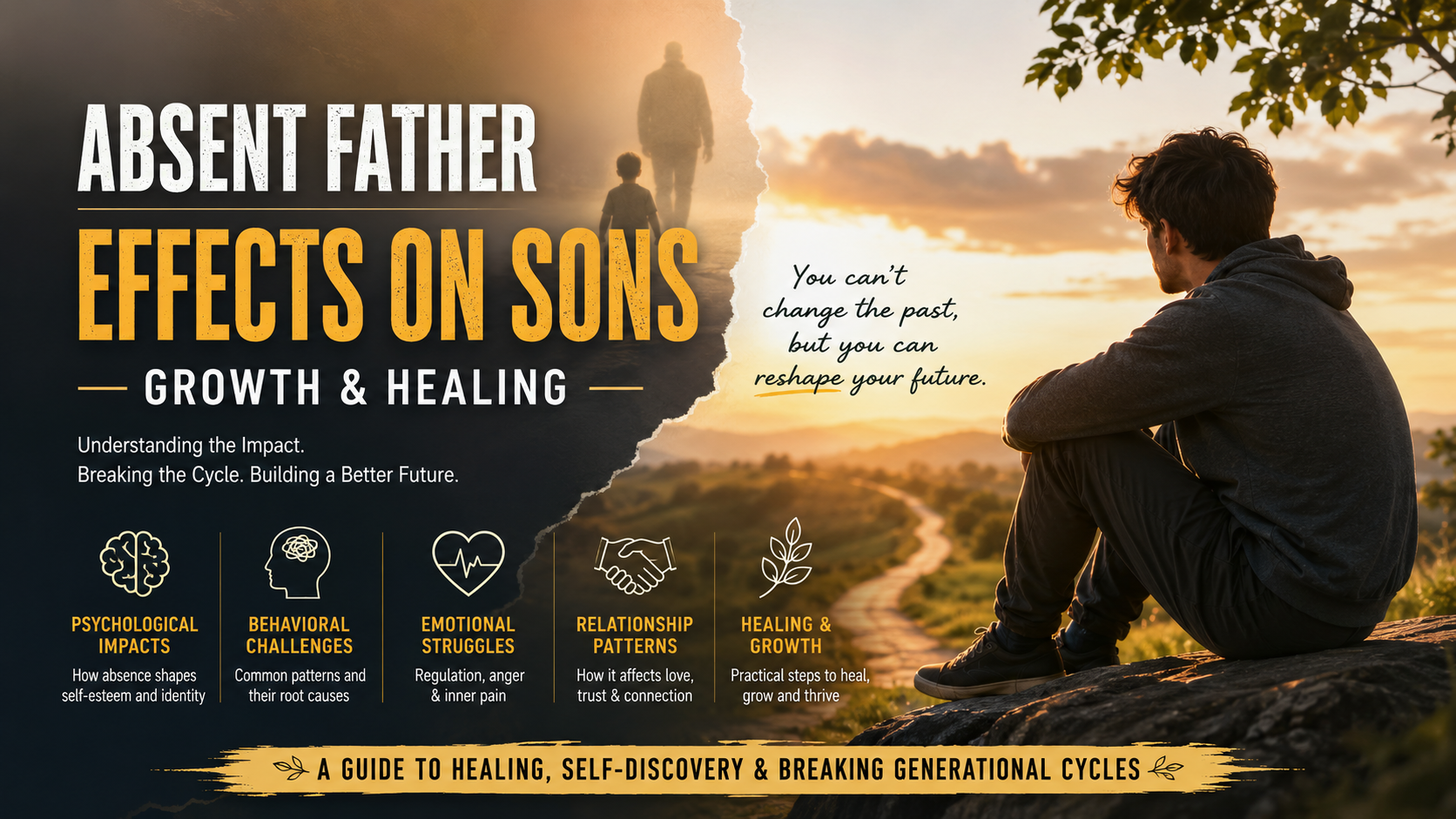
Absent Father Effects on Sons: Growth & Healing
The presence of a father shapes a young boy’s worldview, identity, and emotional security. When that presence is missing, the psychological ripple effects can last a lifetime. Understanding the profound absent father effects on sons is essential for recognizing the unique behavioral and emotional hurdles these men face as they grow. According to comprehensive research published by the Child & Family Blog, a father’s absence significantly alters a child’s socio-emotional development and shapes their future interpersonal relationships. The developmental void left behind often leaves boys searching for validation, boundary metrics, and a solid understanding of what it means to grow into a healthy, balanced adult man.
This article explores how a father’s absence influences a boy’s development from childhood through adulthood. We will examine the psychological impacts, emotional challenges, and relationship patterns that frequently emerge when the paternal bond is fractured or entirely missing. More importantly, we will outline actionable strategies for healing, self-discovery, and breaking generational cycles so that men can reclaim their narratives. Whether you are navigating your own past or supporting a loved one, this guide offers deep insights into the journey toward emotional recovery. Healing requires time, patience, and a willingness to explore these vulnerable spaces, but the outcome is a life built on conscious choice rather than inherited pain.
Psychological Impacts of the Paternal Deprivation Wound
When a father is absent, a son often struggles to find his footing regarding male identity and emotional stability. Dads provide a unique blueprint for navigating the world, managing high-stress emotions, and understanding healthy expressions of masculinity. Without this guiding figure, young boys frequently experience a persistent sense of abandonment that complicates their developmental milestones. This emotional void can lead to intense internal distress, causing the child to constantly question his self-worth and his place within the family dynamic. They often grow up feeling an invisible weight, wondering why the man who should have been their primary protector chose not to be there.
Consequently, these psychological gaps manifest as deep-seated insecurities that persist well into the formative years of young adulthood. Sons may internalize the father’s absence, mistakenly believing that their own perceived flaws or behaviors caused the parent to leave the household. Over time, this misplaced guilt transforms into chronic low self-esteem, making them hyper-sensitive to criticism or perceived rejection from peers. The lack of consistent male validation makes it incredibly difficult for them to trust their own decisions, leaving them highly vulnerable to anxiety and depressive symptoms. They often find themselves searching for external approval to fill a gap that only internal healing can truly resolve.
How Absent Father Effects on Sons Manifest in Behavior
Behavioral challenges are often the most visible signs of a father’s absence during a boy’s adolescent development. Without a father figure to help enforce boundaries, model emotional control, and provide consistent discipline, sons may express their internal pain through external behaviors. These actions are rarely simple acts of random defiance; instead, they represent a silent cry for attention and a subconscious search for identity, structure, and limits. When a boy does not have a paternal anchor, he often tests the boundaries of society to see who will step forward to guide or stop him.
Common behavioral patterns include:
-
Academic difficulties: A lack of dual-parent support often correlates with lower school engagement, decreased motivation, and higher dropout rates.
-
Hyper-masculinity: Some sons overcompensate for the missing father by adopting exaggerated, aggressive male stereotypes that reject vulnerability.
-
Rebellion against authority: Developing friction with teachers, bosses, or law enforcement often stems from unresolved issues with the primal authority figure.
-
Risk-taking behavior: A higher propensity for substance abuse or premature sexual activity often serves as a maladaptive coping mechanism for deep emotional pain.
Emotional Regulation Problems Linked to Absent Father Effects on Sons
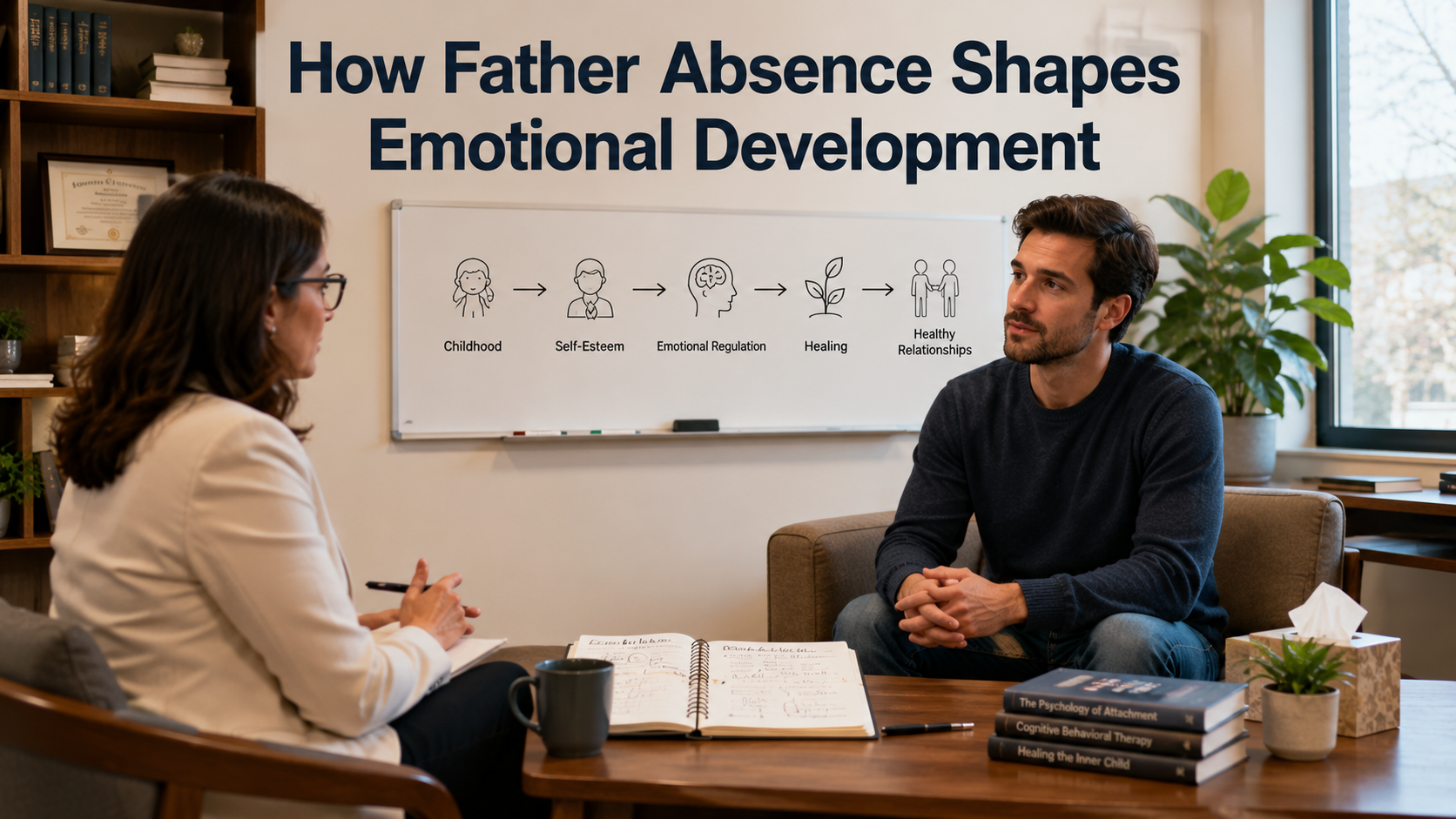
Fathers typically play a critical role in teaching sons how to channel physical aggression and handle complex frustrations productively. Through rough-and-tumble play, sports, and structural boundary setting, boys learn the art of emotional discipline and self-control. When this physical and emotional interaction is missing, sons may struggle immensely with emotional regulation throughout their adolescent years. They might flip unpredictably between extreme emotional suppression and sudden, volatile outbursts of anger because they never learned how to articulate their true feelings safely. This lack of balance can severely disrupt their school life, friendships, and early professional endeavors.
Adult Relationship Trauma and Paternal Abandonment Patterns
The impact of an absent parent does not vanish when a young boy turns eighteen and transitions into the professional world. In fact, adult romantic relationships often become the primary stage where childhood wounds resurface with intense clarity. Men who grew up without fathers frequently struggle to form secure attachments with romantic partners, close friends, or corporate colleagues. They operate under a subconscious script written in childhood, which tells them that the people they love the most are destined to leave them eventually.
Commitment phobia is highly prevalent among this demographic because their first male role model abandoned them when they needed protection the most. To safeguard themselves from experiencing that devastating pain again, these men might push partners away before the relationship becomes deeply serious or vulnerable. Similarly, they may exhibit intense emotional dependency, constantly seeking validation to soothe an underlying, terrifying fear of rejection. Furthermore, the absence of a healthy parental relationship means these men rarely observe functional conflict resolution, causing them to view every minor disagreement as an existential threat to the relationship’s survival.
Strategies for Overcoming Absent Father Effects on Sons
Awareness is the first major step toward long-term psychological recovery and emotional freedom. While the past cannot be rewritten or erased, adult sons can actively choose how they respond to their childhood wounds today. Healing requires intentional effort, profound self-compassion, and a willingness to confront painful memories that have been suppressed for decades. It is entirely possible to construct a beautiful, functional life even if the foundation of your childhood felt shaky and unstable. Breaking the cycle means deciding that the pain stops with you.
| Stage | Name | Action / Core Focus |
| 1 | Acknowledgment | Refusing to deny the emotional pain |
| 2 | Therapy | Processing trauma with a specialist |
| 3 | Mentorship | Seeking healthy male role models |
| 4 | Self-Parenting | Developing internal security |
Seeking Professional Therapy for Fatherless Traumas and Healing Paternal Wounds
Unpacking decades of childhood trauma is incredibly difficult to manage entirely alone. Therefore, professional intervention is often necessary for long-term recovery. Working with a licensed therapist provides a safe, non-judgmental space. In this environment, men can process complex grief, anger, and feelings of parental rejection safely. Modalities like Cognitive Behavioral Therapy (CBT) help men identify negative thought patterns. These harmful loops usually stem from early childhood abandonment.
Therapy allows men to replace these ideas with healthier, reality-based beliefs. Furthermore, deep therapeutic work allows adult sons to separate their father’s personal choices from their own inherent value as human beings. This vital realization unlocks a profound level of emotional freedom. Most men have never experienced this type of relief before in their lives. Over time, consistent therapy helps individuals build new coping mechanisms, process old memories, and step away from the emotional weight of past parental neglect.
Finding Positive Male Mentors to Counter Parent Loss and Male Absenteeism
Adult sons can benefit immensely from building intentional relationships with older, wiser men within their local communities. Mentors, sports coaches, uncles, or professional leaders can offer excellent guidance. They provide the practical wisdom and emotional validation that was completely missing during a boy’s childhood years. These healthy connections prove something vital to the subconscious mind. They show that positive male support is always accessible.
Furthermore, these relationships demonstrate that vulnerability among men is a true strength rather than a weakness. By observing these individuals, adult sons learn how healthy men handle daily stress. They see how these role models treat their families and navigate personal failures constructively. This real-world exposure allows adult sons to rewrite their internal blueprint for manhood completely. Through consistent mentorship, men discover how to show up for others, build structural boundaries, and confidently lead their own families.
Practicing Present Parenting to Overcome the Broken Father-Son Dynamic
For men who choose to have children, becoming a dad offers a profound opportunity for generational healing. By remaining actively present, emotionally available, and consistently supportive, they can completely break the negative cycle. This choice stops the replication of the trauma that caused them so much personal pain. Providing their own children with safety, presence, and unconditional love allows these men to redefine their family legacy forever.
The daily act of showing up for your children serves as a powerful form of active self-healing. It proves that you possess the internal strength to be the father you always wished you had during your own childhood. This redemptive process transforms an adult man’s perspective on his past. It turns his deepest personal void into a beautiful source of generational stability. Ultimately, present parenting ensures that the pain of the past does not inherit the future.
FAQ SECTION
What are the main absent father effects on sons?
The primary absent father effects on sons involve many deep emotional, psychological, and behavioral challenges. These serious issues last from early childhood straight through to late adulthood. Emotionally, these boys combat persistent feelings of abandonment. They also experience chronic low self-esteem and severe difficulty regulating their daily emotions. This total lack of emotional stability can lead to intense, long-term anxiety. Behaviorally, a distinct lack of paternal guidance manifests early during adolescence. You will notice academic underachievement and constant rebellion against authority figures. These boys also show a much higher statistical likelihood of engaging in high-risk activities. As these sons mature, the trauma transitions into complex romantic complications. These men often struggle to trust partners, show severe attachment anxieties, or completely avoid commitment. Recognizing these multi-layered effects allows men to address the root causes of their adult struggles. They can then treat the primary trauma rather than just managing surface symptoms.
Can a mentor replace the role of a missing father?
A mentor cannot entirely erase the biological reality or the unique emotional void left by an absent father. However, they can provide an incredibly powerful therapeutic buffer. This relationship alters a young man’s life path completely. A positive male mentor serves as a living blueprint. He offers the structural guidance, wisdom, and emotional validation that a growing boy desperately needs to build his identity. Through these supportive relationships, young men learn how to navigate professional spaces. They learn to manage interpersonal conflicts and understand masculinity in a healthy, non-destructive manner. Mentorship helps to rewire the subconscious belief that men are inherently unreliable or emotionally distant. While it does not change the past, a strong mentorship network provides the practical tools and emotional support necessary. Sons can build a successful, well-adjusted future despite their early childhood disadvantages.
How does a father’s absence affect a son’s romantic relationships later in life?
A father’s absence profoundly shapes a son’s romantic trajectory by distorting his foundational understanding of trust, vulnerability, and relationship security. Because his primary male role model proved unreliable, the adult son often operates under a difficult assumption. He assumes that anyone he gets close to will eventually abandon him. This core wound typically manifests in one of two distinct ways. It can show up through avoidant attachment, where the man refuses to commit and pushes partners away. Alternatively, it manifests through anxious attachment, where he becomes hyper-dependent and constantly demands validation to soothe his inner fears. Additionally, he grew up without observing healthy, day-to-day conflict resolution between two partners. Therefore, he may view minor relationship disagreements as complete catastrophes. This mindset leads directly to defensive communication, emotional withdrawal, or sudden relationship sabotage.
Is anger common in men who grew up without a father?
Yes, unresolved anger is one of the most frequent behavioral manifestations observed in these men. This anger is rarely just a natural personality trait. Instead, it serves as a defensive emotional shield. It covers deep layers of grief, unrecognized sadness, and a sense of profound injustice regarding their upbringing. Without a present father to model emotional discipline, a boy often internalizes his pain. He never learns how to channel frustration constructively. This pain eventually boils over into sudden irritability, hostility toward authority, or passive-aggressive behavior. You can see these negative patterns in his professional and personal life. In therapy, men learn that their anger is often a secondary emotion. By safely exploring the primary wounds of rejection and sadness underneath, they can finally release the emotional rage. This shift stops the past from holding them captive for years.
How can a man heal from the trauma of an absent father?
Ultimately, healing from this specific trauma requires a conscious, courageous decision to confront the childhood pain directly. Consequently, men must stop suppressing or denying their past experiences to achieve true emotional freedom. For example, seeking professional therapy serves as a vital component of this recovery journey. This is because therapy offers the structural framework needed to process complex trauma safely. As a result, it allows men to grieve the missing relationship and dismantle negative core beliefs regarding self-worth.
Furthermore, beyond clinical settings, deep healing involves practicing consistent self-compassion. Therefore, men should actively build strong communities of reliable male friends. In addition, they need to learn to parent themselves by establishing healthy internal boundaries and daily routines. For those who choose to become parents themselves, practicing conscious parenting serves as the ultimate form of restorative healing. Consequently, this path allows a man to rewrite his family’s generational narrative completely. Indeed, he finds profound purpose in providing the love he never received.
CONCLUSION
Growing up without a paternal figure presents significant emotional challenges, yet the absent father effects on sons do not have to dictate a man’s future destiny or limit his potential. The journey through childhood abandonment often leaves deep, invisible scars, drastically affecting an individual’s self-esteem, capacity for emotional regulation, and adult relationship dynamics. However, recognizing these deep wounds allows men to step out of the shadow of the past, break free from survival mode, and take proactive control of their emotional well-being. It takes immense courage to admit that the absence of a father hurt you, but that admission is the precise location where genuine personal transformation begins. For those navigating this difficult path, exploring resources on growing up without dad can provide valuable validation and clarity during the early stages of recovery.
Healing is entirely possible through intentional personal growth, professional therapeutic intervention, and the long-term support of positive male mentors. By confronting their pain openly rather than masking it behind anger or hyper-independence, adult sons can develop secure attachments, build profound emotional resilience, and discover their true identity outside of parental neglect. Ultimately, the greatest victory for an adult son is breaking the generational cycle completely, ensuring that his own children receive the daily presence, unconditional love, and structural security he truly deserved. Through this redemptive process, men turn their greatest childhood void into their greatest adult strength, successfully conquering the multi-layered absent father effects on sons.