Does the Size of Solar Panels Affect Their Output?
Choosing the right solar setup often starts with one important question: Does the size of solar panels determine how much electricity they generate? Solar panels convert sunlight directly into electricity through photovoltaic cells. Therefore, a larger surface area can capture more sunlight and potentially produce more power.
However, physical dimensions tell only part of the story. Factors such as cell efficiency, panel technology, sunlight exposure, and installation conditions also influence electricity generation.
Understanding the relationship between solar panel dimensions and wattage helps homeowners, RV travelers, and off-grid enthusiasts make informed decisions. When roof space is limited, choosing the wrong panel configuration can restrict your daily energy production. Similarly, mismatched panels and poor installation choices can reduce overall system performance.
In this guide, we explore four important questions about solar panel sizing and performance:
- Does physical panel size affect electricity output?
- Is one large solar panel better than several smaller panels?
- Can you safely combine 100W and 200W solar panels?
- What is the biggest drawback of solar panels?
Does the Size of Solar Panels Affect Their Output?
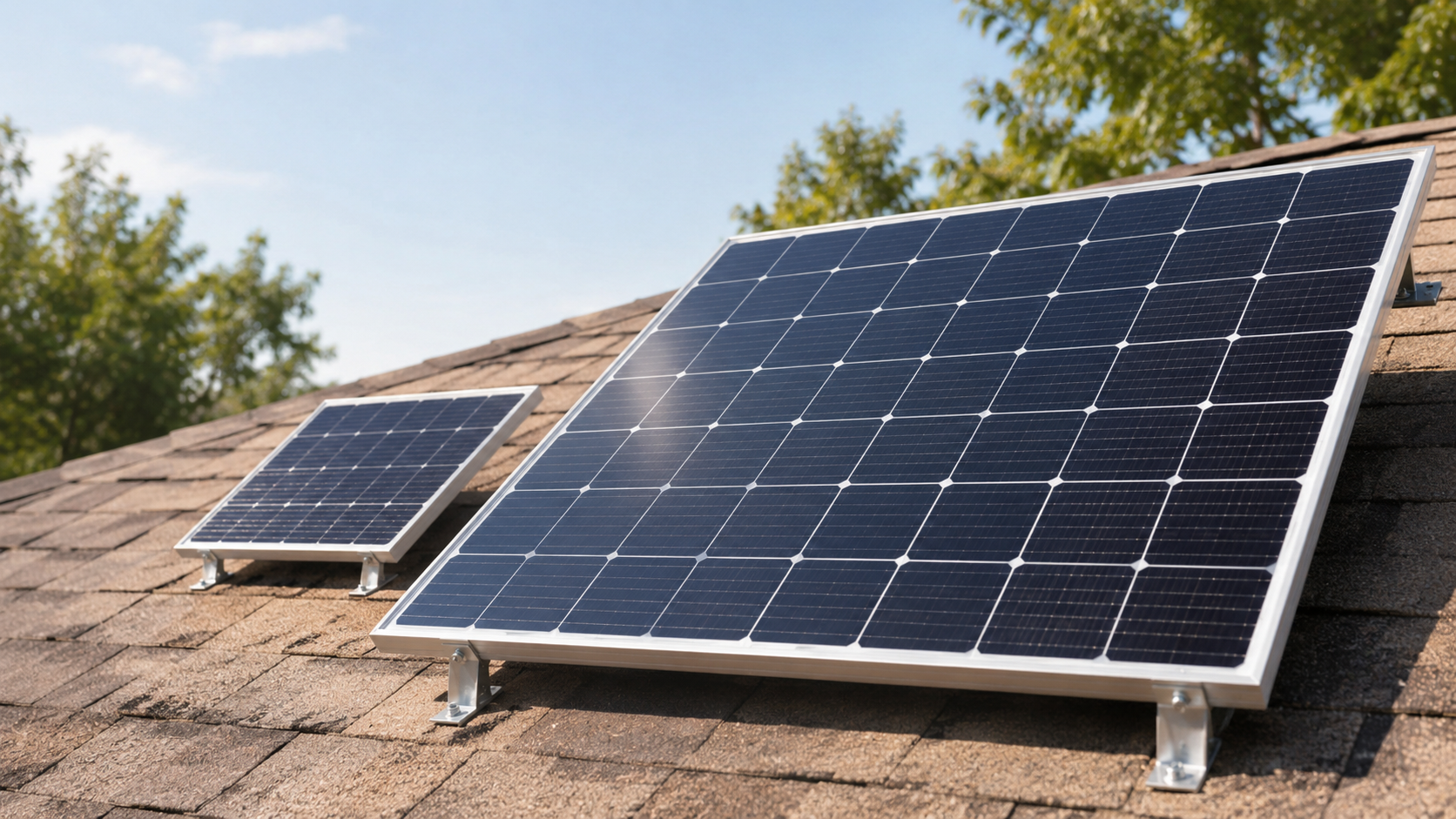
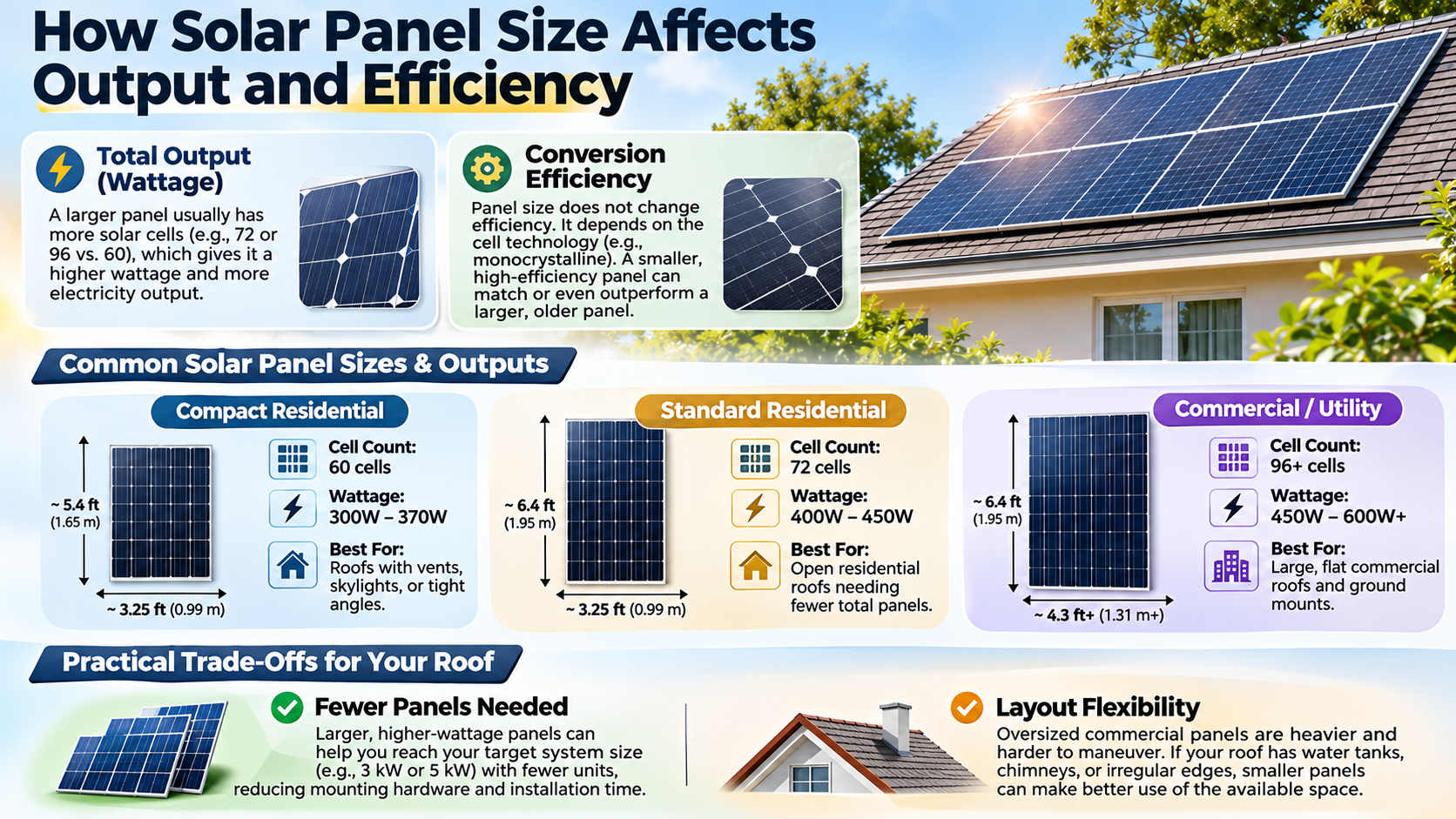
Yes, the physical size of solar panels can directly affect their electricity output. Larger panels generally accommodate more photovoltaic cells, allowing them to capture more sunlight. When two panels use similar cell technology and efficiency, the larger panel typically produces more watts.
For example, a residential 400W solar panel may measure approximately 65 by 39 inches. A portable 100W panel is usually considerably smaller. However, exact dimensions vary between manufacturers and models.
Panel dimensions alone cannot determine actual electricity generation. A compact, high-efficiency monocrystalline panel may produce more power than a larger panel with less efficient cells.
You should also consider the panel’s rated wattage, which indicates its maximum power output under standard test conditions. Actual production depends on sunlight, temperature, shading, and installation angle. Before choosing a panel, it is also important to calculate your home’s solar energy needs to determine the appropriate system capacity.
Therefore, consider both physical dimensions and conversion efficiency when comparing solar panels.
Why Solar Cell Efficiency Matters Alongside Panel Dimensions
Solar cell efficiency determines how effectively a panel converts sunlight into usable electricity. It measures the percentage of incoming solar energy converted into electrical power.
Higher-efficiency panels can generate more electricity within the same installation area. This makes them particularly useful for homes with limited roof space, RVs, and compact off-grid systems.
Modern monocrystalline solar panels commonly achieve efficiencies above 20%. Some premium models exceed 22%, depending on their technology and design.
By comparison, lower-efficiency panels generally require more surface area to achieve the same rated wattage. This difference becomes important when planning an installation with limited available space.
Consider these factors when comparing solar panel efficiency:
- Cell technology: Monocrystalline panels generally offer higher efficiency than traditional polycrystalline models.
- Panel dimensions: Larger panels can accommodate more photovoltaic cells.
- Wattage rating: Higher-rated panels can deliver more power under standard testing conditions.
- Temperature performance: Heat can reduce a panel’s electrical output.
Ultimately, efficiency and physical size work together to determine how much electricity a solar panel can generate.
Is It Better to Have One Large Solar Panel or Several Small Panels?
Choosing between one large solar panel and several smaller panels depends on your installation space, energy requirements, and shading conditions. Both configurations offer advantages, but neither works best in every situation.
A single large panel generally requires fewer mounting brackets, electrical connections, and installation components. It can also offer a lower installation cost per watt. This makes larger panels suitable for residential rooftops with sufficient uninterrupted space. Understanding the requirements of residential solar panel installation can also help you choose the right panel arrangement for your roof.
However, several smaller solar panels provide greater installation flexibility. You can position them across different roof sections or arrange them around obstacles. This configuration can also suit RVs, vans, boats, and compact off-grid installations.
Your electrical configuration matters too. Multiple panels connected through separate MPPT inputs or suitable module-level electronics can reduce the impact of partial shading.
Before deciding, compare the available installation area, total wattage, wiring requirements, and expected shading conditions.
Managing Partial Shading and Installation Space
Partial shading is an important consideration when choosing between large and small solar panels. Even a small shadow from a tree, chimney, or nearby building can reduce electricity production.
However, several smaller panels do not automatically eliminate shading losses. Their performance depends on the electrical connections, bypass diodes, and charge controller configuration.
For example, panels connected in series share the same current path. If one panel experiences significant shading, the entire string may produce less electricity. Bypass diodes can help reduce these losses, but they do not eliminate them completely.
Multiple panels connected in parallel can offer better independence between individual panels. However, shading can still affect their performance.
Consider these installation factors:
- Available roof space: Larger panels work well on open, uninterrupted rooftops.
- Shading conditions: Separate electrical inputs can help limit losses from shaded panels.
- Mounting flexibility: Smaller panels fit irregular surfaces and limited spaces.
- Installation costs: Fewer panels generally require fewer mounting and wiring components.
Choose a configuration that matches your roof layout and electrical requirements.
Can I Mix 100W and 200W Solar Panels?
Yes, you can combine 100W and 200W solar panels in the same system. However, their electrical specifications must be compatible. You should check their operating voltage, current, and charge controller requirements before connecting them.
The main challenge involves differences in electrical characteristics. When panels with different current ratings connect in series, the same current flows through both. Consequently, the lower-current panel can limit the output of the entire string.
Parallel connections work differently. They combine the current produced by individual panels while maintaining a common operating voltage. This arrangement can accommodate different wattage ratings when their electrical characteristics are compatible.
However, simply having two panels rated at 12 volts does not guarantee compatibility. Their actual operating voltages, known as Vmp, should be sufficiently close.
An appropriately sized MPPT charge controller can help optimize energy harvesting. Always check the manufacturer’s specifications before combining different solar panels.
Series Versus Parallel Wiring Rules
Understanding series and parallel wiring is essential when combining solar panels with different wattage ratings. Each configuration affects system voltage and current differently. When comparing the size of solar panels, remember that physical dimensions and wattage ratings do not determine electrical compatibility.
Series connections:
- Connect the positive terminal of one panel to the negative terminal of another.
- Increase the total system voltage.
- Maintain approximately the same current throughout the string.
- Can experience reduced output when one panel produces significantly less current.
Parallel connections:
- Connect positive terminals together and negative terminals together.
- Maintain approximately the same system voltage.
- Combine the current produced by individual panels.
- Require compatible operating voltages and appropriate protection.
For example, combining 100W and 200W panels in parallel may work when their operating voltages are sufficiently similar. However, their actual specifications must be checked first.
Also verify the charge controller’s maximum input voltage, current, and power limits. Never assume that an MPPT controller automatically makes incompatible panels suitable for combination.
For more complex installations, separate MPPT inputs or individual charge controllers may provide better performance.
What Is the Biggest Drawback of Solar Panels?
The biggest drawback of solar panels is their dependence on sunlight. Unlike conventional power sources, solar panels cannot generate electricity continuously throughout the day and night.
Their electricity production decreases during cloudy weather, heavy rain, and periods of low sunlight. Production also changes with seasonal daylight hours and installation conditions. At night, solar panels stop generating electricity completely.
This creates a challenge for homeowners who depend on solar energy throughout the day. Without battery storage or a grid connection, maintaining a continuous electricity supply becomes difficult.
Another important disadvantage is the initial installation cost. Purchasing solar panels, inverters, mounting equipment, wiring, and batteries can require a substantial investment.
Maintenance, inverter replacement, and eventual equipment upgrades can also add to long-term expenses. Understanding how long solar panels last with proper maintenance can help homeowners plan these costs and make better long-term investment decisions.
However, solar panels can reduce electricity bills over time. The actual savings depend on installation costs, electricity prices, available sunlight, and household energy consumption.
Therefore, consider both the upfront investment and long-term operating costs before choosing a solar system. The size of solar panels also influences your installation requirements, available roof space, and overall system configuration.
Overcoming Intermittent Solar Power With Battery Storage
Battery storage helps address one of the biggest limitations of solar energy: inconsistent electricity generation. Instead of using all generated electricity immediately, a battery system stores excess energy for later use.
During sunny hours, solar panels can generate electricity for household appliances. Any available surplus can charge the connected battery system. After sunset, the stored electricity can power selected appliances and essential equipment. If your goal is to run a house completely on solar power, understanding battery capacity and daily energy consumption is equally important.
Lithium iron phosphate (LiFePO4) batteries are a popular option for residential and off-grid solar installations. They offer a long cycle life, good thermal stability, and reliable performance when properly installed.
Battery storage provides several practical benefits:
- Nighttime electricity: Use stored solar energy after sunset.
- Backup power: Keep essential appliances running during certain grid outages.
- Better energy utilization: Store surplus daytime electricity instead of exporting or wasting available generation.
- Greater energy independence: Reduce reliance on the electricity grid.
However, batteries increase the initial system cost. You must also consider battery capacity, inverter compatibility, charging limits, and expected energy consumption.
A properly sized battery system can improve solar energy availability. However, it cannot eliminate production shortages during extended periods of poor weather without additional charging sources.
Conclusion
Choosing the right solar panel involves more than comparing physical dimensions. While larger panels can generate more electricity, solar panel efficiency, wattage, sunlight exposure, and installation conditions also play important roles. The best option depends on your available space, energy requirements, and budget.
A single large panel may suit an open rooftop, while several smaller panels offer greater flexibility for RVs and compact installations. You can also combine 100W and 200W panels, provided their electrical specifications and wiring configurations are compatible.
Although weather-dependent generation and upfront costs remain common challenges, battery storage can improve energy availability and reduce reliance on the grid. For additional guidance, explore the U.S. Department of Energy’s guide to how solar energy works.
Ultimately, compare panel dimensions, rated wattage, efficiency, and compatibility before making a purchase. The right solar panel system is not necessarily the largest one, but the one that delivers reliable power for your specific needs.