Noise Cancellation and Adaptive Audio Mode: Which Listening Mode Is Right for You?
Modern headphones offer advanced audio features that improve music, podcasts, and everyday calls. However, choosing between noise cancellation and adaptive audio mode can be confusing.
Both technologies improve listening comfort, but they handle surrounding sounds differently. Active Noise Cancellation (ANC) reduces unwanted background noise. Adaptive Audio automatically adjusts noise control according to your surroundings.
Understanding these differences helps you choose the right listening experience. It also helps you remain aware of important environmental sounds.
Prolonged exposure to loud environments can contribute to hearing damage. Appropriate listening habits and suitable headphones can help reduce unnecessary exposure. Learn more about hearing protection through the World Health Organization.
Many headphone users also have questions about speech isolation, sound leakage, and physical noise blocking. Some wonder whether headphones can eliminate every surrounding sound.
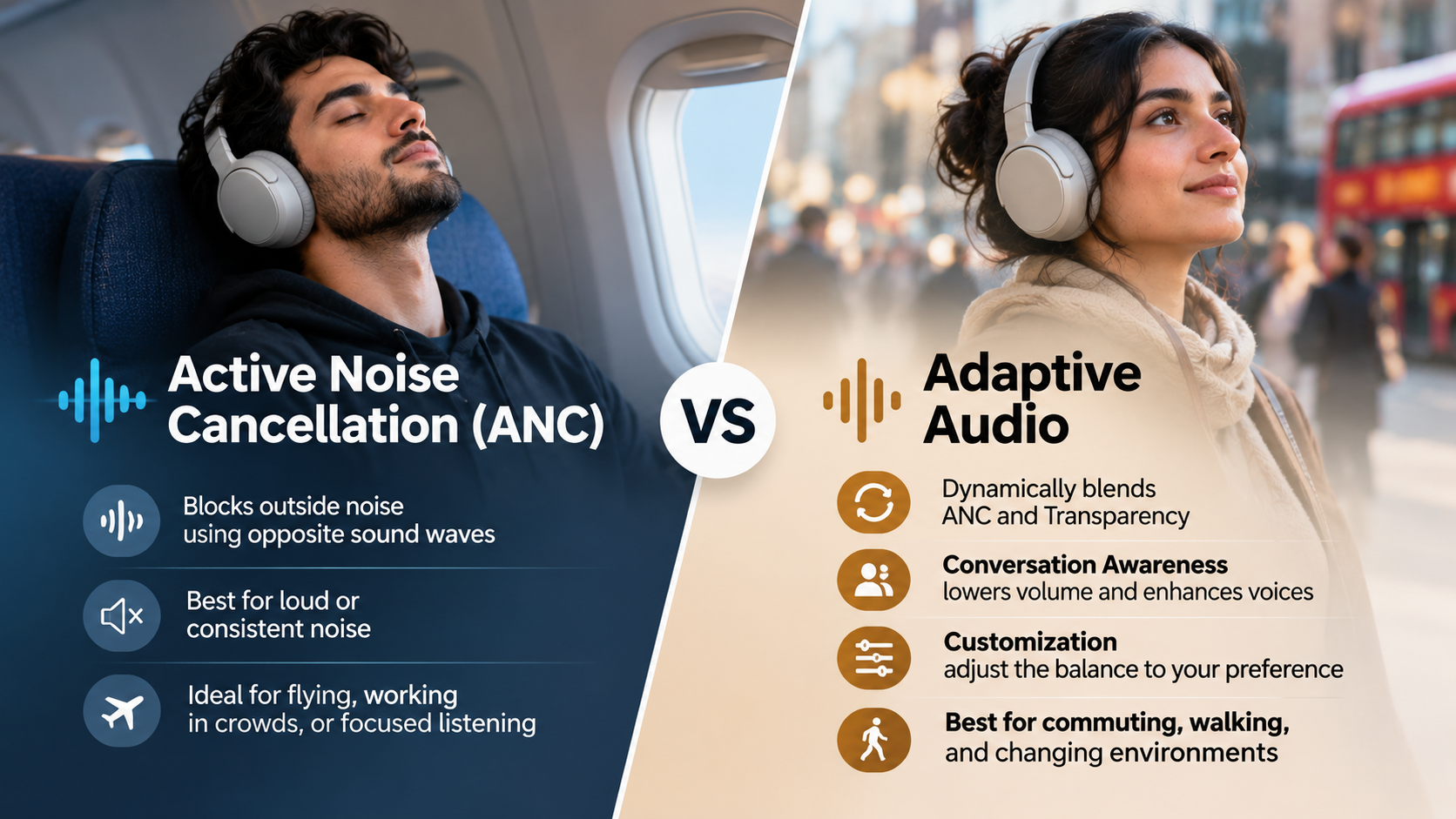
This guide explains how noise cancellation and adaptive audio mode work. It also explores their advantages, differences, and practical limitations.
Is Adaptive Audio Better Than Noise Cancelling?
Adaptive Audio is not necessarily better than traditional noise cancellation. Both features serve different listening needs. Traditional Active Noise Cancellation (ANC) reduces surrounding noise using microphones and electronic processing. For a deeper explanation, explore how noise cancellation works. It works particularly well against consistent background sounds, including aircraft engines and air conditioners.
Adaptive Audio automatically adjusts noise control according to changing environmental conditions. Depending on the manufacturer, it may balance noise cancellation and transparency. This helps users remain aware of important surrounding sounds without constantly changing settings.
For example, adaptive listening can be useful when walking through busy streets or working in shared offices. However, dedicated ANC may provide better isolation during flights or focused study sessions.
Your choice ultimately depends on your environment and listening preferences. Understanding noise cancellation and adaptive audio mode helps you select the most suitable option.
Dynamic Awareness Versus Total Isolation
Adaptive listening prioritizes flexibility rather than maximum isolation. It can automatically adjust environmental sound levels when your surroundings change.
This makes it useful for people who frequently move between quiet and noisy environments. You can enjoy music while maintaining some awareness of nearby conversations and announcements.
Traditional ANC offers a different advantage. It focuses on reducing unwanted environmental noise rather than maintaining awareness.
Consider these situations:
- Outdoor walking: Adaptive Audio can help maintain awareness of nearby activity.
- Air travel: Dedicated ANC helps reduce persistent aircraft engine noise.
- Office work: ANC provides better isolation when concentrating.
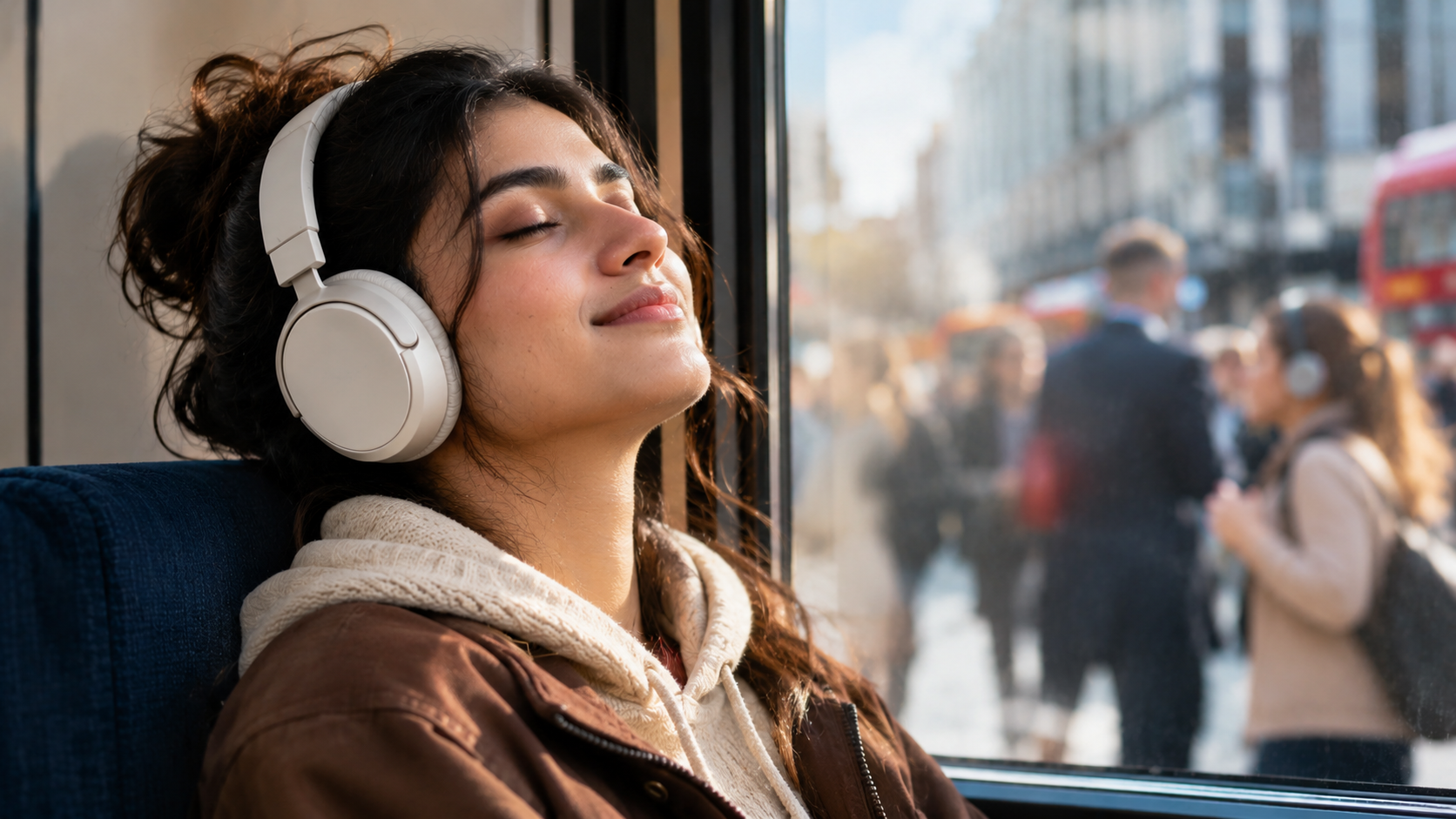
- Daily commuting: Adaptive settings can reduce the need for manual adjustments.
However, adaptive processing does not guarantee awareness of every environmental sound. Always remain alert around traffic and other potential hazards.
Is Adaptive ANC Better Than ANC?
Adaptive ANC improves traditional noise cancellation by adjusting its performance according to changing acoustic conditions. Standard ANC also uses microphones and electronic processing to reduce unwanted sounds. However, some basic implementations offer less dynamic adjustment.
Adaptive systems continuously monitor environmental noise and may also evaluate headphone fit. Their processors adjust cancellation levels to maintain consistent performance.
For example, background noise can change significantly when travelling between a quiet office and a busy railway station. Adaptive ANC responds to these changes automatically.
Some headphones also adjust their cancellation according to ear-tip positioning. This helps compensate for minor changes in the acoustic seal.
However, adaptive ANC does not automatically guarantee better performance. Results depend on microphone quality, processing algorithms, headphone design, and physical fit. Some premium fixed ANC headphones can outperform cheaper adaptive models.
The Role of Ear-Tip Leakage Correction
Earbud positioning plays an important role in noise cancellation performance. Small gaps between silicone ear tips and ear canals can reduce passive isolation.
Some adaptive ANC systems use internal microphones to detect changes in acoustic conditions. They then adjust their processing to compensate for certain fit-related changes.
This can help maintain more consistent noise reduction when earbuds shift slightly during everyday activities.
However, electronic correction cannot completely replace a proper physical seal. Choosing appropriately sized ear tips remains essential. If you’re comparing different models, this guide to choosing the right noise-cancelling headphones explains the features and fit considerations worth checking before buying.
Consider these practical steps:
- Try different ear-tip sizes for a comfortable fit.
- Check whether your earbuds support automatic fit testing.
- Keep microphone openings clean and unobstructed.
- Reposition loose earbuds when sound isolation decreases.
A secure fit improves passive noise isolation and supports effective ANC performance.
Can I Still Hear People Talking With Noise Cancelling?
Yes, you can still hear people talking while using Active Noise Cancellation. ANC generally performs better against consistent, low-frequency sounds than unpredictable human speech.
For example, airplane engines, ventilation systems, and road noise produce relatively continuous acoustic patterns. These sounds are easier for cancellation systems to reduce.
Human speech contains constantly changing frequencies, pitches, and rhythms. This makes complete cancellation more challenging.
Physical headphone materials also influence how much conversation reaches your ears. Over-ear cushions and properly fitted ear tips provide additional passive isolation.
Nearby voices may sound quieter or less distinct when ANC is enabled. However, louder conversations can remain audible.
The actual performance depends on headphone design, background noise, microphone placement, and listening volume. If you need awareness of conversations, Transparency Mode may be more suitable.
Why Irregular Frequencies Bypass Digital Filters
Human speech presents a difficult challenge for noise cancellation technology. Conversations contain rapidly changing sounds rather than predictable background patterns.
ANC systems use microphones to capture surrounding noise. Their processors generate opposing sound waves to reduce unwanted acoustic energy.
However, sudden changes in speech are difficult to cancel perfectly. Processing delays and microphone limitations also affect performance.
Physical isolation helps reduce some speech frequencies. Nevertheless, voices can remain audible through headphone cushions and earbud seals.
This explains why ANC does not completely silence nearby conversations.
If you need to hear announcements or communicate with colleagues, consider these options:
- Switch to Transparency Mode when necessary.
- Use Conversation Awareness if your headphones support it.
- Lower music volume when speaking with others.
- Remove your headphones when complete attention is required.
Avoid increasing music volume excessively to mask nearby conversations. Listening at high volumes for extended periods can also increase hearing risks. If you regularly use wireless earbuds, learn whether AirPods can damage your hearing and how to protect your ears.
Which Is Best, ANC or PNC?
Choosing between ANC and PNC depends on your environment and listening requirements. Active Noise Cancellation (ANC) uses microphones, electronic processing, and speakers to reduce unwanted environmental noise.
Passive Noise Cancellation (PNC) relies on physical materials and headphone design. Over-ear cushions, closed-back earcups, and silicone ear tips create barriers against surrounding sounds.
PNC works without batteries or electronic processing. It can reduce high-frequency sounds effectively when headphones provide a suitable seal.
ANC offers additional benefits against persistent, low-frequency background noise. This makes it particularly useful during flights, train journeys, and daily commutes.
Neither technology completely replaces the other. Many premium headphones combine both approaches to provide more balanced noise reduction.
When comparing noise cancellation and adaptive audio mode, remember that physical isolation also influences the final listening experience. The best choice combines effective noise reduction with comfortable headphones.
Why Combined Hybrid Designs Rule the Market
Combining active and passive noise reduction creates a more comprehensive listening experience. Each technology handles different aspects of environmental noise.
Passive isolation reduces sound entering through physical gaps. Thick ear cushions and properly fitted ear tips help block external sounds.
Meanwhile, ANC targets unwanted noise through electronic processing. It is particularly effective against continuous, low-frequency sounds.
Together, these technologies improve overall isolation across different listening environments.
When comparing headphones, consider the following features:
- Physical design: Look for comfortable ear cushions or properly fitting ear tips.
- ANC performance: Check independent reviews and real-world noise reduction tests.
- Microphone quality: Better microphones can improve environmental noise detection.
- Battery life: ANC requires additional power during operation.
- Comfort: A secure fit matters during extended listening sessions.
The best combination depends on your budget, preferred headphone style, and everyday environment.
Is 100% Noise Cancellation Possible?
Complete 100% noise cancellation is not achievable with current consumer headphones. Modern ANC technology can significantly reduce surrounding sounds, but some noise will remain audible.
One limitation involves the physical behaviour of sound waves. ANC systems require microphones and electronic processing to detect unwanted sounds. They then generate opposing sound waves to reduce incoming acoustic energy.
Processing delays make it difficult to eliminate sudden and unpredictable noises completely. High-frequency sounds can also be challenging to cancel effectively.
Another limitation involves sound transmission through the body. Vibrations can reach the inner ear through surrounding tissues and bones. This pathway is known as bone conduction.
Therefore, even premium headphones cannot create absolute silence. Their performance depends on acoustic conditions, physical fit, and electronic processing capabilities. When headphone isolation is not enough, reducing unwanted sound at its source can also help. Explore practical ways to reduce noise pollution for additional solutions.
Understanding these limitations also helps explain why noise cancellation and adaptive audio mode cannot completely eliminate every environmental sound.
Biological Limits and Mechanical Bone Conduction
Headphones cannot completely isolate your hearing from every surrounding vibration. Sound can reach the inner ear through pathways beyond the ear canal.
Bone conduction describes how mechanical vibrations travel through the skull and stimulate the inner ear. This explains why some sounds remain perceptible despite effective headphone isolation.
However, bone conduction is only one limitation. Physical gaps, microphone performance, processing delays, and changing sound frequencies also affect ANC effectiveness.
Sudden noises, including car horns and nearby conversations, can remain audible. Their intensity and frequency influence how effectively headphones reduce them.
For the best possible noise reduction, consider these practical recommendations:
- Choose headphones with effective ANC performance.
- Ensure ear cushions or ear tips fit properly.
- Select the appropriate listening mode for your environment.
- Keep headphone microphones clean.
- Avoid excessive listening volumes.
Remember that noise cancellation improves listening comfort but does not replace hearing protection in dangerously loud environments.
Conclusion
Choosing between noise cancellation and adaptive audio mode depends on your daily listening habits and surroundings. Traditional ANC works best when you want to reduce distracting background noise during flights, commutes, or focused work. Adaptive Audio offers greater flexibility by adjusting sound control as your environment changes.
Both technologies improve listening comfort, but neither provides complete silence. Your headphone fit, microphone quality, and audio settings also influence performance.
Before choosing your next pair of headphones, consider where you listen most often. If maximum isolation matters, prioritize strong ANC performance. If you frequently move between different environments, adaptive listening may offer greater convenience.
Ultimately, the best choice between noise cancellation and adaptive audio mode is the one that balances sound quality, comfort, and environmental awareness.