What’s the Difference Between LG’s B-Series and C-Series OLED TVs?
The LG B vs C OLED comparison mainly comes down to brightness, processing, gaming features, design, and price. Both series use self-lit OLED pixels, so they deliver deep blacks, strong contrast, and excellent picture quality. You can also compare LG’s current OLED technology and TV lineup directly through LG’s official OLED TV range.
The B-series is designed as a more affordable entry into LG’s OLED lineup. The C-series sits higher in the range and adds more advanced processing and brightness technology.
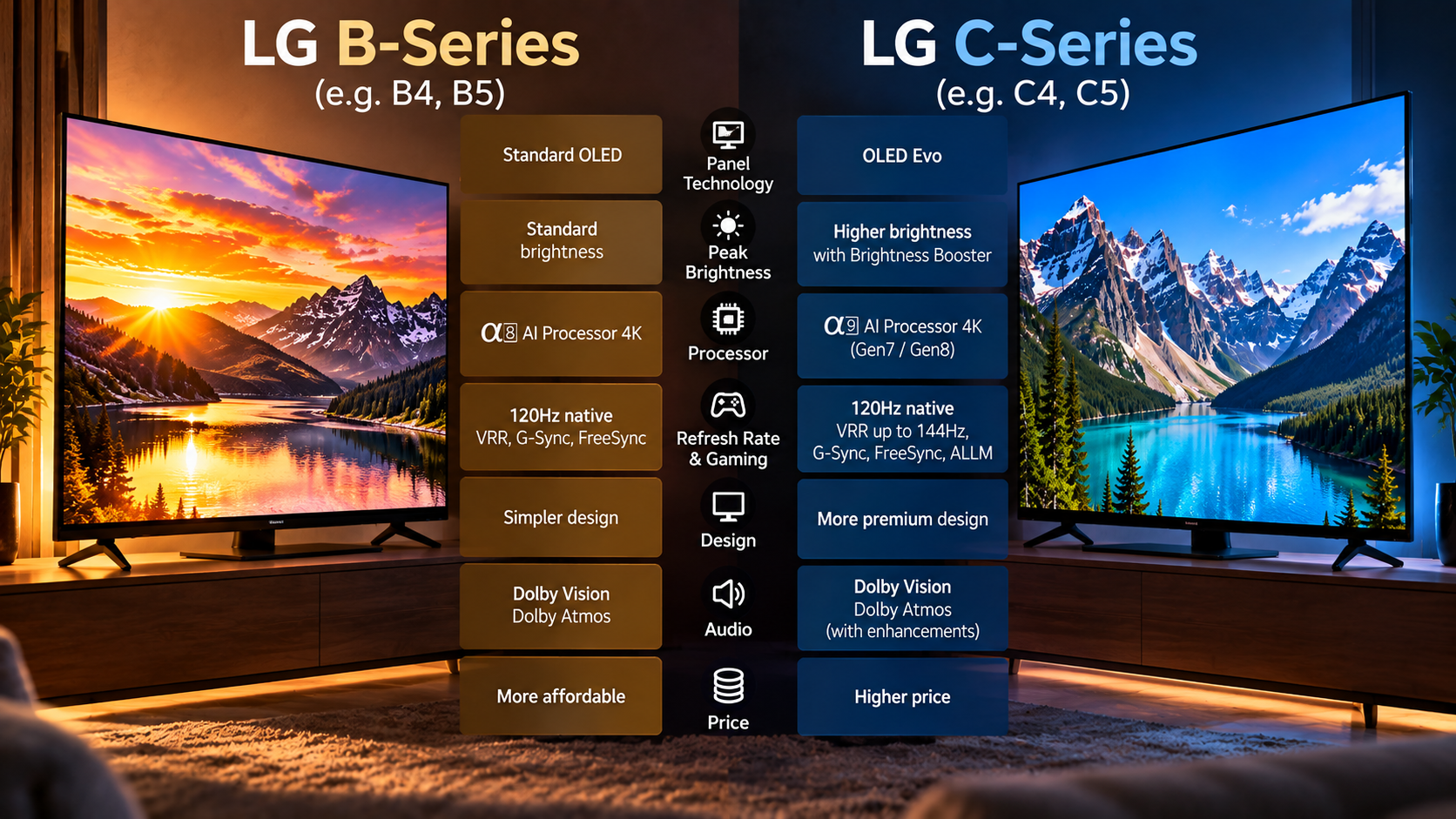
For example, the LG B4 uses an α8 AI Processor 4K and a 120Hz native refresh rate. The C4 uses an α9 AI Processor 4K Gen7, Brightness Booster technology, and VRR support up to 144Hz.
The practical difference depends on your room, viewing habits, gaming needs, and budget. A dark home theater may not require extra brightness. A bright room or gaming setup can benefit more from the C-series features.
Which Is Better, LG B Series or C Series?
The LG C-series offers more advanced hardware, but that does not automatically make it the better choice for every viewer. The biggest differences involve brightness, processing, design, audio, and gaming capabilities.
LG positions the C-series above the B-series in its OLED lineup. For example, the B4 uses the α8 processor, while the C4 uses the more advanced α9 Gen7 processor. The C4 also adds Brightness Booster technology.
The C-series can therefore be more suitable for rooms with stronger ambient light. Its additional processing can also help with image enhancement and upscaling.
However, the B-series still provides the core OLED experience. It offers self-lit pixels, deep blacks, Dolby Vision, Dolby Atmos, and modern gaming features.
If price is the main consideration, the B-series can provide strong OLED performance for less money. If you want additional brightness and processing, the C-series offers more advanced hardware.
How Brightness and Processing Differ
Brightness is one of the most noticeable differences in the LG B vs C OLED comparison. The C-series includes technology designed to improve light output, while the B-series focuses on providing OLED performance at a lower tier. If you are comparing OLED with other display technologies, our guide to OLED vs QLED 2026 provides a broader look at how the two technologies differ.
The LG C4 uses Brightness Booster, which is designed to improve picture brightness. LG also specifies higher brightness performance for certain C4 sizes compared with their stated predecessors.
Processing is another important distinction. The B4 uses the α8 AI Processor 4K, while the C4 uses the α9 AI Processor 4K Gen7.
The processor can affect upscaling, image processing, tone mapping, and other picture enhancements. However, a more advanced processor does not mean every scene will look dramatically different.
Your viewing environment matters too. A bright room, HDR content, and demanding gaming can make the C-series advantages easier to notice. In a darker room, the practical gap may be smaller.
For most buyers, brightness, processing, viewing conditions, and price should all be considered together.
Which TV Is Better, the LG B4 or the C5 OLED?
The LG C5 is a newer model than the B4, so this comparison involves two different generations. The B4 belongs to LG’s 2024 lineup, while the C5 belongs to the 2025 generation.
The C5 uses LG’s α9 AI Processor 4K Gen8 and supports a 120Hz native refresh rate. It also supports VRR up to 144Hz and includes OLED evo technology.
The B4 uses the α8 AI Processor 4K and a 120Hz native refresh rate. It also supports VRR, G-Sync, and FreeSync for compatible gaming systems.
The C5 therefore offers newer processing and additional display technology. These features can appeal to buyers looking for newer picture and gaming capabilities.
However, the B4 remains a capable OLED television. Its lower position in the lineup does not change the fundamental advantages of OLED technology.
Price should remain part of the comparison. If the B4 is substantially cheaper, its lower cost may matter more than the C5’s additional features.
C5 Brightness, Processing, and Gaming Upgrades
The C5 introduces several improvements over the B4. Its α9 AI Processor 4K Gen8 handles image processing and AI-based picture enhancements. LG also lists features such as AI Picture Pro and OLED Dynamic Tone Mapping Pro.
Gaming is another area where the C5 has strong specifications. LG lists VRR up to 144Hz, G-Sync compatibility, FreeSync compatibility, and ALLM.
The C5 also supports Dolby Vision gaming at 4K 120Hz. This can be useful for compatible consoles, PCs, and games.
The B4 also supports modern gaming features. It offers VRR, G-Sync, and FreeSync compatibility, along with a 120Hz native refresh rate.
Therefore, the C5 is not simply a brighter version of the B4. It combines newer processing with updated OLED technology and gaming capabilities.
Still, the practical difference depends on the content you watch. Casual streaming may not reveal every processing improvement. High-quality HDR content and high-refresh gaming are more likely to expose the hardware differences.
Which Series of LG OLED Is Best?
There is no single LG OLED series that suits every buyer. LG uses different series to target different combinations of price, brightness, design, processing, and performance. If long-term durability is also a concern, it is worth comparing how long Mini LED TVs last compared with OLED TVs before choosing a display technology.
The B-series generally targets buyers who want OLED picture quality without paying for higher-tier features. The C-series adds more advanced processing and brightness technology. Higher-end models, including the G-series, focus further on premium design and display hardware.
This distinction is important when considering LG B vs C OLED models. Someone who watches movies in a dark room may place less value on additional brightness. A viewer with strong daylight in the room may notice the difference more.
Gaming requirements can also affect the decision. Higher refresh rates and additional gaming features may matter more to PC gamers than casual television viewers.
Screen size should also be considered. Larger displays can change both the price difference and the practical impact of brightness.
Instead of choosing a series based only on its position in the lineup, compare the features you will actually use. Consider room brightness, screen size, gaming, sound, design, and price.
Where the G-Series Fits
LG’s G-series occupies a more premium position than the B and C ranges. Its appeal extends beyond basic OLED picture quality and focuses heavily on premium design and display hardware.
The G-series is particularly associated with LG’s Gallery-style wall-mounting design. This creates a flatter appearance against the wall than a conventional TV placed on furniture.
That design can appeal to buyers who want the television to become part of the room’s interior. Installation requirements should still be considered before choosing a wall-focused model.
The C-series offers a more conventional setup for many households. Depending on the model, it can be wall-mounted or placed on suitable furniture.
The B-series generally provides a more value-focused route into OLED technology. It can make sense when the priority is getting OLED picture quality without paying for every premium feature.
The G-series serves a different purpose within LG’s lineup. It emphasizes premium presentation and additional display technology.
When comparing LG’s OLED ranges, consider your room and viewing habits first. A higher-priced series is not automatically the right choice if its extra features will rarely be used.
Which LG TV Is Better, the B4 or the C4?
The LG C4 has more advanced specifications than the B4, especially for processing and brightness. However, the B4 still provides many features that make it a capable OLED television.
The B4 uses an α8 AI Processor 4K and has a 120Hz native refresh rate. It also supports VRR, G-Sync, and FreeSync for compatible gaming systems.
The C4 uses the α9 AI Processor 4K Gen7 and adds Brightness Booster technology. LG also lists a 120Hz native refresh rate and VRR support up to 144Hz.
These differences can make the C4 more appealing for HDR content, gaming, and brighter viewing environments. Its processing hardware also sits higher within LG’s lineup.
The B4 can still be a practical choice when its price is significantly lower. Both models provide OLED’s core strengths, including self-lit pixels and deep black levels.
The actual price gap matters because television discounts can change the value of each model. A heavily discounted B4 may make more sense than a C4 at full price.
When comparing the two, look beyond specifications. Consider your room, screen size, gaming equipment, viewing distance, and budget.
HDR, Design, and Gaming Differences
The C4’s main advantages over the B4 include Brightness Booster, α9 Gen7 processing, and its more premium design. These features can improve the experience with HDR content and demanding games.
The C4 supports VRR up to 144Hz, G-Sync compatibility, FreeSync compatibility, ALLM, and Dolby Vision gaming at 4K 120Hz.
The B4 also supports modern gaming features. It offers VRR, G-Sync, and FreeSync compatibility, along with its 120Hz native refresh rate.
HDR performance is another consideration. The C4’s brightness-focused technology can make bright highlights more noticeable in compatible content. This can be useful when watching HDR movies or sports in a brighter room.
Design also separates the two models. The C4 uses a slim profile and narrow bezels, while the B4 has a more value-focused design.
However, these differences do not make the B4 unsuitable for premium viewing. OLED’s self-lit pixels still provide strong contrast and deep blacks.
Ultimately, the LG B vs C OLED decision depends on how much you value the C4’s additional features. If you want stronger brightness and processing, the C4 offers more. If price is the priority, the B4 remains a practical alternative.