Mastering Your Career Journey With Proven Phone Interview Tips
Landing a great job often starts with a simple phone call. Therefore, learning effective Phone Interview Tips can help you make a stronger first impression. Recruiters often use initial screening calls to evaluate communication skills, enthusiasm, and professional fit. Without visual cues, your voice, tone, and pacing become especially important.
Preparation also helps you answer questions with greater confidence. Research the employer, review the job description, and prepare examples that demonstrate your relevant skills. According to guidance from the U.S. Bureau of Labor Statistics, understanding employment requirements and preparing for the hiring process can help candidates navigate their career search more effectively.
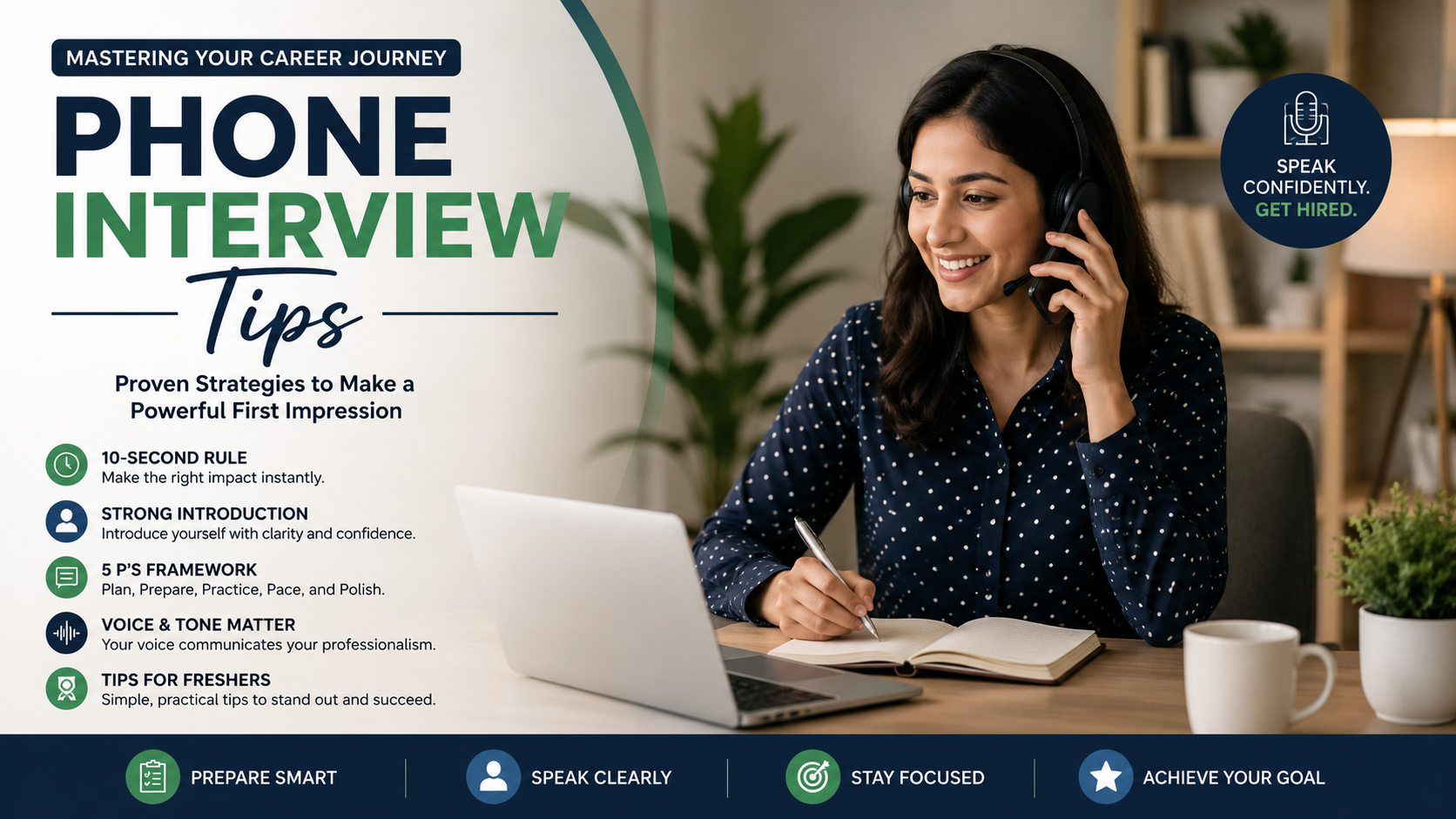
This guide covers practical strategies for phone interviews. You will learn about the ten-second rule, effective self-introductions, the five P’s framework, professional opening remarks, and phone interview tips for freshers. These techniques can help you sound prepared, focused, and confident throughout the conversation.

What Is the 10-Second Rule in an Interview?
The ten-second rule describes the brief opening period when an interviewer may begin forming a first impression. During this moment, your tone, energy, clarity, and greeting can influence how the conversation begins. Since phone interviews remove visual cues, your voice carries more responsibility.
When you answer the phone, use a clear and professional greeting. Speak at a comfortable pace and avoid sounding rushed. A warm tone can also make the conversation feel more natural. However, avoid forcing excessive enthusiasm because it can sound unnatural.
Your first few seconds should show that you are prepared and ready to speak. Keep background noise to a minimum and make sure your phone connection is reliable. These simple steps prevent avoidable distractions.
Preparation makes this opening easier. Practice your greeting several times before the interview. Also, rehearse your introduction aloud rather than reading it silently. This approach helps you sound conversational instead of scripted when the recruiter calls.
Mastering Your Vocal Tone Early
Your vocal delivery works like a digital handshake during a phone interview. Because the recruiter cannot see your facial expression or body language, your voice communicates your attitude. A steady and welcoming tone can make you sound confident without becoming overly formal.
Before answering, take a brief breath and collect yourself. Then, speak clearly and maintain a moderate pace. Smiling while speaking can also make your voice sound warmer and more approachable.
Avoid speaking too quickly, especially when you feel nervous. Fast speech can make your answers difficult to follow. Instead, pause briefly between ideas and allow the interviewer time to respond.
You should also vary your tone naturally. A completely flat voice can suggest low interest, while excessive excitement may sound rehearsed. Aim for calm energy and genuine interest.
Most importantly, focus on clarity. Use simple language and pronounce important names, job titles, and technical terms carefully. Strong vocal delivery helps your Phone Interview Tips work in practice because the recruiter can understand your value without relying on visual communication.
How Do I Introduce Myself in a Phone Interview?
A strong phone interview introduction should be brief, relevant, and easy to follow. Start by stating your full name clearly. Then, explain your current professional status and mention experience that relates directly to the position. For additional guidance, review these HR interview preparation strategies to strengthen your overall approach.
For example, you might describe your current role, recent qualification, or relevant experience. Follow that information with one accomplishment or strength connected to the job. This structure gives the interviewer a useful reason to continue exploring your background.
Avoid explaining your entire career history during the introduction. Recruiters usually want a concise overview rather than a detailed biography. Focus on information that supports your suitability for the position.
You should also review the job description before the call. Identify two or three requirements that match your experience. Then, prepare short examples that demonstrate those strengths. Preparing a cover letter that highlights relevant experience can also help you identify the strongest qualifications to emphasize during the interview.
A polished introduction should sound natural rather than memorized. Practice your key points, but do not memorize every word. This approach gives you enough structure to stay focused while allowing the conversation to develop naturally.
Structuring Your Professional Summary
Your professional summary should connect your background with the employer’s immediate needs. Start with your current status, such as your role, qualification, or area of expertise. Then, mention one or two relevant strengths that support the position.
For example, a marketing candidate could mention experience with content planning, campaign analysis, or customer research. A software candidate could highlight a relevant project, programming skill, or technical achievement. The goal is to establish relevance quickly.
Keep the summary focused on evidence. Instead of saying you are a strong problem solver, briefly explain how you solved a meaningful problem. Specific examples give your claims more credibility.
Your summary should also remain concise. A long introduction can reduce the interviewer’s opportunity to ask questions. Aim to create a clear starting point rather than deliver a complete career history.
Finally, practice your summary aloud. Listen for awkward wording, unnecessary details, and overly long sentences. Adjust the wording until it sounds natural. A concise professional summary can help the recruiter understand your value within the first few minutes.
What Are the 5 P’s of an Interview?
The five P’s provide a practical framework for preparing for an interview. They are commonly expressed as proper preparation prevents poor performance, although candidates can apply the idea through preparation, practice, presence, pacing, and positivity.
Preparation means researching the company, role, and likely interview questions. Practice involves saying answers aloud so you can respond without excessive hesitation. Presence focuses on sounding attentive and engaged throughout the conversation.
Pacing is especially important during phone interviews. Speaking too quickly can make you sound nervous and reduce clarity. Finally, positivity helps you maintain a constructive attitude when discussing your experience, challenges, and career goals.
This framework can also reduce interview anxiety. Instead of trying to remember every possible question, focus on these core areas. Prepare relevant examples and understand the main points you want to communicate.
However, the five P’s should not become a rigid script. Interviews can change direction quickly. Use the framework as a preparation tool while remaining flexible enough to respond naturally to unexpected questions.
Applying the Framework Daily
You can strengthen the five P’s by building simple preparation habits before every interview. Start by reviewing the job description and identifying the skills the employer emphasizes most. Then, prepare short examples that demonstrate those skills.
Next, practice your answers aloud. Speaking helps reveal awkward phrases and encourages more natural responses. It also helps you control your pacing and reduce unnecessary filler words.
Your physical environment matters as well. Choose a quiet location with reliable phone service. Keep your resume, job description, notes, and a glass of water nearby. However, avoid reading complete answers during the call. Make sure you also have a resume that clearly presents your relevant experience available for quick reference.
Before the interview begins, take a few slow breaths. Sit upright and keep your attention on the conversation. Even though the interviewer cannot see you, good posture can support stronger vocal delivery.
Finally, maintain a positive but realistic mindset. You do not need to sound perfect. Instead, focus on being clear, prepared, and engaged. These habits turn the five P’s framework into a practical routine that supports stronger phone interview performance.
What Do You Say First in a Phone Interview?
Your first words should identify you, acknowledge the interviewer, and establish a professional tone. A simple greeting is usually enough. For example: “Hello, this is Alex Smith. Thank you for calling me today to discuss the marketing specialist role.”
This opening works because it is clear and courteous. It confirms your identity and shows appreciation for the interviewer’s time. You can then allow the recruiter to guide the conversation.
Avoid overly casual greetings such as “Hey, what’s up?” Professional language is safer during an initial screening call. You should also avoid sounding excessively formal or rehearsed.
Before the scheduled call, check your phone connection and choose a quiet location. Remove notifications and other distractions to stay focused throughout the conversation. Also, ensure your phone has enough battery to handle the entire interview.
When the interviewer calls at the agreed time, answer promptly if possible. Should you miss the call, return it as soon as you can. A professional opening cannot fix every interview problem, but it creates a strong foundation for the discussion.
Setting a Professional Tone Immediately
Professionalism begins before you answer the phone. Prepare your environment several minutes before the scheduled interview. Find a quiet location and remove potential distractions, including television, music, and unnecessary notifications.
When the call begins, listen carefully to the interviewer’s greeting. Respond naturally instead of immediately delivering a memorized script. A brief pause before speaking can help you organize your thoughts.
Your pace also matters. Speaking too quickly can make even strong answers difficult to understand. Use short pauses when moving between important points. This makes your responses easier to follow.
Keep your resume and the job description nearby. You can use them as references when discussing dates, responsibilities, or qualifications. However, avoid constantly reading from your notes because your delivery may sound unnatural.
Most importantly, show genuine interest. Thank the interviewer for their time and respond thoughtfully to questions. A professional tone does not require complicated language. Clear communication, active listening, and calm delivery often create a stronger impression than overly polished phrases.
Phone Interview Tips for Freshers
Freshers may face a common challenge during phone interviews: limited professional experience. However, employers can still evaluate your potential through academic projects, internships, volunteer work, leadership activities, and practical assignments.
Instead of apologizing for having limited experience, focus on transferable skills. Discuss examples that demonstrate problem-solving, teamwork, communication, adaptability, and willingness to learn. Explain what you contributed and what you learned from the experience. If you have a portfolio, you can also use projects and work samples to demonstrate your abilities.
Research the company before the interview. Understand its products, services, customers, and role requirements. This preparation helps you answer questions with greater relevance and shows genuine interest in the opportunity.
Freshers should also prepare for common questions. These may include questions about strengths, weaknesses, career goals, academic projects, teamwork, and reasons for applying. Keep your answers specific and supported by examples.
Do not exaggerate your experience. Recruiters can usually recognize inflated claims during follow-up questions. Instead, be honest about what you know and explain how you plan to develop further.
Strong preparation can help freshers compete effectively, even without extensive corporate experience. The goal is to demonstrate potential, professionalism, and a willingness to contribute.
Leveraging Academic and Project Experience
Academic projects can provide strong evidence of workplace skills when you explain them effectively. Begin by describing the project’s purpose and your specific responsibility. Then, explain the challenge your team faced and the actions you took.
For example, you might discuss how you divided responsibilities during a group assignment. You could also explain how you solved a technical problem or completed work under a tight deadline. These examples demonstrate practical skills without requiring years of employment history.
Focus on outcomes whenever possible. Mention measurable results, improvements, successful presentations, or completed deliverables. If a project did not produce measurable results, explain what you learned and how you applied that knowledge.
Internships and volunteer activities can also strengthen your answers. Connect each experience to the requirements of the position. Avoid listing every activity you have completed.
Instead, select the examples that best demonstrate your suitability. Use concise stories that explain the situation, action, and result. This approach helps recruiters understand what you can contribute. For freshers, relevant evidence often matters more than the length of your work history.
Frequently Asked Questions
How Should I Set Up My Environment for a Phone Interview?
One of the most practical Phone Interview Tips is creating a quiet, reliable environment before the call begins. Choose a distraction-free room with strong cell reception or a stable landline connection. Keep your resume, job description, notepad, and water nearby. Close unnecessary apps and silence notifications to avoid interruptions. Good preparation also prevents you from searching for documents during the conversation. A calm environment helps you concentrate, listen carefully, and respond with confidence. If possible, tell people nearby that you need privacy during the interview. Also, test your phone connection beforehand to identify potential problems.
Is It Acceptable to Use Notes During a Phone Call?
Yes, using concise notes is one of the most useful Phone Interview Tips for candidates. Unlike an in-person interview, a phone call allows you to keep important information nearby without distracting the interviewer. Prepare short bullet points covering key achievements, company facts, relevant skills, and questions you want to ask. Avoid writing complete answers because reading directly from a script can make your voice sound unnatural. Instead, use keywords as reminders. Organize your notes clearly so you can find information quickly. This approach helps you stay focused while keeping your responses conversational.
What Should I Wear for a Phone Interview?
Although the interviewer cannot see you, professional clothing can still influence your mindset. Wearing business-casual or formal attire can help you feel more prepared and focused. It may also encourage better posture and stronger vocal delivery during the conversation. However, clothing alone does not determine interview performance. Your preparation, communication, and knowledge of the role matter more. Still, dressing professionally can create a useful mental transition from your normal routine into interview mode. As part of your Phone Interview Tips, choose comfortable professional clothing that helps you feel alert and confident without creating unnecessary distractions.
How Can I Handle Unexpected Questions Calmly?
Handling unexpected questions is one of the most important Phone Interview Tips because recruiters may test how you think under pressure. Take a brief pause before answering so you can organize your thoughts. You can also say, “That is an interesting question,” while preparing your response. Avoid rushing simply because silence feels uncomfortable. When possible, structure your answer with a clear example or explanation. If you do not know something, be honest and explain how you would find the answer. Staying composed demonstrates critical thinking, adaptability, and professionalism, even when you cannot immediately provide a perfect response.
Conclusion
Mastering the art of remote communication requires intentional practice, careful preparation, and a clear understanding of what recruiters look for during initial screenings. By implementing practical phone interview tips—such as nailing your opening remarks, structuring your self-introduction, and remembering the five P’s—you set yourself apart from the competition. Freshers and seasoned professionals alike can dramatically improve their callback rates by focusing on vocal clarity and confident delivery. Take time to rehearse your answers out loud and set up a quiet environment before your next scheduled call. Approach every conversation with genuine enthusiasm and professionalism to secure your next great career opportunity.