
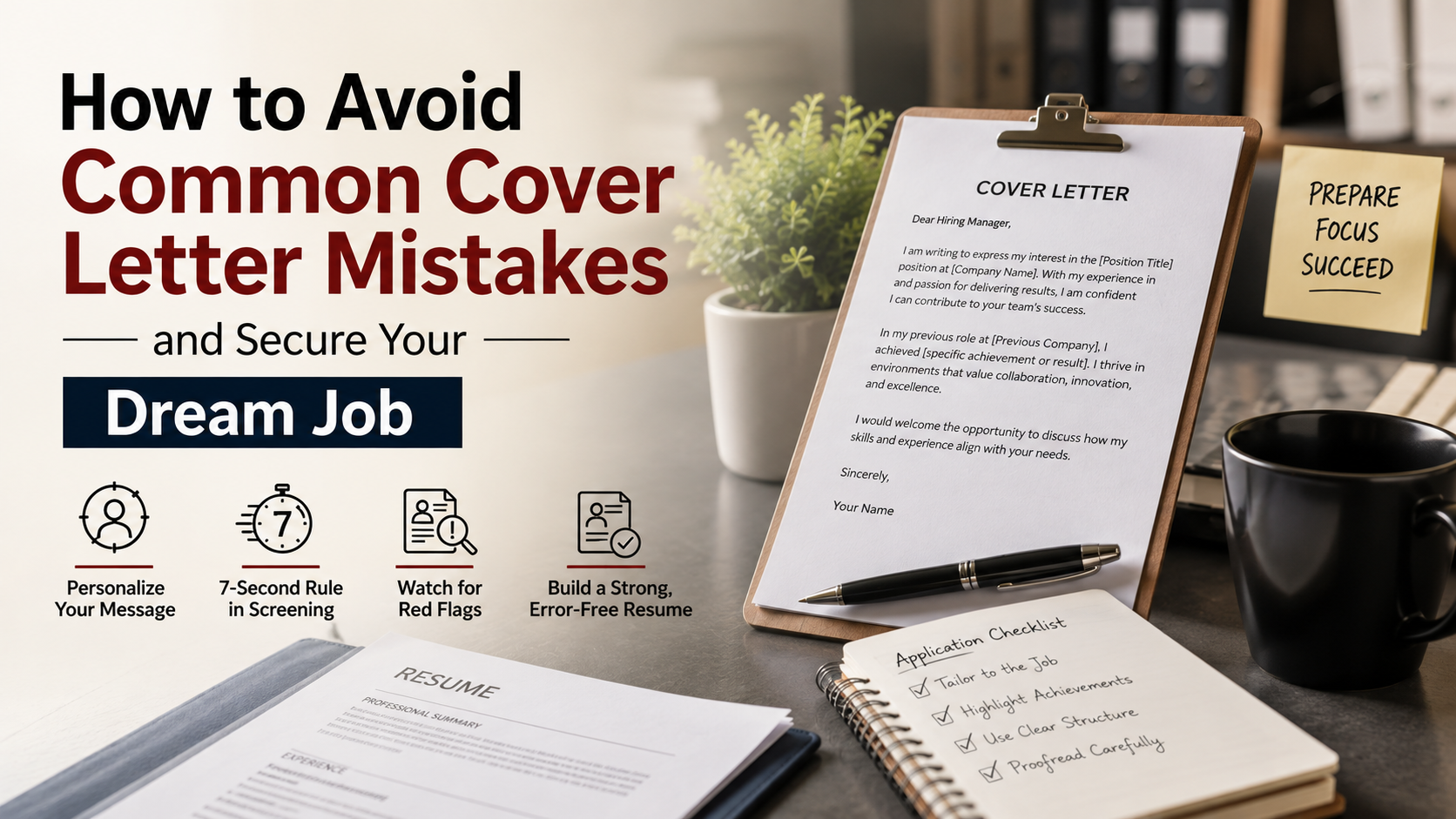
How to Avoid Common Cover Letter Mistakes and Secure Your Dream Job
Job seekers often struggle to make a great first impression, making common cover letter mistakes that can instantly derail their employment applications. When applying for competitive roles, submitting a flawed application document can push your resume straight to the rejection pile. This happens because hiring managers look for precision, professionalism, and genuine alignment with company values. According to insights shared on Harvard Business Review, tailoring your materials correctly is essential for standing out. Throughout this article, we will examine what are 5 common cover letter mistakes, what is the 7 second rule in resume screening, what are red flags on a CV, and what are 5 common mistakes people make on their resume. By understanding these pitfalls, you can refine your job application strategy and significantly boost your interview callbacks this year.
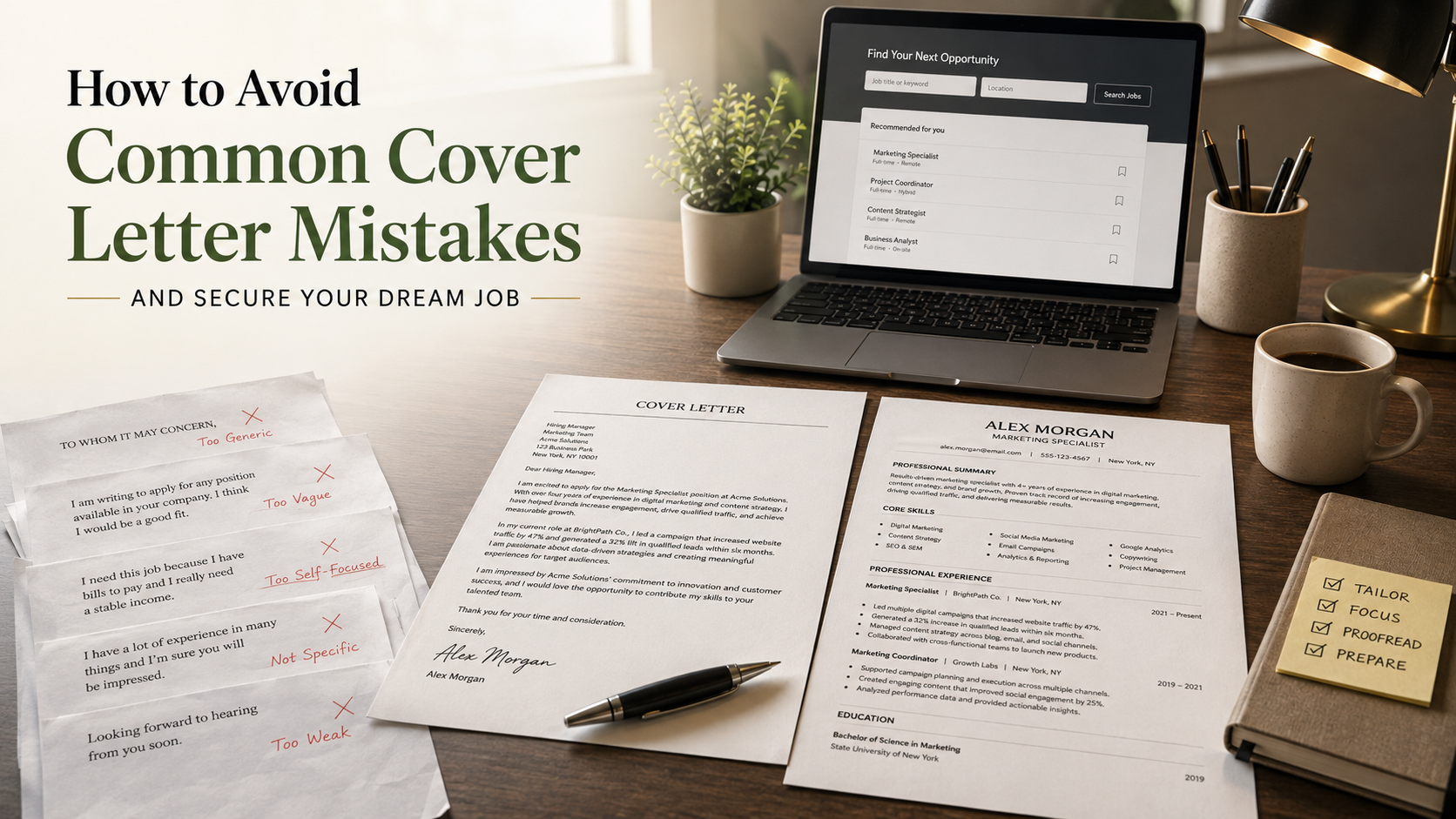
What Are 5 Common Cover Letter Mistakes?
Avoiding common cover letter mistakes can make your application more professional and credible. Recruiters often notice small errors during the first review. A generic letter is one of the biggest problems. It shows little effort toward the specific employer or role. For additional guidance, review how to write a cover letter step by step.
Another common mistake is repeating your resume word-for-word. Your cover letter should add context and explain why your experience fits the position. It should not simply list the same responsibilities.
Applicants also make the mistake of focusing too much on what the company can offer them. Instead, explain how your skills can solve problems and create value.
Other common cover letter mistakes include spelling errors, incorrect names, and poor formatting. Addressing the wrong hiring manager can also hurt your credibility.
Finally, avoid writing a lengthy letter. A concise message with relevant examples is easier to read and more effective.
Failing to Personalize Your Message
Personalization is one of the simplest ways to avoid common cover letter mistakes. Employers want evidence that you understand their organization and the position you are applying for. A generic introduction can make your application feel copied and careless.
Start by researching the company, department, and role. Look for specific projects, business goals, or challenges related to the position. Then connect those details with your relevant skills and experience.
Your opening should explain why you are interested in that particular opportunity. Avoid vague statements that could apply to every company. Instead, mention something specific about the employer or role.
Address the appropriate hiring manager whenever you can find their name. If the name is unavailable, use a professional department-based greeting.
A personalized letter does not need to be long. Even a few relevant details can show genuine interest and make your application more memorable.
What Is the 7-Second Rule in Resume Screening?
The 7-second rule in resume screening describes the idea that recruiters may spend only a few seconds initially scanning a resume. It is better treated as a guideline than a strict measurement. Screening times vary based on the employer, role, application volume, and recruitment process.
During an initial scan, recruiters usually look for information that quickly shows relevance. This can include job titles, recent experience, important skills, measurable achievements, and clear career progression.
A cluttered resume makes this process harder. Dense paragraphs can hide the information that matters most. Poor formatting can also make an otherwise qualified candidate appear less organized. Avoiding resume mistakes recruiters notice immediately can help keep important information clear and easy to find.
Make your strongest qualifications easy to find. Use concise bullet points and clear section headings. Put important achievements near the beginning of relevant sections.
Your goal is not to impress recruiters with design. Instead, create a resume that communicates your value quickly and clearly.
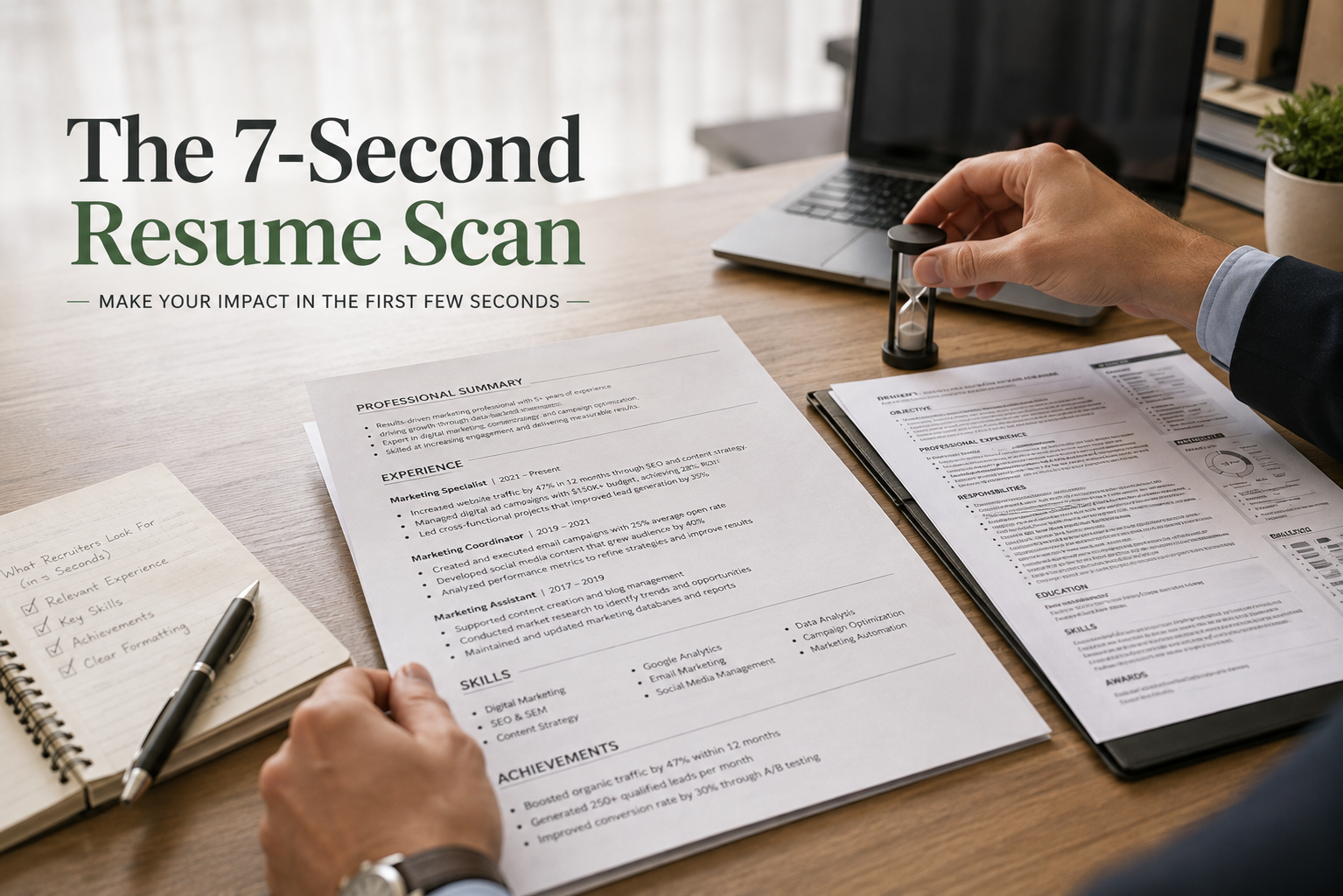
Optimizing for Quick Scanning
To make your resume easier to scan, use a clean and consistent structure. Start with clear section headings and organize employment history in reverse-chronological order. This lets recruiters understand your recent experience without searching through the page.
Keep each bullet focused on one achievement, responsibility, or result. Avoid long paragraphs that combine several unrelated points. Strong action verbs can also make your experience easier to understand.
Place measurable results where they naturally support your claims. Numbers such as percentages, revenue figures, project sizes, or time savings can quickly demonstrate impact.
Formatting should support readability rather than distract from your qualifications. Use consistent spacing, simple typography, and enough white space between sections.
Also, avoid excessive visual elements. Complicated layouts can make information harder for recruiters and applicant tracking systems to process.
A well-structured resume helps employers identify your strongest qualifications quickly. That matters when recruiters review many applications for the same position.
What Are Red Flags on a CV?
CV red flags are details that may cause employers to question a candidate’s suitability or credibility. Not every warning sign automatically leads to rejection. However, unexplained or inconsistent information can create unnecessary concerns during screening. Recognizing resume mistakes recruiters notice immediately can also help you identify issues before submitting your application.
Common examples include unexplained employment gaps, frequent job changes without clear progression, and vague descriptions of previous roles. These issues become more concerning when the resume provides little context.
Outdated technical skills can also weaken an application, especially for roles that require current knowledge. Including unnecessary personal information can distract from relevant qualifications. Exaggerated job titles or responsibilities can damage trust if employers later discover inconsistencies.
The solution is not to hide difficult parts of your career. Instead, provide accurate and relevant context. Make your responsibilities clear and keep dates consistent throughout your application.
Employers value transparency. A straightforward CV can address potential concerns before they become major problems.
Explaining Employment Gaps Honestly
Employment gaps do not automatically make someone a poor candidate. People leave the workforce for many legitimate reasons, including family responsibilities, education, career changes, or personal circumstances.
The bigger problem is leaving a significant gap unexplained when the rest of your employment history suggests continuous work. You do not need to provide private details. A short, professional explanation is usually enough.
For example, you can describe a period as career development, further education, freelance work, caregiving, or another accurate activity. Choose wording that reflects what you actually did during that period.
If you developed new skills during the gap, mention relevant courses, certifications, projects, or independent work. These details can show that you continued developing professionally through continuous learning for career success.
Never invent employment or achievements to fill a gap. False information can create more serious problems during interviews or background checks.
An honest explanation gives employers useful context. It also helps shift attention toward your current skills and readiness for the role.
What Are 5 Common Mistakes People Make on Their Resume?
Several common resume mistakes can weaken an otherwise qualified application. One major problem is using a cluttered layout that makes important information difficult to find. An overly complicated design can also create problems when an applicant tracking system processes the document. Reviewing resume mistakes recruiters notice immediately can help you identify and fix similar problems.
Another frequent mistake is using weak or passive language. Strong action verbs make responsibilities and achievements clearer. Candidates also often describe duties without showing measurable results.
Failing to proofread is another avoidable problem. Spelling, grammar, formatting, or date errors can suggest poor attention to detail. Even small mistakes can distract recruiters from your qualifications.
Including too much unrelated work history can create another issue. Your resume should emphasize experience that supports your target role.
The most effective resume focuses on relevance, clarity, and evidence. Remove unnecessary information and prioritize achievements that demonstrate your ability to contribute.
Neglecting Measurable Achievements
Many candidates describe what they did without explaining what they achieved. Listing routine responsibilities gives recruiters limited evidence of your actual performance.
For example, saying that you “managed customer accounts” explains a duty. A stronger statement could show how many accounts you managed or what results you produced. Specific evidence makes your contribution easier to understand.
Use numbers when they genuinely support your achievements. Depending on your role, useful metrics may include revenue, cost savings, productivity improvements, customer growth, project volume, or time saved.
You do not need statistics for every bullet point. Some responsibilities may not have meaningful numbers. In those cases, describe the outcome, scope, complexity, or improvement involved.
Focus on the difference you made rather than simply listing activities. This approach helps employers understand your capabilities more quickly and supports the use of measurable achievements that demonstrate your value.
A resume becomes more persuasive when its claims are supported by clear evidence. Measurable achievements can provide that evidence without adding unnecessary length.
Frequently Asked Questions
How long should a professional cover letter be?
A professional document should never exceed one single page. Keeping your text concise shows respect for the hiring manager’s busy schedule. Aim for three to four short paragraphs that quickly introduce your background, highlight key achievements, and state a clear call to action for an upcoming interview.
Can I use the same document for every job application?
Using the exact same application text for multiple roles is a major mistake. Every employer has unique needs, company cultures, and technical requirements. Customizing your application for each specific role proves your genuine enthusiasm and directly addresses the exact skills the hiring manager wants to see.
What is the best way to address the hiring manager?
Finding the actual name of the hiring manager or department head is always best. You can check LinkedIn, the company website, or call the front desk to ask. Avoid outdated generic greetings like To Whom It May Concern, and opt for professional alternatives like Dear Hiring Manager if a specific name is unavailable.
Should I include references directly on my application?
You should not include professional references directly on your initial application materials. Save valuable space for your core skills and employment history. Create a separate reference document and provide it only when the employer explicitly requests it later in the hiring process.
Conclusion
Mastering the art of job applications requires careful attention to detail and a commitment to presenting your best professional self. By understanding and avoiding common cover letter mistakes, you protect your candidacy from early rejection. Remember to respect the rapid screening process, eliminate dangerous resume red flags, and highlight measurable achievements that prove your value. Applying these strategies will transform your job search and help you secure more interviews. For further preparation, learn how to interview like a pro and approach your next opportunity with greater confidence and clarity.