
The Power of Pairs When Reading Aloud
Reading is a journey that transforms when shared with others, especially when exploring pair reading strategies. When we bring voices together, written words spring to life with rich expression, rhythm, and deeper meaning. Many educators and literacy experts, such as those at the Read Aloud organization, emphasize that vocalizing stories aloud unlocks cognitive pathways that silent reading alone often misses. This article explores the core mechanics of shared literacy, breaking down the power of reading aloud, the distinct advantages of cooperative partnerships, the fundamental reading powers, and actionable strategies like the 5 4 3 2 1 method. Whether you are an educator, parent, or lifelong learner, understanding these dynamics helps you elevate comprehension, build confidence, and foster a genuine love for literature in readers of all ages.
What Is the Power of Reading Aloud?
The power of reading aloud lies in its ability to connect spoken language with written text. As readers hear words spoken naturally, they understand vocabulary, sentence structure, and pronunciation more effectively. This process strengthens language development while making written content easier to understand. Reading aloud also improves listening skills, encourages active engagement, and creates a deeper emotional connection with stories and informational texts. Children and adults alike benefit from hearing expressive reading, especially when exploring unfamiliar topics or challenging books.
Reading aloud also supports memory and confidence. Listeners can focus on meaning without struggling to decode every word independently. As a result, they absorb new vocabulary more naturally and develop stronger comprehension skills. Whether used at home, in classrooms, or during group learning sessions, reading aloud encourages meaningful discussions and creates a supportive environment where readers feel comfortable asking questions, exploring ideas, and building lifelong literacy habits.
Enhancing Vocabulary Acquisition Through Sound
Hearing unfamiliar words in context significantly improves vocabulary development. Readers learn correct pronunciation, natural intonation, and subtle word meanings through repeated exposure. Listening also helps reinforce spelling patterns and language structure.
Reading aloud exposes learners to words they may not encounter in everyday conversations. Over time, this repeated exposure expands vocabulary and improves both speaking and writing skills. It also strengthens language comprehension, making future reading experiences easier and more enjoyable.
What Are the Benefits of Pair Reading?
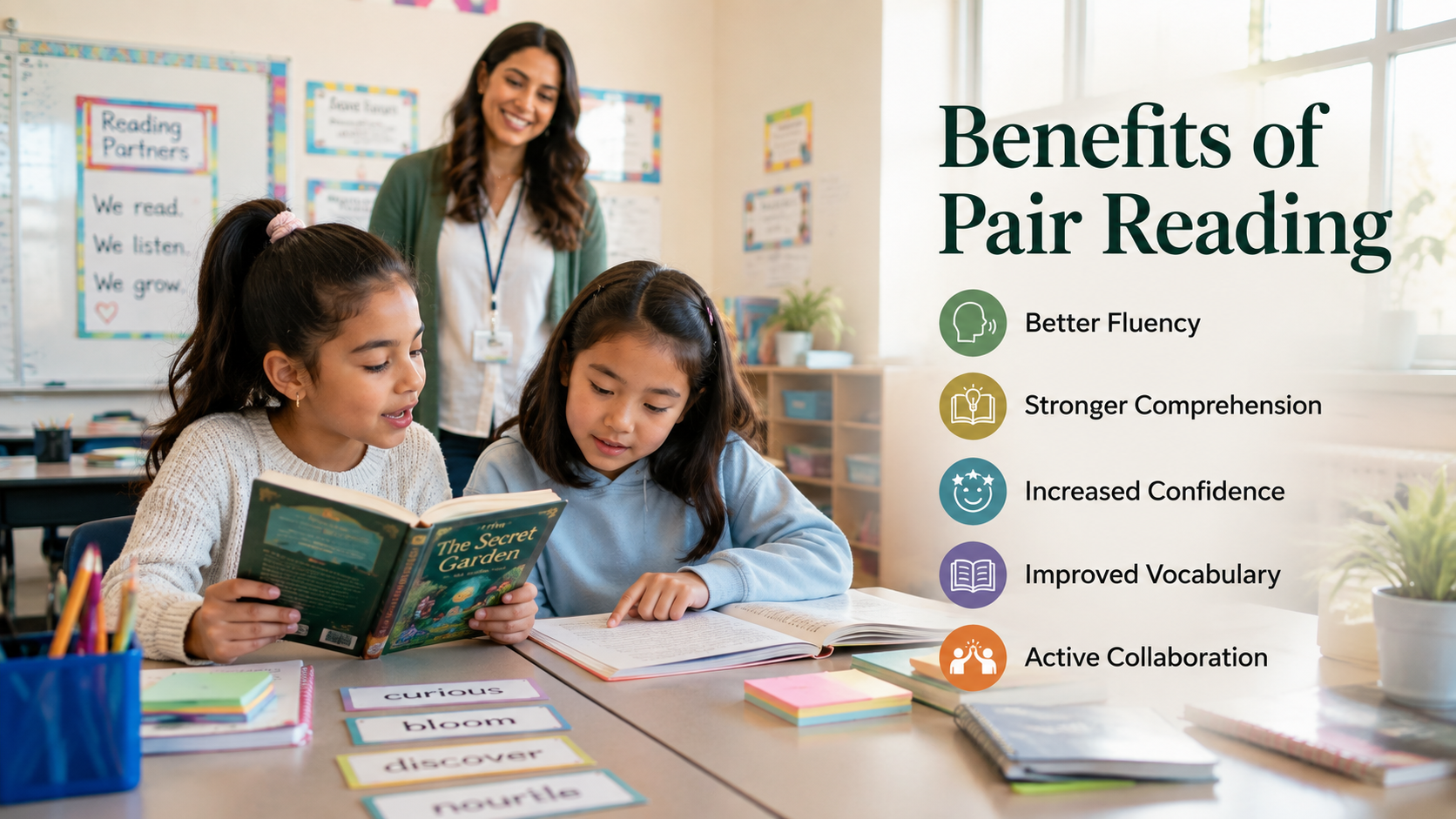
Pair reading combines collaboration with guided practice, making it an effective strategy for improving literacy skills. Two readers take turns reading, listening, and supporting each other throughout the activity. This shared approach reduces pressure, especially for struggling readers, because they receive immediate encouragement from a trusted partner. As partners model fluent reading, expression, and pacing, both readers gradually improve their confidence and accuracy. Pair reading also develops communication skills while creating a positive learning environment that encourages participation.
Beyond improving reading fluency, pair reading promotes accountability and active engagement. Partners can quickly identify pronunciation mistakes, clarify difficult vocabulary, and discuss unfamiliar ideas together. These regular interactions strengthen comprehension while keeping learners motivated. Whether used in classrooms, libraries, or at home, pair reading helps readers build confidence, improve fluency, and develop stronger comprehension skills through consistent peer support.
Building Confidence in Reluctant Readers
Reading with a supportive partner reduces anxiety and encourages participation. Reluctant readers often feel more comfortable attempting challenging passages when they know someone is there to help.
Additional benefits of pair reading include:
- Improved reading fluency
- Better comprehension
- Increased confidence
- Stronger communication skills
- More enjoyable reading sessions
These advantages make pair reading an effective strategy for learners of all ages.
What Are the 5 Reading Powers?
The five reading powers—decoding, vocabulary, comprehension, fluency, and motivation—form the foundation of strong literacy skills. Each element contributes to reading success in a unique way. Decoding enables readers to recognize and pronounce words accurately. Vocabulary provides the knowledge needed to understand those words in different contexts. Comprehension allows readers to interpret ideas, identify key messages, and make meaningful connections with the text. Fluency improves reading speed, accuracy, and expression, making reading more natural and enjoyable.
The final reading power, motivation, keeps readers engaged over the long term. A motivated reader is more likely to explore different genres, develop critical thinking skills, and build lifelong reading habits. When these five reading powers work together, they create confident, independent readers who can understand increasingly complex texts while enjoying the learning process.
The Critical Role of Reading Motivation
Reading motivation drives continuous learning and long-term literacy growth. Even readers with strong technical skills may lose interest without genuine curiosity and engagement.
Educators and parents can strengthen motivation by:
- Offering books that match personal interests
- Celebrating reading progress
- Creating enjoyable reading routines
- Providing positive encouragement
- Allowing readers to choose their own books
These simple practices help develop lasting reading habits.
What Is the 5 4 3 2 1 Reading Strategy?
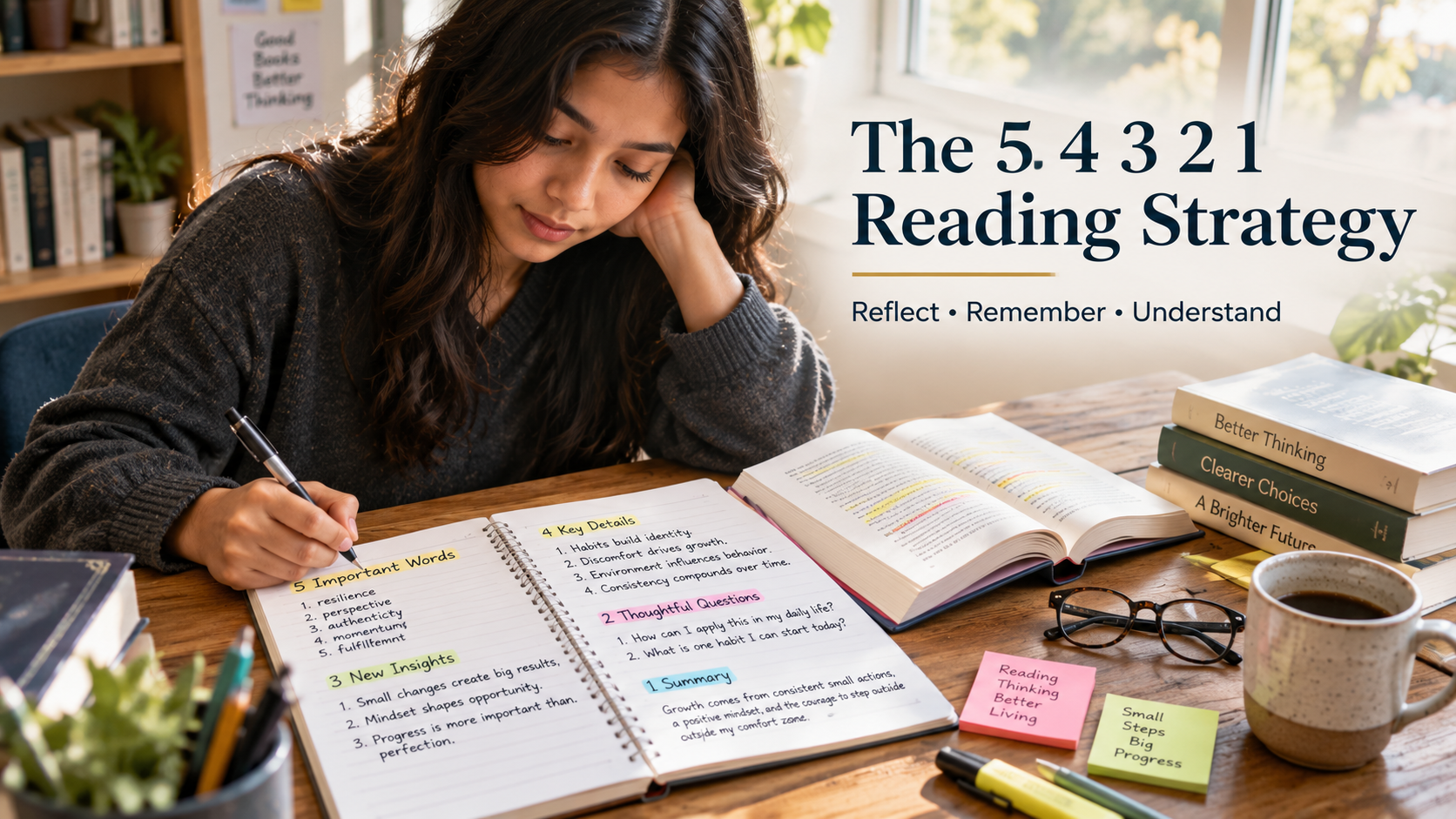
The 5 4 3 2 1 reading strategy is a structured reflection technique that improves comprehension and information retention after reading. Readers organize their thoughts by identifying five important words, four key details, three new insights, two thoughtful questions, and one overall summary. This simple framework encourages active learning instead of passive reading. By breaking reflection into manageable steps, readers analyze the text more deeply and remember important ideas for longer periods.
The strategy works well in classrooms, study groups, and independent learning. It encourages critical thinking while helping readers organize information logically. Teachers often use it to assess understanding, while students benefit from improved recall and clearer note-taking. Because the process is simple and adaptable, the 5 4 3 2 1 reading strategy supports learners of different ages and reading levels.
Boosting Retention Through Structured Reflection
Breaking reflection into numbered steps makes reviewing information easier. Readers focus on one task at a time instead of trying to remember everything at once.
The strategy helps readers:
- Improve comprehension
- Strengthen memory retention
- Develop critical thinking
- Identify knowledge gaps
- Prepare for discussions or assessments
Regular use of this method builds stronger reading and study habits while making learning more organized and effective.
FAQ
How does reading aloud improve listening comprehension?
Reading aloud exposes listeners to complex sentence structures and advanced vocabulary well beyond their current independent reading levels. By hearing these elements spoken naturally, the brain builds stronger linguistic frameworks, allowing individuals to comprehend sophisticated audio and verbal information much more effectively in daily life.
What age group benefits most from pair reading?
Pair reading benefits a wide range of ages, starting from early elementary school students learning basic fluency up to middle school students tackling complex literature. The collaborative nature of pairs scales effortlessly, adapting easily to different reading levels, text complexities, and collaborative learning goals.
Can parents practice pair reading at home?
Parents can easily practice pair reading at home by taking alternating turns reading paragraphs or pages with their children. This shared routine creates a low-pressure environment, models fluent pacing, and provides a wonderful bonding opportunity centered around exploring great stories together.
How do I choose the right books for pair reading?
Choose books that sit slightly above the struggling reader’s independent level but remain accessible when shared with a partner. Look for engaging plots, rich descriptive language, and themes that genuinely spark curiosity to keep both readers motivated throughout the session.
Conclusion
The journey of literacy flourishes when we embrace collaborative approaches like pair reading and the dynamic art of reading aloud. Throughout this article, we examined how voicing text enhances vocabulary, why pairs build crucial reading confidence, and how foundational reading powers support overall growth. If you ever struggle to retain information or find yourself forgetting everything you read, incorporating these active verbal techniques can profoundly transform your memory and focus. We also explored actionable tools like the 5 4 3 2 1 strategy to deepen daily comprehension. By applying these insights in classrooms and homes, you can transform reading from a solitary chore into an engaging, shared adventure. Take what you have learned today, partner up with a reader, and discover how shared storytelling unlocks a lifelong passion for books.