

No Degree, No Problem: The Best Career Options Without a College Degree
The traditional professional landscape is shifting rapidly. Consequently, finding high-paying career options without a college degree is more achievable than ever before. Many global employers are actively shifting toward skills-based hiring. Therefore, they prioritize what you can actually do over a piece of paper. According to the U.S. Bureau of Labor Statistics, numerous high-growth occupations offer lucrative paths. These fields welcome individuals who bypass the university route entirely. This cultural shift is creating unprecedented opportunities for self-taught individuals, bootcamp graduates, and career changers. As a result, you can build a stable future without taking on massive student loan debt.
This comprehensive guide breaks down the most sustainable and high-paying professional paths available today. Crucially, the modern workforce values hands-on capability over academic credentials. By focusing on practical application, building a portfolio, and earning targeted certifications, you can secure a great trajectory. However, success requires a strategic approach to skill acquisition. Let’s look closely at the best career paths you can start building right now to achieve long-term professional success.
High-Paying Career Options Without a College Degree in Tech
The technology sector leads the charge when it comes to skills-based hiring. Because digital frameworks evolve at a breakneck pace, real-world capability matters much more than formal diplomas. Indeed, problem-solving skills are what engineering teams truly care about. Consequently, many tech giants have completely removed degree requirements from their job descriptions to source diverse talent pools.
Software Development and Engineering
You do not need a formal computer science degree to build excellent applications. Similarly, you can manage complex enterprise databases without a diploma. Many successful engineers teach themselves through interactive online coding bootcamps. Furthermore, they utilize open-source contributions and independent documentation study. Employers simply look for clean logic and the ability to solve functional problems efficiently.
-
Key Skills: C#, Python, SQL database management, and cloud architecture.
-
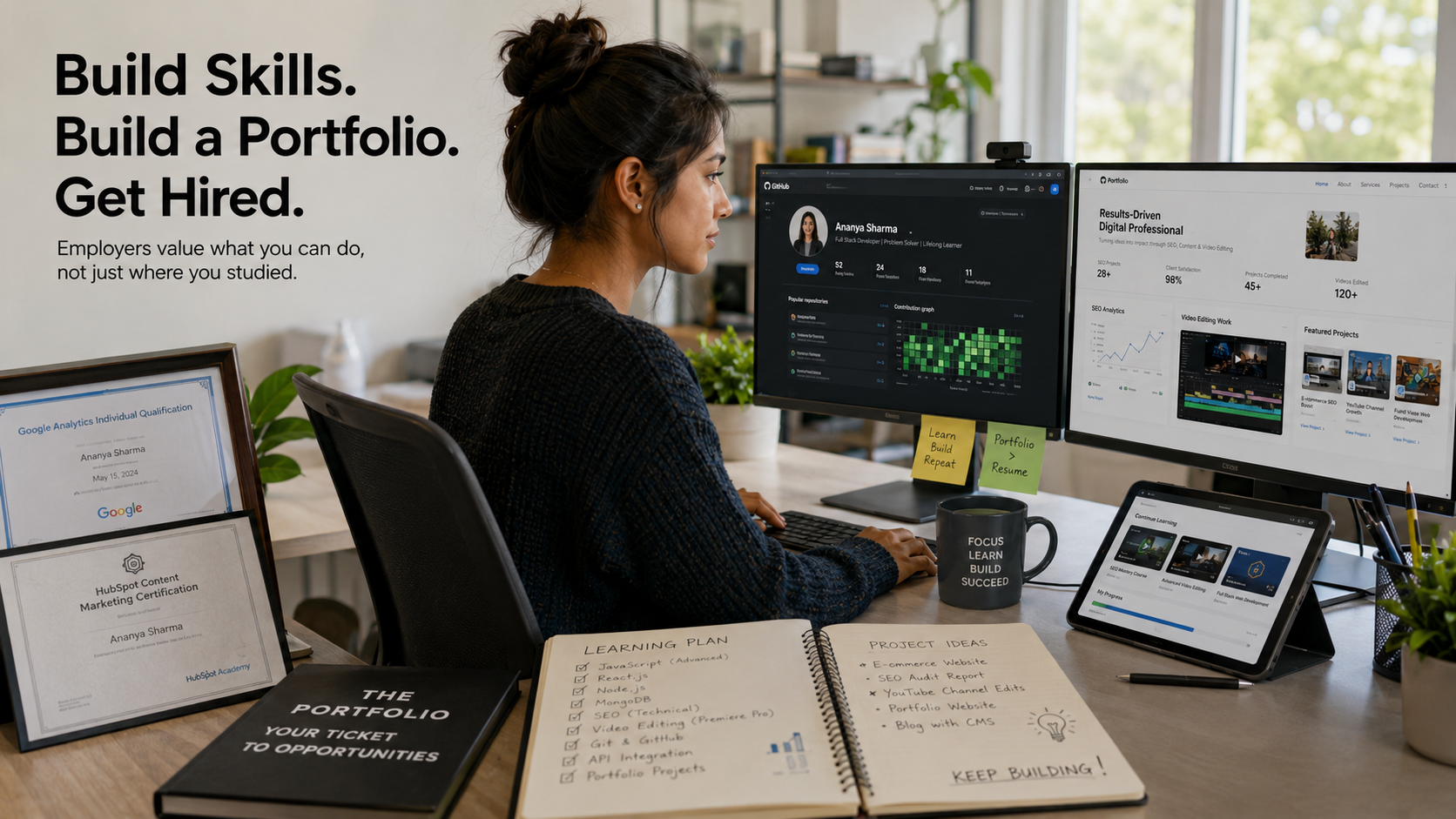
How to Start: Build a personal portfolio on GitHub to showcase your coding logic, database schemas, and completed projects directly to recruiters.
To thrive in this competitive space, focus on mastering a specific stack before branching out. Specifically, developing a deep understanding of application development allows you to speak confidently during technical interviews. Moreover, showing that you can build an application from scratch makes your lack of a degree irrelevant. Thus, your portfolio becomes your true asset.
IT Support and Network Administration
Every modern business relies heavily on secure, reliable IT infrastructure to conduct daily operations. Therefore, companies need skilled technical professionals to manage internal networks. They must also troubleshoot complex hardware configurations and protect critical digital communication channels. Fortunately, this field offers a straightforward, step-by-step upward trajectory based purely on technical certifications.
-
Key Skills: Network routing, cloud systems deployment, and basic information security protocols.
-
How to Start: Earn industry-standard certifications like CompTIA A+, Network+, or Cisco CCNA to validate your hardware and networking skills immediately.
Starting in an entry-level helpdesk role allows you to learn the inner workings of corporate infrastructure. Meanwhile, you will be earning a steady income. As you accumulate hands-on experience, you can earn advanced system certifications. Consequently, you can quickly move into specialized roles like systems administrator or network engineer. Ultimately, this path rewards continuous learning and technical curiosity above all else.
Lucrative Professional Paths in Logistics and Operations
Global supply chains require organized coordinators to keep goods moving smoothly across international borders. As international commerce becomes more integrated, companies are investing heavily in operational talent. Therefore, businesses actively seek individuals who understand practical logistics and technical supply chain management.
Maritime Logistics and Port Operations Specialist
Global trade depends heavily on standardized maritime shipping networks to transport bulk materials and finished goods efficiently. Thus, specialized logistics coordinators manage crucial cargo tracking systems. They also navigate complex international compliance laws and oversee standardized documentation. For this reason, this field highly values practical compliance knowledge over generic business theory.
-
Key Skills: Knowledge of international shipping standards, supply chain tracking, and official identification systems like the UN/LOCODE standard.
-
Why it Matters: The industry faces a shortage of operators who understand global compliance, making this a highly stable, long-term profession.
Entering this sector often involves starting in administrative or coordination roles within freight forwarding companies. Because the daily tasks involve handling highly specific international codes, your on-the-job mastery becomes your greatest asset. Furthermore, professionals who understand how to optimize routing are highly compensated. Consequently, they save companies thousands of dollars per shipment.
Project Management Coordinator
Organized individuals who can guide complex initiatives from initial planning to final execution are highly valued across all corporate sectors. Whether managing a commercial construction project or coordinating a software development sprint, project managers ensure success. Specifically, they help teams meet tight deadlines and stick to strict budgets. Therefore, this career path relies heavily on structural organization.
-
Key Skills: Timeline optimization, budget tracking, risk management, and clear stakeholder communication.
-
How to Start: Acquire a foundational Certified ScrumMaster (CSM) certification or a Project Management Institute (PMI) credential to demonstrate your structural knowledge.
You can enter this field by taking on junior coordinator roles. In these positions, you will assist senior managers with scheduling and tracking deliverables. As you demonstrate your ability to remove operational bottlenecks, you will naturally progress. Eventually, you will handle larger projects independently. In short, it is a highly versatile path with excellent growth potential.
Highly Rewarding Creative and Digital Trades
If you possess a strong visual sense, the creative industry offers excellent independent and corporate career paths. However, you must be willing to master modern digital tools. Businesses require continuous streams of digital assets to engage audiences. Therefore, they constantly hire talent to convert customers in the digital marketplace.
Digital Content Strategist and SEO Expert
Modern businesses need a powerful online presence to attract clients and stay ahead of their competition. Consequently, content strategists and Search Engine Optimization (SEO) experts analyze online search trends. They also map out extensive editorial calendars and optimize web copy. This discipline is completely performance-driven. Therefore, it is ideal for self-taught marketers.
-
Key Skills: Search Engine Optimization (SEO), content strategy frameworks, audience research, and analytical tools.
-
How to Start: Complete free training modules on Google Search Central and build a personal website to test strategies and prove you can rank keywords.
Because search engine algorithms change frequently, up-to-date practical knowledge is far more valuable than old university textbooks. By demonstrating that you can grow organic traffic, you make yourself an indispensable asset. Moreover, you prove you can convert web visitors into customers. Thus, you will find ample opportunities in corporate marketing departments and digital agencies alike.
Multimedia Designer and Video Editor
From internal corporate marketing departments to independent digital production houses, visual storytellers are experiencing massive demand. Indeed, the global media landscape is growing rapidly. Businesses require polished video content, social media graphics, and interactive user interfaces. Therefore, this creative field evaluates talent entirely based on visual style and technical execution.
-
Key Skills: Advanced video editing platforms, vector graphic design software, and digital layout optimization.
-
How to Start: Assemble a digital portfolio website showcasing diverse video edits, motion graphics templates, or promotional marketing materials.
To build a sustainable career without a formal art degree, focus on building a distinct visual style. Additionally, you must learn the specific software tools used by professional agencies. You can easily start by taking on freelance gigs. For example, you can help local businesses upgrade their social media presence. Over time, your collected body of work becomes your definitive calling card.
FAQ SECTION
Can I really get a high-paying job without a college degree?
Yes, you absolutely can land a high-paying position without a formal university degree. Today, career options without a college degree are expanding as employers increasingly prioritize practical skills over academic credentials. Modern industries are actively moving away from rigid degree requirements, focusing instead on skill verification and real-world performance.
Many of the best career options without a college degree are found in fast-growing sectors such as technology, digital marketing, skilled trades, and global supply chain logistics. These industries frequently hire candidates based on technical expertise rather than an expensive piece of paper. Employers want professionals who can solve problems, adapt quickly, and deliver results from day one.
If you’re exploring career options without a college degree, earning industry-recognized certifications, building a strong portfolio, and gaining hands-on experience can significantly improve your earning potential. In many cases, these career options without a college degree offer salaries that match or even exceed those of traditional graduate roles. Ultimately, your professional growth depends more on your skills, consistency, and ability to create value than on holding a university diploma.
What are the fastest growing non-degree career paths today?
The fastest-growing career paths that do not require a college degree are currently concentrated within technology, digital commerce, and highly specialized operational logistics. Specifically, roles such as software developers, cybersecurity analysts, network administrators, and cloud engineers are experiencing critical talent shortages. Because these digital fields evolve at a breakneck pace, traditional four-year academic institutions struggle to keep their curricula relevant. Furthermore, specialized operational sectors like agile project management and international maritime logistics coordinator roles face continuous global demand. These fast-growing fields offer clear, linear progression paths based strictly on your technical upskilling and hands-on performance. Therefore, excellent opportunities remain wide open for self-taught professionals and bootcamp graduates who can adapt quickly to new software tools, learn specialized industry standards, and fill immediate operational gaps in corporate teams.
How do I prove my skills to employers without a diploma?
To successfully catch the eye of corporate recruiters without a traditional university diploma, you must build a comprehensive, public portfolio that acts as undeniable proof of your capabilities. For technical roles like software engineering or database management, maintaining an active, organized GitHub profile filled with clean, documented code and real-world application logic is essential. Similarly, if you are pursuing digital marketing, SEO, or creative trades, launching a personal website that highlights detailed case studies, live web traffic metrics, or successful design campaigns works incredibly well. Additionally, stacking recognized certifications from official organizations gives you instant baseline credibility. When you combine these tangible assets with a performance-focused resume that highlights exact project outcomes, you demonstrate your value directly. Consequently, this strategic approach allows you to bypass human resources filters and secure competitive interviews based entirely on your visible expertise.
Are certifications better than a college degree for landing a job?
Certifications are highly advantageous because they are significantly faster, more affordable, and much more targeted than a traditional four-year college degree. While an academic degree provides a broad, theoretical foundation, a specialized industry certification serves as precise verification that you possess the exact tactical skills required for a specific job role right now. For many cutting-edge sectors, holding targeted credentials alongside a strong personal portfolio is actually preferred by hiring managers. This powerful combination gives companies confidence that you can contribute to their active pipelines with minimal training. Furthermore, pursuing certifications allows you to avoid the crippling financial burden of student loans while focusing your energy entirely on highly profitable, in-demand technical skills. Ultimately, certifications prove your commitment to continuous, modern upskilling, which is an trait highly prized by modern corporate leaders.
How do I transition to a new field without academic credentials?
Successfully transitioning into a brand-new field without academic credentials requires a highly organized strategy centered on structured self-study, active networking, and practical skill validation. First, you must reverse-engineer your target role by identifying the exact technical skills, software tools, and frameworks currently in demand. Next, leverage high-quality online bootcamps, official technical documentation, and interactive tutorials to master these concepts thoroughly. Once you build a baseline of knowledge, create independent projects or offer pro-bono services to local organizations to accumulate real-world troubleshooting experience. Finally, optimize your professional profiles to highlight your new technical capabilities rather than your past employment history. Be sure to actively attend industry meetups and connect directly with working professionals to uncover hidden job openings, as personal referrals are incredibly powerful for non-traditional candidates.
CONCLUSION
Finding excellent career options without a college degree is a highly practical reality in today’s evolving job market. Consequently, companies worldwide are shifting their focus toward execution, practical skills, and measurable results. Whether you choose to dive into software engineering, master digital content strategy, or coordinate complex international maritime logistics, your progression matters. Your success depends heavily on your personal willingness to learn and adapt. If you’re still deciding which direction to take after school, explore our guide on career options after high school to discover more pathways that align with your interests and goals. Therefore, the door is wide open for individuals who choose determination over traditional credentials.
By obtaining targeted certifications, building an impressive portfolio, and showcasing your skills on open platforms, you can confidently bypass the university path. Focus on continuous improvement, stay curious, and build real solutions to unlock a highly rewarding professional future. Your value as a professional lies in what you can build, create, and organize. Therefore, invest in yourself and take control of your career path today.