
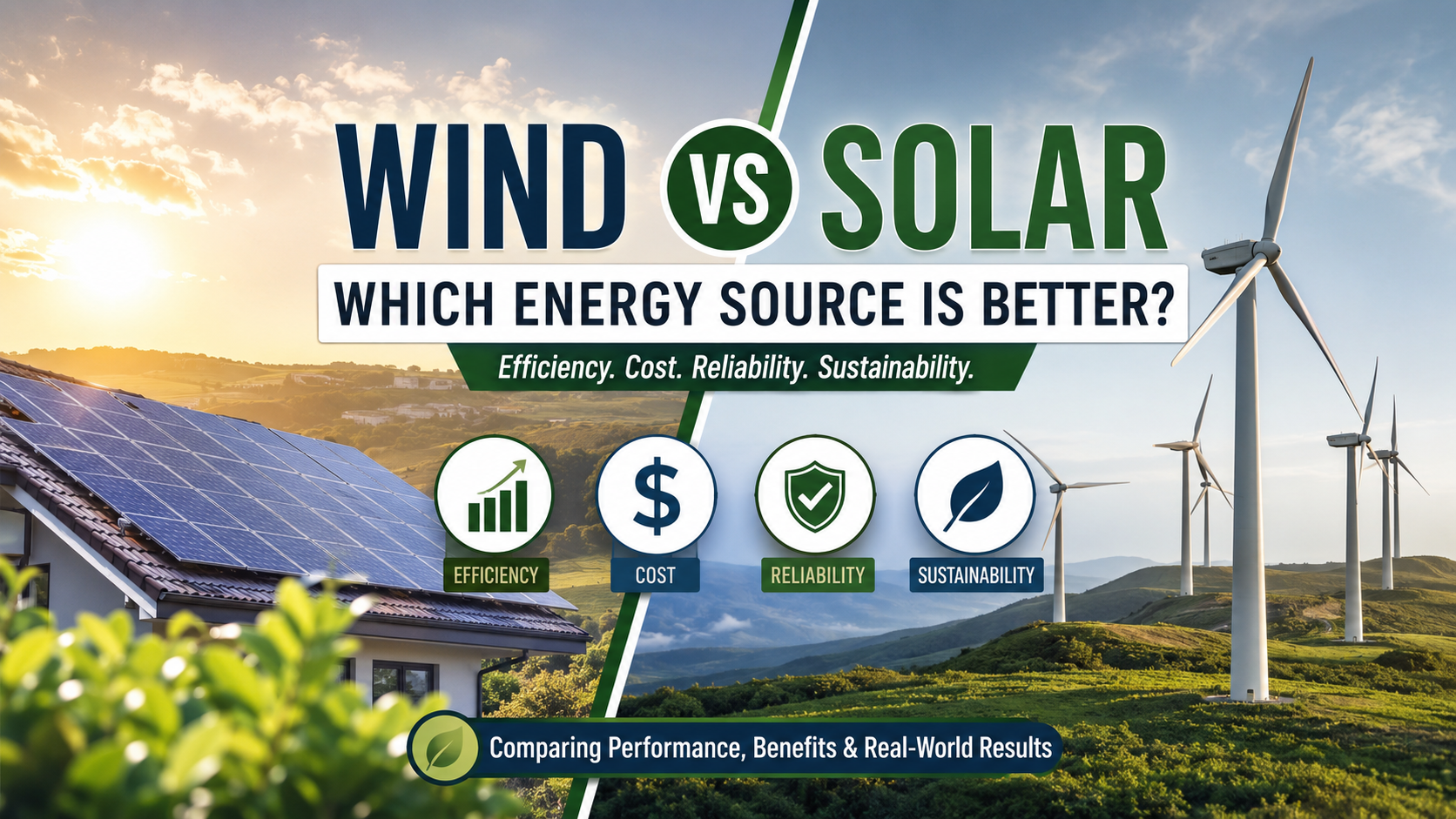
Wind vs Solar Efficiency: Which Energy Source Is Better?
The debate over wind vs solar efficiency is heating up rapidly. Global energy markets urgently need cleaner power grids today. Homeowners and governments want the absolute best return on investment. You must deeply understand how each mechanical system works perfectly. Both systems convert raw natural resources into reliable everyday electricity. The U.S. Department of Energy (DOE) heavily researches both expanding sectors. Officials state that optimizing these renewable power systems remains critical. Constant optimization actively ensures a truly sustainable global future.
But how do field experts strictly measure this crucial performance? For solar panels, efficiency means precisely calculating sunlight conversion rates. Engineers measure exactly how much light turns into electrical current. For wind turbines, the complex testing process requires another approach. Technicians must evaluate the kinetic energy safely captured from air. Both green technologies offer consumers distinct operational strengths and benefits. Buyers also face specific physical drawbacks that require careful consideration.
You might discover that solar panels work perfectly for homes. Suburban houses fit incredibly well in sunny, dense urban climates. Meanwhile, massive industrial wind farms heavily dominate open rural areas. Vast flat plains and windy offshore ocean environments prove ideal. This comprehensive article breaks down everything you need to know. We explore exactly how both advanced energy systems operate daily. Our guide thoroughly compares their specific energy conversion rates accurately. We also evaluate long-term financial maintenance costs for future buyers. Let us finally settle this vital renewable energy debate today.
Is Solar More Efficient Than Wind?
Comparing the conversion rates of solar panels and wind turbines reveals clear differences in how each technology generates electricity. Traditional photovoltaic (PV) panels typically convert 17% to 22% of sunlight into usable electricity. Premium models can exceed this range under ideal conditions. In comparison, modern wind turbines can convert up to 50% of the wind’s kinetic energy into mechanical power, approaching the theoretical Betz limit.
Although wind turbines achieve a higher conversion efficiency, actual energy production depends heavily on local weather conditions. Wind speeds fluctuate throughout the day and across seasons, which directly affects electricity generation. Solar panels, on the other hand, produce more predictable output in regions with consistent sunlight.
When comparing solar vs. wind efficiency, conversion rates alone do not tell the whole story. Real-world performance depends on climate, installation location, maintenance requirements, and annual energy production. In sunny regions, solar systems often deliver more reliable daily generation. Meanwhile, wind power performs exceptionally well in areas with steady, strong winds. Choosing the most efficient renewable energy source ultimately depends on local environmental conditions rather than efficiency percentages alone.
Conversion Rates and Practical Power Generation
While wind turbines offer a higher theoretical conversion ceiling, solar photovoltaic systems provide dependable performance for residential and commercial installations. Solar panels use semiconductor materials to convert sunlight directly into electricity through the photovoltaic effect. This process contains no moving parts, reducing maintenance requirements and improving long-term reliability.
Wind turbines generate electricity by using aerodynamic blades to capture kinetic energy from moving air. The rotating blades drive a generator that produces electrical power. However, wind conditions change frequently, causing energy output to vary throughout the day.
Because of these differences, practical performance should be measured by annual electricity generation instead of laboratory efficiency ratings alone. Solar systems often produce consistent energy in sunny climates, while wind turbines can outperform solar where strong, sustained winds are common. Evaluating local weather patterns, available space, and long-term energy needs provides a far more accurate comparison than conversion efficiency alone.
What Is the 20% Rule for Solar?
The 20% rule for solar generally refers to the long-standing benchmark that commercial photovoltaic panels convert about one-fifth of incoming sunlight into usable electricity. For many years, standard silicon solar panels achieved efficiencies between 15% and 20%, making this figure an important industry reference point. It reflects how much solar energy can realistically be converted into electrical power under standard testing conditions.
Modern manufacturing has significantly improved panel performance. Many residential and commercial solar panels now reach efficiencies between 21% and 23%, while premium products perform even better. Although the 20% rule originated as a historical benchmark, it continues to help consumers understand how solar panel efficiency has evolved. Higher efficiency means greater electricity production from the same roof area, making modern solar installations more productive and cost-effective than earlier generations.
Historical Benchmarks and Modern Panel Efficiency
Silicon-based solar technology has advanced steadily since its commercial introduction. Continuous improvements in manufacturing, materials, and cell design have pushed panel efficiencies beyond the traditional 20% benchmark.
Researchers are also developing advanced technologies such as perovskite solar cells and tandem solar cells. These innovations aim to capture a broader range of the light spectrum and significantly improve electricity generation. Although many remain in development, they represent the next generation of high-efficiency solar technology.
As production methods become more efficient, higher-performing panels continue to become more affordable. Today’s homeowners and businesses can generate substantially more electricity per square foot than they could just a decade ago. This ongoing progress allows both rooftop and utility-scale solar installations to deliver greater energy output while making better use of available installation space.
What Did Elon Musk Say About Solar Energy?
Elon Musk has consistently promoted solar energy as one of the world’s most important long-term renewable energy solutions. He often explains that Earth receives an enormous amount of energy from the Sun every day, describing it as a giant fusion reactor in the sky. Musk has also suggested that covering only a relatively small desert area with solar panels could generate enough electricity to power the United States.
Beyond solar generation, Musk frequently emphasizes the importance of combining photovoltaic systems with battery storage. He believes decentralized energy systems that pair rooftop solar with home batteries can improve grid reliability and reduce dependence on fossil fuels. According to this vision, renewable electricity can be generated locally, stored during the day, and used whenever needed, creating a cleaner and more resilient energy infrastructure.
The Future of Solar Integration and Storage
Musk’s vision extends beyond installing more solar panels. He regularly highlights the value of integrating photovoltaic systems with advanced battery storage technologies, such as residential energy storage systems. Without batteries, surplus daytime electricity may be exported to the grid or remain underutilized, while nighttime demand still depends on other energy sources.
Smart battery systems allow homeowners and businesses to store excess solar electricity for later use. This improves energy independence and reduces reliance on conventional power grids during peak demand periods or outages.
As battery technology continues to improve, solar power becomes increasingly practical as a reliable, all-day energy solution. Combining renewable generation with energy storage creates a more flexible electricity network capable of supporting households, businesses, and large-scale infrastructure while reducing greenhouse gas emissions.
Is wind more efficient than solar?
Evaluating whether wind is more efficient than solar comes down to capacity factor and physical conversion limits. Wind turbines typically boast a higher capacity factor, often operating between 35% and 50% in optimal locations, meaning they generate electricity for a larger portion of the day. In contrast, standard commercial solar panels generally achieve a capacity factor of 15% to 25%, heavily constrained by nightfall and changing weather conditions. Furthermore, wind turbines can capture energy 24 hours a day as long as air currents remain strong enough to spin the blades. This continuous generation capability often gives wind an operational edge in utility-scale deployments. However, solar technology excels in predictability and flexibility, making it vastly superior for decentralized, rooftop installations where massive wind towers cannot be built.
Conversion Limits and Theoretical Maximums
The fundamental physics governing wind vs solar efficiency highlights distinct technical constraints. Wind turbines are bounded by the Betz Limit, which dictates that no turbine can capture more than 59.3 percent of the kinetic energy in wind. Modern commercial turbines successfully capture about 45 percent of that theoretical maximum. Meanwhile, traditional silicon solar panels convert roughly 20 percent of sunlight into usable electricity, though advanced multi-junction laboratory cells can exceed 40 percent. While wind converts its available energy resource at a higher percentage, solar benefits from an overwhelmingly abundant and direct fuel source.
How many solar panels equal one windmill?
Determining how many solar panels equal one windmill requires comparing the massive generating capacity of utility-scale turbines to typical residential solar arrays. A modern utility-scale wind turbine typically generates between 2 to 3 megawatts of electricity, with some offshore behemoths reaching up to 15 megawatts. Assuming a standard residential solar panel produces roughly 400 watts of power under optimal peak sunlight conditions, bridging that output gap requires a staggering quantity. A single 3-megawatt wind turbine can equal the power output of approximately 7,500 individual 400-watt rooftop solar panels. This massive discrepancy explains why commercial wind farms require vast open acreage, whereas solar installations can scale incrementally from small rooftops to expansive solar farms.
Calculating Real-World Output Differences
Comparing the physical footprint and actual output of these systems reveals practical deployment challenges. Wind turbines capture energy from much larger sweeping areas, allowing them to harness high-altitude winds that blow consistently and forcefully. Solar panels are limited by their two-dimensional surface area exposed directly to sunlight during daytime hours. Because solar generation fluctuates significantly with cloud cover and seasonal changes, matching the steady output of a single large turbine demands extensive battery storage or vast arrays of photovoltaic panels working in unison.
Wind power vs solar power cost
Analyzing wind power vs solar power cost involves examining upfront capital expenditures, ongoing maintenance requirements, and overall levelized cost of energy. Historically, utility-scale wind projects offered a lower levelized cost of electricity due to massive economies of scale and high individual turbine capacity. However, solar technology has experienced dramatic price drops over the past decade, making photovoltaic installations exceptionally competitive for both residential and commercial buyers. Installation costs for solar panels have plummeted, allowing homeowners to install rooftop systems with predictable payback periods. Wind energy systems, conversely, involve heavy logistical expenses, specialized heavy machinery for transport, and complex zoning regulations that raise initial project costs.
Maintenance and Long-Term Operating Expenses
Long-term financial viability depends heavily on routine upkeep and structural resilience over decades of operation. Wind turbines feature complex mechanical moving parts, gearboxes, and large blades that experience intense mechanical stress, requiring frequent inspections and costly maintenance interventions. Solar panels contain no moving parts, which drastically reduces ongoing mechanical wear and tear, lowering routine operation expenses significantly. While inverters in solar setups eventually need replacement after ten to fifteen years, the overall structural maintenance for solar arrays remains much lower than the upkeep demanded by towering industrial wind turbines.
Wind vs solar efficiency pros and cons
Weighing wind vs solar efficiency pros and cons shows that neither technology is universally superior without considering context. Wind energy offers a high capacity factor and generates power day and night. However, wind brings severe intermittency, setup hurdles, aesthetic concerns, and ecological impacts on local birds. Solar energy shines through its scalability, silent operation, zero moving parts, and easy urban integration. Solar disadvantages involve dependence on daylight, weather disruptions, and heavy reliance on battery storage for grid reliability.
Geographical Limitations and Environmental Factors
Choosing the right renewable resource depends entirely on local climate, topography, and regional weather patterns. Coastal regions, open plains, and high-altitude mountain passes offer exceptional wind resources that maximize turbine efficiency. Conversely, desert regions and sun-drenched tropical or temperate zones provide optimal conditions for maximizing photovoltaic energy yield. Understanding these regional distinctions ensures that energy planners deploy the most effective technology for maximum generation capacity and environmental harmony.
Which Is Best, Solar or Wind?
Choosing between solar power and wind power depends on location, climate, available space, and individual energy requirements. Solar energy generally performs best in sunny regions and urban environments where rooftop installations are practical. Wind energy delivers stronger results across coastal areas, open plains, and offshore locations with consistent wind speeds.
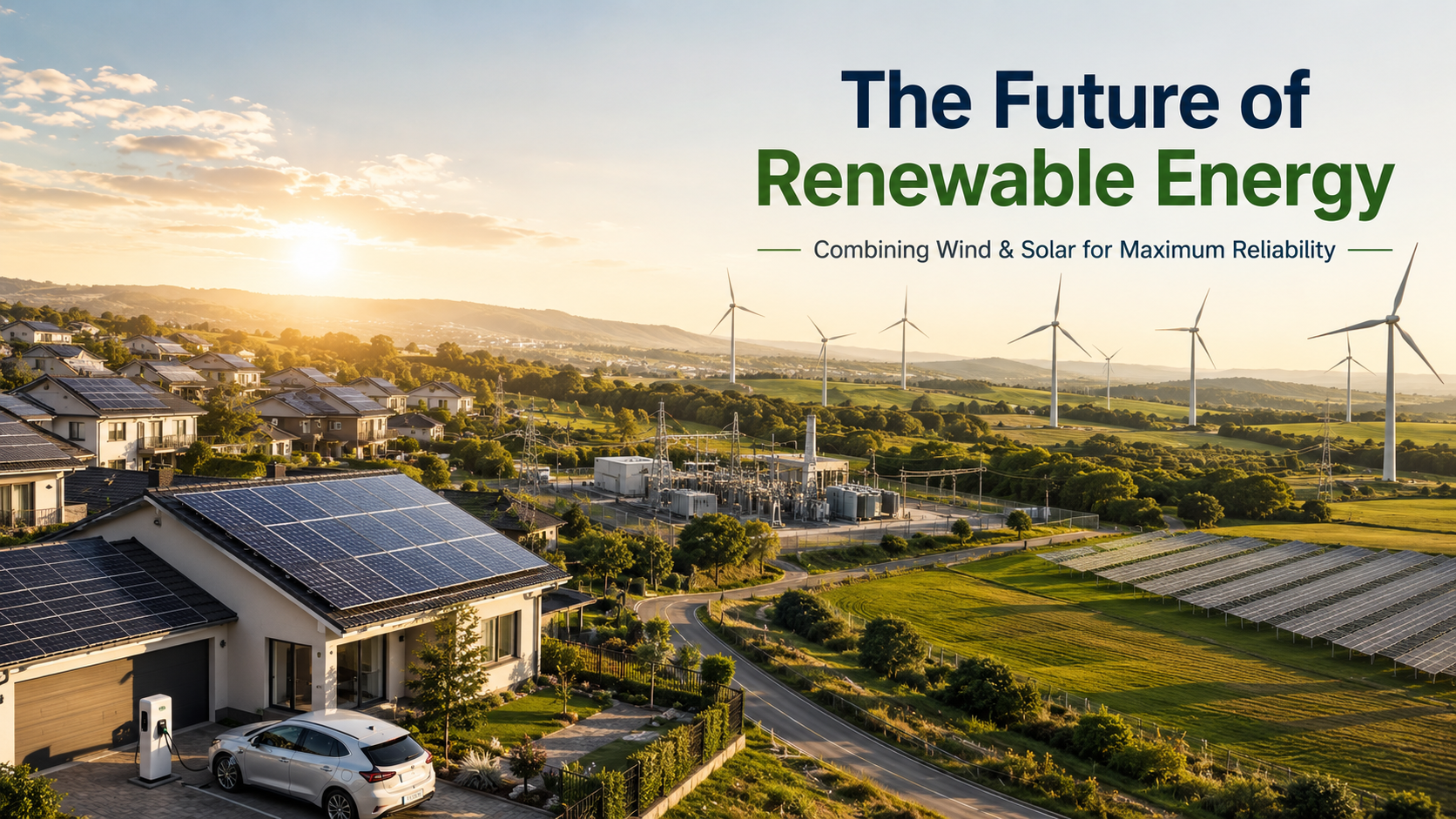
Rather than treating these renewable technologies as direct competitors, many modern energy systems combine both. Hybrid renewable systems help balance electricity production because weather conditions affecting one resource may not impact the other. This complementary approach improves energy reliability throughout the year while reducing dependence on traditional fossil fuels. Evaluating local environmental conditions, installation costs, and long-term energy goals is the most effective way to determine which renewable solution offers the greatest value.
Choosing the Right Renewable Energy Solution
Selecting the best renewable energy system starts with evaluating your local climate, property size, and electricity usage. Properties located in consistently windy areas may benefit from small-scale or utility-grade wind turbines. However, these installations require sufficient open space and compliance with local zoning regulations.
For most homeowners and businesses, solar panels remain the simpler and more affordable option. They require relatively little maintenance and commonly provide reliable performance for 25 to 30 years.
Comparing installation costs, expected electricity production, maintenance needs, and available incentives helps maximize long-term savings. In many regions, combining solar panels with battery storage provides an excellent balance between affordability, energy security, and environmental sustainability.

Frequently Asked Questions
How does weather affect solar and wind efficiency?
Weather directly influences the performance of both renewable energy systems. Heavy clouds, rain, fog, and snow reduce the amount of sunlight reaching solar panels, lowering electricity production. Seasonal daylight variations also affect daily output.
Wind turbines depend entirely on moving air. Calm conditions stop electricity generation, while extremely strong winds may require turbines to shut down temporarily to protect mechanical components.
Combining solar and wind provides consistent energy because each technology responds differently to changing weather.
Can I use both solar and wind power together?
Yes. A hybrid renewable energy system combines solar panels with wind turbines to improve overall reliability. Solar panels usually generate the most electricity during sunny daytime hours, while wind speeds often increase during evenings, storms, or cloudy weather.
Using both technologies together helps smooth fluctuations in electricity production. This reduces dependence on the utility grid and improves energy availability throughout different seasons. Hybrid systems are particularly useful in remote locations where maintaining a consistent power supply is essential.
How long do solar panels and wind turbines last?
High-quality solar panels typically last 25 to 30 years while experiencing only gradual performance loss over time. Most manufacturers also provide long-term performance warranties.
Wind turbines generally operate for 20 to 25 years, although they require more regular maintenance because they contain moving mechanical components. Routine inspections and timely replacement of worn parts help maximize efficiency, extend service life, and maintain safe operation throughout the system’s lifespan.
Which renewable source is cheaper to install?
For most homeowners, solar power is the more affordable renewable energy option. Declining manufacturing costs, modular system designs, and simpler installation have made residential solar increasingly accessible.
Wind turbines usually involve higher upfront costs. They require larger installation areas, specialized equipment, structural engineering, and local permitting. These additional expenses make wind energy more suitable for farms, commercial properties, and utility-scale projects than for typical residential installations.
Conclusion
The debate over wind vs solar efficiency shows that each technology has distinct advantages. Commercial wind turbines convert a higher percentage of wind energy into electricity, operate around the clock when conditions are favorable, and generate far more power than individual solar panels. As a result, wind energy remains the preferred choice for large-scale electricity generation.
However, technical efficiency is only one factor. For homeowners, solar energy is often the more practical option because rooftop panels are easier to install, require minimal maintenance, and provide long-term savings. If you’re interested in making informed sustainability decisions beyond renewable energy, it’s also worth exploring other important subjects that affect everyday life. Check out our guide on topics you should educate yourself on.
Ultimately, wind vs solar efficiency is not about choosing a single winner but understanding how each technology performs in different conditions. Large wind farms can supply cities with renewable electricity, while residential solar systems help households reduce their dependence on the grid. Comparing wind vs solar efficiency shows that their strengths complement each other, making a combined approach more reliable than relying on either source alone. As renewable energy adoption grows, wind vs solar efficiency will remain an important factor in energy planning, helping governments, businesses, and homeowners make informed decisions. By combining wind and solar power, we can build a cleaner, more reliable, and more sustainable energy future while maximizing wind vs solar efficiency across diverse energy systems.