
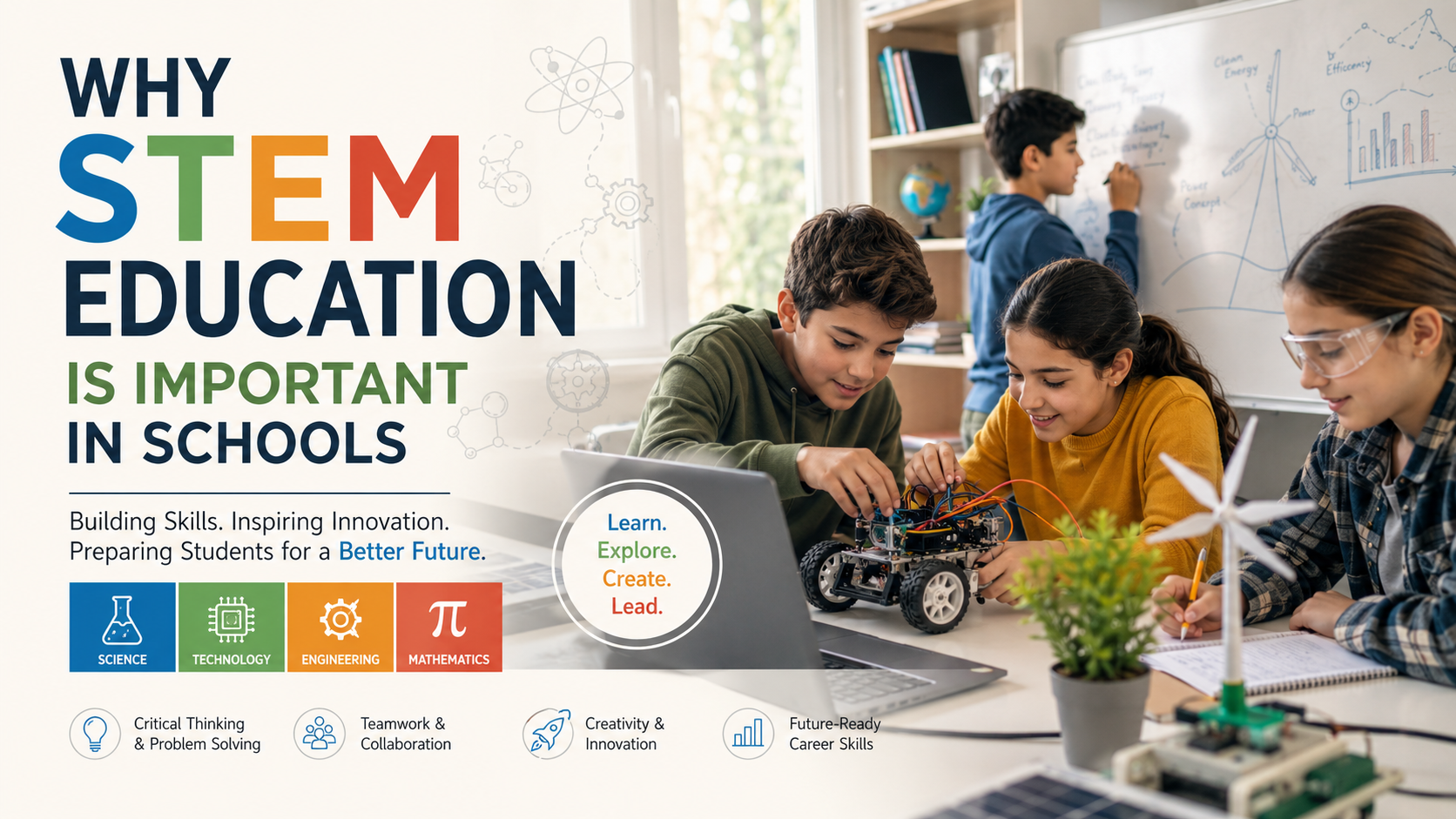
Why STEM Education Is Important in Schools
Modern classrooms face a fast-changing world driven by technology. Consequently, understanding why STEM education is important in schools has become crucial for all educators. Science, Technology, Engineering, and Mathematics (STEM) learning goes beyond simple memorization. Instead, it provides a hands-on approach that teaches students to solve complex problems. For example, according to insights from the National Science Foundation, fostering early interest in science and math builds essential skills. Ultimately, these skills prepare young learners for a technical global economy.
Furthermore, STEM education does not treat academic subjects as separate units. Rather, it connects them through real-world applications. Therefore, by introducing these concepts early, schools help students build logic and curiosity. In addition, beyond improving test scores, this training equips children to adapt to shifting job markets. In this guide, we will explain why STEM education is important in schools, how it transforms classrooms, and why these core skills matter for every student.
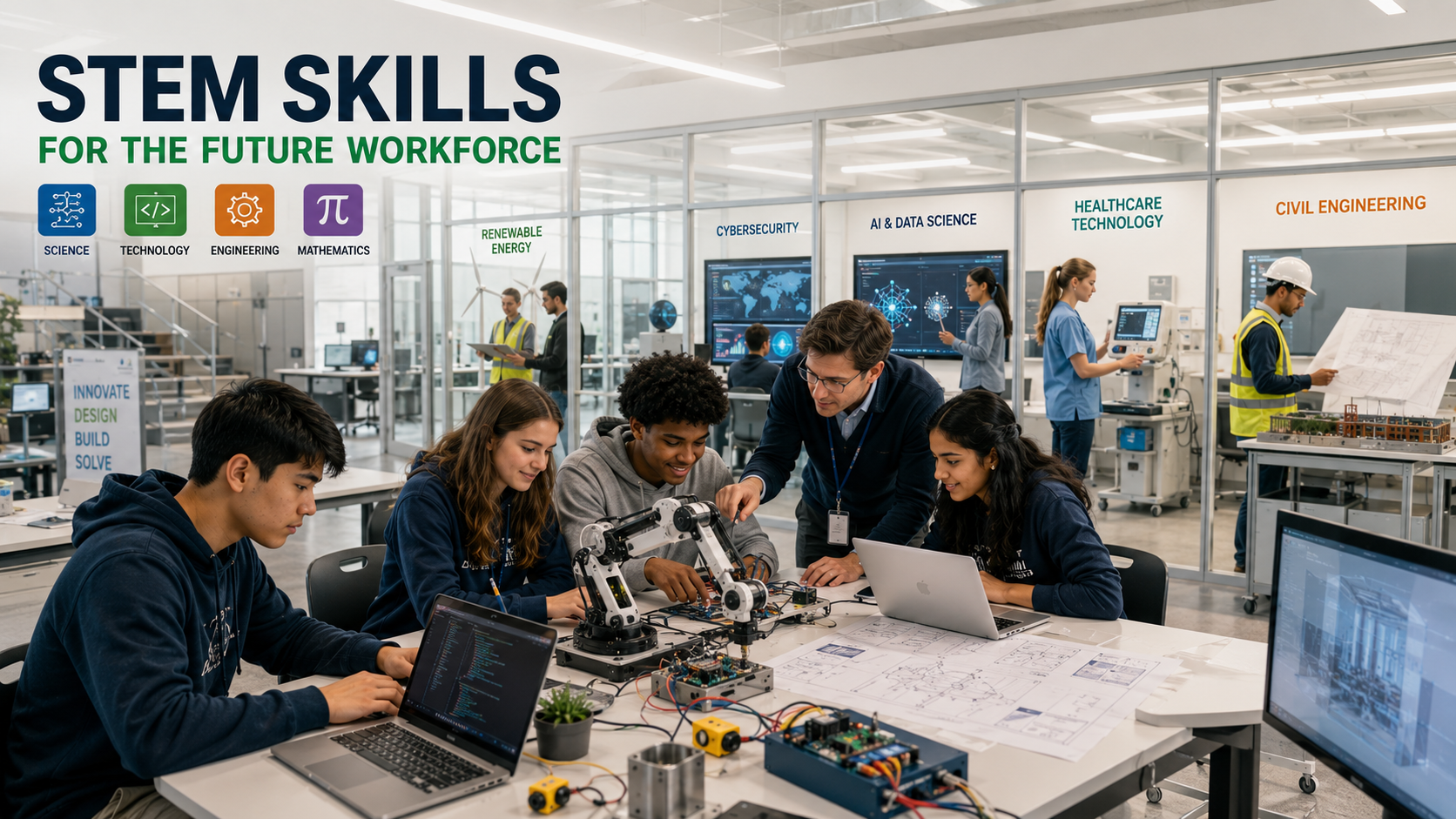
Why Is STEM Education Necessary Today?
STEM education is necessary today because the global economy increasingly depends on people who can adapt, innovate, and solve complex problems. Traditional rote memorization alone no longer prepares students for success in a technology-driven world. Employers now value individuals who can analyze information, think critically, collaborate effectively, and apply knowledge across multiple disciplines.
By combining science, technology, engineering, and mathematics into a unified learning approach, STEM education bridges the gap between classroom theory and practical application. Students learn to view challenges as interconnected problems that require creative and evidence-based solutions. This approach strengthens resilience, adaptability, and technical literacy from an early age.
As industries continue evolving through automation, artificial intelligence, and digital transformation, students need skills that remain relevant in changing workplaces. STEM education encourages innovation while preparing learners to become creators of technology instead of passive consumers. It also builds confidence, improves decision-making, and promotes lifelong learning.
Ultimately, investing in STEM education helps students prepare for rewarding careers while enabling societies to remain competitive in a rapidly evolving global economy.
Preparing Students for Modern Workforce Demands
Today’s industries increasingly rely on automation, artificial intelligence, robotics, and data analytics. Schools must adapt their curriculum to reflect these changes and reduce future skills gaps. Students who participate in hands-on STEM projects gain practical experience that closely resembles real workplace environments.
Project-based learning also improves communication, teamwork, and problem-solving abilities. These transferable skills are valuable across industries, including healthcare, manufacturing, finance, education, and information technology. Early exposure to STEM careers helps students explore future opportunities with greater confidence and purpose.
Why Is STEM Important in the Classroom?
STEM plays a vital role in modern classrooms because it transforms students from passive learners into active investigators and problem-solvers. Rather than simply reading about scientific concepts, students conduct experiments, build prototypes, write code, and test ideas through practical activities. This hands-on approach makes learning more engaging while improving understanding and long-term knowledge retention.
Teachers become facilitators who guide inquiry instead of simply delivering information. Students ask meaningful questions, test hypotheses, evaluate evidence, and refine their ideas through continuous exploration. This learning model develops curiosity while encouraging independent thinking and creativity.
STEM classrooms also emphasize collaboration. Students work together to solve problems, communicate ideas clearly, and respect different viewpoints. These experiences mirror real workplace environments where teamwork is essential. As a result, learners develop both technical knowledge and valuable interpersonal skills.
By making lessons relevant to everyday life, STEM education creates a classroom environment where students stay motivated, actively participate, and better understand how their education connects to the world around them.
Fostering Inquiry-Based Learning and Curiosity
Inquiry-based learning encourages students to take ownership of their education. Instead of providing immediate answers, teachers present real-world challenges that require investigation and experimentation.
Students learn to ask questions, gather evidence, test solutions, and improve their ideas through trial and error. They also discover that mistakes are valuable learning opportunities. This process builds critical thinking, confidence, curiosity, and the ability to learn independently throughout life.
What Is STEM Education and Why Does It Matter?
STEM education is an interdisciplinary approach that integrates science, technology, engineering, and mathematics into connected, real-world learning experiences. Instead of teaching these subjects separately, educators combine them through practical projects that demonstrate how different disciplines work together to solve everyday problems.
This approach matters because it helps students understand how scientific discoveries influence engineering, how mathematics supports programming, and how technology improves modern life. Rather than memorizing isolated facts, learners develop a deeper understanding of concepts by applying them in meaningful situations.
STEM education also prepares students to address global challenges such as climate change, cybersecurity, healthcare innovation, renewable energy, and sustainable resource management. These issues require individuals who can think across multiple disciplines and develop creative, evidence-based solutions.
By promoting collaboration, innovation, and analytical thinking, STEM education prepares students for future careers while helping them become informed citizens capable of contributing to technological and scientific progress.
Connecting Academic Theory to Real-World Applications
Connecting classroom lessons with real-life applications makes difficult concepts easier to understand. When students design a bridge, build a robot, or create a simple computer program, abstract theories become practical experiences.
This hands-on learning improves comprehension, strengthens memory, increases motivation, and helps students appreciate the real-world value of science, technology, engineering, and mathematics.
What Are the Three Importance of STEM?
The three major benefits of STEM education are fostering innovation, strengthening critical thinking, and supporting long-term economic growth. Together, these pillars prepare students for personal success while helping communities remain competitive in an increasingly technology-focused world.
First, STEM promotes innovation by combining technical knowledge with creativity. Students learn how to develop new ideas, improve existing solutions, and contribute to scientific and technological advancement.
Second, STEM strengthens critical thinking by teaching learners to evaluate evidence, question assumptions, analyze information, and make informed decisions. These skills are essential in an age of rapid technological change and widespread digital information.
Third, STEM supports economic growth by preparing a skilled workforce for high-demand careers. Countries with strong STEM education systems are better positioned to attract investment, encourage entrepreneurship, and remain globally competitive.
By focusing on these three areas, educational institutions equip students with practical skills that benefit both their careers and society as a whole.
Driving Economic Growth and Global Competitiveness
Countries with strong STEM talent attract investment, encourage innovation, and support thriving industries. A skilled workforce enables businesses to develop advanced technologies, expand research, and compete internationally.
Prioritizing STEM education also creates high-paying career opportunities, strengthens startup ecosystems, and improves long-term economic resilience. Investing in technical education today helps build a more competitive and prosperous future.
FAQ
How does STEM education differ from traditional learning?
Understanding why STEM education is important in schools starts with how it differs from traditional learning. STEM education integrates science, technology, engineering, and mathematics into project-based learning instead of teaching each subject separately. Traditional learning often emphasizes memorization and isolated concepts.
In contrast, STEM focuses on hands-on activities, teamwork, experimentation, and solving real-world problems. Students actively apply classroom knowledge, helping them develop practical skills that prepare them for future careers and everyday decision-making. This practical approach is one of the main reasons why STEM education is important in schools, as it encourages critical thinking, creativity, and innovation.
At What Age Should Children Start Learning STEM Concepts?
Children can begin exploring basic STEM concepts during preschool through play-based activities such as building blocks, puzzles, nature observation, and simple experiments. Early exposure encourages curiosity and helps children understand how the world works.
Age-appropriate STEM experiences build confidence in mathematics and science while reducing anxiety toward technical subjects later in school. Introducing these concepts early also supports problem-solving, creativity, and logical thinking that benefit learning throughout life.
Do Students Need to Pursue Engineering Careers to Benefit from STEM?
No. Students do not need to become engineers, programmers, or scientists to benefit from STEM education. The skills developed through STEM—including critical thinking, collaboration, communication, creativity, and digital literacy—are valuable in nearly every profession.
Whether students choose careers in healthcare, business, education, law, finance, or the arts, STEM helps them analyze information, solve problems efficiently, and make better decisions in both professional and personal settings.
How Can Parents Support STEM Learning at Home?
Parents can encourage STEM learning by creating opportunities for curiosity and exploration during everyday activities. Cooking, gardening, building projects, puzzles, and simple science experiments all help children develop logical thinking and problem-solving skills.
Parents can also ask open-ended questions, encourage children to test ideas, and promote creative play instead of excessive passive screen time. Supporting curiosity at home helps children build confidence, enjoy learning, and develop habits that contribute to lifelong academic and personal success.
CONCLUSION
In summary, understanding why STEM education is important in schools is essential for creating a forward-thinking educational system. Broadly speaking, understanding why education is important in our life helps us see how foundational learning shapes individual growth and long-term societal progress. By integrating science, technology, engineering, and mathematics into daily instruction, school districts provide young learners with vital tools. Specifically, they cultivate intellectual resilience, systematic problem-solving skills, creative adaptability, and cooperative habits that benefit students across all areas of life.
Ultimately, these core competencies prepare students to succeed in high-growth technical careers. In addition, they equip them to navigate an increasingly digital world safely and effectively. Therefore, investing in early, equitable, and engaging technical education ensures that every child has the opportunity to discover their true potential. Above all, school administrators, teachers, parents, and local communities must work together. Together, they must make hands-on, interdisciplinary learning a standard feature in every modern classroom.