
3 Ways Spam Callers Keep Getting Your Phone Number
Your phone buzzes during dinner, and another unknown number appears on your screen. Dealing with relentless spam callers has become a frustrating experience for millions of smartphone users. These unwanted calls interrupt work, disturb personal time, and sometimes involve dangerous scams.
According to the Federal Trade Commission (FTC), unwanted robocalls remain a major consumer protection concern. As a result, many people wonder how strangers obtain their private phone numbers. They also want to know why blocking one number rarely solves the problem.
Understanding how telemarketers and scammers operate is the first step toward protecting your privacy. For example, your contact details can circulate through marketing databases, public records, and compromised accounts. Additionally, automated dialing systems can generate numbers without obtaining them from existing databases.
In this guide, we’ll explore three common ways spam callers find your phone number. You’ll also discover how to reduce unwanted calls, protect your personal information, and avoid common phone scams.
1. Data Brokers and Lead Generators
Data brokers and lead generation companies are common sources of phone numbers used for marketing. These businesses collect personal information from different sources. They then organize it into databases and sometimes share or sell it to other companies.
You may unknowingly provide your phone number while using everyday online services. For example, shopping websites and loyalty programs often request contact information during registration. Similarly, discount offers and online competitions may collect your details.
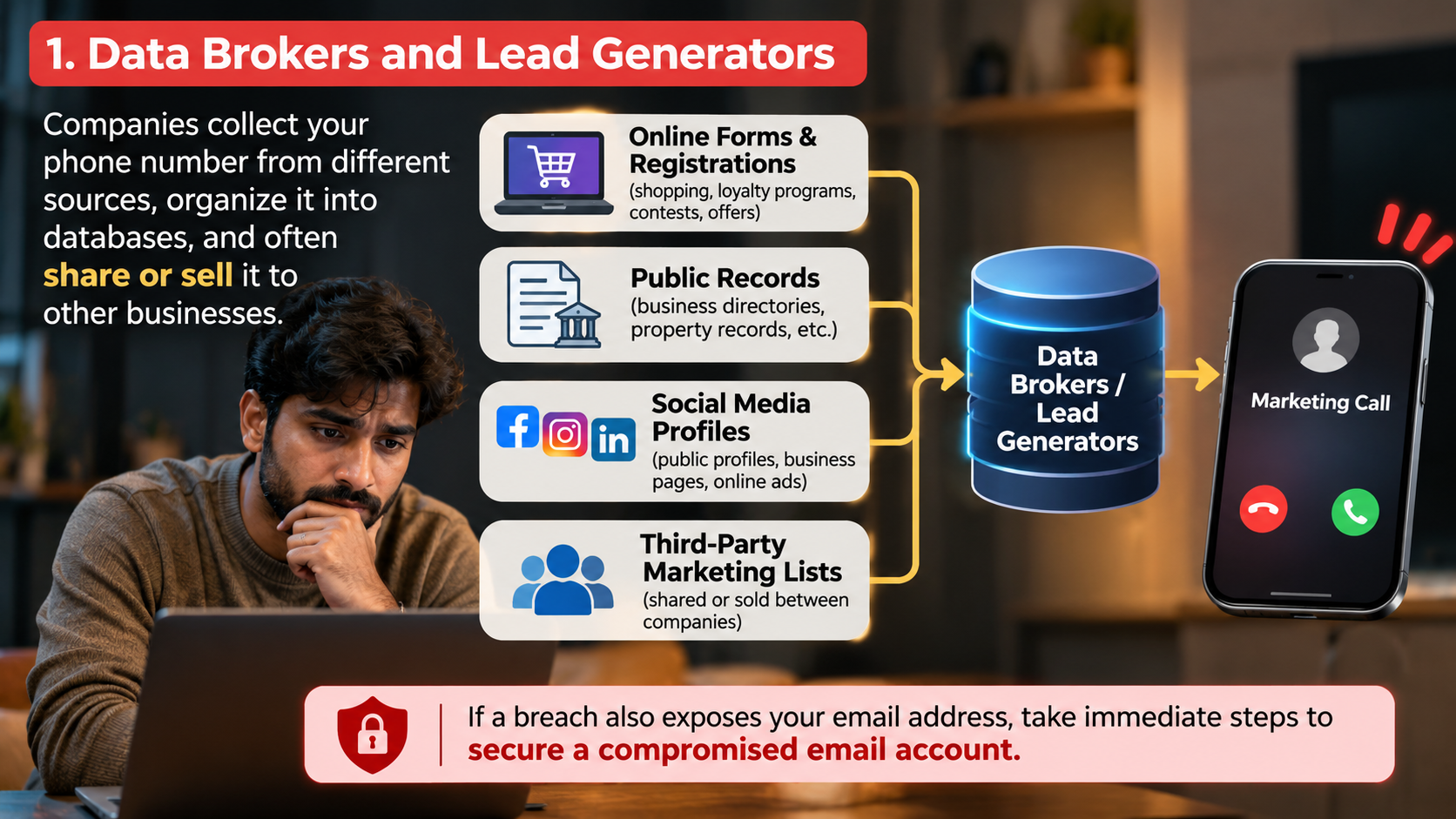

Here are some common ways these companies obtain phone numbers:
- Online forms and registrations: Shopping websites, loyalty programs, competitions, and discount offers may request your phone number. Depending on their privacy policies, they may share information with marketing partners.
- Public records: Some data brokers collect publicly available information. This may include business directories, property records, and other accessible databases.
- Social media profiles: Public profiles, business pages, and online advertisements can expose contact information. Additionally, automated tools may collect publicly visible details.
- Third-party marketing lists: Companies sometimes exchange contact databases with advertising partners. Consequently, your number may reach businesses you have never contacted.
Once criminals obtain your phone number, they may combine it with other personal information. Consequently, their calls and messages can appear more convincing. If the same security breach also exposes your email address, you should take immediate steps to secure a compromised email account.
2. Data Breaches and Leaks
Another reason spam callers may have your number is a data breach. Even careful internet users cannot completely control how companies protect their information. For example, websites, mobile applications, retailers, and service providers regularly store customer details. Unfortunately, cybercriminals may target these databases to steal personal information.
When attackers compromise a database, exposed information may include names, email addresses, and phone numbers. However, the exact information depends on the affected company’s security systems.
Common sources of leaked contact information include:
- Compromised databases: Hackers may access customer records through vulnerable websites, applications, or company networks.
- Third-party service providers: Businesses sometimes share customer information with external vendors. As a result, a security incident involving one vendor can expose information from multiple organizations.
- Stolen customer lists: Criminals may distribute or sell stolen databases through underground online marketplaces.
- Phishing attacks: Fraudsters sometimes trick people into submitting personal details through fake websites and messages.
Once criminals obtain your phone number, they may combine it with other personal information. Consequently, their calls and messages can appear more convincing.
Although changing privacy settings cannot prevent every data breach, you can reduce your exposure. For instance, use strong passwords, enable two-factor authentication, and limit unnecessary information sharing. Additionally, check whether companies offer security alerts after a data breach.
3. Automated Dialers (Robocallers)
Not every spam caller obtains your number from a company database. Instead, some scammers use automated dialing software, commonly associated with robocalls. These systems can dial large numbers of telephone numbers automatically.
For example, certain systems generate possible number combinations within specific area codes and prefixes. They then place calls to check which numbers connect. Consequently, scammers may reach your phone without purchasing your contact information.
Here are three common techniques:
- Sequential number generation: Automated systems create and dial possible phone number combinations. Therefore, they do not always need an existing customer database to reach potential targets.
- Active number verification: Some systems record whether a call connects, receives an answer, or reaches voicemail. This information may help identify potentially active numbers.
- Call routing: Certain robocall systems use prerecorded messages or connect answered calls to human operators. Meanwhile, others attempt to identify people who might respond to particular offers.
However, answering an unknown call does not automatically guarantee more spam calls. Nevertheless, interacting with suspicious callers or following their instructions can expose you to additional risks.
Therefore, avoid engaging with unexpected callers whenever possible. Instead, let unfamiliar numbers go to voicemail. Most importantly, never share personal details or follow suspicious automated instructions.
How Did Spam Callers Get My Phone Number?
Spam callers can obtain your phone number through data brokers, public records, online registrations, and company data breaches. In many cases, you might have shared your contact information without realizing how widely it could circulate.
For example, many websites request phone numbers when offering discounts, free trials, delivery updates, or membership benefits. Depending on their privacy policies and applicable consent requirements, some businesses may share customer information with marketing partners.
However, sharing your number online is not the only possible explanation. Automated dialing systems can also generate possible telephone numbers. As a result, scammers may contact you without accessing personal databases.
Additionally, fraudsters sometimes purchase contact lists containing information collected from multiple sources. These lists may include names, phone numbers, locations, and other available details.
If you suddenly receive numerous unwanted calls, consider these possible explanations:
- Your number appeared in a marketing database.
- A company holding your information experienced a data breach.
- Automated dialing software generated your number.
- Your contact details appeared in a public online directory.
Unfortunately, identifying the exact source is often difficult. Nevertheless, you can limit unnecessary information sharing and activate your phone’s spam protection. Together, these precautions can help reduce future interruptions.
How Do I Stop 30 Spam Calls a Day?
Receiving dozens of unwanted calls daily can become exhausting. Unfortunately, blocking individual numbers may not solve the problem. Many scammers use different numbers or caller ID spoofing to avoid detection. Therefore, learning how to block spam calls effectively can help you reduce unwanted interruptions and manage suspicious numbers more easily.
Therefore, a better approach combines your mobile carrier’s protection, smartphone settings, and responsible call-handling habits. Although these measures cannot guarantee complete protection, they can significantly reduce unwanted interruptions.
Here are four practical steps you can follow:
1. Register on the National Do Not Call Registry
If you live in the United States, register your number through the official National Do Not Call Registry. This helps limit legitimate telemarketing calls. However, it does not stop scammers, illegal robocalls, or every unwanted caller.
2. Activate Your Carrier’s Spam Protection
Major US mobile carriers offer tools to identify or filter suspicious calls. For example:
- AT&T offers ActiveArmor.
- Verizon provides Call Filter.
- T-Mobile offers Scam Shield.
Therefore, check your carrier’s available features and enable the appropriate protection.
3. Enable Built-In Smartphone Protection
Your phone may already include useful spam-filtering features.
- iPhone: Enable Silence Unknown Callers under Settings, then Apps, then Phone.
- Android: Open the Phone app, access Settings, and enable Caller ID and spam protection. However, the exact options depend on your device.
4. Avoid Interacting With Suspicious Calls
Do not press buttons to speak with an unknown operator or provide personal information. Instead, let suspicious calls go to voicemail.
By combining these steps, you can reduce unwanted interruptions. However, the results depend on your carrier, device, and the types of calls you receive.
Can a Scammer Hack My Phone With Just My Phone Number?
No, knowing your phone number alone does not normally give a scammer access to your smartphone, photographs, messages, or personal files. A telephone number is an identifier, not a password. Additionally, modern smartphones use security protections that prevent ordinary callers from accessing private information.
However, this does not mean sharing your number is completely harmless. Scammers can use it as a starting point for more targeted attacks. For instance, they may combine your number with information found on social media or leaked databases.
As a result, they can attempt to impersonate your bank, mobile carrier, or another trusted organization. Some common attacks include:
- Smishing: Fraudsters send fake text messages containing malicious links or fraudulent payment requests.
- Phishing calls: Scammers pretend to represent trusted companies and request passwords or financial information.
- SIM swapping: Criminals attempt to convince your mobile carrier to transfer your number to a SIM card they control.
- Verification code scams: Fraudsters ask you to share one-time passwords or account recovery codes.
Fortunately, you can reduce these risks by following a few precautions. Never share verification codes with unexpected callers. Similarly, avoid clicking suspicious links and enable account security features wherever available. However, if you accidentally open a suspicious link, follow these steps to stay safe after clicking it and protect your personal information
Ultimately, your phone number alone is generally insufficient to compromise your device. The bigger danger comes from what scammers can persuade you to reveal or approve.
Will Spam Callers Eventually Stop?
Unfortunately, spam callers rarely stop simply because you ignore their calls. Your phone number may remain in marketing databases or automated dialing systems for an extended period. Therefore, ignoring unwanted calls does not guarantee that they will disappear permanently.
Additionally, some scammers use rotating telephone numbers and caller ID spoofing. This makes blocking individual numbers less effective. For example, even after blocking several suspicious callers, you may receive calls from completely different numbers.
However, the frequency of unwanted calls can change over time. Some automated systems monitor call responses, while others continue dialing generated number combinations.
Fortunately, you can take several practical steps to reduce these interruptions:
- Stop answering suspicious numbers: Let unfamiliar callers leave a voicemail. Additionally, avoid interacting with unexpected automated messages.
- Use spam filters: Enable your carrier’s call protection and your phone’s built-in spam detection.
- Block repeated callers: Report and block numbers that repeatedly contact you.
- Limit public exposure: Remove your number from unnecessary public profiles and online directories where possible.
- Report fraudulent calls: Use your country’s official consumer protection or telecommunications reporting service.
Remember, ignoring calls alone cannot guarantee removal from a spam list. Instead, combine call filtering, reporting, and privacy protection. This approach offers a more reliable way to manage unwanted calls.
What Happens If I Answer a Spam Call and Say Hello?
Answering a suspicious call and saying hello does not automatically give scammers access to your phone or personal accounts. However, interacting with unknown callers can create opportunities for unwanted follow-up.
For example, some automated dialing systems monitor call responses. They may record whether someone answers, whether the call reaches voicemail, or whether a person interacts with an automated message.
As a result, certain telemarketing operations may identify responsive numbers. However, not every spam caller uses the same tracking methods. Simply saying hello does not guarantee that your number will receive more unwanted calls.
There is also a common misconception that scammers can record your voice saying hello and use it to authorize bank transactions. In reality, a short voice recording alone does not normally provide sufficient authorization for modern banking systems.
Nevertheless, you should avoid unnecessary interaction with suspicious callers.
Follow these precautions when receiving an unexpected call:
- Do not share your full name, address, banking details, or passwords.
- Never reveal one-time passwords or verification codes.
- Avoid pressing buttons in response to suspicious automated instructions.
- Hang up if the caller makes unusual requests or creates unnecessary urgency.
- Contact the organization directly using its official telephone number if you need to verify a request.
Ultimately, the safest option is to let unfamiliar calls go to voicemail. This gives you time to check the caller. More importantly, it helps you avoid unnecessary risks.
Conclusion
Spam calls can be frustrating, especially when unknown numbers interrupt your daily routine. However, understanding how spam callers get your phone number makes it easier to protect your privacy. Data brokers, information leaks, and automated dialing systems are among the most common sources.
Although you cannot always prevent scammers from finding your number, you can reduce their opportunities. For example, avoid sharing personal information on untrusted websites and enable your phone’s spam protection. Additionally, block or report suspicious calls whenever necessary.
Most importantly, never share passwords, banking details, or verification codes with unknown callers. By staying alert and following these simple precautions, you can reduce unwanted interruptions and keep your personal information safer.