
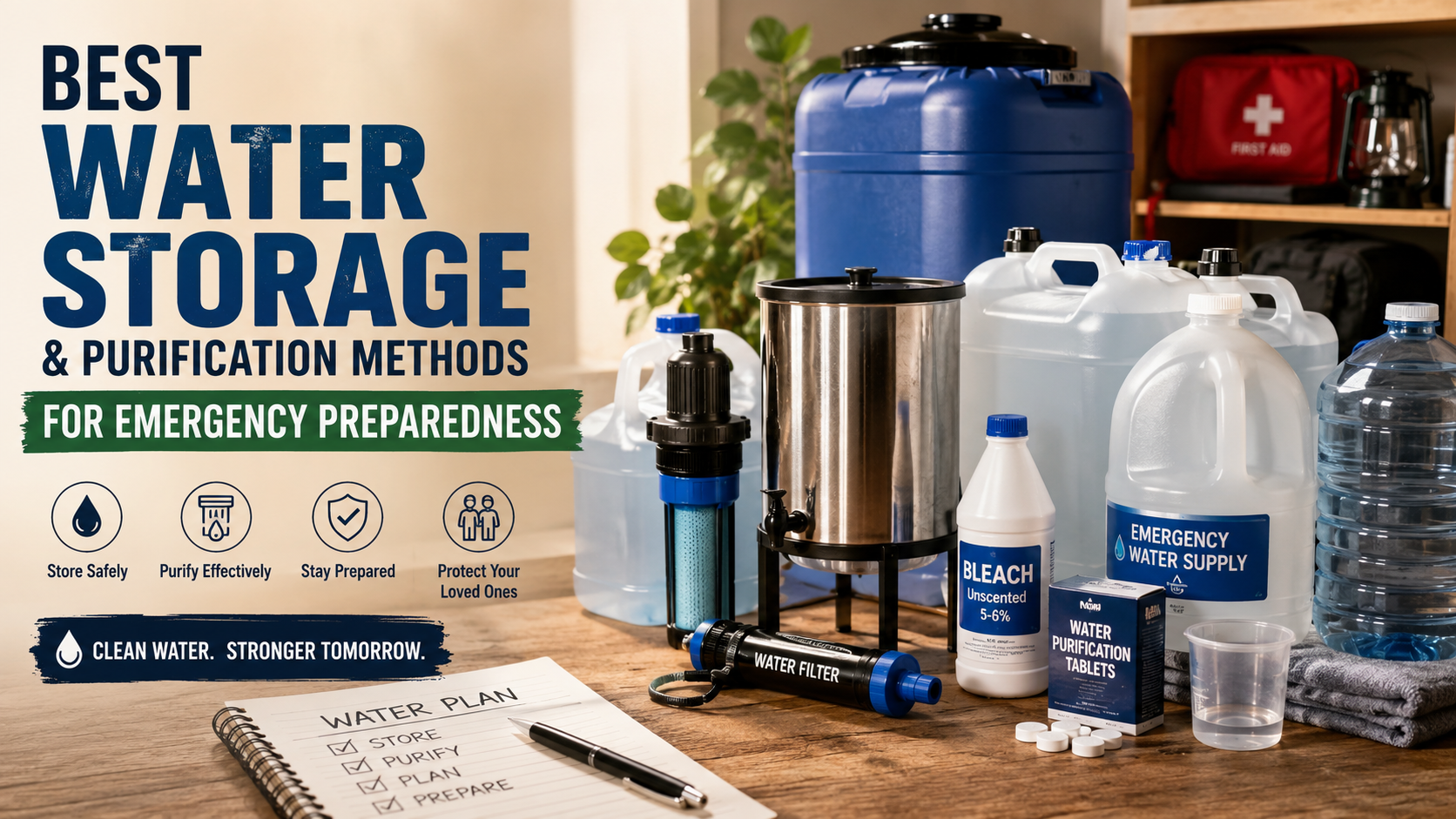
Best Water Storage and Purification Methods for Emergency Preparedness
When a crisis strikes, access to clean hydration can mean safety and survival. Having a reliable strategy for water storage and purification methods is a vital step for household preparedness. According to Ready.gov, storing at least one gallon of water per person daily is essential for drinking and sanitation. Yet, bottled supplies eventually run out, making long-term treatment strategies just as vital as stockpiling.
Disasters often disrupt municipal water treatment plants, leaving taps dry or contaminated with bacteria and viruses. Staying prepared requires a dual approach. You must know how to store emergency reserves properly and how to purify alternative sources like rainwater or streams.
This guide covers everything you need to know about building a resilient reserve. We will explore how to calculate daily needs, select containers, choose heavy-duty filtration systems, and implement chemical disinfection using best practices recommended by the U.S. Environmental Protection Agency (EPA). By the end, you will have a clear roadmap to protect your loved ones.
Understanding Water Storage Basics for Crises
Proper storage forms the foundation of any reliable survival plan. Without clean containers, pure water quickly becomes unsafe. Selecting the right materials and keeping them in optimal conditions prevents contamination over time.
Selecting Food-Grade Containers for Safe Water Storage
Choosing safe storage vessels prevents toxic chemicals from leaching into your supply. Look for containers stamped with food-grade plastic symbols, such as HDPE marked with recycling code 2. Avoid using old milk jugs or juice containers. Organic residue breaks down and harbors bacteria over time.
Heavy-duty water bricks, BPA-free barrels, and commercial storage tanks offer durable solutions for residential use. Test your containers before filling them to ensure there are no hairline cracks or structural weaknesses. When you invest in certified food-safe vessels, you eliminate the risk of chemical plasticizers seeping into your drinking reserves.
It is also wise to purchase spigot-equipped carboys or stackable containers. These make dispensing water simple and sanitary without requiring you to dip cups or open the main seal. This minimizes the potential introduction of airborne pathogens into your emergency stash.
Ideal Storage Locations and Environmental Conditions
Environmental factors drastically affect the shelf life of stored reserves. Store your containers in cool, dark, and dry locations away from direct sunlight and concrete floors. Sunlight degrades plastic and promotes algae growth, while concrete can leach chemicals into plastic containers over time.
Keep your emergency supply far away from household chemicals, gasoline, and pesticides to prevent chemical vapor absorption. Many people make the critical mistake of storing emergency water in uninsulated garages or garden sheds. Extreme temperature fluctuations can degrade the plastic and alter the taste or safety of the liquid inside.
Designating a climate-controlled closet, an indoor pantry, or a cool basement corner protects the structural integrity of your containers. Elevating your storage barrels off the floor using wooden pallets prevents moisture accumulation. This thwarts rust and mold growth while making your storage footprint much easier to inspect and maintain.
Effective Water Purification Techniques
When stored supplies deplete, you must know how to treat raw water sources safely. Natural bodies of water and rainwater often contain invisible pathogens that cause severe illness. Implementing robust purification techniques eliminates these biological and chemical hazards effectively.
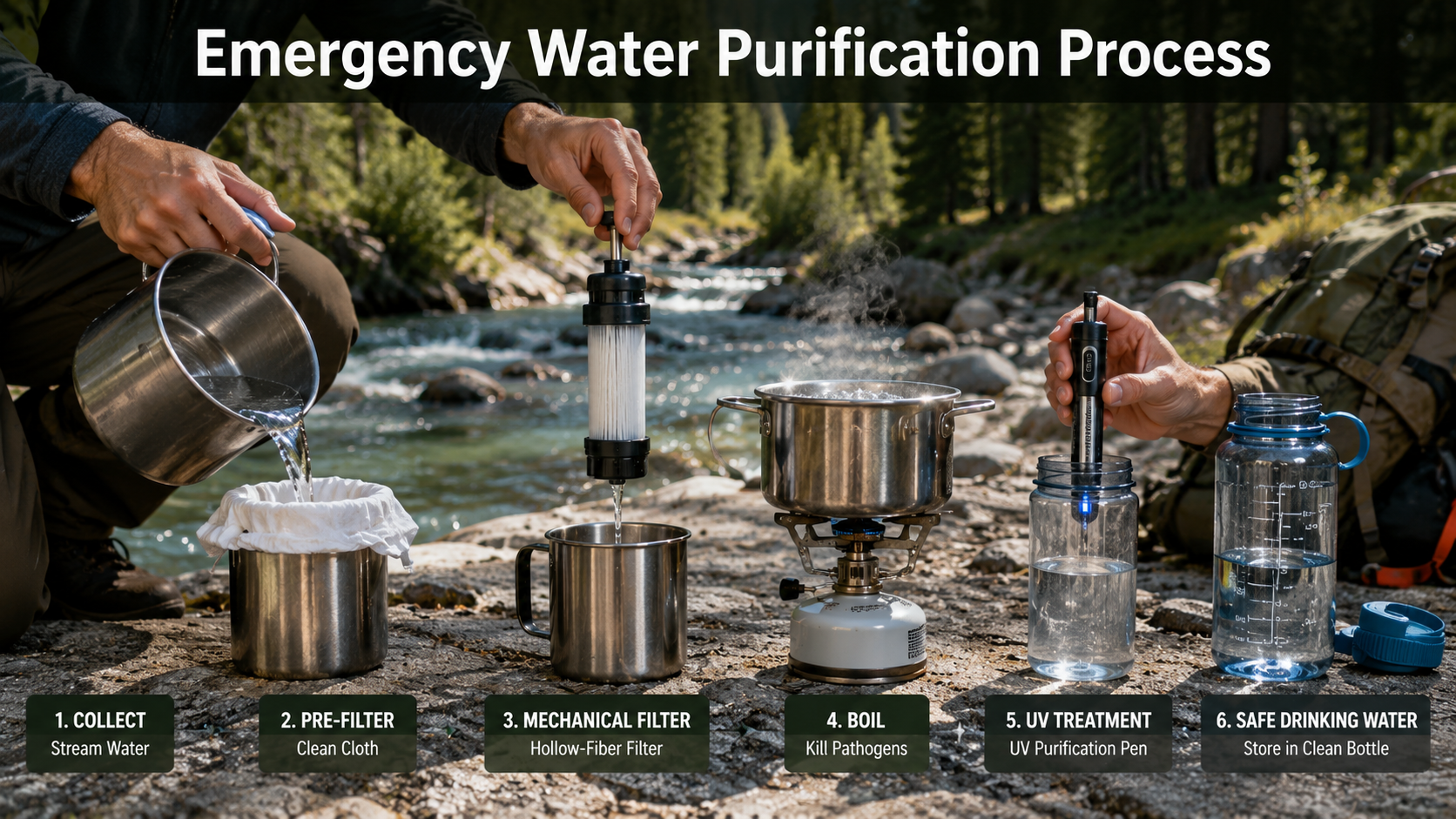

Boiling Water as a Reliable Disinfectant
Boiling remains the gold standard for killing disease-causing microorganisms, including bacteria, viruses, and parasites. Bring your collected water to a rolling boil for at least one minute, or three minutes if you reside at high altitudes above 6,500 feet.
Allow the boiled liquid to cool naturally, then aerate it by pouring it back and forth between two clean containers. This restores its flat taste and adds back dissolved oxygen. While boiling requires heat sources like a camp stove or fire, it offers absolute peace of mind regarding biological safety.
In emergency scenarios where utilities are severed, knowing how to sterilize water using alternative fuel sources becomes an invaluable skill. Remember that boiling only addresses biological contaminants. It does not remove heavy metals, chemical pollutants, or radiation, meaning you must combine boiling with pre-filtration if your water source is murky. Always store your boiled water in sanitized, sealed containers to prevent post-treatment contamination.
Chemical Disinfection with Bleach and Purification Tablets
Chemical treatments provide a lightweight, portable alternative when heat sources are unavailable. Regular unscented household chlorine bleach works well in emergencies. Use about eight drops of 5% to 6% sodium hypochlorite per gallon of clear water, stir thoroughly, and let it sit for 30 minutes.
Alternatively, commercial purification tablets containing chlorine dioxide or iodine offer rapid, pre-measured disinfection for hiking, travel, and bug-out bags. Chemical disinfection is particularly advantageous when you are on the move and lack the means to boil large quantities of water efficiently.
-
Check expiration dates: Ensure purification tablets and household bleach are fresh to guarantee potency.
-
Observe contact time: Let chemically treated water stand for the full recommended contact time before drinking.
-
Keep a dropper: Store a dedicated medicine dropper and a sealed bottle of unscented bleach in your emergency kit.
Mechanical Filtration and UV Systems for Water
Mechanical filtration and UV purification are among the most effective water storage and purification methods for ensuring safe drinking water during emergencies. Advanced portable filters use hollow-fiber membranes to physically trap microscopic protozoa and bacteria down to 0.1 microns. Brands like Sawyer and Katadyn provide excellent mechanical options for field use. Furthermore, ultraviolet (UV) purifiers neutralize pathogens by disrupting their DNA with specialized light wavelengths.
When planning water storage and purification methods, combining a mechanical filter with a UV pen or chemical disinfectant provides comprehensive protection against bacteria, protozoa, and many viruses. This layered approach reduces the risk of waterborne illness when using untreated water sources.
To keep these water storage and purification methods effective, mechanical filters require regular backflushing to remove trapped sediment. Never allow hollow-fiber filters to freeze if water remains inside them, as expanding ice crystals can damage the microscopic pores and reduce filtration performance.
Portable UV systems rely on battery power or solar rechargers, making spare lithium batteries or a dependable solar charger essential emergency gear. Including UV treatment in your water storage and purification methods adds an extra barrier against harmful microorganisms that mechanical filtration alone may not address.
By first straining cloudy water through a clean cloth, then using a microfilter, and finally applying UV light, you can create one of the most reliable water storage and purification methods for producing safer drinking water in austere environments.
Frequently Asked Questions
How much emergency water should I store per person?
You should store at least one gallon of water per person per day for drinking and sanitation purposes to maintain basic physiological health and hygiene. For a standard two-week preparedness kit, a family of four needs roughly 56 gallons.
-
Drinking and Hydration: Essential for preventing dehydration and heat-related illnesses.
-
Sanitation and Hygiene: Vital for handwashing and basic cleaning tasks to prevent disease outbreaks.
-
Pets: Factor in furry companions, who require about one ounce of water per pound of body weight daily.
Having a generous buffer accounts for unexpected delays in rescue efforts, special medical needs, and physically demanding recovery operations where individual water consumption can easily double.
How long does stored tap water last before expiring?
Stored tap water treated commercially or disinfected properly generally remains safe indefinitely if kept in sealed, food-grade containers away from heat and light. However, most emergency management experts recommend rotating your stored supply every six to twelve months to maintain a fresh taste.
Over time, plastic containers can absorb ambient household odors or lose structural integrity through polymer degradation. If you notice any unusual cloudiness, floating sediment, strange odors, or off-flavors when opening a rotated container, discard the liquid or use it strictly for non-potable cleaning tasks.
Maintaining a strict inventory schedule with clearly marked expiration and filling dates written directly on your storage barrels guarantees that rotation becomes an effortless, automatic part of your household safety routine.
Can I drink rainwater collected during a storm?
Rainwater is generally safe to drink if collected properly from clean metal or synthetic roofs using sanitary catchment systems and food-grade funnels. However, the first few minutes of a heavy rainstorm wash away atmospheric pollutants, bird droppings, dust, pollen, and roof debris.
Always discard that initial contaminated runoff before collecting water for storage. Pass collected rainwater through a multi-stage mechanical filter and apply a reliable disinfection method before drinking to eliminate harmful environmental contaminants and microscopic pathogens.
Avoid collecting rainwater downwind from heavy industrial zones, chemical plants, or major roadways. Installing a first-flush diverter on your catchment system automatically captures and discards dirty initial runoff to protect your main storage tanks.
What is the difference between water filtration and purification?
Filtration physically removes particulate matter, suspended sediment, and larger microorganisms like bacteria and protozoa through microscopic screens or hollow-fiber membranes. Purification goes a critical step further by neutralizing sub-microscopic threats.
-
Filtration: Physically blocks dirt, sediment, protozoa, and larger bacteria using micro-pores.
-
Purification: Destroys viruses and neutralizes dissolved chemical toxins using UV light, chemicals, or distillation.
Relying exclusively on mechanical filtration may leave dangerous viral pathogens behind because viruses are often significantly smaller than standard filter pores. Combining both physical filtration and chemical or UV purification is necessary for unsafe natural sources.
How do I know if a natural water source is safe to treat?
No natural water source is safe to drink without proper treatment. Even crystal-clear water can contain harmful bacteria, viruses, and parasites. Mountain streams, rivers, and alpine lakes may also contain agricultural runoff or animal waste that is invisible to the naked eye.
Choose water sources that are as far as possible from industrial sites, cattle pastures, mining operations, and human settlements. This helps reduce the risk of chemical contamination. However, location alone does not guarantee safe water.
Always use multiple water storage and purification methods before drinking untreated water. Start by filtering out sediment. Then boil the water or use chemical disinfectants or UV purification. This multi-barrier approach provides the best protection against waterborne diseases.
Teach every member of your household to treat wild water with caution. Following reliable water storage and purification methods helps prevent illness during camping trips, emergencies, and disaster evacuations.
What should I do if my water tastes flat after storage?
Stored water often tastes remarkably flat and unappealing because dissolved oxygen naturally dissipates from the liquid during the long-term sealing and storage period. You can easily restore the pleasant taste by pouring the water back and forth between two clean pitchers or containers several times from a slight height.
This mechanical aeration process rapidly reintroduces ambient oxygen back into the liquid and significantly improves its overall flavor profile. Adding a tiny pinch of clean salt or baking soda per gallon can also help enhance mineral balance in treated emergency reserves.
Never let the flat taste discourage you from consuming your emergency water. Simple aeration is a foolproof way to make stagnant water taste fresh and appealing again without needing expensive flavor packets or artificial additives.
Conclusion
Preparing for unexpected crises requires proactive planning, particularly when securing essential survival resources like hydration supplies. By implementing dependable water storage and purification methods, you safeguard your household against unforeseen emergencies and natural disasters. Taking the time today to calculate your daily requirements, invest in food-grade containers, and learn proper filtration techniques builds lasting resilience. If you’re planning outdoor adventures as part of your preparedness strategy, explore these practical camping meal ideas and preparation tips to complement your emergency planning.
Remember that survival relies not just on having a plan, but on practicing it regularly. Inspect your emergency reserves twice a year, rotate stored supplies, and test your filtration gear to ensure everything functions perfectly when it matters most. Take action today by assembling your emergency water kit, and give your family the ultimate gift of security, health, and peace of mind.