

Turning Apprenticeships Into Degrees: A Modern Path to Success
1. Introduction to Work-Based Higher Education
Turning apprenticeships into degrees has steadily emerged as one of the most innovative pathways for career-driven individuals aiming to combine hands-on professional experience with formal academic credentials. Furthermore, in today’s competitive job market, traditional university routes often leave graduates with heavy student debt and limited practical skills. According to the U.S. Department of Labor Apprenticeship Overview, earn-while-you-learn models provide an effective alternative by uniting paid employment with structured educational training. Consequently, this article explores how learners can seamlessly transition from vocational programs to full academic degrees, saving time and money while maximizing career potential. Moreover, you will learn about the structural pathways available, the core benefits for modern professionals, and actionable strategies to map out your own educational journey. Therefore, modern educational institutions are recognizing that workplace competencies hold tremendous weight, thus creating unprecedented opportunities for ambitious professionals worldwide.
2. The Evolution of Modern Career Pathways for Turning Apprenticeships Into Degrees
The traditional wall separating vocational training from academic higher education is rapidly crumbling across global industries. Employers and educational institutions now recognize that practical workplace competence holds equal value to theoretical classroom study. Consequently, educational frameworks have evolved to support seamless transitions for ambitious learners who want the best of both worlds.
Bridging Vocational Training and Academic Credit via Work-Based Learning
Many modern vocational programs now partner with accredited universities to offer recognition of prior learning. Specifically, hours spent mastering trade skills or technical proficiencies translate directly into college credits. Instead of starting a degree program from scratch, apprentices enter higher education with a significant head start.
The Rise of Degree Apprenticeships in Higher Education
Degree apprenticeships represent the ultimate evolution of this educational model. Candidates secure full-time employment while simultaneously studying toward a bachelor’s or master’s degree. Employers often sponsor tuition fees, removing the financial barriers that typically deter prospective students from pursuing higher education.
3. Key Benefits of Combining Work Experience with Higher Learning
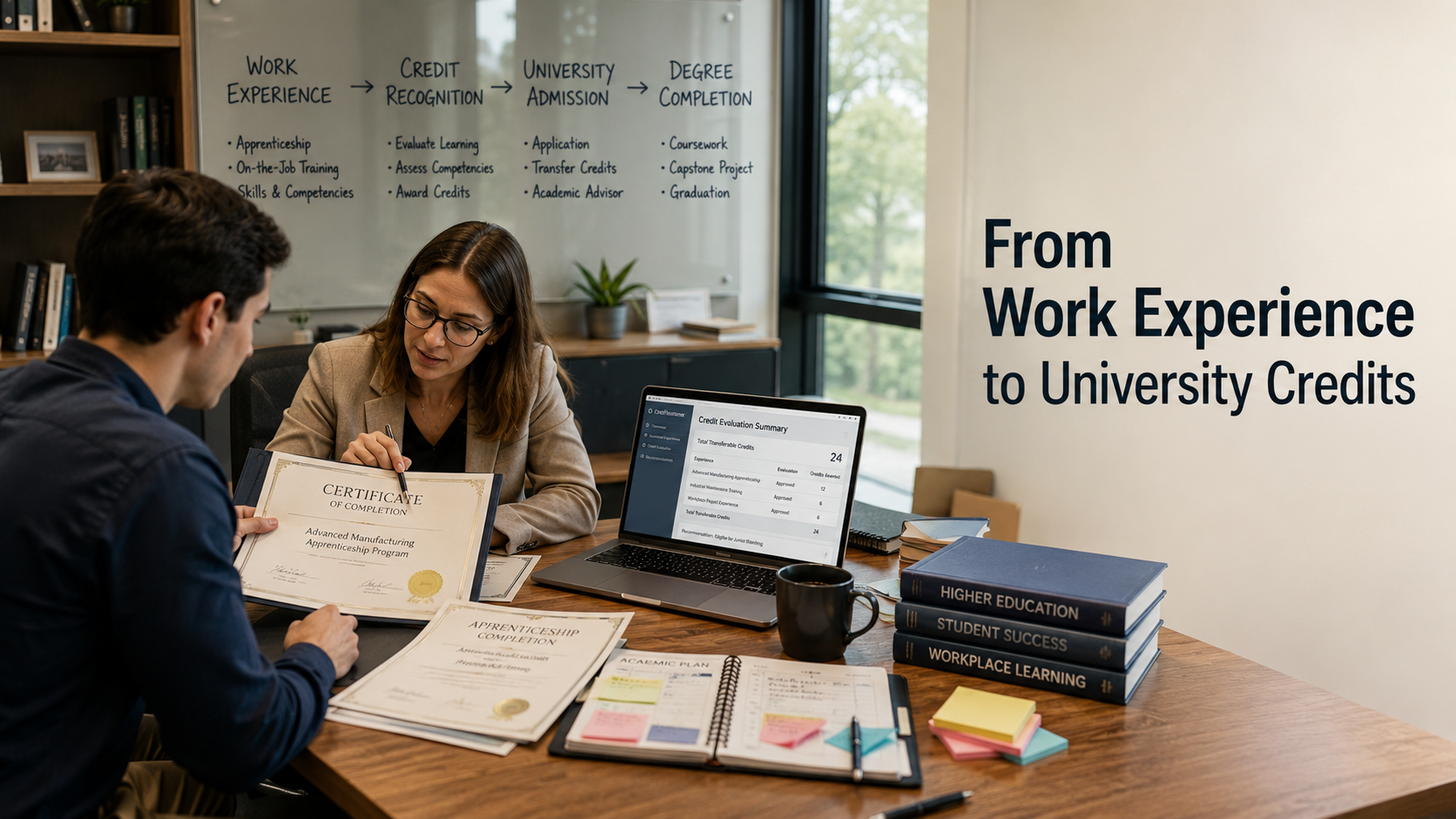

Integrating employment with academic study delivers compounding advantages that accelerate long-term career growth. Professionals who choose this route gain distinct edges over peers who follow traditional, siloed educational paths.
-
Immediate Financial Independence: Earn a steady salary while studying, eliminating the necessity for high-interest student loans.
-
Enhanced Practical Competence: Apply theoretical concepts directly to real-world workplace challenges the very next day.
-
Faster Career Advancement: Graduate with both an academic degree and years of verifiable industry experience.
-
Stronger Employer Loyalty: Many sponsoring companies offer permanent placement or leadership roles upon program completion.
4. How to Transition From Vocations to Academic Degrees
Navigating the transition from hands-on work to academic rigor requires careful planning and strategic execution. Successful candidates approach their educational progression with the same discipline they apply to their daily professional tasks.
Assess Your Current Qualifications and Credits
Begin by auditing your current vocational certificates, workplace training hours, and completed modules. Speak with academic advisors who specialize in work-based learning to evaluate how your prior achievements align with university requirements.
Choose the Right Partner Institution
Select a college or university that actively supports non-traditional students and offers flexible learning formats. Institutions with dedicated credit-transfer programs make the transition much smoother by valuing your practical background.
Maintain Balance Between Work and Study

Balancing full-time employment with academic coursework demands exceptional time management. Establish a reliable weekly schedule, communicate openly with your employer regarding study commitments, and utilize digital productivity tools to stay organized.
5. Overcoming Common Challenges Along the Way
While the rewards are substantial, pursuing academic qualifications while maintaining professional responsibilities presents unique hurdles. Anticipating these obstacles helps learners maintain momentum throughout their journey.
-
Time Management Fatigue: Juggling job duties and essay deadlines can lead to burnout. Prioritize tasks ruthlessly and protect personal rest time.
-
Institutional Red Tape: Navigating credit transfers can involve complex paperwork. Maintain meticulous records of all professional certifications and training logs.
-
Maintaining Academic Momentum: Transitioning back into a studious mindset after years in the workforce requires patience. Utilize campus writing centers and peer study groups for support.
Frequently Asked Questions
Can all types of apprenticeships be converted into university degrees?
Not every vocational program automatically transfers into a full university degree, but many modern pathways support this progressive integration. The viability depends heavily on the specific industry, the accreditation status of the training provider, and formal partnerships with higher education institutions. Candidates should carefully verify credit-transfer agreements before enrolling in any initial vocational program. For example, technical fields like engineering, information technology, and healthcare frequently offer structured articulation agreements that map hands-on training directly to bachelor’s programs. By researching these opportunities early, learners can avoid academic dead ends and position themselves for long-term educational advancement. Moreover, this approach ensures seamless academic progress without unnecessary delays.
How long does it typically take to complete a degree through this pathway?
The timeline varies widely based on prior experience, the specific academic discipline, and whether you choose to study part-time or full-time. On average, individuals balancing full-time employment with degree studies take between four to six years to graduate from their chosen programs. However, because comprehensive credit-transfer policies actively acknowledge prior workplace learning, many motivated students manage to finish significantly faster than traditional undergraduates. This accelerated timeline allows dedicated professionals to step into higher-paying leadership roles much sooner without ever having to pause their ongoing careers or forfeit their earned income. Consequently, the return on investment for turning apprenticeships into degrees remains exceptionally high.
Who usually covers the tuition costs for these specialized programs?
Tuition funding models differ significantly depending on regional educational policies, specific company frameworks, and specialized program types. In many modern degree apprenticeship frameworks, the sponsoring employer covers a substantial portion or even the entirety of the tuition fees, often aided by government grants or tax incentives. In other scenarios, employees may utilize employer tuition reimbursement benefits or access highly flexible institutional payment plans. Always review financial agreements thoroughly with your corporate human resources department and university financial aid advisors prior to starting your educational journey. Therefore, prospective students can minimize out-of-pocket expenses while maximizing their career potential.
Will employers value a degree earned through work-based learning?
Employers frequently value work-based degrees far more than traditional academic credentials because of the practical edge they provide. Hiring managers actively appreciate candidates who possess both theoretical foundational knowledge and proven, real-world execution skills developed on the job. This dual background demonstrates exceptional personal discipline, professional resilience, and immediate operational competence. Consequently, graduates from these dynamic programs often secure promotions or high-level job offers rapidly because they require zero onboarding regarding industry realities, making them immediately productive assets to any forward-thinking organization. Furthermore, companies actively seek out candidates who understand real-world business dynamics.
What qualifications do I need to start this educational journey?
Prerequisites vary depending on the chosen field of study and the specific university’s entrance criteria and admissions policies. Generally, candidates need a foundational vocational qualification, relevant industry work experience, or standard high school diplomas to qualify. Some advanced technical programs may require aptitude tests or panel interviews to assess readiness for rigorous academic writing and independent research. Consulting directly with university admissions counselors provides the most accurate, detailed, and up-to-date prerequisite checklists for your specific major, ensuring you meet all necessary standards before applying. Therefore, preparation is vital for a smooth transition.
How do I balance my full-time job and my university coursework?
Balancing professional duties and academic studies requires strict personal organization, transparent communication, and realistic goal-setting habits. Successful students create dedicated weekly timetables that allocate specific, uninterrupted blocks of time for studying, working, and resting. Additionally, communicating your academic schedule and exam periods to your supervisor helps prevent unexpected workplace conflicts during heavy project deadlines. Utilizing employer support structures, such as flexible working hours or dedicated study leave, also plays a crucial role in maintaining long-term academic success and preventing professional burnout. Thus, maintaining discipline ensures steady progress across all professional and academic fronts.
Conclusion
Turning apprenticeships into degrees represents a truly transformative shift in modern education, bridging the crucial gap between theoretical knowledge and practical workplace execution. By combining paid professional experience with structured academic study, ambitious learners avoid crushing financial debt while building undeniable market value and long-term career resilience. Throughout this comprehensive guide, we explored the rapid evolution of modern career pathways, the core financial and professional benefits, and practical strategies for overcoming common hurdles. To better understand the broader impact of lifelong learning, explore why education is important in our life, which complements the value of earning a degree through apprenticeship programs. Embracing this dual approach empowers dedicated individuals to accelerate their professional trajectories with absolute confidence. Take the proactive first step today by auditing your current credentials, researching accredited partner universities, and mapping out a personalized, strategic roadmap toward your ultimate academic and professional goals.