
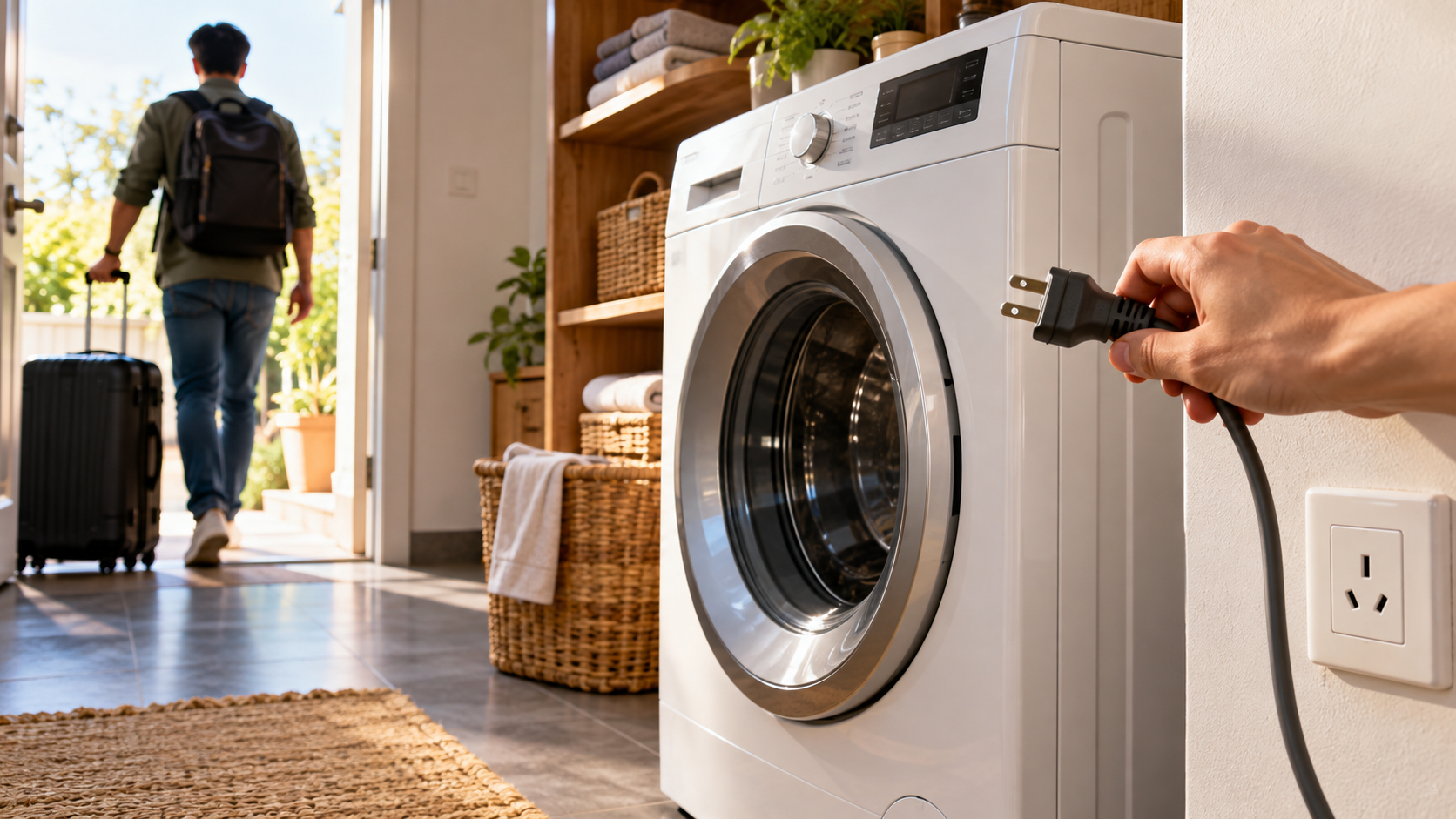
Should You Unplug Your Washing Machine Before Vacation?
Preparing for a trip involves more than packing bags and locking doors. You also need to decide which appliances should remain powered while you are away. One common question is whether you should unplug your washing machine before vacation.
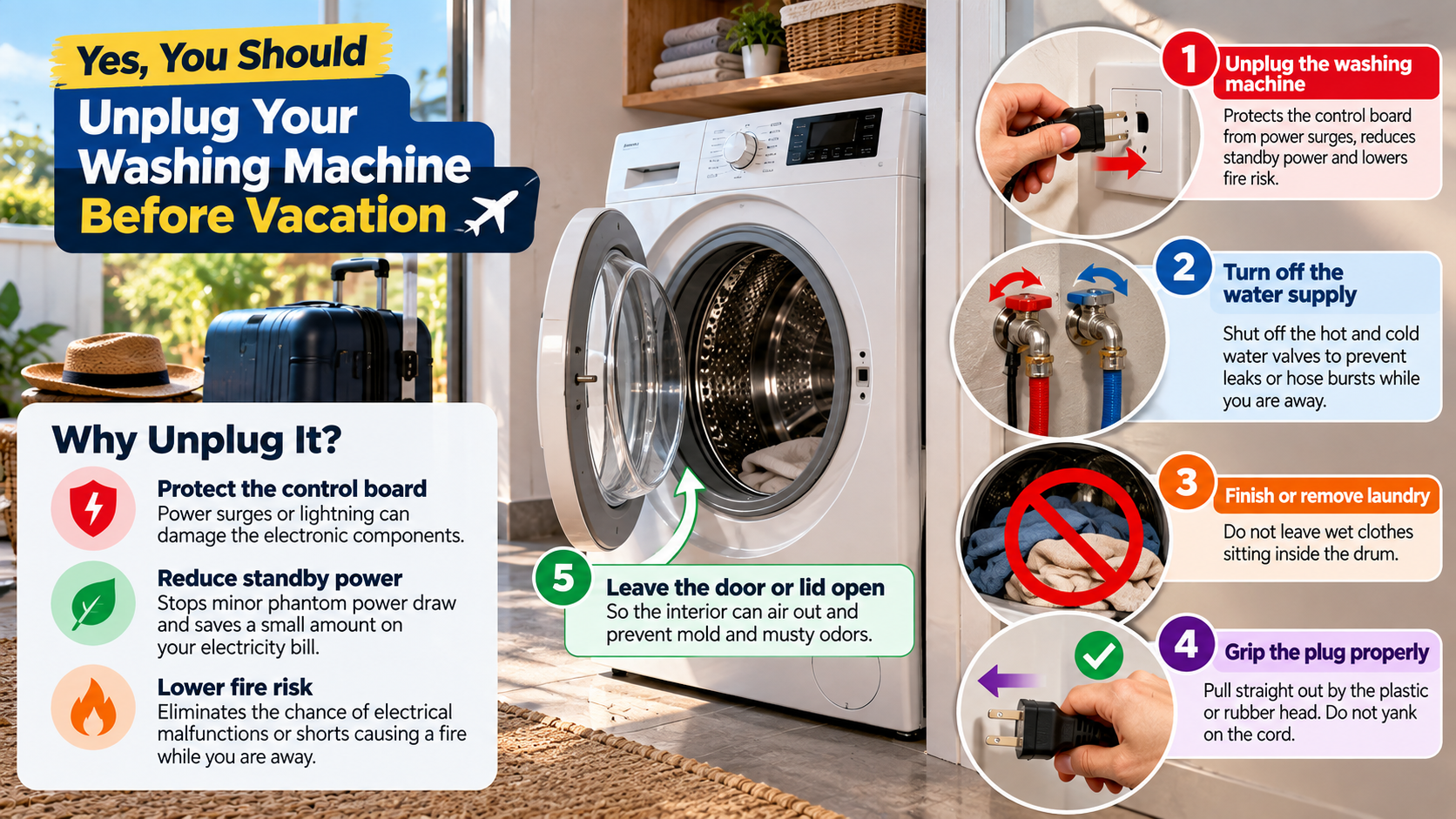
A washing machine can use a small amount of standby electricity when it is not running. More importantly, its electronic controls can be vulnerable to electrical surges. A major surge caused by lightning or utility problems can damage sensitive components.
Unplugging the washer takes only a few seconds and removes its connection to the electrical supply. It can also reduce unnecessary standby power consumption while you are away.
Water is another concern. Washing machine hoses remain connected to pressurized water lines even when the appliance is switched off. A damaged hose or loose connection could cause significant water damage while nobody is home.
This guide explains whether you should unplug your washer, which appliances deserve attention, and what other precautions can help protect your home during vacation.

Should I unplug everything before vacation?
You do not need to unplug every electrical device before leaving for vacation. Unplugging your washing machine before vacation is useful, but some household systems need continuous power.
Your refrigerator should normally remain powered. Security systems, smoke alarms, sump pumps, and other essential equipment may also need electricity. Disconnecting these systems could create more problems than it solves.
Instead, focus on non-essential appliances and electronics that can safely remain unused. This includes washing machines, dryers, televisions, gaming consoles, desktop computers, coffee makers, and other small appliances.
If you plan to unplug the washing machine before vacation, disconnect it after the final laundry cycle. Unplugging these devices can reduce standby electricity use and limit their exposure to certain power surges.
Do not switch off the main breaker unless you understand how doing so will affect your home. Some systems may depend on electricity even when you are away.
A room-by-room check is usually more practical. Identify equipment that does not need to operate during your absence, then disconnect it safely before leaving.
Protect Your Home Without Disabling Essential Protections
The goal is not to shut down your entire house. Instead, separate essential systems from appliances that can safely remain off.
Start with the kitchen and laundry areas. Unplug appliances that will not operate while you are away. Coffee makers, toasters, washing machines, dryers, and countertop cooking appliances are usually easy candidates.
Next, check entertainment and office equipment. Televisions, game consoles, desktop computers, monitors, printers, and speakers can generally remain disconnected during a vacation.
Keep essential systems powered. These may include refrigerators, security equipment, internet equipment, medical devices, sump pumps, and other systems your home depends on.
If you use smart-home equipment, check whether disconnecting a device will affect security or automation routines. Do not unplug something simply because it consumes standby power.
This selective approach provides a better balance between energy savings, electrical protection, and home safety. You reduce unnecessary loads without disabling systems that need to operate while you are gone.
Is it bad to leave your washing machine unplugged?
No. Leaving a washing machine unplugged for several days or weeks does not normally harm the appliance. Its motor, drum, pump, and other mechanical components do not require electricity when the machine is not operating.
In fact, choosing to unplug your washing machine before vacation can provide an additional layer of electrical protection. An unplugged appliance has no direct electrical connection to the wall outlet, so it cannot receive a surge through that power connection.
However, electrical protection is only one part of preparing your washer for a long absence. Moisture control also matters.
Water can remain inside the drum, detergent drawer, drain system, or rubber gasket after a wash cycle. If the door stays closed, trapped moisture can contribute to unpleasant odors and mildew growth.
Before leaving, wipe the door seal and detergent area dry. Leave the washer door slightly open if the manufacturer permits it. This allows air to circulate through the drum.
Also check the water connections and shut-off valves. A few minutes of preparation can reduce both electrical and water-related risks.
Preventing Stagnant Water and Odor Buildup
A washing machine can develop unpleasant odors when moisture remains trapped inside for an extended period. This problem becomes more noticeable when the appliance stays closed and unused during vacation.
Before leaving, make sure the final wash cycle has finished completely. If necessary, run an appropriate drain or spin cycle to remove remaining water.
Pay particular attention to the rubber door gasket on a front-load washer. Moisture and detergent residue can collect inside its folds. Wipe these areas with a clean, dry cloth before you leave.
You should also check the detergent drawer. Remove any leftover detergent or water that could contribute to buildup.
Once the interior is reasonably dry, leave the door slightly open. This improves ventilation and allows residual moisture to evaporate.
If you unplug the washing machine before vacation, keeping the door open also helps prevent odors from developing while the appliance remains unused.
Do not force the door open if your washer design does not allow it. Follow the manufacturer’s instructions for storing the appliance between uses.
These steps are simple, but they can make a noticeable difference. Good airflow and a dry interior help reduce musty odors when you return from your trip.
What should I turn off when I go on vacation?
Before leaving for vacation, focus on systems that can create problems while nobody is home. Water and electrical equipment deserve particular attention.
Start with your washing machine. If you plan to unplug the washing machine before vacation, first turn off its dedicated water supply valves if they are easily accessible. This reduces the risk of water damage if a hose fails while you are away.
You can also consider shutting off the home’s main water supply if your property and plumbing system allow it. However, make sure essential systems do not require water during your absence.
Your water heater may have a vacation mode or another recommended setting. Using it can reduce unnecessary heating when the home is unoccupied. Follow the manufacturer’s instructions rather than changing settings blindly.
Your heating and cooling system should usually remain operational at an appropriate setting. Completely switching it off can create problems related to extreme temperatures, humidity, or frozen pipes.
Finally, disconnect non-essential appliances and electronics. Check outdoor faucets, lighting, garage equipment, and other systems before departure.
Managing Plumbing Valves and Water Heaters
Water damage can become a serious problem when a home remains unattended. Washing machine hoses are particularly important because they stay connected to pressurized water lines.
Before leaving, locate the hot and cold water shut-off valves behind your washer. Close them if practical and if your washer’s instructions do not state otherwise.
Closing these valves reduces the amount of water that could enter the washing machine if a supply hose develops a leak. It is a simple precaution that takes very little time.
You may also have a main household water shut-off valve. If you plan to close it, consider whether your refrigerator, sprinkler system, humidifier, boiler, or other equipment requires water.
For your water heater, check whether it includes a vacation setting. This setting is designed to reduce heating while the home is unoccupied.
If you unplug your washing machine before vacation, remember that unplugging does not stop water from reaching the appliance. The water valves must be closed separately.
Do not assume that every water heater should be switched off completely. The correct approach depends on the heater type and your home’s plumbing.
The key is to reduce unnecessary water and energy exposure without disabling essential systems.
What appliances should I unplug when I go on vacation?
You should consider unplugging appliances that will not perform any useful function while you are away. This can reduce standby electricity use and disconnect sensitive electronics from the electrical supply.
In the kitchen, suitable candidates may include coffee makers, toasters, air fryers, countertop appliances, and other equipment that does not need to remain powered.
In living areas, consider televisions, gaming consoles, soundbars, desktop computers, monitors, and similar electronics. Before unplugging a television, you may also want to understand ways to use your TV’s USB port for connected devices. Check that disconnecting them will not interfere with security or other required functions.
The laundry area deserves special attention. If you will not use the appliances, unplug your washing machine before vacation and disconnect the dryer according to the manufacturer’s recommendations.
Some devices use very little standby power, so the energy savings from unplugging one appliance may be small. The benefit becomes more meaningful when several unnecessary devices are disconnected.
The decision should therefore be practical rather than obsessive. Prioritize appliances that are unnecessary, sensitive to power problems, or connected to water.
When deciding what to unplug before a trip, your washing machine is one appliance worth considering because it combines electrical and water connections.
High-Risk Phantom Loads in Living Areas
Many homes contain several electronics that remain in standby mode throughout the day. These devices may consume small amounts of electricity even when they appear to be switched off.
Common examples include televisions, game consoles, computer monitors, printers, speakers, chargers, and streaming devices. Individually, their standby consumption may be modest.
However, several devices operating continuously can create a larger combined load. Disconnecting them before a long vacation eliminates that standby consumption during your absence.
Power strips can make this process easier. If several non-essential devices share one strip, switch it off or unplug the strip before leaving.
Do not disconnect equipment that supports essential home functions. Security systems, medical equipment, networking equipment, or other necessary devices may need continuous power.
Also remember that standby consumption is only one reason to unplug electronics. Disconnecting a device from the outlet can reduce its exposure to electrical surges through that connection.
The same principle applies when you unplug the washing machine before vacation. Disconnecting unnecessary equipment can provide both energy and electrical benefits.
The practical approach is simple: unplug what you do not need, but leave essential systems operating.
A quick check before departure can save energy without creating unnecessary problems.
Frequently Asked Questions
Should I turn off the water supply to my washing machine before vacation?
Yes, you should always shut off the dedicated water supply valves behind your washing machine before traveling. Washing machine supply hoses remain under constant water pressure, even when the appliance is turned off. A cracked rubber hose or loose fitting can leak hundreds of gallons into your home within a few days. Closing the cold and hot shut-off valves takes thirty seconds and completely eliminates the threat of catastrophic laundry room flooding.
Does unplugging appliances while on vacation really save electricity?
Yes, unplugging idle appliances saves electricity by eliminating phantom load, also known as vampire power draw. Modern appliances consume electricity continuously to power Wi-Fi adapters, standby lights, digital clocks, and internal memory circuits. While a single microwave or coffee machine uses modest wattage daily, unplugging multiple electronics and heavy appliances across your home reduces overall kilowatt consumption and trims your monthly energy bill.
Can a power surge damage my washing machine while I am away?
Yes, a power surge can ruin your washing machine’s electronic control board. Modern washers rely on delicate digital computers, sensors, and digital displays that are sensitive to irregular voltage changes. Summer lightning strikes or local power restoration surges can bypass standard wall outlets and fry these microprocessors instantly. Disconnecting the power cord creates an air gap that keeps internal electronics safe.
Should I leave my washing machine door open while on vacation?
Yes, you should always leave your washing machine door cracked open while you are away. Front-load and top-load washers retain damp moisture along door gaskets, detergent drawers, and internal drums after cycles finish. If you latch the door shut, that trapped humidity creates an ideal environment for foul-smelling mold and mildew. Leaving the door slightly ajar allows air circulation and prevents odors.
Conclusion
Choosing to unplug your washing machine before vacation is a simple precaution that can make sense during an extended absence. It disconnects the appliance from the electrical outlet and eliminates its standby electricity consumption.
However, unplugging the washer should not be your only preparation step. The water supply deserves equal attention because supply hoses remain under pressure even when the appliance is switched off.
Before leaving, consider closing the washer’s water supply valves. Wipe moisture from the rubber gasket and leave the door slightly open if the manufacturer permits it. You should also review travel health and safety tips before leaving for an extended trip.
You should also review other appliances throughout your home. Disconnect non-essential electronics and countertop appliances, but keep critical systems powered.
Do not switch off essential equipment without understanding the consequences. Refrigerators, security systems, sump pumps, medical devices, and other important systems may need continuous electricity.
For additional guidance, see Whirlpool’s recommendations for washing machine vacation care. Whirlpool recommends disconnecting the washer’s power and turning off its water supply when it will not be used for an extended period.
The best vacation preparation is selective. Unplug unnecessary appliances, shut off avoidable water sources, and keep essential systems operating. These small steps can reduce electrical, water, and maintenance risks while your home is unattended.