

Time Management Tips for College Students

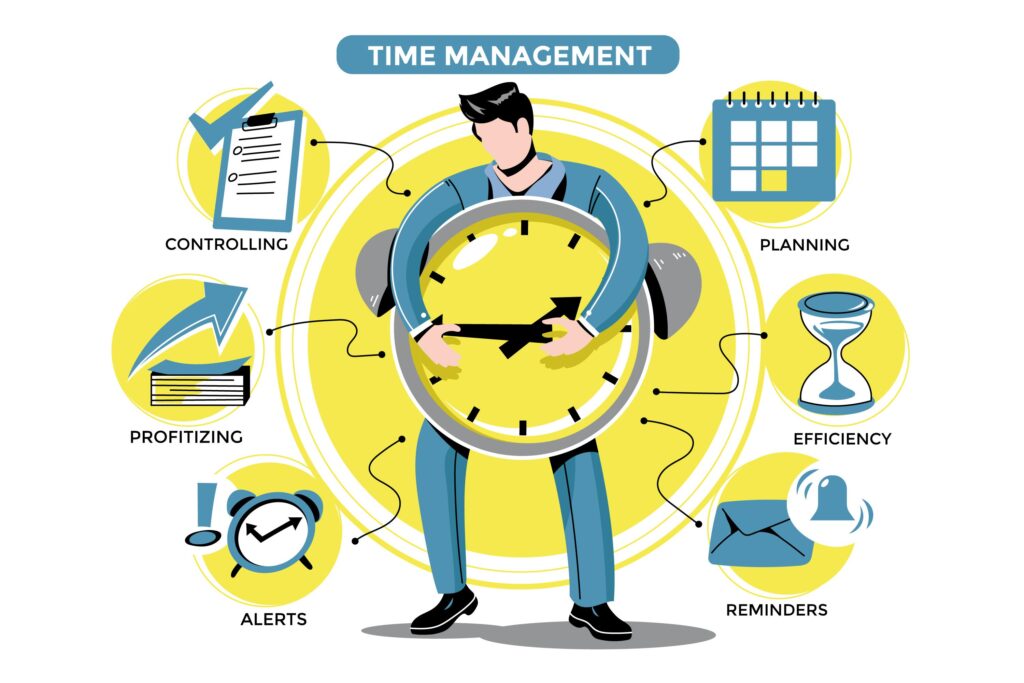
College life is an exciting journey filled with new friends, challenging classes, and new opportunities. However, many students struggle to manage their responsibilities. Without effective time management tips for college students, balancing classes, assignments, part-time jobs, and social activities can quickly become overwhelming.
Many undergraduates find the transition from high school difficult. They no longer have strict schedules or constant supervision. As a result, they often struggle to balance essays, exams, work commitments, and a healthy social life. If you are pulling all-nighters or missing deadlines, you are not alone.
Mastering your schedule is one of the most important skills for academic success. That is why finding practical time management tips for college students is essential. These strategies can help you stay organized, meet deadlines, and reduce stress throughout the semester.
Poor scheduling can also lead to academic burnout. Over time, this can affect both your grades and well-being. Learning how to use your time effectively does more than improve your GPA. It also prepares you for the demands of your future career.
In this comprehensive guide, we will explore practical, proven strategies to help you take complete control of your daily routine. We will cover how to prioritize your workload, eliminate common modern distractions, and build a sustainable schedule that actually works.
Whether you are a college freshman navigating your first semester or a senior preparing for graduation, these insights will help you reclaim your day. Let us dive into the daily habits that build lasting productivity.
Time Management Tips for College Students: Master the Art of Time Blocking
One of the most effective ways to take control of your day is through a strategy known as time blocking. Instead of keeping a loose, mental list of tasks you hope to accomplish, time blocking requires you to assign specific activities to exact windows of time.
For example, you might block out 9:00 AM to 10:30 AM exclusively for writing a history paper. During this specific window, you do not check emails, scroll through social media, or work on your math homework.
Consequently, this level of intense focus drastically reduces the friction of deciding what to do next. When your calendar dictates your next move, you spend less time procrastinating and more time executing.
Moreover, time blocking forces you to be realistic about how long assignments actually take to complete. Many students suffer from the planning fallacy, constantly underestimating the hours required for complex college projects.
By blocking out your day, you create a visual representation of your available hours. This ensures you leave adequate room for meals, rest, and unexpected academic emergencies.
Time Management Tips for College Students Using a Master Syllabus
At the beginning of each semester, professors provide a syllabus with important deadlines, readings, and exam dates. Unfortunately, many students file these documents away and rarely look at them again.
To stay organized, combine all deadlines into one master calendar. Spend an hour during the first week entering major assignments, quizzes, and exams. This simple habit can save you a great deal of stress later.
Using a master syllabus helps you spot busy weeks in advance. For example, you may notice that three major papers are due in November. Knowing this early allows you to start your work in October.
This proactive approach reduces last-minute cramming. It also helps you enjoy your free time without worrying about forgotten deadlines.
Time Management Tips for College Students from High Achievers
Many people assume successful individuals have more energy or natural talent. In reality, success often comes from managing time effectively.
Consider the habits of successful entrepreneurs and business leaders. Many protect their schedules carefully and plan their days in advance.
College students do not need to run a company. However, adopting a similar mindset can improve academic performance. Think of your time as a valuable resource. Activities such as studying, networking, and skill-building offer long-term benefits.
By contrast, excessive social media use often wastes valuable hours. Treating your schedule with greater respect can lead to better grades and stronger career opportunities.
Utilize the Eisenhower Matrix for Prioritization
When you have a mountain of coursework, deciding where to start can easily trigger analysis paralysis. This is where the Eisenhower Matrix becomes an incredibly valuable tool for college students.
This simple framework helps you categorize your tasks into four distinct quadrants based on urgency and importance. Tasks that are both urgent and important, like a paper due tomorrow, must be tackled immediately.
On the other hand, tasks that are important but not urgent, such as researching a project due next month, should be scheduled for later. The true magic of the matrix lies in identifying tasks that are urgent but not important, which can often be delegated or minimized.
Finally, it highlights activities that are neither urgent nor important, like binge-watching a new television series. By mercilessly cutting out these low-value activities, you instantly free up valuable hours for your genuine academic priorities.
Eliminate Digital Distractions Ruthlessly
In today’s highly connected world, your smartphone is undoubtedly the greatest enemy of deep, focused studying. Every single notification, text message, and social media alert is specifically designed to pull your attention away from your textbooks.
To genuinely succeed, you must create a distraction-free environment whenever you sit down to tackle complex coursework. Start by placing your phone in another room, or utilize applications that temporarily block access to distracting websites during study sessions.
Additionally, closing unnecessary tabs on your laptop can prevent you from passively wandering onto YouTube or Reddit. It is important to understand that human brains are not actually capable of true multitasking.
When you constantly switch between writing an essay and checking Instagram, your overall efficiency plummets drastically. By protecting your focus fiercely, you can easily complete a three-hour assignment in half the time, giving you your evening back.
FREQUENTLY ASKED QUESTIONS (FAQs)
How can I effectively balance a part-time job with my college classes?
Balancing a part-time job with full-time college coursework requires exceptional organization and proactive communication. First and foremost, you must be entirely transparent with your employer about your academic commitments from the very beginning. Provide them with your class schedule and exam dates well in advance so they can schedule your shifts appropriately.
Furthermore, you need to maximize the hidden pockets of time throughout your day. For instance, if you have an hour break between a lecture and your work shift, use that exact time to review flashcards or outline an upcoming essay. Do not waste these small windows, as they compound into massive productivity gains over the week.
Additionally, try to tackle your most demanding academic tasks on your days off from work. By dedicating your completely free days to deep, uninterrupted study sessions, you reduce the pressure to perform complex mental tasks after a physically exhausting shift at your job. Ultimately, setting clear boundaries between work time and study time is critical for your mental health.
What is the absolute best way to stop procrastinating on large college assignments?
Procrastination usually occurs because a specific assignment feels far too massive or intimidating to tackle all at once. The human brain naturally avoids overwhelming tasks, preferring the immediate comfort of easier, low-effort activities. Therefore, the absolute best way to overcome this mental block is to break the large assignment down into ridiculously small, easily manageable micro-tasks.
Instead of writing “Write 10-page research paper” on your to-do list, which is terrifying, write “Find three peer-reviewed sources.” Once you complete that simple task, you will feel a small surge of accomplishment and momentum.
Next, you can aim to write just the introductory paragraph or create a basic outline. Another brilliant strategy is utilizing the five-minute rule; simply promise yourself you will work on the dreaded task for exactly five minutes. More often than not, once you push through that initial wall of resistance and actually begin, you will naturally continue working long past the five-minute mark.
Are digital planners better than physical paper planners for college students?
The debate between digital and physical planners ultimately comes down to your personal learning style and lifestyle preferences. Digital planners, such as Google Calendar or Notion, offer incredible convenience because they sync seamlessly across your phone, tablet, and laptop.
They allow you to set automated reminders, easily reschedule shifting appointments, and color-code different classes with a single click. Furthermore, digital tools are incredibly difficult to lose, ensuring your schedule is always backed up to the cloud.
Conversely, physical paper planners offer a unique, tactile experience that actually aids in memory retention. The physical act of writing down an assignment helps cement it in your brain much better than quickly typing it on a screen.
Additionally, using a paper planner gives your eyes a much-needed break from digital screens and completely eliminates the risk of getting distracted by notifications while checking your schedule. Many top students actually use a hybrid system, utilizing a digital calendar for rigid class times and a physical notebook for daily to-do lists.
How many hours a day should a typical college student actually study?
The traditional academic rule of thumb suggests that for every one hour you spend inside a college classroom, you should spend roughly two to three hours studying outside of it. Therefore, if you are taking a standard 15-credit course load, you should realistically expect to study between 30 and 45 hours per week.
However, it is vital to understand that the quality of your study time matters significantly more than the sheer quantity of hours logged. Staring blankly at a textbook for five hours in a noisy dorm room is far less effective than two hours of highly focused, active recall in a quiet library.
You must focus on engaging with the material through practice testing, summarizing concepts out loud, and teaching the material to a peer. If you utilize active study methods and eliminate digital distractions, you can often master the material in far less time than the traditional guidelines suggest, leaving you more time for rest.
What exactly should I do if I fall dangerously behind on my college coursework?
Falling behind in college can trigger intense anxiety, but the absolute worst thing you can do is ignore the problem and hope it disappears. The very first step is to immediately contact your professors or teaching assistants during their scheduled office hours. Be completely honest about your situation; professors are human beings who appreciate accountability and are often willing to grant extensions if you approach them before a deadline has entirely passed.
Next, you must perform a ruthless academic triage. Look at all your outstanding assignments and calculate which ones carry the most weight toward your final grade. You need to prioritize completing the heavily weighted essays and exams first, even if it means submitting a less important minor worksheet late.
Finally, forgive yourself for slipping up. Guilt and shame are terrible motivators that will only fuel further procrastination. Reset your schedule, create a realistic catch-up plan, and focus entirely on your next immediate step forward.
CONCLUSION
Transitioning into the demanding environment of university life is undoubtedly a major challenge, but your daily schedule does not have to be a source of constant anxiety. By actively implementing these time management hacks, you can transform your chaotic routine into a streamlined machine.
Remember, mastering your workload is not about working yourself to the point of exhaustion; it is about working smarter so you can genuinely enjoy your college years. Implementing effective time management tips for college students is the bridge between merely surviving your classes and truly excelling in them.
When you learn to time block effectively, utilize a master syllabus, and aggressively protect your focus from digital distractions, you unlock a new level of academic potential. Furthermore, these organizational skills will remain incredibly valuable long after you cross the graduation stage and enter the professional workforce.
Your time is your most precious resource, and managing it correctly is the foundation of a successful life. Start small, stay remarkably consistent with your new habits, and watch as your productivity and peace of mind soar.