
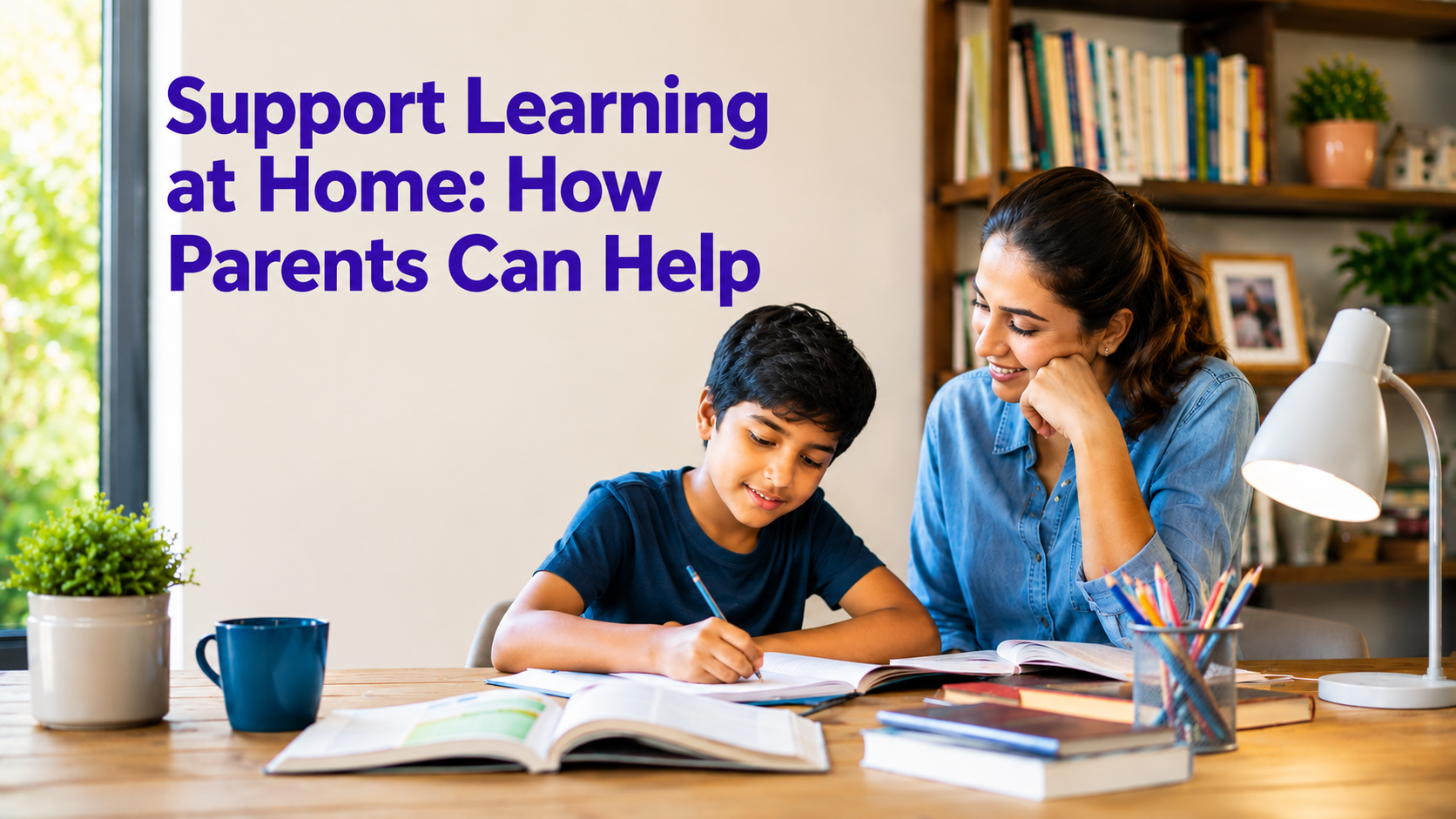
Support Learning at Home: How Parents Can Help
The modern educational landscape is shifting rapidly, placing a much greater emphasis on the educational environment created outside the traditional classroom. Parents now play a vital role in bridging the gap between school lessons and real-world understanding. According to research published by the Harvard Graduate School of Education, active parental involvement in a child’s education significantly correlates with higher academic achievement, better social-emotional development, and improved graduation rates. When parents intentionally support learning at home, they help transform education from a series of tedious school tasks into a lifelong passion.
This comprehensive beginner’s guide will break down actionable strategies you can implement immediately to transform your household dynamic. We will cover everything from setting up optimized physical spaces to fostering a resilient psychological mindset. Whether your child is just entering kindergarten or navigating the complex pressures of middle school, these steps will build a permanent foundation for academic success.
For families looking to make learning more engaging, hands-on activities can reinforce important concepts outside the classroom. You can also explore our guide to the best science kits for kids to discover fun ways to encourage curiosity, critical thinking, and STEM learning at home.
Let’s explore how you can confidently guide your child’s educational journey without needing to be an expert in every single school subject.
Why Creating a Dedicated Study Space Matters
Children thrive on structure. Their environment plays a major role in focus and learning. A noisy or cluttered space can make it harder to concentrate. It may also reduce memory retention and increase homework stress.
A dedicated study area helps create a learning routine. It signals that it is time to focus on schoolwork. Over time, children begin to associate that space with concentration and productivity.
This type of spatial conditioning can be very effective. It helps children settle into their work more quickly. As a result, they can focus better and learn more efficiently.
Choosing the Right Location
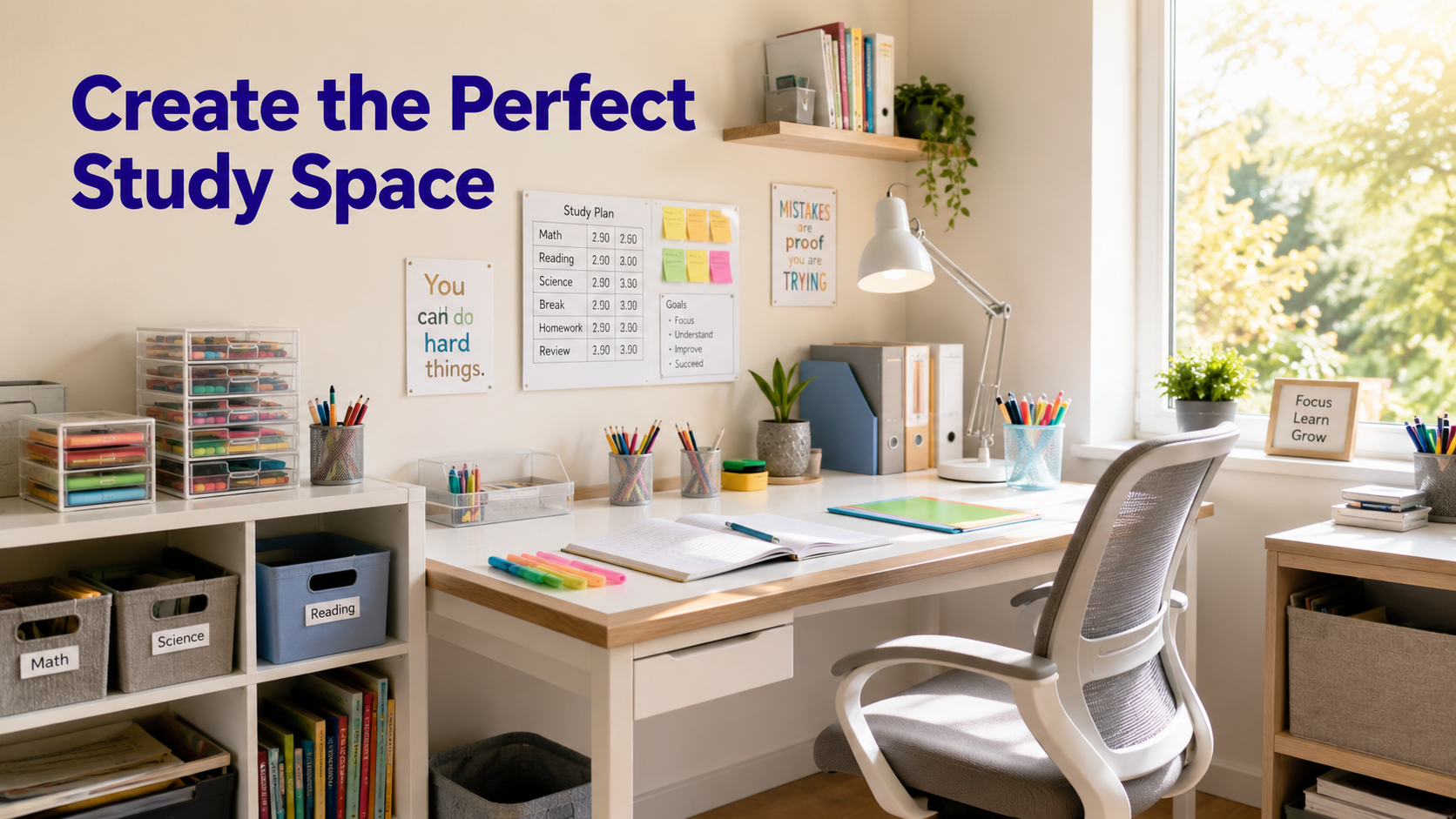
You do not need a massive house or a separate, expensive home office to make this environment work effectively. A quiet corner of the living room, a cleared desk in their bedroom, or a designated spot at the dining table can serve as an excellent study hub. The primary requirement is minimizing auditory and visual distractions during study blocks. Consequently, keep this area away from the television, video game consoles, and out of the direct line of high-traffic household zones. Ensuring a quiet backdrop allows their working memory to focus entirely on the academic task at hand rather than filtering out domestic noise.
To make the space highly functional, involve your child in the decoration process to build a sense of ownership. When they help choose the setup, they feel more inclined to respect the boundaries of that environment. Keep electronics like tablets and smartphones completely out of arm’s reach unless they are strictly required for the current assignment. By physically separating leisure devices from the learning workspace, you reduce the temptation to multitask, allowing their attention span to deepen over time.
Stocking Essential Supplies
Make sure your child has easy access to all necessary learning materials before they sit down to work. This simple preparation prevents frequent interruptions that break their concentration and derail their momentum. When a child has to get up multiple times to look for a ruler, a sharpener, or a reference book, their cognitive focus is fractured, making it harder to re-engage with the material.
-
Writing tools: Sharpened pencils, colored pens, erasers, and highlighters.
-
Organization: Folders, notebooks, labels, and color-coded sticky notes.
-
Comfort: A supportive, child-sized chair and adequate lighting to prevent eye strain.
Having these resources grouped in a caddy or a desk drawer minimizes friction at the start of a study session. It turns the preparation stage into a quick ritual rather than a frantic scavenger hunt. Over time, having an organized physical environment instills personal responsibility, as children learn to maintain their own supplies and prepare their tools for the next day’s tasks.
Establishing Consistent Daily Routines
Routine provides children with a deep sense of psychological safety and predictability. When daily schedules are clear, kids waste far less emotional energy resisting tasks and spend more time actively engaging with their studies. Therefore, building a reliable home learning routine stands as an absolute cornerstone of long-term academic growth and emotional regulation.
Setting a Fixed Homework Time
Work collaboratively with your child to determine the absolute best time for their daily schoolwork. Some children need a 30-minute physical break immediately after school to burn off energy and have a snack, while others prefer to finish their assignments right away while still in school mode. Once you choose a specific time block, protect it fiercely and stick to it every day to build a sustainable, automatic habit. This consistency eliminates the daily negotiation and arguing about when homework will get done, saving time and energy for both parents and students.
To lock this habit in place, treat the chosen time block as an important appointment that cannot be easily skipped or moved. If your child does not have official homework on a particular day, use that designated time for quiet reading, educational games, or reviewing past lessons. This ensures the routine remains unbroken regardless of the school’s shifting daily workload. Consistency reinforces the understanding that learning is an ongoing part of daily life rather than a sporadic obligation.
Balancing Study and Rest
The human brain requires regular, structured breaks to process and consolidate new information effectively. Consider using the Pomodoro Technique, where your child works intensely with full focus for 25 minutes and then takes a 5-minute restorative break. During these intentional intervals, encourage them to stretch, get a glass of water, or step outside for fresh air rather than looking at another digital screen. This rhythmic balance prevents mental fatigue, reduces frustration with difficult subjects, and ensures that the time spent studying is highly efficient and productive.
For older students with heavier workloads, you can gradually lengthen the focus periods while keeping the rest periods meaningful. The absolute rule during breaks is to engage in activities that refresh the nervous system. Avoid complex video games or social media scrolling during these short intervals, as digital platforms often overstimulate the brain rather than resting it. By managing energy levels rather than just managing time, you keep learning sustainable and stress-free.
How Parents Can Support Learning at Home Through Partnership
You do not need to know advanced calculus, complex grammar rules, or niche scientific theories to be an incredibly effective educational guide for your child. Your primary role is to serve as a supportive facilitator and an encouraging cheerleader, helping your child figure out how to learn rather than just giving them the right answers.
Effective parent-teacher communication serves as the critical first step in a child’s academic journey. By maintaining an open and ongoing dialogue with educators, parents can quickly identify specific learning gaps and behavioral shifts early in the school year before they grow into larger obstacles. Spotting these challenges early allows both sides to design tailored support plans and targeted interventions at home and in the classroom, which ultimately leads to significantly better academic outcomes and emotional growth for the student.
Asking Open-Ended Questions
When your child asks for help, avoid giving the answer right away. Instead, ask open-ended questions. For example, ask, “What do you think the first step should be?” You could also ask, “Can you find a similar example in your textbook?”
This approach encourages critical thinking and independence. It also rewards resourcefulness and problem-solving. Over time, children become more confident learners. They learn how to work through challenges on their own.
If your child becomes frustrated, ask them to explain what they already understand. This simple step shifts attention away from panic. It helps them focus on logic and reasoning instead.
By acting as a thinking partner, you support long-term learning. You also model the problem-solving skills they will need during exams and other academic challenges.
Collaborating with Teachers
Maintain an active, open line of communication with your child’s educators throughout the academic year. Teachers can provide invaluable insights into specific behavioral patterns and learning gaps that you might not notice at home. By aligning your home strategies with classroom goals, you create a seamless, unified support system that accelerates student progress and catches issues early. Do not wait for the report card to speak with teachers; proactively check in to ensure your home efforts match what is happening in the classroom.
When communicating with educators, frame your questions around how you can reinforce their specific classroom methodologies at home. For example, ask about the particular math strategies or reading frameworks they use, so you do not confuse your child with conflicting instructions. A united front between home and school reassures the student that their entire community is invested in their long-term growth.
Fostering a Growth Mindset in Your Child
The specific attitude your child holds toward learning dictates exactly how they handle academic challenges, failures, and setbacks. Renowned psychologists emphasize that praising effort over innate intelligence nurtures deep resilience and a lifelong love of learning. When children realize that mistakes are simply data points in the learning process rather than reflections of their worth, they become eager to take on harder tasks.
Praising the Process, Not the Outcome
Instead of saying, “You are so smart at math,” try saying, “I am proud of how hard you worked on this project.” This small change can have a big impact. It teaches children that skills grow through effort, practice, and effective strategies. As a result, they are more likely to persist with difficult homework and academic challenges.
Praise the process rather than the outcome. Doing so gives children a clear path to follow when they face future challenges. They learn that success comes from actions they can repeat and improve.
Focus your compliments on specific behaviors. Highlight persistence, concentration, and problem-solving strategies. For example, you might say, “I noticed that you tried three different methods before finding the answer.” This type of feedback is both clear and encouraging.
Targeted praise helps children recognize what led to success. It reinforces the connection between effort and achievement. Over time, this mindset supports confidence, resilience, and long-term learning.
Redefining Failure as Feedback
When your child brings home a poor test grade or struggles with a concept, view it as an opportunity for growth rather than a disappointment. Sit down together and analyze the mistakes calmly without placing blame or showing frustration. Ask them what they learned from the experience, what went wrong, and how they might adjust their study habits for the next assessment. This approach removes the paralyzing fear of failure, encouraging kids to take healthy academic risks and participate more fully in their own education.
Teach them to add the word “yet” to negative self-talk. If they complain, “I don’t understand fractions,” gently correct them with, “You don’t understand fractions yet.” This minor linguistic correction fundamentally transforms their outlook. It reframes a seemingly permanent intellectual wall into a temporary hurdle that can be cleared with patience, time, and the right strategies.
Incorporating Educational Activities into Daily Life
Learning should never stop completely when the school bell rings or when the textbook closes. In fact, some of the most profound, lasting lessons happen during ordinary household activities and family routines. By weaving educational concepts naturally into daily life, you show your child that education is highly relevant to the real world and not just something confined to a school building.
Kitchen Science and Math

Cooking and baking provide a hands-on way to explore math and science. Measuring ingredients teaches fractions, ratios, and scaling. Watching ingredients change during baking introduces basic chemistry concepts. Children can also learn about heat transfer and chemical reactions.
The kitchen becomes a practical learning space. Abstract ideas become easier to understand when children can see and experience them. This approach encourages curiosity and strengthens academic understanding.
Challenge older children by asking them to double or halve a recipe. This activity develops mental math and fraction skills. You can also discuss why bread rises or how ingredients emulsify. These conversations make science more approachable and engaging.
Real-world examples often feel less intimidating than textbook lessons. They help children connect concepts to everyday life. The result is stronger understanding and more memorable learning experiences.
Reading for Pleasure
Create a literacy-rich home by making reading a daily family activity. Keep it enjoyable rather than treating it as a chore. Let your children see you reading books, newspapers, or magazines for pleasure. Children often learn by observing the habits of adults around them.
Read aloud with younger children whenever possible. Talk about the story, characters, and new vocabulary together. These conversations can strengthen reading comprehension and language skills.
For older children, consider creating a family book club. Discuss books or articles during dinner or family time. This encourages critical thinking and deeper analysis.
Offer a variety of reading materials throughout the home. Include graphic novels, science magazines, biographies, and historical fiction. Avoid limiting choices to school reading lists. Instead, encourage children to explore topics that interest them.
When children discover books that match their interests, reading becomes more rewarding. It shifts from an academic task to a tool for independent learning and personal growth.
FAQs
What is the most effective way to help a child who is struggling with homework?
The most effective approach is to identify the root cause of the struggle without doing the work for them. Begin by asking your child to explain the assignment in their own words to check for basic comprehension. Break complex, multi-step tasks down into smaller, manageable pieces to prevent psychological overwhelm and anxiety. If they remain stuck, review past classroom examples together or consult trusted online educational resources. Always maintain a calm, encouraging demeanor throughout the process. If the difficulties persist across multiple weeks, reach out to their teacher immediately to discuss additional targeted interventions and support.
Furthermore, pay close attention to when the frustration spikes during their study session. If the breakdown happens immediately, they likely missed a fundamental instruction in class. If it happens after 30 minutes, they might simply be exhausted. Keeping a simple log of these struggles can give their teacher highly specific information to help resolve the issue in class.
How can I keep my child motivated to learn without relying on rewards?
Internal motivation lasts much longer than external rewards like toys, video games, or money. To build internal drive, focus on your child’s specific interests and explicitly connect their schoolwork to those real-world passions. Celebrate their incremental progress and point out how much their skills have improved over time through hard work. Allow them to have a voice in creating their study schedule, which builds a healthy sense of autonomy and ownership. When children feel competent, independent, and connected to the material, they naturally develop an internal desire to learn for the sake of discovery.
Additionally, encourage curiosity by exploring the “why” behind school subjects. If they are learning world history, watch a documentary together or visit a local historical site to bring the stories to life. Showing them that knowledge grants power and understanding in the real world provides a deep sense of purpose that no cheap plastic toy or financial reward can ever replicate.
How much time should my child spend on home learning activities each day?
The ideal duration depends entirely on your child’s age, attention span, and developmental stage. As a general rule, elementary school students benefit most from 10 to 30 minutes of focused homework or educational reading per night. Middle school students can typically handle 60 to 90 minutes of daily study without burning out. High schoolers may require two hours or more, depending on their specific course load and advanced classes. It is crucial to monitor their stress levels; quality of focus matters far more than the total number of hours spent sitting miserably at a desk.
If you notice your child regularly exceeding these general timeframes while staring blankly at their papers, it is a sign to step in. Prolonged, unproductive study sessions lead to exhaustion and a deep resentment toward education. Break the work into shorter segments or end the session early and send a quick note to the teacher explaining that the assignment took longer than expected.
How can I support learning at home if I work full-time?
You can easily provide excellent support by focusing on consistency and structure rather than constant physical supervision. Set up a predictable evening check-in routine where you review your child’s assignments and celebrate their daily achievements together. Use weekends for interactive, experiential learning opportunities, such as visiting a local museum or exploring nature trails. You can also leverage high-quality educational apps and online tools that track progress automatically while you are working. Remember that your emotional encouragement and genuine interest in their education matter far more than the quantity of hours you spend sitting directly next to them.
You can also establish a reliable network by forming study groups with neighbors or using after-school programs that offer structured homework help. When you get home, your role can shift entirely from a stressful supervisor to an encouraging audience. Asking them to teach you one thing they learned that day validates their effort and reinforces their learning while keeping your evening interactions positive.
What should I do if my child refuses to do their schoolwork at home?
When resistance occurs, look for the underlying emotional or cognitive cause instead of entering a stressful power struggle. Often, defiance masks frustration, hidden learning difficulties, extreme fatigue, or confusion about the material. Give your child a structured choice to restore their sense of control, such as letting them choose whether to do math or reading first. If emotions run too high, implement a brief cooling-off period before returning to the task calmly. Keep a consistent daily routine so that doing schoolwork becomes an expected, non-negotiable part of their lifestyle.
Avoid using threats or raising your voice, as stress actively shuts down the brain’s ability to learn and process logic. If the refusal is chronic, sit down during a calm moment outside of homework hours to discuss the issue. Use “I” statements like, “I notice you get very upset during math time, and I want to help make it easier for you.” Working together to find a solution builds trust and reduces behavioral friction.
Conclusion
Learning does not end when the school bell rings. Parents who actively support learning at home can make a lasting difference in their child’s development. When families support learning at home consistently, children strengthen their academic, cognitive, and creative skills.
Create a quiet study space and establish predictable routines. These simple steps help support learning at home and encourage better focus. Working closely with teachers can also support learning at home by reinforcing classroom goals and expectations.
Your role is to guide and encourage rather than demand perfection. When you support learning at home with patience and positive reinforcement, children develop resilience and a growth mindset. These qualities build confidence and independence over time.
Small efforts can lead to meaningful results. Reading together, exploring educational activities, and solving problems as a team all help support learning at home. These everyday experiences create valuable opportunities for growth.
Stay positive and celebrate progress, even when it seems small. The strategies in this guide can help you support learning at home more effectively. By choosing to support learning at home every day, you can help your child develop strong study habits and succeed in school and beyond.