
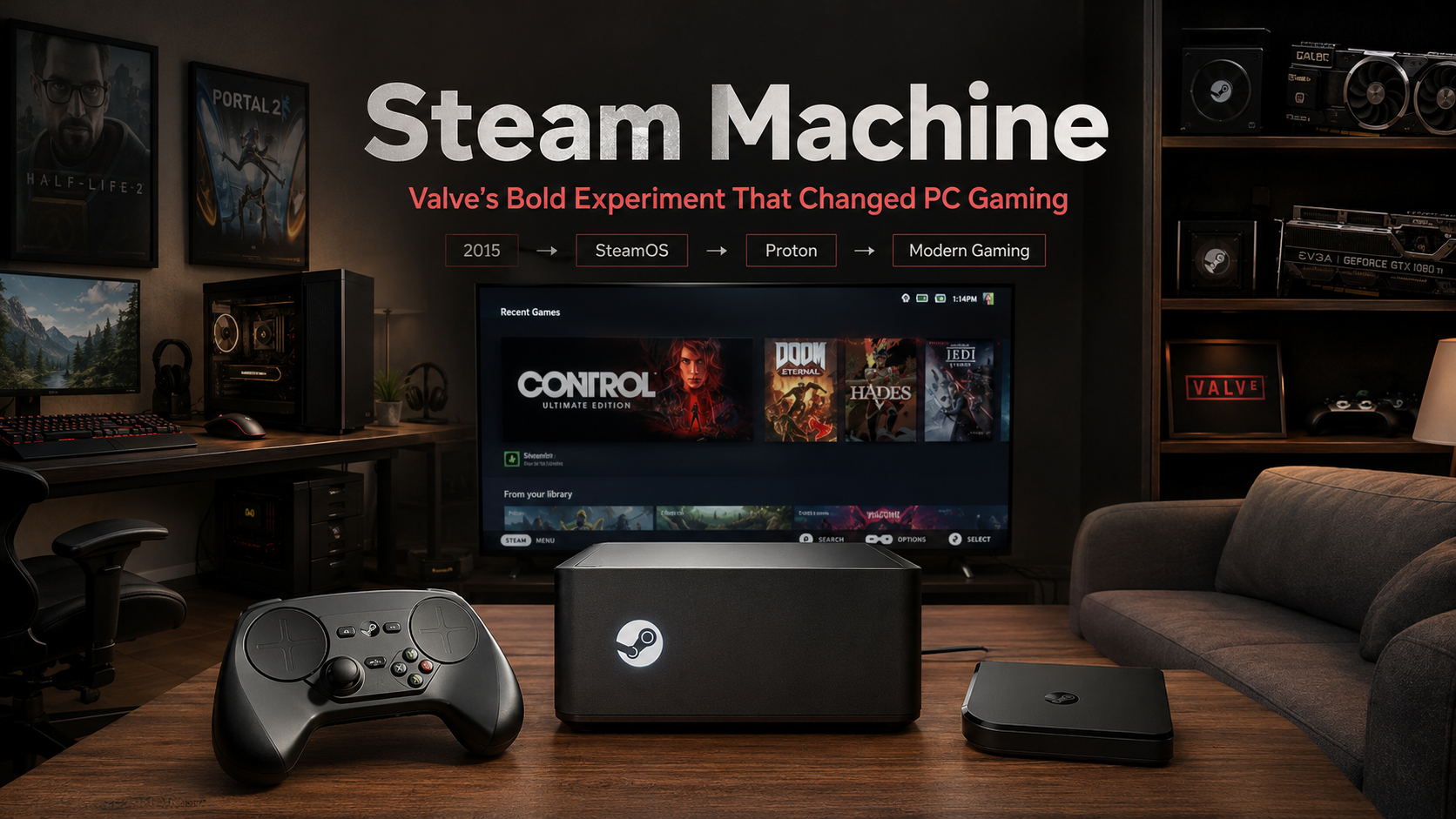
What Is a Steam Machine? Valve’s Gaming Legacy
The Steam Machine was one of Valve Corporation’s most ambitious attempts to reshape the gaming industry. Designed to bring the power and flexibility of PC gaming into the living room, Steam Machines aimed to combine the open nature of personal computers with the convenience and simplicity of traditional gaming consoles. Unlike the PlayStation or Xbox, Steam Machines were not a single device but a family of compact gaming PCs produced by multiple hardware manufacturers and powered by SteamOS, Valve’s Linux-based operating system.
The project emerged from Valve’s desire to create an open gaming ecosystem that was less dependent on Microsoft’s Windows platform. By partnering with manufacturers such as Alienware, Gigabyte, and Zotac, Valve hoped to offer players a console-like experience while still allowing the customization and upgradeability associated with PC gaming. To support this vision, the company also introduced complementary products including the Steam Controller and Steam Link, creating a complete entertainment ecosystem centered around the Steam digital storefront.
Officially released on November 10, 2015, Steam Machines generated significant interest among gamers and industry analysts. Although the platform struggled commercially and was largely discontinued by 2018, its impact extended far beyond sales figures. The project helped advance Linux gaming, influenced future Valve hardware initiatives, and remains an important chapter in the evolution of PC gaming technology.
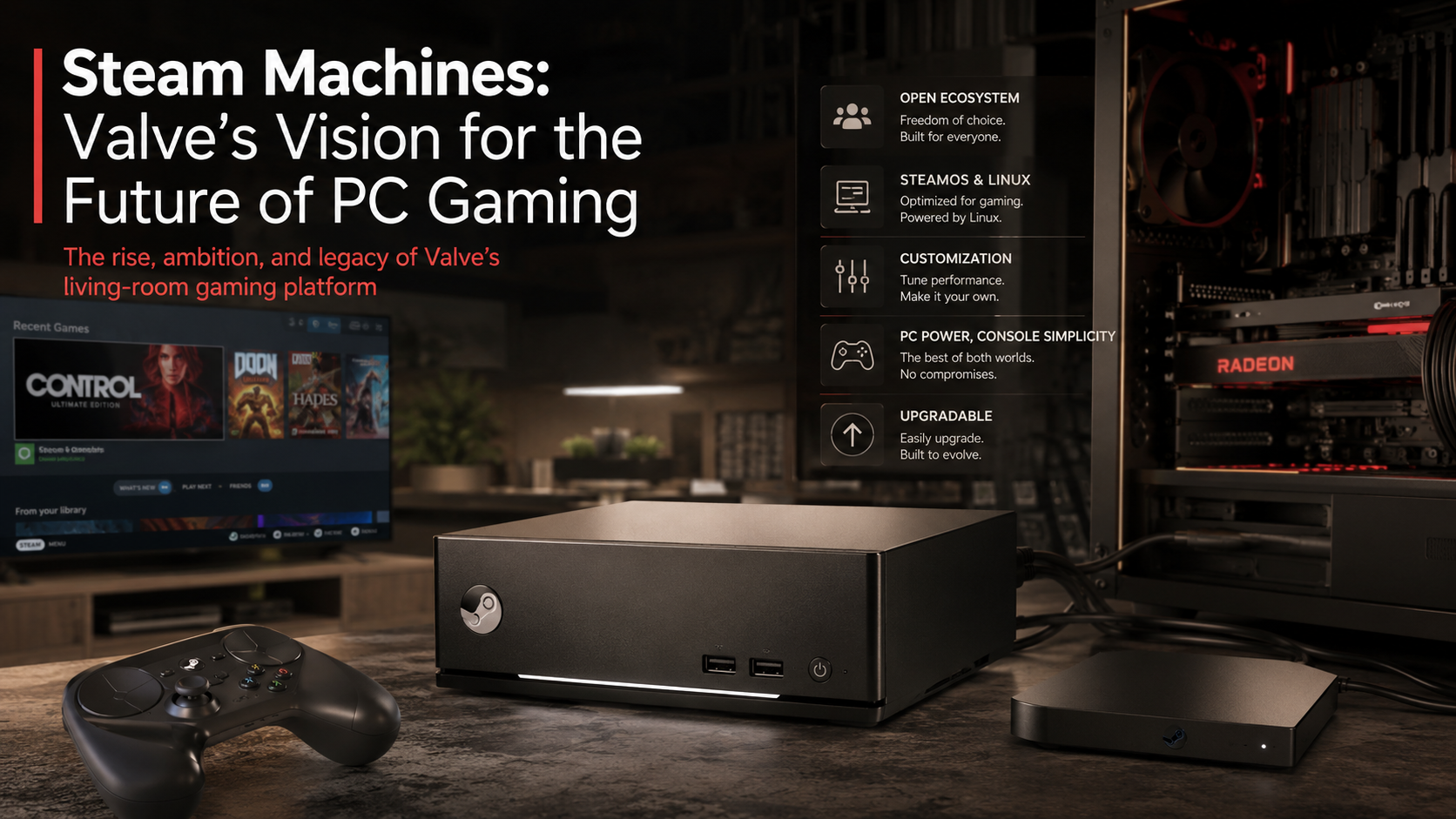
The Origins of Steam Machines
The origins of Steam Machines can be traced back to Valve’s concerns about the future of PC gaming. During the early 2010s, Steam had become the dominant digital storefront for PC games, accounting for a large share of digital game sales on Windows. However, Valve became increasingly concerned about Microsoft’s direction with Windows 8 and the growing emphasis on closed software ecosystems.
Valve co-founder and CEO Gabe Newell publicly criticized Windows 8 and described it as a potential threat to the openness that had helped PC gaming thrive. To reduce dependence on Microsoft, Valve began investing heavily in Linux gaming. The company released a Linux version of Steam in 2012 and started encouraging developers to support the platform.
At the same time, Valve recognized that many gamers wanted a console-like experience without giving up access to PC games. This idea eventually evolved into the concept of the Steam Box, an internal project that later became Steam Machines. Valve envisioned compact gaming computers that could sit beside a television, boot directly into Steam, and provide a living-room experience comparable to dedicated gaming consoles.
Valve’s Vision for the Living Room
Valve’s goal was not simply to create another gaming console. Instead, the company wanted to redefine how players interacted with PC games. Traditional gaming PCs were typically used at desks with keyboards and mice, while consoles were designed for televisions and controllers. Steam Machines aimed to combine these two worlds.
The company imagined a future where players could purchase a small gaming PC, connect it to a television, and immediately access their entire Steam library. Because the platform was based on PC architecture, users would still enjoy the benefits of upgradeable hardware and open software.
Valve also envisioned a broader ecosystem that included game streaming, family sharing, parental controls, and cloud-based services. These features were designed to make PC gaming more accessible to casual players while retaining the flexibility valued by enthusiasts.
The living-room strategy was central to Valve’s long-term plans and influenced many of the products developed during this period.
SteamOS: The Operating System Behind Steam Machines
SteamOS served as the software foundation of every Steam Machine. Built on Debian Linux, the operating system was specifically optimized for gaming and entertainment.
Unlike traditional desktop operating systems, SteamOS launched directly into Big Picture Mode, a controller-friendly interface designed for televisions. Users could browse their game libraries, access the Steam store, communicate with friends, and manage settings without needing a keyboard or mouse.
SteamOS also introduced several advanced features, including:
- Family Sharing
- Parental Controls
- Media Streaming
- Steam In-Home Streaming
- Cloud Saves
- Multi-user support
One of SteamOS’s biggest challenges was game compatibility. At the time, most PC games were developed primarily for Windows. Valve later addressed this issue through Proton, a compatibility layer that enables Linux systems to run many Windows games without requiring native ports.
Today, Proton remains one of Valve’s most important software achievements and continues to power modern SteamOS devices.
Steam Machine Hardware Specifications
Unlike traditional consoles, Steam Machines did not use standardized hardware. Valve established minimum requirements while allowing manufacturers to create unique configurations.
The original beta hardware distributed to testers included several configurations featuring Intel processors and Nvidia graphics cards.
Typical specifications included:
Processor Options:
- Intel Core i7-4770
- Intel Core i5-4570
- Intel Core i3
Graphics Options:
- Nvidia GeForce GTX Titan
- Nvidia GeForce GTX 780
- Nvidia GeForce GTX 760
- Nvidia GeForce GTX 660
Memory:
- 16 GB DDR3-1600 RAM
Storage:
- 1 TB Hybrid Drive with 8 GB SSD Cache
Power Supply:
- 450-Watt Internal PSU
Valve also designed a specialized cooling system that separated airflow channels for the CPU, GPU, and power supply. This approach helped maintain thermal efficiency within the compact chassis.
Steam Controller: A New Approach to Gaming Input
The Steam Controller was one of the most innovative components of the Steam Machine ecosystem. Rather than relying solely on traditional analog sticks, it featured dual haptic touchpads designed to replicate mouse-like precision.
Valve created the controller to make genres such as strategy games, simulation titles, and first-person shooters more comfortable to play from a couch. The device included:
- Dual haptic trackpads
- Gyroscopic motion controls
- Rear grip buttons
- Customizable control schemes
- Cloud-based profile sharing
Although the controller received mixed reviews, it developed a loyal fan base and influenced later Valve hardware designs.
Steam Link and Home Streaming
Alongside Steam Machines, Valve launched Steam Link, a small streaming device designed to bring PC gaming to televisions without requiring dedicated gaming hardware.
Steam Link connected to a home network and streamed games from a primary gaming PC. This allowed users to play their existing Steam libraries on a television in another room.
Ironically, Steam Link became one of the biggest competitors to Steam Machines themselves. Many consumers found it more affordable to purchase a Steam Link than invest in an entirely new gaming system.
Vendor Support and Hardware Partners
Valve partnered with numerous manufacturers to bring Steam Machines to market.
Major partners included:
- Alienware
- CyberPowerPC
- Digital Storm
- Falcon Northwest
- Gigabyte
- Zotac
- Origin PC
- Scan Computers
- Webhallen
These companies produced machines ranging from entry-level gaming systems priced around $499 to premium configurations costing several thousand dollars.
While this flexibility appealed to enthusiasts, it also created confusion among mainstream buyers who were accustomed to straightforward console offerings.
Why Steam Machines Failed
Despite significant media attention, Steam Machines struggled to achieve widespread adoption.
Several factors contributed to their decline:
- Limited Linux game support
- High hardware prices
- Hardware fragmentation
- Competition from Windows PCs
- Competition from PlayStation and Xbox
- The success of Steam Link
- Delays in SteamOS development
By mid-2016, fewer than 500,000 units had been sold. Many manufacturers eventually discontinued their models, and Valve removed Steam Machine sections from the Steam storefront in 2018.
The Return of Steam Machine in 2025
In November 2025, Valve announced a new singular version of the Steam Machine as part of its broader hardware lineup. Unlike the original initiative, which relied on numerous manufacturers, the new approach centers on a unified hardware design.
The upcoming device is scheduled for release on June 29, 2026. While Valve has not revealed every technical detail, the announcement marks the return of the Steam Machine brand after several years of absence.
This new strategy appears to address many of the issues that affected the original platform, particularly hardware fragmentation and inconsistent user experiences.
Legacy and Impact
Although the original Steam Machines were not commercially successful, they played an important role in Valve’s hardware evolution.
The project accelerated Linux gaming development, contributed to the creation of Proton, and helped Valve gain valuable experience designing gaming hardware. Many lessons learned during the Steam Machine era influenced later products and software initiatives.
Today, Steam Machines are remembered as a bold attempt to challenge the traditional console market and expand the possibilities of PC gaming. While the original experiment may have fallen short of expectations, its influence continues to shape Valve’s approach to gaming technology and open-platform development.
FAQ SECTION
How Much Did the Steam Machine Cost?
The price of a Steam Machine depended on the manufacturer, hardware configuration, and performance level. Unlike traditional consoles that launch with one standard model, Valve allowed several companies to create their own versions of Steam Machines. This approach gave buyers more choices but also created a wide price range.
Companies such as Alienware offered entry-level models that started around $450 to $500. These machines targeted players who wanted a simple living-room gaming setup without building a desktop PC. More expensive models included stronger processors, dedicated graphics cards, larger storage drives, and improved cooling systems. High-end versions could easily cost more than $1,500, while some premium configurations reached even higher prices.
Valve discontinued the original Steam Machine lineup in 2018, so retailers no longer sell new units. Today, collectors and enthusiasts occasionally buy used models through online marketplaces. Prices usually range from $100 to $300 depending on the hardware and condition.
Modern gamers usually choose newer gaming PCs or handheld devices instead because they offer better performance, compatibility, and long-term support.
What Is a Steam Machine Used For?
Valve created Steam Machines to bring PC gaming into the living room and give players a console-style experience. The devices allowed users to connect a compact gaming computer to a television and access their Steam library from a couch.
Steam Machines used SteamOS, a Linux-based operating system that Valve designed specifically for gaming. The system opened directly into Big Picture Mode, an interface that helped users browse games, purchase titles, manage settings, and communicate with friends using a controller.
The machines focused mainly on gaming, but they also worked as small home computers. Since SteamOS used Linux, owners could install applications, stream videos, browse the web, and use the device for entertainment purposes. This flexibility gave Steam Machines more freedom than traditional consoles.
Valve also supported the ecosystem with products like the Steam Controller and Steam Link. These accessories improved navigation and allowed players to stream games from another PC.
Although Steam Machines did not become popular, they introduced many ideas that shaped modern PC gaming devices.
Is the Steam Machine Still Coming?
The original Steam Machine project ended after Valve and its hardware partners failed to attract a large audience. Valve removed Steam Machine products from the Steam store in 2018 after sales remained low and many manufacturers stopped producing new models.
The company faced several challenges during the platform’s lifespan. Many PC games supported Windows but lacked Linux versions, which limited the available library. Consumers also struggled to understand the difference between various hardware models because each manufacturer offered different specifications.
However, Valve did not abandon the ideas behind Steam Machines. The company continued improving SteamOS and developed Proton, a technology that allows Linux systems to run many Windows games. These improvements solved one of the biggest problems that affected the original project.
Valve later used these lessons in newer hardware designs. The Steam Deck became the closest successor because it combined PC gaming flexibility with a simple console-like experience.
The Steam Machine name represents an important step in Valve’s hardware journey, even though the original product line disappeared.
Is a Steam Machine Worth Buying Today?
Most gamers should not buy an original Steam Machine today because the hardware has become outdated. The systems used components from the mid-2010s, and many modern games require much stronger hardware to deliver smooth performance.
The original Steam Machines also relied on early versions of SteamOS. At launch, Linux gaming had limited support, and many popular Windows games could not run properly. Valve improved the situation later with Proton, but the original devices did not receive the full benefits of that technology.
Still, some users may find value in a Steam Machine. Collectors may enjoy owning a unique piece of gaming history, while Linux enthusiasts can experiment with the hardware and customize the system. The compact design also makes some models useful as media centers or retro gaming machines.
For most people, modern gaming PCs, handheld PCs, or newer Valve hardware provide a much better experience. These options deliver stronger performance, wider game compatibility, and better future support.
A Steam Machine remains an interesting historical device, but it no longer makes sense as a primary gaming system.
Is a PC Better Than a Steam Machine?
A traditional gaming PC offers a better experience than an original Steam Machine for most players. Standard PCs provide access to a much larger selection of games because developers primarily design PC titles for Windows.
Gaming PCs also give users complete control over upgrades. Players can replace graphics cards, processors, memory, storage, and other components whenever they need more performance. Steam Machines offered less flexibility because many models used compact designs that limited hardware changes.
A PC also supports multiple gaming platforms. Users can access Steam, other digital stores, creative applications, streaming tools, and countless software options. This makes a gaming PC more versatile than a device focused mainly on SteamOS.
Steam Machines still introduced valuable ideas. They showed that many players wanted a simple living-room gaming experience without losing PC features. Valve used those lessons to improve SteamOS and create newer products.
For someone who wants maximum performance, customization, and compatibility, a gaming PC remains the stronger choice. Steam Machines mainly appeal to collectors and technology enthusiasts who appreciate Valve’s experimental approach.
CONCLUSION
The story of the Steam Machine is a classic tale of a brilliant concept arriving slightly ahead of its technological time. Valve correctly predicted that players wanted the freedom of open-source PC gaming combined with the comfortable, accessible form factor of a traditional television console. However, early hardware fragmentation, high pricing, and a lack of native game compatibility on Linux severely limited its mainstream commercial appeal. Instead of abandoning the initiative altogether, Valve patiently iterated on their software stack, systematically fixing their biggest ecosystem flaws behind the scenes.
Ultimately, this bold living room experiment laid the vital foundation for the modern portable gaming revolution. The creation of the Proton compatibility layer completely transformed Linux from an outsider platform into a gaming powerhouse. When you look closely at the success of modern portable devices, you are looking directly at the refined, perfected DNA of Valve’s original hardware vision. It proved that meaningful innovation requires a willingness to stumble, learn, and adapt.
The future of gaming continues to expand beyond traditional platforms, creating new ways for players to interact with technology and even explore opportunities like earning money while playing games.