
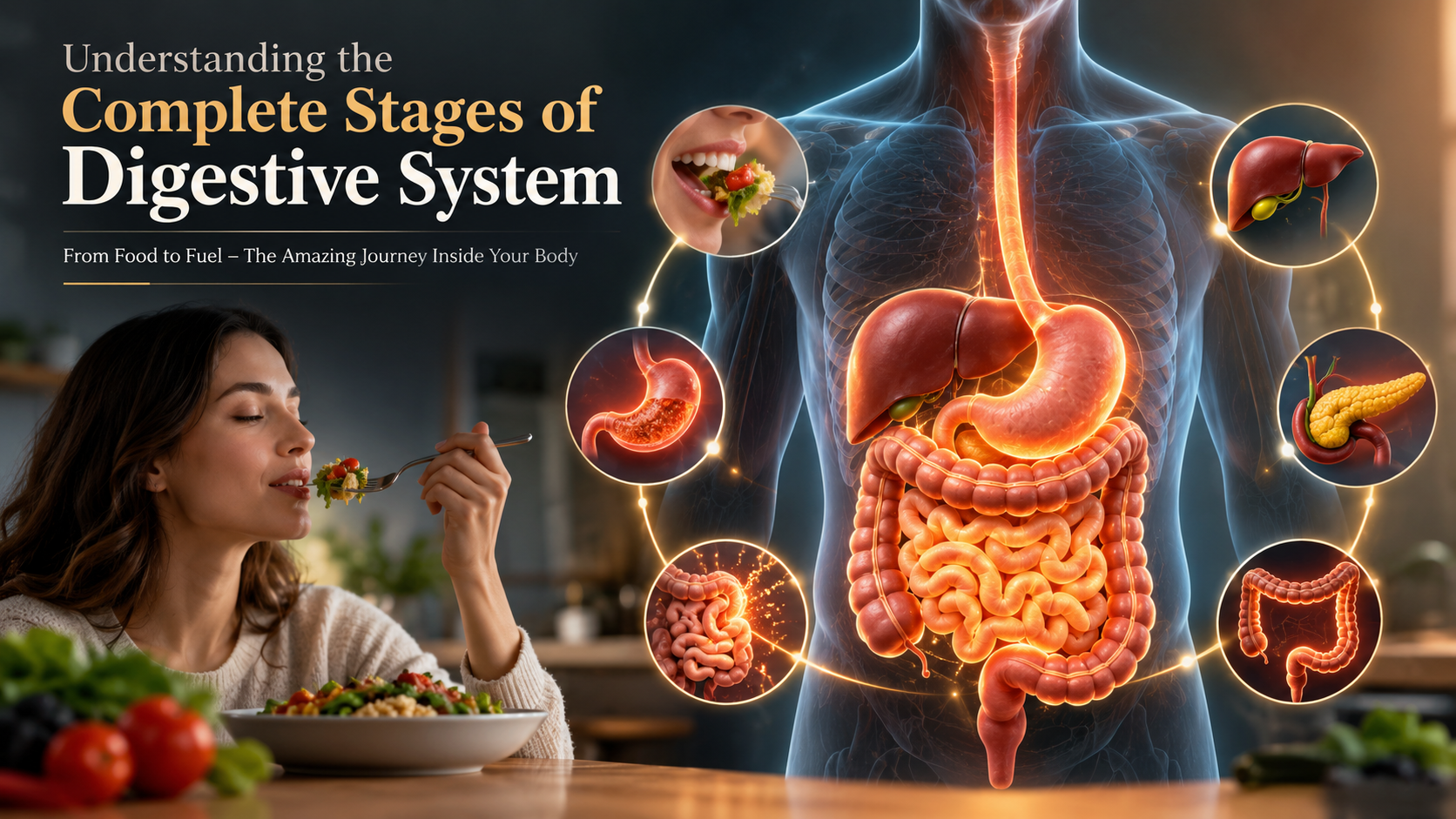
Understanding the Complete Stages of Digestive System and How Digestion Works
Understanding the stages of digestive system function helps explain how the body turns food into usable nutrients. Every day, your digestive system moves food through a coordinated series of mechanical and chemical processes. These processes allow the body to obtain nutrients needed for energy, growth, and cell repair. For a detailed overview, the National Institute of Diabetes and Digestive and Kidney Diseases (NIDDK) explains how the digestive system breaks down food and absorbs nutrients.
The digestive system includes the gastrointestinal tract, along with organs such as the liver, pancreas, and gallbladder. Food moves from the mouth through the esophagus, stomach, small intestine, and large intestine before waste leaves the body.
In this guide, we will explore several common ways of describing the digestive process. These include what are the 5 stages of the digestive system, what are the 7 steps of digestion, what are the 10 steps of digestion, what are the six stages of digestion, and what are the 7 digestive system functions.
These classifications can vary between educational sources. However, they all describe the same essential journey of food through the digestive tract.

What are the 5 stages of the digestive system?
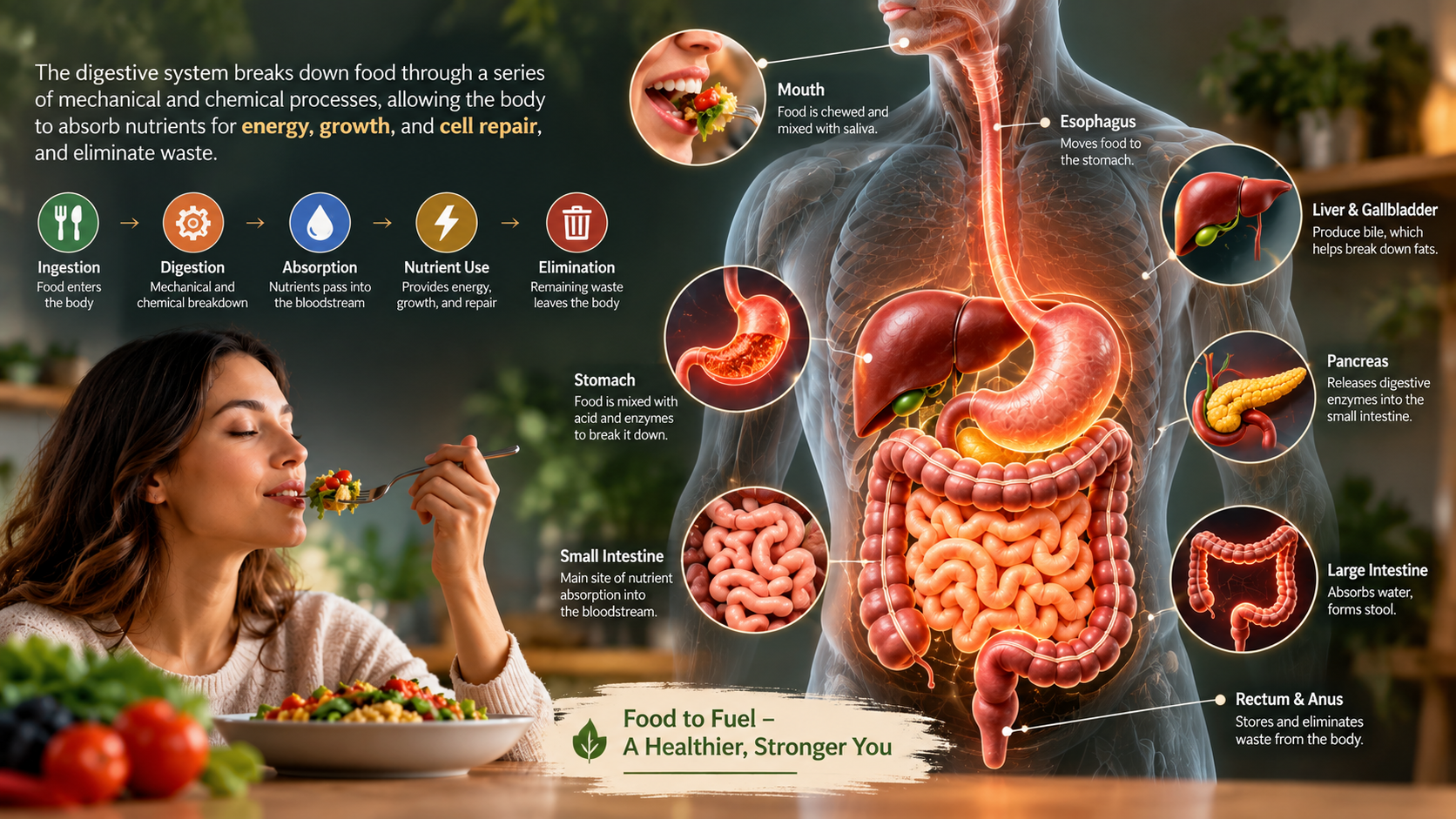
The five stages of the digestive system can be described as ingestion, digestion, absorption, nutrient use, and elimination. These terms provide a simple way to understand how food moves from intake to waste removal. However, this is a simplified educational model rather than a single universal medical classification.
The first stage is ingestion, which begins when you place food in your mouth. Chewing breaks food into smaller pieces, while saliva starts the chemical digestion of carbohydrates. Food then moves through the esophagus by swallowing and peristalsis.
The second stage is digestion. Mechanical movements and digestive juices break food into smaller molecules. The stomach mixes food with acid and enzymes, while the small intestine receives digestive juices from the pancreas and bile from the liver.
The third stage is absorption, which occurs mainly in the small intestine. Nutrients cross the intestinal lining and enter the blood or lymphatic system.
The final stages involve nutrient use and elimination. The body uses absorbed nutrients for energy, growth, and cell repair. The large intestine absorbs water, forms stool, and the rectum stores it until elimination.
Core Processing Phases of Food Breakdown
The five-phase model provides a straightforward overview of the digestive process. It shows how food enters the body, gets broken down, provides usable nutrients, and eventually becomes waste. This sequence also explains why different digestive organs perform different jobs.
The main phases can be summarized as:
- Ingestion: Food enters through the mouth.
- Digestion: Mechanical and chemical processes break food down.
- Absorption: Nutrients pass through the intestinal lining.
- Nutrient use: Cells use absorbed nutrients for energy, growth, and repair.
- Elimination: Remaining waste leaves the body as stool.
Chewing supports digestion by reducing food size and mixing it with saliva. Peristalsis then moves food through the gastrointestinal tract. The stomach continues mechanical mixing and chemical digestion before releasing chyme into the small intestine.
The small intestine performs most nutrient absorption. The large intestine then removes additional water and helps form stool. This simplified model makes the stages of digestive system function easier to understand without treating one classification as the only correct version.
What are the 7 steps of digestion?
The seven steps of digestion can be organized as ingestion, propulsion, mechanical digestion, chemical digestion, absorption, nutrient use, and elimination. This model provides more detail than the five-stage approach. It separates physical movement and food breakdown into distinct processes.
The first step is ingestion, when food enters the mouth. The second is propulsion, which moves food through the gastrointestinal tract. Swallowing starts this movement, while peristalsis pushes food through the esophagus and intestines.
The third step is mechanical digestion. Chewing, stomach contractions, and intestinal movements physically reduce and mix food. The fourth step is chemical digestion, where acids, bile, and enzymes break nutrients into smaller molecules.
The fifth step is absorption. Most nutrient absorption takes place in the small intestine. Nutrients then enter the bloodstream or lymphatic system and travel to tissues throughout the body.
The sixth step can be described as nutrient use or assimilation. Cells use absorbed nutrients for energy, growth, and repair. The seventh step is elimination, when undigested material becomes stool and leaves through the anus.
Sequential Mechanical and Chemical Actions
These seven steps show that digestion involves more than simply breaking food apart. The digestive system must also move food, add digestive secretions, absorb nutrients, and remove waste.
Each process supports the next one. Chewing creates smaller food particles, while saliva begins carbohydrate digestion. Swallowing and peristalsis then move the food toward the stomach.
Inside the stomach, muscular contractions mix food with acid and digestive enzymes. This produces a semi-liquid substance called chyme, which gradually enters the small intestine.
The small intestine is especially important because it completes much of the chemical digestion and absorbs most nutrients. Pancreatic enzymes help digest carbohydrates, fats, and proteins. Bile from the liver helps with fat digestion.
After absorption, the body distributes nutrients for use or storage. Remaining material enters the large intestine, where water is absorbed and stool forms. Peristalsis moves the stool toward the rectum for elimination.
This sequence explains how the major stages of digestive system activity work together as one coordinated process.
What are the 10 steps of digestion?
A more detailed 10-step digestion process breaks the journey into smaller actions. Unlike the core digestive functions described by medical organizations, this ten-step model is mainly useful for educational purposes. It helps students follow food as it travels through different parts of the gastrointestinal tract.
The first step is ingestion, when food enters the mouth. Second is mastication, when the teeth break food into smaller pieces. Third is swallowing, which moves the food from the mouth toward the esophagus.
Fourth is esophageal transport. Peristalsis pushes the swallowed food toward the stomach. Fifth is gastric mixing, where stomach muscles combine food with acid and digestive enzymes. Sixth is chemical digestion in the stomach, particularly the breakdown of proteins.
Seventh is the release of chyme into the small intestine. Eighth is continued digestion with pancreatic enzymes, intestinal juices, and bile. Bile helps the body process fats, while pancreatic enzymes digest carbohydrates, fats, and proteins.
Ninth is nutrient absorption, which occurs mainly in the small intestine. Tenth is water absorption and stool formation in the large intestine. The resulting stool eventually moves into the rectum before elimination.
Micro-Steps of Gastrointestinal Processing
Breaking digestion into ten steps provides a closer look at how different organs contribute to the overall process. It also shows why digestion depends on coordinated muscular activity and chemical secretions.
The process begins with chewing and saliva. Saliva moistens food and contains enzymes that begin breaking down starches. After swallowing, peristalsis moves the food through the esophagus.
The stomach then mixes the food with digestive juices. Its acid and enzymes support protein digestion. The stomach gradually releases chyme into the small intestine, where most chemical digestion and nutrient absorption occur.
The pancreas supplies enzymes that digest major nutrients. The liver produces bile, while the gallbladder stores and releases bile into the small intestine. These secretions support the digestion of fats and other nutrients.
The small intestine absorbs nutrients through its lining. Some nutrients enter the bloodstream, while many dietary fats enter the lymphatic system before reaching the bloodstream.
Finally, the large intestine absorbs water and converts remaining material into stool. This detailed model makes the stages of digestive system activity easier to follow from eating through elimination.
What are the six stages of digestion?
The six stages of digestion can be grouped as ingestion, secretion, mixing and movement, digestion, absorption, and defecation. This classification focuses on the major physiological activities performed by the digestive system. It is another educational framework rather than a universally fixed medical sequence.
The first stage is ingestion, which occurs when food enters the mouth. The second stage is secretion. During digestion, the stomach, pancreas, liver, and other digestive tissues provide substances such as acid, enzymes, bile, and mucus.
The third stage combines mixing and movement. Chewing, stomach contractions, intestinal movements, and peristalsis help mix food with digestive juices. These movements also push digestive contents forward through the gastrointestinal tract.
The fourth stage is digestion. Mechanical actions reduce food size, while enzymes and acids break complex nutrients into smaller molecules. The fifth stage is absorption, which occurs mainly in the small intestine. Nutrients cross the intestinal lining and enter circulation.
The sixth stage is defecation, which removes stool from the body. Before this happens, the large intestine absorbs water and forms the remaining waste into stool. The rectum stores stool until a bowel movement occurs.
Textbook Classification of Gut Stages
This six-stage model is useful because it groups related digestive activities into broader categories. It also emphasizes that digestion involves movement and secretion, not just the breakdown of food.
Ingestion starts the process. Once food enters the mouth, chewing and saliva begin mechanical and chemical processing. The digestive tract then releases secretions that support digestion and protect its lining.
Movement is controlled by muscular activity throughout the gastrointestinal tract. Peristalsis pushes contents forward, while other contractions mix food with digestive fluids. These actions help expose food to enzymes and improve digestion.
Chemical digestion then converts large food molecules into smaller components. Carbohydrates become simple sugars, proteins become amino acids, and fats are broken into smaller components that the body can absorb.
Most nutrient absorption takes place in the small intestine. The absorbed nutrients then travel through the blood or lymphatic system for processing and use.
Finally, the large intestine absorbs water and helps form stool. The rectum stores the stool before defecation. Together, these stages explain the major activities involved in the stages of digestive system function.
What are the 7 digestive system functions?
The seven digestive system functions can be described as ingestion, mechanical processing, chemical digestion, secretion, movement, absorption, and elimination. Some educational models combine or rename these functions, so the exact number can vary. Still, these categories cover the major jobs performed by the digestive system.
Ingestion brings food and liquids into the body. Mechanical processing then breaks food into smaller pieces through chewing and muscular contractions. Chemical digestion uses enzymes, stomach acid, bile, and other digestive secretions to reduce nutrients into absorbable components.
Secretion is another important function. Digestive organs release substances that help break down food and support movement through the tract. Peristalsis and other muscular actions then transport and mix digestive contents.
Absorption allows nutrients and water to cross the intestinal lining. Most nutrient absorption occurs in the small intestine, while the large intestine absorbs additional water.
The final function is elimination. Undigested material and other waste become stool and leave the body through the anus. The digestive system also contributes to immune protection through tissues and microorganisms associated with the gastrointestinal tract.
Essential Physiological Roles of the Gut
The digestive system does far more than simply break food apart. It coordinates movement, chemical processing, nutrient absorption, water balance, and waste removal. These functions allow the body to obtain useful materials from food while disposing of material it cannot use. Maintaining overall wellness also involves habits such as healthy eating and fitness at home.
The digestive tract also works closely with the nervous system and hormones. Signals within the gastrointestinal tract help regulate movement and digestive secretions. The enteric nervous system can control many digestive activities within the gut itself.
The liver, pancreas, and gallbladder also support digestion even though food does not pass directly through them. The pancreas produces digestive enzymes, while the liver produces bile. The gallbladder stores and releases bile when needed.
The small intestine performs most nutrient absorption. Its lining allows nutrients to enter circulation, where they can be transported to tissues throughout the body. The large intestine then absorbs water and helps convert remaining waste into stool. Including a variety of fruits and vegetables in your diet is one way to obtain important nutrients and dietary fiber.
Understanding these functions makes the stages of digestive system activity easier to connect. Each function contributes to a larger process that supports nutrition, energy production, growth, repair, and waste elimination. Choosing nutritious meals, including easy and healthy breakfast ideas, can also support a balanced approach to nutrition.
Frequently Asked Questions
How long does food take to pass through all stages of digestion?
Food typically takes between twenty-four to seventy-two hours to pass completely through the human digestive tract, depending on the composition of your meals, hydration levels, and individual metabolic rate. High-fiber plant foods move faster, while heavy, protein-rich or fatty meals require more time for thorough enzymatic breakdown and nutrient extraction in the stomach and small intestines.
What is the primary organ responsible for nutrient absorption?
The small intestine is the primary organ responsible for absorbing nutrients into your bloodstream. Its interior lining features millions of tiny, finger-like projections called villi and microvilli, which dramatically increase the surface area available for capturing amino acids, simple sugars, fatty acids, vitamins, and minerals before waste moves onward to the large intestine.
Why is chewing considered the most crucial initial step?
Chewing is vital because it initiates mechanical digestion and mixes food with salivary amylase enzymes that begin breaking down carbohydrates immediately. Thoroughly chewed food reduces the workload on your stomach and small intestine, prevents choking hazards, and ensures that digestive juices can easily penetrate food particles for maximum nutrient extraction.
Can stress negatively impact the stages of digestion?
Stress can significantly disrupt digestive stages by activating the sympathetic nervous system, often called the fight-or-flight response. This physiological shift diverts blood flow away from the gastrointestinal tract, reduces enzyme and acid production, and alters gut motility, frequently leading to symptoms like cramping, bloating, indigestion, or irregular bowel movements.
Conclusion
Mastering the intricacies of the stages of digestive system functions gives you a profound appreciation for how hard your body works behind the scenes. From initial ingestion and thorough chewing down to final absorption and waste elimination, every phase plays a vital role in maintaining your overall health and energy levels. By understanding these sequential processes, you can make better dietary choices, support your gut microbiome, and recognize when something requires medical attention. Remember to eat mindfully, stay well-hydrated, and provide your body with nutrient-dense foods to keep your gastrointestinal tract running efficiently. Building an organic garden from scratch can also make it easier to incorporate fresh produce into your meals. Applying these simple wellness habits will help ensure your digestive system continues to support your vitality and longevity for years to come.