
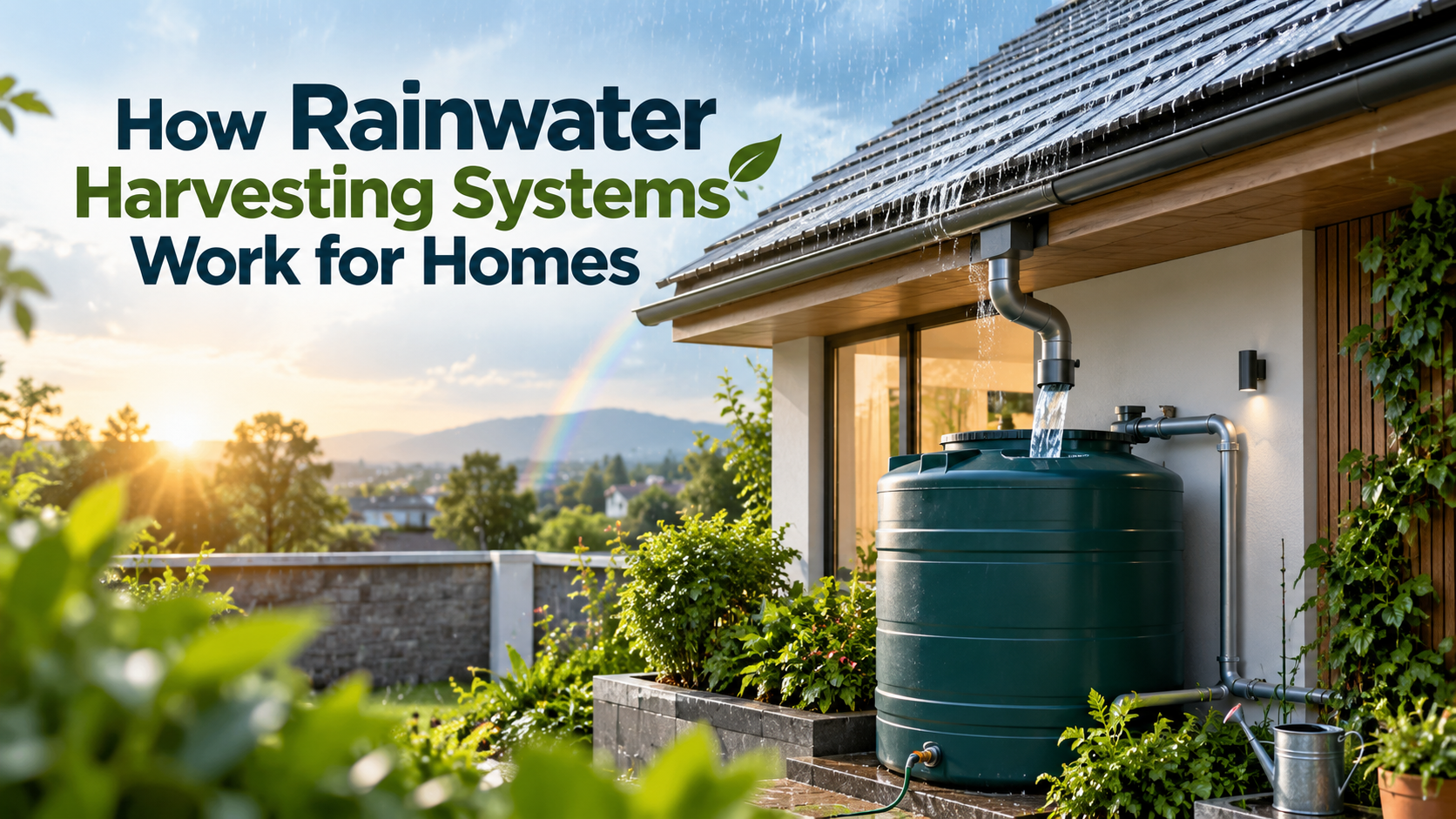
How Rainwater Harvesting Systems Work for Homes
Water scarcity is a growing concern across the globe. This makes sustainable water management increasingly important for modern households. Understanding how Rainwater Harvesting Systems work can help homeowners reduce water bills and create a reliable backup supply.
A domestic rainwater collection system captures rainfall from suitable roof surfaces. It then filters, stores, and distributes the collected water for practical household uses. These uses can include gardening, toilet flushing, cleaning, and other non-potable applications.
This guide explains how Rainwater Harvesting Systems work at home. It also covers common techniques, system types, installation costs, disadvantages, and selection factors. For broader water resource information in India, homeowners can consult the Central Ground Water Board for official hydrogeological data and guidance.
Whether your goal is to reduce your environmental impact or improve water security, rooftop collection can offer a practical solution. However, the right system depends on rainfall, roof size, storage capacity, local regulations, and intended water use.


How can rain water harvesting be done at home?
Rainwater harvesting at home starts by capturing precipitation from a suitable rooftop. The roof acts as the main catchment surface. When rain falls, gutters collect the runoff and direct it toward downspouts. These pipes then carry the water toward a filtration or collection point.
A first-flush diverter can remove the first portion of runoff. This helps discard dust, leaves, bird droppings, and other debris that may collect on the roof. After this initial diversion, cleaner water moves toward the storage system.
The collected water enters a storage tank, barrel, or underground cistern. A screen or filter helps prevent leaves, insects, and larger particles from entering the tank. Pumps and distribution pipes can then move the stored water to selected household outlets.
Common uses include:
- Garden and landscape irrigation
- Toilet flushing
- Outdoor cleaning
- Washing certain non-potable surfaces
With proper design and maintenance, Rainwater Harvesting Systems can reduce dependence on municipal water supplies. However, drinking applications require appropriate treatment and testing.
Simple Rooftop Capture Setup
A basic rooftop capture setup does not require a highly complex system. It can use clean gutters, downspouts, mesh screens, and suitable storage barrels. The components must connect securely to prevent leaks and uncontrolled overflow.
Gutter guards help keep leaves and larger debris out of the collection network. A fine mesh screen can provide another barrier against insects and other contaminants. These components also reduce the amount of debris entering the storage tank.
A first-flush diverter is useful because roof surfaces can accumulate dust and organic matter between rainfall events. Diverting the initial runoff can improve the quality of water entering the tank.
The storage container should remain covered and protected from direct contamination. An overflow pipe is also essential during heavy rainfall. It directs excess water away from the tank and foundation.
For a simple setup, homeowners should consider:
- Roof condition and catchment area
- Gutter capacity
- Tank size
- Filtration requirements
- Overflow management
A basic system can support gardening and other non-potable uses. More advanced Rainwater Harvesting Systems need additional filtration, pumping, and treatment equipment.
What are the 10 disadvantages of rainwater harvesting?
Although rainwater harvesting can reduce freshwater consumption, it also has several limitations. Homeowners should understand these disadvantages before investing in a system. The first concern is the initial cost of tanks, pumps, filters, plumbing, and installation.
Maintenance creates another ongoing responsibility. Gutters, filters, tanks, and screens require regular inspection and cleaning. Poor maintenance can allow contaminants, algae, sediment, or insects to affect stored water.
Rainwater availability also depends on local weather. Extended dry periods can reduce collection and leave households dependent on other water sources. Large storage tanks may also require considerable space or excavation.
Water quality can become another concern. Pollutants, unsuitable roofing materials, animal waste, and airborne contaminants can enter collected water. Local building rules may also restrict certain installations.
Ten common disadvantages include:
- High initial installation costs
- Ongoing maintenance requirements
- Dependence on rainfall patterns
- Risk of bacterial or mosquito contamination
- Space requirements for storage tanks
- Possible water-quality problems
- Local regulatory restrictions
- Electricity requirements for pumped systems
- Extra treatment costs for drinking water
- Overflow and storage limitations during extreme rainfall
Therefore, Rainwater Harvesting Systems work best when their design matches local rainfall, household demand, and available space.
Maintenance and Contamination Risks
Maintenance is essential for keeping a rainwater collection system functional and hygienic. Without regular cleaning, gutters can collect leaves, dust, insects, and other organic material. These contaminants may eventually enter the storage tank.
Storage tanks can also accumulate sediment over time. Organic sludge and algae may affect water appearance, create unpleasant odors, and reduce overall water quality. Covered tanks and suitable screening can reduce these risks.
Homeowners should inspect gutters and filters regularly, especially before and during rainy periods. Tanks should also be checked for sediment buildup and signs of damage. The first-flush system should remain functional so contaminated initial runoff does not enter the main storage tank.
Mosquito prevention is particularly important in warm climates. Storage tanks should remain properly sealed while still allowing safe inspection and maintenance.
For better system performance:
- Clean roof catchment surfaces where practical.
- Inspect gutters and screens regularly.
- Remove sediment from storage tanks.
- Check overflow pipes for blockages.
- Keep tanks securely covered.
These simple steps can improve the reliability of Rainwater Harvesting Systems. They also help reduce contamination risks and extend the useful life of system components.
How much does it cost to install a rain harvesting system for a home?
The cost of installing a residential rainwater harvesting system varies widely. System size, tank material, filtration, plumbing, pumps, and installation requirements all affect the final price. A simple above-ground barrel setup can cost relatively little, particularly when homeowners handle some installation work themselves.
Larger systems require a bigger investment. Underground cisterns may involve excavation, structural preparation, plumbing changes, and professional installation. Systems designed for extensive household use may also require pumps, advanced filters, control equipment, and additional storage.
The cost can increase further when harvested water requires treatment for specific applications. Potable water systems need appropriate purification and quality controls. These requirements can make the project substantially more expensive than a basic garden irrigation setup.
Homeowners should consider both initial and long-term costs. Potential savings depend on local water prices, rainfall, household consumption, and the amount of water successfully collected.
Before installation, compare:
- Storage capacity
- Tank and filter costs
- Pump requirements
- Plumbing modifications
- Installation and excavation charges
- Ongoing maintenance expenses
A properly sized system can improve the long-term value of Rainwater Harvesting Systems.
Factors Influencing Installation Expenses
Tank selection is one of the major factors affecting installation costs. Polyethylene tanks are commonly used because they are relatively lightweight and easy to install. Concrete and fiberglass tanks may involve different material, transportation, and installation costs.
Storage capacity also has a direct impact on the budget. A larger tank requires more material and may need additional installation space. Underground tanks can require excavation and structural preparation, increasing labor expenses.
Filtration requirements also influence total costs. A simple system for garden irrigation may need basic screening and sediment filtration. A system intended for more demanding applications may require several treatment stages.
Pumps and plumbing can add further expenses. This is especially true when water must travel significant distances or reach elevated outlets. Electrical connections may also be necessary for powered pumps.
Other important cost factors include:
- Roof and gutter condition
- Local labor rates
- Site accessibility
- Tank location
- Required storage volume
- Maintenance requirements
Because conditions differ between properties, homeowners should obtain a site-specific estimate. This approach makes Rainwater Harvesting Systems easier to size correctly and prevents unnecessary equipment costs.
What are the 7 types of rainwater harvesting?
Rainwater harvesting methods differ according to geography, land characteristics, rainfall, and intended use. Seven commonly discussed approaches include rooftop harvesting, surface runoff harvesting, floodwater harvesting, subsurface dykes, percolation pits, contour bunds, and check dams.
Rooftop rainwater harvesting collects runoff directly from buildings. It is particularly useful for homes and can supply water for non-potable applications. Surface runoff harvesting collects water moving across yards, open land, or paved areas.
Floodwater harvesting captures seasonal flows and directs them toward suitable storage or recharge areas. Subsurface dykes can help retain underground water within suitable geological formations.
Percolation pits allow collected water to move into the ground. They are commonly associated with groundwater recharge. Contour bunds slow runoff across sloping land and encourage greater soil moisture absorption.
Check dams create small barriers across suitable drainage channels. They can slow water movement and support local groundwater recharge.
The seven methods are:
- Rooftop rainwater harvesting
- Surface runoff harvesting
- Floodwater harvesting
- Subsurface dykes
- Percolation pits
- Contour bunds
- Check dams
For homes, rooftop systems are usually the most directly applicable option among these methods.
Understanding Surface and Rooftop Variations
Rooftop harvesting and surface runoff harvesting differ mainly in their collection points and contamination risks. Rooftop systems collect water before it reaches the ground. This can make the collected water easier to manage for suitable non-potable household uses.
Surface runoff travels across soil, roads, driveways, and other ground surfaces. During this movement, it can collect more sediment, oils, organic matter, and other contaminants. As a result, surface systems may require different filtration and treatment approaches.
Rooftop systems also work well where homes have suitable roof areas and effective drainage. Their performance depends on roof size, rainfall intensity, gutter design, and storage capacity.
Surface systems may be more suitable for larger properties or situations where substantial ground runoff is available. However, they require careful site planning and water-quality management.
When comparing the two approaches, consider:
- Catchment surface condition
- Expected contamination
- Available storage
- Filtration requirements
- Intended water use
- Local rainfall patterns
For many households, rooftop collection provides a simpler starting point. Properly designed Rainwater Harvesting Systems can then integrate storage, filtration, and overflow management into one practical setup.
What is the best rainwater harvesting system in India?
There is no single rainwater harvesting system that is best for every Indian household. India has major differences in rainfall, soil conditions, groundwater levels, temperatures, and urban development. Therefore, system design should match local conditions rather than follow a one-size-fits-all approach.
For many homes, rooftop rainwater harvesting combined with suitable storage or groundwater recharge can provide a practical solution. Storage tanks can support non-potable household needs, while properly designed recharge structures can help direct water into suitable subsurface formations.
Tank materials and filtration systems should also match the local environment. Polyethylene, ferrocement, concrete, and other options may suit different properties and budgets. The right choice depends on structural requirements, available space, maintenance needs, and expected rainfall.
Homeowners should evaluate:
- Annual and seasonal rainfall
- Available roof area
- Household water demand
- Tank capacity
- Ground conditions
- Intended water use
- Local regulations
Rather than choosing a system based only on brand or price, assess the complete installation. A properly sized Rainwater Harvesting System is more important than selecting equipment based on marketing claims.
Selecting Reliable Indian Brands
Choosing reliable equipment requires more than comparing brand names. Homeowners should first verify whether tanks, filters, pumps, and other components are suitable for the intended application. Product specifications should match local climate conditions and expected system use.
Where applicable, buyers should look for relevant Indian standards and certifications. BIS-compliant products, when applicable to the specific component, can provide useful assurance about manufacturing and performance requirements.
Tank construction also deserves attention. Storage products should be appropriate for outdoor exposure, temperature changes, and long-term water storage. Filters should match the expected level of sediment and contamination.
Installation quality is equally important. Even high-quality components can perform poorly when gutters, first-flush devices, pipes, or overflow systems are incorrectly installed.
Before selecting a supplier, compare:
- Product specifications
- Applicable certifications
- Warranty terms
- Replacement-part availability
- Installation support
- Maintenance requirements
- Local service availability
The best choice is therefore not necessarily the most expensive brand. Reliable components, correct sizing, proper installation, and regular maintenance determine how effectively Rainwater Harvesting Systems perform.
What are the two main techniques of rainwater harvesting?
Rainwater harvesting is commonly divided into two broad techniques: water storage for direct use and groundwater recharge. Both approaches capture rainfall, but they have different purposes and require different system designs.
Storage systems collect rainwater in tanks, barrels, or cisterns. The stored water can later support gardening, cleaning, toilet flushing, and other suitable non-potable applications. These systems can be especially useful where households experience intermittent water shortages.
Groundwater recharge systems direct collected rainwater into the ground through suitable structures. Depending on local conditions, these may include recharge pits, trenches, shafts, or other engineered systems. The goal is to increase infiltration and support groundwater resources.
Neither technique is universally better. Storage provides direct access to collected water, while recharge focuses on improving subsurface water availability. Local geology, groundwater conditions, rainfall, and regulations should guide the decision.
In some properties, both approaches can work together. A household may store part of its harvested water while directing suitable excess rainfall toward recharge.
This combined approach can make Rainwater Harvesting Systems more flexible and resilient when designed correctly.
Differentiating Storage Versus Recharge
Storage and groundwater recharge serve different purposes, so homeowners should not treat them as interchangeable solutions. Storage systems retain collected water above or below ground for later household use. Their value depends heavily on tank capacity and household demand.
Recharge systems instead encourage collected water to move into the ground. They can support groundwater replenishment where soil, geology, and groundwater conditions make infiltration appropriate. Their effectiveness depends on proper site assessment and engineering.
Storage is generally easier to understand from a household-use perspective. It provides a visible water reserve for activities such as irrigation, cleaning, and toilet flushing. Recharge provides a longer-term water-management benefit but does not create the same immediately accessible reserve.
A combined strategy may offer greater flexibility. For example, a property can store rainfall for regular use and manage excess water through an appropriate recharge structure.
The key differences include:
- Storage: Holds water for later use.
- Recharge: Directs water into suitable groundwater formations.
- Storage: Depends on tank capacity.
- Recharge: Depends on soil and geological conditions.
Selecting between these approaches should reflect the property’s water needs and local environment. Proper planning makes Rainwater Harvesting Systems more effective and sustainable.
Frequently Asked Questions
Can harvested rainwater be used for drinking?
Harvested rainwater is generally unsafe for direct consumption without rigorous multi-stage purification. Pathogens, heavy metals, and airborne pollutants can contaminate roof runoff. Advanced filtration systems including reverse osmosis and ultraviolet disinfection are required to make harvested water potable. Without these treatments, use stored water strictly for non-potable tasks.
How often should rainwater tanks be cleaned?
Rainwater storage tanks require professional inspection and cleaning at least once a year. Regular maintenance prevents organic sludge accumulation, algal growth, and bacterial contamination. Inspecting gutters, mesh screens, and first-flush diverters every three months ensures optimal system performance and water clarity.
Do rainwater systems require electricity to run?
Basic gravity-fed rainwater systems operate entirely without electricity by placing storage tanks at higher elevations than usage points. However, most modern residential setups rely on electric pressure pumps to deliver water efficiently indoors. Backup battery systems or manual hand pumps can maintain functionality during unexpected power outages.
Will a rainwater system work during a drought?
Rainwater harvesting systems rely entirely on local precipitation patterns for water replenishment. During prolonged droughts, storage tanks will eventually deplete unless the household practices strict water conservation. Supplementing your setup with municipal supplies or groundwater wells ensures reliability during extended dry periods.
Conclusion
Mastering how rainwater harvesting systems work for homes empowers you to build a sustainable, resilient household. By capturing and storing precipitation, you actively reduce dependence on overburdened municipal grids and lower monthly utility expenses. Although initial installation costs and ongoing maintenance demands require careful planning, the long-term environmental and financial benefits are immense. Whether you implement a simple rooftop barrel setup or an advanced underground recharge network, every drop conserved makes a difference. Assess your local climate, budget, and property layout today to start your rainwater harvesting journey.