
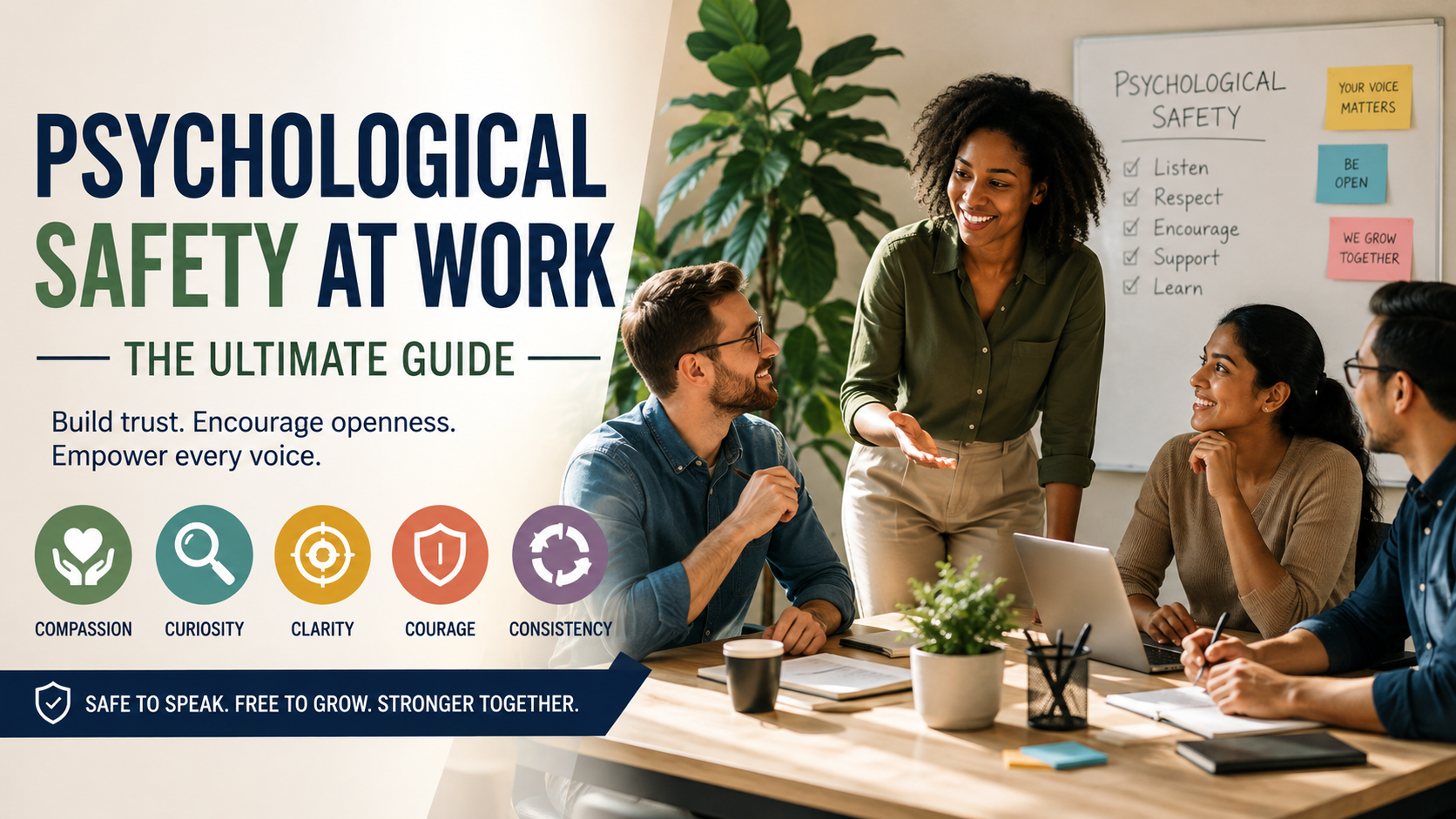
Psychological safety at work: The Ultimate Guide
Understanding psychological safety at work is essential for building high-performing teams where every member feels secure to share ideas. According to a landmark study by Google re:Work, psychological safety stands out as the single most critical dynamic of effective teamwork. Without it, employees often conceal their true thoughts out of fear of negative career consequences. This comprehensive guide answers core questions, including what psychological safety means, the 5 C’s framework, effective best practices, and practical workplace examples. Whether you are a team leader or an individual contributor, fostering this culture transforms how people collaborate. Let us dive deep into the core concepts that drive modern organizational success and trust.

What Is Psychological Safety in the Workplace?
Psychological safety at work is the shared belief that team members can speak openly without fear of humiliation, punishment, or dismissal. Employees feel comfortable asking questions, sharing ideas, raising concerns, and admitting mistakes. They can also challenge decisions when they believe something needs attention.
The concept was developed in organizational behavior research and focuses on creating trust within teams. It shifts workplace behavior away from fear-driven compliance and toward open collaboration. When employees feel safe speaking honestly, important information reaches the right people sooner.
Psychological safety also helps organizations uncover blind spots. Different perspectives are more likely to surface during discussions, reviews, and decision-making. This can improve problem-solving and support innovation.
Building Trust Through Open Communication
Open communication is a foundation of psychological safety at work. Leaders should actively invite opinions during meetings and listen without immediately judging or dismissing them. Employees can also strengthen this environment by developing strong communication skills that help them express ideas, concerns, and disagreements clearly. Employees notice how leaders respond when someone disagrees or raises a difficult issue.
When honest feedback receives a constructive response, people become more willing to participate. Over time, these interactions build trust and encourage shared accountability. Teams can then discuss complex problems without avoiding uncomfortable topics.
What Are the 5 C’s of Psychological Safety?
The 5 C’s of psychological safety offer a practical framework for building trust and openness within teams. They include Compassion, Curiosity, Clarity, Courage, and Consistency. Each element supports a workplace where employees can communicate honestly and contribute without unnecessary fear.
Compassion encourages people to respond with empathy when mistakes happen. Curiosity encourages teams to understand why something happened before assigning blame. Clarity provides clear expectations, responsibilities, and boundaries. Courage helps employees speak up about concerns, unpopular opinions, and potential risks. Consistency ensures these behaviors remain part of everyday workplace culture.
Together, the 5 C’s can help organizations create stronger working relationships. They also make psychological safety more practical because employees can connect the concept with specific behaviors.

The Role of Compassion and Consistency
Compassion and consistency provide stability within the 5 C’s framework. Compassion helps employees understand that mistakes are part of learning and improvement. It does not mean ignoring poor performance or avoiding accountability.
Consistency shows employees that psychological safety is not a temporary management initiative. Leaders must demonstrate the same standards during successful periods and difficult situations. When employees know what response to expect, they are more comfortable raising concerns.
This combination can create a workplace where people feel respected while remaining accountable for their work. It also supports long-term professional development and healthier team relationships.
What Are 5 Best Practices to Promote Psychological Safety in the Workplace?
Building psychological safety in the workplace requires consistent leadership behavior. Organizations can begin with five practical habits that encourage employees to participate and communicate openly:
- Listen actively: Give employees time to explain their concerns before responding.
- Normalize vulnerability: Leaders can acknowledge their own mistakes and knowledge gaps.
- Encourage different perspectives: Ask quieter team members for their views during discussions.
- Create clear feedback channels: Provide safe and accessible ways to raise concerns.
- Address toxic behavior quickly: Deal with intimidation, harassment, and repeated disrespect promptly.
These practices work best when leaders demonstrate them consistently. Employees are less likely to speak openly if management asks for constructive feedback but reacts defensively.
Psychological safety also depends on inclusion. Leaders should ensure that workplace discussions do not favor only senior or outspoken employees.
Normalizing Vulnerability as a Leader
Leaders strongly influence the emotional tone of a team. When managers admit mistakes or acknowledge that they do not know something, they make vulnerability more acceptable.
This does not require leaders to appear uncertain about every decision. Instead, it shows employees that being honest about limitations is acceptable. A manager might say, “I missed that issue,” or ask the team for help solving an unfamiliar problem.
These small behaviors can reduce the pressure to appear perfect. Employees may become more willing to ask questions, report problems, and suggest improvements.
Over time, this behavior can support a culture where mistakes become opportunities for learning. Teams can focus on solving problems instead of protecting individual reputations.
What Are Some Examples of Psychological Safety at Work?
Examples of psychological safety at work often appear during difficult conversations, project reviews, and everyday team interactions. For example, a junior developer might identify a security flaw in a senior developer’s code. In a psychologically safe team, the junior employee can raise the concern without fearing professional retaliation. Teams can also benefit from understanding how hackers steal data so employees recognize why speaking up about potential security risks matters.
Another example involves an employee who realizes they may miss an important deadline. Instead of hiding the problem, they inform the team early. The team can then adjust priorities, provide support, or communicate the delay to stakeholders.
These situations show how psychological safety affects practical workplace behavior. Leaders respond with curiosity and problem-solving rather than immediate blame.
Psychological safety does not mean employees avoid accountability. Instead, it allows people to discuss problems honestly so teams can correct them sooner.
Admitting Mistakes Without Fear of Retribution
Employees make mistakes in every workplace. The difference is how teams respond when those mistakes become visible.
When an employee reports an error and receives constructive guidance, others learn that honesty is safer than concealment. This can reduce the tendency to hide problems until they become more expensive or difficult to fix.
A psychologically safe response focuses on understanding what happened. Teams can examine the root cause, identify contributing factors, and develop safeguards. Leaders can still hold employees accountable when appropriate.
The goal is not to remove consequences from every mistake. Instead, the goal is to separate useful accountability from unnecessary blame.
This approach can improve learning and reduce repeated errors. Employees become more likely to report issues early, giving teams more time to respond effectively.
Psychological Safety at Workplace Examples
Looking at psychological safety at workplace examples shows how everyday interactions influence company culture. During a brainstorming session, for example, a manager might thank an employee for challenging a popular assumption. That response signals that respectful disagreement is welcome and helps build stronger team relationships.
Another example is a regular team check-in. Employees may discuss workload concerns, professional challenges, or signs of burnout without worrying about being labeled as weak or uncommitted.
These behaviors demonstrate that psychological safety is not simply a policy or workplace slogan. It develops through repeated interactions between employees, managers, and leaders.
Psychological safety can support belonging, resilience, collaboration, and better decision-making. However, it requires consistent behavior rather than occasional team-building activities.
Organizations should also watch for warning signs. Employees who regularly stay silent, avoid raising concerns, or agree with every decision may not feel safe enough to challenge the group.
Encouraging Dissent During Strategic Planning
Strategic planning provides a useful test of psychological safety. Leaders can ask direct questions such as, “What are the biggest weaknesses in this plan?” This gives employees a clear invitation to identify potential problems.
Constructive disagreement can prevent groupthink and expose risks before implementation begins. It can also reveal information that senior leaders may not have considered. Creating a high-performing team also depends on giving employees space to question assumptions and contribute different perspectives.
However, encouraging dissent does not mean accepting criticism without structure. Employees should explain their concerns respectfully and support important claims with evidence where possible.
Leaders also need to respond carefully. If someone raises a valid concern and gets dismissed, future participation may decline. If leaders explore the concern seriously, others learn that challenging an idea does not threaten their position.
Over time, this practice can improve strategic decisions. Teams become more willing to test assumptions, identify weaknesses, and consider alternative approaches before committing resources.
Frequently Asked Questions
Why is psychological safety important for innovation?
Psychological safety drives innovation by removing the fear of failure and ridicule. When employees feel secure, they share bold ideas and take creative risks without worrying about negative consequences. This freedom of expression sparks breakthrough solutions that closed cultures miss entirely.
How can remote teams build psychological safety?
Remote teams build psychological safety through intentional virtual communication and regular video check-ins. Leaders must create dedicated spaces for casual conversation, use digital feedback tools anonymously if needed, and ensure every remote voice receives equal airtime during online meetings.
Can psychological safety lead to lower accountability?
Psychological safety does not mean lowering performance standards or avoiding accountability. Instead, it pairs high support with clear expectations, allowing teams to address mistakes constructively without fear, which ultimately drives higher commitment and better results.
How do you measure psychological safety in a team?
You measure psychological safety through anonymous employee surveys, pulse checks, and observation of team meetings. Key indicators include how often people ask questions, admit mistakes, share dissenting opinions, and offer mutual support during challenging professional situations.
Conclusion
Embracing psychological safety at work transforms ordinary teams into resilient, high-performing powerhouses. By understanding its core definitions, implementing the 5 C’s, and practicing everyday vulnerability, organizations create environments where people truly thrive. When employees no longer fear speaking up, innovation accelerates, retention improves, and workplace culture becomes a competitive advantage. Start applying these best practices today to cultivate a trusting, open atmosphere. Your team’s future success depends on the safety you build today.