

Step-by-Step Guide to Planning an Engaging School Assembly
School assemblies offer valuable opportunities to build community, celebrate achievements, and inspire students. However, keeping hundreds of students attentive can be challenging for educators and organizers. Planning an engaging school assembly requires thoughtful preparation, creative ideas, and meaningful student participation.
Interactive presentations, student performances, and well-organized activities can make assemblies more enjoyable. Teachers can also explore UNICEF’s guidance on child-friendly schools for broader ideas about creating inclusive, supportive learning environments. Applying these principles can help schools make assemblies more memorable.
Traditional announcements alone may struggle to hold students’ interest. A balanced program combines useful information with entertainment, recognition, and opportunities for involvement. Short segments, clear transitions, and age-appropriate activities help maintain energy throughout the event.
This guide explains how to make school assemblies interesting, find fun assembly ideas, organize each stage, and choose effective opening lines. It also explores activities and creative special items that can make your next school gathering stand out. With careful planning, you can turn a routine assembly into a positive experience that students genuinely look forward to attending.

How can I make my school assembly interesting?
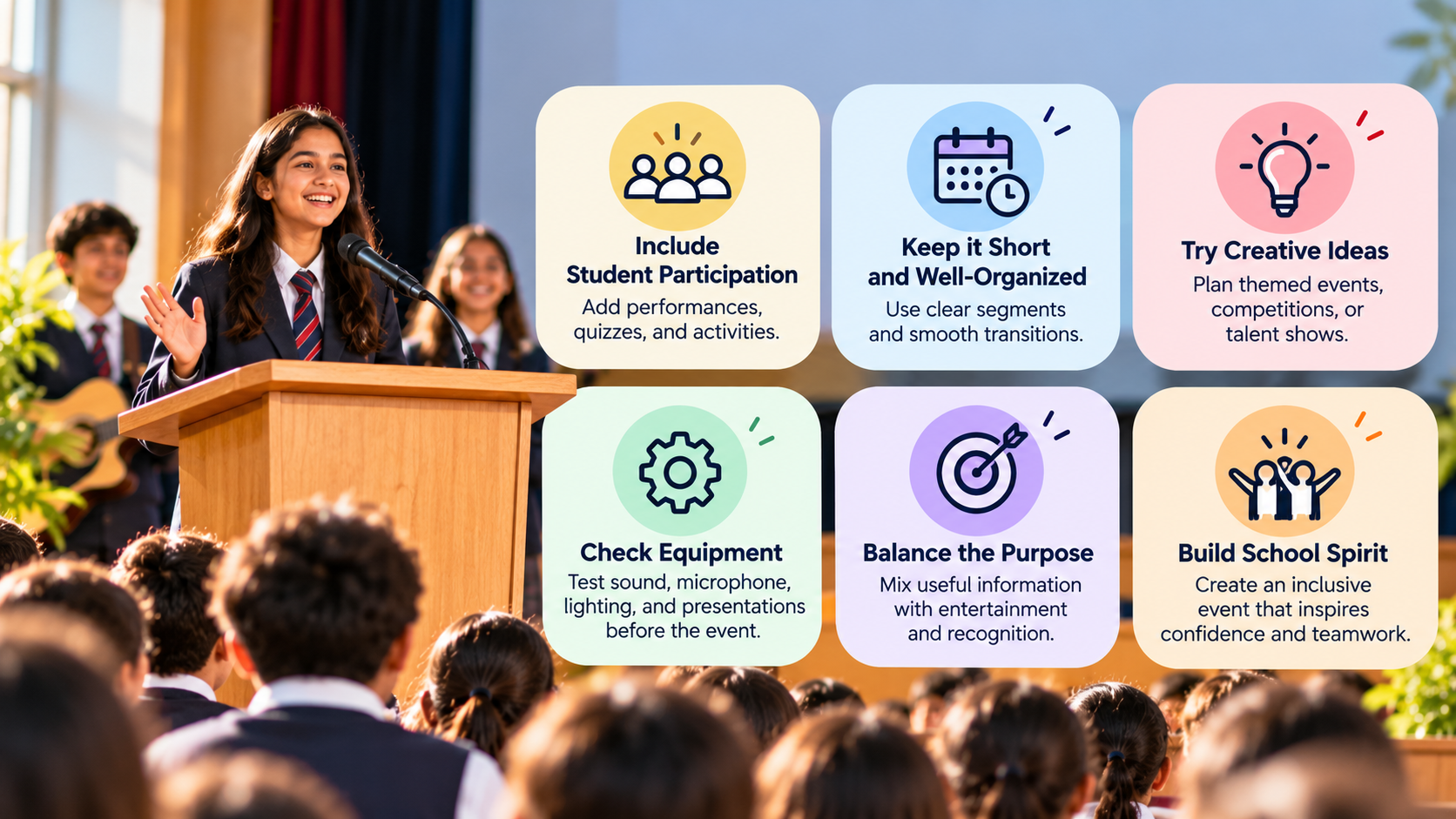
Making a school assembly interesting starts with replacing lengthy speeches with interactive experiences. Instead of relying only on administrative announcements, include student performances, multimedia presentations, and live demonstrations. Keep each segment focused and engaging to maintain attention throughout the event.
Invite students to participate in quick challenges, trivia games, or recognition ceremonies. Seeing their classmates perform can encourage other students to pay attention and participate. You can also introduce short audience questions or simple activities that involve different year groups.
Good preparation matters just as much as creative content. Check the sound system, microphone levels, lighting, and presentation equipment before students arrive. Ensure everyone can see the stage and hear the speakers clearly.
Balance entertainment with the assembly’s main purpose. Whether you are celebrating achievements or sharing an important message, every activity should support that goal. Combining student involvement, clear communication, and varied presentations makes assemblies more enjoyable and meaningful.
Focus on Pacing and Visual Variety
Pacing plays an important role in maintaining student attention during a school assembly. Avoid lengthy speeches and repetitive announcements that make the program feel predictable. Instead, divide the schedule into short, focused segments, adjusting their length to suit the students’ ages and the event’s purpose.
For example, alternate a brief speech with a musical performance, quiz, or student presentation. Short videos, informative slides, and demonstrations can add visual variety without overwhelming the audience. Use transitions that connect each activity naturally.
Music can help create an energetic atmosphere, but keep the volume appropriate for the venue. Presenters should speak clearly and avoid unnecessary pauses between segments. Rehearsing transitions also prevents technical delays.
A simple rule is to give every segment a clear purpose. If an activity does not inform, entertain, recognize, or involve students, consider shortening it. Consistent pacing and visual variety help create a school assembly that feels organized, lively, and easy to follow.
What are some ideas for a fun and engaging school assembly?
Fun school assembly ideas should encourage participation while supporting a positive school culture. A teacher-versus-student trivia competition can introduce friendly competition and test general knowledge. A talent show gives students an opportunity to share their abilities in music, dance, drama, poetry, or other creative areas.
Schools can also organize themed assemblies around important occasions, seasonal celebrations, cultural events, or school milestones. A school spirit rally can recognize academic progress, sports achievements, and community contributions. Assemblies can also explore career awareness, including the future of blue-collar jobs in the age of AI. These events help students feel connected to their school.
For a more interactive approach, try a short quiz, a mystery challenge, or a live demonstration. Students can also participate in storytelling, debates, or team-based problem-solving activities. Choose formats that suit the available time and equipment.
The most effective activities are inclusive and age-appropriate. Give students different ways to participate, including performing, answering questions, presenting ideas, or supporting their classmates. A fun school assembly should entertain students while building confidence, teamwork, and school pride.
What are the steps involved in conducting a school assembly?
Conducting a successful school assembly requires a clear plan, assigned responsibilities, and careful coordination. Start by identifying the assembly’s main objective. Decide whether you want to celebrate achievements, communicate important information, promote a value, or entertain students. Activities that help students develop problem-solving skills can also prepare them to respond to unexpected situations, as explored in how students face the unexpected.
Next, select a suitable theme and form a planning team. Include teachers, student representatives, and other staff members when appropriate. Assign responsibilities for hosting, presentations, equipment, decorations, and student coordination.
Prepare a schedule that lists every activity, its duration, and the person responsible. Confirm the venue, seating arrangements, accessibility, and audio-visual requirements. Rehearse important segments and test all equipment before the event.
On the day, organize student entry and brief presenters about their roles. Keep the program on schedule while allowing enough flexibility for minor adjustments. Afterward, collect feedback from students and staff.
Use these steps to organize your event:
- Set the objective: Define what students should learn, experience, or celebrate.
- Choose the theme: Select a relevant topic and suitable activities.
- Assign responsibilities: Give each team member a clear role.
- Prepare the schedule: Arrange activities and establish time limits.
- Check equipment: Test microphones, speakers, projectors, and videos.
- Rehearse the program: Practice presentations and transitions.
- Review the results: Gather feedback and identify improvements for future assemblies.
What is the best line to start anchoring the Assembly of school?
The best opening line for a school assembly should welcome the audience, establish a positive mood, and introduce the event’s purpose. A confident opening helps students understand that the program is beginning and encourages them to pay attention.
Avoid generic greetings that sound rushed or overly formal. When planning an engaging school assembly, choose a line that suits the assembly’s theme, the students’ age group, and the occasion. A celebration may call for an energetic introduction, while an assembly about discipline or kindness may benefit from a thoughtful opening.
Here are some opening lines that school assembly anchors can use:
- General assembly: “Good morning, respected principal, teachers, and my dear friends. Let us begin today’s assembly with positivity, enthusiasm, and a shared commitment to learning.”
- Motivational assembly: “Every new day brings an opportunity to learn, improve, and become a better version of ourselves. Let us begin today’s assembly with that spirit.”
- School celebration: “Good morning, everyone! Today is an opportunity to celebrate our achievements, appreciate one another, and strengthen the spirit that makes our school special.”
- Special occasion: “A warm welcome to everyone gathered here today. Let us make this assembly meaningful by listening, participating, and learning something valuable together.”
Speak clearly, maintain a comfortable pace, and pause briefly after the greeting. A strong opening line works best when the anchor delivers it naturally and connects it to the program that follows.
What activities can be done in assembly?
When planning an engaging school assembly, choose activities that combine entertainment, learning, and student participation. Use different formats to accommodate students’ interests and abilities. This variety helps prevent the program from becoming repetitive or dominated by lengthy speeches.
Musical performances, poetry recitations, short plays, and storytelling sessions can showcase student creativity. Academic activities, such as spelling challenges, general knowledge quizzes, and science demonstrations, make learning interactive. Short presentations about environmental awareness, digital safety, or healthy habits can also communicate useful information. Schools can also introduce discussions about changing career opportunities and jobs most likely to be automated to help students understand how technology is changing the world of work.
Consider inviting guest speakers who can share relevant experiences. Teachers, alumni, and community members may offer practical lessons about perseverance, responsibility, or personal growth. Student artwork and science projects can also be displayed through presentations or short video montages.
Select activities according to your assembly’s purpose, available time, and resources. Make participation voluntary where appropriate, and provide alternatives for students who prefer not to perform on stage.
Popular school assembly activities include:
- Educational quizzes: Test knowledge through short, age-appropriate questions.
- Music and dance: Showcase student talent and celebrate cultural diversity.
- Short plays: Explore themes such as kindness, teamwork, and responsibility.
- Thought of the day: Introduce a meaningful quote and explain its relevance.
- Science demonstrations: Present simple experiments with appropriate safety precautions.
- Student recognition: Celebrate achievements, improvement, and positive contributions.
A balanced program helps students leave feeling informed, included, and connected to their school community.
What are some creative special item ideas for a school assembly?
Creative special items can make an ordinary school gathering memorable. When planning an engaging school assembly, choose one standout activity that supports the theme and gives students something meaningful to experience. The goal is to create excitement without making the schedule unnecessarily complicated.
Invite a successful alumnus, local community contributor, or skilled artist to share a short presentation. Their experiences can inspire students and introduce practical lessons about learning, creativity, and perseverance. Another option is a time capsule activity in which students write messages to their future selves. The school can preserve these messages and open them at a planned future event.
A teacher-student performance, coordinated flash mob, or school mascot challenge can also create excitement. For educational themes, consider a live science demonstration, an interactive storytelling session, or a student-led innovation showcase. Schools exploring hands-on learning can also consider robotics education in modern schools. Check equipment requirements and safety arrangements before approving any demonstration.
Here are a few creative special items to consider:
- Time capsule ceremony: Collect student messages, goals, and predictions for a future school event.
- Alumni spotlight: Invite a former student to share lessons from their career or education.
- Teacher-student challenge: Organize a friendly quiz, performance, or talent competition.
- Innovation showcase: Present student inventions, artwork, or science projects.
- Surprise appreciation segment: Recognize helpful classmates, dedicated staff, or positive school contributions.
Choose an activity that fits your schedule, audience, and available resources. A well-prepared special item can make the assembly more engaging while maintaining a smooth flow.
FAQ SECTION
How long should a standard school assembly last?
A standard school assembly should ideally last between thirty and forty-five minutes to maintain optimal student attention spans. Anything longer frequently leads to widespread restlessness and fatigue, especially among younger grade levels. Keep your programming concise, ensure smooth transitions between speakers, and strictly respect scheduled class times to maintain a positive, cooperative relationship with teaching staff members across the school.
What is the best way to manage student behavior during an assembly?
The best way to manage student behavior is through clear expectations, proactive seating arrangements, and active supervision by teachers. Establish behavioral guidelines before entering the auditorium, and have teachers sit interspersed among their students to monitor focus. Keeping the program fast-paced and engaging also naturally minimizes behavioral issues by keeping students entertained and involved throughout the session.
How can we encourage shy students to participate in assemblies?
You can encourage shy students by offering low-pressure participation options, such as group submissions, anonymous digital polling, or pre-recorded video contributions. Avoid calling on students spontaneously on stage, as this can induce anxiety. Instead, celebrate their contributions through creative projects displayed on screens or through group achievements, allowing them to feel valued without being put directly in the spotlight.
How frequently should schools host large-group assemblies?
Schools should aim to host large-group assemblies once or twice a month to keep them special without causing unnecessary schedule fatigue. Over-scheduling can diminish the novelty and impact of these gatherings, making students view them as routine inconveniences rather than exciting community events. Balancing frequency with high-quality content ensures maximum anticipation and student engagement every single time.
Conclusion
Mastering the art of planning an engaging school assembly transforms a routine calendar requirement into an inspiring, unforgettable community celebration. Throughout this comprehensive guide, we explored effective strategies to capture student interest, incorporate fun activities, establish clear operational steps, and utilize powerful anchor lines. By focusing on dynamic pacing, interactive student participation, and creative special items, you can eliminate boredom and foster a vibrant, connected school culture. Remember that thorough preparation, clear communication, and thoughtful organization are the ultimate keys to long-term success. We strongly encourage you to take these valuable insights, collaborate closely with your colleagues and student leaders, and start designing your next memorable assembly today. Your dedicated efforts will build stronger connections, celebrate student achievements, and create lasting positive memories for every single member of your school community.