
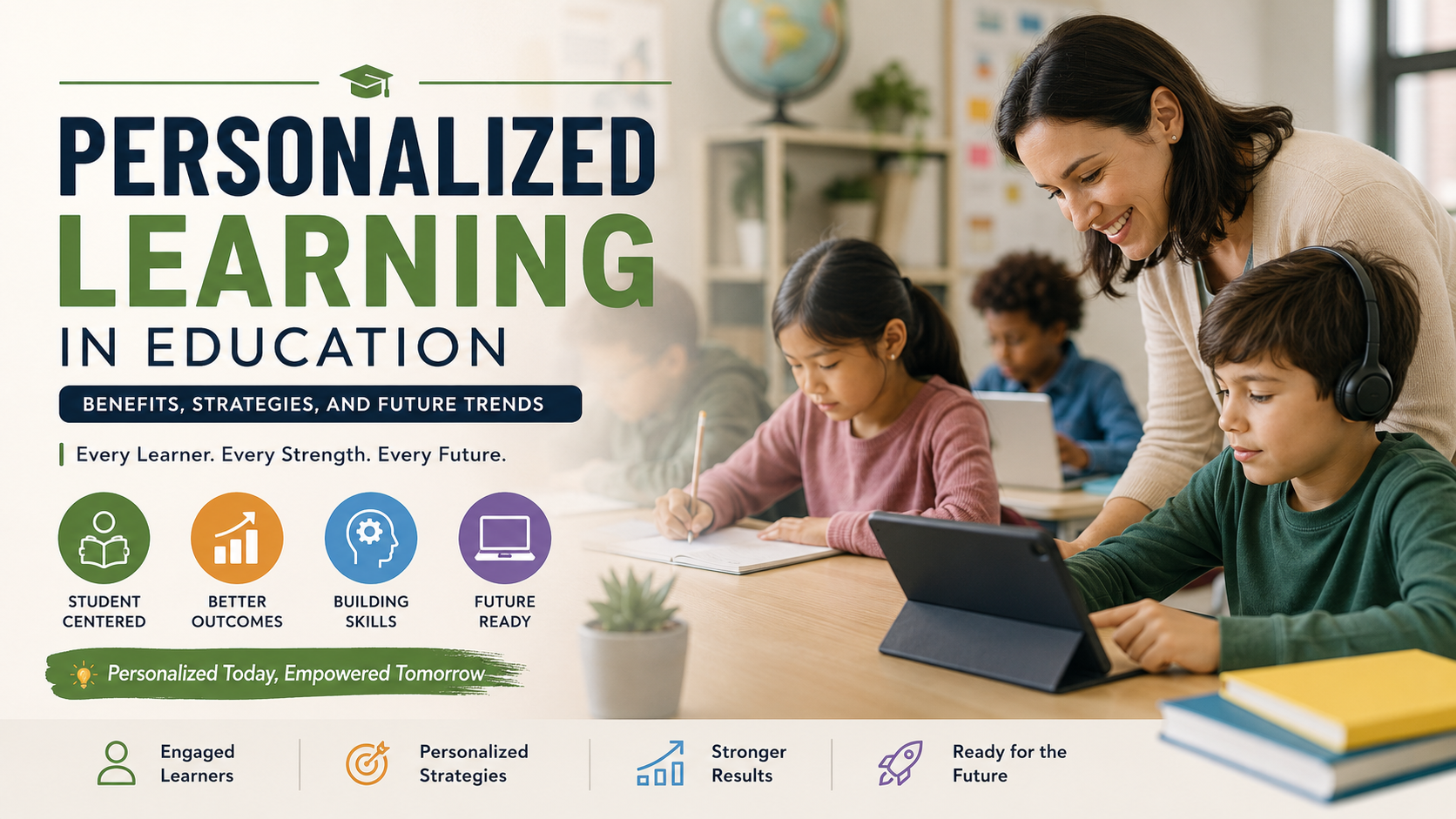
Personalized Learning in Education: Benefits, Strategies, and Future Trends
The traditional classroom model is quickly becoming obsolete. Today, personalized learning in education transforms how teachers instruct worldwide. It also completely changes how students absorb complex information. According to recent research by the U.S. Department of Education, tailored instruction improves academic outcomes. Therefore, customizing lessons to student strengths, immediate needs, and personal interests yields great results.
By shifting focus from rigid curriculums to individual learners, schools foster deep engagement. Consequently, this approach ensures no student gets left behind. A student-centric approach matters because every human brain processes information differently. For example, some learners grasp abstract math concepts visually. Meanwhile, others excel through hands-on, practical execution. Indeed, recognizing these cognitive differences prevents frustration. As a result, students no longer suffer from fast-paced lectures or repetitive tasks that lack challenge.
In this comprehensive guide, we explore this adaptive framework deeply. Furthermore, we will analyze practical deployment strategies for modern classrooms. Finally, we will examine upcoming technological trends that shape global schooling.
The Core Benefits of Customized Instruction
Implementing a highly tailored school model yields lasting improvements. However, both students and educators benefit significantly. School districts must move away from standardized timelines. When they discard rigid textbook progressions, the entire academic ecosystem transforms. Therefore, this shift empowers students to take ownership of their intellectual development. It converts education from a passive requirement into an active pursuit of growth.
Boosted Student Engagement and Motivation through Tailored Education
When students possess a meaningful say in their daily learning paths, motivation skyrockets. Thus, implementing personalized learning in education connects academic subjects directly to real-world interests. For instance, a student interested in sports might master statistics by analyzing player data. Similarly, an aspiring artist might explore chemical reactions through paint mixing. This immediate relevance transforms passive listening into active participation. Consequently, as students see their passions reflected in coursework, they develop genuine curiosity. This curiosity extends far beyond the final school bell.
Improved Academic Outcomes and Student Mastery
Traditional classrooms move to the next topic regardless of individual understanding. In contrast, customized instruction completely discards this flawed timeline. It relies instead on a strict mastery-based model. Therefore, students progress to advanced materials only after demonstrating a clear understanding of foundational concepts. As a result, this approach systematically eliminates persistent learning gaps. For example, it fixes core issues in reading comprehension and mathematics. By providing targeted intervention exactly when a student struggles, educators ensure no baseline knowledge is missed. This naturally leads to higher exam performance and deeper conceptual retention.
Development of Lifelong Self-Regulation Skills
Furthermore, introducing personalized learning in education constantly encourages learners to set personal goals. Students learn to manage their schedules and track their own progress. This habit builds essential self-regulation skills over time. Consequently, learners study their own work critically. They quickly identify unique strengths and hidden cognitive weaknesses. These advanced metacognitive skills prepare them exceptionally well for higher education. Moreover, they thrive in modern corporate environments where self-directed learning is crucial. By learning how to learn early in life, individuals become highly adaptable adults. Thus, they can rapidly acquire new professional skills in a fluctuating global job market.
Effective Strategies for Implementing Personalized Learning in Education
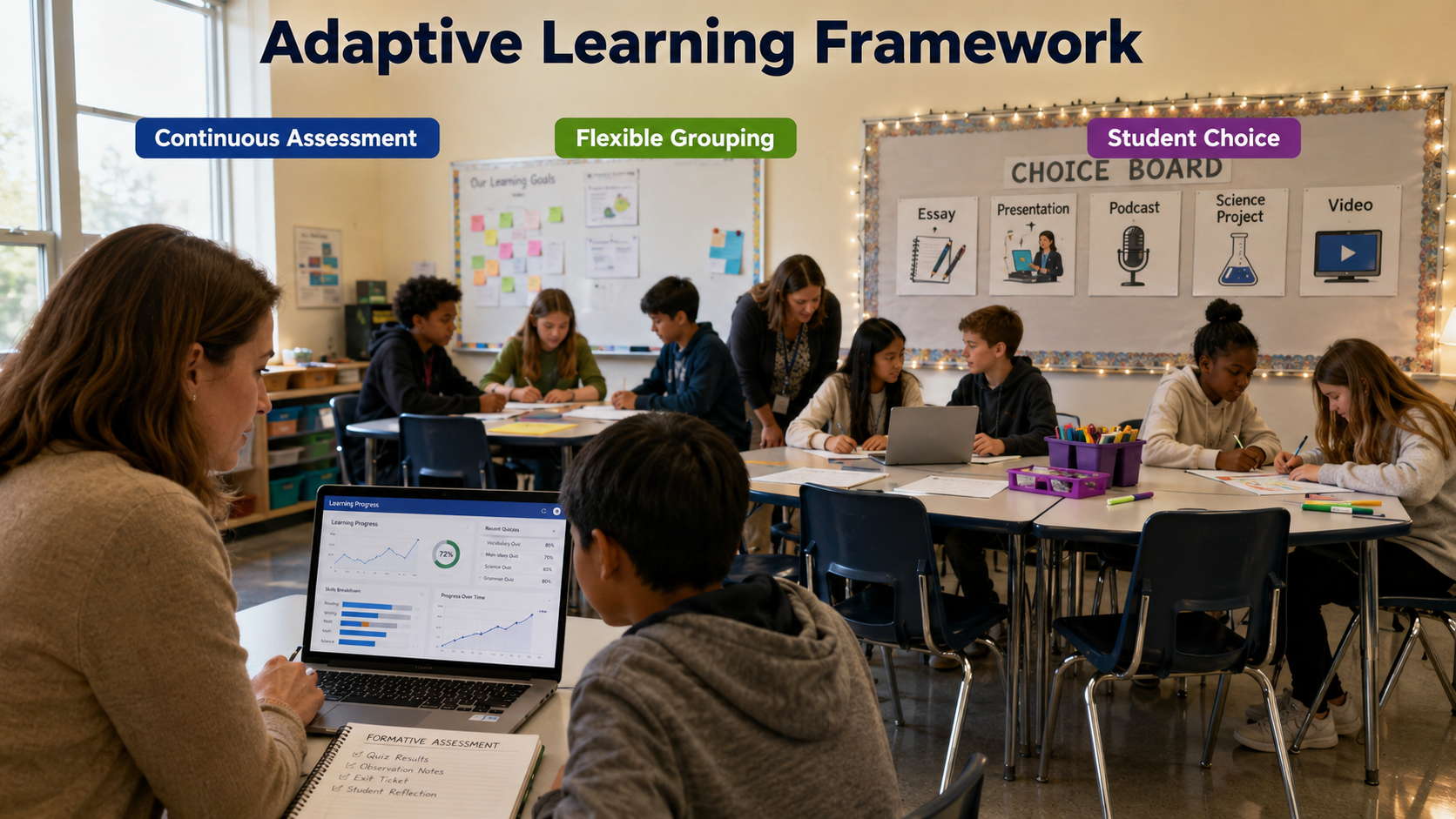

Transitioning to an individualized instructional model requires deliberate planning. Specifically, it demands systemic cultural changes and a strong structural framework. Teachers can deploy several proven, practical strategies to manage a dynamic classroom. Therefore, they can focus heavily on the student without becoming overwhelmed by administrative workloads.
| Adaptive Learning Framework | Description |
|---|---|
| 1. Continuous Assessment | Diagnoses individual student learning gaps. |
| 2. Flexible Grouping | Groups peers based on real-time skill needs. |
| 3. Student Choice Boards | Empowers learners to select their tasks. |
Educators begin by collecting actionable data. To do this, they use frequent, low-stakes formative assessments. These tools measure understanding without causing test anxiety. Modern digital tools track student progress instantly. Consequently, this capability allows teachers to spot microscopic learning hurdles early. Therefore, they can intervene before these issues grow into major academic deficits.
Furthermore, teachers utilize flexible grouping strategies to maximize personalized learning in education. They avoid seating students by perceived ability permanently. Instead, these peer groups remain fluid. They change daily or weekly based on specific skill needs identified by recent data. Additionally, teachers maintain comprehensive learner profiles. These documents track each student’s specific learning style, cultural background, expression preferences, and long-term goals.
Armed with this holistic view, educators design choice boards. These boards provide a varied menu of assignments. Thus, they allow students to choose exactly how they demonstrate mastery. A student might choose to write a traditional essay. Alternatively, another might build a dynamic digital presentation or record an audio podcast. This method ensures evaluation fits their natural strengths perfectly.
Future Trends Driving Tailored Education Forward
Global technology continues to evolve at an exponential rate. Consequently, the practical possibilities for tailored education expand significantly. The coming years will witness an unprecedented integration of smart systems. Therefore, immersive hardware will assist teachers and empower independent student discovery.
Artificial Intelligence and Adaptive Software Trends
Artificial intelligence completely revolutionizes classroom software. Indeed, deploying personalized learning in education offers automated support that scales effortlessly. Modern adaptive learning platforms analyze individual student responses in real time. For example, they track progress as students work through digital modules. If a learner struggles with a specific fractions quiz, the algorithm instantly detects the error pattern. Then, it automatically generates simpler preparatory exercises. This step quickly rebuilds the necessary foundational skills.
This real-time automated scaffolding allows software to handle repetitive tutoring tasks seamlessly. Consequently, human educators free up valuable time. Therefore, they can focus their limited energy on targeted, small-group interventions. This approach ensures students receive empathetic, personal guidance when they need it most.
Immersive Virtual Reality Learning Environments in Digital Education
Moreover, virtual reality technology will soon allow students to explore history and science safely. They can experience spatial concepts through highly customized simulations. For instance, a visual learner can walk through a realistically rendered ancient Roman forum. Meanwhile, a kinesthetic learner can disassemble a virtual rocket engine piece by piece.
These immersive experiences cater to diverse sensory preferences safely and affordably. Thus, they eliminate geographical limitations entirely. Furthermore, these environments automatically adapt to the user’s interaction pace. They provide immediate contextual clues, definitions, and visual aids. Consequently, this guidance helps the student through complex spatial concepts without requiring constant direct teacher oversight.
Overcoming Challenges in Individualized Classrooms
The long-term advantages of tailored schooling are undeniably clear. However, several significant systemic challenges remain for districts attempting widespread deployment. Acknowledging these real-world operational hurdles is a crucial first step. Therefore, it allows leaders to build a sustainable, realistic framework that supports both students and staff.
Teachers frequently face massive initial workloads. Specifically, they must design multiple distinct learning paths for thirty unique individuals simultaneously. Without proper administrative support, dedicated educators can quickly feel overwhelmed. As a result, they often face severe professional burnout.
Consequently, school districts must actively provide comprehensive training on managing personalized learning in education. They need to supply modern digital collaboration tools and dedicated weekly planning time. This support ensures teachers can manage these classrooms efficiently. Furthermore, equity issues persist regarding technology access across different socioeconomic neighborhoods. Therefore, school systems must commit to equity. Low-income students must receive identical hardware quality and reliable high-speed internet. Indeed, true personalization cannot exist without an equitable, fair distribution of foundational educational resources.
Frequently Asked Questions
What is the primary goal of personalized learning in education?
The primary goal of personalized learning in education is to treat every individual student as a unique learner. The framework honors distinct academic needs, cognitive strengths, personal interests, and cultural backgrounds. Instead of forcing an entire diverse classroom through the exact same textbook curriculum at an identical, rigid pace, this modern pedagogical approach adjusts the journey. Therefore, it alters the instructional speed, learning environment, and teaching methodologies to fit the person.
By doing so, it ensures that all learners achieve true, deep mastery of the material before moving forward. Consequently, this strategy effectively eliminates frustrating learning gaps over time. Ultimately, this framework aims to maximize each student’s unique potential. Thus, it makes public and private education far more equitable, efficient, and deeply engaging. It transforms the school experience from a system of passive compliance into an active journey of self-discovery. This prepares students to become independent thinkers who are capable of navigating a complex world.
How does this approach differ from traditional differentiated instruction?
Many educators and parents often use these two terms interchangeably. However, they possess distinct operational definitions within modern content strategy. Differentiated instruction involves the teacher proactively changing the blending of lessons, materials, or delivery styles. For instance, the instructor alters these elements for different pre-determined groups of students based on perceived ability levels.
In sharp contrast, personalized learning actively includes the individual student in the co-design of their very own educational path from the ground up. The learner actively helps set their own academic goals. Furthermore, they select their preferred learning activities from curated options and track their own daily progress using data. Therefore, personalization represents a much more comprehensive, student-led transformation of the entire learning experience. It successfully shifts the power dynamic from teacher-directed dissemination to student-centered discovery and self-actualization.
Does individualized instruction require a device for every single student?
No, implementing an individualized learning framework does not strictly require an expensive one-to-one device ratio to be highly successful. Adaptive software algorithms certainly make tracking student data much simpler for busy teachers. However, educators can successfully implement deep personalization through creative analog methods.
For example, experienced teachers regularly utilize physical choice boards, fluid peer learning groups, hands-on stations, and independent reading projects without relying on digital screens whatsoever. Technology acts as a powerful accelerator for customized schooling by automating data collection. Yet, the core philosophy relies entirely on thoughtful instructional design, strong teacher-student relationships, and flexible classroom management strategies. Consequently, these systems always prioritize individual human needs over standardized institutional convenience.
How do teachers accurately grade assignments in a customized classroom?
Grading shifts completely away from a traditional compliance model based on deadlines and averages. Instead, it moves toward a strict, transparent mastery-based system. Traditional setups average test scores over the course of a semester. Consequently, this habit often penalizes students for struggling early on.
In contrast, teachers evaluate whether a student eventually achieves full mastery of specific learning standards. Students frequently receive multiple opportunities to demonstrate their updated understanding through various alternative formats. For instance, these options include hands-on projects, oral presentations, or comprehensive digital portfolios. As a direct result, the final grade accurately reflects what the student actually knows at the conclusion of the instructional unit. Therefore, it no longer tracks how quickly they memorized facts for a single high-stakes Friday exam.
What role do parents play in a personalized education framework?
Within a personalized framework, parents transition from passive observers into active, vital collaborators. They assist deeply in their child’s educational journey instead of merely reading report cards. Students learn to track their own academic progress using clear, transparent learning targets.
Consequently, parents gain deep, real-time insights into their child’s specific conceptual strengths and hidden academic weaknesses. Therefore, they can actively support their children at home by discussing personal learning goals. Families analyze data profiles together and celebrate incremental growth rather than focusing exclusively on arbitrary letter grades. This open, transparent communication loop fosters a much stronger, more supportive connection between the home environment and the modern classroom. Thus, it ensures that everyone aligns perfectly to help the student succeed.
Conclusion
Embracing personalized learning in education marks a profound, necessary shift toward an empathetic, efficient, and effective global school system. By prioritizing individual student needs over outdated institutional timelines, modern educators can cultivate deep student engagement. Consequently, they successfully eliminate persistent achievement gaps and instill a lifelong love of learning. Practical strategies like data-driven instruction, fluid flexible grouping, and learner profiles allow teachers to manage diverse classrooms successfully. Indeed, they can achieve this without facing administrative burnout.
Meanwhile, emerging technological trends like artificial intelligence and virtual reality promise to make deep customization even more scalable. These high-tech developments integrate perfectly with modern types of alternative education built outside standard frameworks. These tools will become far more accessible in the coming years. Moving away from rigid, standardized expectations empowers the next generation to become highly adaptable, self-regulated thinkers. Thus, they will arrive fully prepared for tomorrow’s complex workplace challenges. Investing in personalized education frameworks is ultimately an investment in a more equitable and innovative future for society as a whole.