
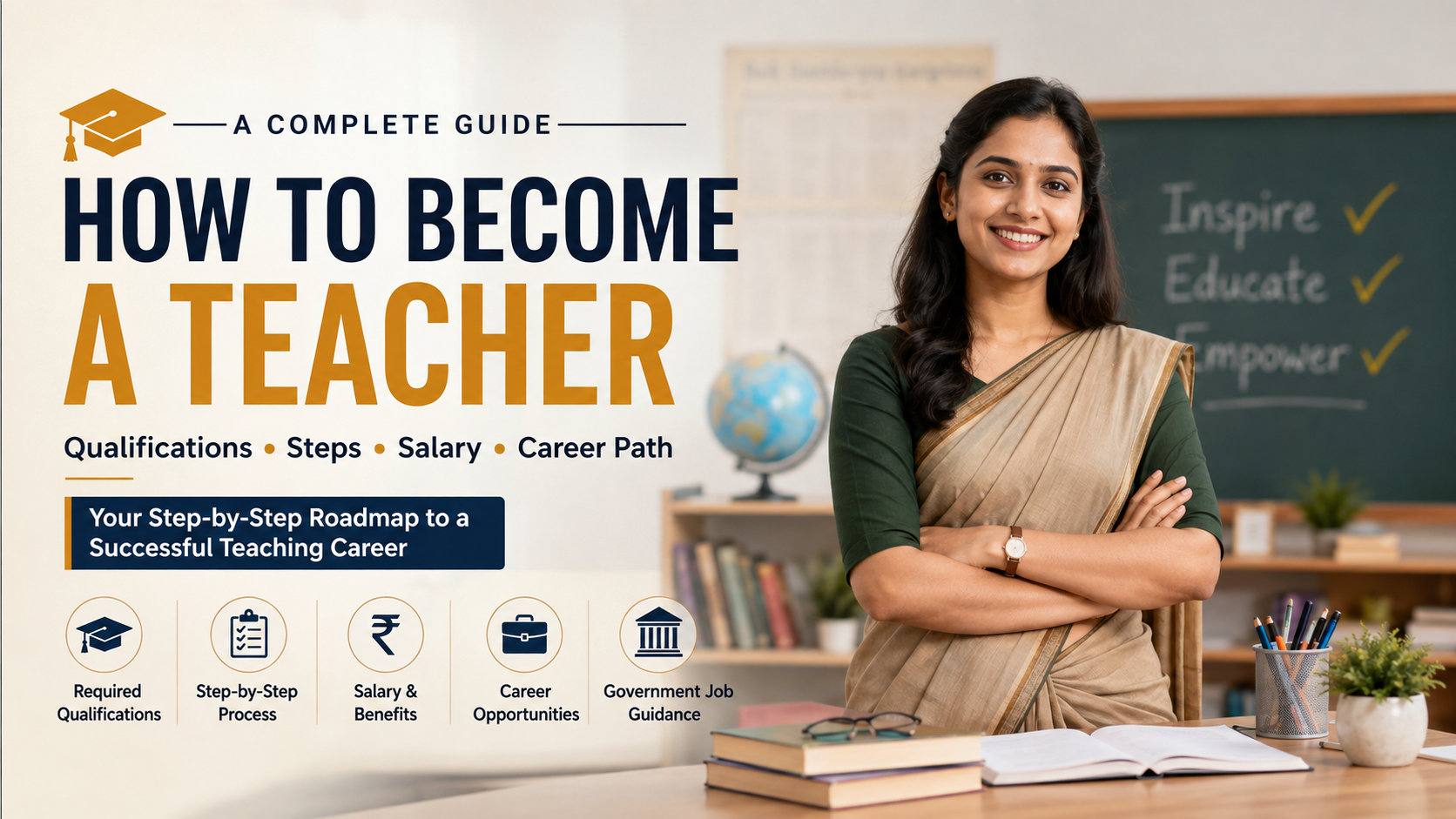
How to Become a Teacher: A Complete Step-by-Step Guide for Aspiring Educators
Stepping into a classroom as an educator is one of the most rewarding career choices you can make. Knowing how to become a teacher allows you to shape young minds and build a stable, respected professional future. Whether you are just finishing school or planning a career switch, the journey requires clear qualifications, dedication, and the right academic path. For official guidelines on teacher education standards and certification norms, you can check the National Council for Teacher Education. This guide breaks down everything you need to know, including the steps involved, salary expectations, pathways after the 12th grade, duration of training, and how to secure a government teaching position.
How to Become a Teacher in India: Qualifications, Salary, and Career Path

What Are the Steps to Become a Teacher?
Becoming a teacher in India requires academic preparation, professional teacher training, and, for many roles, eligibility or recruitment examinations. The exact requirements depend on the school level, subject, state, and type of institution.
After completing higher secondary education, students usually pursue a bachelor’s degree in a relevant subject. Those planning to teach at the school level may then complete a professional teaching qualification, such as a Bachelor of Education (B.Ed.), where required.
Aspiring teachers may also need to clear an eligibility test or recruitment examination. CTET and various state-level Teacher Eligibility Tests are important for many teaching positions, but requirements differ by role and recruiting authority.
After meeting the required qualifications, candidates can apply for teaching positions in government, private, or other recognized schools. Building subject knowledge, classroom skills, and communication abilities can further improve career opportunities. Tool kit for mentor teachers can also help educators develop practical strategies for supporting effective teaching and classroom practice.
Essential Certification and Licensing Exams
Teacher eligibility and recruitment exams play an important role in the Indian education system. The Central Teacher Eligibility Test (CTET) is conducted for eligibility for certain teaching positions, particularly in schools under specified central government authorities. State governments also conduct their own Teacher Eligibility Tests for relevant teaching roles.
Passing an eligibility test does not automatically guarantee a teaching job. Candidates must still satisfy the educational qualifications and recruitment requirements for the position. Government vacancies may also require a separate competitive examination, depending on the recruiting authority.
Before applying, check the latest eligibility rules for your target school, state, and teaching level. Requirements can differ for primary, upper-primary, secondary, and higher-secondary teachers.
Preparation should cover the prescribed syllabus, subject knowledge, pedagogy, and previous examination papers. Understanding the specific recruitment process can help you avoid applying for positions for which you are not eligible.
What Is a Teacher’s Salary in India?
A teacher’s salary in India varies widely according to qualifications, experience, teaching level, location, and employer. Government schools generally follow established pay structures, while private schools may use their own salary systems.
Entry-level teachers may earn less while building classroom experience. Experienced teachers, senior educators, and teachers working at well-established institutions can earn substantially more. Metropolitan locations may also offer different salary levels because of local employment conditions.
Government teaching positions can provide structured pay scales, allowances, regular increments, and greater employment stability. However, benefits depend on the specific post, department, and applicable government rules.
Teachers in colleges and universities follow a different career path. Academic positions generally require higher qualifications, such as a master’s degree and, for many roles, eligibility qualifications or a Ph.D., depending on the position and applicable regulations.
When comparing teaching careers, salary should not be the only consideration. Job stability, workload, promotion opportunities, benefits, location, and professional development can also influence the overall value of a teaching position.
Government Versus Private Pay Structures
Government and private schools can differ significantly in their salary structures and employment conditions. In government schools, teachers generally receive salaries based on established pay rules, along with applicable allowances and regular increments.
Benefits depend on the specific government department and appointment terms.
Private school salaries vary more widely. Factors such as the school’s reputation, location, board affiliation, teacher qualifications, experience, and responsibilities can influence compensation. Some established private schools offer competitive salaries, while smaller institutions may provide lower starting packages.
Private institutions may also offer opportunities for salary growth based on experience, performance, or additional responsibilities. However, these increases are not governed by one universal pay structure.
Government positions often attract candidates because of their employment stability and structured progression. Private schools may appeal to teachers who value different working environments or faster career movement.
Before choosing between the two sectors, compare the complete employment package rather than salary alone. Consider workload, working hours, benefits, promotion policies, professional development, and long-term career prospects.
How Can I Become a Teacher After 12th?
Students can begin preparing for a teaching career immediately after completing Class 12. One option is to choose an integrated teacher education programme that combines undergraduate study with professional teacher preparation.
Traditional pathways usually involve completing a bachelor’s degree first and then pursuing a teacher-training qualification where required. Integrated programmes can combine these stages into a longer undergraduate course, allowing students to develop subject knowledge and teaching skills together.
The best route depends on the level and subject you want to teach. Students should first identify whether they want to teach primary, secondary, or higher-secondary classes. They should also check the eligibility requirements for the institutions and teaching positions they are targeting.
An early decision can help students choose the right academic stream and entrance requirements. However, students who are uncertain about teaching do not need to commit immediately. A conventional bachelor’s degree can preserve flexibility before professional teacher training.
Always verify the current admission and qualification rules before selecting a programme. Teacher education requirements can change as regulations and institutional policies are updated.
Choosing Integrated Degree Programs
Integrated teacher education programmes provide a combined route for students who decide to pursue teaching after Class 12. Examples include programmes that combine Bachelor of Arts and teacher education or science-focused undergraduate study with teacher preparation.
These courses allow students to develop academic knowledge and professional teaching skills within a structured programme. The duration and eligibility criteria depend on the specific programme and institution.
Integrated programmes can be useful for students who already have a clear teaching goal. They may provide a more direct academic pathway than completing separate qualifications at different stages.
However, students should not choose an integrated course simply because it appears faster. Check the programme’s recognition, curriculum, admission requirements, and eligibility for the teaching positions you eventually want.
Students should also consider the subject they want to teach. A strong academic foundation in the relevant subject can become important when applying for secondary or higher-secondary teaching roles.
Before enrolling, compare several recognized programmes and review their current requirements. Questions to Ask Before Taking Admission can help you evaluate important factors before choosing a programme. Choosing the right course at the beginning can prevent qualification gaps later in your teaching career.
How Many Years Does It Take to Become a Teacher?
The time required to become a teacher depends on the qualification route and the level at which you want to teach. An integrated teacher education programme can provide a pathway of around four years, depending on the specific programme.
Another common route involves completing a three-year bachelor’s degree followed by a two-year professional teacher education programme, making the academic pathway approximately five years. The exact duration can vary according to the course and applicable regulations.
Students aiming for college or university teaching usually need additional qualifications. These may include a master’s degree and, depending on the position, eligibility qualifications or doctoral study.
Your timeline can also include preparation for entrance, eligibility, or recruitment examinations. Therefore, completing the academic qualification does not always mean you can immediately secure a teaching position.
The most efficient pathway depends on your target teaching level, subject, and preferred institution. Before starting, identify the qualification requirements for your intended career and consider how to optimize lesson planning to save time once you begin teaching.
Planning early can help you avoid completing qualifications that do not match your target teaching role. It also gives you enough time to prepare for relevant examinations and recruitment processes.
Planning Your Timeline Effectively
Planning your education early can make the path to becoming a teacher more manageable. Start by identifying the level and subject you want to teach. Then check the qualifications required for that specific role.
Students finishing Class 12 can compare integrated teacher education programmes with conventional bachelor’s degree pathways. An integrated programme may take around four years, while a bachelor’s degree followed by professional teacher training may take about five years.
If you want to teach at the college or university level, plan for additional postgraduate study. Requirements vary by academic position, subject, institution, and current regulations.
Your plan should also account for entrance examinations, teacher eligibility tests, and recruitment examinations where applicable. These stages can add preparation time even after you complete your formal education.
A simple timeline can help you track each milestone:
- Class 12: Choose an appropriate academic direction.
- Undergraduate study: Build strong subject knowledge.
- Teacher training: Complete the required professional qualification.
- Eligibility exams: Take relevant tests when required.
- Recruitment: Apply for suitable teaching vacancies.
Review requirements before each stage because regulations can change.
How to Become a Government Teacher
Becoming a government teacher usually requires specific educational qualifications, professional teacher training, and eligibility for the relevant recruitment process. Requirements vary by state, teaching level, subject, and recruiting authority.
Candidates must first complete the qualifications specified for their target post. Depending on the position, this may include a bachelor’s degree, teacher education qualification, and a Teacher Eligibility Test such as CTET or a state-level TET.
Government recruitment may involve a separate competitive examination. Some positions are filled through written examinations, while other recruitment processes may include additional stages. The exact selection method depends on the department or recruiting body.
Candidates should carefully read the official recruitment notification before applying. It normally specifies age limits, educational qualifications, subject requirements, examination patterns, reservation rules, and application procedures.
Competition for government teaching positions can be high. Strong subject knowledge and consistent preparation can therefore improve your chances of performing well.
Rather than preparing for every teaching exam, identify the specific government post you want. Then prepare according to its latest official eligibility and syllabus requirements.
Preparing for Competitive Recruitment Tests
Government teacher recruitment examinations require focused preparation because vacancies can attract many qualified candidates. Start by studying the latest official syllabus and examination pattern for your target position.
Build strong knowledge of your teaching subject first. Then prepare areas such as child development, pedagogy, teaching methods, language skills, and general knowledge when they appear in the relevant examination.
Previous question papers can help you understand question patterns and identify weak areas. Regular mock tests can also improve accuracy and help you manage examination time.
A practical preparation routine should include both learning and revision. Set weekly targets and regularly review topics you have already studied. Avoid relying only on memorization, especially for pedagogy and subject-based questions. Developing strategies for giving students feedback is also an important teaching skill that can strengthen classroom practice.
Keep track of official recruitment announcements because eligibility conditions, vacancies, examination dates, and application procedures can change.
Most importantly, prepare for the exact examination connected to your target teaching position. CTET or a state TET may establish eligibility, but a separate recruitment process may still be required for a government appointment.
Consistent preparation, careful attention to eligibility rules, and strong exam performance can improve your chances of securing a government teaching position.
Frequently Asked Questions
What subjects should I major in to become a high school teacher?
You should major in the specific subject you intend to teach, such as mathematics, science, English, or history. Most secondary schools require candidates to hold a bachelor’s degree in their chosen teaching subject alongside a formal teaching qualification to ensure deep subject matter expertise.
Is a B.Ed degree mandatory for all teaching jobs?
Yes, a Bachelor of Education degree is legally mandatory for teaching positions in most primary, secondary, and senior secondary schools. However, some specialized vocational or preschool roles may accept alternative early childhood diplomas or technical certifications instead of a standard degree.
Can I become a teacher without clearing TET exams?
Clearing Teacher Eligibility Tests is generally mandatory for securing jobs in public schools and many recognized private institutions. While certain unregulated private schools might hire educators without eligibility test scores, having cleared these exams vastly improves your employment prospects and career growth.
What is the age limit for government teacher jobs?
The age limit for government teaching positions typically ranges from twenty-one to forty years, depending on the specific state board and recruitment notification. Reserved category candidates usually receive age relaxations as per government rules, allowing older applicants to apply successfully.
Conclusion
Embarking on a teaching career is a noble pursuit that demands dedication, continuous learning, and proper academic preparation. Knowing how to become a teacher empowers you to navigate the required degrees, certifications, and government examinations with confidence. By following the structured pathways outlined in this guide, you can successfully enter the classroom, inspire future generations, and build a deeply fulfilling professional life. Take the first step today by reviewing your educational options and mapping out your ideal timeline toward becoming a certified educator.