
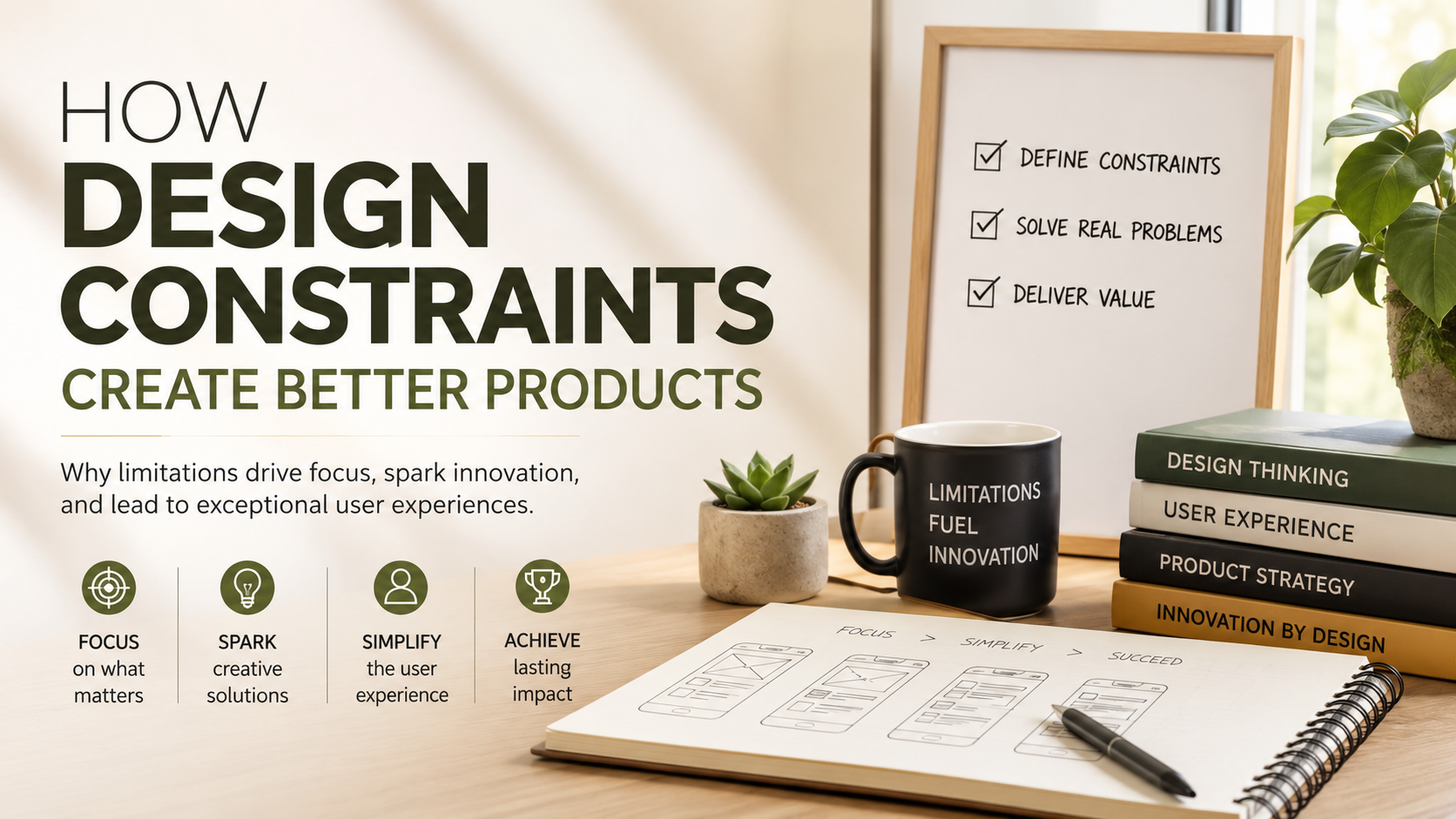
How Design Constraints Create Better Products
Have you ever wondered how design constraints create better products in modern development? Total creative freedom frequently hurts development rather than helping it. Therefore, in the complex world of user experience, setting strict parameters is the secret weapon to ultimate success. Consequently, it explains exactly how design constraints create better products by forcing teams to prioritize what matters.
Furthermore, this critical concept is heavily supported by leading UX researchers. Organizations like the Interaction Design Foundation emphasize that structural limits provide boundaries for innovative problem-solving. Without these guardrails, digital tools quickly become bloated with unnecessary features. Users consequently become overwhelmed by options, and the core value of the software gets lost in translation. Why does this psychological phenomenon happen so frequently? The human brain inherently craves simplicity and clear guidance. Heavy cognitive overload pushes users away from platforms. Streamlined experiences thus draw them in with ease. Limitations regarding screen dimensions or technical capacities force creators to make hard decisions early.
In this article, we will explore the fascinating psychology behind simplicity. You will learn why limiting your options sparks true creativity. We will also look closely at real-world examples of iconic companies that leveraged strict limitations to achieve massive market success. Get ready to rethink your workflow.
How Design Constraints Create Better Products: The Psychology of Simplicity
How Design Constraints Create Better Products and Spark Innovation
Many amateur creators believe that endless possibilities lead to the absolute best outcomes. However, real-world development proves the exact opposite trend time and time again.
Discovering how design constraints create better products requires us to look closely at project focus. Hard limits force you to focus entirely on solving the user’s primary problem without distraction. When you cannot possibly build every single feature under the sun, you are forced to build the right thing. Without strict boundaries, software goods frequently suffer from severe feature creep. This dangerous phenomenon occurs when development teams continually add new buttons and options.
The interface turns into a messy, complicated puzzle. Users struggle immensely to find basic functions, leading to widespread frustration and high abandonment rates. By applying strict product design limitations, you cut away the unnecessary fat. You leave only the core features that deliver genuine value to the consumer.
Furthermore, boundaries actively spark unexpected innovation. Think about a talented poet writing a traditional haiku poem. The strict syllable count forces them to choose each word with maximum impact.
Similarly, UX constraints force designers to discover clever, elegant solutions to complicated architectural problems. A tight budget or restricted processing power pushes your engineering team to think outside the box.
The Psychology Behind Simplicity in Product Design and Constraints
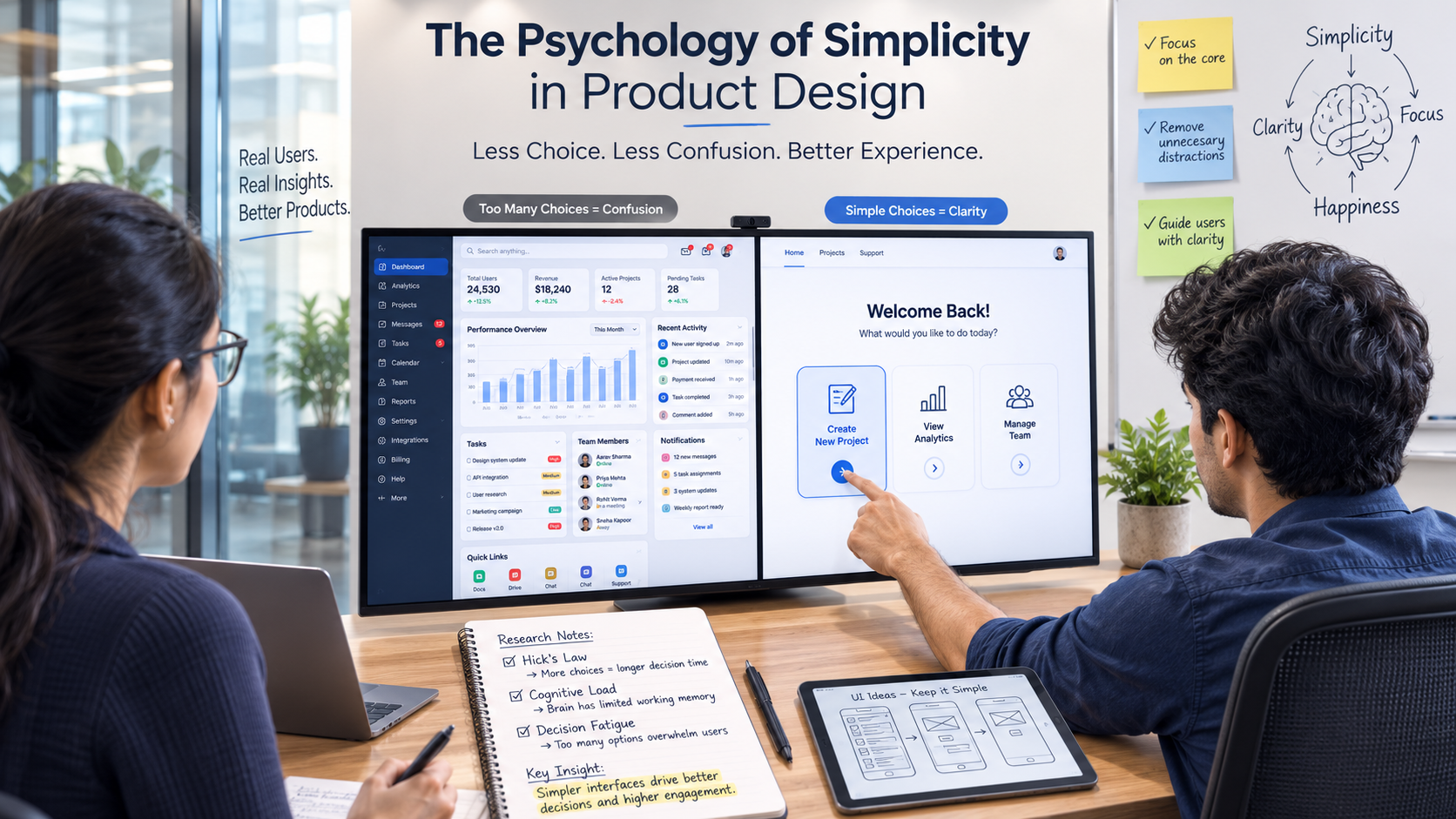

To understand why minimal interfaces succeed so wildly, we must look closely at human psychology. Our brains process digital information based on distinct mental patterns. When product creators respect these patterns, they effortlessly craft highly intuitive experiences. Hick’s Law states that decision time increases proportionally with the number of choices available.
Therefore, giving users twenty different options paralyzes them with doubt. Giving them three clear choices empowers them instantly. Simplicity in design drastically reduces decision fatigue. Users enjoy apps and websites that guide them naturally from one step to the next without causing mental strain.
Similarly, cognitive load theory plays an undeniable role in user experience optimization. Every single human brain possesses a strictly limited amount of active working memory.
If your digital application requires users to remember too many steps, their cognitive load maxes out instantly. They will feel overwhelmed and abandon your platform entirely for a simpler competitor. Strategic design restrictions guarantee that you only present information that the user absolutely needs at that exact moment.
Common Product Limitations That Drive Success and Better Design Constraints
Embracing limits means identifying them early in the development cycle. Different types of boundaries shape the final product outcome in unique and fascinating ways. Technical and hardware limits dictate how you build digital tools for modern audiences. For instance, mobile-first design forces creators to organize content carefully for very small screens.
You simply cannot hide poor design on a tiny smartphone display. This specific technical boundary birthed the clean, vertical scrolling interfaces that dominate the internet today. Resource constraints, such as tight deadlines and small budgets, often feel stressful to management teams. Yet, they serve as excellent natural filters for bad ideas.
When time is short, you cannot afford to waste weeks debating minor button color variations. You must ship the core, working product to the market. Time constraints force teams into an agile, action-oriented mindset. They prioritize core functionality and reliability over elusive perfection. By accepting these parameters, teams build resilient project frameworks that deliver results faster.
Real-World Examples of Constrained Design and Creative Limits
History provides incredible examples of limitations breeding iconic, world-changing products. Recognizing these real-world examples helps validate the immense power of intentional boundaries.
Twitter, now known as X, originally limited user posts to a strict maximum of 140 characters. This harsh technical restriction stemmed directly from early telecommunication SMS text messaging limits.
However, this exact limitation defined the entire culture of the platform. It forced users to be concise, witty, and direct with every message. It created a fast-paced environment tailored perfectly for real-time news delivery and quick community updates.
Another legendary example is the original Apple iPod. Before modern touchscreens dominated the market, the early iPod faced severe hardware limits regarding space and interface capabilities. Designers had to figure out how users could navigate thousands of songs easily without a keyboard. This hardware constraint directly led to the invention of the iconic mechanical scroll wheel. A major physical limitation successfully birthed a revolutionary input method that changed music consumption forever.
How to Implement Strategic Limits and Design Constraints in Your Workflow
Understanding the underlying theory is only the first step toward better creation. You must actively apply these boundaries to your daily professional workflow to see truly tangible results.
Before you start designing wireframes, you must identify the primary goal of the project. Ask yourself what single problem this tool solves for the customer, and write this goal down clearly. Make it your ultimate project filter. If a new feature idea does not directly serve this core problem, discard it immediately.
Furthermore, adopt the Minimum Viable Product mindset. Building an MVP is the ultimate exercise in professional restraint. An MVP includes only the absolute necessities required for the product to function. By launching an MVP early, you test your core assumptions in the real world quickly. You gather valuable user feedback without wasting money on unwanted features.
Finally, limit your actual design toolkit. Restrict your color palette to three main colors, use only two professional fonts, and limit heading sizes. When designers operate within a strict visual system, the final product looks cohesive and builds immediate trust with the audience.
FAQ SECTION
What are design constraints in product development?
Design constraints are specific limitations placed on a project during its development phase. These boundaries can involve hardware capabilities, screen sizes, budgets, or tight deadlines. Instead of viewing them as negative roadblocks, successful teams use them as creative guardrails. They force creators to narrow their focus and prioritize essential features over unnecessary additions. By working within these strict parameters, teams avoid bloated interfaces and deliver highly functional, user-centered solutions that solve real problems efficiently. Furthermore, understanding these boundaries helps teams allocate resources wisely, streamline workflows, and ensure that the final output aligns perfectly with actual business objectives and user needs.
Why do constraints improve creativity?
Total freedom often leads to a paralyzing effect known as the blank canvas syndrome. When you can do anything, it becomes incredibly hard to decide where to start. Constraints give your brain a specific puzzle to solve. They force you to think outside the box to overcome a specific hurdle. Psychologically, having clear rules reduces anxiety and sharpens your focus. This structured environment encourages innovative thinking, leading to clever solutions that a completely unrestricted process would never uncover. Ultimately, limitations act as creative building blocks, providing a solid foundation from which true genius and original problem-solving can emerge naturally.
How does Hick’s Law relate to product simplicity?
Hick’s Law is a psychological principle stating that the time it takes for a person to make a decision increases with the number of choices presented. In product design, this means that adding too many features or buttons overwhelms the user. By applying design constraints, you intentionally limit these options. Reducing choices minimizes decision fatigue and lowers the user’s cognitive load. Consequently, users navigate your app or website much faster, leading to a much more satisfying and intuitive experience. This streamlined journey keeps engagement high, reduces bounce rates, and ensures that users can accomplish their primary goals without getting lost in unnecessary clutter.
What is feature creep and how do limits prevent it?
Feature creep occurs when a project continuously expands beyond its original scope, usually by adding more and more tools or options over time. This bloats the product, making it slow, confusing, and difficult to maintain. Strict limitations prevent feature creep by acting as a ruthless filter. When a team operates under a tight budget or a strict deadline, they simply cannot afford to build non-essential items. They must stick to the core functionality, ensuring the final release remains clean and focused. This disciplined approach protects the product’s vision, prevents engineering burnout, and guarantees that development cycles stay on schedule and within financial budgets.
Can limitations ever hurt a product?
Yes, limitations can hurt a product if they are unreasonable or poorly aligned with user needs. Artificial constraints that do not serve a purpose will only frustrate your team and your customers. For example, restricting accessibility features to save time is a harmful constraint. The goal is to apply strategic limits that enhance focus, not arbitrary rules that damage usability. You must always balance constraints with genuine user requirements to ensure the final product remains highly valuable and functional. Regular user research and open cross-functional communication help teams identify which boundaries are healthy and which ones need adjustment.
How do technical limits shape modern software?
Technical limits dictate how software functions across various devices and operating systems. For instance, developing applications for mobile devices forces teams to prioritize responsive layouts, fast loading speeds, and touch-friendly navigation elements. These technical boundaries prevent developers from creating overly complex interfaces that slow down performance. Instead, engineers must write clean, efficient code and optimize data loading. By respecting these technical parameters, companies ensure their digital products run smoothly, consume less battery power, and deliver an exceptional experience for users regardless of their hardware specifications.
What is the role of an MVP in constraint-driven design?
A Minimum Viable Product, or MVP, represents the purest application of design and resource constraints in business. Instead of spending months building a massive platform with every imagined feature, an MVP focuses solely on the core functionality needed to solve the user’s main problem. This approach allows companies to launch quickly, gather authentic user feedback, and validate market demand with minimal financial risk. By constraining the initial scope, teams learn what customers truly value. They can then iterate and expand the product intelligently based on real-world data rather than unproven assumptions.
CONCLUSION
In conclusion, total freedom in a creative project is frequently a hidden trap that leads to poor outcomes. Having limitless options sounds appealing at first glance, but it usually results in cluttered interfaces, confused users, and heavily delayed product launches.
Therefore, understanding how design constraints create better products completely shifts your approach to software and physical development. By embracing intentional limitations, you force yourself to prioritize the user’s core needs above everything else, eliminating distractions and ensuring high utility.
Strict boundaries spark genuine innovation and keep teams aligned on a unified vision. Furthermore, the psychology of simplicity proves that human beings overwhelmingly prefer streamlined, intuitive experiences.
By reducing cognitive load and limiting unnecessary choices, you empower your users to take action with absolute confidence and speed. Hardware limits, budget caps, and tight deadlines are never obstacles to avoid. Rather, they are the essential tools you need to build something truly extraordinary and functional. For additional insights on this topic, you can read more about setting up constraints for creative thinking.
As you move forward into your next development cycle, start actively applying these proven principles to your own workflow. Define your core problem before writing a single line of code or drafting wireframes. Limit your color palettes, restrict your feature lists, and always aim for the simplest possible solution. Embrace the boundaries in front of you with enthusiasm. When you learn to love your limits, you will consistently design cleaner, smarter, and far more successful products that stand the test of time.