
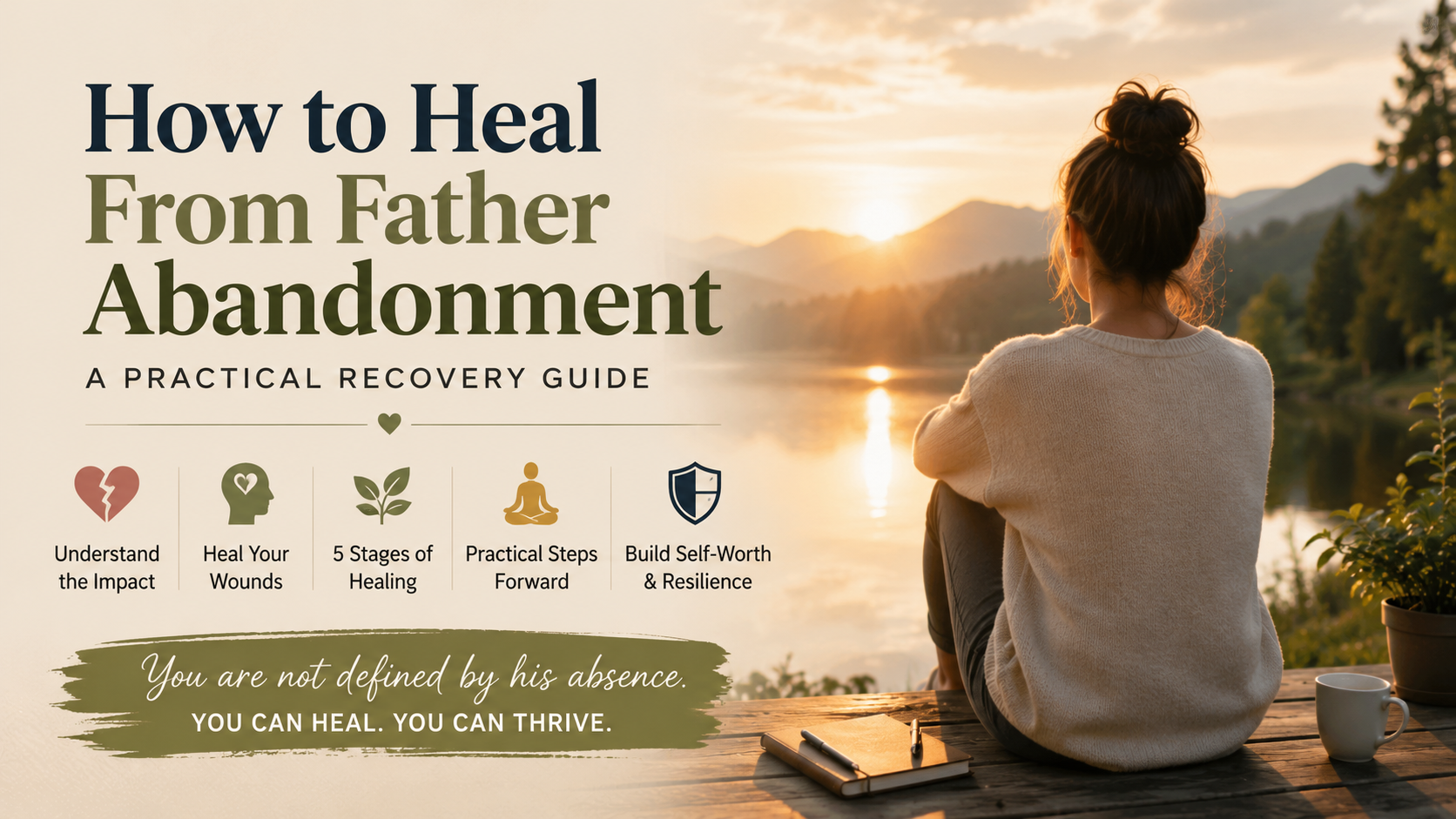
How to Heal From Father Abandonment: A Practical Recovery Guide
Experiencing emotional or physical neglect during childhood leaves deep scars that can linger well into adulthood. When you try to heal from father abandonment, you are embarking on a journey of reclaiming your self-worth, emotional independence, and inner peace. According to research and resources from the American Psychological Association, early childhood attachment disruptions can influence adult relationships, emotional regulation, and self-esteem. The National Institute of Mental Health also provides evidence-based information about psychotherapy and how professional treatment can help people manage emotional and psychological difficulties.
Understanding these impacts is an important first step toward recovery. Many adults struggle with chronic self-doubt, fear of rejection, and difficulty trusting others after experiencing an absent or emotionally unavailable caregiver. If you want to understand the broader experience of growing up without a dad, this can provide additional context. This comprehensive guide explores how to heal father abandonment wounds, what the five stages of abandonment healing may look like, what practical actions to take if your father abandons you, and how to heal from an absent dad so you can move forward with greater confidence and emotional resilience.
How to Heal Father Abandonment Wounds?
Healing father abandonment wounds takes time, self-compassion, and a willingness to understand how early experiences shaped your beliefs. When a father is emotionally or physically unavailable, a child may interpret that absence as personal rejection. Over time, thoughts such as “I am not worthy of love” can become deeply rooted.
The first step is separating your father’s limitations from your value. His absence may reflect his choices, circumstances, or emotional capacity. It does not determine your worth. Acknowledging the pain without blaming yourself can also help you process grief more safely. You can also learn to recognize the signs of father wounds to better understand how these experiences may affect your emotions and relationships.
Therapy can provide structured support when abandonment experiences affect daily life or relationships. Approaches such as cognitive behavioral therapy (CBT) and eye movement desensitization and reprocessing (EMDR) may help some people process distressing experiences and challenge unhelpful beliefs.
You may also need to grieve the relationship you deserved but did not receive. That grief is valid. Healing means accepting what happened while building a healthier relationship with yourself.


Reconnecting With Your Inner Child
Reconnecting with your inner child can help you explore emotions connected to childhood neglect or abandonment. The exercise involves imagining your younger self during moments when you felt ignored, rejected, frightened, or alone. Instead of judging those feelings, respond with the compassion and reassurance you needed then.
You might write a letter to your younger self. Tell them that the abandonment was not their fault. Remind them that they deserved attention, protection, consistency, and affection. You can also identify situations that still trigger those childhood emotions today.
This practice does not erase painful experiences or replace professional treatment. Instead, it can encourage greater self-compassion and emotional awareness. When difficult feelings appear, pause before reacting and ask what you actually need.
With repetition, you may become better at recognizing old abandonment fears. You can then respond from your present circumstances rather than automatically reliving earlier emotional patterns.
What Are the Five Stages of Abandonment Healing?
People sometimes describe abandonment recovery through five stages: shattering and recognition, withdrawal, internalizing, awakening, and healing. However, these stages are not a universal clinical model. Emotional recovery rarely follows a predictable sequence, and people may move backward or revisit earlier feelings.
Shattering and recognition may involve realizing how deeply a parent’s absence affected you. Withdrawal can bring grief, anxiety, loneliness, or fear of further rejection. During internalizing, you may repeatedly question why the abandonment happened or wonder whether you caused it.
Awakening can involve greater clarity about your father’s choices and your own responsibility for your future. You may begin challenging beliefs that once felt permanent. Healing gradually involves acceptance, stronger boundaries, emotional regulation, and healthier relationships.
The important point is not reaching each stage perfectly. Healing from father abandonment is individual and non-linear. Some days may feel productive, while others bring old emotions back. Progress means responding to those emotions with greater awareness rather than expecting yourself to forget the past.
Moving From Anger to Acceptance
Moving from anger toward acceptance can become an important part of abandonment healing. Anger often appears when you recognize that your needs were ignored or your boundaries were violated. It can help you identify what was unfair and what you should no longer tolerate.
However, staying consumed by anger can keep your attention focused on the person who hurt you. Acceptance does not mean forgiving your father, excusing his behavior, or pretending the abandonment was acceptable. It means acknowledging what happened without allowing it to control every part of your present life.
You can begin by naming what you lost. Perhaps you wanted guidance, affection, protection, encouragement, or consistent involvement. Those needs were legitimate, even if your father could not meet them.
As acceptance develops, your focus can gradually shift toward what you can control now. You cannot rewrite your childhood. You can choose your boundaries, relationships, values, and responses today. That shift creates space for growth without denying the pain that came before it.
What to Do If Your Father Abandons You?
If your father has recently abandoned you or remains emotionally unavailable, protecting your well-being should become a priority. One difficult step is releasing the expectation that he will suddenly change, apologize, or provide the closure you want. Continuing to wait for that response can keep you emotionally stuck.
Instead, focus on relationships and routines that provide stability. Trusted friends, relatives, mentors, therapists, and support groups can offer healthier examples of reliable connection. You do not have to process everything alone. Understanding the effects of an absent father on sons may also help readers recognize how paternal absence can shape emotional and relationship patterns.
Creating healthy routines can also reduce the impact of emotional triggers. Journaling may help you identify recurring thoughts and patterns. Exercise, creative activities, sleep, and regular social contact can support emotional regulation and daily functioning.
You may also need to decide how much contact feels safe and sustainable. Boundaries are not punishments. They are limits designed to protect your emotional well-being.
Most importantly, avoid measuring your worth by your father’s involvement. His absence can hurt deeply, but it does not define your identity. Healing involves gradually building a life that does not depend on receiving validation from someone who may be unable or unwilling to provide it.
Establishing Firm Emotional Boundaries
Establishing emotional boundaries with an absent father can protect you from repeated cycles of hope, disappointment, and distress. This becomes especially important when a father enters your life unpredictably or contacts you only when convenient for him.
Start by identifying behaviors you can and cannot accept. You might decide that you will not tolerate insults, manipulation, repeated broken promises, or conversations that consistently leave you emotionally overwhelmed. Your boundaries should focus on what you will do, rather than controlling what your father does.
For example, you may end a conversation when disrespect begins. You may reduce contact if interactions repeatedly harm your well-being. In some situations, temporary or permanent distance may be appropriate.
You do not always need to explain every boundary in detail. Consistently following your own limits can be more important than convincing another person to agree with them.
Setting boundaries may initially trigger guilt, especially if you learned to prioritize your father’s needs. That discomfort does not automatically mean your boundary is wrong. Healthy boundaries teach you that your emotional safety deserves consideration too.
How to Heal From an Absent Dad?
Healing from an absent father involves building an identity that does not depend on his presence, approval, or validation. You may have spent years wondering why he left or trying to become worthy of the attention you wanted. Those questions can become exhausting when they never produce satisfying answers.
Instead, begin investing in the parts of life you can influence. Develop your skills, pursue meaningful goals, strengthen friendships, and create routines that support your well-being. These actions help shift your attention from what was missing toward what you are building now.
Supportive relationships can also challenge the belief that people will always leave. Trusted friends, mentors, relatives, partners, or community members can demonstrate what consistency and mutual respect look like.
You can also create a chosen family made up of people who genuinely show up for you. These relationships do not replace your biological father. They simply provide forms of connection that may have been missing.
Your childhood history remains part of your story, but it does not have to determine your future. Healing means allowing your values, choices, and relationships to shape your identity more than your father’s absence does.
Cultivating Self-Reliance and Confidence
Cultivating self-reliance after father abandonment can strengthen your sense of security, but self-reliance should not mean refusing help from everyone. Healthy independence means trusting yourself while also recognizing when support is useful.
Start with small decisions. Practice identifying what you feel, what you need, and what choice aligns with your values. When you make a decision, evaluate the result without automatically assuming you failed. This process can gradually strengthen confidence in your judgment.
You can also build confidence by keeping promises to yourself. Set realistic goals and follow through consistently. Each completed task provides evidence that you can depend on yourself, even when circumstances become difficult.
At the same time, allow yourself to receive support. Secure relationships involve both independence and connection. You do not need to prove that you can handle everything alone.
When abandonment fears appear, remind yourself that your current situation is not identical to your childhood. You have more choices, resources, and awareness now. Over time, learning to trust yourself while accepting healthy support can reduce the grip of abandonment fears and create a stronger sense of emotional security.
Frequently Asked Questions
Can father abandonment affect adult romantic relationships?
Yes, father abandonment frequently impacts adult romance by triggering fears of intimacy, abandonment anxiety, or a tendency to choose unavailable partners. Recognizing these repeating behavioral patterns in therapy helps individuals build secure, trusting, and emotionally balanced partnerships over time.
Is it normal to feel angry years after the abandonment?
Feeling angry years later is completely normal, as trauma leaves lasting imprints on the emotional memory banks. Anger often indicates that parts of your grief remain unresolved, signaling an opportunity for deeper self-reflection, forgiveness work, and targeted emotional release practices.
Should I confront my absent father for closure?
Confronting an absent father rarely brings the desired closure because accountability requires willingness on their part. True closure comes from within, through self-validation, grieving the loss, and deciding to build a fulfilling life entirely on your own terms.
How do I stop blaming myself for my father leaving?
Stopping self-blame requires understanding that a parent’s choice to leave stems entirely from their personal limitations, flaws, and issues. Remind yourself daily that a child is never responsible for an adult’s failure to provide love, care, and emotional safety.
Conclusion
Embarking on the journey to heal from father abandonment takes immense courage, patience, and profound self-compassion. While the pain of an absent or neglectful dad leaves deep footprints on your heart, it does not define your entire life story. By working through the stages of healing, addressing your inner wounds, and establishing empowering personal boundaries, you reclaim your emotional freedom. Remember that you are entirely worthy of love, stability, and genuine connection. Take the insights you have gained today, apply them gently to your daily life, and continue stepping forward into a future where your worth is defined solely by you.