
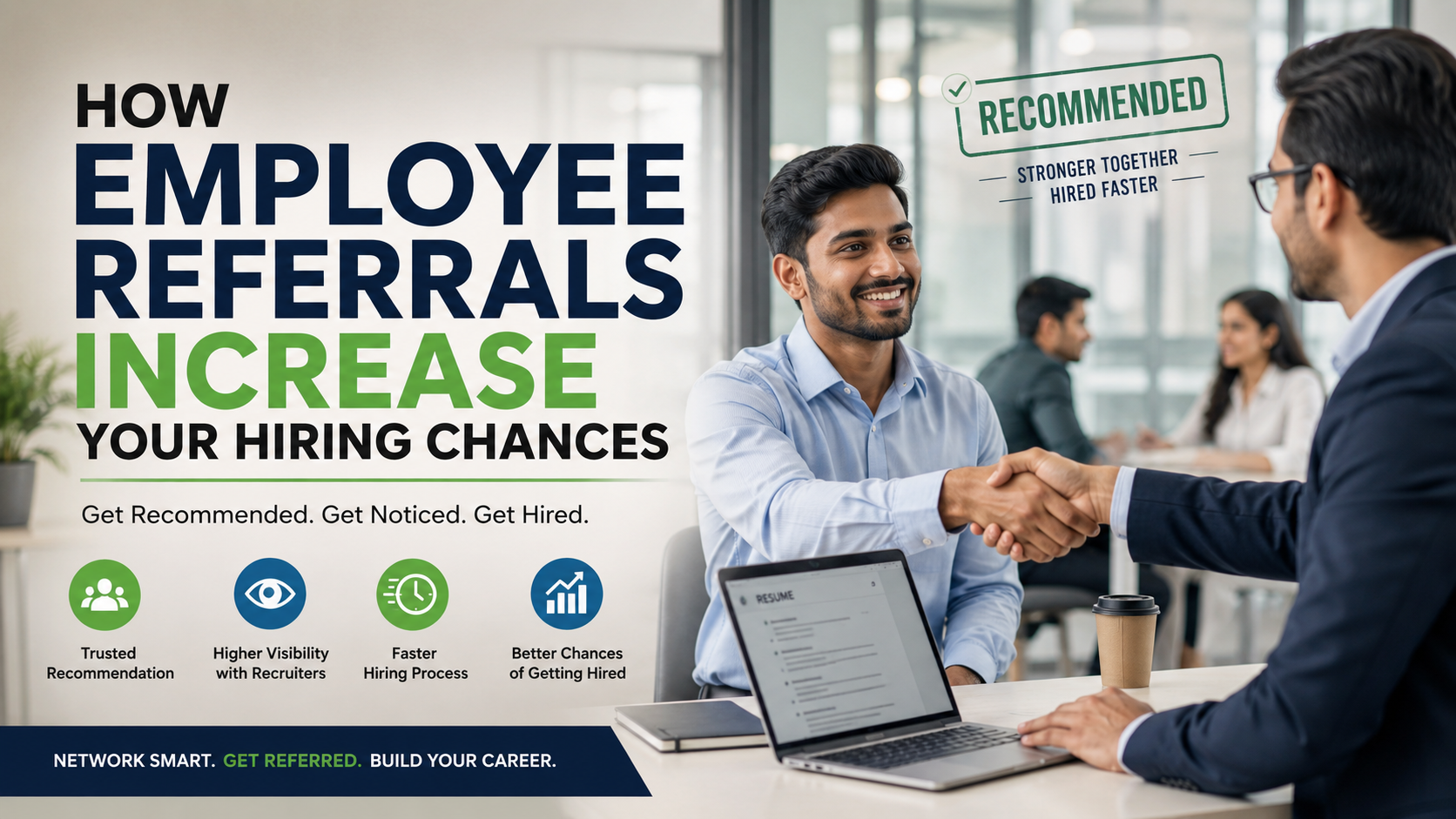
How Employee Referrals Increase Your Hiring Chances
Applying for jobs online often feels like throwing your resume into a void. Hundreds of applicants compete for every open role. Therefore, standing out requires more than just a clean CV. Understanding how employee referral hiring benefits your job search can change your results completely. According to research published on LinkedIn, referred candidates get hired much faster than standard applicants.
Furthermore, when an employee vouches for you, hiring managers pay attention immediately. An internal recommendation acts as an instant trust signal in an ocean of applicants. As a result, your application reaches real human eyes right away instead of getting stuck in automated software. This warm introduction effectively bridges the gap between you and the hiring team.
In addition, this comprehensive guide breaks down why this strategy works so well. You will learn why recruiters prioritize referred candidates above others. You will also discover how internal recommendations help during tricky interview stages. Finally, we share actionable networking tips to help you get recommended naturally. Consequently, every section below provides actionable steps to boost your career prospects.
Primary Employee Referral Hiring Benefits for Job Seekers
Recruiters spend countless hours filtering through giant resume databases every day. They try hard to find qualified talent quickly. However, when an employee submits a candidate, the company skips several initial screening steps. The current staff member pre-screens you before HR even calls you. As a result, this direct route speeds up the timeline significantly. A process that usually takes months can happen in just days.
Moreover, talent acquisition teams work under tight deadlines. They need to fill open roles with dependable professionals. Traditional applicants carry a lot of uncertainty. Hiring teams do not know their true work ethic until after onboarding. On the other hand, referred candidates enter the pipeline with a built-in endorsement. Decision-makers feel much more confident moving forward. Consequently, HR teams prioritize these applications. This focus saves time, reduces recruitment costs, and keeps team standards high.
Harnessing Social Proof to Upgrade Your Application Status
Social proof plays a huge role in modern hiring decisions. Companies know that employees rarely risk their reputation for weak candidates. Recommending a poor worker makes the referrer look bad. Therefore, employees only recommend people they trust. Thus, an internal recommendation acts as a stamp of approval that lowers hiring risks for employers.
In addition, an internal vouch moves your application past the pile of unknown resumes. Recruiters view your qualifications with an optimistic mindset. Someone they already trust has spoken up for your capability. This halo effect carries you through early screening stages. Consequently, you gain a massive advantage over equally qualified candidates who applied cold.
-
Immediate Visibility: Your application sits at the top of the recruiter’s inbox.
-
Built-in Endorsement: The current worker’s personal reputation transfers partially to you.
-
Higher Engagement: HR teams respond much faster and provide clear updates.
How Internal Recommendations Outsmart Resume Software
Applicant Tracking Systems (ATS) reject many resumes using rigid keyword algorithms. A small formatting error or unusual job title can drop a top candidate. Consequently, software drops applicants before a human ever looks at their credentials. This automated gatekeeping creates a huge hurdle for qualified professionals.
However, securing an internal vouch lets you bypass these digital barriers easily. You still submit an application for compliance reasons. Nevertheless, your advocate ensures a recruiter reviews your file personally. A real person evaluates your actual experience. As a result, your unique strengths get noticed even if your resume misses a keyword.
Bypassing Automated Gatekeepers with Employee Referral Hiring Benefits
Bypassing automated filters gives you a fair human evaluation. Human recruiters read between the lines easily. Furthermore, they recognize transferable skills and value non-traditional career paths. Software cannot match this level of understanding. Therefore, this human touch gives you a real chance to showcase your potential.
In fact, hiring teams review referred resumes with a positive bias from the start. They do not search for reasons to reject you. Instead, they actively look for reasons to invite you for an interview. This mindset shift dramatically raises your chances of moving forward in the hiring process.
Lower Risk and Longer Retention: Employee Referral Hiring Benefits for Companies
Companies view every new hire as a major financial investment. A bad hire costs thousands in wasted training, lost productivity, and severance fees. Consequently, talent acquisition leaders prioritize candidate sources that offer reliable outcomes. They want choices that bring long-term workplace stability.
Moreover, referral programs deliver strong outcomes by connecting companies with pre-vetted talent. Employers know that referred candidates carry a lower risk of early turnover. By focusing on referral pipelines, organizations build stronger teams. In addition, they avoid the costly disruptions associated with bad hiring decisions.
Cultural Alignment and Job Match Validation
Current employees understand the workplace culture very well. They know the daily expectations, team dynamics, and management styles. Therefore, when an employee recommends you, they already know your personality fits the environment. They verify that your core values match the team’s culture.
“Employees naturally recommend people they trust and enjoy working with. This alignment creates a seamless cultural fit from day one.”
As a result, this pre-validation removes guesswork about team compatibility. You enter interviews already understanding the company culture. This knowledge helps you tailor your answers effectively. Thus, you can show your genuine fit during conversations without stress.
Higher Job Satisfaction and Smoother Team Onboarding
Data shows that referred hires stay with companies much longer than cold applicants. You enter the organization with an existing social connection. Therefore, your initial workplace transition feels smoother and far less stressful. You adapt to your new role much faster.
Additionally, an internal contact provides instant support during your first few months. Your referrer answers casual questions and explains company norms. They help you integrate into the workplace seamlessly. Consequently, this internal support leads to higher job satisfaction and lower turnover over time.
-
Faster Onboarding: Friends inside the company help you adapt to workflows quickly.
-
Higher Satisfaction: An existing social network reduces workplace isolation effectively.
-
Lower Turnover: Referred employees show higher loyalty and stay longer with the firm.
Financial Rewards and Referral Perks Drive Employee Support
Most modern companies offer cash bonuses to employees who bring in talent. Businesses gladly pay these rewards because internal recommendations save them money. Referrals cut third-party recruiter fees and shorten recruitment cycles. Therefore, they provide a cost-effective way to find great talent.
| # | Stakeholder | Benefit |
| 1 | Company | Saves money on external agency fees |
| 2 | Current Employee | Receives a financial bonus |
| 3 | Candidate | Lands a great position much faster |
Understanding this financial incentive changes how you view asking for help. You are not asking for a difficult favor. Instead, you are offering an opportunity that benefits the employee financially. At the same time, you help the company fill a critical opening.
Why Staff Members Are Eager to Help You Leverage Employee Referral Hiring Benefits
Employees earn bonuses when their candidates get hired. Therefore, they genuinely want you to succeed throughout the process. They often share insider interview tips with you. Furthermore, they help you tailor your resume and check your status with HR directly.
In addition, recommending successful talent boosts the employee’s standing at work. It shows leadership that they care about building a strong team. They demonstrate good judgment regarding professional talent. As a result, their personal and financial motivation works in your favor every step of the way.
Tactical Networking Steps to Earn Employee Referral Hiring Benefits
Securing a solid recommendation requires authentic relationship-building. You should avoid sending cold, pushy messages on social media. Instead, build real professional rapport and mutual respect first. People need to feel comfortable putting their reputation on the line for you.
Furthermore, networking with patience and curiosity yields the best long-term results. Focus on creating value, seeking advice, and understanding company goals. This approach presents you as a thoughtful professional. Consequently, you quickly become someone who would make a great addition to their team.
Building Authentic Connections That Yield Employee Referral Hiring Benefits


-
Tap Alumni Networks: Reach out to graduates from your former school who work at target companies. Shared backgrounds create easy common ground.
-
Engage Professional Content: Comment thoughtfully on posts shared by target employees. Get on their radar naturally before reaching out directly.
-
Ask for Informational Calls: Request short chats to learn about career paths and company culture. Avoid demanding an immediate job referral.
Preparing Your Advocates for the Submission Process
Make your advocate’s job as easy as possible when they agree to help. Send them a clear summary of your top qualifications. Furthermore, include a tailored resume and the exact job link.
Providing these details allows your referrer to submit your info in minutes. In addition, it gives them clear talking points for HR. They can easily explain why you are a great fit for the open position.
FAQ SECTION
Do employee referral hiring benefits guarantee you an interview?
An internal recommendation does not guarantee an interview, but it improves your overall application odds immensely compared to traditional submissions. Standard applicants often face instant automated rejections from aggressive applicant tracking systems (ATS) before a human ever reviews their resume. However, referred candidates almost always receive a direct manual review from a designated hiring manager or senior talent recruiter. If your professional background matches the core requirements of the position, your chances of landing an initial screening call are extremely high. Nevertheless, a referral only gets your application noticed and retrieved from the digital pile. You must still showcase strong technical skills, prepare thoroughly for behavioral questions, demonstrate clear domain knowledge, and perform exceptionally well during every actual interview stage to successfully convert that warm introduction into a concrete job offer.
How much do internal recommendations boost your overall hiring odds?
Extensive industry research shows that internal referrals increase your overall hiring chances by four to five times compared to standard cold applications. Referred applicants typically make up a very small fraction of the total applicant pool for any given job opening. However, despite their low numbers, they account for a disproportionately massive percentage of final hires across almost every industry. Companies strongly prefer internal recommendations because referred candidates onboard significantly faster, integrate seamlessly into existing teams, and align naturally with the corporate culture. Furthermore, these employees stay with the business much longer than individuals hired through cold applications or third-party recruiters. These clear organizational benefits make internal employee referrals the single most powerful, reliable, and effective channel for securing your next professional role in a competitive market.
Should you ask someone you do not know well for a job recommendation?
It is always best to build a genuine professional connection before asking anyone to submit an official internal recommendation for you. Sending unsolicited, transactional cold messages to complete strangers on social media or professional networking platforms rarely yields positive results. In fact, most professionals hesitate to risk their internal standing and company reputation on someone whose work ethic and character they cannot vouch for personally. Instead of asking for a referral right away, request a brief informational interview to learn about their career journey, team structure, and workplace culture. Once you establish a warm rapport, demonstrate your professional competence, and show genuine interest in their insights, you can naturally ask if they would feel comfortable submitting your resume through their company’s internal portal.
What is the ideal way to follow up after an employee refers you?
Send a warm, personalized thank-you message immediately after an employee agrees to submit your referral into their internal company portal. Express sincere appreciation for their valuable time, effort, and willingness to sponsor your application. In addition, keep them updated as you progress through different interview rounds, assessments, and follow-up conversations with the talent acquisition team. Because many employees receive financial referral bonuses if you get hired, they have a genuine personal and financial interest in your ongoing success and always appreciate status updates. If you ultimately land the position, thank them again personally and consider sending a small token of gratitude. Conversely, if you do not get the role, maintain the relationship gracefully, thank them for their support, and keep the professional door open for future opportunities.
Can referral perks help offset minor skill gaps on your resume?
Yes, an internal referral can significantly help cover minor skill gaps or slight experience deficiencies on your professional resume. When a respected current employee vouches for your strong work ethic, adaptability, problem-solving mindset, and rapid learning speed, recruiters become far more open-minded during evaluation. Consequently, decision-makers become willing to overlook a missing secondary qualification, an unfamiliar software tool, or slightly fewer years of required experience than originally listed in the job description. The baseline trust established by an internal referral gives hiring managers immense confidence in your long-term potential. Therefore, they evaluate what you can achieve with proper team onboarding rather than instantly rejecting your application based on a rigid, automated keyword checklist.
CONCLUSION
Navigating today’s job market requires a focused strategy. Simply sending generic resumes to online job boards is rarely enough. However, leveraging employee referral hiring benefits gives you control over your job search. It places your application directly in front of key decision-makers. Internal endorsements remove the friction caused by resume screeners. Furthermore, they give you instant credibility that sets you apart from competing candidates.
In addition, referrals give you great insight into company culture and expectations. Current employees act as internal advocates. They help you prepare for HR interview questions and speed up the recruitment timeline. Employers prefer referred talent because these hires stay longer, fit the team culture, and lower onboarding costs.
To succeed, focus on building authentic, mutually beneficial relationships across your industry. Reach out to former colleagues, connect with school alumni, and engage with professionals at your target companies. Consequently, when you approach networking with curiosity and respect, earning internal recommendations becomes a natural process that elevates your career.