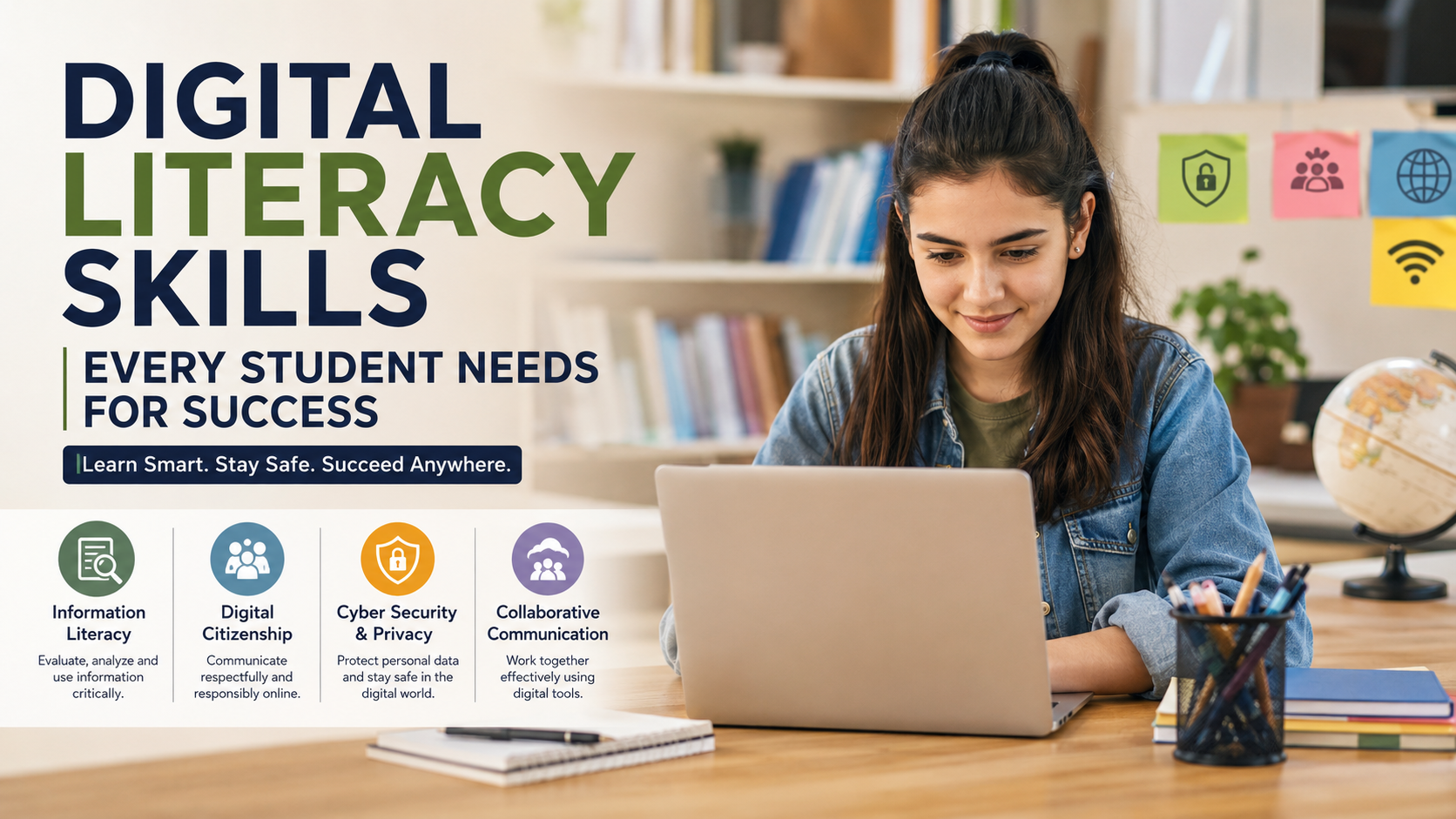
Digital Literacy Skills Every Student Needs for Success
The modern educational landscape has shifted entirely into the digital realm, transforming how knowledge is shared and consumed. Today, understanding how to use a computer is no longer enough to get by. Students must develop a sophisticated set of digital literacy skills every student needs to thrive academically and professionally. According to research and educational frameworks published by UNESCO, mastering these competencies is critical for lifelong learning and global civic participation in our hyper-connected world.
This topic matters because technology influences every aspect of a student’s daily life. From online research to collaborative group projects, digital tools are completely woven into the curriculum. However, simply being a “digital native” who knows how to scroll through social media does not translate to academic or workplace readiness. Students need explicit guidance to move from passive consumers of technology to active, safe, and productive creators. This article will explore the core pillars of digital communication, critical thinking, data privacy, and technical adaptability that form the foundation of modern education.
Why Digital Literacy Matters in Modern Education
Technology in the classroom is no longer just an administrative supplement. It is the very infrastructure of modern learning. When students possess strong digital competencies, they shift from memorizing facts to actively discovering knowledge. This transformation encourages independent thought and allows learners to explore complex subjects at their own pace using multimedia resources. Moreover, the future job market increasingly demands these technical capabilities. Almost every career path today requires some level of technical proficiency, data management, or digital collaboration. Giving students these tools early ensures they will not lag behind when they transition into higher education or enter the professional workforce. By embedding these habits into the daily curriculum, schools create an equitable environment where all students can build professional tech confidence.
Core Digital Literacy Skills Every Student Needs
1. Information Literacy and Critical Evaluation
The internet contains a vast ocean of information, but much of it is unverified or completely false. Students must learn how to filter out the noise. They need to evaluate the credibility of websites, recognize media bias, and distinguish between evidence-based articles and opinion pieces. Learning how to cross-reference data and check primary sources prevents the spread of misinformation. It also teaches students to build their own academic arguments on factual foundations rather than emotional rhetoric. Educators must teach specific frameworks, like lateral reading, so students can investigate the authority of a website before trusting its content. Ultimately, critical evaluation transforms internet users from passive, vulnerable consumers into sharp intellectual researchers who understand data validity.
2. Digital Citizenship and Online Etiquette
Being a good digital citizen means understanding the real-world impact of online behavior. Students must recognize that their digital footprint is permanent and can affect future college admissions or career opportunities. Maintaining clean digital conduct ensures that online spaces remain collaborative and physically safe for everyone involved. Students should practice thoughtful communication by engaging in constructive academic forums without resorting to cyberbullying or toxic commentary. They must respect intellectual property by understanding copyright laws and learning how to properly cite digital sources to avoid plagiarism. Finally, digital citizenship requires practicing inclusivity by recognizing and valuing diverse perspectives in global online communities.
3. Cyber Security and Personal Data Privacy
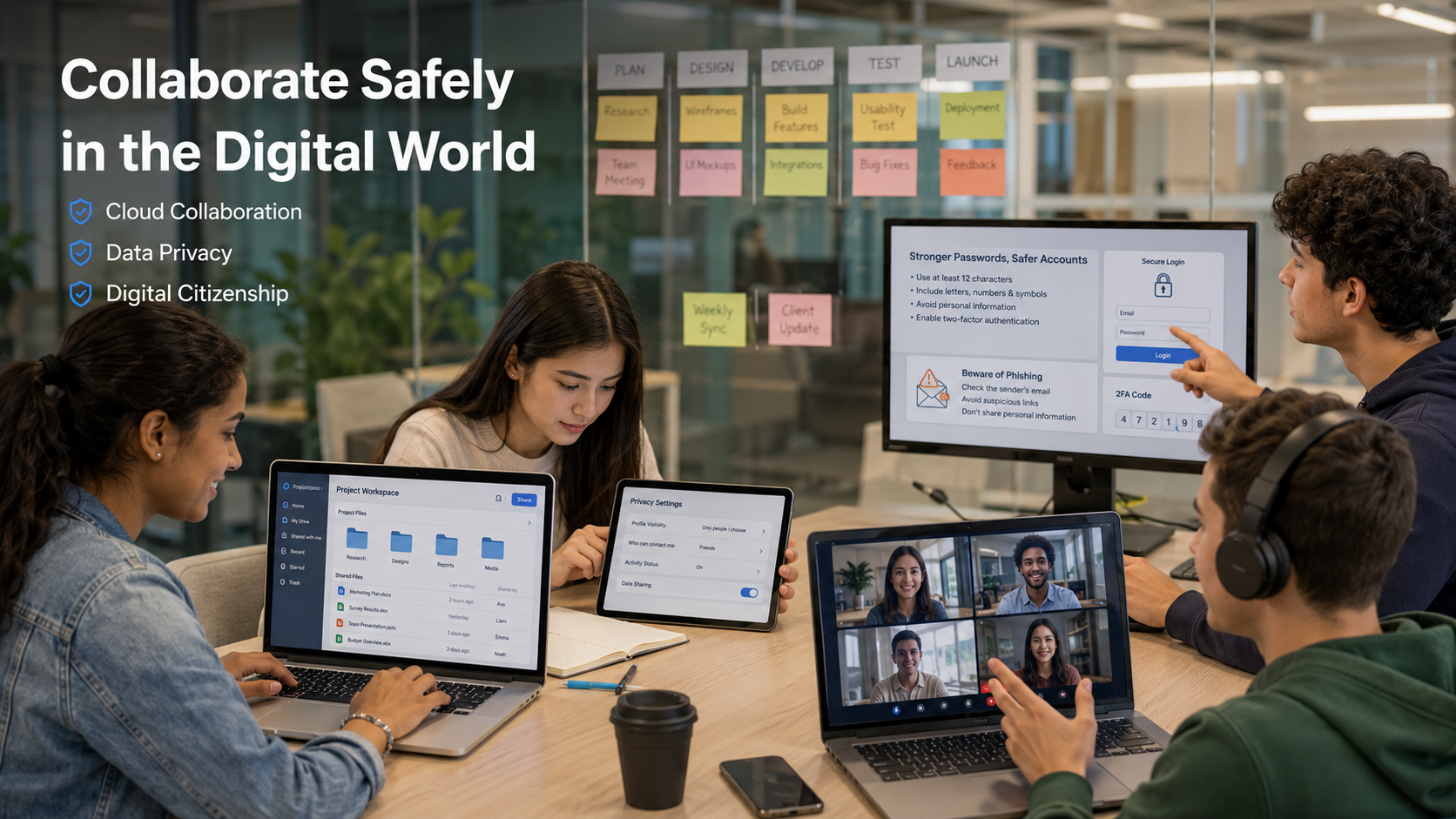
Students often share personal information online without considering the long-term consequences of data harvesting. Protecting personal data is a non-negotiable skill in the modern age, especially as educational platforms become targets for breaches. Educating students on how to spot phishing scams, create robust passwords, and manage privacy settings on educational platforms is essential. They must learn to safeguard their identity from malicious actors who target younger users through social engineering tactics. Furthermore, students need to understand how algorithms track their browsing habits to target them with personalized advertisements. Developing this defensive mindset allows students to navigate public networks safely while preserving their personal autonomy and privacy.
4. Collaborative Communication Tools
The modern classroom relies heavily on cloud-based collaboration tools to mirror modern workplace dynamics. Students need to know how to co-edit documents in real-time, manage shared folders, and communicate professionally through email and chat applications. Mastering these platforms prepares them directly for remote work environments, where team projects are executed entirely across digital networks. Students must learn to coordinate schedules, assign digital tasks, and give constructive feedback via digital comments. Understanding the subtle nuances of text-based communication prevents misunderstandings and fosters healthy team environments. These tools teach students how to manage projects efficiently from start to finish.
| Core Component | Key Practical Application |
| Critical Evaluation | Filtering facts from fake news and analyzing media bias. |
| Digital Citizenship | Building a positive, responsible, and permanent online footprint. |
| Data Security | Managing advanced privacy settings and creating complex passwords. |
| Collaboration | Mastering cloud-based tools and coordinating remote teamwork. |
How Educators and Parents Can Support Digital Proficiency
Teaching these concepts requires a unified effort from both schools and families to ensure long-term behavioral changes. Educators should integrate digital tools directly into daily assignments rather than teaching technology as an isolated subject. For instance, a history lesson can double as an exercise in verifying online historical sources and analyzing media frameworks. Similarly, parents can reinforce these habits at home by discussing media literacy and setting healthy boundaries around screen time. Open conversations about online safety create a secure environment where students feel comfortable asking questions when they encounter confusing or harmful content online. By working together, mentors and parents can guide youth away from mindless scrolling and toward constructive tech mastery.
FAQs
What are the main digital literacy skills every student needs today?
The essential digital literacy skills every student needs include information literacy, digital citizenship, data privacy management, and collaborative communication. Information literacy helps students evaluate the credibility of online sources to avoid misinformation, deepfakes, and media bias. Digital citizenship teaches them to behave responsibly, legally, and ethically in online communities while protecting their digital footprint. Data privacy ensures they know how to protect their personal information, create strong passwords, and avoid phishing scams. Finally, collaborative skills allow students to use cloud-based tools effectively for group work and future professional projects. Together, these skills form a holistic foundation that prepares students for academic achievement and modern workplace demands, ensuring they use technology safely and effectively.
How does digital literacy differ from basic computer skills?
Basic computer skills involve knowing how to operate hardware and software, such as typing on a keyboard, opening a web browser, or turning on a machine. In contrast, digital literacy focuses on the critical thinking, cultural understanding, and deep evaluation required to use those technical tools effectively and safely. For example, knowing how to type a search query into Google is a basic computer skill. However, understanding which search results are credible, verifying the author’s credentials, and spotting commercial bias represents digital literacy. It shifts the user from a basic mechanical operator to an analytical digital consumer who can solve problems independently in complex online environments.
Why is digital citizenship important for young learners?
Digital citizenship is crucial because it teaches students about the total permanence and impact of their digital footprint. Every post, comment, and share leaves a lasting trail that future employers, universities, and peers can easily review. By learning digital citizenship early, students practice empathy, avoid cyberbullying, protect intellectual property rights, and respect copyright laws. This guidance helps them build a positive online reputation that supports their long-term academic and career ambitions rather than hurting them. Furthermore, it empowers young learners to recognize unsafe online behaviors, report malicious interactions, and contribute positively to the global internet community.
How can teachers naturally integrate digital literacy into standard lessons?
Teachers can integrate digital literacy by embedding technical analysis tasks directly into existing subject curricula instead of treating IT as a separate class. For example, instead of writing a traditional paper book report, an English teacher might ask students to build a simple website, design an infographic, or record a polished podcast review. During a science project, teachers can instruct students to use verified academic databases and evaluate the peer-review status of their sources. This approach makes technology training highly practical, contextual, and immediately relevant to real-world scenarios. It teaches students that digital tools are primary instruments for deep subject learning and professional communication.
At what age should students start learning about data privacy?
Students should start learning about data privacy as soon as they begin interacting with any internet-connected devices, including tablets and smart toys. Even young children using educational apps should understand simple concepts like never sharing their full names, passwords, home addresses, or school locations online. As they grow older, this education can expand into managing complex social media privacy settings, identifying advanced phishing attempts, and understanding how corporate algorithms track consumer data. Introducing these security habits early ensures that data protection becomes a natural, lifelong reflex, lowering their vulnerability to identity theft and digital exploitation as they grow.
Conclusion
Navigating the modern educational landscape requires far more than technical familiarity or basic keyboard skills. Developing the core digital literacy skills every student needs ensures that young learners remain safe, informed, and highly productive online. By mastering critical evaluation, learning how hackers steal data, and practicing good digital citizenship, students transform technology into a powerful engine for personal growth and academic achievement. They become conscious creators rather than vulnerable consumers of media.
Ultimately, these proficiencies build a solid bridge toward future workplace readiness and global economic participation. As technology continues its rapid evolution, the ability to adapt to new digital environments will remain a defining trait of successful individuals. Encouraging these skills today prepares students to become leadership figures in the digital world of tomorrow, ensuring they remain resilient in the face of rapid technological disruption.