
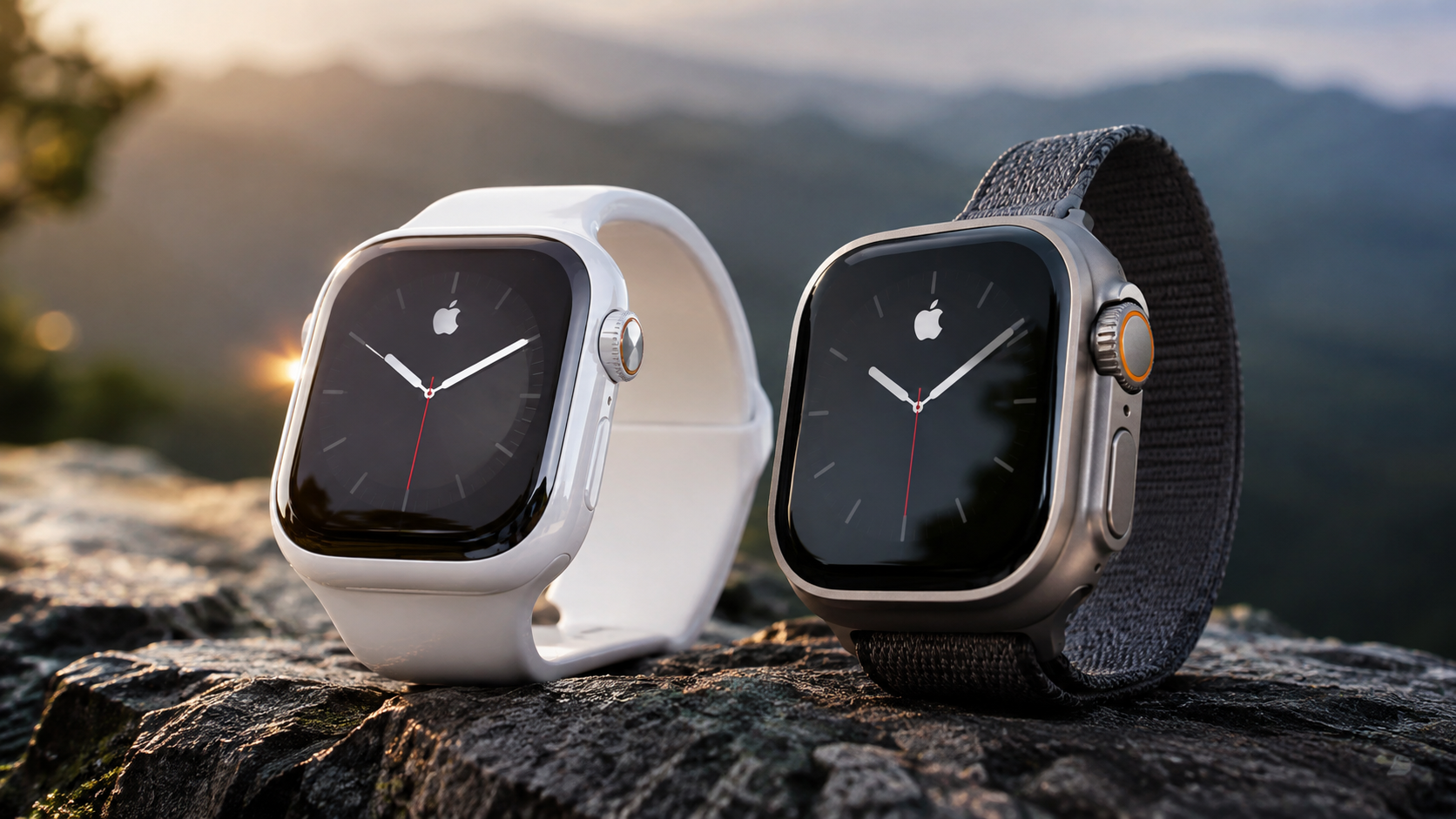
Ceramic vs Titanium Apple Watch: Which Material Is Better for Overall Durability?
Choosing an Apple Watch case material involves more than appearance. You also need to consider scratch resistance, impact protection, weight, and long-term wear. The Ceramic vs Titanium Apple Watch comparison highlights two materials with different strengths and weaknesses.
Ceramic offers excellent surface hardness and resists everyday scratches. Titanium provides a lightweight metal construction with good strength and impact tolerance. However, neither material is completely resistant to damage.
Both materials offer advantages for different lifestyles. Ceramic maintains its polished appearance, while titanium provides better tolerance for physical stress. Understanding these differences helps you make a more informed purchasing decision.
In this guide, we compare ceramic and titanium Apple Watch models across important durability factors. We examine scratch resistance, impact protection, structural strength, and everyday reliability. You will also discover which material suits outdoor activities and regular use.

Which Is Better, Apple Watch Ceramic or Titanium?
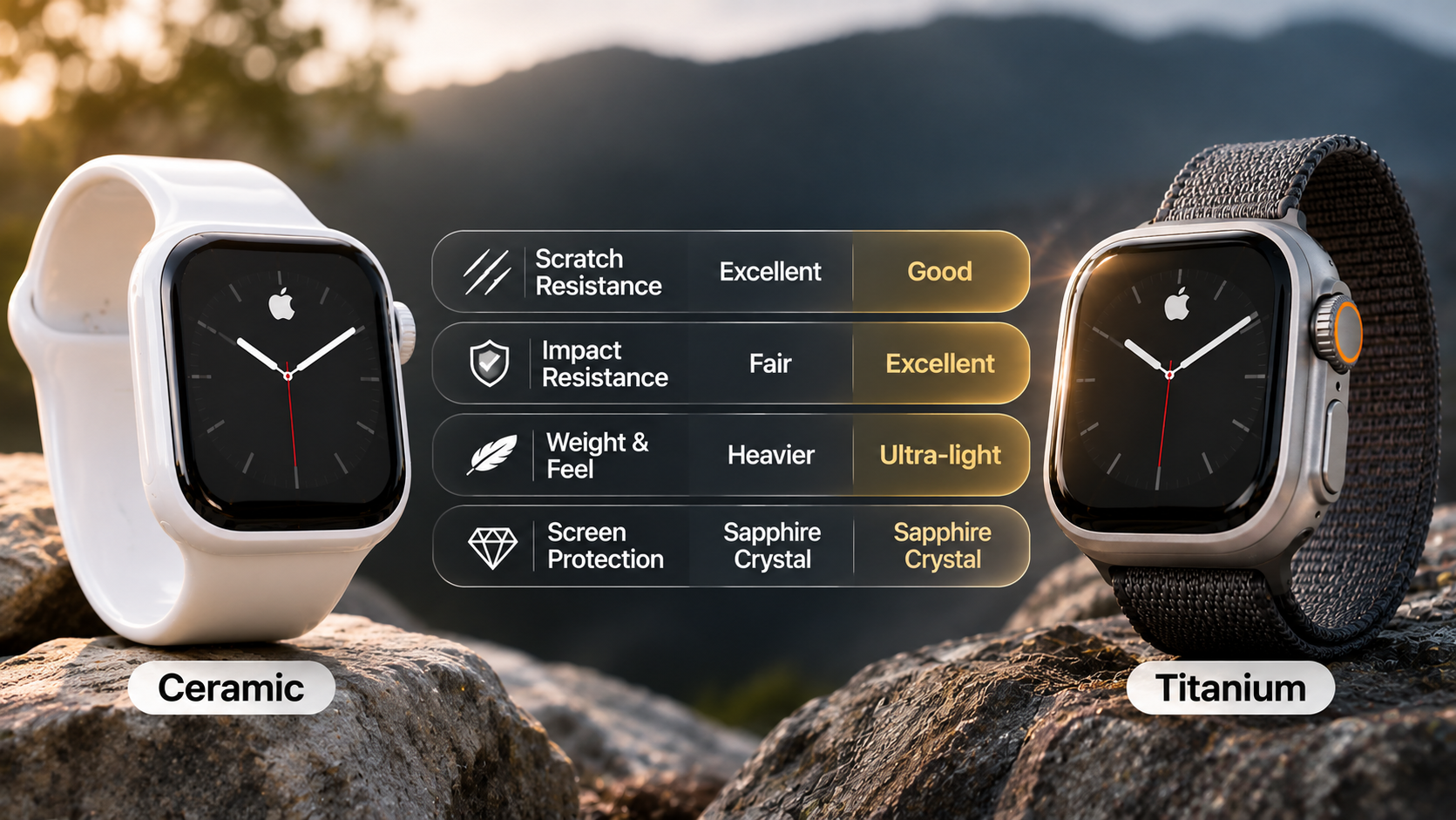
Choosing between a ceramic or titanium Apple Watch depends on your priorities. Ceramic offers excellent resistance to surface scratches and helps maintain its polished appearance. Titanium provides a combination of strength, relatively low weight, and better tolerance for physical impacts.
Neither material wins in every durability category. Ceramic has greater surface hardness, making it less likely to develop ordinary scratches. However, its hardness comes with a trade-off. Ceramic is more brittle and can chip or fracture under certain impacts.
Titanium behaves differently. It can develop scratches and visible surface marks during regular use. However, its metallic structure provides greater resistance to impact-related structural damage.
For everyday activities, both materials offer dependable protection. Ceramic suits people who prioritize appearance and scratch resistance. Titanium is more suitable for people who regularly participate in outdoor activities or demanding workouts.
Impact Absorption Versus Cosmetic Preservation
The biggest difference between ceramic and titanium is how each material responds to physical damage. Ceramic has a very hard surface, which helps prevent scratches from everyday contact. However, hard impacts against concrete, stone, or tile can cause chips or cracks.
Titanium offers a different type of protection. Its metallic structure allows some deformation under extreme stress. This helps it tolerate impacts without behaving like brittle ceramic.
Consider these differences when choosing your watch:
- Ceramic: Better resistance to everyday surface scratches and cosmetic wear.
- Titanium: Better tolerance for sudden impacts and mechanical stress.
- Ceramic: Maintains its polished appearance with relatively little surface wear.
- Titanium: Can develop scratches but generally handles physical stress better.
Your environment also matters. Desk workers may appreciate ceramic’s scratch-resistant finish. Hikers, cyclists, and outdoor enthusiasts may prefer titanium’s impact tolerance.
Is Titanium or Ceramic Better for Watches?
Both ceramic and titanium have established uses in traditional and modern watchmaking. However, they serve different purposes. Titanium is particularly popular in premium sports watches because it combines relatively low weight with useful mechanical strength.
It also offers excellent corrosion resistance. This makes titanium suitable for environments involving sweat, moisture, and saltwater. Its lightweight construction can improve comfort during extended wear.
Ceramic is valued for its appearance, hardness, and resistance to surface wear. It maintains its finish without the same tendency to develop visible scratches as many metals. It also resists corrosion and does not tarnish like certain metal finishes.
However, ceramic requires careful handling. A strong impact against a hard surface can damage its structure. Titanium is generally more forgiving when exposed to sudden physical stress.
Neither material is automatically better for every watch. Your decision should depend on whether you prioritize cosmetic preservation, physical durability, or everyday comfort.
Real-World Versatility in Modern Watchmaking
Modern watchmakers use titanium and ceramic for different performance requirements. Titanium works particularly well in sports watches, where weight, strength, and corrosion resistance matter. Ceramic is more commonly associated with premium designs that prioritize surface hardness and long-lasting appearance.
Their practical differences become clearer during everyday use:
- Weight: Titanium is generally lighter than comparable ceramic constructions.
- Scratch resistance: Ceramic offers better resistance to ordinary surface abrasion.
- Corrosion resistance: Both materials resist corrosion effectively.
- Impact tolerance: Titanium generally handles sudden impacts better.
- Appearance: Ceramic retains its polished finish, while titanium may develop visible marks.
These differences are particularly relevant when comparing premium smartwatch models. Weight can influence everyday comfort, especially during workouts and extended wear. However, weight alone does not determine durability. Case design and display protection also matter.
Is Ceramic More Durable Than Titanium?
Ceramic is more durable than titanium in terms of surface hardness. However, titanium generally offers better resistance to impact-related structural damage. Understanding this distinction is important when comparing Apple Watch case materials.
Hardness measures how well a material resists scratches and surface indentation. Ceramic performs particularly well in this area. Everyday contact with clothing, desk surfaces, and other objects is less likely to leave visible marks.
Toughness describes a material’s ability to absorb energy before fracturing. Titanium has an advantage here because it can deform under stress rather than immediately breaking.
This difference affects how each material responds to accidents. Ceramic may retain its appearance for years but can suffer damage from a hard drop. Titanium may develop cosmetic scratches while remaining structurally intact.
Therefore, durability depends on the type of damage you want to avoid. Ceramic prioritizes surface protection, while titanium offers greater impact tolerance.
Understanding Hardness Compared to Material Toughness
Hardness and toughness describe different material properties. Confusing them can lead to incorrect conclusions when comparing ceramic and titanium watches.
Hardness measures resistance to scratching, indentation, and surface deformation. Toughness measures how much energy a material can absorb before cracking or breaking.
Ceramic generally has much greater hardness than titanium. This explains why ceramic cases can maintain their appearance despite regular contact with everyday objects.
Titanium, however, has greater ductility. It can deform under sufficient force without behaving like brittle ceramic. This makes it more suitable for situations involving sudden impacts.
Here is a simple comparison:
- Hardness: Ceramic has the advantage.
- Scratch resistance: Ceramic generally performs better.
- Ductility: Titanium has the advantage.
- Impact tolerance: Titanium generally performs better.
- Fracture resistance: Titanium is generally more forgiving under sudden mechanical stress.
Neither property alone determines overall durability. A watch’s design, display protection, and construction also influence its ability to survive everyday accidents.
Which Is the Most Durable Apple Watch?
The most durable Apple Watch depends on the type of protection you need. Apple’s Ultra lineup is designed for demanding outdoor activities. It combines a Grade 5 titanium case with sapphire crystal display protection and a raised case design. For a closer comparison of Apple’s rugged and everyday models, explore the Apple Watch Ultra 4 vs. Series 12 comparison.
These features help protect the watch during outdoor adventures, workouts, and demanding environments. The Ultra lineup also offers 100-metre water resistance and IP6X dust resistance. Apple tests its Ultra models against selected MIL-STD-810H environmental conditions.
However, titanium is not the only material worth considering. Ceramic Apple Watch models also offer excellent scratch resistance and a premium finish.
The important distinction is that the Ultra combines several protective design features. Its durability does not come from titanium alone.
For users who regularly hike, cycle, swim, or explore outdoor environments, the Ultra offers a purpose-built design. Those prioritizing cosmetic durability may prefer ceramic.
Engineered Defense Against Extreme Outdoor Elements
Apple Watch Ultra models combine several protective features to handle demanding environments. Their Grade 5 titanium construction provides a strong, corrosion-resistant case. The material also keeps the watch relatively lightweight compared with many traditional metal alternatives. Android users interested in similar rugged smartwatch features can also explore Android alternatives to the Apple Watch Ultra.
The raised case edges help protect the sapphire crystal display from certain edge impacts. Sapphire also offers excellent scratch resistance, making it suitable for outdoor use.
Other important protection features include:
- Titanium case: Provides a lightweight and corrosion-resistant outer structure.
- Sapphire crystal: Helps resist scratches on the display.
- Raised edges: Help protect the display during edge impacts.
- Water resistance: Supports swimming and other specified water activities.
- IP6X certification: Provides protection against dust.
- MIL-STD-810H testing: Covers selected environmental and mechanical conditions.
These features make the Ultra suitable for demanding activities. However, military-standard testing does not guarantee survival in every accident. Water resistance can also decrease over time. Proper maintenance remains important.
Is the Ceramic Apple Watch Durable?
Yes, a ceramic Apple Watch offers excellent durability against everyday scratches and cosmetic wear. Its hard surface helps prevent the marks that commonly appear on softer materials. It also resists corrosion and does not tarnish like certain metal finishes.
This makes ceramic appealing to people who want their watch to maintain a clean, polished appearance. Its surface can remain visually consistent even after extended everyday use.
However, scratch resistance does not mean complete protection against physical damage. Ceramic is more brittle than titanium. A strong impact against concrete, tile, or another hard surface can cause chipping or cracking.
The display and case also have different material properties. A sapphire front crystal provides additional protection against display scratches. However, it does not make the entire watch impact-proof.
For everyday office use, casual activities, and normal wear, ceramic offers excellent cosmetic durability. However, users should take additional care during contact sports and demanding outdoor activities.
Preventing Thermal Shock and Brittle Fracture
Ceramic handles everyday friction and surface abrasion very well. However, its brittle structure makes it more vulnerable to certain types of physical damage. Understanding these limitations helps you protect your Apple Watch over time.
Sudden impacts are a bigger concern than ordinary surface contact. Dropping a ceramic watch onto concrete, granite, or tile can create enough force to damage its case.
You can reduce this risk through a few simple precautions:
- Avoid dropping the watch onto hard surfaces.
- Remove it before activities involving repeated heavy impacts.
- Use a suitable protective case when necessary.
- Avoid exposing the watch to sudden, extreme temperature changes.
- Inspect the case regularly for visible chips or cracks.
Ceramic’s resistance to scratches remains one of its strongest advantages. However, it should not be treated as indestructible.
If your priority is maintaining a pristine finish, ceramic is worth considering. If your daily routine involves frequent impacts, titanium may offer greater peace of mind.
Ultimately, the Ceramic vs Titanium Apple Watch decision comes down to your preferred type of durability. Ceramic prioritizes scratch resistance and appearance, while titanium offers greater tolerance for physical stress. Consider your activities, comfort preferences, and maintenance expectations before choosing.
Conclusion: Ceramic vs Titanium Apple Watch – Which Should You Choose?
Choosing between a ceramic and titanium Apple Watch ultimately depends on your lifestyle and durability priorities. Ceramic offers excellent scratch resistance and maintains its polished appearance over time. Titanium, on the other hand, provides better impact tolerance, lightweight construction, and greater structural flexibility.
If you primarily use your watch for office work, casual activities, and everyday wear, ceramic is worth considering. However, if you regularly participate in outdoor activities, cycling, hiking, or demanding workouts, titanium offers a more practical choice.
Before making your decision, check Apple’s official Apple Watch comparison page to compare available case materials, display protection, weight, and water resistance.
Neither material is completely damage-proof. Consider your daily activities, preferred appearance, and protection requirements before purchasing. Ultimately, the best Ceramic vs Titanium Apple Watch option is the one that matches how you use your smartwatch.