
What Is A Black Light Flashlight Actually Used For?
Have you ever wondered what glowing secrets hide in plain sight around your home? A black light flashlight is a fascinating tool that reveals things our naked eyes simply cannot see. By emitting ultraviolet (UV) radiation—a spectrum of light documented by authorities like the U.S. Food and Drug Administration—these devices make certain substances fluoresce or glow in the dark. Whether you are a curious homeowner, a dedicated pet parent, or a professional cleaner, keeping one of these handy gadgets in your drawer can completely change how you view your surroundings.
Many people think these UV flashlights are only for escape rooms or forensic crime shows. However, they are incredibly practical for everyday use. From spotting hidden pet urine on your living room rug to identifying counterfeit currency before making a big cash sale, the applications are surprisingly diverse.
In this comprehensive guide, we will explore exactly what these tools do and how they work. You will learn the top practical uses for a black light flashlight, how to choose the right one for your specific needs, and what safety precautions you should take. Let us dive into the glowing world of UV light and uncover the invisible together.
What Are Black Light Flashlights Good For?
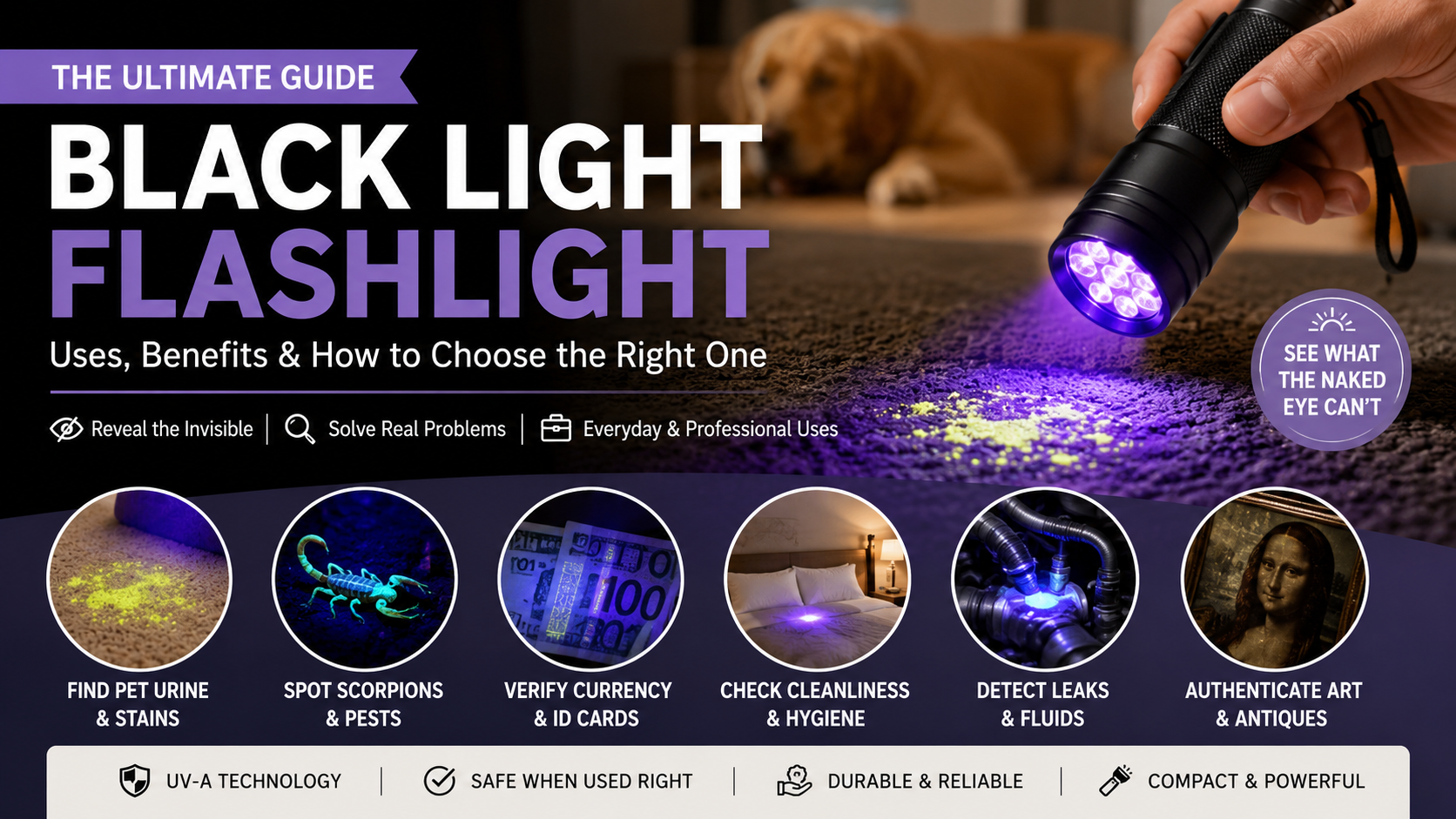
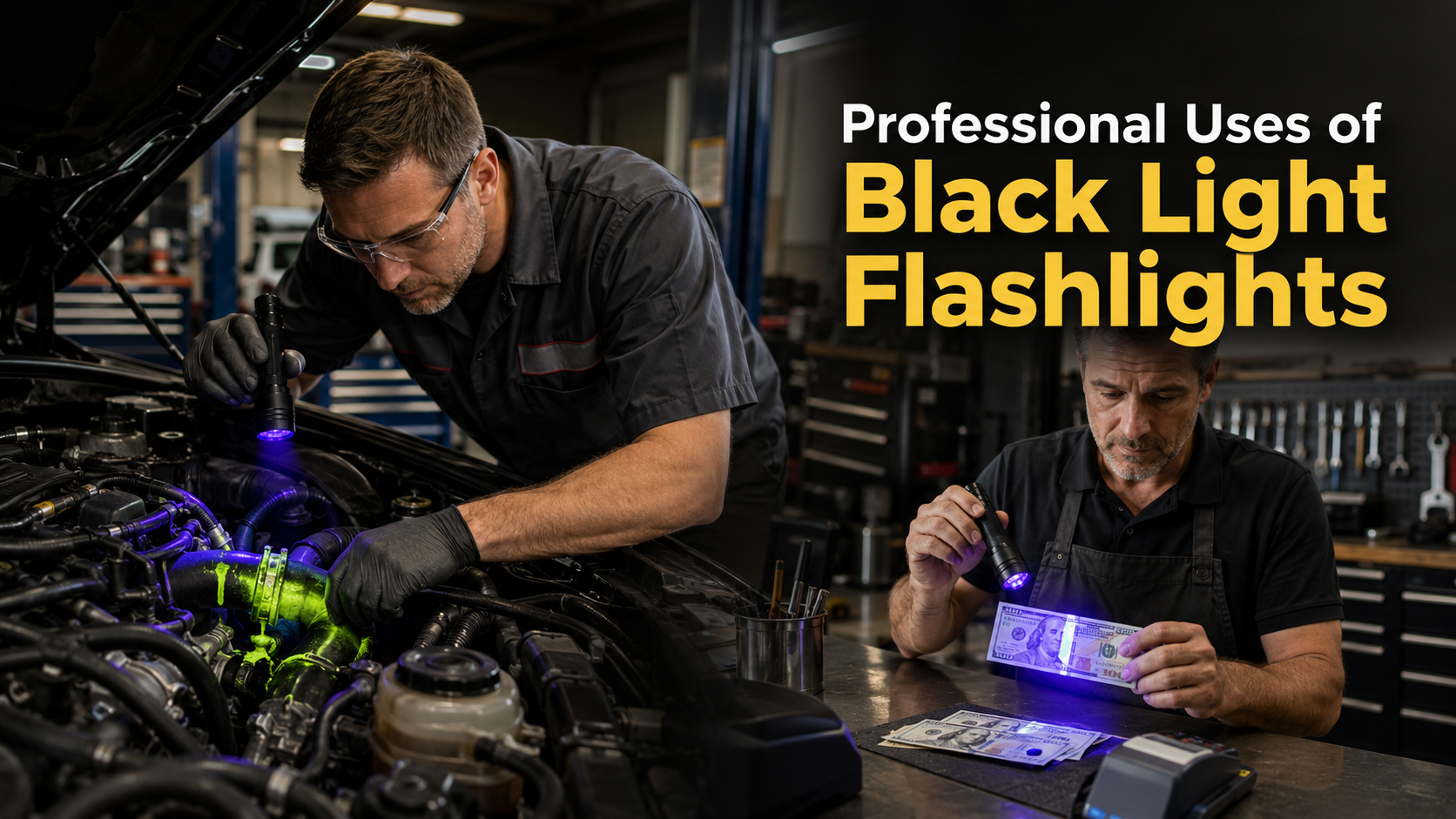
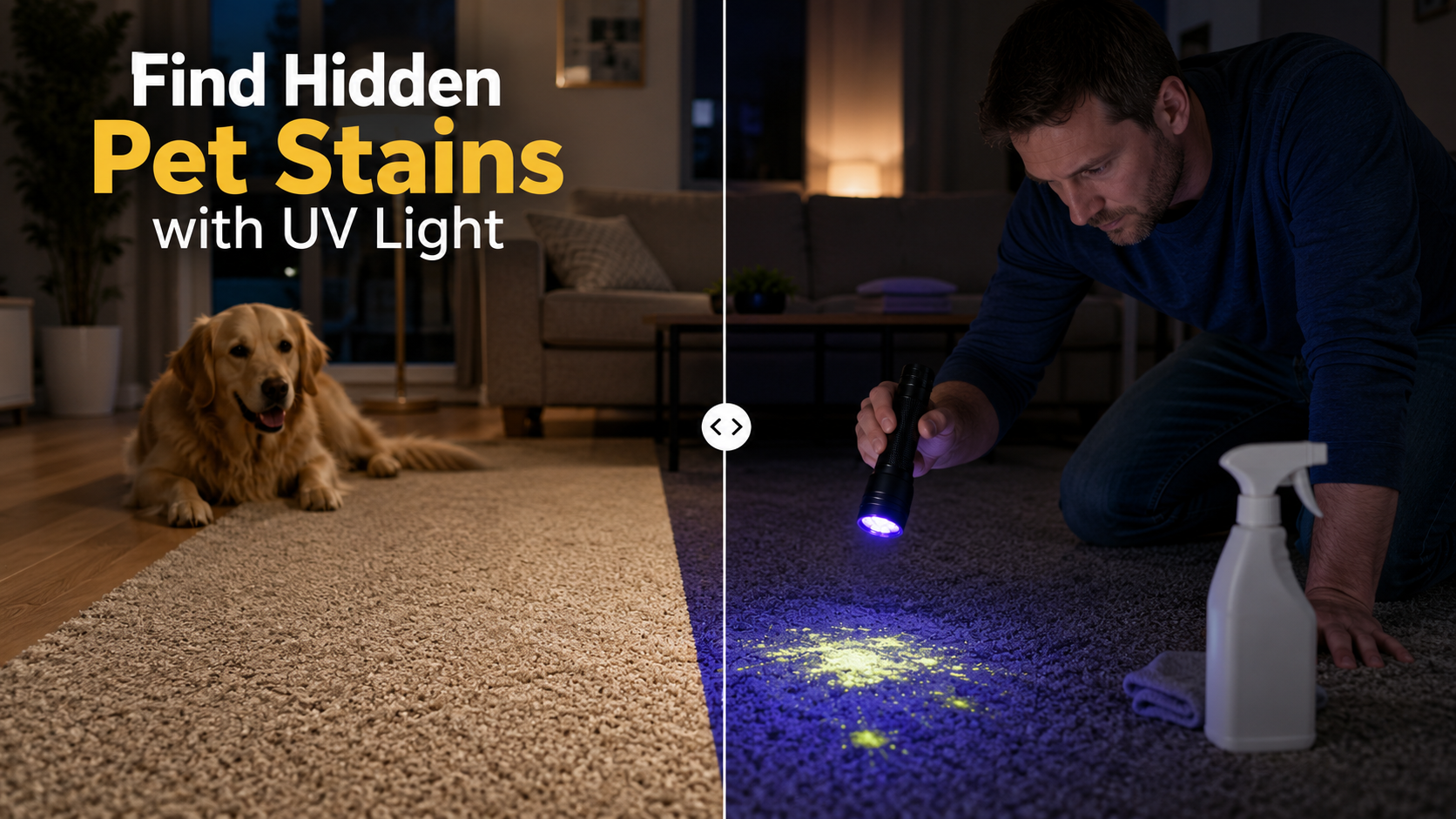
A black light flashlight is a versatile tool with practical uses in homes, workplaces, and specialized industries. One of its most common applications is helping pet owners locate hidden urine stains on carpets, rugs, upholstery, and hard floors that remain invisible under normal lighting. Hotels, vacation rentals, and cleaning professionals also use UV flashlights to inspect rooms for biological residues and verify cleanliness. In the automotive industry, mechanics pair ultraviolet lights with fluorescent dyes to identify difficult-to-find leaks in engines, cooling systems, and air conditioning units.
Collectors and hobbyists use black light flashlights to examine uranium glass, minerals, antiques, and vintage collectibles that fluoresce under ultraviolet light. Security professionals also rely on UV flashlights to verify banknotes, passports, identification cards, and event tickets containing hidden security features. Whether for home maintenance, inspections, or professional work, a quality black light flashlight provides a fast, reliable way to reveal details invisible to the naked eye.
Essential Household and Professional Applications

Getting the best results from a black light flashlight depends on choosing the right wavelength for your task. Different UV wavelengths produce different levels of fluorescence and visibility.
For general household cleaning, a 395nm UV flashlight is an affordable choice for detecting pet urine stains and common spills. A 365nm UV flashlight produces less visible purple light and offers greater accuracy for professional inspections, document verification, and mineral identification. Always darken the room before scanning because reduced ambient light makes fluorescent materials stand out more clearly. After locating pet stains, treat them immediately with a high-quality enzymatic cleaner. This breaks down uric acid crystals instead of simply masking odors. Professionals also recommend scanning the area again after cleaning to confirm that no hidden residue remains. Using the correct wavelength and cleaning method improves detection accuracy and helps eliminate odors permanently.
Can You Turn Your Phone Flashlight Into a Black Light?
The simple answer is no. A smartphone flashlight cannot become a true black light flashlight because it uses standard white LEDs rather than ultraviolet LEDs. These LEDs are designed for everyday illumination and cannot generate the UV-A wavelengths required to produce fluorescence. Many mobile apps claim to convert your phone into a UV light by changing the screen color or adding purple filters to the camera flash. However, these apps only alter visible light and do not create genuine ultraviolet radiation. Since fluorescence occurs only when invisible UV light excites certain materials, software alone cannot reproduce this effect. Without dedicated UV hardware, smartphones cannot perform reliable stain detection, mineral inspection, or counterfeit verification. If you need authentic UV performance, an external UV accessory or a dedicated black light flashlight is the only practical solution.
Understanding Mobile Limitations and Filters
Many people download UV flashlight apps expecting them to reveal hidden stains or security markings. Unfortunately, these applications cannot overcome the physical limitations of smartphone hardware.
If an object appears to glow while using a screen filter, the effect usually comes from reflected visible light rather than genuine fluorescence. Real ultraviolet illumination requires specialized UV LEDs that standard smartphones do not include. External clip-on UV accessories can provide limited functionality, but they still cannot match the brightness or performance of a dedicated black light flashlight. For dependable inspections, invest in hardware specifically designed to emit ultraviolet light instead of relying on software that changes only screen colors.
What Will Glow Under a Black Light?
Many everyday materials contain compounds that react strongly when exposed to ultraviolet light. Organic substances such as pet urine, saliva, and other bodily fluids often fluoresce because they contain proteins and minerals. In nature, several minerals, fungi, and even scorpions produce vivid fluorescent colors under UV illumination. Household products can also glow unexpectedly. Laundry detergents often contain optical brighteners that make white fabrics appear brighter in daylight and glow under ultraviolet light. Tonic water shines with a bright blue color because it contains quinine. Certain paints, markers, cosmetics, and adhesives also fluoresce. Understanding which materials naturally react to UV light makes a black light flashlight useful for cleaning, scientific demonstrations, hobby collecting, and security inspections.
Common Household and Natural Fluorescent Materials
Knowing which materials naturally fluoresce helps you interpret what you see during an inspection. Not every glowing object indicates contamination or a biological stain.
Common materials that glow under UV light include:
- Pet urine and many bodily fluids
- White clothing washed with optical brighteners
- Toothpaste
- Petroleum jelly
- Certain vitamins
- Tonic water containing quinine
- Paper currency with UV security features
- Minerals such as fluorite and calcite
- Some fungi and scorpions
Recognizing these reactions prevents confusion during inspections. It also helps distinguish between harmless fluorescent household products and genuine biological contamination.
Can an iPhone Do a Black Light?
An iPhone cannot function as a black light flashlight because its LED flash and display emit only visible light. Apple designs iPhone hardware for photography, video recording, and general illumination rather than ultraviolet emission. Although many third-party apps advertise UV flashlight features, they simply apply purple or blue filters without generating real ultraviolet wavelengths. Covering the flash with colored plastic, tape, or markers also does not create UV light. Instead, it reduces the flashlight’s brightness. If you need portable ultraviolet capability, the most practical solution is a dedicated UV flashlight or a reputable clip-on UV LED accessory designed specifically for smartphones. These devices provide genuine ultraviolet illumination for inspections that phone hardware cannot perform.
Hardware Realities of Smartphone Cameras
Modern smartphones intentionally exclude ultraviolet LEDs because they are designed for safe everyday use and visible-light photography. Their camera sensors and flash systems are optimized for the visible spectrum rather than UV inspection.
Generating true ultraviolet light requires specialized semiconductor components that are not included in current consumer smartphones. While future devices may incorporate advanced UV sensors, today’s iPhone models cannot replace a dedicated black light flashlight. If you regularly inspect pet stains, minerals, collectibles, or security documents, a purpose-built UV flashlight remains the most reliable and accurate choice.
Is a black light and UV light the same?
A black light and ultraviolet light are essentially the same thing, because a standard black light is just a specialized source of ultraviolet radiation. Specifically, these popular handheld devices emit long-wave ultraviolet light, often abbreviated as UV-A radiation, alongside a faint amount of visible violet glow. When you switch on a black light flashlight, invisible UV rays strike specific phosphors or organic compounds, causing them to fluoresce brightly. This fluorescence makes invisible stains, minerals, and security features visible to the human eye. While all black lights are ultraviolet lights, not all UV sources are black lights, since industrial UV lamps emit shorter, more dangerous wavelengths.
Wavelength Spectrums and UV-A Classifications
Understanding the specific light spectrum helps clarify why these terms are used interchangeably in consumer markets. Ultraviolet radiation spans from 100 to 400 nanometers, divided into UV-A, UV-B, and UV-C subcategories. Consumer black lights operate safely within the 365 to 395 nanometer range, which constitutes long-wave UV-A. This specific band excites fluorescent materials efficiently while avoiding the harmful tissue damage associated with shorter UV wavelengths.
Frequently Asked Questions
Are black light flashlights dangerous to look at?
Avoid looking directly into the beam of a black light flashlight, especially for extended periods. Although most consumer UV-A flashlights are considered relatively safe during normal use, prolonged exposure can cause eye strain or irritation. If you frequently use UV lights for inspections, wearing UV-blocking safety glasses offers additional protection.
How do I clean pet stains found with a UV light?
After locating a stain with your black light flashlight, apply an enzymatic pet stain remover to the affected area. Allow the cleaner to work for the recommended time so it can break down the uric acid crystals completely. Blot the area gently and let it air dry before checking the spot again with your UV flashlight.
What is the difference between 365nm and 395nm UV lights?
A 365nm UV flashlight produces cleaner ultraviolet light with very little visible purple glow. It is preferred for professional inspections, mineral identification, and document authentication. A 395nm UV flashlight emits more visible violet light, making it more affordable and well suited for everyday tasks such as finding pet urine stains.
Can I use a black light flashlight to find scorpions?
Yes. Many scorpion species naturally fluoresce with a bright blue-green glow under ultraviolet light. Because of this, campers, hikers, and homeowners often use a black light flashlight for safe nighttime inspections in areas where scorpions are common.
Conclusion
In conclusion, these devices are much more than simple novelty items. A high-quality black light flashlight is a remarkably versatile tool that deserves a spot in every home and professional toolkit. We have explored how these devices harness the power of ultraviolet radiation to reveal a hidden world of fluorescent materials.
Whether you are trying to locate the source of a persistent pet odor, inspecting a hotel bed for pests, or ensuring the authenticity of a valuable antique, this technology provides instant, undeniable answers. By choosing the correct wavelength for your specific needs—typically 395nm for general household chores or 365nm for professional inspections—you can tackle complex cleaning and diagnostic tasks with incredible efficiency.
Remember to prioritize safety by never shining the beam directly into anyone’s eyes. You should also consider wearing protective eyewear if you plan to use the device for extended periods. Since many UV flashlights are battery-powered, keeping your device charged and avoiding common smartphone mistakes that reduce battery life can also help you develop better charging habits for rechargeable electronics.
Ultimately, owning a black light flashlight empowers you to see beyond the limitations of human vision. You can uncover hidden messes, verify important documents, and keep your environment safe. Invest in a reliable UV torch today, keep one in your emergency drawer, and take control of the unseen hazards lurking right under your nose.