
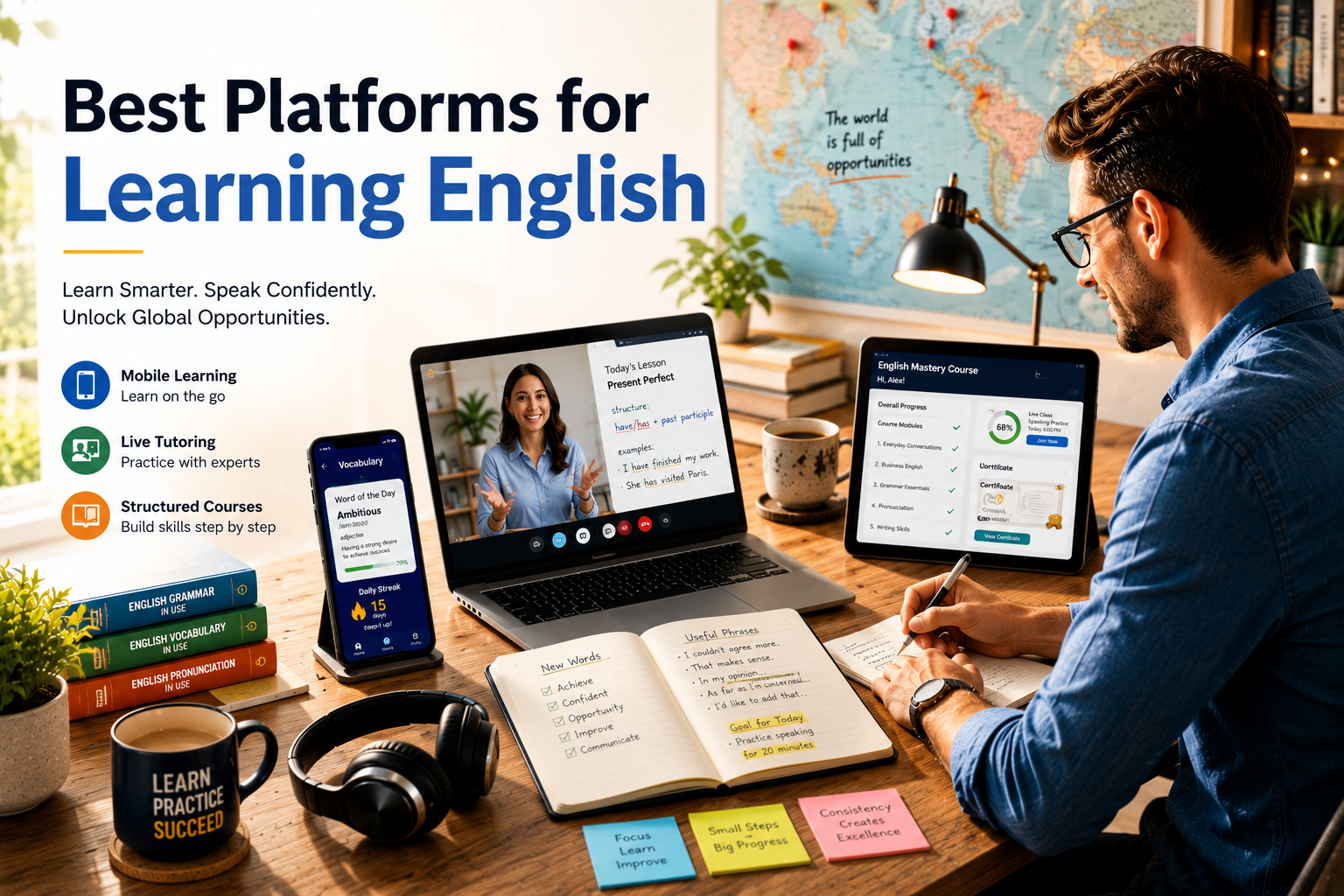
Best Platforms for Learning English: Your Guide to Fluency
Mastering a new language can completely transform your career, expand your travel experiences, and spark immense personal growth. Finding the right tools is the critical first step toward achieving your goals. Today, the best platforms for learning English offer unprecedented flexibility, allowing you to study whenever and wherever you want. Whether you are prepping for an upcoming professional exam or practicing conversational skills for an international vacation, digital resources make education highly accessible. According to global training data from the British Council, millions of adults worldwide actively seek flexible online environments to improve their global communication skills.
However, the sheer volume of available apps, software systems, and websites can feel overwhelming to navigate on your own. Every learner has unique needs, budgets, and schedules that dictate their ideal learning environment. A tool that works perfectly for a visual beginner might frustrate an advanced student who needs real-time conversation practice with a native speaker. Therefore, choosing the wrong application can waste your valuable time, deplete your budget, and significantly lower your motivation.
This comprehensive guide breaks down the best platforms for learning English this year. We evaluate their core features, teaching methods, and pricing structures to help you make an informed decision. If you’re also looking for practical study strategies, read our guide on learning English as a second language for additional tips to improve your speaking, listening, reading, and writing skills. By exploring these insights, you’ll easily identify the ideal service for your learning style. Let’s dive into the top choices available right now.
Top Choices: The Best Platforms for Learning English
Choosing the right virtual classroom depends heavily on how you absorb information and process new linguistic concepts. Some students thrive with structured grammar drills and vocabulary flashcards, while others prefer casual, spontaneous conversations with native speakers. The digital educational market has evolved rapidly to serve both methods exceptionally well. By understanding the core mechanics of each delivery system, you can choose a product that aligns perfectly with your cognitive habits. Let us examine the top-performing services across different categories so you can understand their unique benefits.

Interactive Mobile Apps for On-the-Go Practice
For absolute beginners, mobile applications offer a low-pressure and affordable entry point into language study. These tools use gamification to make daily practice feel like an entertaining game rather than a tedious academic chore.
-
Duolingo: This famous tool uses quick, bite-sized lessons focused on translation, basic syntax, and vocabulary building. It is perfect for establishing a daily study habit, though it lacks deep conversational practice or advanced speaking scenarios.
-
Babbel: This premium subscription service offers a much more structured approach to language learning. It focuses heavily on real-world conversations, practical grammar explanations, and helpful speech recognition tools that analyze your pronunciation instantly.
These mobile services are excellent for building a foundational vocabulary and understanding baseline sentence construction. However, software algorithms can only take you so far on your educational journey. You should eventually pair these digital apps with live speaking practice to truly achieve fluid conversational proficiency.
Live Tutoring Platforms for Personalized Feedback
If your primary goal is confident, fluent speaking, direct human interaction is absolutely essential. Live tutoring services connect you directly with experienced instructors for customized, real-time feedback that targets your personal weaknesses.
-
Preply: This massive marketplace allows you to browse thousands of independent tutors based on their hourly budget, availability, and specific native accent. You can easily find specialists for business writing, conversational fluency, or formal exam preparation.
-
Cambly: If you prefer instant access without booking hours ahead, this option connects you to native speakers around the clock. It is highly effective for casual, unstructured chatting and conquering your fear of vocal mistakes.
Expert Insight: Working with a live tutor forces your brain to think dynamically and translate thoughts quickly. Consequently, you overcome the fear of making mistakes much faster than you would using standalone software programs.
Structured Online Courses for Academic Growth
Some learners need a traditional classroom curriculum with clear milestones, formal grading rubrics, and accredited certificates. Academic web portals fill this gap perfectly by offering structured university-level courses taught by real professors.
-
Coursera: By partnering with major global universities, this site provides comprehensive specializations in corporate communication, technical presentation, and professional academic writing.
-
edX: This portal features deep, self-paced courses from top-tier global institutions, making it ideal for advanced learners who want rigorous instruction and formal testing metrics.
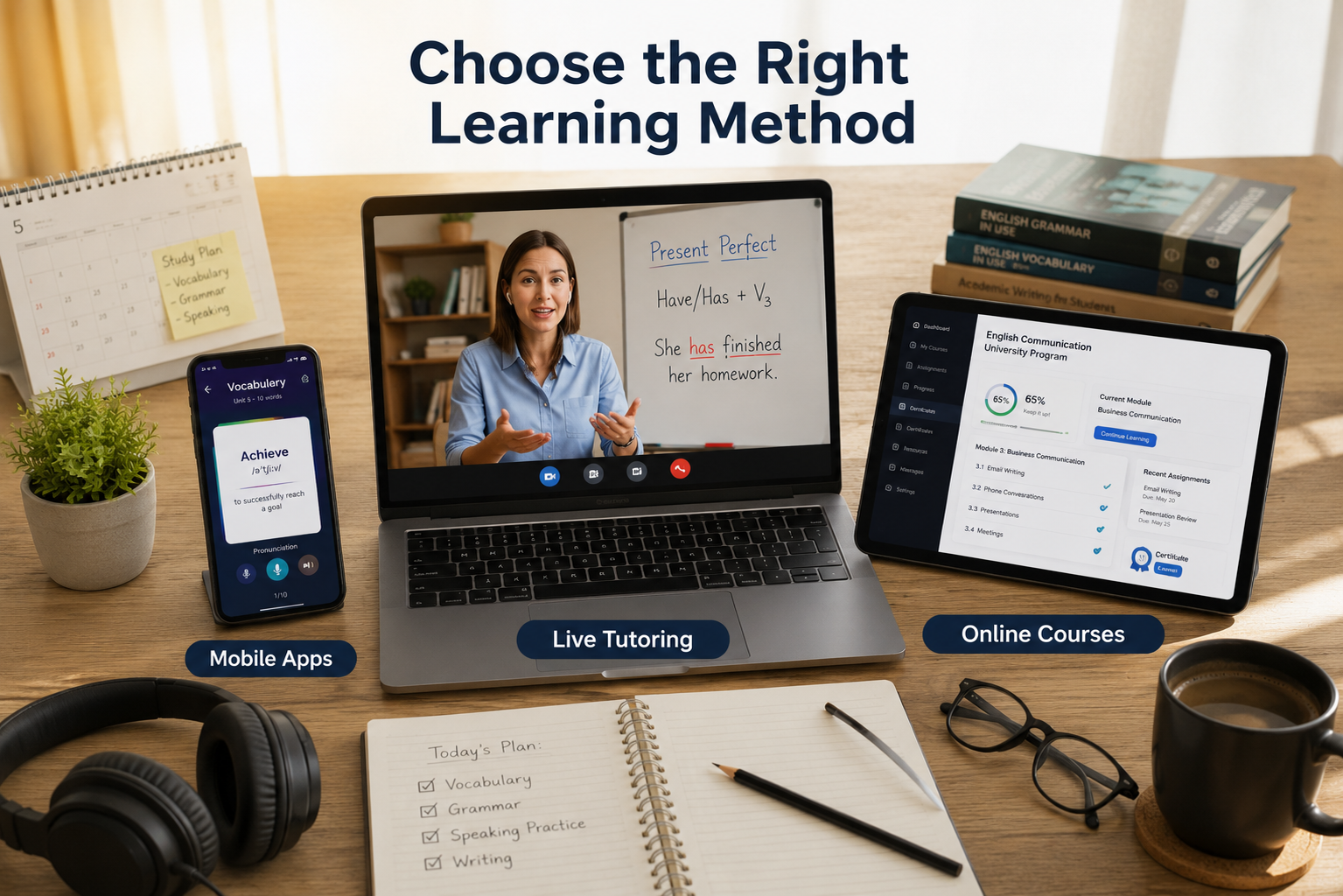
Different English learning platforms serve different purposes. Mobile apps are best for building vocabulary and developing daily learning habits through software-based exercises, making them ideal for beginners. Live tutoring platforms focus on improving conversational confidence by offering high levels of interaction through one-on-one sessions with real teachers. Academic online courses are well suited for learners who want to strengthen business English and formal grammar, typically providing a medium level of interaction through video lessons, quizzes, assignments, and peer grading. Choosing the right option depends on your learning goals, preferred teaching style, and the amount of personal interaction you need.
How to Maximize Your Digital Language Studies
Simply purchasing a premium software subscription does not guarantee that you will become fluent. To get the maximum value out of these digital tools, you must approach your weekly studies strategically and deliberately.
First, set a realistic daily schedule that fits your current lifestyle. Studying for fifteen minutes every single day yields far better long-term results than cramming for two hours once a week. This continuous consistency allows your brain to retain new vocabulary much more effectively by moving information from short-term memory to long-term memory.
Second, do not rely on just one application to do all the heavy lifting. For example, you can use a mobile app to learn new words during your morning commute, then schedule a weekly live tutoring session to practice speaking those words out loud with a native coach. Combining different methods accelerates your path to fluency and keeps the learning process engaging.
FAQ SECTION
Which are the best platforms for learning English for beginners?
The best platforms for learning English for beginners are Duolingo and Babbel. Duolingo offers a free, engaging way to build basic vocabulary through short games and quizzes. If you want a stronger understanding of grammar and sentence structure, Babbel provides more detailed explanations. These best platforms for learning English help you build confidence before speaking with real people. They create a safe environment where you can make mistakes without embarrassment while training your ear to recognize English sounds. You can also repeat audio, complete exercises, and learn at your own pace. One reason these are considered the best platforms for learning English is their beginner-friendly approach. They allow you to develop essential vocabulary and grammar skills before moving on to live conversations with teachers or native speakers.
Over time, the best platforms for learning English provide a solid foundation of vocabulary and common verbs. As a result, you’ll feel more prepared and confident when joining your first live English conversation or online class. If you’re comparing the best platforms for learning English, starting with Duolingo or Babbel is an excellent choice because both offer structured lessons that make learning easier for beginners.
Can I achieve full fluency using only mobile apps?
No. Achieving complete conversational fluency using only mobile apps is unlikely for most learners. While apps are excellent for learning vocabulary, pronunciation, and common phrases, they cannot fully replicate real conversations.
To speak naturally, you eventually need to practice with native or fluent speakers who use idioms, slang, and natural speech patterns. Treat language apps as a starting point rather than a complete learning solution.
Apps can correct spelling and simple exercises, but they cannot always provide detailed feedback on tone, context, or natural expression. Developing fluency requires responding to unpredictable conversations in real time, which only regular speaking practice can provide.
How much do online English tutoring platforms cost?
The cost of online English tutoring depends on the platform and the teacher’s experience. On marketplaces like Preply, instructors usually charge between $10 and $40 per hour, depending on their qualifications and location. Services like Cambly offer subscription plans starting at around $30 per month for limited weekly sessions.
Most learners can find an option that fits their budget by comparing teachers, lesson formats, and subscription plans. Many platforms also offer trial lessons to help you choose the right tutor.
Specialized tutors, such as those preparing students for the IELTS exam or teaching business English, often charge higher rates. In contrast, conversation-focused tutors usually offer more affordable lessons. Choosing a tutor based on your learning goals helps you balance cost with the level of expertise you need.
Are certified academic courses worth the investment?
Yes, certified courses are highly valuable if you need official credentials for your career advancement or university applications. Programs on Coursera or edX provide structured professional training designed by top academic minds. They teach advanced skills like technical writing, corporate presentations, and nuance in professional environments. These platforms issue digital certificates that you can display directly on your resume or LinkedIn profile to prove your language competency to recruiters. Beyond the piece of paper, the deep academic design forces a level of rigorous reading and analytical comprehension that simple flashcard apps cannot replicate. You interact with long-form literature, analyze complex sentence frameworks, and review peers’ essays. This comprehensive environment ensures you grasp the underlying architectural laws of the language. If your ultimate goal involves working in an international corporation or studying at an English-speaking university, the deep professional growth gained from these platforms justifies the premium cost.
How many hours a week should I spend studying?
Consistency matters far more than the total number of hours you clock in a single day. Aiming for roughly three to five hours per week is ideal for steady, measurable progress over time. Splitting this time into daily twenty-minute sessions prevents mental fatigue and improves your long-term memory retention. Regular, short exposures keep the language fresh in your mind and help you build a sustainable daily habit that persists for months. Cramming for four hours straight on a Sunday afternoon often leads to cognitive overload, meaning you will likely forget the vast majority of the information by the following weekend. By spreading out your exposure, you trigger your brain’s spaced repetition tracking, which signals that the language is vital for daily survival. Over several months, this steady routine accumulates hundreds of hours of high-quality exposure, completely transforming your comprehension skills without causing burnout or disrupting your professional workday schedule.
CONCLUSION
Finding the best platforms for learning English ultimately depends on your personal goals, budget, and learning preferences. Beginners can easily build a solid foundation using gamified mobile apps that turn study into play. Meanwhile, intermediate and advanced students will see much faster progress by investing in live tutoring or structured academic courses.
Every tool mentioned in this guide offers unique advantages designed for different stages of the educational journey. The most successful students do not limit themselves to a single method or app. Instead, they strategically combine different digital resources to create a well-rounded study routine that tackles reading, writing, listening, and speaking simultaneously.
Remember that technology is simply a tool to facilitate real human connection across borders. True fluency requires patience, regular practice, and a willingness to step outside your comfort zone during live conversations. Take action today by downloading an app, enrolling in a course, or booking a trial lesson with a professional tutor to kickstart your language skills and unlock new opportunities worldwide.