
The Complete Guide to the Benefits of Coconut Oil for Health and Skin
Coconut oil has earned a permanent place in kitchen pantries and bathroom cabinets worldwide. People use this tropical oil for cooking, skincare, haircare, and various personal care routines. Understanding the genuine benefits of coconut oil helps separate popular wellness claims from evidence-based information. Coconut oil contains medium-chain fatty acids, including lauric acid. However, its high saturated fat content makes moderation important. The Harvard T.H. Chan School of Public Health explains why coconut oil should not automatically be considered a healthier alternative to unsaturated oils.
Whether you want to moisturize dry skin, choose an oil for cooking, or improve your haircare routine, understanding its uses matters. This guide explores the nutritional properties, potential health benefits, skincare applications, and possible side effects of coconut oil. You will also learn how coconut oil differs from whole coconut and how to use it responsibly. With realistic expectations and balanced dietary choices, you can decide whether coconut oil suits your everyday wellness routine.

What are the 10 benefits of coconut oil?
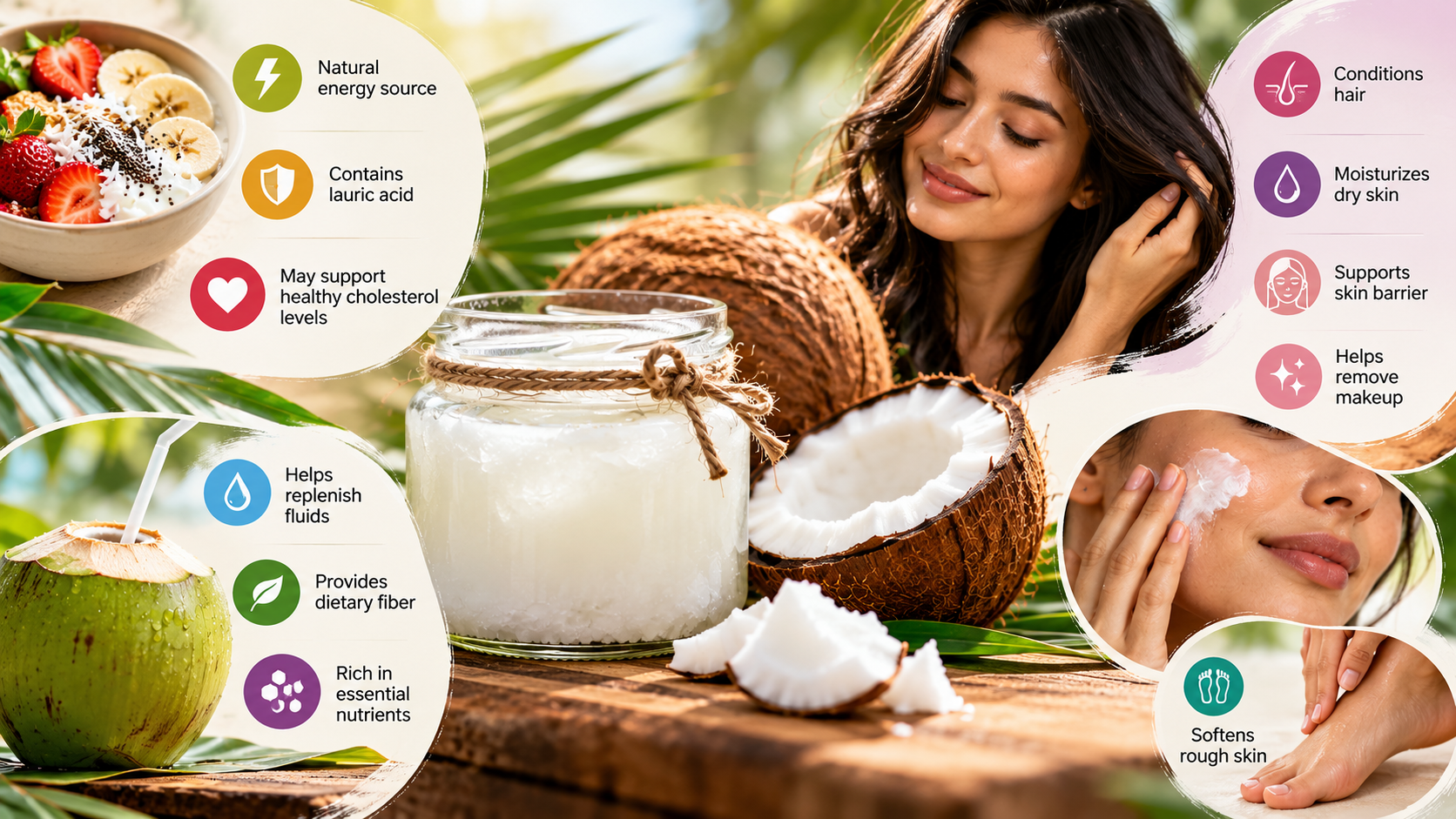
The potential benefits of coconut oil depend on how you use it. Some applications, particularly moisturizing dry skin and conditioning hair, have practical benefits. Other popular health claims require stronger scientific evidence. Here are ten commonly discussed uses and properties of coconut oil.
- Provides energy: Coconut oil contains fats that your body can use for energy. However, most of its fatty acids are not metabolized exactly like pure medium-chain triglycerides.
- Contains lauric acid: This fatty acid shows antimicrobial activity in laboratory studies, although its effects in the human body vary.
- Moisturizes dry skin: Coconut oil helps reduce moisture loss by forming a protective barrier.
- Conditions hair: It can penetrate hair fibers and help reduce protein loss during washing.
- May increase HDL cholesterol: Some studies report higher HDL levels, but this does not establish better heart health.
- Works for cooking: Coconut oil is suitable for selected cooking methods when used at appropriate temperatures.
- Softens rough skin: It can improve the feel of dry elbows, knees, and heels.
- Supports oil pulling: Some people use it for oral hygiene, although evidence for additional dental benefits remains limited.
- Helps remove makeup: It dissolves many oil-based cosmetic products.
- Supports skin barrier care: Its moisturizing properties may help certain dry skin conditions.
These uses do not mean coconut oil treats every health problem. Its nutritional value and effects depend on the amount consumed, your skin type, and your overall routine.
What are the 10 benefits of coconut?
Whole coconut offers nutritional benefits that differ from those of coconut oil. Coconut meat contains fiber, minerals, and dietary fat, while coconut water provides fluids and electrolytes. Coconut flour also offers a useful alternative for certain gluten-free recipes. Here are ten nutritional features worth understanding.
- Provides dietary fiber: Coconut meat contains fiber that supports bowel regularity.
- Helps replenish fluids: Coconut water supplies water and electrolytes, although its suitability depends on your hydration needs.
- Contains essential minerals: Coconut meat provides manganese, copper, and other minerals in varying amounts.
- Provides antioxidant compounds: Coconut contains phenolic compounds that may contribute to antioxidant activity.
- Supplies dietary energy: Its fat and carbohydrate content provides calories for everyday activities.
- Supports digestive health: Fiber in coconut meat can help maintain normal bowel function.
- Offers a gluten-free flour: Coconut flour works in many baking recipes, although its high fiber content affects texture.
- May promote fullness: Fat and fiber can contribute to satiety.
- Adds variety to meals: Coconut meat, milk, flour, and water offer different culinary uses.
- Contributes to nutrient intake: Whole coconut can form part of a varied, balanced diet.
However, these benefits depend on the product and serving size. Coconut oil contains virtually no fiber, while coconut water contains much less fat than coconut meat. Coconut products can also differ considerably in calories, added sugar, and saturated fat. Choose the form that matches your nutritional needs rather than assuming every coconut product provides identical benefits.
Is eating a spoonful of coconut oil good for you?
Eating a spoonful of coconut oil provides concentrated dietary fat, but it is not necessary for good health. Some people add it to coffee, oatmeal, or smoothies because they enjoy its flavor and texture. Others believe it increases metabolism, improves mental focus, or supports digestion. However, there is insufficient evidence to recommend a daily spoonful for these purposes. Coconut oil contains substantial saturated fat and calories, so adding it without adjusting your overall diet can increase your daily energy intake.
A tablespoon contains approximately 120 calories and around 11–12 grams of saturated fat, depending on the product. Eating large amounts may also cause nausea, abdominal discomfort, or diarrhea in some people. If you enjoy coconut oil, use a modest quantity in meals rather than treating it as a supplement. Replacing some saturated fats with unsaturated oils, such as olive or canola oil, is generally more consistent with heart-health recommendations. Your overall dietary pattern matters more than any single ingredient.
Manage Daily Saturated Fat Intake Responsibly
Managing saturated fat intake is important when deciding how much coconut oil to consume. Although coconut oil comes from a plant, its saturated fat content is high. Excessive intake can raise LDL cholesterol, which is associated with an increased risk of cardiovascular disease. This makes portion control particularly important for people who regularly eat coconut oil or other high-fat foods.
The American Heart Association recommends limiting saturated fat to less than 6% of total daily calories for people who need to lower their LDL cholesterol. Other dietary guidelines commonly recommend keeping saturated fat below 10% of total calories. Your individual needs may vary depending on your health and medical advice.
For a practical approach:
- Measure coconut oil instead of pouring it freely into meals.
- Consider using olive, canola, or other unsaturated oils more often.
- Check the saturated fat content of packaged foods.
- Avoid adding coconut oil to your diet solely for unproven health benefits.
You do not need to eliminate coconut oil completely. Instead, consider your total saturated fat intake and the nutritional quality of your overall diet.
How It Helps Moisturize Dry Skin
Coconut oil can help moisturize dry skin by reducing moisture loss from the skin’s surface. Its oily texture forms a protective layer that helps keep the skin soft and reduces dryness. Some research suggests that virgin coconut oil may improve skin hydration and barrier function. These properties make it a practical option for certain dry areas, including elbows, knees, hands, and heels. Its fatty acids also show antimicrobial activity in laboratory studies, but this does not mean applying coconut oil prevents or treats skin infections.
Coconut oil may help some people manage dryness associated with mild skin irritation. However, it is not a substitute for prescribed eczema treatments or medical care for persistent inflammation. Its suitability also depends on your skin type. People with oily or acne-prone skin may experience clogged pores, breakouts, or irritation after facial application. If you want to try it, apply a small amount to a limited area first and observe your skin’s response. Stop using it if irritation develops. For deep wounds, infected skin, or persistent rashes, seek appropriate medical advice instead of relying on coconut oil alone.
Is Daily Facial Application Suitable for You?
You can apply coconut oil to your face daily if your skin tolerates it, but it is not suitable for everyone. Its thick, occlusive texture helps reduce moisture loss, which may benefit people with dry skin. However, coconut oil is considered highly comedogenic, meaning it may clog pores in some individuals. This can contribute to blackheads, whiteheads, and acne breakouts. If you already experience frequent pimples or have oily skin, a lighter moisturizer may be a better option.
If you want to try coconut oil on your face, follow these precautions:
- Start with a small amount: Apply a thin layer to a limited area.
- Monitor your skin: Watch for clogged pores, redness, itching, or new breakouts.
- Avoid irritated areas: Do not apply it to skin that reacts badly to the product.
- Choose alternatives when needed: Fragrance-free moisturizers and non-comedogenic products may suit acne-prone skin better.
Squalane and jojoba oil are alternatives worth considering, although individual results can vary. Coconut oil may also help dissolve makeup, but remove the residue thoroughly. Choose a product based on your skin’s needs rather than assuming natural ingredients are always gentler.
Potential Risks and Digestive Problems
Eating too much coconut oil can cause digestive discomfort and may affect your cholesterol levels. Because it contains concentrated fat, large servings can trigger nausea, abdominal cramps, bloating, or loose stools, particularly when introduced suddenly. Individual tolerance varies, so an amount that causes no discomfort for one person may upset another person’s stomach. Coconut oil is also calorie-dense. Regularly adding large amounts to meals without adjusting other foods can increase total calorie intake and contribute to weight gain over time.
Another concern is its high saturated fat content. Frequent consumption can raise LDL cholesterol in some people, potentially increasing cardiovascular risk. The effect depends on your overall diet and what coconut oil replaces. Replacing unsaturated oils with coconut oil is generally less favorable for heart health than choosing oils rich in unsaturated fats. Coconut allergy is possible, although uncommon, and people with suspected allergic reactions should avoid further exposure until they receive appropriate advice.
To reduce potential side effects, use modest portions and prioritize a varied diet. Pay attention to your body’s response rather than assuming that daily consumption is necessary. If you have high cholesterol or an existing cardiovascular condition, discuss suitable dietary fat choices with a qualified healthcare professional.
Frequently Asked Questions
What is the difference between virgin and refined coconut oil?
Virgin coconut oil comes from fresh coconut meat through cold-pressing methods that preserve natural aroma, delicate polyphenols, and a mild tropical flavor. In contrast, manufacturers produce refined coconut oil from dried coconut copra, bleaching and deodorizing it to create a neutral scent and a higher smoke point. Virgin oil works best for raw skin care and light culinary sauteing, whereas refined oil suits high-heat baking and neutral frying applications.
Can coconut oil improve hair strength and prevent breakage?
Yes, coconut oil directly benefits hair strength thanks to its unique chemical affinity for natural hair proteins. Lauric acid possesses a low molecular weight and a straight, linear carbon chain that penetrates deeply inside the hair shaft rather than merely coating the surface. Applying it as a pre-shampoo conditioning treatment seals delicate cuticles, reduces moisture swelling during washing, and noticeably minimizes everyday styling breakage.
Does coconut oil help with weight loss?
Coconut oil is not an automatic weight-loss solution, despite popular claims regarding medium-chain triglycerides. While these fats slightly boost thermogenesis and increase temporary feelings of fullness compared to long-chain lipids, coconut oil remains exceptionally calorie-dense. Adding excess tablespoons to your regular daily diet without cutting calories elsewhere will hinder weight loss efforts. Use it strictly as a replacement for other dietary fats rather than an add-on.
How should you store coconut oil to keep it fresh?
Store coconut oil in an airtight glass or food-safe plastic container placed inside a cool, dark kitchen pantry away from direct sunlight. Coconut oil naturally liquefies at roughly 24°C (76°F) and solidifies in cooler temperatures; this temperature-driven phase shifting does not harm quality or shelf life. Kept free of moisture and stray food particles, high-grade virgin oil stays fresh for up to two years.
Conclusion
Understanding the proven benefits of coconut oil enables you to use this multipurpose tropical fat safely and strategically. From providing quick dietary energy to shielding dry skin from moisture loss, it remains a reliable staple in both modern kitchens and daily beauty routines. However, balanced consumption and selective topical usage remain essential. Its high saturated fat concentration warrants moderation in everyday cooking, and its pore-clogging potential means it works far better on dry body skin than on breakout-prone complexions.
By respecting its distinct physical properties, you can harness its strengths without experiencing unexpected digestive problems or skin blemishes. Treat coconut oil as a versatile tool rather than an all-in-one miracle cure. Start by introducing small amounts into your diet or skincare routine, listen closely to how your body responds, and enjoy its natural nourishing qualities responsibly. For more practical ideas about using everyday ingredients, explore how to utilize your basic ingredients in your cooking.