All posts by Vikas Chaudhary

Photo Session with Your Pet: See Preparation Tips

Photo Session with Your Pet: See Preparation Tips

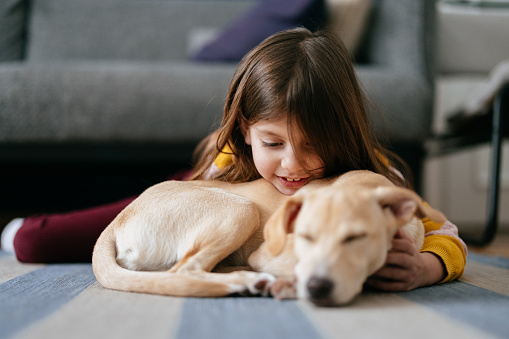
The most photogenic subjects imaginable are probably animals. While everyone enjoys casually snapping pictures of their dogs, cats, and other cherished animal friends, others go a step farther and arrange a professional photo shoot. If you want to have priceless photo session that will preserve memories of your pet, this can be a terrific investment. This photo session can be proudly shown to other animal lovers, shared on social media, and framed to place on the wall.

What do you want in this photo session?

IMAGE CREDITS: Unsplash.com

Think on the type of images you want and what you want to do with them before you even start talking to the photographer about the photo shoot. Do you desire pictures that you can frame and display? a range of pictures that you may upload to an album and publish online? You could have one or more objectives. Think about it and talk about it with your family or other pet-loving people. You can better organize the session if you can picture the type of photos you want to take.

Planning photo session with photographer

The more effectively you communicate with the photographer during a photo shoot, the more likely it is that you will be pleased with the outcome. It’s very crucial to plan things in advance for pet photo shoots. So that you and your pet are ready for the session, you and the photographer must be aware of what to expect. There are numerous options for a pet photo shoot. Considerable factors include:

Grooming your pet for photo session

IMAGE CREDITS: Unsplash.com

In order to appear your best, you can visit a salon or a hairstylist in advance of a self-portrait photo shoot. The similar approach should be taken with pets. Your pet will look his best during the shoot if you bathe him, cut his nails, and perform other care. Plan a grooming session for them soon before the shoot if you typically take them there. If you’d prefer, you can also brush and bathe your pet at home. It is also important to keep in mind that treating your pet for fleas or other bugs prior to the shoot can help to reduce scratching and discomfort.

Your pet’s state

In order to appear your best, you can visit a salon or a hairstylist in advance of a self-portrait photo shoot. The similar approach should be taken with pets. Your pet will look his best during the shoot if you bathe him, cut his nails, and perform other care. Plan a grooming session for them soon before the shoot if you typically take them there. If you’d prefer, you can also brush and bathe your pet at home. It is also important to keep in mind that treating your pet for fleas or other bugs prior to the shoot can help to reduce scratching and discomfort.

Essential accessories of your pet

IMAGE CREDITS: Unsplash.com

Bring everything required to keep your pet content and relaxed if you’re taking it to the photographer’s studio or another venue (such a park or other open space). Here are a few ideas.

  • Treats will make it much simpler to coax a dog into performing the poses you want.
  • a harness or leash. You also need any leashes or harnesses required to control the animal. Remember that you can photograph the animal with the leash on and then remove it using Photoshop or another program.
  • Any other items to occupy and calm your pet throughout the journey and in between vaccinations, such as toys or bones.
  • Water and a dish (like a gallon jug).

Feeding your pet

Of course, feeding needs to be customized for your pet’s needs, age, breed, and other aspects. But generally speaking, it’s better to feed your pet a little meal a few hours before a photo shoot. It will be difficult to keep your pet still if he is really hungry throughout the shoot. But if he isn’t overstuffed, rewarding him with sweets will work better to get his cooperation.

Display of artwork

What kind of artwork you want to display is something you should think about. You could prefer a gorgeous album on your coffee table that you can flip through with family and friends rather than many framed items hanging in your foyer.

Consider the location where you would like to exhibit your portraits. Would you like them in your chic, contemporary living room? Or perhaps in your inviting home library? Consider your favorite forms of landscape and what kinds would look best in those areas. There are numerous options available.

Make it a fun photo session

IMAGE CREDITS: Unsplash.com

The hardest tip yet might be this: DON’T STRESS! Don’t stress over your pet’s angelic appearance or how it should pose. The majority of the dogs and cats I shoot are merely typical house pets without any further training. Photographing a pet with personality is a lot of fun, and we want that personality to come through in the images.

Great pet photos require a lot of time and patience to produce. There will be a lot of waiting and multiple repetitions of postures or photos. This is entirely typical. It’s best to arrive in good spirits and with low expectations for your pet. Be sure to enjoy yourself! 

USEFUL LINKS:

Keep hovering to know more:

Tricks to best prepare for photoshoot with your pet

See what to wear to your photo session here 


Always Look Fantastic in Photos: Know everything 

Always Look Fantastic in Photos: Know everything

Everyone is curious in how to look better in photos. There are specific tips and tactics you can employ to ensure you always look your best, whether you’re attempting to expand your Instagram following or simply want to know how to look fantastic in images with your pals. Nowadays, posing for pictures is an art, and it’s not only for actors and super models. Check out these advices on how to  look beautiful in pictures.

We’ve all been in front of the camera at some point, whether it was for a selfie, a friend’s wedding, or even our own wedding.  Additionally, if you’ve ever looked at a photo of yourself and felt unattractive, then this blog post is for you.

Follow some of our straightforward advice on how to appear good in pictures if you anticipate ever having your picture taken.

Know yourself: look fantastic

IMAGE CREDITS: Unsplash.com

Look at pictures of yourself—both ones you like and ones you don’t—and decide why you look good or awful. Can you identify the variations? Maybe you’ve noticed that particular types of clothing or hairstyles make you look better. Additionally, you might not like how the camera catches you or discover that smiling makes you look lot better in pictures. Make a list of the things you enjoy and dislike so you can continue to look fantastic in pictures.

Practice your poses

It’s not simply for models to practice their most attractive grins and poses. You must practice if you want to learn how to be more photogenic. For the greatest angles, stances, and smiles, practice in front of a mirror or even a camera. Try out various angles and get comfortable with angling your body in positions you can repeat in front of the camera.

Wear splendid outfits: look fantastic

IMAGE CREDITS: Unsplash.com

In a photograph, your clothing can make a huge difference. You won’t look decent in pictures if you don’t dress to flatter your form. Choose colors that complement your skin tone and styles and cuts that suit your figure. The most crucial thing is to feel good in whatever you’re wearing because it will definitely show.

Consider carefully what you’ll wear for your photo shoot. To reduce unnecessary distraction, combine solid colors with striking graphics that aren’t very busy. Additionally, pay attention to how your clothing fits you. To guarantee that your garment suits your body form, make sure your sizing is accurate. Make sure you feel fantastic and at ease, and that it matches your sense of style.

Perfect matching make-up

Your photo can be made or broken by your makeup. A proper match for your foundation is crucial. A photo makes it very clear if something is overly light or dark. For blemishes and dark circles, use a concealer that matches your skin tone, and for your t-zone (forehead, nose, cheeks, and chin), choose a translucent powder to prevent your face from looking oily.

Focus on your eyes: look fantastic

There are several things you can do to assist make that happen; you always want your eyes to captivate viewers and serve as the main point in photographs. It’s imperative to wear mascara and curl your lashes. You get that glimmer because these two things make your eyes more open and enable lighter to enter them.

Your hair is the thing: look fantastic

IMAGE CREDITS: istockphoto.com

The last thing you want is for your hair to appear lifeless and flat in a picture. Avoid using too much hair product to prevent your hair from seeming wet and crunchy, control frizz, and flip your head over just before the photo to add volume (if your haircut permits it).

Wear a natural smile

It won’t appear nice if you’re trying too hard to grin in your pictures. Be careful to grin as naturally as you can. Think about something or someone that makes you happy while relaxing your face and jaw muscles and focusing your eyes. Also keep in mind that practice makes perfect. Before approaching the camera, practice your smile in the mirror.

Smiling with and without teeth: look fantastic

While it is more flattering for some people to grin without teeth, it is healthier for others. To determine which is best for you, try both in the mirror. Practice is essential if you decide to grin without teeth because it could not look like a smile at all.

Lightning effect

IMAGE CREDITS: istockphoto.com

It’s important to have good lighting, and using natural light is usually best. Make sure your blinds are open if you’re inside so the light can pour in. In order to get the greatest lighting for your selfie, turn around. Make sure the sun isn’t too bright if you’re outside. In your photographs, you don’t want to be squinting.

A few general pointers include avoiding standing directly under a light because it will cast strange shadows on your face.  Because they are professionals, your photographer will be able to assist you with this, so pay attention to what they say.  The ideal lighting for outdoor photography will be 15 to 20 minutes before and after sunset.  Your photographer will always aim to position you in complete shade, unless it’s a cloudy day, to prevent mottled lighting and strange shadows.

Facing the camera: look fantastic

When it comes to posing for shots, your photographer will assist you, but generally speaking, we advise against facing the camera directly. You’ll always look better in images if you hold your body at an angle to showcase your features.

If you often blink when being photographed, try closing your eyes shortly before the picture is taken and slowly opening them just before the shutter releases.

Control your chin: look fantastic

IMAGE CREDITS: Unsplash.com

Your face will appear lifted and more angular in photos where your neck is long and your chin is tipped slightly forward. Before your professional photo shoot, you might want to practice this to get comfortable holding your chin in that posture.

USEFUL LINKS:

See some more tips to look amazing in your photos

Find perfect location for your photoshoot with our guide 


What to Wear to your Photo Session?

What to Wear to your Photo Session?

The preparation for a great photograph includes a number of important steps, including choosing what to wear for the occasion. If  what you wear is overt or obvious, it could rapidly start to distract. We help you in choosing what to wear with our amazing guide on outfit.

To disappear into the backdrop is the ultimate goal of clothing. It may mean the difference between a really good portrait and another image. If you do not adhere to these fundamental rules, you can be requested to alter your outfit before I take your photographs.

Tone down bright colors: wear amazing

IMAGE CREDITS: Unsplash.com

Bright colors may reflect light and draw attention away from the face. Avoid wearing bright colors like red, pink, green, etc. When choosing lighter shades, stick to pastels and avoid pink tones. Pale blue and yellow complement denim or khaki trousers really well. For example, if you have scheduled a sunset photography session, these colors look fantastic in nature.

Patterns and print to be avoided

Avoid patterns and prints of any type. Whatever the size of the print or pattern, it will be distracting. Particularly in the case of digital photos, minute garment patterns (even a tiny herringbone pattern) might result in dreadful distortions that were not there before.

Don’t wear short sleeve or pants: wear amazing

IMAGE CREDITS: Unsplash.com

Clothing with long sleeves is a MUST! It’s equally crucial to wear long trousers rather than shorts for informal photographs. There will be more flesh in the picture on the exposed areas of the arms and legs than on the face itself. This is a significant diversion.

Eyeglasses: wear amazing

It’s possible to wear or not wear glasses. Of course, non-reflective lenses are very beneficial. Even better, it’s occasionally feasible to get a matched set of eyeglasses sans lenses. This is especially useful if your contact lenses occasionally blur the shape of your face.

Makeup and hair

Simple, off-the-face hairstyles are preferred. Distracting shadows are produced by hair that hangs down onto the sides of the face. Bangs that are excessively low to the face will block light from reaching the subject’s eyes, which are the face’s most crucial feature. Getting your hair and makeup done professionally before your photo shoot is always a good idea. It will significantly alter how you feel and appear. FMK Hair is suggested by Vivid Photography & Imaging. This is always OK if you have a favorite hair and makeup artist. As long as you give yourself enough time to do your hair and makeup before your planned appointment, you will feel and look amazing.

Neckline for the photoshoot: wear amazing

IMAGE CREDITS: Unsplash.com

A neckline that is near to the neck is the most attractive for anyone. In photos, a neckline with a lot of free space makes the neck appear thicker. On the other hand, the most flattering neckline is one that reaches the base of the neck, such as a turtleneck or a V-neck top. It tends to make a person look slimmer and attractively frames their face.

Family or group photos: wear amazing

Keep your outfits straightforward and coordinated. It must be carefully chosen to harmonize the bodies. Avoid using big logos and loud or busy designs. Best are solid colors. Decide first whether the outfit will have a warm tone (browns, etc.) or a cool tone (blues, greys, or blacks, etc.). Then, be sure to adhere to all of the directions listed above. Maintaining a group in a same color palette concentrates the viewer’s attention on the people and faces that make up the portrait. Groups with dissimilar colors usually become more distracting. If somebody in your family is exceptionally pale, wearing white might make pale skin appear even paler. White tops with khakis or trousers can look quite lovely and easy-going.

Jeans are a classic option that are perfect for informal, enjoyable photos because they are flattering and don’t expose panty lines or wrinkles. The top shirts are lighter, giving the photos a more relaxed and vibrant appearance. Because they accentuate natural skin tones, pastels are typically attractive as well. In addition to being slimming, black or other dark shirts worn over the top give the photos a more sombre and reflective air. Everyone should dress in color-coordinated ensembles (there needn’t be a uniform, but there should be a theme). Select for the kids clothing that fits well and doesn’t have much “growing room”. For a family portrait, white or black tops with jeans or khakis are always lovely.

Show your baby bump: wear amazing

IMAGE CREDITS: Unsplash.com

Because the idea is to highlight that gorgeous baby belly, I prefer shooting maternity on a plain black or white background. A flowing white outfit can also look wonderful, but wearing black from head to toe is typically an excellent idea. The greatest option is a straightforward button-down shirt in black, white, or both colors that allows you to quickly unbutton the bottom portion to show off your belly. Please encourage the father to join you (as well as your other children, if you have them; they should wear solid black or white). There will be several postures when your hands are visible, so make sure to take off any jewellery you do not want to appear in the photos.

New born babies

Most of the time, infants and babies are photographed in their birthday suits, which is when they look their best! Solid colors are typically the greatest choice if you want them to be shot wearing clothes. Include that fantastic outfit if you have one that you would love a picture of. You must have bare feet. You are welcome to bring any kind of prop you want to use. In order to create the artistic photos you’re after, I prefer parents to wear all-black outfits from head to toe.

USEFUL LINKS:

Keep on hovering for more tips on outfit 

When it comes to choosing props we have something for you


Gorgeous Outdoor Photos: Tips you need to know 

Gorgeous Outdoor Photos: Tips you need to know

Whether you want to take elegant shots for business or informal pictures of friends and family, being able to take exceptional outdoor portraits is a crucial talent. Outdoor portraiture is also highly gratifying because it allows you to get stunning images in glorious light while also taking in stunning views of the  outdoor landscape and urban environment.

However, taking beautiful pictures is no easy task. Working with your subject, making the appropriate settings, managing the light, thinking about your compositions, and many other things are all necessary. It’s understandable why so many aspiring portrait photographers find it difficult to get started.

Choosing the right camera: outdoor shoot

IMAGE CREDITS: Unsplash.com

You may take stunning outdoor photos with practically any camera model, from the most basic smartphone to the most sophisticated full-frame DSLR. However, if you want to increase your chances of success, I strongly advise that you pick your camera carefully.

Be sure to first get a DSLR or mirrorless model. One big advantage these cameras have over fixed-lens point-and-shoot cameras is the ability to use a range of lenses to capture different angles and looks. Your decision on a full-frame, APS-C, or Micro Four Thirds camera will be based on your level of interest, your financial situation, and how portable you need the camera to be.

Proper focal length

Although focal length and lens selection may not appear crucial, they can have a significant impact on your images. Because differing focal lengths call for you to be nearer or farther from your subject, perspective distortion will become more pronounced the closer you are.

Unchecked perspective distortion frequently produces unattractive body proportions; if you’re not careful, you’ll wind up with a long list of dissatisfied customers. (After all, asking “Why does my head look swollen?” from a client is the last thing you want to hear).

Remember that you don’t need to buy a specific portrait lens because almost every kit lens includes some of these focal lengths. If all you have is the lens that came with your camera, you’ll be OK.

Always shoot in RAW, avoid JPEG: outdoor shoot

IMAGE CREDITS: Unsplash.com

I’ve said these words a thousand times, and I’ll say them a million times more. The RAW file format is an unaltered compilation of the data collected by your sensor during the exposure. It is a digital negative of yours. Additionally, it offers you tremendous post-processing freedom and enhances image quality.

On the other side, a lot of what you record is lost when you photograph in JPEG format. You lose a lot of important details, such as tone range and colour nuance. It will only end in tragedy.

Shooting with right aperture and shallow depth

A shallow depth of field effect from a wide aperture will blur the background and highlight your subject. This is a crucial component of the “look” that expert portrait photographers adore, and it’s the kind of thing that can quickly transform your photos from ordinary to outstanding.

Therefore, if you can, shoot at f/2.8 or possibly f/1.8. Naturally, not every lens can operate at such a wide aperture; some stop functioning at f/5.6 and higher. If you can, I’d suggest investing in a wide-aperture lens (there are many fantastic low-cost ones, such a 50mm f/1.8).

Don’t include all points for focus: outdoor shoot

Always keep in mind that you must master focus if you hope to consistently get excellent outdoor pictures.

And a major, major focusing error I observe novices making? employing a lot of focus points in the hopes that one will capture the subject, or using the Auto AF area option where the camera chooses the focus point for you. Unfortunately, neither of those approaches is effective, and you’ll frequently get fuzzy, out-of-focus pictures, especially if you’re using a wide aperture.

Always focus on the eyes

IMAGE CREDITS: Unsplash.com

Yes, it’s crucial that you get your portrait images’ focusing right, but what exactly does it entail? maintaining razor-sharp vision, of course!

As the windows to the soul, eyes are the natural subject of any good portrait. The eyes should also be represented properly because they are the feature on the face with the highest detail.

When utilizing a wide aperture and focusing on the eyes, the shallow depth of field effect will also soften the skin.

Using a grey card: outdoor shoot

Grey cards are not always used by outdoor portrait photographers. However, I’m a major admirer of grey cards, therefore I strongly advise using one for each and every photo session.

Why? I’m going to explain this backwards to avoid any misunderstanding. There is always a way to choose a custom white balance when opening Adobe Camera Raw or any other RAW image processing program. Typically, you can use an eyedropper of some sort to click on the area of the image that you believe to be neutral grey.

Natural reflector is always beneficial

IMAGE CREDITS: Unsplash.com

While it might seem like there aren’t many reflectors available for outdoor photography, there are actually a lot of both natural and man-made reflectors that you can use to improve your pictures. Therefore, you can always rely on the environment around you if you don’t want to bring a reflector (or you forget yours for a photo).

You see what I mean? Additionally, double- and triple-check your setup to ensure that you have a natural reflector if you’re going to a place where one might not exist. You can buy pop-up reflectors, as I indicated above, but you can also create your own out of foam core or white cardboard.

Powerlines and signs to be avoided: outdoor shoot

We’ve already talked about keeping your camera focused on the subject’s eyes, but you also need to retain the viewer’s attention on the image as a whole and on your portrait subject in particular.

One or two trees, powerlines, signs, long blades of grass, a single item of trash, or even lengthy bits of grass can seriously detract from an otherwise excellent outdoor portrait shot.

Therefore, pay close attention to the space around your subject before taking even a single photo. Do you observe any deterrents? Anything that could detract from the picture? If so, remove it or reposition your topic so that any backdrop distractions are hidden.

USEFUL LINKS:

Click here to know some more tips on outdoor photography 

We have some alternatives to display your photos, see here 


Themed Photo Sessions: All you need to know about it!

Themed Photo Sessions: All you need to know about it!

In 2020, life underwent a significant transformation that persisted through 2021, 2022, and 2023. Our personal lives and our art were both affected, but in the thick of it all, fresh concepts and intriguing trends arose. Check out some amazing ideas for your themed photo session. These themed photo ideas will make your photography amazing.

Variety and togetherness: themed photography

IMAGE CREDITS: Unsplash.com

The experience of being in a pandemic led a substantial portion of society to reflect more deeply on many of the greater problems that face humanity. We came together as a result of the darkness, and we started to turn to our neighbours for support.

Look to variety and togetherness as a photo topic in 2023 as both life and art are imitating one another. Show how we are all in this together and that working as a team is how we survive.

Project the space: themed photography

Many of us now gaze at the stars and ponder what else might exist in the universe. Photography has greatly benefited from new technology; we can now use projections and computer representations in our work.

Why not use the expanse of the universe as inspiration to make some astronomical projections? Combine pictures of space with portrait, still-life, and other subjects!

Revive the renaissance vibes

IMAGE CREDITS: Unsplash.com

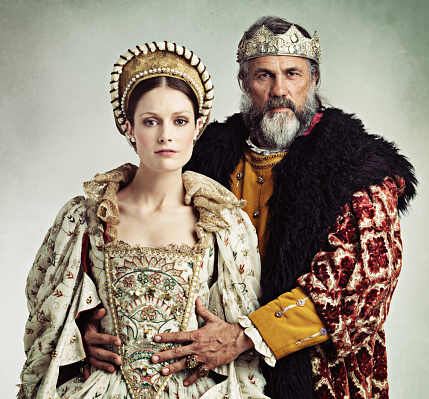
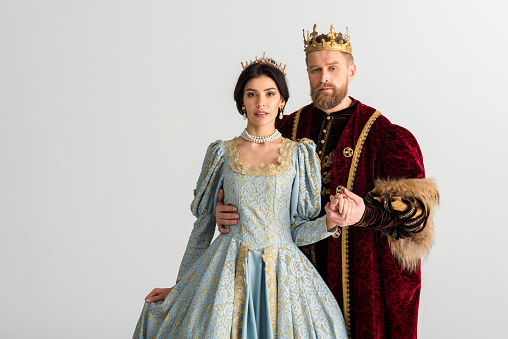
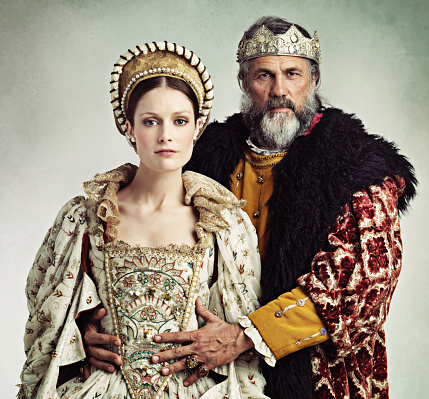
The past can always be usefully examined. The lovely appearance of Renaissance Europe is growing in popularity, particularly as more people rediscover past interests like attending Renaissance festivals! Bring out the corsets, puff sleeves, and gorgeous embroidered fabrics for your upcoming picture shoot.

You can achieve fantastic results by fusing contemporary culture with touches of Renaissance attire.

Engulf in mystery: themed photography

Everything in the world is mysterious. Why not make it a themed photo session?

The concept allows for so much creative freedom, even if you don’t personally practice mysticism! To take jaw-dropping portraits, you can employ accessories, fog machines, lights, and a variety of incredible shooting techniques. In addition to being a terrific technique to get out of a creative rut, it’s also a lot of fun.

Bold and exciting colors

Bold, energetic, exciting, and joyful are all attributes of color! All four of these things can significantly improve your photography. Try out dramatic backdrops, bold cosmetics, and bold haircuts. Have fun with the colors!

Get a little quirky: themed photography

IMAGE CREDITS: Unsplash.com

Let’s be kooky! In 2023, personalities are prominently displayed, and flat-lay product photography demonstrates this well. You are challenged to think creatively by this theme. Do something bizarre without fear!

Who gives a damn what people think? Give routine things a quirky spin.

Vintage is never outdated: themed photography

Throwbacks are popular on social media because we like reliving the past. Grab a throwback camera or experiment with editing to give your upcoming photo shoot a retro vibe. Additionally, utilize a flash without a diffuser and aim for a lot of brown and orange tones while setting up pictures. You might also think about making your photos black and white or sepia.

This topic may be found in a lot of recent branding imagery! There is great power in nostalgia.

Be around greenery

Slowing down allows you to experience nature’s beauty and unite with it. Why not make a whole series where the importance of flora is equal to that of your picture subject? To generate interesting photos, have your model stand in front of flowers and trees.

See what you can create by experimenting with shallow and deep depths of field!

Click while you nap: themed photography

We’ve wanted to normalize naps for a while, and we finally have! Play around with this entertaining photoshoot topic idea. There are so many funny and amusing ways to portray the wonderful feeling of a nap.

You can make fresh compositions with cushions and blankets, and you can add some hilarious stances for some amazing pictures.

A little bit of geometry

IMAGE CREDITS: Unsplash.com

Visual art has frequently used geometry throughout history (repetition is actually what makes humans grow!). So instead of taking typical portraits, start incorporating geometric shadows into your pictures to make them more fascinating.

There are several methods to accomplish this, most of which may be carried out at home:

  • Put a pattern on the wall or the target.
  • Place a cut-out stencil in front of a light source.
  • On a sunny day, cover windows with blinds.

Be a cowboy: themed photography

People have recently begun to pay attention to their origins and have even developed an interest in living off the land, which implies cowboy and western dress! A life of grit, honor, and pride may be incredibly beautiful.

Visit a ranch and document life in the American wilderness.

Distort reality

IMAGE CREDITS: Unsplash.com

What is reality, exactly? Recently, mine developed a warp and is still regaining its original shape. Use special items and photographic techniques to alter the viewer’s vision of the world by capitalizing on this sensation.

Try applying Vaseline to a glass window and then shooting through it. Or perhaps use a creative filter and have fun creating unique images. Do anything you can to distort it!

Capture the ordinary: themed photography

Due to the epidemic, the commonplace was elevated to the exceptional, and now that more businesses are operating normally, the commonplace is wonderful. There are countless photos that tell a narrative and highlight the commonplace.

Click from below

IMAGE CREDITS: Unsplash.com

It’s always a good thing to shift our perspectives, and one of the wonderful things about photography is that it allows us to give audiences a fresh viewpoint. Why not record life while you are lying on the ground? On the bottom, everything appears different!

Shoot your workplace

Even if not everyone enjoys their profession, you must record it if you do! The pandemic left a lot of passion projects unfinished, but now is the perfect opportunity to get started again. Capture the passion for work and the people who work hard to continue doing what they love.

Adventure as a theme: themed photography

Spending too much time indoors may cause you to yearn for adventure, and what better place to find adventure than in nature? Plan a photo session with a concept based on exploration. Show your subjects sprinting through the breath-taking vistas of our planet.

It’s a wonderful justification to venture outside and discover something new!

USEFUL LINKS:

Discover some more theme ideas for your photo session 

Make your family photoshoot a fun with these tips 


How to Choose a Professional Photographer?

How to choose a Professional Photographer?

Where should I look to get the best photographer? Or how to choose a wedding photographer. We sincerely hope that these ideas assist you to choose the right photographer.

You want the photographer you hire to provide perfect images. After all, these images—which capture a moment in the life of your kid, family, or loved one—will be preserved in time forever. especially when choose a wedding photographer because your wedding images can only be taken once.

Research to choose

IMAGE CREDITS: istockphoto.com

Consult with family and friends for recommendations, peruse websites, and read reviews. Your chances of discovering a diamond increase as you examine more images. Avoid asking questions in Facebook groups since you can receive unfavorable feedback.

Always choose a professional

Everyone knows someone who “takes photos,” but shooting excellent shots while travelling, setting up a fantastic shot, interacting with clients, providing ideal lighting, and editing photos are all talents that require training and expertise. Hire a qualified professional photographer rather than someone who only declares to be a photographer. Check out their portfolios, websites, and reviews. Genuine photographers maintain websites.

Check experience of the chosen one

IMAGE CREDITS: Unsplash.com

Similar to step number 2, examine the photographer’s work for consistency, qualifications, education, and experience. Everyone must start somewhere, but the best outcomes require a professional with knowledge of the industry. As this can significantly affect the quality of the final output, find out if the potential photographer has any training in art, photography, or picture editing.

Talk to former clients

Make sure to carefully read any reviews you come across online. You could inquire about getting in touch with former customers to receive their feedback. Customers who were satisfied with the photographer’s work would be able to elaborate on it for you. This will help you better comprehend the creative process. Speaking with a professional photographer’s clientele might reveal a lot about them.

Choose according to your style

To examine the photographer’s portfolio, go to their website and social media accounts. Does the photography approach fit your desired end results? Do you appreciate how the colors and edits have changed? The whites and the blacks are they both white? Which type of lighting, natural or artificial, do you prefer? If the results are produced in an entirely different manner from your own, you won’t be pleased. Selecting a photographer whose work you find lovely will increase the likelihood that you’ll appreciate the finished product.

Interview your photographer

IMAGE CREDITS: Unsplash.com

Request a consultation once you’ve reduced the number of prospects in your search. If you initially talk to potential photographers on the phone or in person, it will be simpler for you to decide how well your personalities will mesh.

You should feel at ease and able to talk honestly with your photographer. You’re more likely to feel completely at ease throughout the session if you feel comfortable speaking on the phone. Ensure that neither you nor your companion are bothered by the photographer.

By taking advantage of this opportunity to discuss the kinds of shots you are looking for, you may ensure that the photographer is comfortable working with kids, infants, and dogs if they will be present in the pictures. Ask to see all of the galleries they are required to give their customers.

Focus your priorities when you choose

As with other professions, photographers usually specialize in one or two areas of photography, such as weddings, maternity, children, families, landscapes, and animals. For example, choosing a wedding photographer may not be the greatest option for capturing your new-born’s first moments. Though it’s possible that a nature photographer wouldn’t be the best choice to capture your wedding. To get the photographs you want, find a photographer who specializes in them.

Talk about editing process

The best picture editors are also the best photographers. However, not all editors are created equal. Set clear expectations and enquire about the photographer’s experience and editing tools. Are you seeking extensive editing, little editing, or some combination of the two? Verify that the photographer you choose can meet your needs both throughout the shooting and editing processes. Each photographer offers their clientele a unique editing approach.

Always consider the fee when you choose

IMAGE CREDITS: Unsplash.com

Although hiring the photographer that charges the lowest price could be enticing, this is typically a sign of inexperience and lack of skill. Photographers seek a fair price for their services as well as what is necessary to keep their businesses operating. Ask whether there are any other costs not included in the upfront price, such as whether printing, editing, and other services are included or not. Although working with a skilled photographer doesn’t have to break the bank, you should be ready to invest a sizable sum of money to ensure the best results.

Location is very important

Location is key, particularly if you’re hiring a portrait photographer. whether you have a specific site in mind, investigate whether it will fit for your project or ask the photographer about her favorite shooting spots. Make certain the website is flawless. You can also check the area in advance to make sure it’s what you intended. Last but not least, find out if there is an extra fee for the photographer to travel to the place of your choice.

Wedding photography

IMAGE CREDITS: Unsplash.com

Compared to other photography genres, wedding photography is the most competitive. Ask a wedding coordinator or the wedding vendors if you still need help finding a photographer for your big day. If you simply ask, you are sure to receive more advice during the course of arranging your wedding. If this is something you are interested in, ask if they offer wedding albums because not all photographers do. The most crucial thing is to look at galleries from actual weddings rather than the themed wedding they created for their website.

USEFUL LINKS:

Choose your professional photographer with these simple steps given here

Click here to know most influential leaders in the history 

Questions You Should Be Asking Your Photographer

Questions you should be asking your photographer

What questions ought to you make of a photographer if you encounter them? What photography-related questions will clarify how they operate? What tips can you glean from their experience to enhance your own photography?

These are the questions that will help you understand how the photographer handles their own photography as well as provide you with the best, most helpful advice.

So, you’ll know how to get the most useful information the next time you run into a photographer you adore or simply interact with a photographer on a website or forum.

What is the one thing you wish you had known before you began taking pictures?: # questions

IMAGE CREDITS: Unsplash.com

Every photographer faces challenges when they first start out, but they all get better with practice. Accordingly, every photographer has one, two, or even hundreds of things they wish they had known when they first started.

How did you become a skilled photographer? # questions

Regardless of how good a photographer is, they weren’t born with photographic genius. Every photographer has gone on a trip because mastering camera settings, composition, light, and post-processing takes work.

So, question them on it. Inquire about their transition from amateur to professional status (or skilled amateur, semi-professional, etc.). What did they do that most benefited them? Was it studying photography-related books? courses in photography? watching a photograph? Practicing? A certain kind of magic bean?

Which gear do you use?

IMAGE CREDITS: Unsplash.com

Since this issue seems a little superficial and outstanding image are created by photographers, not equipment, I don’t advise you to start with it.

Nevertheless, equipment does matter, and comprehending a photographer’s setup can be beneficial for two reasons in particular:

It will provide suggestions for your own equipment (after all, if a photographer you admire uses a particular lens and produces razor-sharp shots, the lens is unquestionably capable glass!).

You’ll gain knowledge of the tools required for various types of photography. For instance, if you’ve never taken a panorama of a landscape, you might not be aware that you require a specific kind of tripod.

Which lens do you prefer to use? Why? # questions

This additional photography gear-related query seeks to ascertain why a photographer employs the particular lenses they do as well as what distinguishes some lenses from others. A talented photographer can create shots with any lens, but other factors like focal length, maximum aperture, autofocusing speed, and more can have an impact on your pictures (perhaps much more than you might believe!).

By the way, selecting from a group of high-quality lenses is less about figuring out which lens is sharpest. Instead, it’s about figuring out which lens best suits your own preferences and needs, so you can get the photos you want.

Do you bring anything else with you when you go out to shoot besides a camera and a lens?

The majority of photographers have one or two indispensable accessories, such as a cleaning kit, a portable charger, or even a specific pair of hiking boots.

According on the type and manner of photography, these items differ from photographer to photographer.

Asking a photographer about their necessities may be a lot of fun. Ask them why they carry the particular goods they do. And soon you’ll have a few things to put on your own wish list for gear!

Is there anything you regret buying among the photography equipment you bought? Why?

IMAGE CREDITS: Unsplash.com

The fact that it isn’t a frequently asked question contributes to its intrigue. What wouldn’t you buy if you were a photographer?

You’ll get a lot of varied responses to this, which is fantastic. Encourage the photographer to be as general or detailed as they’d want. Photographers may mention their dusty lenses, their tripods shaking on still days, their broken lights after five uses, or something completely different.

Take note of every component, but don’t allow that deter you from purchasing the tools on your own since what works for one person could not work for another!

What settings do you prefer? # questions

I advise you to keep this question open-ended because you want to discover the optimal parameters for particular situations as well as the settings that a photographer can’t live without. You don’t want to know the exact settings that a photographer employs occasionally.

While some photographers are quite picky about their settings, others like to leave everything on Auto and concentrate on lighting, composition, and processing. Therefore, if the photographer doesn’t provide much information, don’t press the issue (and don’t limit the photographer if they go on and on about the settings!).

What sort of post-processing equipment do you employ? How does your process look?

Post-processing is quite specific to each photographer, and it may be intimidating for new photographers, so if you have trouble with it, this is an important question to consider.

The program the photographer uses may be your starting point, but explore further. Inquire about particular tools and methods. (Do they assign colors? Which sliders are their favourites? Do they evade detection? And if they appear receptive, inquire about their process. In other words, how do they create an image from beginning to end? How does the procedure appear?

The secret of a photographer’s style may be found in the slightest of elements, so pay close attention when they are being discussed.

Which of all your pictures is your favourite? Why? # questions

IMAGE CREDITS: Unsplash.com

This is a terrific icebreaker question and a great way to get even the most reserved photographers talking about themselves and their work because photographers often adore discussing their own work.

A photographer will frequently describe how they approached the composition, why they appreciate the shot, and sometimes even the techniques they employed to create it if you ask them about their favorite work. It’s a treasure trove of knowledge!

Whose work has the greatest impact on you? # questions

The “influence” question is the most challenging to answer of all the questions to ask photographers on our list, but if you have the time and the photographer is open to it, it may provide amazing insights into their work.

USEFUL LINKS:

Click here to learn more about conversing with a photographer 

Discover some tips for photoshoot with children 


Unique Photo Session Ideas You’re Going to Love

Unique Photo Session Ideas You’re Going to Love

Nothing compares to making memories with your loved ones. Do you appreciate capturing lovely photos of your family and yourself? You are undoubtedly constantly looking for ideas for your next photo shoot. You’ll adore the unique photo ideas we’ve provided below.

Photo session on family history

IMAGE CREDITS: Unsplash.com

Do you like the pictures your grandparents or even great grandparents have taken? Why not try making your own? You can get the same appearance and feel with a little bit of editing.

Alternately, go all out with historical attire and a posed photo shoot.  A lot of photographers offer photos with historical attire and accessories.

Find photographers that have a good selection of costumes or shop online for attire. Look for those who specialize in the appearance and atmosphere of the historical period you want to recreate.

Generational photo-session

Why not make a photo that future family members can treasure? Photos are one of those commodities that are passed down through generations.

To represent the different generations of women in your family, take a photo with your daughter, mother, and grandmother. You can also include any other combination of family members in the shot.

Capture photo on pregnancy

Pregnancy growth may be shown in a variety of entertaining ways, and photographing it is the best way to remember this period of your life. Take a selfie with the pregnancy stick, the ultrasound image, or a sign indicating the gestational week in which the shot was taken.

Then, with the father and siblings present, professional maternity photographs are taken at 30-34 weeks.   Years from now, you’ll be able to share that precious moment with your child and walk them through your journey leading up to meeting them.

Click with your pets

IMAGE CREDITS: istockphoto.com

If you have pets at home, they will be very obedient models for a portrait session.

The way that dogs and cats act and react when being photographed varies greatly. Dogs will remain motionless for a photograph if a treat is included.

We’ve discovered that cats are most photogenic while sunbathing. Cats will wander from a sunlit patch to a sunny windowsill solely for warmth and like following the light throughout the day.

Take a picture of your cat from outside the window if it enjoys sitting on a sunny windowsill.

The quality of the golden light and how it highlights the subject are advantages of taking pictures of pets lounging in the sun.

Still photography

Another wonderful concept for a home photo shoot that is simple to set up and entertaining to capture is still life photography. Art that depicts scenes of inanimate objects has been around for ages in the form of painting and sketching.

Consider lighting and background aspects when creating scenarios with flowers in vases, fruit platters, other commonplace items.

Instead of using your ceiling lights, which cast a yellow glow, position yourself near a window to get the most of the natural light. Or, to make a scene stand out, employ flash equipment either on or off camera.

The best props for still life creative photography are probably already lying around your home. Or when taking your daily walk, collect any random items that come your way, such shells, driftwood, and dried marine life.

Capture your toys

IMAGE CREDITS: Unsplash.com

You have the ideal subjects for toy photography if you have kids or collect cool toys. It’s without a doubt one of the most pleasant ideas for a home photo session because you may set up intriguing scenarios in which to pose your subject.

Toys are popular collectibles that make people nostalgic and yearn for their younger selves.

Pose Star Wars figures in the sandpit in the backyard. To capture a lone Storm Trooper exploring the deserts of Tatooine, adjust the depth of field and angle. Here is my comprehensive guide to photographing toys.

Photo session on a rainy day

Our most ambitious photography intentions frequently come to an end on rainy days. The wettest of days can be creatively successful thanks to a few at-home photo shoot concepts.

As any street photographer would attest, shooting after a rainstorm makes the streets come alive.  Large puddles make excellent mirror images of the clouds overhead.

For a photo of morning dew developing on leaves and spiderwebs, get up close to the plants and foliage as water beads on the surface.

Click photo with water drops

Photographing a water drop that has been frozen as it falls is one of the best ideas for a home photo shoot. To capture the droplet as it develops a beautiful tear shape, use a quick shutter speed.

Put a full bowl of water on the table, position the camera near the bowl, and pour a drop into the bowl’s middle. Check your pictures after each shot to fine-tune the timing between releasing the droplet and pushing the shutter.

Click with your neighbor or friend

IMAGE CREDITS: Unsplash.com

A nice option is to include your neighbors in a portrait project if you get along well with them. They’ll be seeking for something to break up the boredom while everyone is under lockdown.

Take amusing pictures of your neighbors at their front gates with the backdrop of their houses. Invite your neighbors to join you on your daily walk.

No neighbors nearby? Instead of planning a romance photo shoot, coordinate a best buddy photo session. Use this inspiration to produce amazing images if your pals are commemorating a momentous occasion, such as an anniversary.

Conduct a fashion photo shoot

You could think that a fashion photography picture shoot is out of your league. If you share a room with a fashionista, put together a variety of attractive looks for your photo shoot.

The model should be directed and posed to best display their sense of style in a variety of full-body pictures. For gorgeous lifestyle fashion photographs, work in the yard, garden or park.

These photo shoots hone your model direction abilities for upcoming jobs.

USEFUL LINKS:

Check out some more unique ideas on photoshoot. Click here

Don’t be indecisive about your future:

High paid Salary courses after 12th Science  


Senior Photoshoot: Top tips you should consider  

Senior Photoshoot: Top tips you should consider

Graduation involves more than just crossing a stage and hoisting your cap in the air. It marks the beginning of your new chapter in life. Whether you’re a college graduate or a high school senior, a senior photo session may be much more than just the corny yearbook shot on picture day. Purchasing senior pictures gives you the ability to record the highlights of this period of your life for future reflection. For the best senior portraiture advice, keep reading.

Investment of many kinds: Senior Photoshoot

IMAGE CREDITS: istockphoto.com

Senior pictures aren’t simply for your graduation announcements or to improve your Instagram feed, although in our opinion, either of those reasons is plenty in and of itself. To perfectly capture who you are at this point in your life, you can completely customize your photo session.

  • Make a list of your interests and pastimes. There are countless ways to include things you adore in your photographs to further enhance their individuality. Take pictures of the activities you most enjoyed doing while in school, whether you were involved in a club, a group, or a sport. Your photographs will reflect real excitement and joy, capturing the true you.
  • Regarding careers… You can also get a couple professional headshots for your résumé, LinkedIn profile, or social media during your senior session. Choose a neutral background for your session and a straight-on smile for the standard headshot. You can also choose more relaxed lifestyle images, which are great for adding variation to your professional web presence.
  • Being proud of your school. If you have a strong sense of school pride, this is your last opportunity, before you graduate and become an alumnus, to proudly display your school’s colors, give the school’s hand sign, and document the “good old days” while you still have them.

Show your interest and passions

The focus of your senior portrait session is you! During your session, your family may join you for a few family shots, but the most of the photos will focus on you and your achievements. You probably feel most confident in what best represents you!

Bring an item to represent your sport, such as a ball, jersey, or hat, if you were active in athletics. the band? your instrument with you.  Art? Bring some of your work or your supplies with you. Yearbook? Take a camera with you. Show off your proudly earned patches if you have a letterman jacket!

Planning beforehand: Senior Photoshoot

IMAGE CREDITS: Unsplash.com

The senior portrait session is not the time to put off doing something (like you did on that term paper ), because everyone in your class is graduating at the same time.

As graduation draws closer, college students may find it more difficult to take photos on campus. Your campus probably has a few popular photo locations, including a landmark, statue, or sign that seems to be the focus of everyone’s attention.

By making a plan in advance, you can obtain the photos you want without feeling rushed or pressed for time.

Regarding your photographs, consider the weather as well. If your campus is lush and green, springtime, when the grass is verdant and the flowers are blooming, can provide the ideal backdrop.

The spring season is typically the busiest for senior sessions, so plan ahead to secure the photographer of your choice and have your photographs ready in time to order and notify family and friends of your graduation.

Fall is a fantastic season for senior portraits, particularly if you’re graduating that semester. Additionally, there may be less competition for shots in the most popular locations during this time of year, making it the ideal time to capture the gorgeous autumn colors.

Add props: Senior Photoshoot

IMAGE CREDITS: Unsplash.com

Props are a great way to add variation to your images during your senior portrait photography session. It can be unsettling to have your picture taken alone, but never worry! With the greatest postures and suggestions to help you stand out, your senior photographer has you covered. Including items in the mix will assist give your session even more posing alternatives and distinctive photos.

You can rejoice in front of the camera by holding placards, tossing biodegradable confetti, and, if you’re graduating from college, popping some champagne. Don’t forget your cap, gown, stole, and any cords, of course. We advise carrying a jacket or dress shirt to throw on over your attire for a close-up shot if you want to squeeze in a headshot.

If you intend to bring a change of clothes, let your photographer know so that they can factor in your changing time. If you’re bringing a variety of props, we suggest bringing a friend or family member along to help carry your necessities. Bring any cosmetics, a tiny mirror, a comb, or anything else you might need for a fast touch-up.

Choosing right location

Traditional senior photo sessions used to conjure up images of dull backgrounds, artificial lighting, and stiff posing, but nowadays they are thrilling experiences that go along with your degree that you worked so hard to obtain.

Take into account that your senior pictures are more of a lifestyle session. Take your photographs outside of the studio so you can capture your life anyway you want to. It might take place at one of your favorite places on campus, in the middle of your city or town, or even at the coffee shop where you used to stay up late studying.

Keep your clothing simple: Senior Photoshoot

IMAGE CREDITS: Unsplash.com

Bring nothing that has logos, wild prints, words, stripes, or images on it. The focus should be on your face, eyes, and expression rather than the shirt’s emblem.

Additionally, check to see that the color of your undershirt matches the rest of your outfits and doesn’t peek through. Please bring a strapless bra if you require one to your session. You may not always be able to tuck or move straps, and you probably don’t want a hot pink bra strap showing.

USEFUL LINKS:

Keep on hovering to know more:

Tips for senior photoshoot you should know

Click here to know how to choose props for your photography 

Choosing the Best Camera for Your Child

Choosing the Best Camera for Your Child

It’s never too early to start, and finding the best camera for your kids can be a terrific way to encourage creative engagement while having fun. With a best camera in hand, kids are liberated to discover their surroundings and make lifelong memories of the people and places they encounter.

However, it can be difficult than it may seem to choose the perfect camera for your youngster. You can choose from a broad variety of children’s cameras, some of which are perfect for growing older kids and others of which are made exclusively for smaller children.

To assist you in selecting the camera that will best suit your child, we have tried, tested, and searched the internet for the greatest kids’ cameras at the best costs.

Fujifilm Instax Mini 11: best kids cameras

IMAGE CREDITS: Unsplash.com

The Instax Mini 11 from Fujifilm makes instant photography simple and available to everyone. This round-edged camera, which comes in a variety of six colors, fits smaller hands perfectly and makes lovely prints.

The sole user-controlled aspect of the camera is the option to activate the optional selfie mode. The minimum focus distance in selfie mode is 0.3 meters, and there is even a small mirror next to the lens to ensure that you are in the picture.

The prints, which are about the size of a credit card and take around 90 seconds to develop, are perfect for putting in albums or sharing with loved ones.

VTech Kidizoom Duo 5.0

The Kidizoom Duo is the ideal first camera because it was created especially for young children. It has 5MP sensors on both the front and back, a 4x digital zoom, built-in effects, and it can even record videos.

The Duo’s controls are logically organized, with big buttons for the shutter release and lens selector on the grips and a zoom wheel on the back. Either the 2.4in LCD screen or the binocular viewfinder can be used to frame photos.

Additionally straightforward and user-friendly, the menu system provides access to a variety of filters and effects for images, videos, and voice recordings. Even a variety of built-in games are available.

Fujifilm Instax Mini Evo: best kids cameras

IMAGE CREDITS: istockphoto.com

The hybrid Fujifilm Instax Mini Evo provides all the excitement of instant photography without any of the customary uncertainty. The Evo is a hybrid instant and digital camera that takes 4.9MP images that can be saved to a computer, printed on Fujfilm’s credit card-sized Instax Mini film, or shared on social media via a smartphone app.

Instead of wasting expensive film on misfires or photos where someone has their eyes closed, the Evo allows images to be examined on the rear LCD display before printing. This is in contrast to most other instant cameras, which start printing as soon as the picture is taken.

Canon IXUS 185: best kids cameras

Compact cameras have had difficult few years, with camera phones virtually consuming the entry-level market. The Canon IXUS 185 is a very capable point-and-shoot camera, though, and it can compete with more expensive smartphones.

It has a 20MP sensor and can generate great, high-resolution photographs. Cam also has an 8X optical zoom, which gives it an outstanding range of vision. It isn’t exactly bursting with features because it is an entry-level compact, but it is specified for the price. It has amazing minimum focus distance for close-up macro pictures, face detection auto focuses, and smart auto mode.

Canon EOS 2000D

IMAGE CREDITS: Unsplash.com

Beginner photographers wishing to purchase their first “real” camera can choose Canon’s EOS 2000D. The 2000D is a real DSLR with an optical viewfinder, manual settings, and support for the whole line of EF lenses from Canon.

There are totally automatic modes for novices that include intelligent scene settings for food photography, night photography, sports photography, and more. Additionally, manual modes and built-in creative filters are available for individuals who want to enhance their creativity. The 2000D can connect to your smartphone over Wi-Fi using the Canon Connect app and supports Full HD video recording as well.

Apple iPhone 8 (Refurbished): best kids cameras

The finest tiny camera may possibly be a phone, as smartphone camera technology advances with each new generation. Apple’s iPhone 8 was the best smartphone when it arrived and continues to take excellent pictures and movies even if it is no longer the flagship model.

It has a 12MP primary camera, a 7MP selfie camera. It supports up to 4K video recording. A wide variety of photo programs are available on the App Store for iOS devices, and sharing photos online is simple.

Harman Reusable 35mm: best kids cameras

The reusable has replaced the disposable. Despite the fact that you can still purchase a vintage disposable, prices have been rising recently. Single-use cameras have long been a must-have for children on holiday shopping lists. the Harman Reusable comes in.

It functions just like a typical single-use camera; the only distinction is that it may be reloaded. It is made completely of plastic, making it lightweight and portable but sturdy enough to give to a child. There is a shutter button, a wheel for winding the film. And a switch to turn on or off the flash, making it quite simple in terms of features. Simply point and shoot now.

Polaroid Now

IMAGE CREDITS: Unsplash.com

Few cameras can match Polaroid’s classic design. While the Fujifilm Instax Mini 11 (also included in our collection) is a little more affordable instant choice.

A straightforward point-and-shoot instant camera, the Now stays faithful to Polaroid’s One-step tradition. It has automatic exposure with exposure compensation.

The images are precisely what you would expect from a Polaroid: drool-inducingly soft, vibrant, and brimming with retro elegance. Additionally, the prints are substantially bigger. Than what you would get from an Instax Mini camera from Fujifilm, making them perfect for exhibiting.

USEFUL LINKS:

Check out some more best cameras for your kids, click here
Know some tips to protect and preserve your drawing

Surviving Family Photoshoot: Make it fun event

Surviving Family Photoshoot: Make it fun event

Getting family photoshoot is important. Everyone want their family to be celebrated and documented in creative ways. You want to leave your children with lovely pictures that include their mother.

We have some great tips to help you survive those important family photo shoots stress free. Getting out from behind the camera and in front of it can be a stressful experience.

Planning beforehand: family photoshoot

IMAGE CREDITS: Unsplash.com

Planning ahead is crucial when you have young children. Selecting and ironing everyone’s attire shouldn’t be left until the last minute. Do this the week prior, and identify each garment before hanging it up.

This includes any footwear and accessories you are thinking of purchasing. Prepare everything in advance to avoid being frazzled on the big day. If you are, the pictures will reflect that!

Bring some snacks: family photoshoot

For children, snacks are a need! They might become finicky in the middle of the shoot, for one. The ideal method to give them a rest and, of course, keep them hydrated, is with a snack and a beverage.

Despite how tempting it may seem, refrain from rewarding smiles with food. With young children, it could really have the reverse effect of what you desire because you suddenly aren’t providing them what they want quickly enough.

If the photographer asks you to bring out some treats as encouragement, then keep the nibbles hidden.

As a side note Bring only clean-up-able food. Anything like ice cream or fruit that could stain hands or clothing is off limits. Bring some pretzels instead.

Keep the event simple

IMAGE CREDITS: Unsplash.com

It’s important to keep things basic when it comes to attire and accessories. Avoid over accessorizing, especially when it comes to children. Many parents like to dress their little daughters in enormous headbands.

Try to stay away from these unless you are certain that they won’t touch or tug on it. Jewellery is the same. In fact, it might become a toy that they won’t let go of, causing them to hold their hands or arms in front of their faces.

Less props will be easier on everyone involved in the process. Select a manageable-sized handful of goods. If not, you may wind up frustrated and possibly sweating while hauling items back and forth.

Please be on time: family photoshoot

It might sound apparent, but it’s crucial that you show up at the shooting location on time. This will simplify things for both you and the photographer in terms of getting the photos you want. You’ll feel pressured if you arrive late and have less time for photos.

The whole experience and the memories you will create may be seriously harmed by this. Be on the safe side and come 15 to 20 minutes early!

Take it easy!

The way you want things to go will not always be the case. For starters, if you have young children, you will need to abandon the idea of posing. It is advisable to accept their decisions and go with the flow.

Lifestyle photography is fantastic for this reason.  Tears and tantrums are another situation I frequently go into. You shouldn’t worry; they will pass.

You’ll still capture some fantastic pictures even if your child won’t smile. Let it go, just trust me on this one!

Stay relaxed ad calm: family photoshoot

IMAGE CREDITS: Unsplash.com

Make sure that the night before a photo shoot, the entire family gets an adequate amount of sleep. If you get enough sleep, you’ll feel wonderful and be better equipped to deal with the minor stresses that are certain to arise. You’ll look your best if you get enough sleep, and without the puffy bags under our eyes, everyone smiles more.

Your clothing choices

Consider your outfit choices carefully, and make them as far in advance as you can. It can be difficult to find or put together costumes for a family of five that match, look well in photos, and reflect the individual styles of each member. To achieve the look you want, use web resources. Ask your photographer if they have any advice, or go on Pinterest. Think about hiring a personal stylist to go clothing shopping with you for a single day. You won’t be sorry!

Choose Photographer wisely: family photoshoot

Your level of stress during a picture shoot can be significantly reduced by selecting the correct photographer. Find a photographer you can meet in advance if you can, and make sure your personalities mesh. You must feel at ease around this person if they will be taking pictures of your family.

View the work of your photographers. Do they have images of households with the same number of children as yours? How old are they, exactly? If your photographer has expertise working with your kind of family, they will feel more at ease and contribute to a calm atmosphere.

Communicate with your photographer: family photoshoot

Are there any unique circumstances in your family that the photographer needs to be aware of? Make certain they are aware in advance.

They won’t waste your time attempting to coax your son into doing something that is unlikely to happen if they are aware that he has autism and refuses to look at the camera at all.

Alternately, they can arrange to be farther away and utilize a special zoom lens to give your family more privacy.

Make sure your photographer is aware if Aunt Sue and Uncle Bob are divorcing and won’t want to stand alongside each other in family portraits with a larger group.

Take care of your kids

IMAGE CREDITS: Unsplash.com

Before your shoot, give the kids a healthy snack; it will do them the world of good. To keep them satisfied and grounded, consider proteins, fruits, and vegetables. For further hydration and sustenance during the class, bring water bottles and snacks with you.

USEFUL LINKS:

Click here to know more:

How to survive a family photoshoot without stress
Now you can start your art business easily, click here to know more


Photoshoot with children: Tips to remember 

Photoshoot with children: Tips to remember

Do you have trouble getting quality pictures of kids and babies? To photoshoot with children can be difficult. But the photoshoot also offers a lot of rewards. So how can you capture stunning images of kids? How do you portray the wonder of childhood in a photograph? You’ll learn  expert tips in this lesson for taking beautiful pictures of kids and babies and making photoshoot less difficult.

Choosing a perfect location for photoshoot

IMAGE CREDITS: Unsplash.com

Of course, the youngster is the focal point of the picture. However, you must also pick a venue for your shoot.

Even though it frequently seems blurry in a portrait photograph, the background is nevertheless a crucial component of the finished product. What then creates a fantastic setting for taking pictures of kids?

The good news is that even the most unimpressive surroundings can be transformed into magical settings. Detail, texture, and color are the main factors to take into account. Look for a backdrop that gives your photo more detail. Without any texture or detail, it won’t be possible to achieve that lovely background blur.

Photoshoot in natural daylight

Your images will take on a magical look with good lighting.

The same place might appear entirely different in various lighting conditions. Additionally, some types of light are more attractive to your subject than others. What kind of lighting is ideal for photographing kids, then?

First of all, prefer taking photos in daylight. There is no requirement for pricy studio lighting or flash equipment.

And soft or diffused light is the ideal type of illumination. This kind of light is skin-flattering and softens details. Additionally, it softens the image’s atmosphere, which is ideal for taking lovely pictures of kids.

Use backlight or sidelight

IMAGE CREDITS: Unsplash.com

The majority of people believe that when taking shots, the sun should be behind you. But this isn’t the case for lovely child photographs.

The face of your subject will be directly illuminated by the sun if it is behind you. You definitely don’t want the child to squint as a result of this. The skin may be overexposed (too bright) if your subject has intense light shining directly on their face.

Therefore, where should the light be placed in relation to your subject? Using backlighting creates enchanted pictures with a lovely glow all around your subject.

Make sure the sun doesn’t dominate the scene for optimal effects. You might place the sun behind your topic or behind additional background elements.

Use innovative props for photoshoot

Props are a great way to enhance your child photos. Your images gain visual interest thanks to them. They aid in story-telling. Additionally, they amuse older babies and kids while the photo shoot is taking place.

The scene can then be embellished with additional objects, like soft toys or flowers. There are so many different props you may use for older babies and kids.

Toys, teddy bears, balloons, cakes, lanterns, and flowers are a few wonderful examples.

Click natural poses and emotions

IMAGE CREDITS: Unsplash.com

It’s challenging to get kids to pose for pictures. And the outcomes are typically awkward stances and forced smiles. So how can you capture genuine facial expressions and stances that depict childhood emotion? The secret is to avoid asking your subject to grin or pose!

Instead, attempt directing the child with clear, motivating directions. Talking to them softly will help you put them at ease. Tell them you two will have a lot of fun together. Pose them inquiries. Inspire them to engage in play.

Once the infant is at ease, they will begin to move more freely. And you’ll be able to record genuine happiness and passion while they perform.

Perfect focal length of the lens for the photoshoot

What is the ideal lens for photographing children? What kind of focal length should you use? Actually, there is no one ideal focal length or lens. Everything depends on the kind of pictures you wish to take.

Do you wish to take a picture from a wide perspective with a lot of background scenery? If so, a focal length or lens of 35mm is ideal. For pictures when you wish to look down on your subject from above, 35mm is also fantastic.

Wise aperture for beautiful blurry background

How do you achieve the lovely fuzzy backgrounds you frequently see in portrait photographs? Actually, it’s very simple. All you need to do is utilize a large aperture.

The size of the lens’s opening is referred to as the aperture. The depth of field will be shallower the wider the aperture. Only a small section of your photograph will be in sharp focus when you have a shallow depth of field, and the rest will be blurry.

So, how do you adjust the camera’s aperture setting? The mode dial must first be set to either Manual mode (M) or Aperture Priority mode (A or AV).

We would advise using Aperture Priority mode if you are unfamiliar with full Manual mode.

Subject should be in sharp focus for photoshoot

IMAGE CREDITS: Unsplash.com

Only a small section of your image will be in sharp focus when you photograph with a wide aperture (low f/number). Thus, it is crucial that the child be the focal point.

If you focus incorrectly, the background may be sharp while the child is blurry. We suggest utilizing Selective Focus for the most precise focus. (For instructions on how to change the focus setting, consult your camera’s handbook.)

You can relocate the focus point to a particular area of the scene using selective focus. To move the focus point, which is typically represented by a little square on the screen, simply press the arrow buttons.

When taking a portrait, you should concentrate on the subject’s face, especially their eyes.

Click sharp photos when the subject moves

Children are never still. Of course, this results in incredibly vibrant and energizing visuals. However, it can sometimes be difficult to get sharp pictures of moving objects.

As the motion is being captured by the camera, the subject could appear blurry. Additionally, it can be challenging to catch the person in the ideal stance at the exact moment. So what’s the trick to taking stunning pictures of moving objects?

USEFUL LINKS:

Click here to know more about photoshoot with children
We assist you in choosing props for your photography session, see here 


Creative Alternatives to Displaying Your Photos

Creative alternatives to displaying your photos

Get creative with DIY alternatives to photo displays instead of using frames. Your office, bedroom, living room, or kitchen will look better with one of these  creative alternatives photo display ideas. You may create something more unique by removing your images from those outdated frames. One of these alternatives will make for a fun project and let you change how you display your pictures of loved ones, friends, pets, or vacations while you’re trapped at home or if you simply want to freshen up your area.

Photo board: creative alternatives

IMAGE CREDITS: Unsplash.com

Ribbon or corkboard can be used to create a photo board. They can be positioned above a desk or even a bed and serve as the room’s focal point. This strategy, which is most frequently used in kitchens and offices to display a limited number of images, is organized.

Photo wall

Want to make your photo display look nicer? Boost the light! Why not adorn the string lights that are frequently found in bedrooms and offices with some additional décor? Polaroids or pictures can be easily added to the string of lights by using micro close pins. Wall art and lighting are instantly available. Lighting displays typically line a piece of furniture, hang from the ceiling, or cover the room’s perimeter.

Display on wood and wire: creative alternatives

Using a wood and wire arrangement to display your images can give them a more upscale or contemporary appearance. You merely need to arrange your images on the wire that is fastened to the wood using miniature closure pins or clasps, much like a light show. The kitchen or living room seem to be the preferred settings for this technique.

Display by a photo clock

A photo clock is a wonderful way to customize a typical household item. Choose 12 images, then arrange them in a circle. A clock motor and some hands are all that are required to finish this. This is a different way to display your photos and may also be used as home décor. Although, the greatest places for a photo clock are a bedroom, office, or living room.

A shape collages

IMAGE CREDITS: Unsplash.com

You have complete creative freedom while using a shape collage. A shape collage can be anything you want it to be, whether it’s a heart, star, circle, triangle, etc. Depending on how big or small it is, the form may take up the entire wall or serve as a small accent, depending on its size. Some people have used specific colors or themes (such as hearts and stars) to create works of art, but this alternative photo technique gives you the freedom to express yourself.

Create a photo mobile: creative alternatives

These days, mobiles aren’t just for nurseries. Using a foundation constructed of any material you like and hanging or suspended images tied to a thread, you may create a photo mobile. Flowers, cut-out forms, or streamers are just a few additional embellishments or accents that can be added to the strings. These mobiles serve as a backdrop and rest against a wall.

Different kinds of photo frames

If you like frames, why not buy several in various shapes, hues, and designs to make a large photo wall that showcases a range of memories. Specially, you may customize your photo wall in a variety of forms and styles to make it uniquely yours.

Use your imagination no matter which approach you select. One of the most memorable and striking ways to express your family’s narrative is to fill your walls with a lifetime of memories, so start hanging.

Always be creative with alternatives

IMAGE CREDITS: Unsplash.com

If you like a more rustic and stylish look, consider turning old pieces of wood into stained photo clipboards and hanging the pictures from the clips against the wood. Another interesting choice is to hang your pictures from a thin rope so they resemble a clothesline. Binder clips are also excellent for this.

There is an option to make frames out of washi tape if you have some extra time and are the creative sort. Moreover, this will allow you to surround your images with various patterns and colors to truly make your walls shine.

Display your Instagram photos: creative alternatives

Instagram pictures don’t have to exist online only. Simply select a few of your favourites, give in the links, and arrange the finished result on your fridge however you like.

Acrylic photos

IMAGE CREDITS: Unsplash.com

Acrylic prints may give your images a contemporary, clean appearance.  Chiefly, ideal for showcasing a beloved family image or a collection of pictures from a noteworthy event.

Metal prints: creative alternatives

These  prints may make a statement.  Furthermore, metal prints are a striking exhibit for any space in your house due to their vivid colors and polished surface.

Framed canvas

Framed canvas prints are mounted such that there is space between the canvas and the frame, giving the impression that the image is floating inside the frame.

This classy and classic alternative is ideal for showcasing family portraits, holiday pictures, or any other precious memories you wish to display in a distinctive and lovely way.

Mounted prints: creative alternatives

IMAGE CREDITS: Unsplash.com

With mounted prints, you can keep your memories front and center. Eventually, various mounting solutions are available to provide a sturdy background for larger prints.

Enjoying your memories with your images in a creative way without frames is wonderful, but having them in digital format is even better. In addition to being a useful tool for keeping track of the people and things that are most important to you, photos can also be considered modern art.

Probably the most popular way to use family photos to decorate your home is to frame them and fasten them to the wall. This will make your walls look beautiful.

USEFUL LINKS:

Keep on hovering here to know more:

How to DIY creative photo ideas 

Know some tips on winter photography:

Tips on winter photography you should know 


Winter Photography: Tips you should consider 

Winter Photography: Tips you should consider

Although it’s a common topic, winter photography is challenging to perfect. Here are some pointers and ideas from professionals to aid you in growing your skills at winter photography

Photographers can capture everything from stunning snow-covered vistas to the northern lights in wintery, frigid locations. You can capture some absolutely amazing winter photography images if the lighting is favourable. However, the chilly winter climate also presents particular difficulties for photographers — and we don’t just mean the possibility of frostbite!

Exposure composition in Winter

Adjust your exposure adjustment by +0.3 or +0.7 when shooting in sunny, bright winter weather or while attempting to capture the pristine whiteness of fresh snow. As a result, you must inform the camera that you are taking a photo of something bright and change your exposure because cameras can’t identify that you are photographing snow (technically, they can’t see color either). Otherwise, your snow would appear grey rather than white.

Batteries should be warm

IMAGE CREDITS: Unsplash.com

Low temperatures cause batteries to lose their power. The number of shots you can take in one charge can reduce significantly in cold weather—less than 50–70% of what you are used to—from the few hundred you might be used to in warm weather. By keeping your backup batteries warm, you may easily avoid the winter weather. Simply keep the extra batteries close to your body heat in your inside pocket.

Camera shouldn’t be foggy: winter photography

Shooting something in sub-zero conditions is difficult. Be aware of your camera when you’re ready to warm up in any nearby indoor location. If you simply dash inside with your camera, the moisture build-up will cause your lens to fog up right away. This will make you wait for the lens to defog painfully for a few minutes (and perhaps cost you a beautiful image). Before you enter any warm environment, put your camera in a photo bag with a lens cover to prevent this.

Gloves to keep hands warms: winter photography

You’ll almost certainly wind-up shooting while wearing gloves if you’re shooting outside. If you use standard gloves, like I do, you could get upset when you can’t reach all the dials and buttons because of the thickness of the gloves. To provide complete camera control, most photo shops sell specialized photo gloves with thin thermal cloth around the fingertips. For a firm grip, these gloves also contain a unique fabric on the palms. Try these gloves out at your neighbourhood photography store. They might prevent frostbite and a horrible headache for you.

Take care of your nose mate

Winter is a great time to take photos since the lovely hats and mittens really make the picture. Red cheeks are fantastic, but a red nose is not so fantastic if your model is out in the cold. Don’t be upset if your model gets a red nose in every photograph. Adobe Lightroom only requires a saturation adjustment. Sliders for the Orange Saturation and Red Saturation should both be moved significantly to the left (at -5 and -10, respectively). Red noses can be tamed by reducing the red and orange saturations. Give it a go!

Capturing the snowfall: winter photography

IMAGE CREDITS: Unsplash.com

Snowfall is one of the most beautiful subjects for photography. Consider purchasing a telephoto lens—anything with a focal length of 70mm or higher—to obtain the greatest shot. Use a lens that is 200mm or longer and shoot with a narrow aperture (f/4.5–6.3 is a good range to think about). Set your shutter speed as quickly as you can (1/400 of a second or faster).

With such a depth of field, you’ll want to capture the appearance of larger snowflakes directly in front of the lens and beyond the focal point. It will look more mystical if there are enormous, somewhat blurred snowflakes in front and behind your subject.

Don’t miss the sun set and sun rise: winter photography

The dawn and sunset can be even more dramatic than typical during the winter, especially just before or after snowstorms. They are probably lot simpler to take pictures of. Why? Because the sun rises later and sets earlier during the winter, landscape photographers can take a break and sleep in. Photographers must arrive on location as early as 4 a.m. in the summer. The sun rises as late as 7-8 a.m. in the winter.

Keeping your gear box safe

IMAGE CREDITS: Unsplash.com

Invest in a nice snow or rain cover if you are out and about a lot during snowstorms. During picture shoots, it will keep your camera and lenses dry, reducing the possibility of moisture residue getting close to your camera’s electronic components. A snow cover can be purchased for as little as $6, but high-quality covers cost between $60 and $100. Even so, it’s a fantastic purchase that is considerably less expensive than camera repairs.

Drying your camera: winter photography

Bring your camera indoors if it ever gets wet, then wrap it with a dry towel. Give it some time to rest. You run the danger of pushing the snow or water within the seams where the electronic components are if you try to wipe it off, which can effectively destroy your camera. Just place your camera in a towel and let it soak up all the wet for a little while.

Always keep yourself warm

Maintaining your heat is the absolute last step. It’s crucial to be equipped to withstand the wind and the cold when shooting outside because it can be difficult. Overdressing is never a terrible idea. If all else fails, you can always unzip your winter coat. Get ready for a fun day of outside shooting by donning Gore-Tex boots, thick gloves, and a cap.

Be moody buddy

IMAGE CREDITS: Unsplash.com

Of course, there won’t be a dazzling focal point in every picture. Perhaps the total desolation and mortality of winter best describes the tone of your landscape. So, choose a different path and accept the grimness. Use minimalism in your compositions to draw attention to a single element that affects the entire scene. For this kind of composition, ruins or abandoned buildings are ideal subjects.

USEFUL LINKS:

Click here to learn more about Winter photography 
Learn about the skills needed to start 
Writing about your work in no longer difficult, check out

Finding the Perfect Location for Your Shoot

Finding the Perfect Location for Your Shoot

You know as a professional photographer that the setting of your photo shoots can make or break the quality of your pictures. How then can you choose the perfect location and make sure that your clients get the attention they deserve? In order to make your life a little easier, we’ve compiled some helpful advice and tips if you’re having trouble finding appropriate photographic locations.

Location with a flattering light

IMAGE CREDITS: Unsplash.com

Avoid places with poor lighting options; dark spaces are difficult to work in and frequently unattractive. Organizing an outside picture shoot during the most flattering part of the day is one of the simplest methods to get around this. The softest and warmest types of natural lighting are typically available for early morning or late evening shots.

Find a site with lots of space to set up artificial lighting equipment as part of your portable photo studio setup if you’re planning an interior photo session. After all, you might need to add additional lighting to the sun’s natural rays that is properly aimed to showcase your subjects’ greatest features and mimic natural lighting.

Location suiting you purpose

You should think about what story your photos will tell before choosing a place. You need to establish a theme and narrative for the shoot whether you’re seeking for family photo ideas or unique settings for lifestyle portraiture. Consider the scenario when you are working on a high-concept fashion shoot with sharp, fitted suits and expensive velvet dresses. Find a setting that exudes glamour and elegance, like a ballroom, a posh drawing room, or an art gallery. Additionally, you might want to consider hiring props to give some artistic flair to the pictures, but be careful not to go crazy and make them appear overly “busy”.

Always have a backup location

IMAGE CREDITS: Unsplash.com

In the days and hours prior to your shoot, try to pay attention to the weather predictions. While a downpour could completely halt an outdoor photo studio shoot (unless you’re trying for the wet appearance! ), an overcast sky could substantially change the quality of your lighting. Obviously, rescheduling a shoot at the last minute could interfere with your hectic schedule and frustrate your clients. As a result, it’s a good idea to pick a site with a climate that is primarily sunny, warm, and dry. If you want to be extra cautious, you could also find a backup spot to utilize in the event of a storm.

Location with variety angles

You should aim to photograph your subjects against a variety of backgrounds when doing a photo session. Finding a location with a diversity of objects, colors, and textures is therefore a smart idea. We advise you to locate at least five appropriate backdrops for each site you visit when looking for settings and photo studios.

Accessibility of your location

Look for a place that is both accessible and not too far away. Along with annoying your clients, spending hours in a car or van will cut into the time allotted for the actual session. Additionally, it could make your models feel drowsy and exhausted before the job even begins, which is when you need them to be at their best. We advise picking a location that your employees, clients, and models can get to easily and via a range of transportation options.

Do not undervalue color

IMAGE CREDITS: Unsplash.com

Don’t undervalue the impact of color while deciding where to go. For instance, if you are shooting a project for a corporate client, you must create images that complement their brand’s color scheme and look great on their website and other marketing touchpoints. Making visuals that clash with these hues could make your job useless and frustrate your clients. Similar to this, before choosing a venue, ask your non-corporate clients what color scheme they prefer because they probably have a few different ideas about it!

Work with your client

The choice of where to shoot should ultimately be made by your customer. Therefore, it’s crucial to outline all of their demands and requirements in advance to save time and effort. During the first meeting, inquire about things like:

  • Are there any particular places I should stay away from?
  • Do you have any preferences for certain themes?
  • Do you have any illustrations you’ve seen that you’d want to copy?
  • Are there any particular items you feel are crucial to have in the background?

Location shouldn’t distract

In portrait photography, finding the right setting is essential, but it should never overshadow the rest of the image. Check your images periodically while you are shooting; if your attention is pulled more to the background than the subject, you are placing too much emphasis on the wrong item.

Simply widening the aperture on your lens is a quick and efficient trick. This blurs the background, keeping it from being overly obtrusive, giving the scene depth, and directing the viewer’s attention to the main topic.

Search license to photoshoot

IMAGE CREDITS: Unsplash.com

This might be an essential idea to think about. The local government may require you to obtain a license or permit before entering certain public spaces, parks and gardens, historical landmarks, and structures.

This is particularly relevant if you’re utilizing photo-shooting tools like tripods, modifiers, and generators that could annoy other people.

Contacting the local authorities and obtaining the necessary authorization letter in advance will help you save a lot of trouble and misunderstanding later on.

Finalize your theme

Look around your neighbourhood for locations that fulfil your needs if a specific structure or natural backdrop would fit your theme well. If you’re unsure of the backdrop you want, travel about your city for inspiration throughout the afternoon. Beautiful places that are virtually in your backyard are simple to miss. For more suggestions, talk to your photographer, family, or friends.

USEFUL LINKS:

Check out the five to find perfect locations for your photography 
Collect historical items at a low budget, see more here 
Learn about the difference between Old and New testaments 

Choosing Props for Your Photography Session

Choosing Props for Your Photography Session

Without the appropriate way of choosing props, any photographic session feels completed. Whether they are expensive or inexpensive, props definitely bring a unique flavour to your photos. They are particularly helpful when taking portrait photos. However, selecting props requires careful planning. You must watch out that they are neither overbearing nor overly straightforward. So that you can have the ideal picture shoot, we have put together a list of suggestions that will assist you in selecting your prop for your upcoming photographic session. After all, photography is supposed to be fun.

Props should be meaningful

IMAGE CREDITS: Unsplash.com

Your images can be greatly improved by using props that have some significance for the subject matter or the model. While taking pictures of your child, you might include their favorite stuffed animal or utilize an item that has special meaning for you. Meaningful accessories instantly give your photo additional depth.

Purposeful props

Make sure the props you choose are appropriate and realistic. Setting a theme for your picture shoot and selecting a venue and coordinating props that are linked to it are the best ways to accomplish this. You could go to a library, for instance, and utilize props like books, rustic tables and chairs, or watches for a photo shoot with an academic atmosphere.

Try to be real and genuine

Choose a topic for which you can genuinely obtain props if it is not something. Consider whether you’ll be able to locate appropriate costumes for everyone in the picture to suit, for instance, if you want to include seasonal props. Seasonal props will be easier to find if you try to find them during that season.

Consider the size of  props

IMAGE CREDITS: Unsplash.com

The grandpa’s farm tractor can be used as a background or support piece for a photo shoot at the farm, for example, as a larger prop that works exceptionally well in picture sessions. However, some props have the potential to completely detract from the beauty of the image. Make sure your prop enhances rather than detracts from the image.

Props should be meaningful

Include a favorite toy of your child’s, a treasured musical instrument you own, a beloved pet, or a passion for dance in your images. There are countless options, and this will give your photos greater significance and help you and your family create wonderful memories.

Don’t be too trendy

Even though you may have just seen a few images with a particular item, try to avoid using anything that won’t appear significantly out of date in a few years. We can advise you on both traditional and contemporary photographic styling. There are many enjoyable options to pick from, but classic is unquestionably better.

Props elevates you boring photos

IMAGE CREDITS: Unsplash.com

Whatever kind of photography you want to do, using photo props is a simple way to change things up and convey various moods through your pictures. According to photographer Julia Cox, “I basically do it to add another dimension or another layer to photos.”

Even the most basic photographs, like a headshot, may be made to look more unique and individualized by the use of props. They enable photographers to take engaging and entertaining pictures.

Use a stool

A stool, one of the most popular photography props, can be used simply as a seat or your model can get creative with it. Encourage your subject to utilize the stool in a variety of ways rather than just having them sit on it. They can sit on the floor next to it and place a different prop on the stool itself, ride it like a horse, or perch on it like a bird.

Test your perspective with props

IMAGE CREDITS: istockphoto.com

Photography props also include anything placed in front of your lens, such as a filter, glass, or prism, to produce special effects in your images.

“Try shooting through objects when you’re on location. Take hold of something and shoot through it. Try experimenting with that to see what affects you can produce, advises Cox.

For a dramatic effect, tinker with your camera’s lenses, crystals, and sunglasses to alter the lighting in your pictures.

These suggestions will help you get started if you lack inspiration or are unsure of which props will work best for the kind of picture you want to take.

  • Wooden cutting boards, wine glasses, white China, parchment paper, or marble slabs are good props for food photography.
  • Images that relate to travel include postcards, money, maps, clothes, local cuisine, vehicles or bicycles, and landmarks or locals.
  • Signs and banners, old pictures, fireworks, balloons, toys and books, umbrellas, or picture frames can all be used in family portraiture.

Know the occasion

If you’re doing a seasonal photo shoot, be sure to incorporate seasonal-appropriate items. Props like present boxes, Christmas trees, wreaths, and even small north pole signs should be available if you’re doing a shoot with a holiday theme, for instance.

 Props Coordination with the background

Coordinating your prop selection with the appropriate backdrop is a simple approach to pick the best ones for your session. Work monochromatic by matching the accessories to the backdrop, or choose hues and textures that work well with it. Use your imagination to add depth and aesthetic appeal to the photograph by incorporating accessories like flowers or set designs (such as arches, seats, or boxes).

Capture in the act

IMAGE CREDITS: istockphoto.com

You can use your subjects’ participation in an activity or action as a prop. This is a terrific method to acquire a dynamic shot, it lets your subjects relax, and it makes the shooting environment enjoyable.

When your participants are engaged in an activity together, you may easily capture their real relationship. Examples include blowing bubbles, painting, painting with confetti, eating cake, taking a picnic, dancing to music, and popping bottles.

USEFUL LINKS:

Keep hovering here to learn more
Check out the most influential leaders in the history of the world today
See the complete Art gift guide here 

Most influential leaders in the history 

Most influential leaders in the history

There have been many influential leaders throughout history, each leaving behind unique and enduring legacies. These figures made a really historic and influential difference to the world.

At some point, you have to gain the respect of your followers if you want to be a leader. Loyalty breeds respect, and respect breeds’ triumph. What is the secret to respect, though, is the actual query. There have probably been millions of times that this question has been posed, and there have probably been many times that responded. Mutual respect, power, and experience are all said to be essential elements by some, while others contend that respect between people is the key to success.

Nelson Mandela: influential leaders

IMAGE CREDITS: istockphoto.com

Nelson Mandela’s name can be included on several lists of world-changing leaders. There are times when a single person’s spirit can motivate a whole generation, both living and dead. Nelson Mandela was a great example of a spirit that was unbreakable, as he often demonstrated.

Throughout his lifetime, Mandela held a variety of positions, including revolutionary, activist, prisoner, and even prisoner. He was not hesitant to stand out for what he believed in, whether it was battling apartheid in his native South Africa or speaking out against discrimination there.

Due to this, he was imprisoned and received a life sentence, during which he astonishingly served 27 years. Although this soul-crushing life trial is incredibly difficult, it didn’t break him. After a successful international campaign for his release, Mandela was at last let free once more. He later went on to become South Africa’s first black president.

Martin Luther King, Jr.

IMAGE CREDITS: Unsplash.com

This historical figure is worthy of much discussion, and there are numerous lessons to be drawn from his sage example. Dr. King was a fervent advocate for civil rights in the US and even played a key role in the struggle to advance equal rights for minorities there. His contributions to the eradication of segregation undoubtedly left their effect on the United States.

But Dr. King also made a significant impact on the world, both at the time of his movement and well into the present. He achieved this by serving as a shining example of how peaceful civil disobedience can be a powerful tool for bringing about change in an unattractive environment.

Sadly, on April 4, 1968, Martin Luther King Jr. was killed. However, he was honored for his humanitarian efforts before passing away when he was given the Nobel Peace Prize, and after his passing, he was also given the Congressional Gold Medal and a posthumous Medal of Freedom.

Mahatma Gandhi: influential leaders

IMAGE CREDITS: istockphoto.com

There are instances of one leader’s deeds encouraging another leader’s success throughout history. This is best illustrated by Mahatma Gandhi, whose campaign of nonviolence and civil disobedience served as the inspiration for the subject of our last leader, Martin Luther King, Jr.

In the early 1900s, Gandhi led the struggle for Indian independence from British rule. As was previously said, he advanced this cause by instilling in his followers the importance of peaceful civil disobedience during his fight for civil rights.

He undoubtedly succeeded in showing people all around the world that using violence is not always the best course of action and that a strong spirit can overcome immense obstacles to achieve great things.

On January 30, 1948, Mahatma Gandhi was shot and killed, yet his legacy lives on in today’s moral sensibility.

Abraham Lincoln: influential leaders

Abraham Lincoln, the 16th president of the United States, had a difficult task on his hands while in office. Not only did he favor the abolition of slavery in the United States, but his administration also saw one of the biggest problems the young nation had ever encountered. The North and South of the United States were divided by the outbreak of the American Civil War.

President Lincoln demonstrated outstanding leadership qualities during the trying time, demonstrating his political maverick status and ability to effect significant change. Lincoln was able to put the United States on a path to ending the war and abolitionist slavery with his famous speech, The Emancipation Proclamation.

Winston Churchill

IMAGE CREDITS: istockphoto.com

Winston Churchill was the Prime Minister of the United Kingdom during an extraordinarily terrible period in recent history. He is renowned for many things, including his quick wit and long list of noteworthy titles.

His work as a politician in Britain, an army officer, and a writer all contributed to his development as a fiery leader who could guide a nation through the horrors of World War 2. Without his guidance, one of the biggest battles the world has ever known may have had a very different outcome—probably not for the better.

Marie Curie: influential leaders

Marie Curie established new scientific directions during her lifetime and amassed a long list of achievements. The science of radioactivity was the physicist’s most significant discovery. He was born in Poland. A few successful cancer treatments were among the many world-changing developments brought on by this discovery.

She accomplished far more than that, though, becoming the first female professor at the University of Paris, the first person to ever receive a second Nobel Prize, and the first woman to ever win a Nobel Prize.

She passed quite tragically as a result of her work with radiation, but her legacy will ensure that she is remembered for many years to come.

Henry Ford

Henry Ford used his leadership and commercial prowess to turn the goal of quick transportation into a reality. Despite the fact that he did not invent the automobile. Ford was a well-known leader who transformed the globe by making automobiles accessible to the general public at a reasonable price. This development made the car a common mode of transportation. Which altered trade, transportation, and the course of history.

Queen Victoria: influential leaders

IMAGE CREDITS: istockphoto.com

From June 20, 1837, until her passing in 1901. Queen Victoria reigned over the United Kingdom of Great Britain and England. During her reign, which is referred to as the Victorian era. There were significant changes in politics, science, industry, culture, and the military.

The size of the British Empire doubled during Queen Victoria’s reign. And she worked to maintain peace while also having some say in international affairs.

USEFUL LINKS:

Check out some female leaders here
See some influential historical figures, click here 
Learn some unusual facts about monarchs 


How to collect historical items with a small budget

How to collect historical items with a small budget

Some people love to collect historical items. But some collect antiques professionally. This guide is for both kinds of people. Collect antiques without disturbing your budget.

Supply and demand: collect antiques

IMAGE CREDITS: Unsplash.com

Some people gather enormous collections of tiny objects, such as bottle caps or Polaroid pictures. These exist because, despite the fact that there is a large supply, the general public does not have a need for them. It’s not that little things aren’t interesting or old. They are simply ignored since most people consider them to be uninteresting, disposable things. Nevertheless, you can frequently locate a niche within these categories to produce something distinctive.

Search for goods that are location-based to accomplish this. You could, for instance, solely collect scents from the Soviet Union. However, in order to do that, you most likely need a connection to the Russian market or populace. This leads us to our following recommendation.

Consider feasibility: collect antiques

This advice is individualized for each person. Some people enjoy the thrill of the hunt, whether it’s for an original comic book or a priceless piece of Edwardian jewelry. If uniqueness is your only concern, you might be happy with a modest or even digital collection. Others, on the other hand, might favor packing as much variety as they can. However, there are some categories where a happy medium can be found.

In Europe, locket jewelry has become highly well-liked. Designers first created them in the sixteenth century, and consumers frequently decorated them with images of departed family members. There were lockets for middle- to upper-class budgets. To begin your collection, you could assemble oval-shaped and brass-made items.

Starting simple and easy

There are several reasons why dipping your toes in a collection is preferable to diving in. You should first spend some time becoming knowledgeable about the items you are collecting. Consider choosing to amass French francs, the country’s currency before the Euro was introduced in 1999. It’s vital to learn how to distinguish between real and fake coins because a counterfeit coin could lower the value of your collection.

Any collection should be aware of the need to avoid purchasing fake items. This is true particularly if you amass cosmetics or other items that you use on your skin. Items that are counterfeited may not follow safety regulations, rendering them harmful as well as counterfeit.

Talking to people: collect antiques

IMAGE CREDITS: istockphoto.com

By starting modest, you can enlist others’ assistance in growing your collection. People may astonish you with gifts to complete your collection or introduce you to an expert in your field. This is related to picking something that isn’t excessively big, expensive, or difficult to find.

The only drawback to this is that your loved ones might not know what to get you. Consider discussing the background of all you have thus far with a close friend.

Your listener might pick up a new skill, which advances your hobby.  You have the opportunity to at least share your passion with someone. You might need to search online to find somebody who can teach you instead.

Join a community: collect antiques

Both offline and online collecting communities are accessible. To uncover hidden jewels, search for nearby conferences, flea markets, and antique shops. Pen enthusiasts can think about attending the yearly San Francisco International Pen Convention, for instance.

Collectors could connect with more seasoned hobbyists or find dealers with hundreds of possibilities for them. By doing this, you gain access to a wider range of websites and social media profiles that can keep you informed of changes in your industry.

There are numerous websites that are solely devoted to one pastime. Readers looking for rare book editions might be interested in Abe Books. Some websites, like PCGS CoinFacts for U.S. currency, are devoted to cataloguing every coin ever made in a country.

Collecting and knowledge

IMAGE CREDITS: Unsplash.com

The best thing about collectors is that they are always willing to impart their knowledge on how to start a collection. Attending exhibitions, conferences, and live auctions is a terrific opportunity to meet collectors and dealers. The framework for a knowledgeable collector is provided by this observation and integration.

To distinguish trustworthy sources from dubious ones, new collectors must get to know merchants and learn about them. Due to the abundance of message boards on websites, the internet has grown to be a useful tool. Collectors can use this as an opportunity to discuss their interactions with various dealers and auction houses.

Research and pursue: collect antiques

It might be intimidating for people who are new to the industry to start a collection on a tight budget. The price of those objects will be influenced by pricing trends based on popularity and rarity, so collectors must choose a collecting emphasis they want to pursue.

The budget for collecting must match the aims for collecting. When goods are bought outside of a reasonable budget or too many collectibles are bought quickly, a collection can turn into a stress-inducing activity rather than a relaxing hobby.

Preserving your collection

The next step after purchasing a collectible is to take care of it. To avoid harm from the glue and pricing that might transfer through the price sticker to the item underneath, price tags should be removed. Never write the purchase price on an item; instead, keep a record of the prices paid, the dates, and the location of the purchase.

When displayed in fluorescent lighting, direct sunlight, or unheated attics and basements, collectibles are susceptible to damage.

Selling your pieces: collect antiques

IMAGE CREDITS: Unsplash.com

If the collector’s tastes have changed or evolved, they might want to sell some of their collectibles, if not their entire collection. Alternatively, if a collectible that is already in their possession becomes available in better condition, they might decide to buy the copy in better condition and sell the original. Selling can improve a collection, give ideas on how to continue to grow as a collector, and establish positive relationships with dealers and auction houses.

USEFUL LINKS:

Keep hovering here to learn more 
Check out hottest trends in art business by visiting this site
Your art business gift guide is here, click to know 

Old and New Testaments difference between the two

Old and New Testaments difference between the two

The Bible most frequently refers to a covenant when the word “testament” (or testaments) is used, such as the covenant that God formed with Israel at Mount Sinai when He made them His people and gave them His rules (Exodus 19:3-6; 20:1-17; 24). The testaments “Old Testament” and “New Testament” are defined in this context.

The Testaments are the two sections that make up the Bible. All the writings connected to the covenant arrangement God made with Israel during Moses’ lifetime are found in the Old Testament (Exodus 24:8). The prophet Jeremiah declared God’s intention to establish a new covenant with His people some 1,000 years after Moses (Jeremiah 31:31–34).

The Old and New Testaments, foundational to Christianity, offer distinct narratives and teachings. The Old Testament comprises ancient Hebrew scriptures, exploring the history of God’s covenant with Israel. In contrast, the New Testament introduces the life and teachings of Jesus Christ, the establishment of Christianity, and a new covenant with humanity.

General differences between testaments

The Old Testament and the New Testament differ from one another even though the Bible as a whole is one book. They are complementary in many respects. The Old Testament serves as the cornerstone, while the New Testament adds to it with more revelation from God.  The New Testament fulfils a number of Old Testament prophecies. The Old Testament provides information on a people’s history, whereas the New Testament focuses on a Person. The Old Testament depicts God’s wrath towards sin (with hints of His grace), whereas the New Testament depicts God’s grace towards sinners (with hints of His wrath).

Messiah in both testaments

According to Matthew 16:18, God primarily dealt with His church in the New Testament as opposed to His chosen people, the Jews, in the Old Testament. Spiritual blessings under the New Covenant take the place of the material blessings promised under the Old Covenant (Deuteronomy 29:9) (Ephesians 1:3).

On Christ…!

IMAGE CREDITS: Unsplash.com

Despite being very detailed, the Old Testament’s predictions about the coming of Christ contain some uncertainty that is resolved in the New Testament.  It is made explicit in the New Testament that the Messiah would make two entrances: in the first, He would suffer, die, and rise again; in the second, He would establish His kingdom.

Ideas in old and new testaments

The New Testament emphasizes ideas that were first revealed in the Old Testament since God’s revelation in Scripture is progressive. In the book of Hebrews, it is explained that Jesus is the real High Priest and that all other offerings in the past were merely shadows of what was to come.

Paradise Lost and Paradise Regained

In the Old Testament, Adam experienced the loss of paradise; in the New Testament, Christ—the second Adam—shows how paradise is reclaimed.

The holy and righteous God in testaments

IMAGE CREDITS: istockphoto.com

The Old Testament prepares people for the coming of the Messiah. Who will make His own sacrifice to atone for humankind’s sins(1 John 2:2). The New Testament recounts the life. And career of Jesus before reflecting on what He accomplished and advising us on how to respond. The God who is revealed in both testaments is the same holy. Forgiving, and righteous God who hates sin but longs to save sinners through an atoning sacrifice. God exposes Himself to us and instructs us. On how to approach Him through faith in both testaments (Genesis 15:6; Ephesians 2:8).

Difference of time period of testaments

The time periods are different.  The events that took place over this roughly 1,000-year span extend from the universe’s genesis to the Jewish people’s return to Jerusalem.

Difference of prophecy

The creation of offerings, festivals, and related practices involved a lot of specifics. Jesus offered Himself as the object of worship in the New Testament. Claiming to be the only one who could lead people to the Father. And to be the way, the truth, and the life.

Focus of testaments

IMAGE CREDITS: istockphoto.com

There are various types of prophecy.  More than 300 prophesies from the Old Testament.

There is a distinction in focus. Looking ahead to the Messiah’s imminent arrival, the Old Testament records God’s activity and deeds. With His life and teachings serving as the cornerstone for the church and the proclamation of the gospel.

In conclusion, the differences between the Old and New Testaments are profound and significant. The Old Testament presents the history, laws, and prophetic teachings of the Hebrew people. While the New Testament introduces a radical shift, focusing on the life, ministry, and teachings of Jesus Christ. It marks the beginning of a new covenant, emphasizing forgiveness, grace, and salvation through faith.

The Old Testament lays the foundation, while the New Testament builds upon it, offering a transformative message of love, redemption, and eternal life. Together, these two sections of the Bible provide a comprehensive narrative that spans generations and offers guidance, hope, and moral teachings to countless individuals. The contrast between the old and the new reflects the evolution of religious thought and doctrine, illustrating the enduring relevance and influence of the Bible in the lives of believers and the world at large.

USEFUL LINKS:

Keep on hovering to know more:

Difference between Old and New Testaments  
See the main functions of United Nations by clicking here 

Know about Human Development Index:

What is Human Development Index


How to write history collectively: History made simple

How to write history collectively: History made simple

If you wish to write history collectively, then you are at right spot. When it comes history, to write is challenging. Your decision to write must be well-planned. We are here to help you in planning.

A better start: write history

IMAGE CREDITS: Unsplash.com

Skip the arrogant, dull beginnings. Don’t begin your essay with something like, People from all cultures have engaged in numerous, protracted disputes over a variety of political and diplomatic matters throughout recorded human history, which has piqued historians’ curiosity and led to the development of several historical theories. Suppose you’re writing a paper about, say, how the British handled the 1857 insurrection in India. This is total dreck, it bores the reader, and it shows that you have nothing worthwhile to say. Bring it home quickly.

Better to begin with: The 1857 uprising forced the British to reconsider how they ran their Indian colony. This line clarifies for the reader what the topic of your paper is and makes it possible for you to present your thesis in the remaining sentences of the introduction. You might continue by saying, for instance, that it was disingenuous of the British to show more sensitivity to Indian customs.

A convincing thesis: write history

You must have a thesis, whether you are writing a senior thesis or an exam essay. Do not simply redo the assignment or begin summarizing your knowledge of the subject. Think to yourself, “What exactly am I trying to prove?” Your thesis includes your position on the matter, your point of view, and your defence. Despite being true, the factual statement “Famine struck Ireland in the 1840s” is not a thesis. The argument is that “The English were responsible for the famine in Ireland in the 1840s”; whether or not it is tenable depends on the context.

A strong thesis responds to a crucial issue regarding how or why something occurred. Who was accountable for the 1840s famine in Ireland? Once you’ve typed down your thesis, don’t forget about it. logically from paragraph to paragraph as you develop your point. Your argument should always be clear to the reader as to its origin, progress, and conclusion.

Analyzation is must

IMAGE CREDITS: Unsplash.com

Students frequently wonder why their lecturers penalize them for merely narrating or summarizing rather than engaging in in-depth analysis. What does the word “analyse” mean? To analyse means to divide anything into its component pieces and to research how those component parts interact. Hydrogen and oxygen can be separated out of water through analysis. Historical analysis, in a larger sense, examines the causes and import of events.

The goal of historical analysis is to uncover connections or differences that are not immediately apparent. Historical analysis is important because it assesses sources, gives causes importance, and examines conflicting theories.

However, you might consider summary and analysis in the following manner: The elements of a summary are who, what, when, and where; the elements of an analysis are how, why, and how it will affect. Many students believe that in order to prove to their professors that they are knowledgeable of the material, they must first provide a lengthy overview. Instead, make an effort to start your analysis as soon as you can, often without any sort of summary.

The facts will “shine through” in a sound analysis.

Critical usage of evidence: write history

Historians evaluate their sources critically and double-check them for accuracy, just like skilled detectives. You wouldn’t think highly of an investigator if they simply used the adversary of a suspect to verify an alibi. Similarly, you wouldn’t be too impressed with a historian who attributed all of World War I’s causes to the French. Consider the two arguments below regarding the causes of World War I: 1) “Germany is to blame for the 1914 calamity.

Only a seasoned liar would claim otherwise. 2) “The claim that Germany started this war is incorrect. The public, the government, and the Kaiser all opposed war. 

You need to conduct some investigation because they cannot both be correct. The greatest strategy is to always inquire: Who wrote the source? Why? When? under what conditions? who for?

Be precise and straightforward

IMAGE CREDITS: Unsplash.com

Vacuous claims and broad generalizations imply that you haven’t taken the time to learn the subject. Take a look at these two phrases: “The people overthrew the government during the French Revolution. The Revolution is significant because it demonstrates the necessity for independence among people. Who are they? Unemployed peasants? urban squatters? wealthy attorneys? what authority? How, when? Who precisely need freedom, and what did they interpret freedom to mean? A clearer description of the French Revolution is as follows:

The Parisian sans-culottes pushed the Convention to implement price controls in 1793 as a result of the threat of rising prices and food shortages. Although this assertion is more constrained than the grandiose generalizations about the Revolution, it differs from them in that it has the potential to lead to a thorough examination of the Revolution.

Be careful about chronology: write history

Establish a clear chronological structure for your thesis and avoid making illogical transitions. Be careful to avoid date ambiguity and anachronisms. If you write, “Napoleon abandoned his Grand Army in Russia and caught the redeye back to Paris,” the error is clear. The issue becomes more subtly evident if you write, “Despite the Watergate scandal, Nixon easily won re-election in 1972,” but it’s still a serious one. (The scandal wasn’t made public until following the election.)

Your lecturer might think you haven’t researched if you write, “The Chinese revolution finally succeeded in the twentieth century.” the revolution? When did the 20th century begin? Keep in mind that history is built on chronology.

Citations and referencing is important: write history

IMAGE CREDITS: Unsplash.com

In a brief paper with one or two sources, your professor could use parenthetical citations, but you should utilize footnotes for any research work on history. Parenthetical citations are ugly; they mar the text and disrupt the reading process. Even worse, they fall woefully short of capturing the depth of historical sources. With good reason, historians are proud of the enormous variety of their sources.

Parenthetical citations like (Jones 1994) may be appropriate for the bulk of social sciences and humanities fields where the source base is often limited to recent English-language books and articles. But historians need the versatility of a complete footnote.

USEFUL LINKS:

Click here to know how to write a good history paper

See some of the unforgettable historical occurrences here 

Learn about top strongest armies in the ancient world 

How to become a good historian: Your history Guide

How to become a good historian: Your history Guide

To find the answers to all kinds of historical questions, historians research the past and examine the available evidence. Even though many historians are academics with advanced degrees, it is also feasible to become one by developing a set of talents outside of the conventional classroom. Its never late to become a historian. When one become a historian, the person is knowledgeable.

To succeed as a historian, you’ll need a passion for the past, excellent reading and writing abilities, and a love of collaboration.

Get a degree in history or a related field from a college: become historian

IMAGE CREDITS: istockphoto.com

At the college level, majoring in history is recommended, but degrees in English, legal studies, or other humanities or social science fields can also be helpful. A B.A. is a requirement for pursuing a career as a professional historian. Transferring to graduate school or finding a job in the real world will be made simpler by getting into a top university and maintaining a good GPA. Take use of whatever chances you have to set yourself apart as a history expert, such writing an honors thesis. Even if you decide on a major unrelated to history, make sure to schedule many history classes.

It’s crucial to sign up for classes where you’ll have the chance to conduct research using resources from earlier eras. Plan your courses such that you will have repeated contact with the same professors before your senior year. This makes it simpler for them to compose strong letters of recommendation for you.

Concentrate on a period of interest in history: become historian

Start paying attention to the historical eras, locales, or topics that interest you as an undergraduate. Consider asking yourself which historical mysteries pique your interest. If you decide to pursue a graduate degree, you will have plenty of time to focus your studies in further detail after college.

For instance, you could want to concentrate on the minute particulars of people’s lives. Or maybe you’ll want to research a specific era, like the 1950s.

Enroll in graduate program: become historian

IMAGE CREDITS: istockphoto.com

Choose whether you wish to enroll in a doctoral (PhD-granting) program or a master’s program alone. By speaking with your undergraduate teachers and sending emails to active historians and potential mentors, you can research potential schools. Prepare and submit your application package, which should include all necessary documents such as your GRE results, the application fee, a letter of introduction, a sample of your writing, and any letters of recommendation.

Obtain letters of recommendation from the professors who know you the best

By researching the educational backgrounds of your favorite historians, you can further reduce the number of schools you are considering.

One of your undergraduate teachers might offer to put you in touch with another professor to find out about graduate programs. If they volunteer to help you with this, thank them and accept their assistance.

Graduate schools will send you admission and financial offer letters in the middle of the spring. Any fine print pertaining to fellowships or assistantships should be reviewed in full.

Ace your graduate-level curriculum: become historian

IMAGE CREDITS: istockphoto.com

For the first two to three years of any program, you’ll often take both colloquia (reading and analysis classes) and seminars (research and writing classes). Make sure to give these courses your full attention in order to achieve excellent grades. An “A” or “A+” is a good grade, however a “B” can indicate that you need to work harder.

Try to enroll in courses that are both related to your particular historical interests and unrelated to them. This will provide you with a solid base of knowledge for your teaching or research.

Pass your thorough exams

Following the completion of your curriculum, you will take qualifying tests, commonly known as comprehensive exams or “comps.” These tests typically consist of two components: an oral examination and a collection of written essays. They are made to cover the material you have already mastered in your graduate-level history studies.

After passing, you move on to the “ABD” or “All But Dissertation” stage.

Create a dissertation or a thesis

IMAGE CREDITS: Unsplash.com

You must use original resources to finish your thesis project if you are a master’s student. If you are enrolled in a PhD program, your dissertation will be a book-length piece that shows your command of your field and your capacity for utilizing sources. The completion time could be three years or longer.

You will have at least one academic mentor or advisor who will oversee the progress of your study and provide expert guidance as you go through graduate school.

A dissertation is longer than a master’s thesis. A dissertation might be more than 250 pages long, while a thesis might be 150 pages long.

You will typically need to visit archives and libraries as part of your research for your thesis and dissertation.

Look for chances to publish: become historian

With or without a degree, you can publish all throughout your life. Local historical periodicals are always looking for intriguing contributions from amateur historians. Aim for publications published by university presses and peer-reviewed journals as a professional historian. One obvious method to stand out in your field is to publish.

Expect a demanding publication requirement, which amounts to one journal paper every two years and a book every five or so, if you want to become a professor at a research university.

When attempting to publish, be patient. You’ll probably receive both rejections and chances to edit and resubmit.

Attend meetings and conferences

IMAGE CREDITS: istockphoto.com

Around the world, historians like congregating in conferences and meetings. A lot of these events are planned around a certain historical topic or theme, like medical history. These are fantastic chances to meet like-minded individuals and broaden your knowledge of history.

Make a proposal to present at a conference if you have original historical research. Consider starting with a small, neighborhood group and progressing to a larger, national or worldwide environment.

The majority of conferences issue a Call For Papers (CFP) months before the gathering. How to submit your paper for consideration is described in the CFP.

USEFUL LINKS:

Keep hovering to learn more here

See how to run your first junk shop by clicking here 

Learn how to get people to invest in your product 


How to memorize historical dates in simple methods

How to memorize historical dates in simple methods

If you didn’t have to memorize a huge list of dates when significant events occurred and the names of famous historical personalities, we think the majority of students would agree that learning history would have been lot more pleasurable. To memorize is to challenge your capability.

Learning about our ancestors’ exploits through the ages is surely fascinating, but if you want to succeed on the history exam, you must memorize their names and the dates when they accomplished something noteworthy.

The issue is that many students find this to be very difficult, and as a result, some of them completely give up on history. If you belong to this group of pupils, we have some good news for you: there are methods you can use to remember dates and names more quickly. Do you wish to learn what they are? then continue reading!

There are numerous approaches for the learner to memorize historical dates and names; below, we have compiled the strategies we think are the most effective. You are not required to employ all of these strategies; feel free to try a few out and pick the ones that are most effective for you.

Divide the numbers to make the dates easier to understand

IMAGE CREDITS: istockphoto.com

You might not even need to memorize the first two digits if you’re trying to remember numerous dates from the same century. For instance, you already know that the first two digits will always be 19, therefore all you have to do is memorize the last two digits if you need to remember the dates of many events that happened in the 20th century. Make an effort to mentally connect the event with the final two digits of the date. To put it simply, remembering two numbers is far simpler than remembering four.

Make good use of math: memorize easily

Although math and history may appear to be unrelated disciplines, your aptitude in addition and subtraction will be very useful when it comes to memorizing dates. Hypothetically, you can focus on how many years later or earlier it happened if you remember the date when one event occurred rather than memorizing the date for the second occurrence. For instance, if you already know that World War One began in 1914 and that it lasted four years, the answer to when it finished is 1914+4.

The Method of Loci: memorize easily

It is a well-known method for making memorizing dates simpler. All you have to do is picture something familiar to you, like your house or school. Next, try assigning various numbers to various locations there. You can picture your TV, for instance, having a huge number 17 on it, and the sofa next to it having the number 76 painted on the cushion. These numbers will be simpler to remember if you associate them with well-known items. And presto! You now have the date of the signing of the American Declaration of Independence.

Put it in writing with a vibrant pen or pencil: memorize easily

IMAGE CREDITS: Unsplash.com

According to research, our brain is better able to memorize numbers and characters if they are put down in a unique typeface or using color. The time has come to dust out any coloured pencils you may have stashed away in a drawer. Simply take a sheet of paper and repeatedly write the same date or name on it using one particular color. For an even more remarkable experience, you can even use your non-dominant hand.

Include the times and people’s names in your illustrations

Why not combine these two tasks if you enjoy doodling and need to memorize a lot of historical dates and names before the test? Include the name or date in your painting by including something that is thematically related to them. Your drawings will be more memorable if they are unique and vibrant.

Say it aloud or sing it

Your sense of hearing is a strong ally when it comes to memorizing dates and names, so make the most of it. Saying the date or name clearly out loud can make a big difference. If you sing it aloud to your favorite song, you’ll perform even better. If you have musical talent, you could even compose your own song utilizing the names, dates, and details of the historical event as the lyrics.

Words that rhyme: memorize easily

IMAGE CREDITS: Unsplash.com

Alternatively, there is no reason why you can’t use your poetry and rhyming prowess to help you better memorize historical information. If you are skilled at those things. The phrase “in 1492 Columbus sailed the ocean blue” is one that all American schoolchildren are familiar with. As you might have predicted, the date is simpler to recall when “two” and “blue” are pronounced similarly.

Connect the numbers to someone or something you are familiar with

Associations with actual individuals and events are possible. The number 10 or 7 on the back of one of your favorite football players’ shirts might just chance to be the final digits of the date you were trying to memorize. You’ll remember the date more easily if you associate that person with the occasion.

Overall, you are attempting to interact with the dates through as many of your senses as you can in order to develop a variety of relationships. It will be simpler to memorize the dates. And pull them out whenever you need them if you use a wider variety of resources to engage with them. And of course, persistence is one of the key ingredients for success in history. Just like it is in any other subject. Do not give up if you do not see the expected effects right away.

Taking help of graph: memorize easily

IMAGE CREDITS: istockphoto.com

You can use a number line or a bar graph to visualize the number 1776. As an additional memorizing technique to help you ingrain. It permanently in your memory. If 1776 were shown as a bar graph, the first number would be extremely low. The second and third numbers would be in the middle. At the top of the graph, and the third number would be only slightly lower than the middle two.

A line linking the several bars can also be used to depict this. Consider it moving from a very low point to a very high point before slightly decreasing. Alternatively, since we’re talking about historical dates, you may use a different kind of line to make a chronological timeline.

USING LINKS:

Check out 9 simple methods to memorize historical dates 

Do you think that nuclear weapons should be banned? Give your opinion here 

Wait, why do we need political parties at all? See here

How to formulate the best history topics in simple ways

How to formulate the best history topics in simple ways

When it comes to the work of a history class, students frequently find it difficult to decide and formulate on their areas of interest or study, so they are unsure of where to begin. Here are some things to think about when you start to formulate your best history. Deciding among vast topics requires efforts. But we will help to formulate best topics for you.

Making sure you can maintain interest in the topic is crucial when selecting a topic for a history class in college. Make a list of the topics, eras, and situations that you are interested in first. Then think about whether you might want to concentrate on a specific person, one particular event, a movement that spanned several eras, or another facet of the past.

Access to the sources: formulate history topics

IMAGE CREDITS: Unsplash.com

Finding out if you have access to the sources you need to respond to your research topic is the second most crucial factor. Do primary sources exist? Do you have any knowledge of—or are you able to locate—some of the secondary sources, or the historians who came before you and wrote on the subject? History from the distant past, such as that of an indigenous people or the ancient or medieval periods, may pique your interest.

Unfortunately, the likelihood that a primary source will be available to a student at a public university decreases with the age of the source or its distance from the US experience. A unique collection of primary sources may occasionally be published or digitized, but relying on such a find is dangerous.

Narrow down research question

After selecting your topic or issue, structure your assignment by posing the appropriate historical questions. The foundation of historical analysis is questions, which also serve as a guide for the historian as they conduct their research for the project. Historians can create effective and efficient parameters for their research as they start examining the amassed data by coming up with the right set of questions. What part did women play, for instance, in the American Revolution? This question guides our reading of the papers while also defining the research’s topic (women) and time frame (the American Revolution).

This last query will show you how important it is to specify the parameters of your historical inquiry so that you may narrowly focus on your subject. Despite the fact that you began with a broad interest—women in the American Revolution—your research topic has allowed you to narrow your attention to a person who left sources and a question that needs to be answered—what did Warren do in the context of her own community in the years leading up to the American Revolution?

Typically, undergraduate history students choose topics that are excessively broad out of concern that they won’t be able to “fill up ten pages” (or twenty, or five) if they don’t aim broadly. However, this presumption sets students up for failure since they are unable to display the primary source analysis abilities that their professors most want to see because they are attempting to answer a broad subject that has already been well explored by previous historians. The best practice is to focus your topic into a query that is precise by time, place, and primary source collections, though you should also closely work with your instructor.

How to find best research topics for your paper: –

IMAGE CREDITS: Unsplash.com

Be interested in a subject where primary sources are available, whether they be in a local archive, published original sources, or a digital collection. What do you actually want to know? Create a list of inquiries. You might possibly start with:

  • What was the cause of an event (a strike, an invention, a conflict, a treaty, or a new law)? Who was in charge? Why should I choose him/her? Why did it occur at that time? Can I make a comparison to another similar occurrence to assess what was special about this cause or result?
  • What was it like to be a part of an ongoing trend (protests, women smoking, anti-tobacco movement)? Why did they decide on their decisions? Why aren’t there more? How did they decide to take part?
Pick one of these questions that can be answered in the best way. By focusing the inquiry, for example, your research question can be Why did x behave in the way she did throughout the discussion leading up to this law’s initial passage? as opposed to a more thorough investigation into the causes. OR “What were your three main concerns when you joined that enduring trend?” Here are some tips for narrowing:
  • Taking into account a specified time frame (the past or 10 years following a new discovery)
  • Evaluating the effects in a different place. Like a town you are familiar with or have access to the newspaper for.
  • Concentrating on a single person. And tracing their experience in relation to a significant event or new trend.

Create a thesis or argument based on that query, making ensuring it is rooted in historical context. And avoids using a transhistorical “people are like this” justification. For instance,

  • X sought this legislation because her father, a reformer himself, had inspired and educated her.
  • This slaves who wrote letters to his master in the 1850s spoke in a kind of code, infrequently expressing genuine annoyance or rage.

Preliminary research: formulate history topics

Get the most recent reliable generic source on your topic and read it for general orientation if you do not already have a general understanding of it. Create the most concisely focused question you can based on the reading. At that time, you should typically discuss with your lecturer whether your question is realistic.

Preparing your bibliography

IMAGE CREDITS: Unsplash.com

Use the bibliography and notes in MUSE, your first general source, as well as Historical Abstracts. On CD-ROM in the library reading room (the computer in the front row. That is furthest to the left as you pass by the reference desk. If you have any questions, go to the desk). You should study any specialized bibliographies on your subject as well, albeit these are frequently a little out of date.

USEFUL LINKS:

Check out how to write a history research paper here

We’ve for you some books to assist in the quest for your excellence, click here

Credit card needs serious attention; check out some tips you need to know here

Best books on Asian History you must read

Best books on Asian History you must read

Asia is a large continent with many diverse nations, each of which has an interesting history. It is impossible to read all the  books that have been published on each era in every country. But one needs to choose among vast books available. To help you choose Asian history books, we’re here to help you.

We’ve assembled a collection of books on the histories of a few different nations. Though by no means exhaustive, we believe this is a fantastic place to start.  Although not everything can be about ancient history, there is a tiny tilt in favour of contemporary history.

Numerous books on various facets of Asian history number in the hundreds. The books we chose just scratch the surface of the history of the area and don’t even begin to cover all of it. What about Asian history most piques your interest?

EMBRACING DEFEAT: JAPAN IN THE WAKE OF WORLD WAR II BY JOHN DOWER: best books

IMAGE CREDITS: FiveBooks.com

It can be difficult to comprehend that Japan was once utterly destroyed by World War II if you haven’t been there in the last 50 years. Dower gives us a wonderful glimpse into how a war-torn Japan evolved into the contemporary nation that we know today. The political and economic aspects of Japan’s return to power are discussed in the book. This would be an excellent purchase if you’re interested in learning how Japan developed into the global power it is today.

MORRIS ROSSABI’S KHUBILAI KHAN: HIS LIFE AND TIMES

The Mongol Empire, which once extended from China to the modern-day Middle East, was once the biggest in the world. Morris Rossabi does an excellent job analysing the reign of the second Mongol emperor, even though there are other publications that more fully describe the steady expansion of the Mongol Empire. In this biography of Khublai Khan, the rise to power and rule of the second Khan of the Mongol Empire are examined. This book must include information on China in addition to Mongolia because Khublai Khan served as both the ruler of China and the Mongols. This is a great read for anyone with an interest in either ancient Chinese history or the Mongols.

MICHAEL SCHUMAN’S THE MIRACLE: THE EPIC STORY OF ASIA’S QUEST FOR WEALTH: best books

IMAGE CREDITS: Unsplash.com

Michael Schuman relates the tale of the so-called Asian economic miracle that occurred in the late 20th century through a compilation of tales from various Asian nations. This book provides some really interesting insights on the history of modern South Korea, Japan, China, and Taiwan. Schuman weaves together the nation’s history with the personal narratives of the key figures who were responsible for this miracle. By doing this, we gain a wonderful understanding of how each nation rose from obscurity. This book is an excellent choice for you if you’re interested in economic development or how East Asia became so prosperous.

ARTHUR COTTERELL’S A HISTORY OF SOUTHEAST ASIA: best books

IMAGE CREDITS: Amazon.in

Southeast Asian history is the subject of this anthology. This book acts as a broad overview of the various nations that make up Southeast Asia. From Vietnam to the Philippines, Arthur Cotterell paints a vivid picture for readers of how the region evolved. For those who are just beginning to explore the history of the area, this book is a fantastic starting place. Comparatively examining the entire region also offers a fantastic method to contrast the histories of diverse nations. For anyone who are unsure about how to begin learning about Southeast Asia, I highly recommend this book.

NISID HAJARI’S MIDNIGHT’S FURIES: THE DEADLY LEGACIES OF INDIA’S PARTITION: best books

One of the most important moments in South Asia’s history was likely the partition of India. For those of you who are unfamiliar, partition in South Asia refers to the drawing of the borders between Bangladesh, Pakistan, and India as they exist today. The author contrasts the actual events with the leaders’ aspirations for India and Pakistan. Hajari thus depicts the tragic tale of two nations that were ultimately overcome by hatred. Hajari examines what may have been and the gloomy situation that Pakistan and India are currently in. For individuals who don’t know much about India, this book is excellent.

 JUNG CHANG’S WILD SWANS: THREE DAUGHTERS OF CHINA

This book, which is maybe my favorite on this list, is about postcolonial China. A Chinese family’s three generations are the main focus of the book. We learn about life in 20th-century China through the experiences of the author, her mother, and her grandmother. However, this is also a story about a family’s tenacity and how change affects a family. It is both an emotional and instructive autobiography that is both intimate and moving. Anyone who appreciates either a decent biography or a solid history book should definitely read this, in my opinion. 

PRAMOEDYA ANANTA TOER’S THIS EARTH OF MANKIND: best books

IMAGE CREDITS: Amazon.in

This is still one of the best works about Indonesian history even if it is a fictitious novel and not a straightforward historical account. Pramoedya Toer creates the story of a young man searching for his identity while living in a Dutch-colonized Indonesia, which is somewhat based on the author’s own life. In addition to examining the effects of colonization on the Indonesian people, this novel also examines the idea of identity in a colonized nation. The book may instruct you on a number of subjects, including Indonesian history, culture, and the brutality of the colonization process. Another outstanding book that I fervently urge everyone to read. It really is that good.

THANT MYINT-U’S THE RIVER OF LOST FOOTSTEPS: A PERSONAL HISTORY OF BURMA: best books

Another biography that provides an excellent, in-depth look at a country’s history. Burma is a nation that seldom ever makes the news. Election seasons seem to be the only times when the nation receives any attention. This book offers readers a fascinating peek at Burma’s internal politics. The narrative by Myint-U provides a rather thorough history of the nation and does an excellent job of explaining how modern-day Burma was created. Additionally, it offers readers in the West a novel viewpoint on a nation frequently characterized by the military regime. Anyone interested in learning about developing nations should read this book.

USEFUL LINKS:

Keep hovering for more, best books on Asian history

Discover some of the top facts about human civilization here

We’ve for you some basic facts about human history


Good books about American history: Your History Guide

Good books about American history: Your History Guide

These top-notch books highlighting the most significant events in American history are as fascinating as they are educational. These books cover many aspects of American history. From civil war to revolution, these books are best to understand American history.

The history of America is replete with coincidences and unlikely events, lofty goals and horrible tragedies, abrupt transformations and the passage of time slowly. Or, the stuff that makes for great literature. From the entrance of European explorers to the Vietnam War, these crucial volumes chronicle American history at its most crucial junctures. Each book on American history is instructive, enjoyable, and, above all, a memorable read.

Washington’s Crossing by David Hackett Fischer: history books

IMAGE CREDITS: Wikipedia

The December 1776 assault on Hessian troops stationed in Trenton, New Jersey, commemorated in Emanuel Leutze’s famous—but historically incorrect—painting, was a critical victory for George Washington and the Continental Army after a succession of disastrous defeats in New York. The Delaware River was traversed by several types of boats, which Fischer’s dramatic, painstakingly researched account clarifies. Fischer also shows how perilously near the Americans were to losing the war before it had even begun.

Founding Brothers by Joseph J. Ellis: history books

The decades that followed the American Revolution and the Constitutional Convention were anything but peaceful, as Ellis makes clear. The young republic was in danger of failing due to disagreements between Federalists and Republicans, the possibility of war with France, and the third-rail of slavery. Ellis explains that the success of the American experiment depends not just on the foresight of its Founding Fathers but also on a great deal of luck and happenstance in this enlightening episodic history.

A Stillness at Appomattox by Bruce Catton

IMAGE CREDITS: Biblio.com

Author Catton, who won the Pulitzer Prize and the National Book Award, vividly recounts the historic battles that helped the North win the Civil War, such as the Wilderness, the Bloody Angle, and the Crater. Few historians have done a better job of evoking the perspective of a soldier in battle, or of understanding how each tactical choice fits into the overall picture.

This Republic of Suffering by Drew Gilpin Faust: history books

Approximate 620,000 soldiers, or 2% of the American population, lost their lives in the Civil War. The number of deaths at such pace today would be 6.5 million. However, statistics alone cannot capture the entire impact of such immense suffering on the American mind. Faust’s sombre, elegiac work serves as a potent reminder that armed combat has a terrible cost by cutting through the gauzy sentimentalism that surrounds so many popular portrayals of the war.

Empire of the Summer Moon by S.C. Gwynne

IMAGE CREDITS: Rakuten Kobo.com

The Great Plains were previously governed by the Comanche Indians, who used their superior riding and fighting prowess to subjugate other tribes and slowed the advance of Manifest Destiny. However, the Comanche were doomed by the repeating rifle and railroads by the late 1860s. The Comanche are given their due recognition in American history thanks to Gwynne’s eloquent and captivating depiction of the tribe and their last and greatest chief, Quanah Parker, which vividly portrays the blood and ferocity of westward advance.

Hard Times by Studs Terkel: history books

Terkel evokes the painful memories of Americans whose lives were forever changed by the Great Depression, from well-known figures like Pauline Kael, Cesar Chavez, and Dorothy Day to the hobos who crisscrossed the country looking for work and the mothers who faced each day not knowing what their children would eat. This crucial oral history practically drips with the humour, tenacity, and bravery of these survivors.

The Worst Hard Time by Timothy Egan: history books

The terrible confluence of drought, wind, and overworked fields that caused the Dust Bowl couldn’t have occurred at a worse time than the stock market fall of 1929. With foresight and more consideration for the environment, the calamity could have been avoided, as Egan explains in this intriguing and colorful history. It’s important to keep in mind how the nation once overcame a natural calamity of its own making at a time when catastrophic storms and record heat waves are occurring more frequently.

An Army at Dawn by Rick Atkinson

IMAGE CREDITS: Amazon.in

This Pulitzer Prize-winning chronicle of the Allied invasion of North Africa. Features the storytelling talent of a war correspondent, Atkinson, who also writes novels. The first large American military operation outside of the Pacific Theatre. Operation Torch served as both a crucial proving ground for American troops. And a significant turning point in the liberation of Europe. The boring facts of history are transformed into an exhilarating thrill trip by Atkinson’s perceptive character portraits and captivating action scenes.

With the Old Breed by E.B. Sledge: history books

To ensure he wouldn’t miss the conflict, Sledge dropped out of an officer training program and enlisted in the U.S. Marines. At Peleliu and Okinawa, where he immediately encountered some of the worst fighting of World War II, he quietly wrote his experiences in a small New Testament. He eventually converted those notes into this harrowing, thrilling, and extraordinarily poignant narrative of the Pacific War more than 30 years later.

Parting the Waters by Taylor Branch: history books

Branch skilfully traces a period of profound upheaval in American history, from Martin Luther King Jr.’s organizing of the Montgomery Bus Boycott through his involvement in the crucial Birmingham campaign. Branch provides crucial pictures of fellow activists including John Lewis, Wyatt Tee Walker, Ella Baker, and Stanley Levison in addition to portraying the characteristics that made King such an inspirational leader.

Fire in the Lake by Frances FitzGerald

IMAGE CREDITS: istockphoto.com

FitzGerald referred to her account of America’s involvement in Vietnam. When it was originally published in 1972 as “a first draught of history.” But Fire in the Lake has stood the test of time better than most. Following a succinct account of Vietnam’s resistance to foreign invasion for a millennium. FitzGerald delivers the sobering, persuasive. And deadly conclusion that almost every element of American policy. In Indochina was based on a fundamental misunderstanding of the people and their culture.

The Best and the Brightest by David Halberstam: history books

The authoritative story of how the U.S. government crossed a line. In Vietnam is included in this #1 New York Times book. It is chock full of vivid character profiles. And eye-opening stories, including Gen. William Westmoreland’s custom of eating breakfast. In his trousers “in order to keep his fatigues pressed.”

USEFUL LINKS:

Check out some of the best books on American History 

Get familiar with the world history simply by clicking here 
Its never late to be good at History, click here to know more


How to write a history book of your own

How to write a history book of your own

Are you interested in history and ready to write a history book, but unsure of how to organize your information? Well to help you write one, we’re here to assist you. Now you can easily write or start to write with help of this article.
Your readers can be presented with history in a variety of ways, and each one has specific benefits. No one strategy is superior to another. It really just comes down to figuring out what suits you and your content the best.

To write a Biography

IMAGE CREDITS: Unsplash.com

Seeing history through the viewpoint of a person who was there can be enlightening. By allowing you, as the author, to fully immerse your readers in the characters, sights, sounds, and ideas of the time and location, as well as its distinctive character, the biography format aids in bringing history to life. You can also delve extensively into your subject’s life to discover how and why he came to be who he was and how he came to be so crucial to the story’s theme.

Scientific incident: write history book

A thorough examination of one historical occurrence enables you to concentrate on an incident (or related series of objects) that illuminates the context of the event’s period and location. You can assist readers comprehend the event, the people, the place, and the time, as well as the matter’s enduring importance, by using your imaginative storytelling abilities to establish the scene.

Personal response

IMAGE CREDITS: Unsplash.com

Even if it may have a bigger impact on us than we think, the past can seem irrelevant to the present. Examining a period of history and considering how it affected your life is a brilliant way to learn more about yourself. When you, the author, see history through such a personal lens, you can both evoke strong feelings in your readers and impart important knowledge.

Consider relationships to write

One of the most important aspects of history is how people interact with one another. History might have been altered if any of the key players had chosen differently. You can learn about the backgrounds and occasionally opposing viewpoints of the major characters in a historical circumstance by delving into the interpersonal relationships that brought them together to produce a single special event.

Alternative history: write history book

The counterfactual method rewrites history and is frequently referred to as “alternative history.” Here, the conclusion of a known factual event or a string of events that have been documented is altered. As the Minutemen attack the British on their way to and from Concord, for instance, the British soundly destroy them, perhaps changing the direction of the American Revolution and the future of the United States.

Another possibility is that the War of the Roses would not have taken place if England’s King Edward IV had wed a French princess rather than Elizabeth Woodville. In counterfactual history literature, characters who time travel to influence previous events are a recurrent motif, including alternative outcomes to significant events like World War II or a presidential murder attempt.

Historical Novel: write history book

IMAGE CREDITS: Unsplash.com

The easiest way to define a historical novel is as fiction that heavily draws inspiration from real-life people, places, and events. To create a better, clearer story, what actually happened might be somewhat changed. Dialogue may be made up or paraphrased, but the fictional exchanges must be true to what is known about the individuals, the setting, and the time period. This is a clever technique for educating readers about a specific era while simultaneously emotionally involving them in the story.

A photographic book

Sometimes it’s preferable to omit those 1,000 words and present a visual aid instead. Historical drawings, diagrams, maps, and copies of documents with the original handwriting can all communicate a richness of information that is challenging to describe in words.

When trying to capture the atmosphere of a location or time period, a photographic book might be helpful. It is particularly helpful when writing about conflicts, discoveries, or other complex topics that call for maps, diagrams, or other illustrations.

Context of historical events: write history book

IMAGE CREDITS: Unsplash.com

When reading about what life was like years or millennia ago, it might be challenging for current readers to comprehend why historical figures acted the way they did. Readers can better comprehend the justification for decisions and actions done during these events by reading a history book that places an incident inside the era in which it occurred. It’s possible for readers to leave with a fresh viewpoint.

Topical history

By concentrating on a particular idea, subject, or human endeavour and following it through time, you can discover history in a fascinating new way. With this approach, you and the reader can examine how the subject changed as the world around it did and how the subject’s development affected how we live now. This method can open up the human experience to a completely new viewpoint.

See Cause and effect to write history

You can investigate how specific people, events, ideas, or technologies had an impact on the globe, similar to how something changed over time. With this approach, readers are drawn into the “life” of the subject at hand and how it relates to their own contemporary perspective.

Concealed history: write history book

IMAGE CREDITS: Unsplash.com

Every one of us studied significant historical events in school. There is, however, a limited amount of time for teachers to provide information beyond the fundamentals. Because of this, some historical titbits are less well-known than others. You may have the opportunity to learn about. And share these individuals’ tales by concentrating. Your history book on subjects, ideas, objects, or connections that have been mostly ignored by history.

History quiz books

By including fascinating details about a specific era, nation, or subject, your history book can entice trivia buffs. These can be brief anecdotes to illustrate events that many people won’t be familiar with or simply one-line facts. These entertaining facts can be used by readers to win game shows. Dominate trivia nights at local bars, and make small chat at business gatherings.

Choose what interests you: write history book

Discovering or selecting a tale is a subject unto itself, but in a nutshell. Look for something that speaks to you or fascinates you. It should be something you are proud of and wish to support. Even once the book is finished. Keep in mind that you will be trapped with it for a very long time.

Knowing yourself helps in selecting the “correct” topic, idea, or story. Because some people fall in and out of love with certain ideas more readily than others. For it to be fascinating and have lasting power. It should ideally have numerous facets and fresh directions to meander down.

USEFUL LINKS:

Check out 12 ways to write a history book

Learn a little about banning nuclear weapons 

Have a peek into the Medieval life: A historic Era


How to master the timeline of human history

How to master the timeline of human history

With continuous revelation of human history, it becomes important to learn and master it. To be a master at human history means a better understanding of it. Timeline of human history can be difficult to master, but now when approached right.

The scientific study of evolution examines how traits of a set of organisms evolve over the course of successive generations. In their research on the evolution of humans, experts have proposed that extinct non-human primates and other creatures that resembled humans in the past gave origin to current humans.

Natural selection is a concept important to the hypothesis of human evolution and was proposed by renowned biologist Charles Darwin. Natural selection is the process through which a species’ genetic make-up evolves over time to make it more able to thrive in its environment. Pioneering work in the area of human evolution was done by Darwin.

Regarding Darwin’s assertions regarding the connections between apes and the timeline of human evolution, a substantial amount of genetic data was gathered. This over time has allowed researchers to determine the precise 94% similarity between the genetic makeup of humans and apes.

Going about Human Evolution

IMAGE CREDITS: Unsplash.com

The capacity to walk on two legs marked the beginning of the change from apes to humans. Bipedalism is the term for this. The species Sahelanthropus tchadensis was one of the oldest known ancestors of humans, a subject we will cover in greater detail later in this article. Around 6 million years ago, Sahelanthropus tchadensis was the first species to start walking on two legs. Homo sapiens, the species to which all modern humans belong, did not arise for around 5 million years after this shift. Several diverse human species lived, evolved, and perished during this significant void in the timeline of human evolution.

Now that we are aware of what human evolution actually entails, we may discuss the timeline of human evolution in more detail. 55 million years ago, to be exact, is when it all started.

55,000,000 years ago: master timeline

Primates evolve from their earliest forms.

eight to six million years ago

The earliest gorillas develop. Following this, the various chimpanzee and human lineages start to diverge from one another.

58,000,000 years ago: master timeline

As the earliest known human ancestor is thought to have started walking on two legs, bipedalism is introduced. Orrorin tugenensis, the species, is this ancestor.

5.5 million years ago

The ape, Ardipithecus, shares characteristics with gorillas and chimpanzees. The habitat of this species is forests.

4,000,000 years ago: master timeline

Australopithecine primates, a species of primate, appear. These primates walk on two hind legs and have brains that are equivalent in size to chimpanzees. The first known human ancestors to inhabit the Savannah were the Australopithecines.

 3.2 million years ago

IMAGE CREDITS: istockphoto.com

Australopithecus afarensis lived in Hadar, Ethiopia, according to a specimen of its skeleton fossils found in East Africa in 1974. Since then, this specimen has gone by the name Lucy.

2.7 million years ago: master timeline

Around this time, Paranthropus, a species of ape, inhabited meadows and woodlands. These primates possessed enormous jaws that they used to chew on rough plant material and roots. This species vanished about 1.2 million years ago.

2,500,000 years ago

Homo habilis as a species first appears. The face of this species is notably less projecting yet nevertheless retains many characteristics with apes. During this time, hominids also started using stone tools, which they made by breaking stones, more often. Around this stage in the evolution of humans, certain hominids also started consuming a lot of meat. Due to the increase in meat eating and the resulting increase in energy, hominids were able to grow their brains bigger.

2,000,000 years ago: master timeline

In Africa, remains from this era of the ape Homo ergaster have been discovered. Compared to earlier species, this ape had a larger brain.

1.8–1.5 million years ago

Asia is the location of the Homo erectus species. The earliest living examples of hunters and gatherers are primates. They were also the first in substantial numbers to travel outside of Africa. This species’ brain is even larger, with a capacity of about 1000 cm3.

1.6 million years ago: master timeline

Based on relics discovered in Kenya, it is thought that this period of time saw the earliest usage of fire. Very sophisticated stone tools were also being developed and used at this period. The majority of early humans continued to use these tools up until about 100,000 years ago.

 600,000 years ago: master timeline

IMAGE CREDITS: Unsplash.com

Homo Heidelbergensis is a species that now exists in Africa and Europe. The brain size of this species of monkeys was quite comparable to that of modern humans.

 500,000 years ago

This is the period when the earliest signs of intentionally constructed shelters first appeared.

400,000 years ago: master timeline

The first humans began using spears for hunting.

325,000 years ago

IMAGE CREDITS: Unsplash.com

It is possible to date the earliest human footprints to 325,000 years ago.

 280.000 years ago: master timeline

The first sophisticated grinding and cutting stones are made.

230,000 years ago

Neanderthals start to appear around this time.  When modern humans take over about 28,000 years ago, they eventually go extinct.

195,000 years ago: master timeline

IMAGE CREDITS: istockphoto.com

Homo sapiens, or modern humans as we know them, initially appear at this time. Human migration spans Asia and Europe. This is the time frame for the earliest indications of Homo sapiens remains. The average human brain’s volume at this period was 1350 cm3.

170,000 years ago: master timeline

It is thought that around this period, Africa was home to the earliest direct ancestor of all modern humans. This ancestor is known as Mitochondrial Eve by scientists.

150,000 years ago

The ability to communicate first appears in humans 150,000 years ago. Research suggests that at this time, Homo sapiens began to create a sophisticated system of symbolic and speech.

140,000 years ago: master timeline

IMAGE CREDITS: istockphoto.com

Long-distance trading was first observed 140,000 years ago, according to fossil evidence.

50,000 years ago

Human culture begins to evolve at a significantly faster rate at this stage in the timeline of human evolution. A few cultural shifts included the adoption of ritualistic burial practices. the production of clothing from animal skin, and the development of more clever, efficient hunting methods.

33,000 years ago: master timeline

The earliest indications of cave art date around 33,000 years ago. During this time, Homo erectus goes extinct entirely in Asia.

18,000 years ago: master timeline

IMAGE CREDITS: istockphoto.com

On the Indonesian island of Flores, there is a species of diminutive, prehistoric humans known as Homo Floresiensis. These prehistoric people are little over a meter tall, and their brains are around the same size as chimpanzees’.

USEFUL LINKS

Keep hovering here to know about Timeline of Human evolution 
Check out most civilizations throughout mankind here 

Learn some top facts on Human Civilization, click here


Most influential historical figures that you should know

Most influential historical figures that you should know

Who is larger: Lincoln or Washington? Napoleon or Hitler? Jane Austen or Charles Dickens? Depending on how you view it, yes. History has witnessed many influential historical figures. These people have been influential in every way. The influential historical figures we discuss here are must known.

We made the decision not to approach the project the way historians might, through a moral evaluation of each person’s unique accomplishments, when we started out to rank the importance of historical people. Instead, we used a computational data-centric approach to evaluate each person by combining millions of opinion traces. By combining a variety of metrics regarding each historical figure’s reputation into a single consensus number, we were able to rank them similarly to how Google ranks web pages.

Johannes Gutenberg: influential figures

IMAGE CREDITS: istockphoto.com

The invention of printing in Europe is credited to Johannes Gutenberg, a German blacksmith, goldsmith, printer, and publisher. The Printing Revolution was started by Gutenberg’s invention of mechanical moveable type printing.

It is frequently cited as the most significant occasion in the modern era.

Napoleon Bonaparte

During the French Revolution, Napoleon Bonaparte rose to prominence as a military and political figure in France. From 1804 to 1814, Bonaparte ruled France as Emperor.

He led France against a number of alliances for over two decades, controlling European affairs.

Martin Luther: influential figures

IMAGE CREDITS: Unsplash.com

German theologian Martin Luther served as a priest, friar, and friar. His significance in the Protestant Reformation is what makes him most famous. He eventually came to disagree with a number of the Roman Catholic Church’s doctrines and rituals. Luther refuted the notion that one may use money to escape God’s wrath for sin.

Karl Marx: influential figures

German socialist, economist, sociologist, and philosopher Karl Marx was also a journalist. Much of the present understanding of labor and its relationship to capital is based on the economic work he did. He has released a lot of novels during the course of his life. He became interested in the philosophical theories of the Young Hegelians while he was a student at the Universities of Bonn and Berlin.

Julius Caesar

Gaius Julius Caesar was a renowned Latin prose author as well as a Roman general, statesman, and consul. The events that brought about the fall of the Roman Republic were significantly influenced by Caesar. In order to control Roman politics for several years, Caesar, Crassus, and Pompey forged an alliance.

Gautama Siddhartha Gautama: influential figures

IMAGE CREDITS: Unsplash.com

Gautama Siddhartha Gautama, often known as Buddha or simply “The Buddha,” was a sage whose teachings formed the basis of Buddhism. Between the sixth and fourth centuries, Buddha spent the most of his life and taught in eastern India. The name ‘Buddha’ means “awakened one” or “the enlightened one”.

Nikola Tesla: influential figures

IMAGE CREDITS: istockphoto.com

Electrical engineer, mechanical engineer, scientist, and American of Serbian descent, Nikola Tesla. The design of the contemporary alternating current electricity supply system is what made Tesla famous. Before moving to America, he worked in the fields of electrical engineering and telephony.

Adolf Hitler

German politician Adolf Hitler served as the Nazi Party’s supremo. From 1934 to 1945, Hitler served as the Nazi Party’s Führer. In addition to being a wicked guy, Hitler was also the driving force behind World War II in Europe. From 1933 through 1945, he was controlling and in charge of the German people.

Moses: influential figures

The Hebrew Bible describes Moses as a former Egyptian royalty who subsequently became a prophet, a religious leader, and a lawgiver. Archaeologists and Egyptologists disagree about Moses’ existence, and biblical critics point to logical contradictions as evidence.

George Washington: influential figures

IMAGE CREDITS: Unsplash.com

George Washington served as the United States’ first president. He served as the chairman of the convention that wrote the United States Constitution, which succeeded the Articles of Confederation. He was also one of the Americans who helped found the country.

Abraham Lincoln: influential figures

The sixteenth American president was Abraham Lincoln. He was in charge of the country at its worst moral, constitutional, and political crises. Lincoln maintained the Union while bolstering the federal government.

Mohandas Karamchand Gandhi

The foremost figure in the Indian independence movement under British control in India was Mohandas Karamchand Gandhi. He oversaw the independence of India and sparked freedom and civil rights revolutions around the globe. People all throughout the world have been motivated to great things by Gandhi.

Socrates: influential figures

One of the pioneers of Western philosophy was the Greek thinker Socrates. He assisted scholars like Plato and Xenophon. One of the most thorough accounts of Socrates to have survived from antiquity is found in Plato’s dialogues.

Martin Luther King Jr.

IMAGE CREDITS: Unsplash.com

Martin Luther King Jr., an American Baptist minister and activist, was the movement’s de facto leader. King Jr. is most known for his part in advancing civil rights through peaceful civil disobedience in accordance with his Christian convictions.

Shakespeare

Shakespeare was an English playwright, poet, and performer. He is regarded as the finest dramatist in the entire globe and one of the greatest writers in the English language. Shakespeare is referred to be the national poet of England and the “Bard of Avon” quite frequently.

Plato: influential figures

Both a philosopher and a mathematician, Plato. He is regarded as a pivotal figure in the growth of philosophy. Along with his mentor Socrates and his most well-known pupil Aristotle, he established the Academy at Athens, laying the groundwork for Western philosophy and science.

Charles Darwin: influential figures

IMAGE CREDITS: Unsplash.com

An English naturalist and geologist by the name of Charles Darwin. Darwin is most recognized for his theory of evolution. He proved that all living things have shared ancestors over the course of time. Together, they published Alfred Russel Wallace’s scientific theory that the mechanism he dubbed “natural selection” was responsible for the branching pattern of evolution.

Alexander the Great

A descendant of the Argead dynasty, Alexander the Great ruled the ancient Greek nation of Macedon. He spent the most of his reigning years leading a historic military battle against Alexander III of Macedon in Asia.

Galileo Galilei: influential figures

Italian mathematician, physicist, engineer, astronomer, and philosopher Galileo Galilei. His accomplishments include support for Copernican-ism, advancements to the telescope, and astronomical observations that followed.

Muhammad: influential figures

IMAGE CREDITS: Unsplash.com

Islam was created by Muhammad. Who is believed to be a prophet and a messenger of God by Muslims and Bahá’s. Muslim communities virtually generally view Muhammad as the final prophet given by God. He was sent to summaries and reaffirm the monotheistic doctrines that Adam, Abraham, Moses, Jesus, and other prophets had previously proclaimed.

USEFUL LINKS:

Check out the Ranking of most influential people in history here

See some of the famous people in history that Bankrupt 

Learn more wealthiest monarchs in the world 


Top historical occurrences you’ll never forget

Top historical occurrences you’ll never forget

Occasionally, something occurs that leaves a lasting impression. Some of the historical events does same. These historical occurrences are so crucial that they are internal to understanding of history.

Anyone may recall certain locations and activities when they first learned about certain historical events. These recollections are referred regarded as “flashbulb” memories because they were so significant and strong that they had the effect of a mental “flashbulb,” creating an image in your mind similar to a snapshot that you will always identify with that important historical event.

Setting foot on Moon: historical events

IMAGE CREDITS: Unsplash.com

It’s hardly unexpected that tragic events are more likely to startle and amaze people than pleasant ones, but terrible news and upsetting events frequently dominate flashbulb memories. Yet one memorable event is the moon landings in 1969. Nearly the entire nation—and a large portion of the rest of the globe, as well—stayed at home from work and school to watch the television transmission of Neil Armstrong and Buzz Aldrin exiting their lunar module and setting foot for the first time on the moon. It was a momentous occasion that demonstrated that nothing was impossible and that no desire was too huge for those in attendance. It was more than just a historic event. Children of a certain generation learnt that they could aim for the moon and succeed.

When Martin Luther King was assassinated: historical events

The 50th anniversary of Martin Luther King, Jr.’s death was recently marked. Generations of Americans have been motivated to struggle for civil liberties and human rights by Martin Luther King, Jr.’s legacy of nonviolent civil disobedience. On April 4, 1968, he was murdered in Memphis, Tennessee, and it appeared that the aspirations and goals of a whole movement were also dashed. When Martin Luther King was killed where were you? was a question that every American found themselves asking at the time.

When John F. Kennedy was assassinated

IMAGE CREDITS: Unsplash.com

When they learned that President Kennedy had been shot and killed by Lee Harvey Oswald, 95% of Americans who were older than 8 at the time can still recall where they were. Kennedy was a very well-liked president whose passing seemed to signify the passing of a zeitgeist as a whole and has been the focus of a plethora of conspiracy theories.

Sinking of Titanic: historical events

“The unsinkable ship” was the Titanic’s moniker in 1912. Everyone thought it couldn’t possibly sink, and that went for both England and America. No one was alarmed when word of the Titanic’s collision with an iceberg reached England, which increased the shock when it was revealed that the ship had sunk. The news that 1,517 individuals had died and only 700 had survived made early morning newspaper headlines, shocking and astonishing the entire nation.

Killing of Archduke Ferdinand

When Gavrilo Princip killed Archduke Franz Ferdinand of Austria in Sarajevo in 1914, it was dubbed “the shot heard around the world” and served as the ignition for World War I. Despite the fact that several members of the European aristocracy had been murdered in the months prior, it was Archduke Ferdinand’s death that had the greatest impact and the most vivid memory for people at the time. It is still referred to as a classic flashbulb memory even though many of the people who went through this are no longer alive.

End of WW2: historical events

IMAGE CREDITS: istockphoto.com

The British population became accustomed to the routine of a protracted, difficult war after anticipating its end by Christmas of 1914. Even though there had been reports of armistice negotiations, the actual ceasefire was somewhat unexpected. The entire United Kingdom, France, Belgium, and all of their allies rejoiced, celebrated, and felt relieved when the Armistice was announced at 11 a.m. on November 11, 1917. When the peace was announced Where were you? was a question that people from all around the world asked one another at the moment.

Pearl Harbour: historical events

America learned on December 7, 1941, that she may be attacked on her own grounds. It was “a date that will live in infamy,” in the words of the then-president Franklin D. Roosevelt, and it served as a rude awakening to the possibility of war for millions of Americans. The next day, America declared war on Japan.

9/11 attack on WTC: historical events

IMAGE CREDITS: Unsplash.com

Two aircraft colliding with the Twin Towers of the World Trade Center in New York City resulted in 2,606 fatalities and thousands more injuries, making it the deadliest terrorist assault to ever take place on American territory. Everyone who witnessed the frightening scene of the powerful towers disintegrating into ash has never forgotten it. It was aired over the world. 97% of People are able to recall precisely where they were and what they were doing.

The royal wedding

Prince Charles and Diana Spencer were married in 1981, and Prince William and Catherine Middleton were married in 2011, and both weddings were celebrated with a day off for the British people to take part in the festivities. More Americans, roughly 23 million, tuned in to see the coverage of Prince William and Kate Middleton’s royal wedding than are believed to have watched Prince Charles and Diana’s wedding, which drew an estimated 17 million viewers.

The Renaissance: historical events

A wonderful era in human history known as the Renaissance—a term that literally translates to “rebirth”—started in Florence, Italy, in the 14th century. And quickly swept throughout all of Europe. During the Middle Ages, there was a period of cultural, political, and economic regeneration. That featured the rediscovery of classical art, literature, and philosophy. This led to an enormous flood of innovative ideas that persisted until the 17th century. It was a shift away from fear and towards beauty, truth, and knowledge in general.

Invention of internet: historical events

IMAGE CREDITS: istockphoto.com

Millennials find it challenging to envision a world without the internet. It’s difficult for anyone alive to recall life before the internet. Which has had such a significant impact on how things operate.

The US Department of Defence created ARPANET, the first functional prototype, in the late 1960s. Although the internet didn’t become widely used until later. The first message was sent across it from UCLA to Stanford on October 29, 1969. Stanford only received the first two letters of this message (“LOGIN”). Since the system broke while transmitting it: LO, which seems appropriate given that the word “lo” is an archaic term. It is used to bring attention to an astounding, fascinating thing: lo and behold!

Useful links:

Know some important moments of history by clicking here
Learn about top historic countries by visiting this site 
See some famous civilizations throughout mankind 


Unusual facts about monarchs which you must know

Unusual facts about monarchs which you must know

The British royal family’s private life intrigues and fascinates many people. But there are some beautiful and unusual facts hidden behind this curtain of secrecy that you wouldn’t believe. These unusual facts about monarchs are attention grabbing.

Intrigued? Learn about the Queen’s two birthdays, how she invented a new breed of dog, and other fascinating oddities about the royal family.

The British Royal Family has long been a subject of interest and awe for people all around the world. There are so many fascinating facts about the Royals that it can be difficult to keep track of them all, from their lavish weddings and majestic residences to their humanitarian endeavours and dedication to public service. Let’s examine a few of the most fascinating Royal Family facts.

Queen’s two birthdays: unusual facts

IMAGE CREDITS: Unsplash.com

Of course, even monarchs only have one birth each lifetime. The Queen nevertheless celebrated two birthdays despite this. On her real birthday, April 21st, she wanted to spend time with her family. Her “official” (not actual) birthday, which can vary around the commonwealth, was typically celebrated with parades in the Capital on the second Monday of June.

Why did Her Majesty celebrate two birthdays? the lovely weather in Britain. King George II, who was born in October, decided to celebrate both his birthday and the annual military march in the summer of 1748. Every king since has done the same.

Touching a royal member is forbidden

Nobody other than a royal is permitted to make personal contact with a member of the royal family, especially the Monarch. However, in modern times, this rule is frequently broken. The Queen was famously hugged by Michelle Obama in 2009 at Buckingham Palace. That’s typically a big no-no, but the Queen seemed to welcome it—some even claim she started it.

Marrying doesn’t ensure a throne: unusual facts

IMAGE CREDITS: istockphoto.com

Planning to wed a royal in the hopes of orchestrating a coup to seize the throne is pointless. Royal marriages prevent anyone from ever rising to the top. Your title would be either queen- or king-consort if you married a monarch.

King sets tone for dinner: unusual facts

Guests may perceive eating with kings and queens as a bit of a race because they are required to put their forks and knives down as soon as the monarch finishes eating. Naturally, royal dinners are quite expensive, but you’d better keep up if you don’t want anything to be wasted.

Monarchs make their own money

Many people think the royals exclusively receive their wealth from the tax payer, but in reality, they receive money from a variety of sources. Their main source of income is the Duchy of Lancaster, a collection of residential, commercial, and agricultural holdings. And of course, many visitors travel to London just to see royal residences like Clarence House and Kensington Palace.

A king needs no passport: unusual facts

IMAGE CREDITS: istockphoto.com

Although it’s a little-known truth, the fact that all UK passports are issued in His Majesty’s name makes sense when you think about it. Why would His Majesty require his own consent before travelling abroad? King Charles III is among the few people in the world who can go abroad without a passport.

Royal family can’t play monopoly

Royal family members aren’t supposed to play Monopoly, which may seem strange. Even monarchy appears to be susceptible to the inevitable rifts and infighting, just like the rest of us. The Duke of York disclosed in 2008 that the Mountbatten-Windsor family’s annual Christmas game sometimes devolves into violence.

Burials at Abbey: unusual facts

IMAGE CREDITS: Unsplash.com

Westminster Abbey has hosted royal weddings, coronations, and even deaths. Within its grounds are the graves of seventeen British kings and queens, with King Edward being the first in the 13th century. Except for Henry III, all of the Tudor kings are present. On an abbey tour, pay your respects by going to the Royal Tombs.

Queen’s invention of dog breed: unusual facts

Famous for her love of corgis, the Queen gave birth to the new mixed-breed Dorgi species of dog when she had one of her corgis’ mates with a Dachshund. Nearly all Dorgis are regarded as being as lovely and caring as they are cute, thanks to their loyalty, intelligence, and friendliness.

  • Monarchs own a lot of property
  • The estimated $14 billion value of the Crown Estate’s properties span the whole UK and include a variety of specialized areas, such as: Royal palaces
  • Agriculture and farming Forests and parks
  • Minerals for commercial and domestic use, including gold and silver, plus a lot more. Additionally, they own the rights to commercial malls and racetracks like Royal Ascot.

Monarchs should stay away from politics: unusual facts

It is forbidden for members of the Royal Family to declare their support for a specific political party. Although having the legal right to vote, they choose not to do so in order to avoid appearing to have a particular political stance.

Queen Anne and pregnancy

IMAGE CREDITS: Unsplash.com

One cannot but feel bad for poor old Queen Anne. She not only went through seventeen pregnancies, but none of her kids made it through labor or infancy. Elizabeth was also denigrated as a useless monarch throughout her reign and for many years after. Most things about her that people could say were that she was overweight, pregnant, foolish, and not very smart. According to contemporaneous accounts like those of Sarah Churchill, the Duchess of Marlborough, Anne’s adversary, who depicted the monarch as “extremely ignorant, very timid, with very little judgement,” this false depiction endured.

Charles I softness for thieves: unusual facts

He is best known today as the “merry monarch” who ascended the throne after fourteen dreadful years of Cromwellian reign. Less well remembered, though, is Charles’ response to having his crown jewels taken.

Once Charles ascended to the throne, Colonel Thomas Blood, a military commander in the English Civil War, emigrated to Ireland. Blood finally made his way back to England, where he lived as a parson while using a false name. He made friends with Talbot Edwards, the Tower of London’s keeper of the Crown Jewels. Blood won Edwards’ confidence and convinced the Keeper to show the gems to him and a few of his friends.

USEFUL LINKS:

Click here to keep on hovering on Royal Family
Visit this site to know some wealthiest monarchs in the world 
Learn about most powerful empires here