
Is It Worth Buying a Soundbar for TV?
Modern flat-screen televisions deliver stunning 4K and 8K visuals. However, their ultra-thin designs leave little room for powerful speakers. If you constantly increase the volume to hear quiet conversations, you might wonder: is it worth buying a soundbar for TV?
According to Dolby Laboratories, speaker placement and dedicated acoustic drivers play important roles in creating immersive home entertainment. Unfortunately, most built-in TV speakers struggle to deliver balanced sound. They often produce weak bass, limited stereo separation, and unclear dialogue.
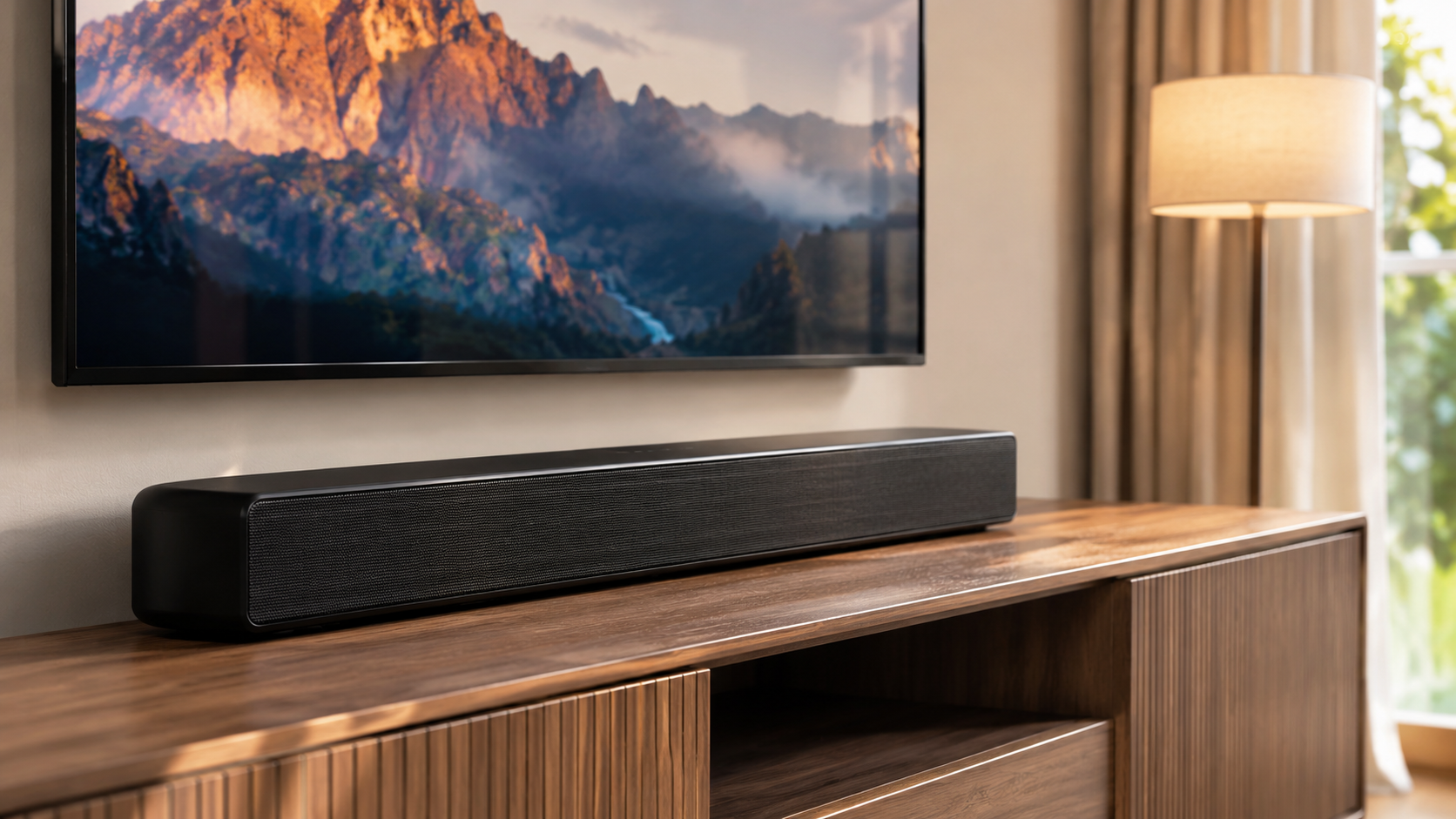
A dedicated soundbar can improve your listening experience without requiring complicated wiring. It makes movies, sports broadcasts, music, and video games more enjoyable. You can also find compact models that fit comfortably beneath most televisions.
However, not every living room needs additional audio equipment. Your viewing habits, room size, and existing TV speakers should influence your decision. Before spending money, consider these five important questions:
- Is it worth buying a soundbar for TV?
- What are the disadvantages of using a soundbar?
- Do soundbars actually make a difference?
- Is it better to buy a soundbar from the same brand as your TV?
- Is a soundbar necessary for TV?
Is it worth buying a soundbar for TV?
Yes, buying a soundbar is worthwhile if your television struggles with dialogue, bass, or overall sound quality. Modern televisions prioritize slim designs, leaving limited space for traditional speaker components. As a result, built-in speakers often produce thin audio with limited depth.
A dedicated soundbar addresses these limitations through larger drivers and improved speaker placement. It directs sound toward your seating position instead of relying on small downward-facing or rear-facing speakers. This can make conversations clearer and background sounds more detailed.
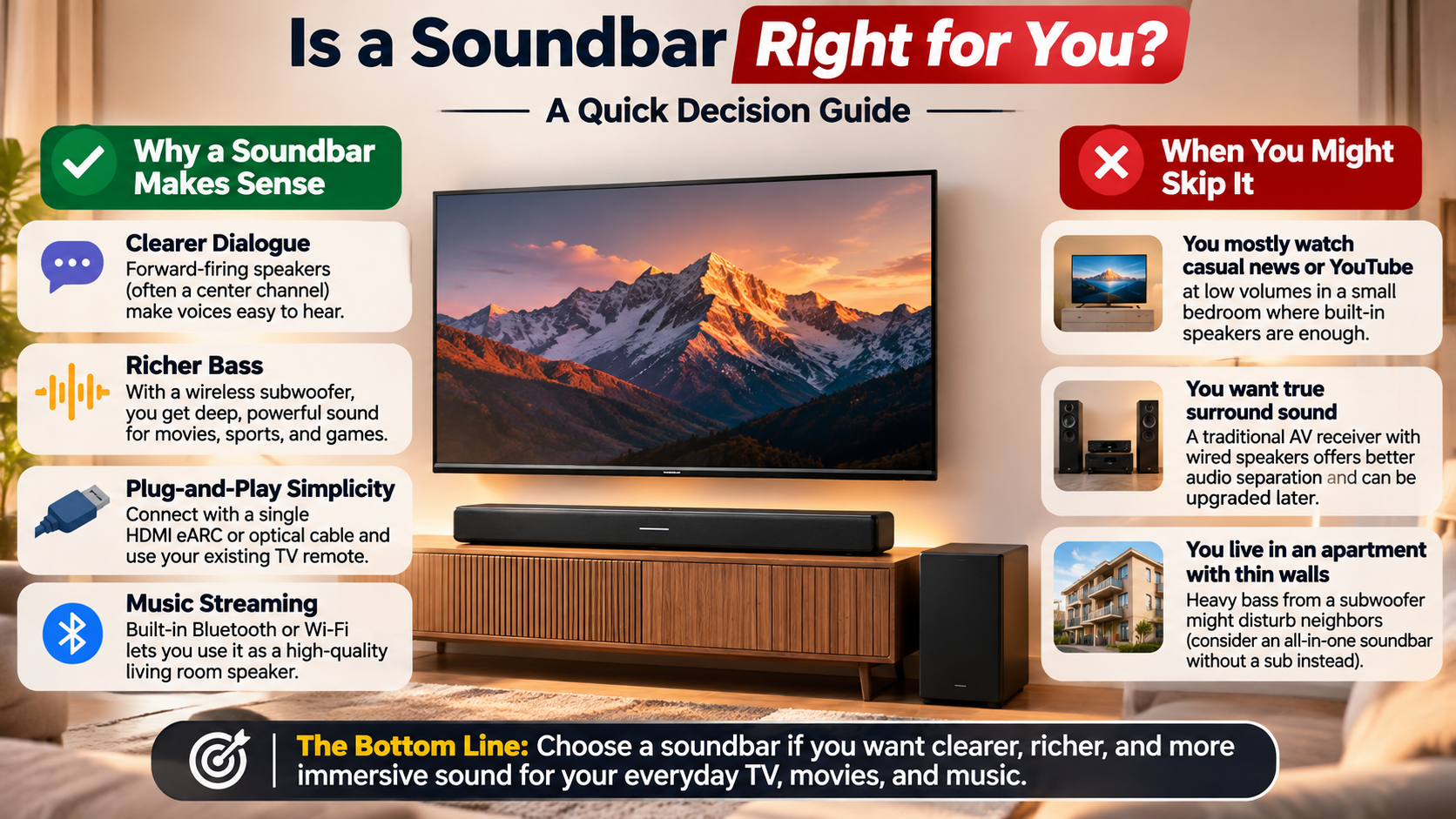
Installation is another advantage. Most modern soundbars connect through a single HDMI eARC or ARC cable. Some models also support Bluetooth and optical connections. You do not need complicated wiring or multiple speakers throughout your room.
However, the right model depends on your requirements. A basic soundbar may suit everyday television watching. A model with a wireless subwoofer works better for movies and music. Consider your budget and room size before choosing one.
Best Budget-to-Performance Sweet Spot
You do not need an expensive home theater system to experience noticeably better television audio. Budget and mid-range soundbars can provide meaningful improvements over standard built-in speakers. For many households, these models offer a practical balance between price, performance, and convenience.
Consider a soundbar priced between $200 and $400 as a starting point. This range often includes models with wireless subwoofers, dedicated center channels, and HDMI connectivity. However, features and prices vary between manufacturers and markets.
Before purchasing, prioritize these features:
- Dedicated center channel: Helps separate dialogue from background sounds.
- Wireless subwoofer: Adds deeper bass for movies, music, and gaming.
- HDMI eARC: Supports compatible high-quality audio formats.
- Dolby Atmos: Provides height effects when the content and equipment support it.
You should also check independent reviews and listen to different models whenever possible. A more expensive soundbar does not automatically deliver better performance. Choose features that genuinely improve your everyday viewing experience.
What are the disadvantages of using a soundbar?
Although soundbars improve television audio, they have several limitations compared with traditional home theater systems. Their compact design makes installation easier, but it also creates certain acoustic compromises. Understanding these disadvantages helps you avoid spending money on unsuitable equipment.
First, most soundbars have limited physical separation between their left and right speakers. This can create a narrower stereo soundstage than separate bookshelf or tower speakers. Some premium models use digital processing to simulate wider sound, but results depend on room conditions.
Second, soundbars offer limited upgrade flexibility. You cannot replace individual internal drivers as easily as components in a traditional speaker system. Some models support additional subwoofers or rear speakers, while others have fixed configurations.
Placement can also become an issue. A soundbar positioned directly beneath a television may block part of the screen or interfere with its infrared sensor. Check your television’s stand height and remote sensor location before purchasing.
Virtual Surround Sound Limitations
Many modern soundbars advertise virtual surround sound and immersive three-dimensional audio. These features use digital processing, speaker positioning, and sound reflections to create a wider listening experience. If you want to understand how spatial audio creates this effect, explore how 8D audio works. Some premium models also include upward-firing drivers for height effects.
However, virtual surround sound does not always reproduce the accuracy of physical rear speakers. Its effectiveness depends on your room’s dimensions, ceiling height, furniture placement, and wall surfaces. Sound reflections must reach your listening position correctly for convincing surround effects.
For example, an enclosed living room with relatively flat walls may deliver better results. Open floor plans and high vaulted ceilings can reduce the effectiveness of certain reflection-based technologies. Heavy curtains and unusual room layouts may also affect performance.
Before buying a soundbar for surround sound, consider these limitations:
- Virtual surround processing does not guarantee accurate rear-channel positioning.
- Upward-firing speakers need suitable ceiling conditions.
- Some systems perform better when you sit directly in front of them.
- Physical rear speakers generally provide more consistent surround placement.
If realistic surround sound is your priority, consider a system with dedicated wireless rear speakers.
Do soundbars actually make a difference?
Yes, soundbars can make a noticeable difference, particularly when replacing the small speakers found in many modern televisions. Their dedicated speaker drivers and amplifiers improve how sound reaches your listening position. The improvement becomes especially noticeable during dialogue-heavy scenes and action sequences.
Most flat-screen televisions have limited internal speaker space. This restricts their ability to reproduce lower frequencies and powerful sound effects. Soundbars use larger acoustic enclosures and multiple drivers to deliver a fuller listening experience. However, the original audio source also matters, so understanding how audio compression affects sound quality can help you get more from your setup.
Dialogue can become easier to understand because sound is projected toward the viewer. Models with dedicated center channels provide additional separation between voices and background audio. This helps prevent conversations from getting lost beneath music and sound effects.
A wireless subwoofer can further improve the experience by reproducing deeper bass. You may notice more impact during explosions, musical performances, and sports broadcasts. However, not every soundbar includes a subwoofer, and performance varies by model.
Even at moderate listening volumes, a suitable soundbar can improve clarity. This makes everyday television watching more comfortable without constantly adjusting the volume.
Dedicated Center Channels Matter Most
If unclear dialogue is your biggest problem, pay attention to the soundbar’s channel configuration. A 2.0 soundbar typically includes left and right channels. A 2.1 model adds a separate subwoofer for improved bass performance.
A 3.1-channel soundbar includes an additional center channel. This channel handles much of the dialogue and other central audio information. It helps keep voices distinct from music and surrounding sound effects.
This feature becomes particularly useful when watching action movies, television dramas, or content with complicated soundtracks. Instead of increasing the overall volume, you can hear conversations more clearly. Some soundbars also provide dialogue enhancement settings for additional control.
When comparing soundbars, consider the following configurations:
- 2.0 channels: Suitable for basic stereo audio and everyday television watching.
- 2.1 channels: Adds a subwoofer for stronger bass.
- 3.1 channels: Adds a dedicated center channel for improved dialogue separation.
- 5.1 channels: Adds surround channels for a more immersive experience.
Remember that channel numbers alone do not guarantee excellent sound. Driver quality, audio processing, and room acoustics also influence performance.
Is it better to buy a soundbar the same brand as a TV?
Buying a soundbar from the same manufacturer as your television can provide additional convenience. However, matching brands is not necessary for reliable audio performance. Most modern televisions and soundbars support standard connections, including HDMI ARC, HDMI eARC, and optical audio.
For example, you can connect a Sony television to a Bose, Samsung, or Sonos soundbar. As long as both devices support compatible audio connections, they should work together. You should still check supported audio formats and connection requirements before purchasing.
Matching brands can offer additional ecosystem features. Samsung Q-Symphony allows compatible Samsung televisions and soundbars to play audio together. LG WOW Orchestra offers a similar experience with supported LG products.
These technologies can improve integration between compatible devices. They may also simplify certain audio settings and remote-control functions. However, their benefits depend on the exact television and soundbar models.
Ultimately, prioritize sound quality, connectivity, and features over the manufacturer’s logo. A well-designed soundbar from another brand may provide better performance than a basic matching model.
When You Should Mix Brands
Choosing a soundbar from a different manufacturer makes sense when its features better match your requirements. Television manufacturers often offer convenient audio accessories, but dedicated audio companies also specialize in speaker design and sound reproduction.
Brands such as Sonos, Bose, and Sennheiser offer soundbars with different approaches to audio performance. Some prioritize dialogue clarity, while others focus on immersive home theater experiences or music playback. If you also plan to stream music through your soundbar, choosing the music streaming service with the best sound quality can further improve your listening experience. Their products may also include wireless streaming and multi-room audio features.
Before selecting a different brand, check these important compatibility details:
- HDMI eARC or ARC: Ensures compatible audio transmission between devices.
- Dolby Atmos support: Check whether both devices support the required audio formats.
- Remote compatibility: Confirm whether your television remote can control soundbar volume.
- Audio passthrough: Check whether your television supports the formats you want to use.
- Wireless connectivity: Verify Bluetooth, Wi-Fi, and other streaming requirements.
Do not assume that an expensive audio brand automatically offers better performance. Compare individual models, independent reviews, and available features. The best choice is the soundbar that meets your listening needs.
Is a soundbar necessary for TV?
No, a soundbar is not necessary for your television to function. Every modern television includes built-in speakers that handle everyday audio. If you mainly watch news, casual YouTube videos, or daytime television, your existing speakers may be sufficient.
However, built-in speakers often struggle with demanding audio content. Movies, sports broadcasts, and video games contain different sound elements that require balanced reproduction. A dedicated soundbar can improve dialogue, bass response, and overall listening comfort.
Your room also influences whether an upgrade makes sense. A small bedroom with quiet surroundings may not require additional speakers. A larger living room may benefit from stronger audio projection and a dedicated subwoofer.
Consider your actual listening habits before making a purchase. If you regularly increase the volume to understand conversations, an audio upgrade could solve that problem. If your current television already sounds clear, spending money on a soundbar may offer limited value.
Ultimately, a soundbar is an optional upgrade rather than an essential television accessory. Buy one when it addresses a specific problem or improves your entertainment experience.
Signs Your Setup Needs an Upgrade
Your television’s built-in speakers may no longer meet your expectations if everyday viewing has become frustrating. Several warning signs indicate that a dedicated soundbar could improve your listening experience. Identifying these problems helps you decide whether additional audio equipment is worth the expense.
Pay attention to these common situations:
- Unclear dialogue: You struggle to understand conversations during movies or television shows.
- Frequent volume adjustments: You constantly increase the volume during quiet scenes and lower it during loud action sequences.
- Weak bass: Music, explosions, and other low-frequency sounds lack depth.
- Limited sound projection: Audio feels weak when you sit farther away from the television.
- Poor wall-mounted audio: Your television’s speaker placement produces an unsatisfactory listening experience.
You should also consider your entertainment preferences. Movie enthusiasts, sports fans, and gamers often benefit from improved audio separation and stronger sound effects.
However, these problems do not automatically mean you need an expensive soundbar. A reasonably priced model may solve your main concerns. Compare available options and choose an upgrade that provides noticeable benefits without exceeding your budget.
Final Verdict: Is It Worth Buying a Soundbar for TV?
So, is it worth buying a soundbar for TV? Yes, if you want clearer dialogue, deeper bass, and a more immersive entertainment experience. A good soundbar can transform ordinary television audio without the expense or complexity of a traditional home theater system.
However, buying one is not necessary for everyone. If your TV speakers already deliver clear, balanced sound, you may not notice enough improvement to justify the extra expense. Consider your viewing habits, room size, and budget before making a decision.
For most households, a soundbar with a dedicated center channel and wireless subwoofer offers a practical balance of clarity, performance, and convenience. You do not need the most expensive model to enjoy better audio.
Our recommendation: Choose a soundbar that solves your biggest audio problem rather than paying for features you rarely use. Ultimately, the right soundbar should make every movie, show, and gaming session more enjoyable.